You’re in a Tokyo izakaya, tucked into a booth that feels both private and connected to the electric buzz of the room. The table is a beautiful disaster of small plates: glistening skewers of yakitori, a half-eaten block of agedashi tofu, empty edamame pods, and a constellation of small glasses. Laughter has been flowing as freely as the sake and highballs for the last few hours. The energy is starting to soften, the sharp edges of conversation rounding into a comfortable hum. It feels like the evening is drawing to a natural close.
Then, someone leans forward, looks around the table, and says the words that signal the true beginning of the end: “Sate, shime wa nani ni suru?“—”Alright, what should we have for the shime?”
To a visitor, the question might seem odd. Why, after a multi-course meal and several drinks, is the immediate topic another course of food? But this isn’t about hunger, not really. This is a cue. It’s the pivot from the second act to the third. Shime (締め), which literally translates to “to close,” “to fasten,” or “to tie up,” is the essential, non-negotiable final ritual of a Japanese night out. It’s the final, starchy punctuation mark on a long, liquid sentence. The night isn’t truly over until a bowl of ramen, rice, or noodles has been consumed. Just paying the bill and heading for the train station feels abrupt, unfinished, like walking out of a movie before the credits roll. This final, deliberate act of eating is a deeply ingrained cultural tradition that provides closure, comfort, and a crucial social buffer. It’s the answer to a question you didn’t even know the evening was asking: How do we end this properly?
This final act of savoring one more bite is a subtle nod to Japan’s broader appreciation for transient culinary moments, much like the nuanced concept of fleeting perfection observed in its seasonal delights.
The Unspoken Script of a Japanese Night Out

To truly appreciate the significance of shime, you need to recognize that a Japanese drinking party, or nomikai, is seldom a spontaneous, disorderly event. It follows a narrative structure, an unwritten social script with a clear beginning, middle, and end. These gatherings focus less on pure indulgence and more on strengthening group bonds, whether among colleagues, teammates, or longtime friends.
The event often starts formally. Usually, a senior member will give a brief speech, everyone raises their glasses for a collective “Kanpai!” and the first drink is almost always shared—most commonly beer poured for one another as a gesture of respect and camaraderie. The evening then shifts to a more relaxed atmosphere. Food arrives in courses, intended for sharing. Drinks are ordered individually. Conversations rise and fall, accompanied by laughter and the clinking of glasses. The rigid hierarchies of the workplace may ease, encouraging a freer exchange known as nominication (a blend of nomu, meaning to drink, and communication).
This carefully arranged progression can last for hours and often spans several venues. The initial gathering at an izakaya is called the ichijikai. When this winds down, a smaller group may move on to a nijikai, or second party, perhaps at a karaoke box or a quiet bar. For the most dedicated, a sanjikai, or third party, might follow. Each phase carries its own vibe and purpose.
Within this well-defined sequence, shime functions as the conclusive final chapter. It is the agreed-upon cue that the festivities are officially ending. It’s not an afterthought; it is an integral part of the evening’s structure. Proposing shime is a polite and universally understood way of expressing, “This has been wonderful, but it is now time to wrap things up.” It offers a graceful way to transition from the lively, alcohol-fueled atmosphere of the party back to the sober reality of going home for the night.
The Psychology of Closure: Why ‘Just Leaving’ Is Not an Option
Japanese culture places deep importance on form, emphasizing clear beginnings and definite endings. Consider the elaborate entrance ceremonies for new students and employees (nyugakushiki and nyushashiki), as well as the equally formal graduation and leaving ceremonies. These occasions mark transitions, giving them significance and weight. Life unfolds in clearly defined stages, and the rituals surrounding them offer a sense of order and emotional clarity.
Even a night out with friends or colleagues, in its own modest way, follows this same cultural principle. Simply standing up, announcing “I’m heading out,” and leaving can feel abrupt and incomplete. It disrupts the harmony (wa, 和) of the group, that valued state of social cohesion. A sudden departure can leave a subtle, lingering awkwardness.
The ritual of shime gracefully resolves this issue. It creates a shared, final micro-event that all participate in together. The group’s focus shifts from lively conversation and drinking to the quiet, simple, and deeply comforting act of eating a bowl of something warm and satisfying. It’s a collective, communal deep breath. Conversation at the ramen counter tends to be more subdued, more reflective. The food itself—warm, savory, and grounding—serves as a physiological transition, gently guiding the body back toward sobriety.
This shared ritual ensures the night doesn’t merely fizzle out with staggered goodbyes on a street corner. Instead, it concludes with one last moment of unity. The group moves together to the chosen shime spot, eats together, and then disperses from there. Everyone leaves simultaneously, on the same page. The social bond holds strong right up to the final “Otsukaresama deshita” (“Thank you for your hard work,” a common parting phrase). The night has been properly wrapped up and put away, leaving no loose ends.
The Holy Trinity of Shime: Ramen, Ochazuke, and Udon

While the idea of shime remains constant, its execution is delightfully diverse. Nevertheless, a clear hierarchy of options prevails—a trio of carbohydrate-rich dishes that underpin the tradition. Each delivers a distinct form of satisfaction, catering to different late-night cravings.
Shime Ramen: The Unrivaled King of Closers
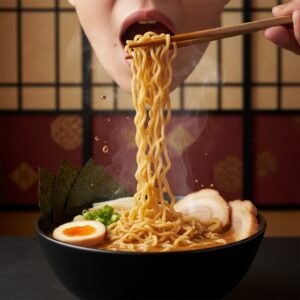
This is the classic shime. Throughout Japan, during the hours after midnight, small ramen shops shine like beacons, their windows fogged from simmering pots of broth within. The appeal is elemental. After hours of drinking, the body longs for salt, fat, and carbs, and a bowl of ramen satisfies all three in a deeply gratifying way.
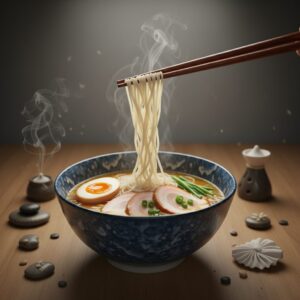
Entering a shime ramen spot is an experience in itself. The air is thick with aromas of pork broth and garlic. The space is usually tight, featuring a simple counter lined with stools. The customers range from post-nomikai office workers to students and night owls, all quietly bent over their bowls. There’s a subtle intensity to the scene. Orders typically include a rich, opaque tonkotsu (pork bone) broth, a robust miso ramen, or a deceptively nuanced shio (salt) or shoyu (soy sauce) ramen. The hot, salty broth aids rehydration and replenishes electrolytes. The fat coats the stomach, while the noodles offer a solid, carb-heavy base. It’s a full sensory attack and the perfect, indulgent finale to a night out.
Ochazuke: The Sobering Elegance
If ramen is the indulgent, rock-and-roll option, ochazuke serves as its calm, acoustic counterpart. It’s for those seeking closure without heaviness. Incredibly simple yet deeply soothing, ochazuke is a bowl of cooked white rice topped lightly, over which hot green tea or a delicate dashi broth is poured. Common toppings include tangy umeboshi (pickled plum), savory flakes of grilled salmon, strips of shredded nori seaweed, or tiny, crunchy rice crackers (arare).
Eating ochazuke feels restorative. It’s light, hydrating, and gentle on the stomach. The warm tea and clean flavors act like a reset button, washing away the excess of the evening. It’s the kind of dish one turns to when feeling under the weather, carrying that same sense of comforting care. Opting for ochazuke as shime is a sign of seasoned maturity. It honors the tradition while prioritizing comfort and the realities of the morning after. In its quiet way, it is the most Japanese choice—understated, elegant, and impeccably balanced.
Udon: The Comforting Hug
Nestled between the intensity of ramen and the austerity of ochazuke lies udon. A bowl of thick, chewy wheat noodles in a clear, savory broth is pure, unadulterated comfort food. The broth, typically a dashi base seasoned with soy sauce and mirin, is lighter than ramen’s but more substantial than the tea used in ochazuke. It’s a warm, gentle embrace in a bowl.
Classic shime udon options include kitsune udon, topped with a large piece of sweet fried tofu that soaks up the broth, or a simple kake udon garnished with just some chopped scallions. The noodles are the real star—their soft, yielding texture is immensely satisfying after a long night. Udon provides the necessary carbs and warmth without the heavy richness of ramen, making it an ideal middle-ground choice. It’s a selection that says, “I want comfort, I want substance, but I also want to feel good tomorrow.”
Beyond the Big Three: Regional and Modern Evolutions
The tradition of shime is not a fixed relic; it remains a dynamic, living part of the culture that evolves with new tastes and regional identities. Although the classic trio still prevails, the fundamental idea of a ritualistic closing dish has been creatively interpreted in some unexpected and delicious ways.
Shime Parfait? The Emergence of the Sweet Finisher
In certain cities, most notably Sapporo on the northern island of Hokkaido, a new player has entered the shime scene: the parfait. The concept of shime pafē has grown into a genuine phenomenon. After enjoying savory izakaya dishes, groups often proceed to a late-night dessert parlor for an elaborate, layered parfait. These are far from simple ice cream sundaes; they are intricate constructions of ice cream, fresh fruit, sponge cake, jellies, and sauces, all served in a tall glass.
The reasoning is surprisingly logical. It provides a complete contrast to the evening’s savory flavors. The cold sweetness acts as a refreshing jolt, offering a clean break from the salt and umami of the earlier meal. While it may appear to be a bold departure, the essential purpose remains the same. It provides a final, shared destination and a ritualistic act that concludes the night in a definitive, satisfying way, catering to a different kind of craving.
Regional Specialties as the Ultimate Finish
Japan’s diverse culinary scene means that shime often reflects local character, turning the final course into a declaration of regional pride.
In Okinawa, Japan’s subtropical southern islands, a popular shime is a substantial bowl of Okinawa soba—a unique dish featuring thick, Chinese-style noodles in a pork-based broth. For the especially hungry, another favored, and somewhat surprising, choice is “steak.” Late-night steakhouses specifically serve the post-drinking crowd, offering simple, sizzling plates of beef with rice and garlic soy sauce. This highlights the island’s distinctive fusion of Japanese and American cultural influences.
In Fukuoka, the undisputed home of tonkotsu ramen, shime ramen is more than a tradition—it’s a lifestyle. The city’s famous yatai (open-air food stalls) buzz well into the night, serving their signature rich pork broth to those craving a perfect last bowl. The local custom of kaedama—ordering an extra helping of noodles to add to your remaining broth—ensures that not a drop of the cherished soup goes to waste.
The Inherent Logic of the Final Carb

While the shime tradition is deeply rooted in social ritual, it also corresponds to a form of folk science. There is a physiological logic to it, even if it lacks hard clinical evidence. Alcohol consumption can deplete glycogen stores and disrupt blood sugar levels, causing the body to crave simple carbohydrates to restore balance. The high salt content in dishes like ramen helps the body retain water and counteracts alcohol’s dehydrating effects. Whether or not it is scientifically proven, it feels right. The body seems to demand this final act of refueling, and the culture has built a beautiful ritual around this need.
Yet the sociological function is arguably even more significant. The shime serves as an important social safety valve. It smoothly handles the often-awkward process of concluding a group activity. Instead of a prolonged series of individual goodbyes, the suggestion of shime establishes a clear, collective goal: “Let’s go for ramen, then head home.” It’s an efficient, elegant, and harmony-preserving device that ensures everyone stays on the same schedule. It prevents the slow, uncomfortable dissolution of the group and allows the shared positive energy of the night to continue until the very end.
The Art of the Perfect Ending
Ultimately, shime is much more than just a drunk snack. It serves as a microcosm of Japanese social dynamics, a delicious reflection of the cultural emphasis on structure, shared experience, and proper closure. It is a ritual that satisfies physical cravings, calms the mind’s desire for order, and strengthens the social bonds within the group.
It embodies a profound understanding that how something concludes is as important as how it begins. The perfect shime turns a simple night out into a complete narrative. So, the next time you find yourself in Japan, as the plates are cleared and the evening draws to a close, listen for that crucial question. When it arises, don’t dismiss it as an unnecessary extra. Recognize it for what it truly is: an invitation to engage in the art of a perfect ending, to close the night with a warm, comforting, and absolutely essential final touch.