Walk into almost any significant temple or shrine in Japan, and you’ll eventually find a small, quiet office, often with a window looking out onto the grounds. Inside, you might see an elderly priest or a young shrine maiden sitting with brushes, black ink, and a collection of heavy-looking red seals. Visitors will approach, present a small, beautifully bound book, and wait in respectful silence. A few minutes later, the book is returned, now bearing a page of breathtaking calligraphy and a vibrant vermilion stamp. This is the world of goshuin, a practice that looks, to the uninitiated eye, like a sophisticated version of a national park stamp rally. But to call it a hobby, or even just collecting, is to miss the point entirely.
So many things in Japan operate on a level of meaning just beneath the surface, and the goshuincho—the book itself—is a perfect example. It’s not a mere keepsake; it’s a personal chronicle. It’s a testament to a journey, not just across the country, but through moments of your own life. Each page is a physical record of a prayer, a moment of reflection, a specific time and place where you connected with something ancient and sacred. It’s a collaboration between you, the history of a place, and the living hands that mark your passage. Far from being a simple collection, a full goshuincho becomes one of the most personal and profound documents of your time in Japan, a story told in ink and spirit that is uniquely yours.
Embracing the reflective practice of recording your personal journey in a goshuincho can be just as rejuvenating as engaging in forest bathing therapy, which offers a mindful escape from the pressures of modern urban life.
The Anatomy of a Sacred Mark
Before you can appreciate the journey, you first need to understand its components. The practice is not random; each element on the page serves a specific purpose and carries a history, transforming a simple sheet of paper into a richly layered certificate of your visit.
What is a Goshuin?
A goshuin (御朱印) literally means “honorable red seal.” While the striking stamps catch the eye first, the entire page is regarded as the goshuin. It’s a unique blend of seal and calligraphy, with no two ever exactly alike. When you receive one, you are acquiring a small, living piece of art.
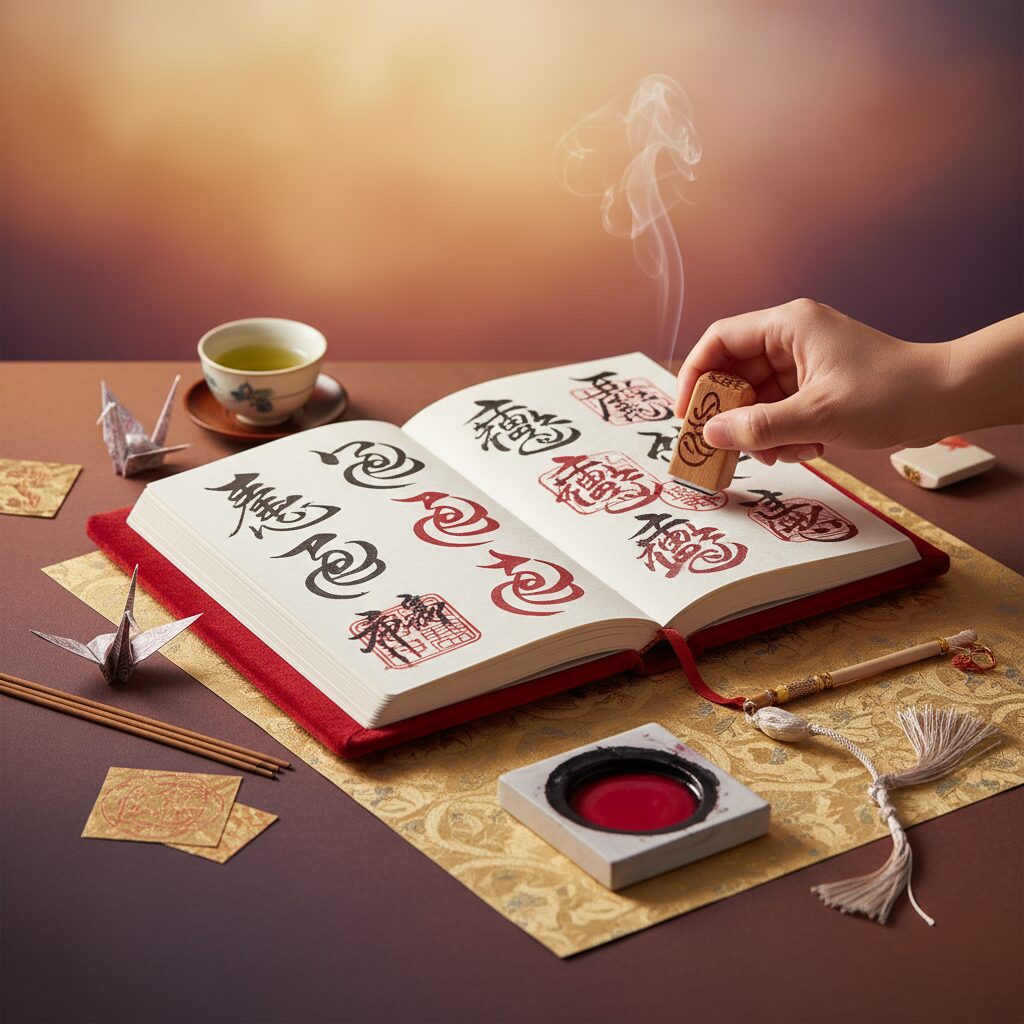
Typically, a goshuin includes several components. The central and most prominent is the shrine or temple’s main seal, stamped in red ink. This seal often bears the institution’s name or the emblem of its principal deity. Then, a calligrapher writes, in bold black sumi ink, the name of the temple or shrine. They often add the name of the specific Buddha, Bodhisattva, or Kami enshrined there. This is an important detail: you are not merely marking a location, but acknowledging the particular deity you came to honor. Lastly, they inscribe the date of your visit, permanently linking this spiritual encounter to a single moment in your life.
Importantly, this is not something you do yourself. You don’t simply take a stamp and press it into your book. Instead, you hand your goshuincho to a professional—a priest, monk, or trained shrine or temple staff member. They create it for you, frequently with deep focus, turning the act into a formal, meditative ceremony.
The Goshuincho: Your Personal Scroll
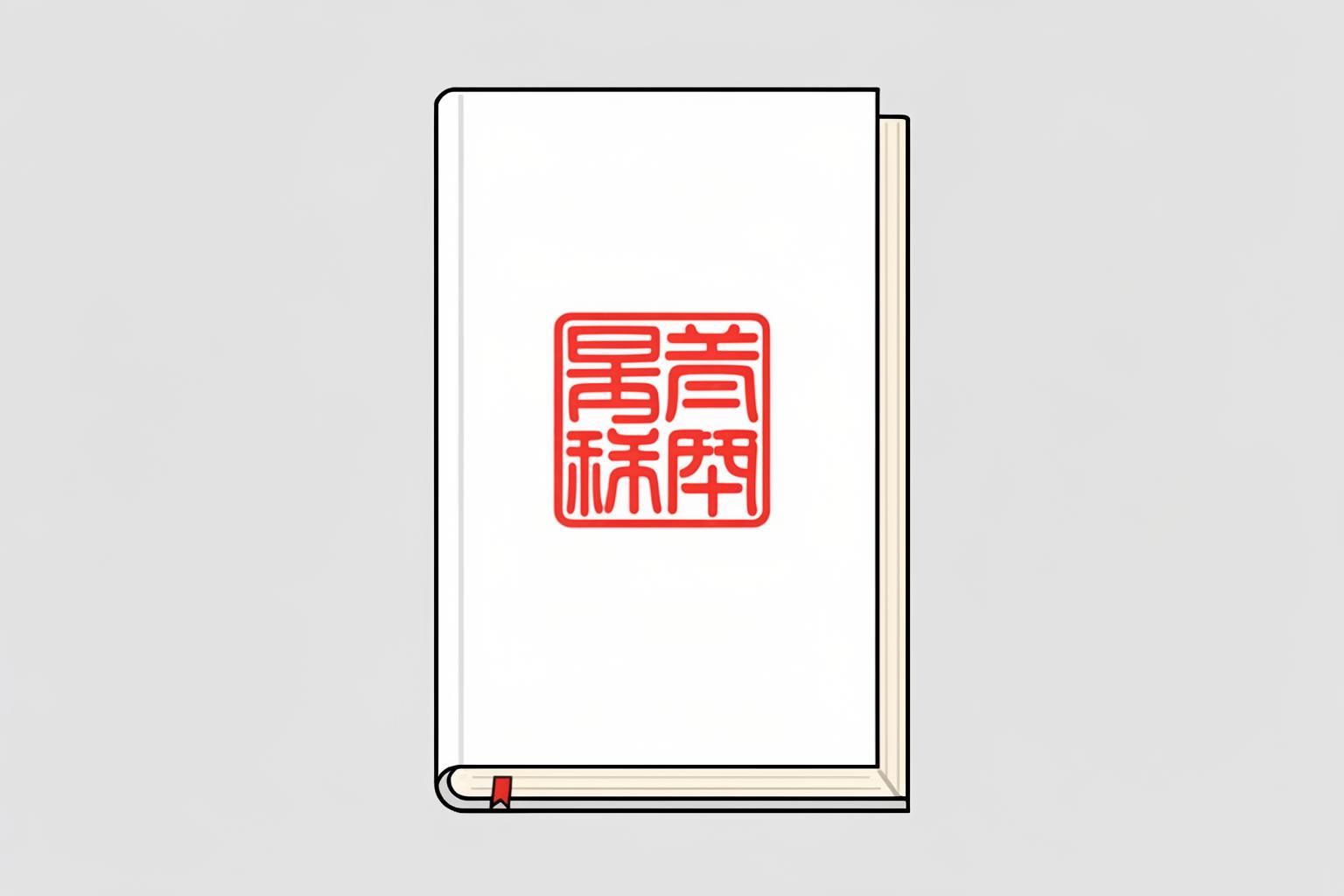
The book that holds these records, the goshuincho (御朱印帳), is as special as what it contains. These are not ordinary notebooks. Most are bound in an accordion style, with pages folding back and forth. This format, known as an orihon, allows the book to open and stretch out, displaying all the goshuin side by side like a magnificent painted scroll. Its design is rooted in the tradition of storing and reading sacred sutras.
The covers themselves are artistic treasures. They can be bound in rich silk brocade featuring traditional patterns such as cranes or chrysanthemums. Many temples and shrines offer their own distinctive designs, showcasing famous paintings from their collections, carvings from their halls, or symbols tied to their history. Some are modern and minimalist, while others incorporate pop culture collaborations. This diversity reflects the living nature of the tradition; it honors its sacred essence while welcoming personal expression.
A common etiquette is to keep separate goshuincho for Buddhist temples and Shinto shrines. Though not a strictly enforced rule, it shows respect for the distinct theological and philosophical traditions of Japan’s two primary faiths. Beginning your journey with two books—one for each—is a thoughtful way to demonstrate awareness that you are engaging with different spiritual realms.
From Proof of Piety to Personal Chronicle
The practice of collecting goshuin feels distinctly modern, perfectly aligned with an era of travel and documentation. Yet its origins lie deeply rooted in Japan’s pilgrimage tradition, when journeys were challenging and carried profound spiritual significance.
A Pilgrim’s Progress
Initially, a goshuin was proof that a pilgrim had not only visited a temple but had completed a particular act of devotion: hand-copying a Buddhist sutra. This practice, known as shakyo, was a merit-generating exercise demanding great time and concentration. Once finished, the pilgrim would present their manuscript to the temple, and in return, the monks would grant a goshuin as a receipt—a certificate of their devotion. It was a mark of spiritual accomplishment.
Over time, as pilgrimages became more accessible to the general public, the strict requirement to copy sutras was eased. Simply offering prayers and making a donation at the temple became enough to receive a goshuin. It changed from proof of specific devotional labor to a broader sign of worship. It indicated that you had undertaken the journey, stood before the altar, and paid your respects. This change opened the tradition to everyone, not just dedicated monks or learned aristocrats.
The Modern Pilgrimage
Today, the concept of pilgrimage has broadened even more. While ancient, established routes like the 88-temple circuit on Shikoku Island remain important and deeply respected, the modern goshuin collector embarks on a more personal pilgrimage. Their journey is driven not by an ancient itinerary, but by their own curiosity, travels, and life experiences.
Your goshuincho becomes a map of your individual story. A page from a grand temple in Kyoto might mark your first visit to the ancient capital. A stamp from a small, windswept shrine on a remote peninsula could capture a summer road trip. A goshuin from your neighborhood temple might commemorate the birth of a child, a prayer for success in a new career, or simply a quiet afternoon seeking peace. Each seal serves as a memory’s anchor. The book doesn’t just say “I was here.” It means, “This place mattered to me on this particular day, at this moment in my life.” It turns travel from a list of locations into a meaningful narrative.
The Ritual: More Than a Transaction
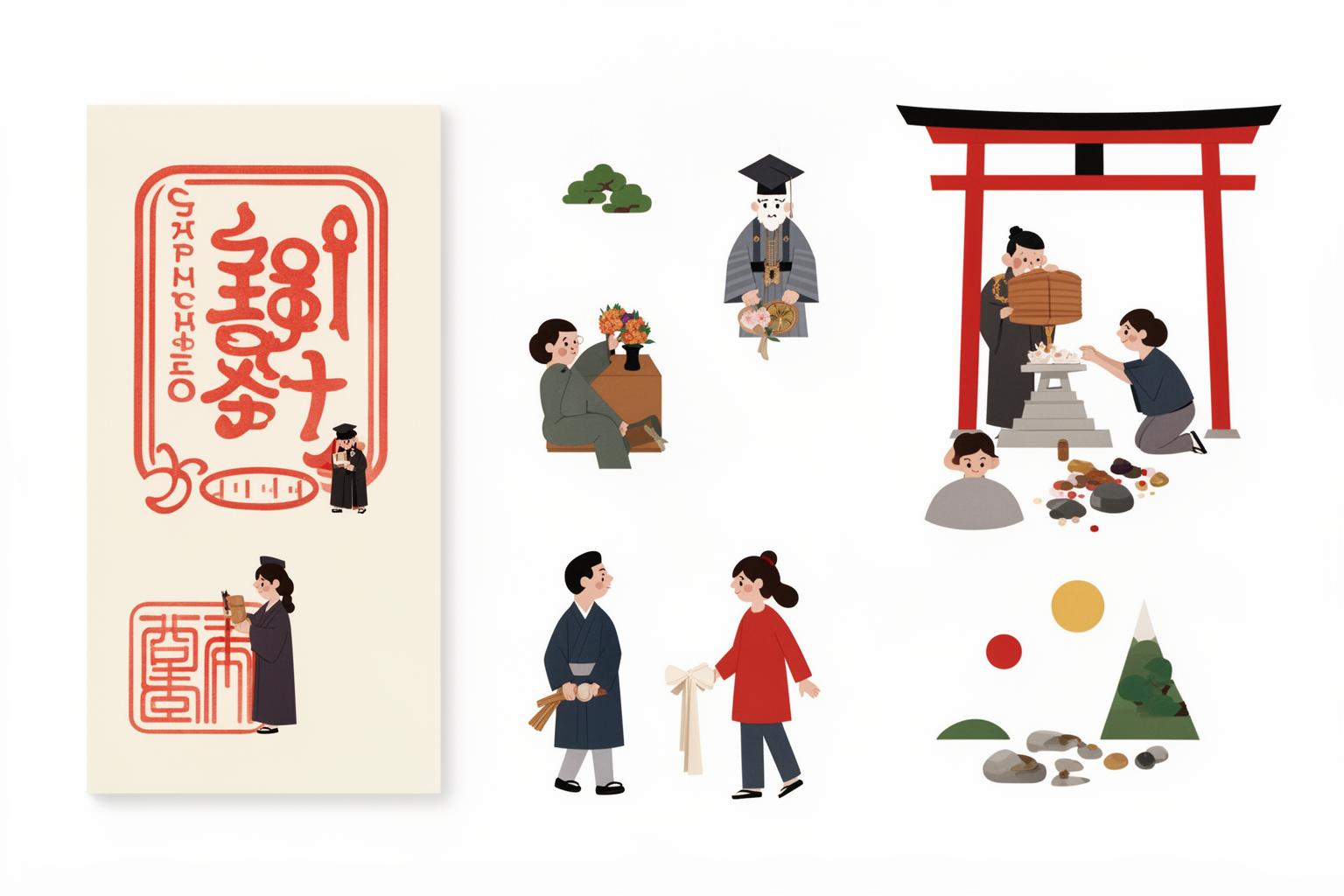
Due to its sacred origins, obtaining a goshuin involves a set of unspoken rules and etiquette. Understanding these is essential to fully appreciating its cultural significance. This is not a commercial transaction; it is a spiritual exchange.
Approaching the Goshuin-jo
The place where you receive your goshuin is typically called a shamusho or juyosho. Though it functions as an administrative office, it maintains the same quiet, respectful atmosphere found throughout the sacred grounds. The most important rule—the one that distinguishes a mindful participant from a simple tourist—is to pray first. You visit the main hall, pay your respects to the enshrined deity, and only then proceed to request your goshuin. The mark serves as a memento of your worship, not the purpose of your visit. Asking for the goshuin without praying is like requesting a diploma without attending the classes; it completely misses the point.
When it is your turn, have your goshuincho opened to the blank page where you want the calligraphy to be inscribed. This small gesture of consideration helps the process run smoothly. Politely hand over the book, often with both hands, and make your request. There will be a small fee, usually between 300 and 500 yen. It is important to view this not as a “price” but as an offering, or osame. You are supporting the upkeep of the temple or shrine, expressing gratitude for their spiritual service and for the beautiful piece of art you are about to receive.
The Moment of Creation
If possible, watch as your goshuin is created. This is where the magic unfolds. You will see the calligrapher pick up their brush, dip it in dark ink, and form the characters with focused, fluid grace born from years of practice. Each stroke is intentional. There is no hesitation. Then, they carefully position the heavy seal and press it firmly onto the page, leaving a perfect vermilion imprint. The entire process is a brief, contained performance of skill and devotion.
This moment transforms the goshuin from a mere object into a meaningful experience. You receive something made by a specific person, at a specific moment. The slight wavering of a line, the particular tone of the ink, the exact placement of the seal—all these details are unique to your goshuin. It is a direct human connection, a bridge between you and an institution centuries old. This deeply personal touch is what sets it apart from a printed postcard or mass-produced charm. It is a piece of the temple’s living spirit, passed directly into your hands.
A Tapestry of Art, Faith, and Memory
Once you start filling your book, you come to realize you are curating something far more meaningful than just a collection of stamps. You are weaving a personal tapestry, its threads drawn from Japanese aesthetics, spirituality, and your own unfolding life story.
The Art in Your Hands
Each page of a goshuincho teaches you about Japanese aesthetics. The principles of balance, asymmetry, and the elegant use of negative space are all evident. The dynamic, powerful strokes of the calligraphy (shodo) contrast beautifully with the static, formal impression of the seal. As your collection expands, you begin to discern the distinct artistic styles of different temples and regions. Some are minimalist and austere, reflecting a Zen sensibility. Others are more ornate and flowing. Many places now offer special, limited-edition goshuin featuring colorful illustrations or seasonal motifs—delicate cherry blossoms in spring, fiery maple leaves in autumn—turning each page into a miniature painting.
A Spiritual Fingerprint
On a deeper level, the goshuincho becomes a record of your spiritual encounters. Each page corresponds to a specific Kami or Buddhist deity. You might have a page for Inari, the god of rice and business, from Fushimi Inari Shrine in Kyoto. Another might honor Amaterasu, the sun goddess, from the Grand Shrine of Ise. A third might be dedicated to Kannon, the Bodhisattva of mercy, from a temple in Kamakura. Flipping through the book is like reviewing a list of divine patrons who have watched over your journey. It becomes a personal pantheon, a collection of sacred connections reflecting the places you’ve visited and the prayers you’ve offered.
Your Story, Written in Ink
This is the true essence of the goshuincho. It is your diary, written in a language of sacred places and moments in time. Years from now, when you look through its pages, you won’t merely see the names of temples and shrines. You will be transported back. You’ll remember the humid summer air on the day you climbed the steps to that mountain shrine. You’ll recall the friend who was with you when you visited that temple by the sea. You’ll feel the quiet hope you held in your heart when you prayed for good health at that small neighborhood sanctuary.
The goshuincho doesn’t just document where you went; it documents who you were. It traces your path, your growth, and your changing relationship with the country around you. It’s a silent witness to your personal history, each page a chapter, each seal a punctuation mark.
In the end, a goshuincho is a profound act of co-creation. It is born from your intention to visit, the temple’s willingness to share its spiritual authority, the artist’s skilled hand, and the simple passage of time. It reminds us that the most meaningful journeys are not about the destinations we collect but about the moments of connection we experience along the way. The book is not the prize. The real collection is the life lived between its beautiful pages, and the goshuincho is simply its sacred, indelible shadow.