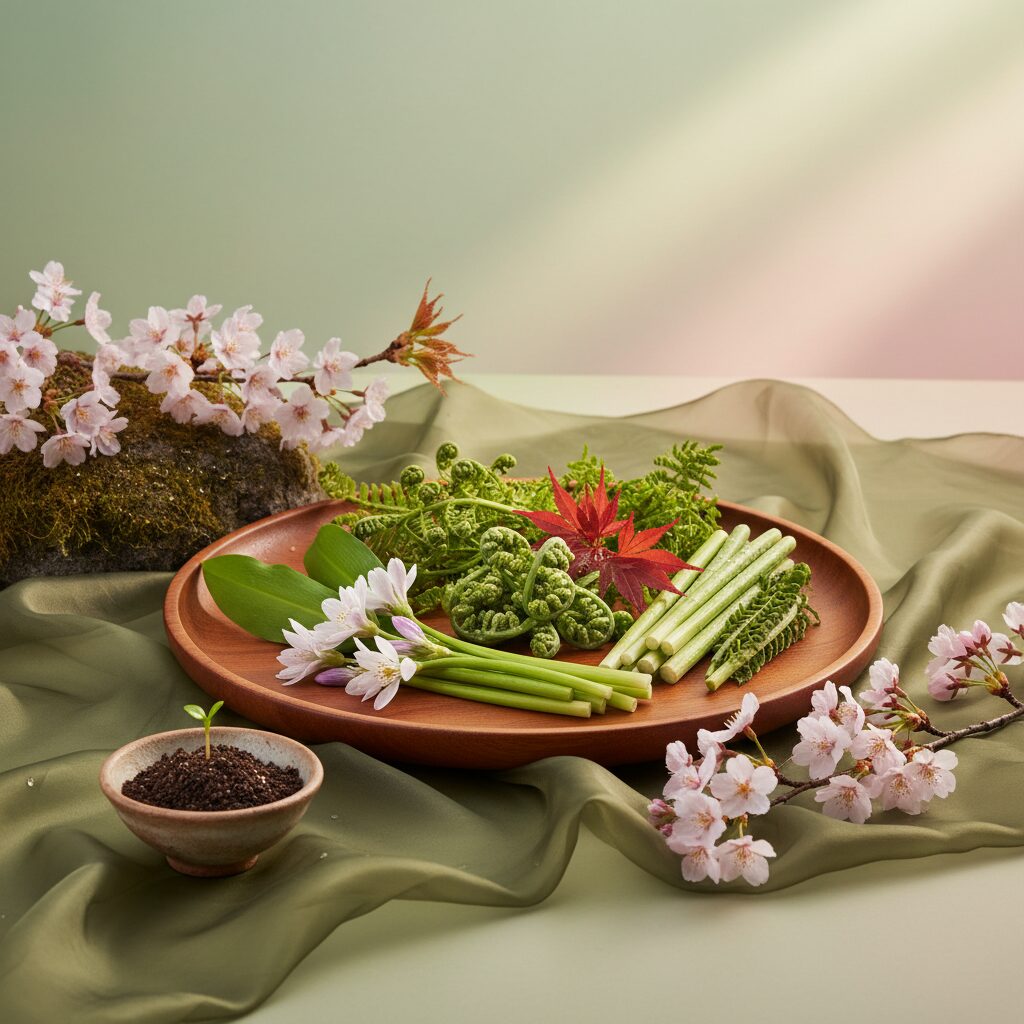
When you think of spring in Japan, your mind probably leaps to cherry blossoms. You picture seas of pale pink petals, picnics under blooming trees, and maybe a sakura-flavoured latte. It’s a beautiful, gentle, almost sweet image of the season’s arrival. But there’s another, older story of spring here, one that doesn’t happen in manicured city parks. It takes place in the damp, thawing mountains, and it tastes distinctly, purposefully bitter.
Every year, as the last snows melt and the ground softens, a quiet pilgrimage begins. People armed with small baskets and generations of knowledge venture into the wilder parts of the country to forage for sansai—wild mountain vegetables. These are not your tidy rows of supermarket spinach. They are gnarly, strange-looking shoots, buds, and fiddleheads, and many of them share a powerful, assertive bitterness. In a cuisine as celebrated for its subtle and delicate balance of flavours as Japan’s, this embrace of harshness might seem odd. Why seek out difficulty on a plate?
But to see it that way is to miss the point entirely. The annual hunt for sansai is far more than a culinary tradition; it’s a deep-rooted ritual of renewal. It’s a physiological and spiritual reset button, a way of shaking off the sluggishness of winter and physically tasting the raw, untamed energy of a new season. This annual bitterness isn’t a flaw to be masked, but a potent medicine to be welcomed—a shock to the system that cleanses the body and reconnects the soul to the rhythms of the natural world.
Embracing the raw energy of foraged sansai mirrors the way Japan is reanimated each morning through its 6:30 AM radio ritual, highlighting a unique blend of nature and tradition that awakens both body and spirit.
The Mountain’s Bounty: Defining Sansai
First, let’s familiarize ourselves with the cast of characters. The word sansai (山菜) is a simple one, combining the characters for ‘mountain’ (山) and ‘vegetable’ (菜). It broadly refers to an entire category of edible wild plants that sprout from mountainsides and woodlands for a brief period in spring. They are the very first greenery to emerge from the cold earth, and their flavor directly reflects that vigorous, explosive growth.
Although specific types differ by region, a few standout stars of the sansai world appear on menus and in home kitchens throughout Japan each spring. To know them is to appreciate the diverse spectrum of this wild harvest.
The Stars of the Show
One of the earliest to appear is fukinoto, the flower bud of the butterbur plant. It emerges as a tightly curled, pale green ball, looking almost otherworldly as it pushes through the remaining snow patches. Its flavor is intensely aromatic and deeply bitter, a concentrated burst of spring often mellowed by deep-frying as tempura or finely chopping and mixing with miso to create a savory condiment called fuki-miso.
Next is tara no me, often called the “king of sansai.” It’s the young bud of the Japanese angelica tree, a thorny plant that demands some effort to harvest. The buds are small and tender, with a rich, slightly nutty flavor carrying a sophisticated, layered bitterness. Battered and fried as tempura, they become a true delicacy, their unique taste beautifully preserved within a light, crispy shell.
Also highly valued are the fiddlehead ferns. You might find kogomi (ostrich fern), which grows in elegant, curled croziers and offers a milder, more approachable flavor reminiscent of asparagus, with just a hint of stickiness and bitterness. Slightly more intense is zenmai (royal fern), whose fuzzy fiddleheads need careful preparation to remove their harshness but reward the effort with a deeper, earthier taste.
Another intriguing example is udo, or Japanese spikenard. Its thick, pale stalks are often grown partially underground to keep them tender. It has a wonderfully unique flavor—aromatic, slightly pine-like, and refreshing, with a crisp texture and lingering, clean bitterness. It can be enjoyed raw in thin slices, simmered in dashi, or fried.
These are just a few of the dozens of plants that fall under the sansai umbrella. Each possesses its own distinct character, its own level of egumi—that particular Japanese term for a complex taste combining bitterness, astringency, and harshness. And it is this very egumi that holds the secret to why these plants are so revered.
A Shock to the System: The Philosophy of Bitterness
The Japanese reverence for sansai is closely connected to a traditional, almost medicinal perspective on food and the changing seasons. The winter diet is naturally heavier—comprising preserved foods, starchy root vegetables, and richer dishes designed to sustain the body through the cold months. According to this wisdom, the body slows down, accumulating waste and fat during the darker season. Consequently, spring represents a time for metabolic revival and thorough cleansing.
Purging the Winter Slumber
Here, the bitterness of sansai plays a key role. In traditional Eastern medicine, bitter flavors are thought to stimulate digestion, purify the blood, and assist the body in detoxifying. The potent compounds in these wild vegetables—polyphenols, alkaloids, and antioxidants—serve as a natural stimulant for the system. Consuming sansai is viewed as a gentle internal cleanse, flushing out winter stagnation and readying the body for the lighter, more active seasons of spring and summer.
This is more than just folklore. Modern science supports much of this ancient knowledge. Many bitter compounds in these plants possess anti-inflammatory and antioxidant effects. They promote the production of digestive enzymes and bile, helping the body break down fats more effectively. This tradition, formed through centuries of careful observation of nature and its impact on the body, essentially established a seasonal dietary cleanse long before it became a popular wellness trend in the West.
Eating sansai declares that winter has ended—not only outside but within your body. Its sharp, invigorating flavor serves as a wake-up call to both your senses and metabolism. It’s the taste of cellular renewal.
More Than a Meal, It’s a Pilgrimage
Understanding the physiological role of sansai is one aspect, but to truly appreciate its cultural significance, you must recognize that the value lies as much in the process as in the final product. The act of foraging, called sansai-tori, is a treasured ritual in its own right.
Reconnecting with the Land
Going into the mountains (yama-iri, or entering the mountain) in early spring is a rich, multi-sensory experience. It involves leaving behind the concrete world and tuning into the subtle signals of the natural environment. You feel the crisp, fresh air, see sunlight filtering through the bare branches, and smell the damp earth as it finally sheds its snowy cover. Searching for sansai requires you to slow down and pay close attention. You’re not just hiking; you’re carefully scanning the forest floor for the distinct shade of a kogomi fern or the unique shape of a fukinoto bud.
This practice cultivates a deep connection to both place and season. You become fully aware of the fleeting nature of this seasonal bounty. Sansai are available only for a few weeks, and their appearance and disappearance mark the true start and end of early spring. This bond cannot be replicated by simply buying a plastic-wrapped bundle from a supermarket.
A Knowledge Passed Down
Importantly, sansai-tori is not a skill you can acquire from a blog post or a YouTube video. It’s rich, experiential knowledge handed down through generations. Experienced foragers can identify dozens of plants at a glance, but more significantly, they know which are poisonous look-alikes. They understand the specific micro-climates certain plants favor—knowing, for example, that tara no me thrives on sunny slopes while koshiabura prefers different lighting conditions.
This makes foraging a meaningful social and familial tradition. Children learn from parents and grandparents not through formal instruction, but through observation and hands-on experience. They learn plant names, the proper way to harvest without harming the root system for future growth, and the stories connected to each plant. This living archive of ecological wisdom turns the annual foraging trip into both classroom and examination. The transmission of this knowledge strengthens family ties and guarantees the tradition’s continuation.
The Humility of Receiving
At the heart of the experience lies a profound respect and gratitude. The Japanese phrase yama no sachi means “bounty of the mountain,” framing the harvest not as something taken but as something graciously received. There is an unspoken code for foraging: take only what you need for a few meals. Never strip an area bare. Always leave enough for the plant to continue its growth cycle and for other foragers—both human and animal—to share. This philosophy offers a thoughtful contrast to commercial agriculture’s logic. It emphasizes reciprocity and sustainability, embodying a humble acknowledgment of nature’s generosity instead of asserting human control over it.
Taming the Wild Flavors
Once the precious bounty has been gathered, the ritual shifts from the mountain to the kitchen. Preparing sansai is an art in itself, involving a careful negotiation with their wild, bitter nature. You can’t simply chop them up and toss them in a pan; most require an essential preparatory step called aku-nuki.
The Art of Aku-nuki
Aku is a challenging term to translate exactly, but it refers to the harsh, astringent, and sometimes mildly toxic components found in certain plants. Aku-nuki is the process of removing this harshness to make the vegetable palatable and safe. The techniques vary as much as the plants themselves. Some, like warabi (bracken fern), are traditionally soaked in water mixed with wood ash, whose alkalinity neutralizes the harsh compounds. Others, such as zenmai, must be boiled and painstakingly kneaded to eliminate bitterness. Many others simply require a brief blanching in salted water.
This process highlights the patient ingenuity of Japanese cooking. It is a culinary dialogue with the ingredients. The aim is not to erase the plant’s essential character—its bitterness—but to moderate it, softening its roughest edges so that its subtler, more delightful qualities emerge. It transforms something potentially harmful into something nourishing and celebratory.
Simplicity is Key: Classic Preparations
In the final dish, simplicity almost always guides the approach. The unique, complex flavor of the sansai takes center stage, and the cooking method supports it without overwhelming it.
Tempura is perhaps the most cherished way to enjoy sansai. The quick, high-heat cooking in a light batter locks in the vegetable’s flavor and texture, while the oiliness provides a perfect balance to the bitterness. A plate of assorted sansai tempura symbolizes spring itself, each bite offering a distinct note from the mountain’s symphony.
Other common methods include ohitashi, where the blanched vegetables are steeped in a light, savory dashi broth, and goma-ae, where they are coated in a sweet and nutty sesame sauce. Some, like udo, might be served with a simple miso dip. In every case, the preparation is minimal, designed to complement and highlight, rather than mask, the wild heart of the ingredient.
The Enduring Taste of a Fleeting Season
In an era of global supply chains and year-round availability, the tradition of foraging for sansai may seem like a relic from another age. Yet it persists, and perhaps is even more valued today, precisely because it offers an antidote to the placeless, seasonless reality of modern life. It compels you to pay attention, to get your hands dirty, and to connect with your food in the most direct way possible.
Eating sansai reminds us that not all good things are sweet or easy. The bitterness is intentional. It’s the genuine taste of the earth awakening after a long rest. It embodies resilience—the vigorous life pushing through cold soil. It teaches a powerful lesson: renewal often requires a shock, cleansing can be uncomfortable, and there is profound satisfaction in embracing the complex, challenging flavors that nature presents. It is the flavor of a particular place at a specific, fleeting moment—a bitter, beautiful greeting to the Japanese spring.