You see it happen at almost every major temple or shrine in Japan, usually off to the side, away from the main crush of people taking photos. There’s a small, quiet office with a window, and inside, a priest or a shrine attendant sits bent over a book. Their movements are a study in focused grace. A large, vermilion stamp is pressed firmly onto a page. A brush glides across the paper, leaving a trail of bold, black characters that seem more alive than mere ink. This isn’t a souvenir shop. What’s happening here is something far more personal and profound.
This is the world of Goshuin, a practice that beautifully marries spirituality, art, and the simple joy of collecting. At its most basic, a Goshuin is a seal stamp given to visitors at a Buddhist temple or Shinto shrine, proof of their pilgrimage. It’s recorded in a special accordion-style book called a Goshuin-cho. But to call it a “stamp rally,” as some guidebooks clumsily do, is to miss the point entirely. It’s like calling a sommelier a grape juice enthusiast. The description is technically true but strips away all the ritual, history, and meaning.
Collecting Goshuin is a way to engage with Japan on a different frequency. It transforms you from a passive sightseer into an active participant. It encourages you to slow down, to observe the small details, and to approach these sacred spaces not as mere tourist attractions, but as living centers of faith and history. For the traveler who has been to Japan before and is looking for a deeper connection, for a way to structure their journey beyond the usual highlights, the Goshuin-cho is the perfect key. It’s a personal travelogue written in the language of sacred calligraphy, a physical record of your own unique path through the spiritual heart of the country.
Collecting goshuin transforms each shrine visit into a personal meditation on tradition, echoing how vending machines reveal Japan’s hidden soul in unexpected ways.
What Exactly is a Goshuin? The Anatomy of a Sacred Seal
To someone unfamiliar, a page in a Goshuin-cho may appear as an indecipherable—though beautiful—collection of stamps and calligraphy. However, each element carries a specific meaning, and understanding them is the initial step toward appreciating the depth of this practice. This is not merely a random assortment of artistic flourishes; it is a formal, sacred document in miniature form.
More Than Just Ink
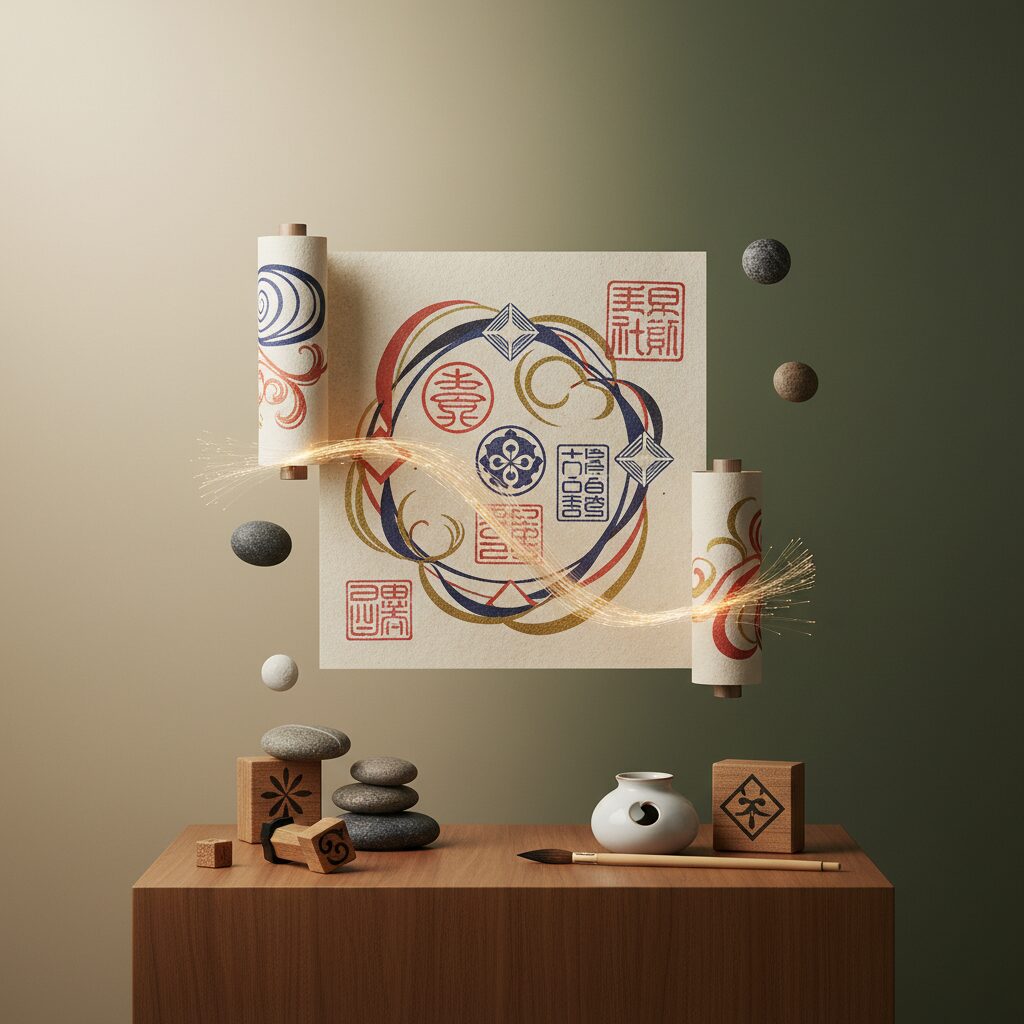
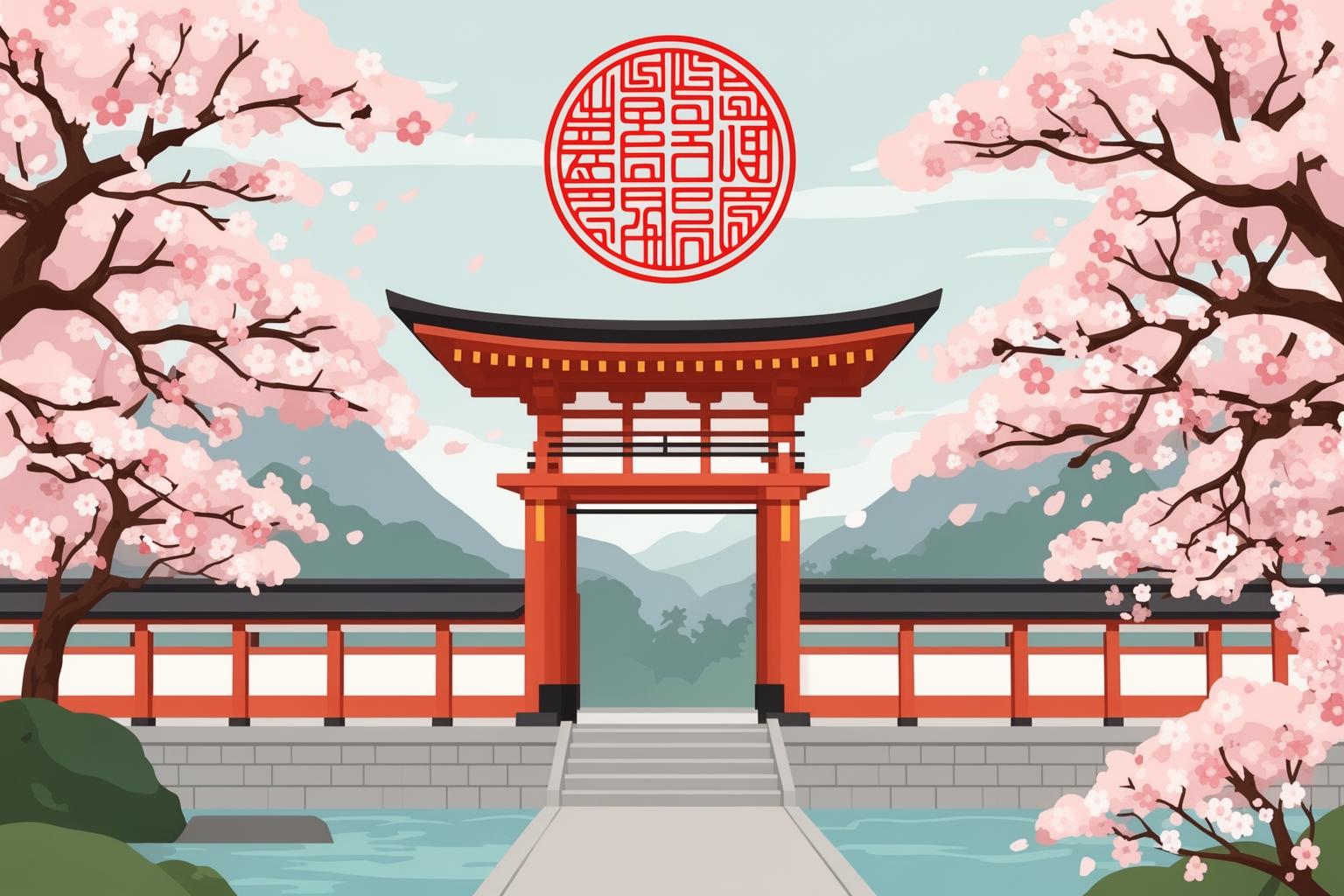
A Goshuin consists of two main components. The first, and most striking, is the red stamp itself, the shuin (朱印). This seal bears the name of the temple or shrine and often features a stylized symbol or crest connected to it, such as a temple’s main deity or a shrine’s family crest (kamon). These seals are often artistic masterpieces in their own right, carved with intricate designs that have been used for centuries. They serve as the official insignia of the sacred place you are visiting.
The second, and arguably even more important, element is the calligraphy, handwritten in black ink (sumi). This is what transforms a Goshuin from a simple stamp into a personal keepsake. A priest, monk, or trained shrine official writes several details directly onto your book. Generally, this includes the date of your visit, presented in Japanese characters. You will also notice the word hōhai (奉拝), meaning “for worship” or “respectfully visited.” Most significantly, the calligrapher inscribes the name of the temple or shrine and often the name of the principal deity enshrined there. This personal touch, this act of creation done just for you, gives each Goshuin a unique energy. No two are ever exactly the same, as the calligrapher’s hand, mood, and ink flow always differ slightly. It is a fleeting moment of connection made permanent on paper.
This is why it fundamentally differs from a souvenir stamp you might casually apply to a postcard at a train station. The Goshuin is regarded as a manifestation of the spirit of the place, a tangible link to the divine entity worshipped there. It is both a form of prayer and a blessing, not merely a keepsake to be acquired casually.
The Goshuin-cho: Your Personal Book of Pilgrimage
You cannot collect these sacred seals in just any notebook. The vessel is as important as its contents. Goshuin must be gathered in a designated book called a Goshuin-cho (御朱印帳). These books are thoughtfully crafted for this specific purpose.
Their most distinctive feature is their construction. They are typically orihon, or accordion-style books, that unfold into a long, continuous sheet of paper. This design allows you to display your collection beautifully and, more practically, ensures that each Goshuin has its own clean page without interference from the reverse side. The paper itself is essential; it is usually a type of thick, high-quality washi (Japanese paper), sometimes made by pressing two layers together. This prevents the rich black ink from bleeding through and spoiling the Goshuin on the opposite page—a common problem for those who mistakenly try to use a Moleskine or other Western-style notebook.
The covers of Goshuin-cho provide a world of expression in themselves. You can find them at any large temple or shrine, as well as in major stationery stores like Loft or Itoya. Their designs range from elegantly simple—covers wrapped in plain, deep-hued linen or silk—to incredibly ornate. Many famous temples and shrines offer their own exclusive Goshuin-cho, featuring designs that reflect their history or locale. You might come across a book adorned with a beautifully embroidered image of the five-storied pagoda at Senso-ji in Tokyo, or one with a simple, striking wooden cover from the grand shrines of Ise. Choosing your first Goshuin-cho is part of the ritual. It becomes your companion, a reflection of your aesthetic, and the starting point of your pilgrimage.
The Ritual and Etiquette: How to Collect Goshuin with Respect
Because collecting Goshuin is a spiritual practice, there is a distinct, though often unspoken, etiquette to follow. Showing up and simply demanding a stamp is a serious faux pas. The process involves respect, requiring you to recognize the sanctity of the space before requesting anything in return. Adhering to these steps ensures you participate in the tradition properly and honorably.
First, Pay Your Respects
This is the most important rule. You must worship at the temple or shrine before approaching the Goshuin office. The Goshuin serves as proof of your visit and your prayer, not just evidence of your presence. Asking for one without first praying is like requesting a graduation certificate without attending class; it misses the entire purpose of the practice.
The act of praying is simple and doesn’t demand deep religious knowledge. Approach the main hall where the principal deity is enshrined. If there is an offertory box (saisen-bako), it’s customary to toss in a small coin offering—a five-yen coin is considered lucky, though any amount is acceptable. At a Shinto shrine, the usual custom is to bow twice, clap your hands twice, offer a silent prayer, and then bow once more. At a Buddhist temple, you typically place your hands together in prayer, bow your head, and pray silently without clapping. Taking a moment to do this centers you and shows respect for the traditions of the place. Only after paying your respects should you seek out your Goshuin.
Finding the Shuin-jo (The Goshuin Office)
After offering your prayer, you can look for the office where Goshuin are prepared. It will almost always be marked with a sign reading 御朱印所 (Goshuin-jo), or sometimes 納経所 (Nōkyō-jo) at temples. These are usually small, quiet counters or windows staffed by one or two people.
When you approach, have your Goshuin-cho ready. Open it to the next blank page where you want the stamp. This small but important gesture helps the process go smoothly. If you hand over a closed book, they must flip through it to find the right spot, which can seem a bit presumptuous. With the book open, present it with both hands and make your request. A simple and polite “Goshuin o onegaishimasu” (I would like to receive a Goshuin, please) is all that’s needed.
The Transaction and the Wait
There is a fee for each Goshuin, but it’s important to view this not as a purchase, but as an offering or donation (hōnō or osame). The usual amount ranges between 300 and 500 yen, although some elaborate or special Goshuin may cost more. Have small bills or coins ready to avoid inconvenience. You will either pay when handing over your book or upon receiving it back.
Then comes the best part: the wait. Resist the urge to use your phone or chat with friends. Instead, watch the calligrapher at work. Notice their quiet concentration, the way they load the brush with ink, and the deliberate, confident strokes that form the characters. You are witnessing a small act of living tradition, a skill passed down through generations. The sound of the brush on paper, the smell of ink, and the sight of the vibrant red seal being pressed—all of this is part of the experience. It’s a meditative moment.
When your book is ready, it will be returned to you. Receive it with both hands and a slight bow, and offer a clear “Arigatou gozaimasu” (Thank you very much). Sometimes, a thin sheet of paper will be placed inside to prevent fresh ink from smudging the opposite page. You can leave it in place until the ink is fully dry.
Beyond the Collection: The Deeper Meaning and Appeal

So why go through all this effort? Why has this practice, once reserved for serious pilgrims, surged in popularity in recent years, attracting everyone from retirees to young students? The charm lies in how it changes the travel experience, shifting it from a passive act of consumption to something much more meaningful and personal.
A Tangible Record of Your Journey
In an age where travel memories are stored as fleeting data on clouds and hard drives, a Goshuin-cho stands out as defiantly and beautifully analog. It’s a physical keepsake that holds the weight and texture of your experiences. Each page is more than just an attractive design; it’s a gateway to a specific memory. You can glance at a page and recall the scent of incense at a temple in Kyoto, the sound of cicadas at a shrine in the mountains of Shikoku, or the feeling of the sea breeze at a coastal sanctuary near Kamakura. It serves as a chronicle of your journey that engages all your senses. Unlike a photograph, which captures a single moment from one viewpoint, the Goshuin embodies the entire visit—the walk up the stone steps, the quiet moment of prayer, the respectful interaction with the calligrapher. It becomes a deeply personal artifact, a book of memories that gains value with every entry.
The Thrill of the Hunt and Serendipity
Though the spiritual element is central, the collector’s excitement in pursuing Goshuin is undeniable. This is not about mindlessly ticking off boxes but about the joy of discovery. Many temples and shrines offer limited-edition Goshuin to commemorate special occasions—New Year’s, specific festivals, or seasonal changes. You might come across Goshuin adorned with beautiful seasonal motifs, such as cherry blossoms in spring or autumn leaves in fall. Some are only available on particular days of the month.
This aspect of the hobby encourages exploration off the beaten path. You might hear of a small, otherwise unassuming neighborhood shrine known for its beautiful, artistic Goshuin featuring a charming animal. This discovery leads you to explore parts of a city you might never have visited otherwise, uncover hidden gems, and connect with local communities. The pursuit of a unique Goshuin becomes a catalyst for authentic exploration and unexpected encounters, enriching your travels with spontaneity and depth.
Connecting with History and Art
Each Goshuin is a unique, original piece of art. The calligraphy style can vary widely from one place to another, and even between calligraphers within the same temple. Some are bold and commanding, while others are delicate and flowing. You begin to recognize the artistry and skill involved, noticing subtle differences in brush pressure and character balance. In a sense, you become the curator of your own private collection of Japanese calligraphy.
Moreover, the practice ties you to a long history of pilgrimage in Japan. The tradition of Goshuin reportedly began as receipts given to pilgrims who dedicated a hand-copied sutra at a temple. Over time, this evolved into the current custom. Carrying your Goshuin-cho means participating in a modern reflection of this centuries-old tradition. In doing so, you are, in a small way, following the paths of countless pilgrims who have journeyed to these sacred sites before you, seeking blessings, peace, or enlightenment.
Navigating the Goshuin World: Practical Advice for Beginners
Getting started with Goshuin is simple, but a few practical tips can help you understand the nuances and avoid common errors, ensuring your experience is smooth and respectful from the outset.
Temples vs. Shrines: Is There a Difference?
Although Goshuin can be obtained at both Buddhist temples (o-tera) and Shinto shrines (jinja), some purists insist on keeping them separate. They use one Goshuin-cho exclusively for temples and another for shrines. This practice stems from the historical division of the two religions during the Meiji Restoration. However, for most people, including the majority of Japanese collectors today, using a single book for both is perfectly normal and acceptable. There is no need to worry about offending anyone by having a temple’s Goshuin alongside a shrine’s. What truly matters is the respectful act of pilgrimage. If you plan to become a dedicated collector, you might want to consider using two books, but for beginners, one is completely fine.
Common Pitfalls and How to Avoid Them
There are a few common mistakes that newcomers often make. First and foremost, never use a regular notebook or scrapbook. This is considered highly disrespectful. Such paper is unsuitable for the ink and conveys a misunderstanding of the sacred nature of Goshuin. Always use a proper Goshuin-cho.
Be mindful of timing. Goshuin offices are not open around the clock. They usually operate during the main hours of the temple or shrine, often closing around 4:30 PM or 5:00 PM. Avoid arriving just before closing and expecting to be served. Plan your visit to allow enough time for both prayer and collection.
It’s also important to know that not every temple or shrine provides Goshuin. For example, most temples of the Jodo Shinshu sect of Buddhism do not, as their teachings focus on faith over rituals or talismans. If you cannot find a Goshuin-jo or are told they don’t offer any, simply accept it respectfully. Lastly, while most Goshuin are written directly into your book, some places—especially during busy festivals—may provide a pre-written Goshuin on a separate sheet of paper (kakikoki) that you can paste into your book later. This is for efficiency and is not considered inferior.
The Modern Goshuin Scene
In the past decade or so, Goshuin collecting has experienced a remarkable surge in popularity, particularly among younger Japanese people and especially women, giving rise to the term Goshuin gāru (Goshuin girl). This trend has sparked a creative boom in Goshuin designs. While the traditional, dignified style remains the standard, many shrines and temples now offer vibrant and artistic designs that challenge conventional forms. You can find Goshuin featuring intricate illustrations, multiple ink colors, or printed on decorative paper. Some shrines have even partnered with popular anime to create limited-edition designs. This modernization demonstrates how a deeply traditional practice can evolve and attract a new generation, while still maintaining its spiritual essence.
A Journey, Not a Race

Ultimately, collecting Goshuin is not a race. It’s not about how many you can gather or how fast you can fill a book. Approaching it this way reduces the experience to a tourist mentality of ticking off items on a list. Instead, the true significance of the Goshuin-cho lies in how it reshapes your perspective on travel in Japan. It lends your journey a quiet sense of purpose.
It invites you to pause, to observe more intently, and to engage with your surroundings with reverence and gratitude. Each completed page stands as a testament not only to the places you’ve visited but also to the person you were at that moment—the thoughts you held while standing before a thousand-year-old camphor tree, the tranquility felt in a serene temple garden, the simple human connection of watching a calligrapher’s brush glide across the page. It is a slow, meditative, and profoundly personal way to cultivate a bond with a country. On your next trip to Japan, consider picking up a Goshuin-cho. See it not as starting a collection, but as opening the first page of a new kind of story—your own.