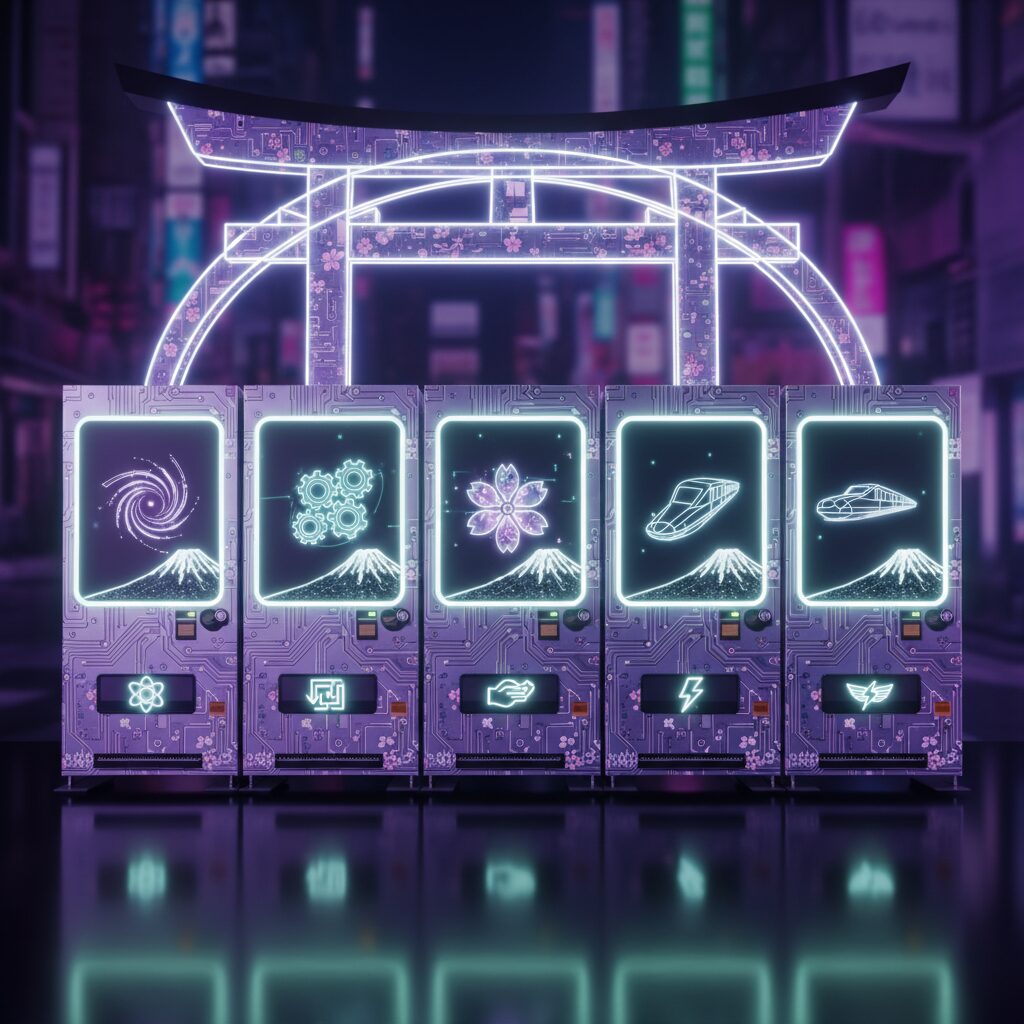
You see your first one moments after stepping out of the airport. It stands under the fluorescent lights of a train platform, humming quietly, a perfect grid of illuminated choices. It’s just a drink machine, you think. Nothing special. But then you see another, and another. You find them clustered in Shibuya’s neon canyons, standing alone in the misty calm of a rural bamboo grove, and tucked into the quiet residential alleys of Kyoto. They offer not just cold green tea and mysterious energy drinks, but steaming cans of coffee, hot corn soup, ice cream, fresh-baked bread, and even bowls of ramen. Welcome to Japan, where the jidōhanbaiki, or vending machine, is not just a convenience—it’s a cornerstone of daily life and a window into the national psyche.
It’s impossible to overstate their ubiquity. Japan has one of the highest densities of vending machines in the world, with roughly one for every thirty people. They are a silent, 24/7 infrastructure woven into the fabric of the country. But the question that quickly forms in the mind of any visitor isn’t just how there are so many, but why. Why are they so well-stocked, so pristine, so… functional? Why can a machine filled with cash and goods sit on a deserted street corner all night without being vandalized or broken into? The answer has little to do with technology and everything to do with a set of deeply ingrained cultural values: profound social trust, an obsession with convenience, and a pragmatic embrace of automation. These humming boxes are more than just dispensers of goods; they are monuments to the unspoken rules that govern Japanese society.
The seamless blend of modern convenience and time-honored respect for resources reflects a Japanese ethos in which the spirit of mottainai remains a guiding principle.
A Universe of Convenience in a Box
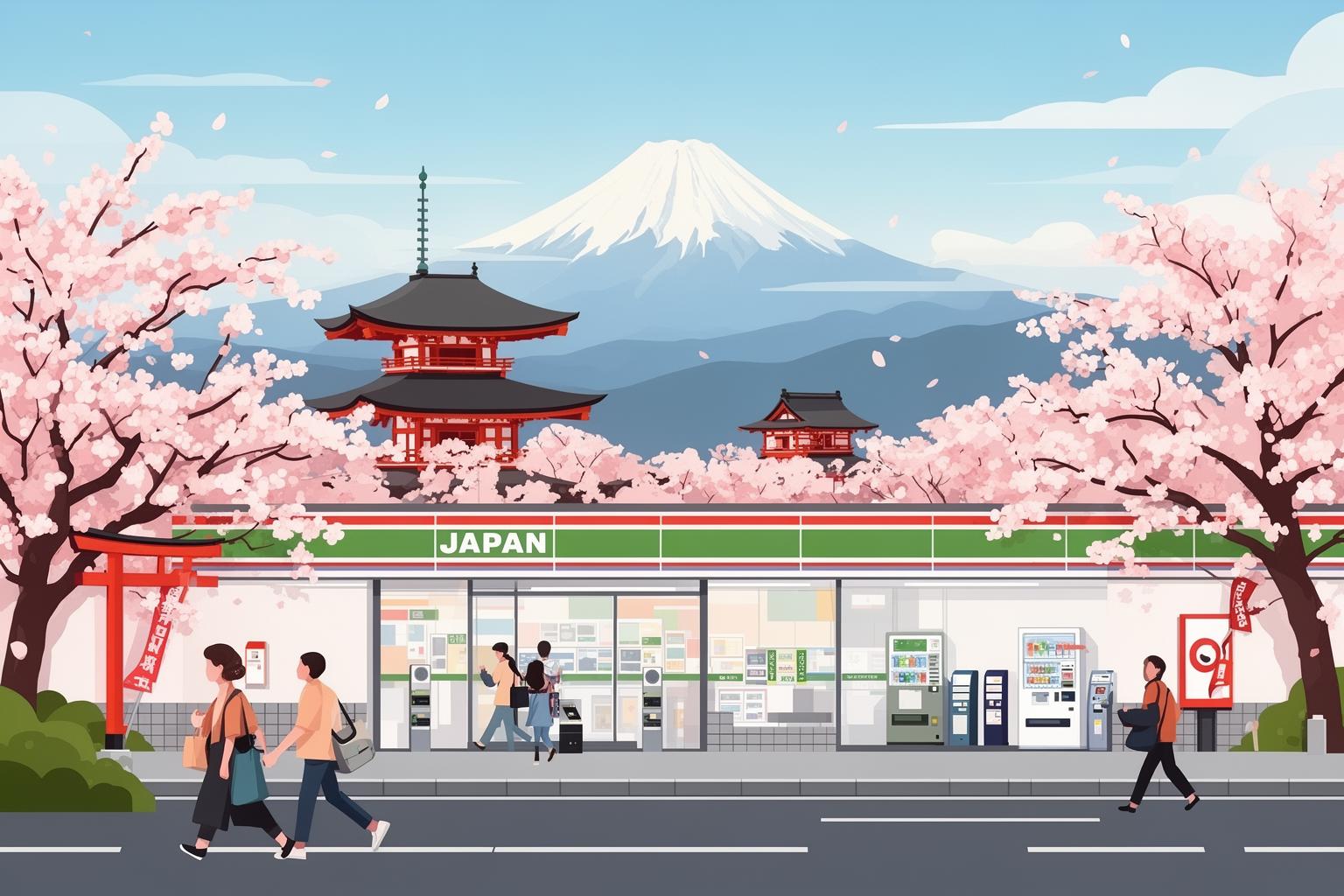
First, you must appreciate the astonishing, mind-boggling variety. Forget the limited range of fizzy drinks and crisps found elsewhere. In Japan, the vending machine is a versatile purveyor, a hyper-specialized mini-shop catering to every imaginable impulse or need, at any time of day or night.
Hot and Cold, Side-by-Side
The most common type, the beverage machine, is a marvel of compact engineering. Blue snowflake icons indicate cold drinks, while red flame icons represent hot ones. The ability to purchase a can of hot, sweet milk tea or a rich black coffee, warmed to the ideal temperature, from the same machine that offers an ice-cold Pocari Sweat is a small daily miracle. In the depths of a humid Tokyo summer, a chilled bottle of water is a lifesaver. On a freezing winter morning waiting for a train in Sapporo, a can of hot lemon tea serves as a personal hand-warmer, a small comfort against the cold. This seasonal sensitivity is distinctly Japanese; the machine’s stock shifts with the weather, anticipating your needs before you yourself are fully aware of them.
Beyond the Beverage
But the variety extends far beyond that. Step away from main streets and you begin to find the specialists. Some machines sell dashi, the essential soup stock of Japanese cuisine, in elegant glass bottles. In rural areas, you might encounter a machine offering fresh local eggs, each carefully nestled in its own protective slot, or bags of locally grown rice. I’ve seen machines dispensing only bananas, others selling pre-sliced apples ready to eat. In office buildings, you might find bread, sandwiches, and onigiri rice balls. At certain train stations, machines dispense a full hot meal—from ramen and udon to curry rice—served in a bowl in under a minute.
The novelty items often capture the imagination of tourists. Yes, you can find machines selling sake, beer, and chuhai, although these increasingly require age-verification technology linked to a Japanese ID card. You’ll find machines vending umbrellas, surgical masks, neckties (for the salaryman who spilled coffee before a big meeting), and even bouquets of flowers. The gachapon machines, which dispense collectible toys in plastic capsules, represent a subculture all their own. These machines don’t just sell products; they offer solutions to the small, immediate challenges of daily life. They stand as a testament to a culture that values preparedness and anticipates every possible scenario.
The Bedrock of Unspoken Trust
This entire ecosystem, this nationwide network of unattended, cash-filled steel boxes, can exist only because of one crucial element: an exceptionally high level of social trust combined with a remarkably low crime rate. This is the true heart of the matter, the cultural framework that enables the hardware to operate.
In many other countries, a vending machine invites trouble. It might be forced open, vandalized, shaken, or otherwise mistreated. In Japan, however, the machine is treated with a baseline of respect that outsiders find truly astonishing. There is a deeply rooted, unspoken social contract: the machine is there to serve the public, and in return, the public refrains from damaging it. This isn’t enforced by a battalion of security guards; it is maintained by a collective sense of civic responsibility.
The Assumption of Honesty
This trust permeates society in numerous ways. You see it when a shopkeeper leaves their stall unattended for a few minutes, confident that nothing will be stolen. You see it in lost-and-found systems where a wallet dropped on the street will almost always be turned in to the nearest police box, cash untouched. Vending machines are the most visible and widespread expression of this principle. They serve as a constant, silent referendum on the honesty of the population—and every day, they pass with flying colors.
The machine itself symbolizes this trust. It trusts you to insert your money. It trusts you not to smash its glass. In return, you trust it to provide the correct product and your change. After the transaction, you simply walk away. The relationship is simple, anonymous, and based on mutual, unspoken understanding. This quiet integrity allows a business to place a million-yen piece of equipment on a dark, lonely street and expect it to be in perfect working order the next morning.
A Safe Society’s Reflection
It is a virtuous cycle. The safety of the streets makes vending machines viable, and their presence, in turn, reinforces that sense of security. The bright light of a vending machine on a dark residential street provides a small pool of illumination, a comforting beacon for someone walking home late at night. They symbolize a society that is orderly and safe—not due to oppressive policing but because of a shared commitment to preserving a peaceful public space. The machine isn’t just selling you a drink; it reflects the safety you feel simply by being there.
The Currency of Convenience
If trust serves as the foundation, then convenience is the grand design built upon it. Japan is a culture that has perfected convenience into an art form. This is driven by several factors: high population density, a demanding work culture, and an exceptional public transportation system. People are constantly on the move, and time is a valuable resource.
Seamless and Frictionless
The vending machine represents the ideal frictionless transaction. There is no line. There is no small talk with a cashier. There is no judgment. It is a straightforward, efficient exchange of money for goods. In a society that can sometimes feel socially rigid, with intricate rules of etiquette shaping interactions, the vending machine provides a brief moment of pure simplicity. You approach, choose, pay, and receive. The entire process takes less than thirty seconds.
This efficiency perfectly matches the pace of Japanese life. Grabbing a can of coffee on the way to the train platform in the morning. Buying a sports drink right outside the park after a run. Getting a bottle of water on a scorching day without having to locate a convenience store, go inside, wait in line, and interact with staff. The machines are placed strategically at points of greatest need and transition — outside train stations, in office lobbies, near public parks, and in quiet residential areas far from the nearest 24-hour store.
The Cash Connection
For decades, the widespread use of vending machines was also tied to Japan’s role as a cash-based society. While much of the world embraced credit and debit cards, Japan held fast to physical currency. Everyone carried coins, and the 100-yen and 500-yen coins, with their considerable purchasing power, were ideal for vending machine use. The machines became an essential part of the cash economy, a quick and easy way to spend the change that accumulated in everyone’s pockets.
Today, this is changing. Most modern machines now feature readers for IC cards like Suica and Pasmo — the same rechargeable cards used for public transportation. This has made transactions even more seamless. A simple tap is all it takes. Yet, the coin slot remains. The machines connect the old and the new, serving both an elderly person paying with carefully counted change and a student tapping their smartphone with equal ease.
People, Population, and Pragmatism
There is another, more practical reason behind the popularity of the jidōhanbaiki: demographics. Japan is facing an aging population and a declining workforce. Labor costs are high, and staffing stores around the clock, especially in rural areas or during late-night shifts, is becoming increasingly difficult.
The Automated Employee
Vending machines serve as an ideal solution. They are quiet, efficient workers who operate 24/7 without complaints. They don’t require breaks, don’t fall ill, and need no salary. One person can restock and service dozens of machines each day, delivering a service that would otherwise need multiple cashiers and stockers. Thus, the vending machine is not just a novelty but a highly practical answer to a pressing national challenge.
This acceptance of automation is evident across Japan, from ticket machines in ramen shops to automated check-in kiosks in hotels. There is less cultural resistance to machines replacing human labor in service roles. The emphasis is placed on efficiency and reliability. Machines perform their tasks flawlessly every time, and in a culture that prizes precision and consistency, this is a highly valued quality.
A Business Model for Everyone
The economic model is equally compelling. A landowner with a small, unused concrete space can lease it to beverage companies like Suntory, Kirin, or Coca-Cola. These companies install and maintain the machines, while the landowner earns a share of the sales. This provides a passive income stream that activates otherwise unused space, turning a neglected corner into a revenue source. This decentralized model is a major reason vending machines appear in the most unexpected locations—because almost any space can be monetized with minimal effort.
A Reflection in the Glass
Ultimately, the Japanese vending machine is far more than just a box that dispenses goods. It serves as a cultural artifact, telling the story of a society built on trust, where individuals are expected to act rightly even when unobserved. It reflects a relentless drive for convenience, valuing every second and anticipating every need. Moreover, it demonstrates a pragmatic embrace of automation as a solution to the challenges posed by a changing society.
To stand before one on a quiet night, illuminated by its soft, artificial glow, is to experience a small, perfect glimpse of modern Japan. The choice is yours. The transaction is seamless. The service is silent. Within its hum, you can sense the rhythm of a nation—orderly, dependable, and grounded in unspoken promises. In its own way, it offers a flawless interaction, providing exactly what you need, exactly when you need it, asking only for a few coins and a bit of trust in return.