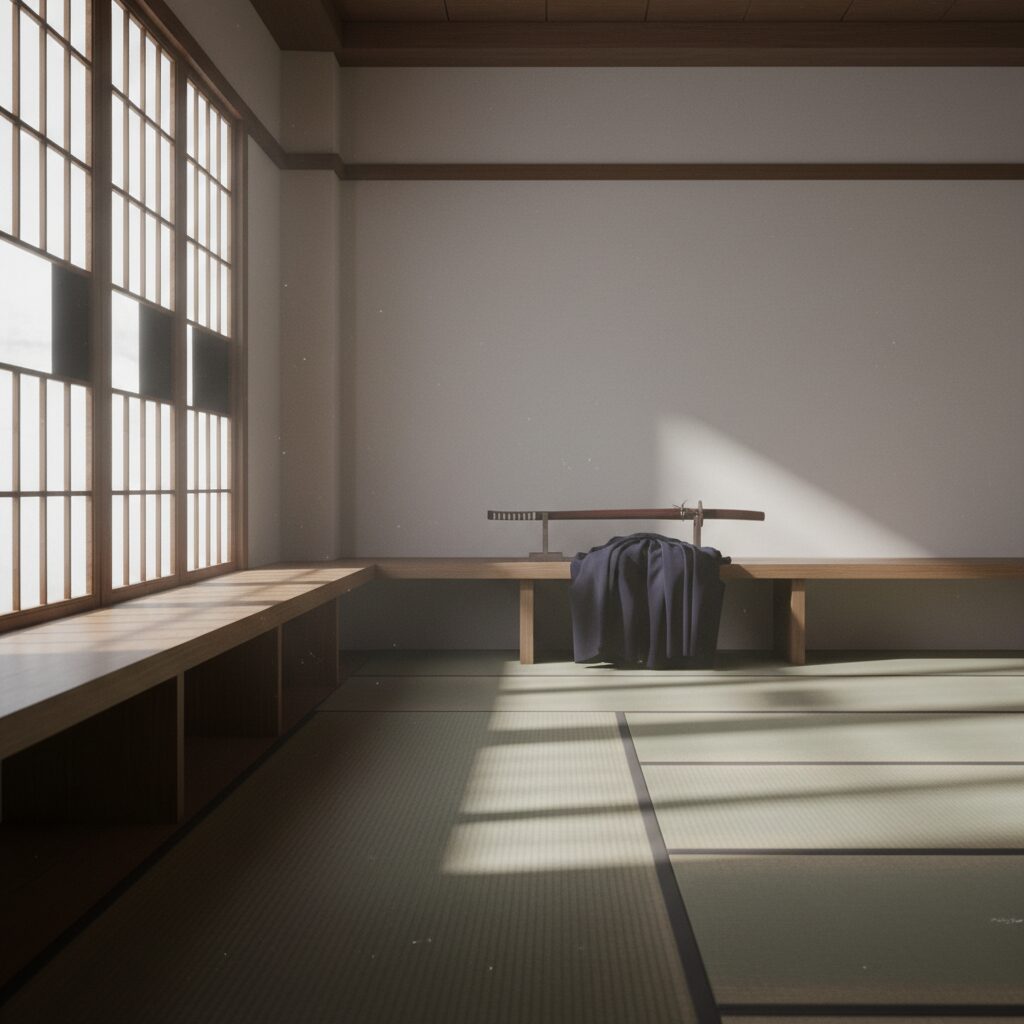
Walk into any traditional Japanese martial arts dojo, and the first thing that strikes you isn’t the sound of kiai—the explosive shouts that accompany a strike—or the rhythmic thud of bodies hitting the mat. It’s the opposite. It’s the profound, almost sacred silence that bookends every single class. Before the first bow and after the last, students and instructors alike, from white-belt beginners to seasoned masters, kneel or sit in a formal posture, close their eyes, and enter a state of silent meditation called mokutō. To an outsider, it might seem like a quaint, perfunctory ritual. A moment to catch your breath. But that assumption misses the entire point. This isn’t just a moment of quiet; it’s the most critical technique being practiced. Mokutō is not an absence of activity; it is the foundational act of Japanese martial arts. It’s the invisible framework upon which all the physical sparring, the intricate forms, and the powerful strikes are built. To understand why this mandatory silence is so non-negotiable, you have to look past the physical movements and into the very mindset that shapes the Japanese approach to discipline, learning, and self-mastery. This silence is a gateway, a tool for mental purification, and the source of a warrior’s true awareness.
This measured silence nurtures a focus that not only fortifies a dojo practitioner’s skills but also resonates with the relentless drive of a modern corporate warrior confronting everyday battles.
The Sacred Threshold: Entering the World of Budo
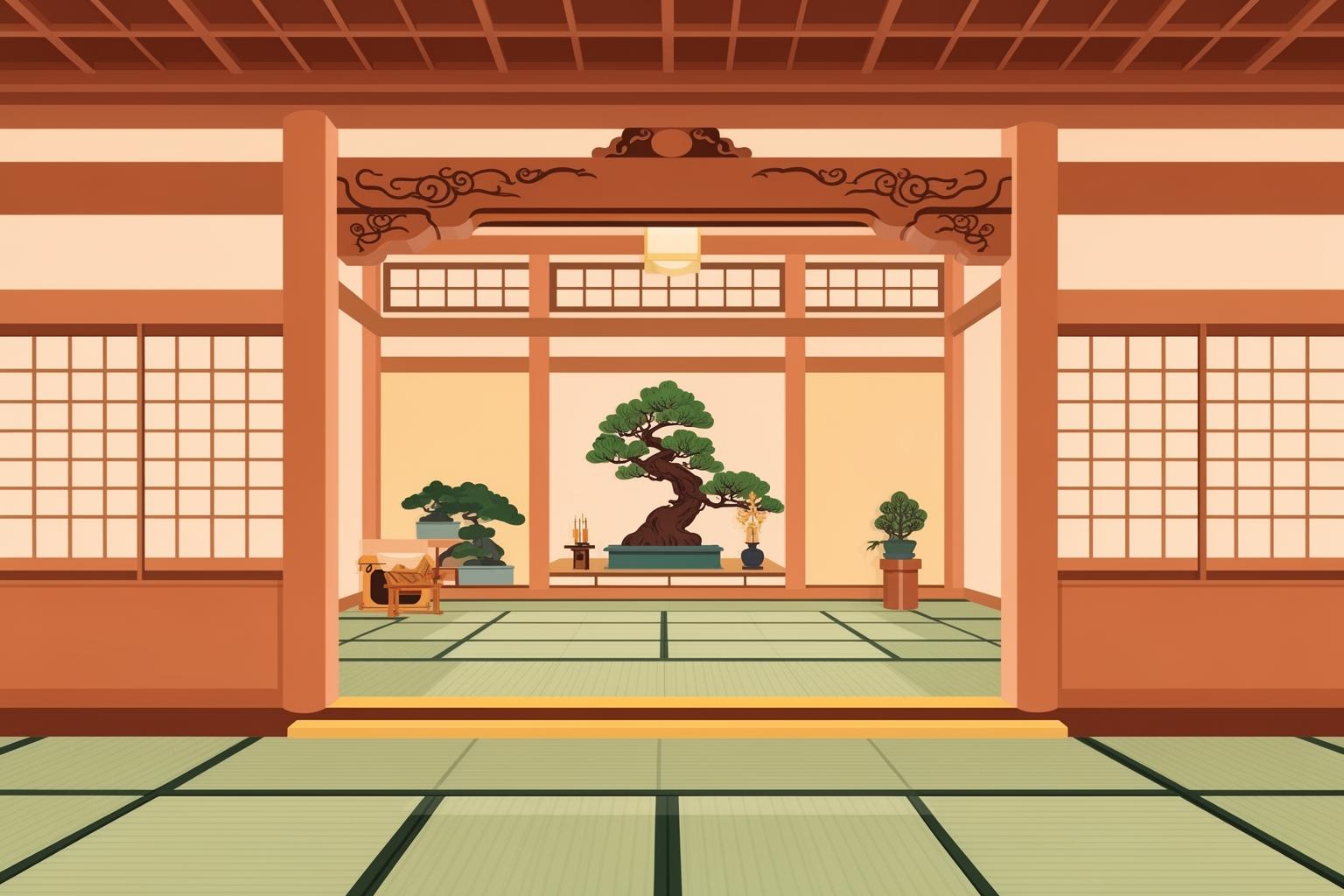
In Japan, there is a strong and widespread cultural concept known as uchi-soto, which roughly translates to ‘inside/outside’. It shapes social interactions, language, and how people perceive spaces. Your home is uchi, while the outside world is soto. Your company is uchi, but a client’s company is soto. This distinction establishes clear boundaries. The dojo serves as a powerful example of an uchi space, a realm set apart from daily life. Mokutō is the formal, ritualistic act of crossing its threshold, consciously deciding to leave the soto world—with all its distractions, frustrations, and everyday worries—outside the door.
Shedding the Self at the Door
When you kneel for mokutō at the start of practice, you undergo a mental and spiritual cleanse. The traffic jam on the way to the dojo, the argument with your boss, the looming deadline—all belong to the soto world. These thoughts are baggage with no place on the mat. They cloud judgment, reduce focus, and hinder learning. The silence of mokutō serves as a tool to discard that mental clutter. It is a declaration: ‘I am here now, fully present, ready to engage with the art.’ It’s a deliberate process of becoming a blank slate. Inside these walls, you are not a manager, a student, or a parent. You are a budoka, a practitioner of the martial way. This shedding of external identity is essential as it cultivates humility and equality within the dojo, where the only hierarchy that matters is based on experience and rank in the art itself.
Consecrating the Space
The silence also honors the space. A traditional dojo is more than just a gym. It is regarded as a place of deep learning and personal growth, sometimes even quasi-sacred. Often, there is a small shrine or designated area at the front—the kamiza or shomen—which serves as a focal point of respect. The collective silence during mokutō is a shared expression of respect for the dojo itself, the lineage of masters who have trained there, the art being practiced, and the teacher (sensei) about to impart knowledge. This silence transforms the atmosphere, filling it with a sense of purpose and solemnity. You are not merely entering a room; you are entering a tradition. The silence acknowledges that you are a guest in a house built through generations of effort and discipline, and you are expected to conduct yourself accordingly.
Emptying the Cup: The Mind of No-Mind
There is a well-known Zen parable about a professor who visits a master to learn about Zen. The master serves tea, and as the professor speaks, the master continues pouring until the cup overflows. Startled, the professor exclaims, ‘It’s full! No more can go in!’ The master responds, ‘Like this cup, you are full of your own opinions and assumptions. How can I show you Zen unless you first empty your cup?’ This encapsulates the psychological essence of mokutō. The objective is to reach a state of mushin, or ‘no-mind’. This does not mean having a blank, empty mind; rather, it involves freeing the mind from the clutter of conscious thought, ego, and fear.
From Thinking to Being
In high-pressure situations, whether during sparring or real-life conflict, there is no time for deliberate, analytical thought. The instant you think, ‘He’s going to throw a right hook, so I should block it this way,’ you are already too late. Action must be immediate and intuitive. Mushin is a state where the body moves without interference from the conscious, hesitant mind. Your training takes over, allowing you to simply react. Mokutō is the fundamental practice for cultivating this state. By consistently practicing the art of stilling the conscious mind and letting thoughts arise and fade without attachment, a martial artist develops the ability to access mushin during training. You silence the inner dialogue to better perceive your opponent’s intention and your own intuition. The quietude of mokutō is where you let go of the ego that insists on control and learn to trust the wisdom embedded in your body through countless hours of repetition.
The Beginner’s Mind
The state of mushin is closely tied to shoshin, the ‘beginner’s mind’. A beginner is open, eager, and free from the preconceptions that can hinder learning. They don’t believe they ‘know better’; they are receptive. As practitioners gain experience, it’s easy for the ego to creep in, for the cup to fill with pride and entrenched habits. Mokutō serves as a deliberate reset. Each time you sit in silence, you are encouraged to return to that state of shoshin. You remind yourself that there is always more to learn, and that your understanding is incomplete. This humility is essential for true mastery. The moment you believe you know everything is the moment you stop growing. Silence strips away the arrogance of expertise and makes you a student once again, every single day.
Zanshin: The Echo of Awareness
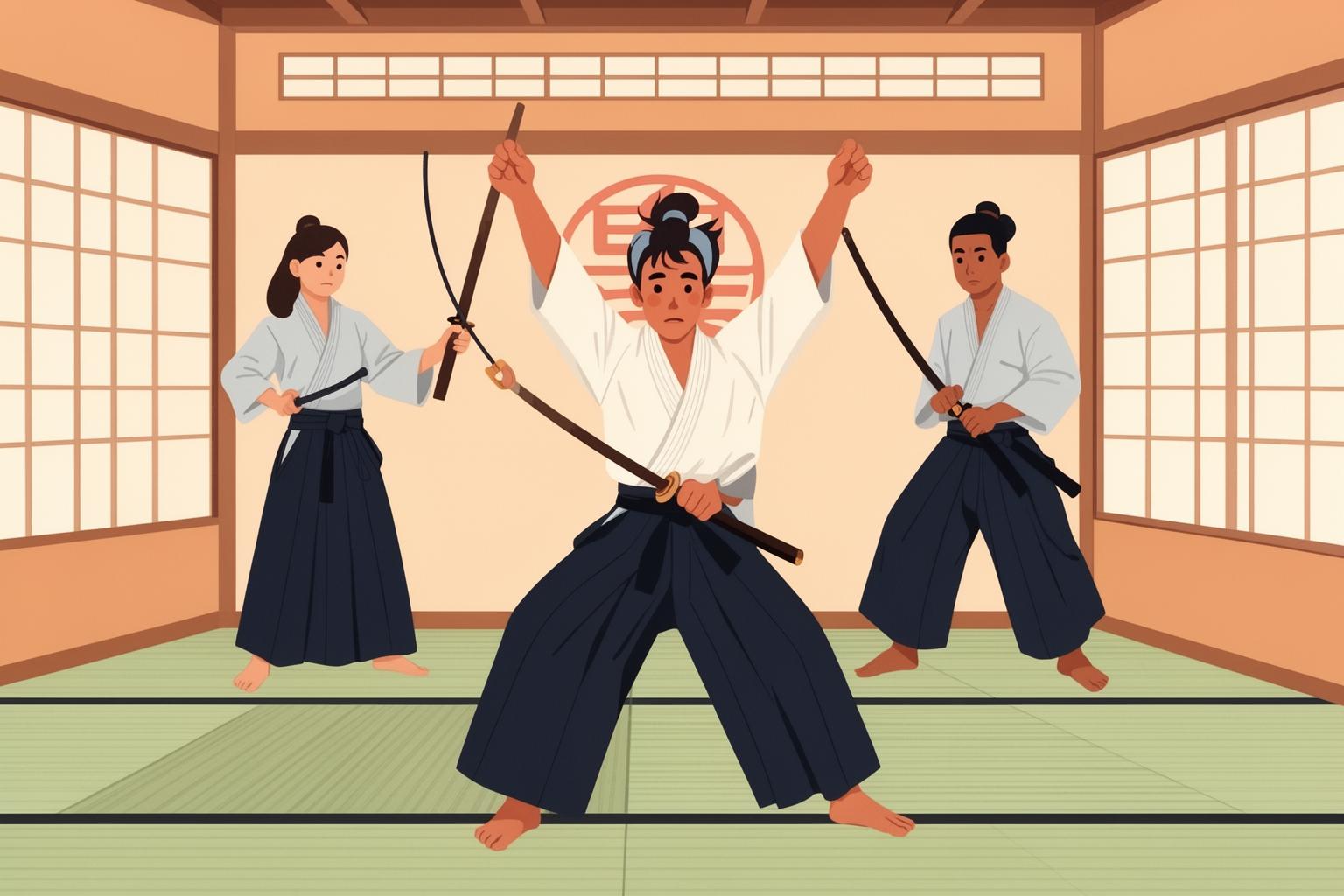
If mushin represents the state of mind during action, zanshin is the state that follows. It is one of the most essential, yet challenging to articulate, concepts in Japanese martial arts. The characters for zanshin (残心) translate to ‘remaining mind’ or ‘lingering heart’. This refers to a state of sustained, relaxed alertness that continues even after a technique has been executed. It embodies complete follow-through, not only physically but mentally as well.
More Than Just a Pose
In karate or kendo, after delivering a strike, the practitioner does not simply lower their guard and relax. Instead, they maintain their posture, keep their focus on the opponent, and stay aware of the entire environment. This is zanshin. It reflects the understanding that the fight is not over until it truly ends. A successful strike might be a feint; another attacker could still be present. Zanshin is the continuous thread of awareness that links one moment to the next. Mokutō serves as the ultimate training ground for this. In stillness, you are not merely zoning out. You are trained to be intensely aware. You sense the floor beneath you, the rhythm of your breathing, and the subtle sounds of the dojo. You develop a panoramic, non-judgmental awareness. This is zanshin at its purest—a calm mind that remains fully present and connected to its surroundings.
Carrying Zanshin into Practice
The meditative state fostered during mokutō is not meant to vanish the moment you rise. The aim is to maintain that focused calm, that zanshin, throughout the entire training session. It involves executing a throw in judo and being immediately prepared for the next move, without any wasted thought. It means performing a kata (a solo form) not as a series of disconnected actions but as a continuous, flowing expression of intention, where the mind stays engaged from the first bow to the last. Without the foundation of mokutō, practitioners would merely go through the motions. The silence teaches them to fully inhabit each movement.
The Beginning and The End: A Symmetrical Ritual
Mokutō is performed not only at the beginning of class but also at the end. Although they look the same, their purpose and feeling differ subtly. They create a symmetrical frame for the training, marking a clear beginning and a definitive conclusion.
Mokutō at the Start: Preparation
As we’ve discussed, the initial mokutō is about preparation and purification. It acts like wiping a slate clean. The focus turns inward, calming the self and creating the internal emptiness necessary for learning. You are shedding the outside world to enter the dojo. It is a moment of centering, gathering scattered energies into a single point of focus. This sets the tone for everything that follows, establishing an atmosphere of seriousness and respect. It is a promise to yourself, your partners, and your teacher that you will dedicate your full attention to the practice.
Mokutō at the End: Reflection
The final mokutō serves a different role. It provides time for reflection and absorption. The training has ended, your body is tired, and your mind is filled with new information and experiences. This closing silence offers a vital chance to process what you have just learned. Rather than immediately rising and rushing back into the noisy chaos of the outside world, you are given a moment to let the lessons of the class settle. You reflect on your successes and, more importantly, your failures without judgment. You internalize the corrections from your sensei. It’s a time to feel the physical sensations in your body and connect them to the techniques you practiced. It’s also a moment of gratitude—for the teachings, for the partners who assisted you, and for the opportunity to practice. This final silence acts as a buffer, allowing a gradual and conscious transition back into the soto world. You re-gather your everyday identity, hopefully bringing with you a piece of the dojo’s calm and awareness. This ritual ensures the lessons of the dojo don’t remain confined to the mat; they become part of the self. It’s the final step in turning a physical workout into a profound practice of self-development.