Imagine a country just a decade out from total, catastrophic defeat. The cities are still scarred, the economy is fragile, and the national psyche is a raw nerve of shame, stoicism, and a desperate will to rebuild. The guiding principles are sacrifice, discipline, and conformity. Everyone is supposed to pull together, endure, and look to a brighter, more orderly future. The pre-war values of militarism may be gone, but the cultural emphasis on the group over the individual, on enduring hardship (gaman), remains the bedrock of society. Now, into this grim, determined landscape, picture a sudden flash of color and noise. A generation of young people, born just before or during the war, who have no memory of imperial glory but a keen awareness of national defeat and the looming presence of their American occupiers. They are restless, bored, and entirely unimpressed with their parents’ solemn mission of reconstruction.
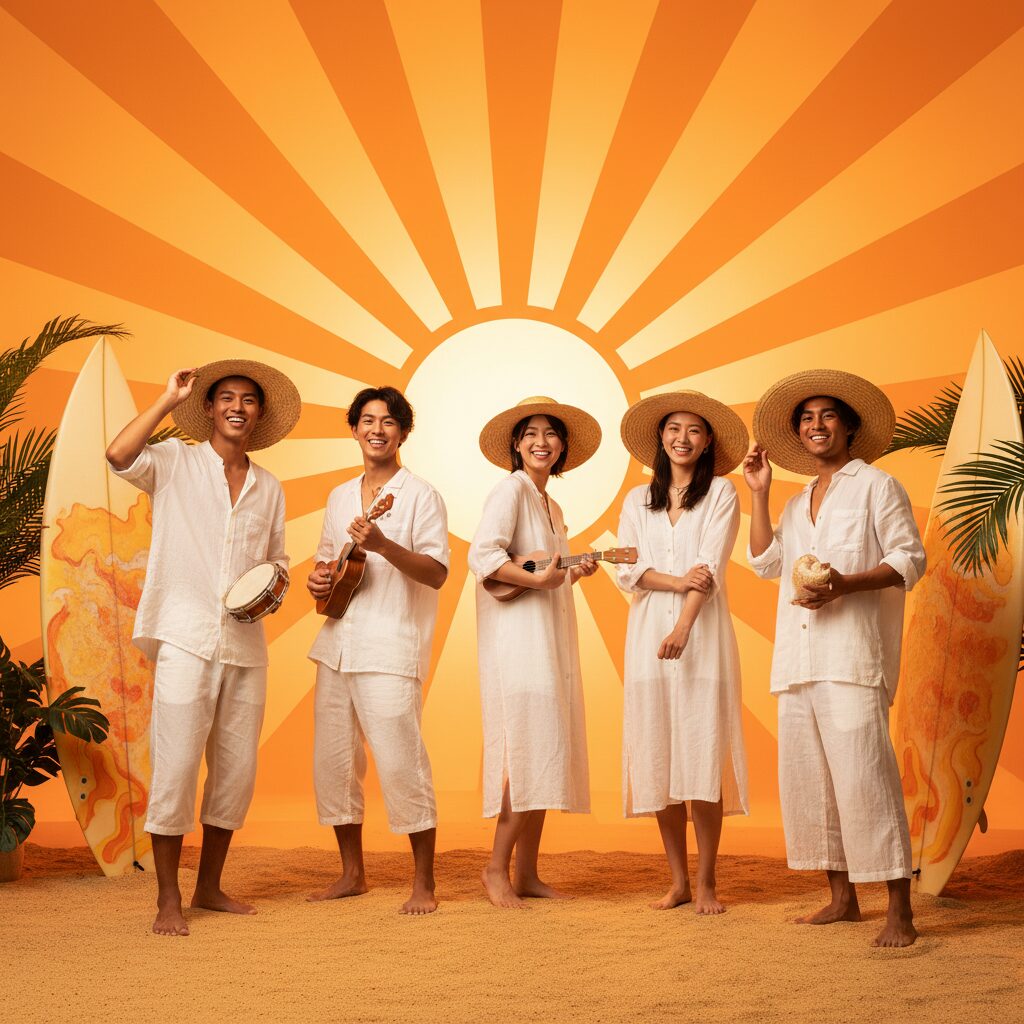
They appear on the sun-drenched beaches of the Shonan coast, a stretch of sand and sea just south of Tokyo. They are the sons and daughters of the new post-war elite—the wealthy, the connected, the privileged. They wear loud aloha shirts, tight trousers, and dark sunglasses. They sail yachts, get into fistfights, drink heavily, and treat sex with a shocking, nihilistic casualness. They are tanned, handsome, and utterly amoral. They are the Taiyo-zoku, the Sun Tribe. And in the summer of 1956, they became the subject of a nationwide moral panic that revealed the deep, anxious fault lines running through post-war Japanese society. This wasn’t just kids acting out; this was Japan’s first full-blown youth subculture, a hedonistic rebellion that burned brightly, scandalized a nation, and then vanished, leaving behind an indelible mark on the cultural imagination.
This restless energy found an unexpected echo in postwar innovations, such as the innovative legal gambling breakthrough, that challenged traditional norms in surprising ways.
The Novel That Lit the Fuse
Every subculture requires a sacred text, a manifesto that crystallizes its worldview. For the Taiyo-zoku, that text was a short, brutal novel titled Taiyo no Kisetsu, or Season of the Sun. The story of its author is as illuminating as the book itself. Shintaro Ishihara was a bold, ambitious student at Hitotsubashi University when he wrote the novel in 1955. It was a raw, visceral tale drawn from the world he knew: privileged, aimless university students spending their summers on the coast, chasing cheap thrills to fend off overwhelming boredom.
The plot explores youthful nihilism. The protagonist, Tatsuya, is a university boxer from a wealthy family. He and his friends drift through a summer filled with sailing, drinking, and casual cruelty. Tatsuya’s philosophy is a kind of aggressive apathy; he feels nothing and respects nothing. He meets Eiko, a girl from a similarly wealthy background, and they begin a destructive relationship based on dominance games and emotional manipulation. It’s a world lacking love, honor, or purpose. The characters are driven by fleeting desires, contempt for authority, and deep boredom that occasionally erupts into violence. The novel’s climax is notoriously shocking, involving a ripped sail, a sexual transaction, and a tragic, meaningless death.
By itself, a story like this might have been a minor pulp sensation. But something remarkable occurred: it won the Akutagawa Prize, Japan’s most prestigious literary award for new writers. The decision was highly controversial. The literary establishment was divided. Older, more conservative critics were horrified by the novel’s amorality, celebration of selfish hedonism, and candid depiction of sexuality. They dismissed it as degenerate trash. Yet younger critics, including luminaries like Yukio Mishima, defended it. They saw in Ishihara’s raw, vigorous prose a new voice for a new generation, a necessary and honest portrayal of the spiritual void left by the war.
Winning the Akutagawa Prize propelled Season of the Sun from a niche novel to a national phenomenon. It sold hundreds of thousands of copies. Suddenly, the private world of a few privileged youths became a subject of public debate. The book named and narrated a growing sense of discontent among the young. It suggested that beneath the surface of diligent reconstruction, a generation was coming of age that entirely rejected their parents’ values. They refused to sacrifice for the nation; they wanted to live for themselves, here and now, regardless of the consequences.
From the Page to the Big Screen
If the novel sparked the movement, the film adaptation ignited it explosively. In 1956, the Nikkatsu film studio, eager to attract the youth market, hurriedly produced a film version of Season of the Sun. Importantly, they cast the author’s younger brother, Yujiro Ishihara, in a supporting role. With his athletic build, rebellious sneer, and smoldering charisma, Yujiro embodied the novel’s anti-hero physically. He became an instant sensation. The film was a huge box office success, soon followed by another, even more influential Taiyo-zoku movie, Kurutta Kajitsu (Crazed Fruit).
Crazed Fruit is often regarded as the quintessential film of the genre. It follows two brothers—Natsuhisa, the older and more responsible, and Haruji (played by Yujiro), the younger and more impulsive—who both fall for the same married woman during a summer in Zushi. The film simmers with sexual tension, jealousy, and youthful frustration, culminating in a shockingly violent and tragic climax involving speedboats and betrayal. It’s stylish, intense, and profoundly unsettling.
These films did more than narrate stories; they forged a powerful visual language. They defined the Taiyo-zoku look. Suddenly, Tokyo’s streets were filled with young men trying to emulate Yujiro Ishihara. The essential components of this new style were a clear rejection of the era’s dull conformity.
The Taiyo-zoku Uniform
The Aloha Shirt
At the core of the look was the aloha shirt. In a society where the dark suit symbolized respectable adulthood for salarymen, the bold, colorful patterns of the Hawaiian shirt were a deliberate act of defiance. The garment evoked leisure, the beach, American GIs, and tropical holidays. It shouted, “I don’t work. I play.” Yujiro Ishihara’s way of wearing it in Crazed Fruit—casually unbuttoned with upturned collars—became iconic. A distinctive way of tying the shirt around the chest or neck even earned the nickname Shintaro-maki, after the author.
Mambo Trousers
Complementing the shirt, the Taiyo-zoku favored tight-fitting cotton trousers, often called “mambo pants.” These sharply contrasted with the baggy, formal trousers of the older generation. They were body-conscious, a bit flamboyant, and again signaled a preference for leisure and style over formality and work.
Ishihara Sunglasses
No Taiyo-zoku outfit was complete without dark sunglasses. They added an aura of mystery, arrogance, and cool detachment. Like many youth subcultures that followed, the Taiyo-zoku recognized the power of concealing one’s eyes. This created a barrier between the wearer and society’s prying, judgmental gaze. These plastic-framed sunglasses quickly became known as Ishihara gurasu.
The “Shintaro Cut”
Even hairstyles played a role in the uniform. The Shintaro-katto was a slightly longer, tousled haircut that starkly opposed the neat, short military-style cuts favored by mainstream society. It was just messy enough to suggest a lack of discipline.
This aesthetic, a “Surf & Blue” vibe, was aspirational. It was the look of someone with money, free time, and a boat. The films were set in seaside resorts along the Shonan coast, such as Zushi and Hayama, which became the symbolic heartland of the Taiyo-zoku. These locations were playgrounds for the wealthy, places to escape the city’s rigid social codes and create a world of sun, sea, sex, and rebellion.
Society Strikes Back: The Moral Panic
The response from mainstream Japanese society was swift and intense. The media, which had initially been captivated by the literary success of Season of the Sun, soon turned against the phenomenon it had helped create. The term “Taiyo-zoku” was actually coined by a film critic in a magazine article, and it was far from complimentary. It became a label used to pathologize and condemn this new youth behavior.
Newspapers were filled with sensational headlines linking the Taiyo-zoku to an alleged rise in juvenile delinquency. Every report of a teenage fistfight, petty crime, or sexual transgression was exaggerated and presented as proof of a society in moral decline, with the Ishihara brothers and their creations blamed as the root cause. The films were accused of serving as “how-to” manuals for delinquent behavior. There were accounts of copycat crimes, with teenagers attempting to reenact scenes from the movies—often resulting in tragedy. One notorious case involved a teenager who died attempting to break into a seaside house, supposedly imitating a scene from Season of the Sun.
The older generation was completely perplexed and horrified. Having survived the war, endured the hardships of the occupation, and dedicated themselves to rebuilding the nation, they embraced an ethos of self-denial and collective effort. The Taiyo-zoku, with their selfish individualism, casual sex, and overt consumerism, appeared to spit on that sacrifice. They were seen as spoiled, ungrateful, and dangerously influenced by the worst traits of American culture—individualism, materialism, and a lack of respect for elders.
This fear and anger quickly turned into action. Parent-teacher associations (PTAs), women’s groups, and various civic organizations organized protests and boycotts of Taiyo-zoku films. They pressured theaters not to screen them and called for government intervention. This public outcry directly led to the establishment of Japan’s first effective film censorship body, the Eirin (Film Classification and Rating Committee), in 1956. Its initial mission explicitly focused on limiting the influence of films considered harmful to youth, with the Taiyo-zoku genre as its main target. Film studios, including Nikkatsu, were compelled to self-censor—cutting scenes of violence and sexuality and softening the rebellious themes.
The backlash went beyond the content of the films; it was about what they symbolized. The Taiyo-zoku represented a profound generation gap, the first of its kind in post-war Japan. The older generation viewed the world through the paradigm of pre-war and wartime Japan—a hierarchical, conformist society where individual needs were subordinate to the group. Their children, however, were growing up in a radically different world, shaped by a new democratic constitution, American cultural influences, and the beginnings of economic prosperity. The Taiyo-zoku were the first to express, through their style and actions, a rejection of the old ways. Their rebellion wasn’t political in the conventional sense; they were not student activists with a coherent ideology. Instead, their defiance was a more personal, existential challenge to the stifling conformity and perceived hypocrisy of the adult world.
The Reality Behind the Myth
Despite nationwide panic, the reality of the Taiyo-zoku was far more complex and limited than the media depicted. The number of genuine yacht-owning, beach-house-partying youths living the full Crazed Fruit lifestyle was exceptionally small. They represented a tiny, privileged segment of the population, concentrated in Tokyo’s affluent suburbs and the coastal towns of the Shonan area. For most Japanese youth in the mid-1950s, life was not a hedonistic summer escape. They were busy studying for tough university entrance exams, working in factories and shops to support their families, and living in a world still marked by economic scarcity.
So why did this small subculture have such a large impact? Because the Taiyo-zoku were more than just a group of people; they embodied a powerful fantasy. They were a media-created myth that resonated far beyond the beaches of Zushi. A working-class teenager in Osaka couldn’t afford a yacht, but he could buy sunglasses and a secondhand aloha shirt. He could imitate the swagger, attitude, and rebellious stance he saw Yujiro Ishihara display on screen. The Taiyo-zoku style offered an escape, a way to signal freedom from the dull reality of everyday life.
They also appeared during a key moment of economic and social change. The mid-1950s marked the start of Japan’s “economic miracle.” For the first time since the war, a sizable portion of the population was beginning to experience some prosperity. There was disposable income, however modest, and the idea of leisure time was starting to take root. The Taiyo-zoku, with their conspicuous consumption and lifestyle focused entirely on leisure, represented a shocking and exaggerated symbol of this new era. They were Japan’s first consumer subculture, using fashion and lifestyle to create identity. This marked a sharp break from the pre-war period, when identity was mainly defined by family, class, and occupation.
While publicly condemning the Taiyo-zoku, the media also played a key role in amplifying and spreading their myth. Magazines featured guides on achieving the “Shintaro look.” The controversy was a marketing goldmine. The more adults worried, the more attractive the subculture became to certain youth segments. This panic created a feedback loop: media outrage spurred youth interest, which generated more media coverage, and so forth. In this way, the Taiyo-zoku were a thoroughly modern phenomenon—a subculture born from the interaction of a literary work, a series of films, and a mass media hungry for sensational stories.
Fading Sun, Lasting Echoes
The Taiyo-zoku phenomenon flared up intensely but briefly. By 1957, the excitement had largely died down. Intense media scrutiny, protests, and new censorship rules imposed by Eirin made it impossible for film studios to keep producing pure Taiyo-zoku films. Consequently, the studios shifted direction, smoothing out the genre’s rough, amoral edges. The rebellious anti-hero gradually evolved into a more acceptable action hero.
Yujiro Ishihara’s career perfectly exemplifies this transformation. He became one of Japan’s biggest and most beloved movie stars, but his image softened over time. The nihilistic delinquent from Crazed Fruit evolved into a rugged, dependable, and ultimately mainstream masculine ideal. The rebellion was tamed and absorbed into the cultural mainstream. Similarly, his brother Shintaro Ishihara pursued a political career, eventually becoming a prominent right-wing nationalist and a long-serving governor of Tokyo. It is one of modern Japanese history’s great ironies that the man who penned the manifesto for the nation’s first major youth rebellion against the establishment became a powerful, conservative pillar of that same establishment.
Although the Taiyo-zoku themselves disappeared from the beaches, their legacy was significant. They created the blueprint for nearly every Japanese youth subculture that followed. They established a pattern of a distinct visual style, affiliation with a specific type of music or media, a defined geographical territory (in their case, the Shonan coast), and a confrontational stance toward mainstream society. They were the first to demonstrate that in post-war Japan, identity could be expressed through style and consumption. The rebellious spirit of the Taiyo-zoku resonated in the biker gangs of the 1960s, the violent bosozoku of the 70s and 80s, the extravagant fashions of Shibuya and Harajuku in the 90s, and beyond.
Above all, the Sun Tribe marked a pivotal moment of cultural rupture. They were a symptom of a nation struggling to define itself after war, occupation, and the sudden influx of Western culture. They were the first generation to ask, in a public and provocative way, what it meant to be young and Japanese in a world where the old answers had been discredited. Their response—to live for the moment, embrace pleasure, and reject the solemn duties of the past—was scandalous and short-lived. Yet the questions they raised continued to haunt Japanese society for decades. The sun may have set swiftly on the Taiyo-zoku, but the glare they cast revealed a new, unfamiliar, and modern Japan beginning to emerge.