Walk down almost any major street in a Japanese city, especially near a train station, and you’ll feel it before you see it. A wall of sound—a chaotic, crashing, metallic roar—leaks from sliding glass doors adorned with flashing neon and cartoon characters. Peer inside and you’re met with a sensory overload: rows upon rows of people, their faces illuminated by strobing screens, sitting transfixed before shimmering machines. This is a pachinko parlor, and you’ve just stumbled upon one of Japan’s biggest and most fascinating contradictions. In a country where the penal code strictly prohibits gambling, this industry pulls in staggering amounts of money, dwarfing the combined revenue of Las Vegas and Macau. It operates openly, on every corner, a multi-trillion yen elephant in the room. So, how is this possible? How does an entire nation participate in a game of chance that is, for all intents and purposes, illegal? The answer isn’t a simple one. It’s a masterclass in legal interpretation, a cultural workaround so ingenious and deeply embedded that it holds a mirror to the Japanese psyche itself. It’s a system of unspoken rules and carefully constructed firewalls that allows millions of people to exchange money for the thrill of winning, all without technically breaking the law. To understand pachinko is to understand Japan’s complex relationship with rules, risk, and the subtle art of looking the other way.
For those curious to delve deeper into how legal gymnastics and sensory overload converge, consider exploring pachinko’s intricate dance of noise and chance to uncover the cultural nuances behind this unconventional industry.
What Exactly Is Pachinko? A Symphony of Chaos
Before delving into the legal intricacies, it’s crucial to understand what’s truly happening inside these roaring halls. At its essence, pachinko is a mechanical game, often likened to a vertical pinball machine. But that comparison falls short, much like describing a symphony as just a collection of sounds. It doesn’t convey the overwhelming, all-encompassing nature of the experience.
More Than Just Vertical Pinball
You don’t insert coins. Instead, you insert bills into a machine beside your seat and buy a cache of tiny steel balls, which are dispensed into a tray. You then control the game with a single knob. Turning it adjusts the force with which the balls are launched, one at a time, up a track to the top of the machine, from where they tumble down through a dense field of brass pins. Most balls simply fall to the bottom, lost. But the aim is to get a few to drop into specific winning pockets. When a ball lands in one of these pockets, it triggers what is essentially a slot machine on the integrated digital screen. If the reels align—three sevens, for instance—you hit the jackpot, or ōatari (大当り), literally “big hit.” This is where the true sensory explosion starts. The machine bursts into a celebratory frenzy of music and flashing lights, and a flood of thousands of new balls pours into your tray. You haven’t won money; you’ve won more balls. These triumphant cascades are what every player chases—the tangible expression of luck.
The Deliberate Overload of Sound and Light
A pachinko parlor is no quiet place for reflection. The noise is a physical force, a continuous, thunderous roar of rattling balls, electronic jingles, and booming announcements. It’s so loud that conversation is almost impossible, and this is entirely intentional. The sound creates an intense, isolating bubble around each player. The external world, with its duties and worries, fades away. There is only you, the knob, and the machine. It’s a form of escapism, a meditative state induced by sensory overload. The flashing lights and vivid anime sequences on the high-definition screens serve the same function. They’re hypnotic, pulling you deeper into the game’s realm, making time slip away. The lingering scent of cigarette smoke, though less common as more parlors go non-smoking, was long a hallmark of the atmosphere—a final layer sealing the player off from the polished, courteous world beyond.
The Faces Among the Crowd
The stereotype of a pachinko player is a middle-aged, chain-smoking man passing the afternoon. While that group is certainly present, the reality is much more varied. You’ll find young university students, well-dressed office workers on their lunch breaks, housewives seeking a brief escape, and elderly retirees who have played for decades. It’s a surprisingly democratic space. Inside the parlor, social status and professional ranks dissolve. Everyone stands equal before the machine, united by the shared hope of an ōatari. This broad appeal highlights pachinko’s deep integration into everyday life—a common, if sometimes stigmatized, pastime for millions.
The Great Contradiction: Japan’s Official War on Gambling
To truly appreciate the ingenuity of the pachinko system, one must first grasp the legal landscape it operates within. Japan, in principle, shows very little tolerance for games of chance. The foundation of this policy is both clear and explicit.
Article 185 and the Prohibition
Article 185 of Japan’s Penal Code is unequivocal: “A person who gambles shall be punished by a fine of not more than 500,000 yen or a petty fine.” It is a straightforward prohibition. This law explains why Western-style casinos, bookmakers, or private poker rooms are not legally found in the country. Betting money on an uncertain outcome is, with few exceptions, a criminal offense. The societal emphasis on diligence, hard work, and earning income through legitimate labor underpins this legal stance. Gambling is viewed as socially harmful, a destructive path that exploits weakness and laziness.
The State-Sanctioned Exceptions
However, the government itself is the largest bookmaker in Japan. There are a few very specific, state-controlled exceptions to the anti-gambling laws. These are known as kōei kyōgi (公営競技), or “public sports.” They include horse racing (keiba), bicycle racing (keirin), boat racing (kyōtei), and motorcycle racing (ōtorēsu). The national lottery (takarakuji) is also part of this group. The key difference is one of purpose and oversight. These betting activities are managed by national or municipal government bodies, with a portion of the profits funding public works and other government projects. The reasoning is that if gambling exists, it should be tightly regulated and benefit the public good. It is a necessary evil, harnessed for civic purposes.
Pachinko: The Elephant in the Gray Zone
Pachinko exists completely outside this framework. It is not government-run; it is a private industry. Yet, it facilitates an activity that looks, sounds, and feels exactly like gambling. Players invest money hoping to win more, with outcomes largely based on chance. So how does it survive and prosper? The industry’s official stance is that pachinko is not gambling; it is a game of skill and entertainment. The balls won are not cash but tokens redeemable for prizes, similar to an arcade. This semantic distinction is the first cornerstone of the remarkable legal structure that protects the entire industry. It may seem absurd at first glance, but it is the critical foundation for the workaround that defines pachinko’s existence.
The “Three-Store System”: How the Magic Trick Works
Here we reach the core of the matter—the elegant, almost beautiful legal loophole that enables pachinko. It is known as the “three-store system” (santen hōshiki), a tripartite arrangement that creates a legal firewall separating the act of playing from the act of receiving cash. It’s a masterstroke of plausible deniability, understood by all parties yet never officially acknowledged by the involved businesses.
Step 1: The Parlor – Winning Prizes, Not Cash
Everything within the pachinko parlor is carefully orchestrated to comply with its legal classification as an “amusement” center. As mentioned, you win steel balls. When you’re ready to leave, you summon an attendant who feeds your balls into a counting machine. You then receive a receipt or card indicating your total. You take this to a prize counter inside the parlor, where you exchange your winnings for various goods—ranging from everyday items like cigarettes, snacks, or electronics. However, for players wanting to cash out, only the “special prizes” (tokushu keihin) matter. These are crucial: typically small, nondescript items such as plastic cases containing a tiny piece of gold or a similar token. The value of these tokens is correlated to a certain number of balls. Importantly, at no point do the parlor staff hand you yen—they legally cannot. Requests for cash are always refused. Their role is strictly limited to awarding prizes, keeping their hands clean.
Step 2: The Exchange Counter – A Separate World
With your special prizes in hand, you leave the parlor. Your next stop is a location that the parlor staff will never directly recommend. If you ask where to exchange the prizes, you might receive a vague gesture or a subtle hint but never explicit instructions. This preserves the illusion that the two businesses are unrelated. Nearby—often down a narrow alley, around a corner, or sometimes just a small window behind a shield—is the prize exchange counter. In Tokyo, these counters are frequently operated by a company called Tokyo Union Circulation (TUC), and so are colloquially called TUC shops. At the window, you hand over your sealed plastic tokens, and silently receive the equivalent value in cash. This exchange counter is a legally independent entity from the pachinko parlor, possessing its own license and ownership. The parlor does not give you money; instead, this separate business buys a “prize” from you. This legal separation breaks the chain.
Step 3: The Wholesaler – Closing the Loop
The final piece remains out of sight of the player. How do the special prizes return to the parlor for future winners? A third independent company—a wholesaler—is involved. This wholesaler visits the TUC shop daily to purchase all the gold tokens collected from players. It then resells these same tokens back to the pachinko parlors, usually at a small markup. This completes the cycle: tokens move from the parlor to the player, from the player to the exchange shop, from the exchange shop to the wholesaler, and finally back to the parlor to be won again. This three-tiered system ensures the parlor never directly handles cash transactions with players for winnings. It’s a cleverly circuitous flow of goods and money that sidesteps the letter of the law, while all participants understand its true intent. It is a system of flawless, interlocking deniability.
The Cultural Fabric: Why Does Pachinko Endure?
This legal loophole alone doesn’t fully explain why pachinko is so deeply embedded in Japanese society. Its longevity stems from a combination of historical context, psychological appeal, and strong vested interests that safeguard its distinctive position.
A History Forged in Post-War Scarcity
Pachinko’s origins date back to the 1920s as a children’s game called the “Corinth Game,” but it surged in popularity during the desperate post-World War II years. In a devastated and impoverished nation, it provided an affordable and easily accessible form of distraction and hope. The early machines were simple, purely mechanical devices, but the prospect of winning a few extra cigarettes or some food was a powerful incentive. It became a social gathering spot and an escape for people striving to rebuild their lives. This post-war legacy anchored pachinko not as a glamorous vice but as a gritty, everyday element of the urban environment.
The Murky Underbelly: Police, Politics, and Power
The pachinko industry is an economic and political giant. It employs hundreds of thousands and generates massive tax revenues, granting it considerable lobbying influence. However, its protection extends beyond that. The industry is overseen by the National Police Agency (NPA), resulting in a uniquely intricate relationship. This is tied to a well-known phenomenon in Japan called amakudari (天下り), or “descent from heaven,” wherein senior government bureaucrats retire from their posts to assume lucrative executive roles in the private industries they once regulated. The pachinko sector is a prominent destination for former NPA officials. This arrangement creates a strong incentive for the police to safeguard the industry rather than dismantle it, providing a cushy post-retirement position for their own. This mutually beneficial relationship has long been one of the most formidable barriers shielding pachinko from serious legal scrutiny.
The North Korean Connection
Another notable and often controversial facet of pachinko’s history is its strong ties to Japan’s ethnic Korean community (Zainichi). Following the war, many Zainichi Koreans faced systemic discrimination that limited their access to conventional career opportunities. Operating on society’s margins, the pachinko industry became one of the few routes to economic advancement. Historically, a significant share of parlor owners have been of Korean descent. For decades, part of the revenue flowed back to North Korea through organizations like Chongryon, effectively serving as a major source of foreign currency for the isolated regime. Although this connection has attracted greater scrutiny and likely waned in recent years due to international sanctions, it adds another layer of political complexity and intrigue to the industry’s narrative.
The Modern Pachinko Experience: Evolving with the Times
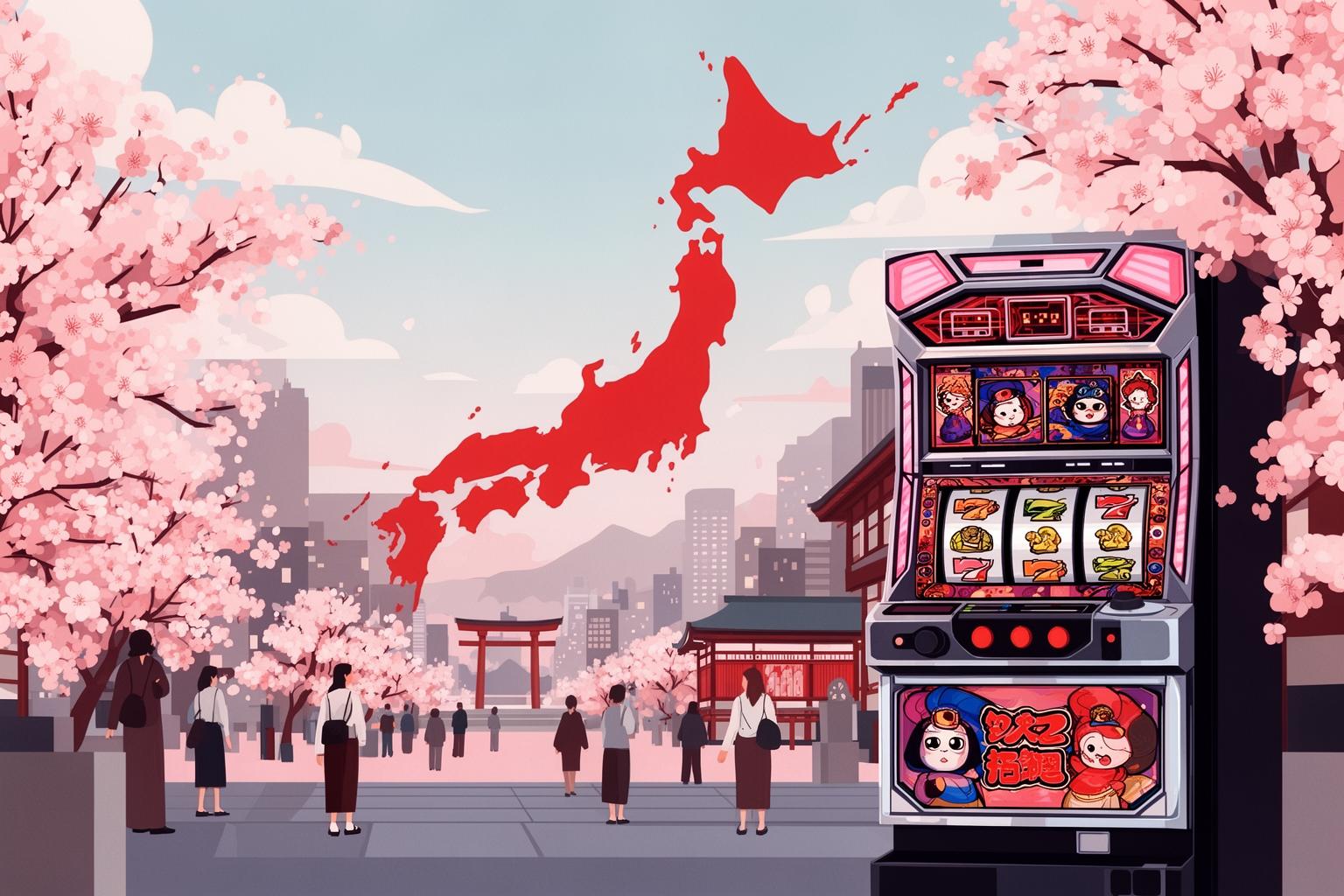
Pachinko has continuously evolved. The simple mechanical games of the past have given way to dazzling digital monoliths that bear little resemblance to their predecessors. The industry keeps adapting to remain relevant and to attract a new generation of players.
From Analog Skill to Digital Fever Dreams
Modern pachinko machines are technological marvels. While players still control the ball launch strength, the role of physical skill has significantly diminished. The game is now largely driven by the digital slot machine displayed on the screen. These screens showcase intricate storylines, cinematic cutscenes, and licensed content from some of the biggest names in Japanese pop culture. Walking through a parlor, you’ll find machines themed around blockbuster anime like Neon Genesis Evangelion, classic manga such as Fist of the North Star, and pop idol groups. Hitting a jackpot can activate a “fever mode” (fībā mōdo), a phase with an increased chance of winning subsequent rounds, accompanied by an intense audio-visual spectacle. This combination of gambling mechanics with beloved entertainment franchises creates a highly engaging—and potentially addictive—experience.
A Cleaner, Brighter, and More Regulated Future?
The industry is keenly aware of its somewhat questionable reputation and has been actively working to improve its image. Many new parlors are bright, clean, and spacious—a stark contrast to the dark, smoky dens of the past. The introduction of non-smoking areas, and in some cases entirely smoke-free venues, aims to attract more female players and a younger audience less tolerant of secondhand smoke. Meanwhile, the government remains involved. Increasing concerns over gambling addiction have prompted new regulations designed to limit the most extreme aspects of the game. These rules have included lowering maximum payout rates, making it more difficult to win large sums quickly. The prospective legalization of integrated casino resorts in Japan also raises long-term questions for pachinko. Will a state-sanctioned form of gambling render the charmingly archaic three-store system obsolete, or will pachinko’s accessibility and cultural resilience allow it to coexist with this new form of competition?
Ultimately, pachinko is much more than just a game. It stands as a living monument to Japan’s unique approach to problem-solving. It reflects a culture capable of creating and following strict rules while simultaneously supporting an elaborate system designed to gracefully circumvent them. The roar of a pachinko parlor is not merely the sound of falling steel balls; it’s the sound of a cultural paradox in full motion. It is an amusement, an addiction, a massive economic force, and a political minefield—all wrapped up in flashing lights and legal fiction. It is a system founded on a shared, unspoken understanding—a game played not only on the machines but with the very definition of the law itself.