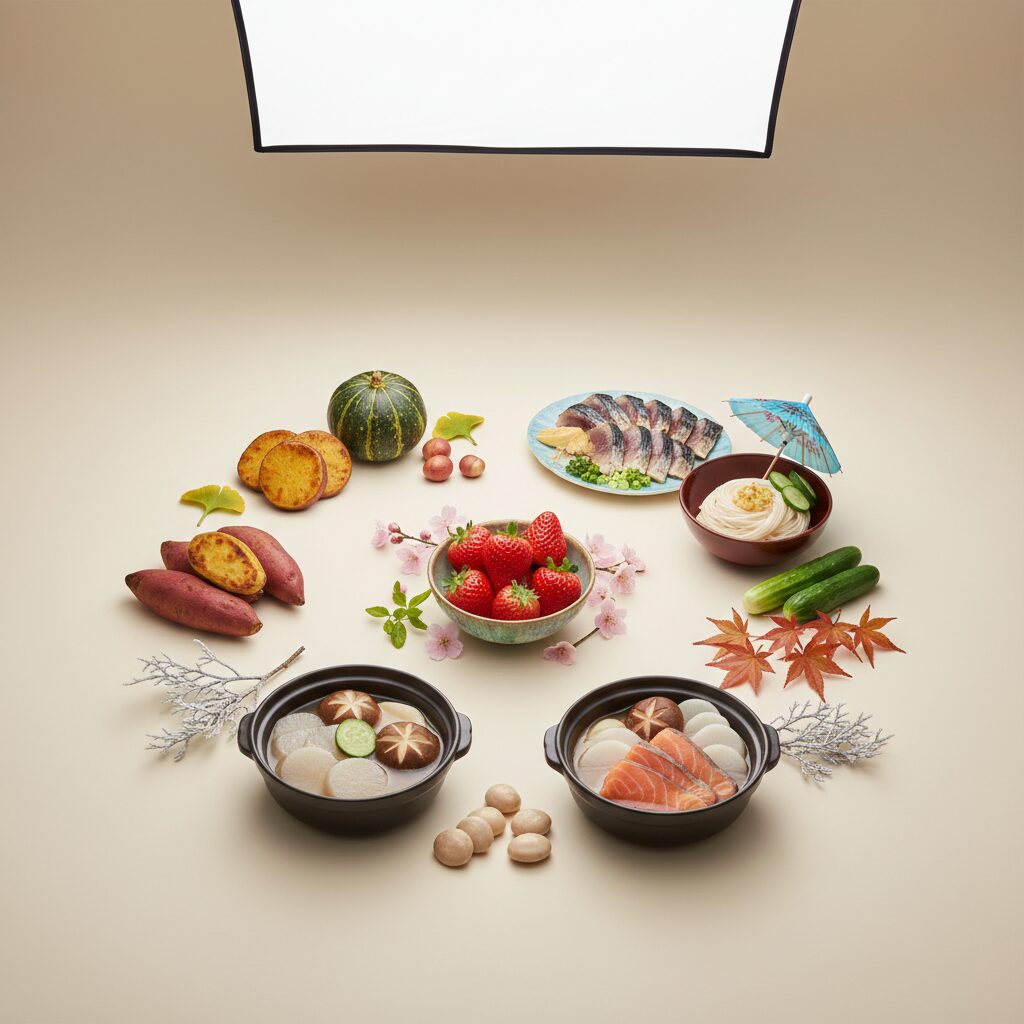
I remember my first few months living in Japan, standing baffled in the fruit and vegetable aisle of a local supermarket. Back home in Australia, the produce section is a vast, unchanging landscape. You want strawberries in July? You can get them. Asparagus in November? No problem. They might have travelled halfway around the world and taste a bit like watery cardboard, but they’re there. The Japanese supermarket, however, felt like a living, breathing entity. One week, a small mountain of tiny, jewel-like strawberries would dominate the entrance. The price was eye-watering, but people bought them with a sense of ceremony. Two weeks later, they were gone. Completely. In their place were bamboo shoots, their conical tips still dusted with soil. Then came the fat, green biwa loquats, then the glistening bunches of Kyoho grapes in late summer. It wasn’t a matter of what was on sale; it was a matter of what existed. The aisle was not a warehouse of global goods; it was a real-time bulletin from the surrounding earth.
My Japanese friends would talk about food with a temporal precision that seemed utterly foreign. “Ah, it’s the season for ayu,” someone would mention in June, referring to the sweet river fish. Not just ‘summer fish,’ but specifically June and July. They spoke of the “first bonito” of the year with the same excitement one might reserve for a major holiday. This wasn’t just seasonal eating as I knew it. This was something else entirely—a deeper, more granular obsession with time. I soon learned that while the rest of the world sees four seasons, Japan’s traditional calendar marks the year with seventy-two distinct micro-seasons, each lasting about five days. And this ancient calendar, with its poetic names like “The East Wind Melts the Ice” and “First Peach Blossoms,” is not a historical artifact. It is the operating system of the Japanese kitchen.
So, why this fanatical devotion to eating what nature offers up in a specific five-day window? Is it simply a pursuit of peak flavour, a form of extreme culinary snobbery? Or is there something more profound at play? The answer, I’ve come to understand, is that this practice is not just about food. It is a lived philosophy, a daily ritual that connects people to the rhythms of nature, a deep-seated gratitude for the ephemeral, and a way of tasting time itself. It’s a conversation with the environment where every bite tells you exactly where you are and what time of year it is, down to the very week. Forget the Gregorian calendar on the wall; in Japan, the real calendar is on your plate.
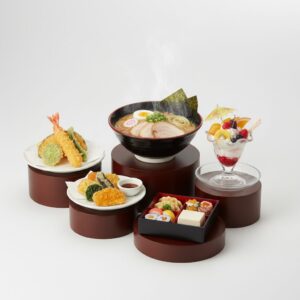
This vibrant celebration of seasonal flavors also gives way to unexpected innovations like the ramen vending machine, which epitomizes Japan’s seamless blend of time-honored tradition and modern convenience.
Beyond the Big Four: Deconstructing Japan’s Culinary Calendar
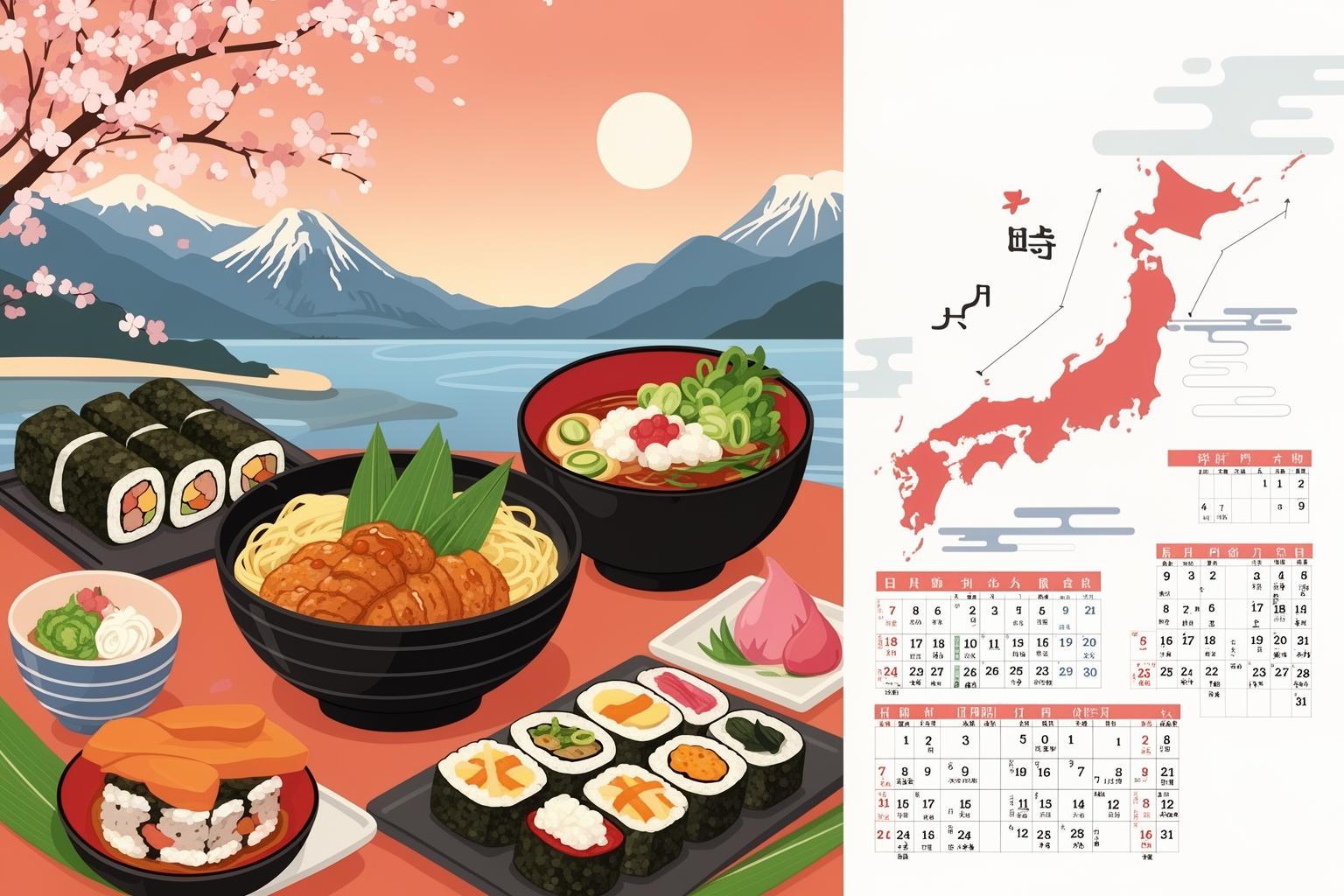
To truly understand the Japanese approach to food, you must abandon the simple four-part division of the year. Spring, summer, autumn, and winter are far too coarse and broad. They are blunt tools in a culture that prizes precision and nuance. The true framework is a delicate, intricate system inherited from ancient China and refined over centuries to align with the specific climate and natural phenomena of the Japanese archipelago.
From Four to Twenty-Four to Seventy-Two
At the core of this system lies the nijūshi sekki, or the twenty-four solar terms. This calendar divides the solar year into twenty-four equal segments, each about fifteen days long. It served as a practical agricultural guide, offering a more precise timetable for planting and harvesting than a simple lunar calendar. Each term carries a name reflecting the natural world’s condition: Risshun (Beginning of Spring), Geshi (Summer Solstice), Shūbun (Autumnal Equinox), and Tōji (Winter Solstice) are among the well-known examples. This layer of twenty-four seasons already presents a much more detailed view of the year. Spring, for instance, is not a single extended event; it unfolds from the first thaw through the initial rains to the peak cherry blossom season.
Yet Japanese culture, in its ceaseless quest for refinement, pushed this concept further. During the Edo period (1603-1868), each of these twenty-four solar terms was divided into three, creating the shichijūni kō, or the seventy-two micro-seasons. Each period spans roughly five days and has a beautifully descriptive, nearly haiku-like name capturing a fleeting natural phenomenon.
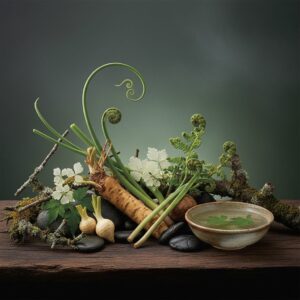
Around February 4th to 8th, the year begins with Harukaze kōri o toku (East wind melts the ice). From March 21st to 25th, it’s Suzume hajimete sukuu (Sparrows first build their nests). In late July, Daichi uruoi okoru (Earth is damp, air is humid). And in mid-November, Kinsenka saku (Daffodils bloom). These aren’t mere poetic touches; they are direct, observational notes from fields, forests, and oceans. They serve as a guide to what is happening right now. When the bush warblers start to sing (Uguisu naku), it is time to forage wild mountain vegetables like fukinoto (butterbur buds). When the praying mantis hatches (Kamakiri shōzu), it signals that certain fish are at their peak.
This system transforms the passage of time from an abstract idea into a sequence of tangible, sensory experiences. It trains you to notice and to pay attention. The world is not simply “getting warmer”; it is in the specific five-day period when “Caterpillars become butterflies.” This deep awareness forms the foundation upon which all Japanese cuisine is built. A true master chef doesn’t just know what is in season; they know the exact micro-season, tailoring their menu to that fleeting reality.
The Language of Seasonality: Shun, Hashiri, and Nagori
If the seventy-two micro-seasons shape the culinary calendar’s structure, then the concept of shun (旬) is its heart. The kanji character itself is elegantly simple, made up of the symbols for “fish” and “ten days,” suggesting a period when a particular fish is at its absolute best. Shun marks the peak of an ingredient’s life—the moment it is most nutritious, abundant, and, most importantly, delicious. It is when a tomato tastes quintessentially like a tomato, a strawberry bursts with sweetness, and a sanma (Pacific saury) is rich and fatty. To eat something in its shun is to experience it at its perfect, essential peak.
But the Japanese palate values not only the pinnacle but also the early and late phases. This is where the concepts of hashiri and nagori introduce emotional depth to the act of eating.
Hashiri (走り) means “first run” or “the beginning.” It refers to the very first appearance of an ingredient at the start of its season. These first-of-the-year items, known as hatsumono, are treasured. Consider the first bonito of the season (hatsu-gatsuo), a leaner, cleaner-tasting fish historically so prized that samurai would pawn their swords for a taste. Eating hashiri isn’t about peak flavor—the ingredient is often not yet at its best. It is about the thrill of anticipation, the joy of welcoming a new season, and the symbolic belief that consuming the first of something brings longevity. It is an optimistic, forward-looking experience.
At the other end lies nagori (名残), meaning “lingering trace” or “relic of a farewell.” Nagori is the experience of eating an ingredient at the very end of its season, for the last time until the next year. There is a poignant melancholy to it. It might be the final summer eggplants, now slightly tougher-skinned than a month ago, or the last persimmons clinging to a bare tree in late autumn. The flavor may be past its prime, but the emotional impact is strong. Eating nagori is a farewell ritual, a moment to reflect on the passing season. It directly taps into the Japanese aesthetic of mono no aware—a gentle sadness for the impermanence of all things. It is a nostalgic, backward-looking experience.
Together, hashiri, shun, and nagori form a complete narrative arc for every ingredient. It is a story with a beginning, middle, and end. Eating in Japan is not simply about consuming food; it is about participating in its life cycle. This transforms an ordinary meal into a profound meditation on time, embracing the excitement of birth, the perfection of maturity, and the bittersweet beauty of decline.
The Philosophy on the Plate: Why It Matters
This intricate system of seasonality is much more than a set of guidelines for gourmands. It embodies a deeply rooted cultural and spiritual worldview. Observing the micro-seasons is a lifestyle that reinforces fundamental Japanese values of gratitude, harmony with nature, and an appreciation for the fleeting beauty of the present moment. The reasons behind this dedication extend far beyond mere taste.
Itadakimasu: Gratitude for a Life Given
At the core of Japanese spirituality lies Shinto, the indigenous faith, which believes that divinity (kami) resides in all things—in mountains and rivers, trees and rocks, and the food we consume. Each plant and animal carries a life force. Harvesting that life for sustenance is a meaningful act that demands respect and gratitude. Eating something in its shun is the ultimate demonstration of this respect. By consuming an ingredient at its peak, you honor its life force when it is most vibrant and potent. You acknowledge the gift of its existence in its most perfect form.
This is encapsulated in the simple phrase said before every meal: itadakimasu. Often translated as “Let’s eat” or “Bon appétit,” its true meaning is much deeper: “I humbly receive this life.” It is a phrase of profound gratitude directed not only to the person who prepared the meal but to everyone and everything involved in its creation: the farmer who cultivated the rice, the fisherman who caught the fish, and the rice and fish themselves for giving their lives. This is no empty formality; it is a moment of sincere mindfulness. The heightened awareness of seasonality makes this gratitude more particular and powerful. When you eat a bamboo shoot that is available only for a few brief weeks in spring, your appreciation intensifies. You are not merely eating a vegetable; you are receiving the specific, transient gift of the spring mountains.
A Dialogue with Nature
Following the 72 micro-seasons nurtures an intimate, ongoing conversation with the natural world. In a society that is heavily urbanized and technologically advanced, it is easy to lose connection with the environment that sustains us. The culinary calendar serves as a potent remedy to this disconnection. It compels you to look outward, to notice the quality of light, the bird species singing in the trees, the type of insect buzzing in the air—these are the very indicators signaling what should be on your table.
The chef becomes a translator, an interpreter of nature’s messages. They go to the market without a fixed shopping list, but with an open mind, asking, “What is the mountain offering today? What did the sea provide this morning?” The menu becomes a direct reflection of that day’s dialogue. This mindset extends to the home cook as well. Planning meals becomes less about personal desires and more about responding to what the world offers. It is a shift from a human-centered view of food to an eco-centric perspective. You do not impose your will on nature; you harmonize with its rhythms. This fosters a powerful sense of belonging, of being part of a larger, cyclical story.
Health, Body, and Balance
Beyond the philosophical and spiritual dimensions, there is a deeply held belief in the physical wisdom of eating seasonally. Drawing on principles of traditional Chinese medicine, Japanese food culture recognizes that the body’s needs vary with the climate. Eating with the seasons is not just beneficial for the soul; it is essential for maintaining physical balance and health.
During the hot, humid Japanese summer, nature offers cooling, water-rich foods. Cucumbers, tomatoes, watermelon, and summer eggplants help hydrate the body and lower its temperature. They are prepared in ways that are light and refreshing—served raw, lightly pickled, or chilled. In contrast, winter’s chill calls for warming, nourishing foods. Root vegetables like daikon radish, carrots, and burdock root (gobō), along with hearty squash and dense fish, provide the energy required to endure the cold. These are often simmered for long periods in rich broths or served in hot pots (nabe), warming the body from within.
Spring foods, such as bitter mountain vegetables (sansai), are believed to help awaken the body from winter’s sluggishness and gently cleanse the system. Autumn foods, including mushrooms, chestnuts, and sweet potatoes, are regarded as nourishment to prepare for the approaching winter. This is not mere folk wisdom; it is an intuitive science for living harmoniously with one’s environment. By eating what nature provides at the appropriate time, you equip your body with exactly what it needs to thrive in that specific season. It is a holistic approach to health where the local farm field serves as the pharmacy.
The Seasonal Obsession in Practice
This philosophy is not restricted to ancient writings or lofty theories. It is a visible, tangible, and delightful reality that unfolds daily throughout Japan, from the most prestigious Michelin-starred counters to the brightly lit aisles of local supermarkets and the modest family dinner table.
The Kaiseki Counter: A Micro-Seasonal Masterpiece
The pinnacle of seasonal expression is undoubtedly kaiseki ryōri, Japan’s formal haute cuisine. A kaiseki meal is a multi-course composition where every element, from the main ingredient to the garnish to the vessel it’s served in, meticulously reflects the specific micro-season. The chef acts as a composer, with the present moment as the theme.
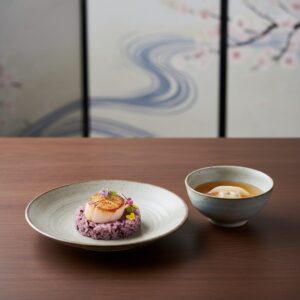
Picture a meal in early summer, during the micro-season of Ayame hana saku (Irises bloom). The meal might start with a small appetizer featuring junsai, a gelatinous water shield plant harvested from pure ponds, served chilled with a touch of vinegar to capture the coolness of water. The soup course, the meal’s centerpiece, might be a perfectly clear dashi broth holding a single piece of pike conger (hamo), its flesh intricately scored to resemble a blossoming flower, accompanied by a fresh green snow pea. The sashimi course wouldn’t be just any tuna; it would be the first bonito (hatsu-gatsuo), lightly seared to accentuate its clean flavor. The grilled course might feature a young, sweet ayu river fish, salted and skewered to appear as if still swimming, testament to its freshness. Even the garnishes carry deep symbolism: an autumn maple leaf carved from a vegetable, or a cherry blossom petal floating in a sake cup in spring. The ceramics and lacquerware are selected to match the season—cool glass for summer, warm, earthy pottery for winter. A kaiseki meal is more than dinner; it is an immersive, edible work of art that lasts only a few days before nature, and the menu, moves forward.
The Supermarket Aisle as a Living Calendar
You don’t need a reservation at a three-star restaurant to experience this tradition. The everyday supermarket serves as a vibrant, democratic display of seasonality. Unlike the uniform produce sections commonly found in the West, Japanese supermarkets are constantly changing. The most prominent displays, right at the store entrance, are dedicated to the shun items of the week. Here, you’ll find beautiful, costly strawberries in March, the corn on the cob in August so sweet it resembles candy, and heaps of mikan oranges in December.
The fish counter offers an even more striking example. The selection shifts daily based on the catch. In spring, you’ll find shimmering firefly squid (hotaru ika) and sea bream (tai), a fish linked to celebrations. In autumn, gleaming silver-bodied pacific saury (sanma), whose kanji literally means “autumn sword fish,” dominates the shelves. Even the packaging emphasizes seasonality. Produce is often labeled with its prefecture of origin and sometimes the farmer’s name, strengthening the connection to the land. This transparency isn’t just marketing; it provides customers with the full story behind their food, where time and place are central characters.
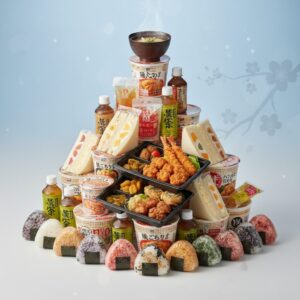
This fascination extends to mass-produced snacks and beverages. Leading companies like Kirin, Asahi, Lotte, and Glico release a steady stream of seasonal limited-edition products. In spring, supermarket shelves turn pink with sakura-flavored items—beer, chocolate, lattes, potato chips. Autumn brings an abundance of sweet potato, chestnut (kuri), and pumpkin (kabocha) flavored treats. These are not niche goods; they are mainstream phenomena eagerly anticipated by the entire population. It’s a clever marketing approach, creating urgency, but it also taps into and strengthens the deep cultural appreciation for the ephemeral tastes of the seasons.
The Home Kitchen: A Humble Ritual
Most importantly, this seasonal rhythm is the lifeblood of the Japanese home kitchen. Family recipes and traditions are tightly intertwined with the calendar. Making umeboshi (pickled plums) is a defining ritual of the rainy season in June, when unripe plums are ideal for preserving. Families come together to prepare special dishes for seasonal festivals, such as chirashi-zushi for the Doll’s Festival in spring and pumpkin simmered in soy sauce for the winter solstice.
Knowledge is handed down through generations: how to properly prepare bamboo shoots in spring to remove bitterness, the best way to grill eggplant in summer, how to achieve the perfect persimmon jam in autumn. These are not merely cooking techniques; they are cultural memories, anchoring individuals and families in the comforting, repeating cycles of the year. This rhythm offers a sense of stability and continuity in an ever-changing world. No matter what happens, spring will arrive, bringing with it the time to pickle cabbage and forage for fiddlehead ferns.
When the System Breaks: Modernity and the Loss of Shun
It would be a romantic illusion to claim that this ancient system remains unchallenged in the 21st century. The same global forces that allow strawberries to be available year-round in Sydney are also at play in Tokyo. Greenhouses, advanced farming methods, and refrigerated supply chains have created an environment where seasonality can seem optional—a choice rather than a necessity. This creates a significant tension within the culture.
The Paradox of the Modern World
Step into a large, upscale department store food hall, and you can find nearly anything you desire at any time of the year. Perfect, hothouse-grown tomatoes line the shelves in the depths of winter. Asparagus from Mexico sits alongside locally grown leeks. For the modern consumer, convenience often outweighs tradition. The ability to satisfy a craving immediately is a powerful temptation that directly clashes with the patient, mindful practice of eating what the seasons offer.
This has sparked real concern about the potential loss of shun. If younger generations grow up eating cucumbers that taste the same in January as they do in July, will their palates lose the capacity to distinguish the difference? Will the profound connection between food and time fade into a nostalgic memory? The Japanese government has even promoted the concept of shokuiku (food education) in schools, partly to reinstate this traditional knowledge and awareness of food in children. It is a deliberate effort to preserve a cultural cornerstone against the tide of global uniformity.
The Taste of Authenticity
Yet, the obsession endures. In fact, one could argue that in the face of year-round availability, the cultural value placed on authentic shun has only grown stronger. It has become a sign of quality, a form of connoisseurship, and an intentional choice. People willingly pay a premium for a field-grown summer tomato because they know it offers a depth of flavor, vitality, and sun-ripened sweetness that a greenhouse-grown tomato simply cannot match. It tastes of a particular place and a particular time.
To the discerning Japanese palate, an out-of-season ingredient doesn’t just taste inferior; it tastes wrong. It lacks what might be considered its essential energy or life force. The persistence of shun serves as a quiet resistance against the commodification of food. It insists that a tomato is not just a tomato; it is a story of soil, water, and sunlight. It upholds the belief that true deliciousness cannot be manufactured or faked. It must be awaited. It must be received as a gift. This commitment to authentic flavor ensures that while out-of-season eating is possible, the desire to eat in harmony with nature remains a strong, motivating force in the culture.
Eating in Japan is a lesson in presence. It teaches you to pay attention, to find beauty in the subtle changes of the world around you. A meal is never merely fuel; it’s a meditation on the nature of time, a celebration of impermanence. When you eat a piece of fatty, autumn-rich sanma under a cool evening sky, you are tasting more than just fish. You are tasting the end of summer, the crisping air, and the turning leaves. You are consuming a moment—perfect and fleeting. In a world that constantly rushes forward, the Japanese kitchen offers a profound insight: the deepest and most fulfilling experiences are often found not by chasing what we want, but by gratefully accepting what is given, right here, right now.