I once stood on a perfectly ordinary bridge in a quiet corner of Tokyo, watching a young man spend a full ten minutes photographing a specific metal railing. He wasn’t a surveyor or an engineer. He held his smartphone in one hand and a laminated screenshot in the other, painstakingly adjusting his angle, his crouch, his zoom, trying to perfectly replicate the image he held. To any casual observer, his behavior was baffling. The bridge was unremarkable. The view was of a sluggish canal and some apartment buildings. But for him, and for the handful of others who arrived while I watched, this spot was anything but ordinary. It was a seichi—a sacred place.
This is the world of Seichi Junrei (聖地巡礼), a term that translates directly to “sacred site pilgrimage.” It’s the phenomenon of fans traveling to the real-world locations that appear in their favorite anime, manga, or video games. And it is far more than simple tourism. The use of the word junrei is deliberate and deeply telling. This is the same term used for centuries to describe religious pilgrimages, like the arduous journey to the 88 temples of Shikoku or the trek to the great shrines at Ise. So what’s going on here? Why is a seemingly secular hobby like anime fandom borrowing the language and rituals of spiritual quests? It’s because, in its own way, that’s exactly what it is. Seichi junrei reveals a fascinating aspect of the modern Japanese mindset: the search for meaning, connection, and a tangible link to the stories that shape identity, all played out in the landscape of everyday life. This isn’t just about snapping a photo for Instagram; it’s about stepping through the screen and finding a piece of a beloved fictional world waiting for you in the real one.
The intertwining of reality and fantasy in these journeys finds a curious mirror in the modern purikura evolution, where capturing a moment becomes a ritual in its own right.
The “Sacred Place” in a Secular Age
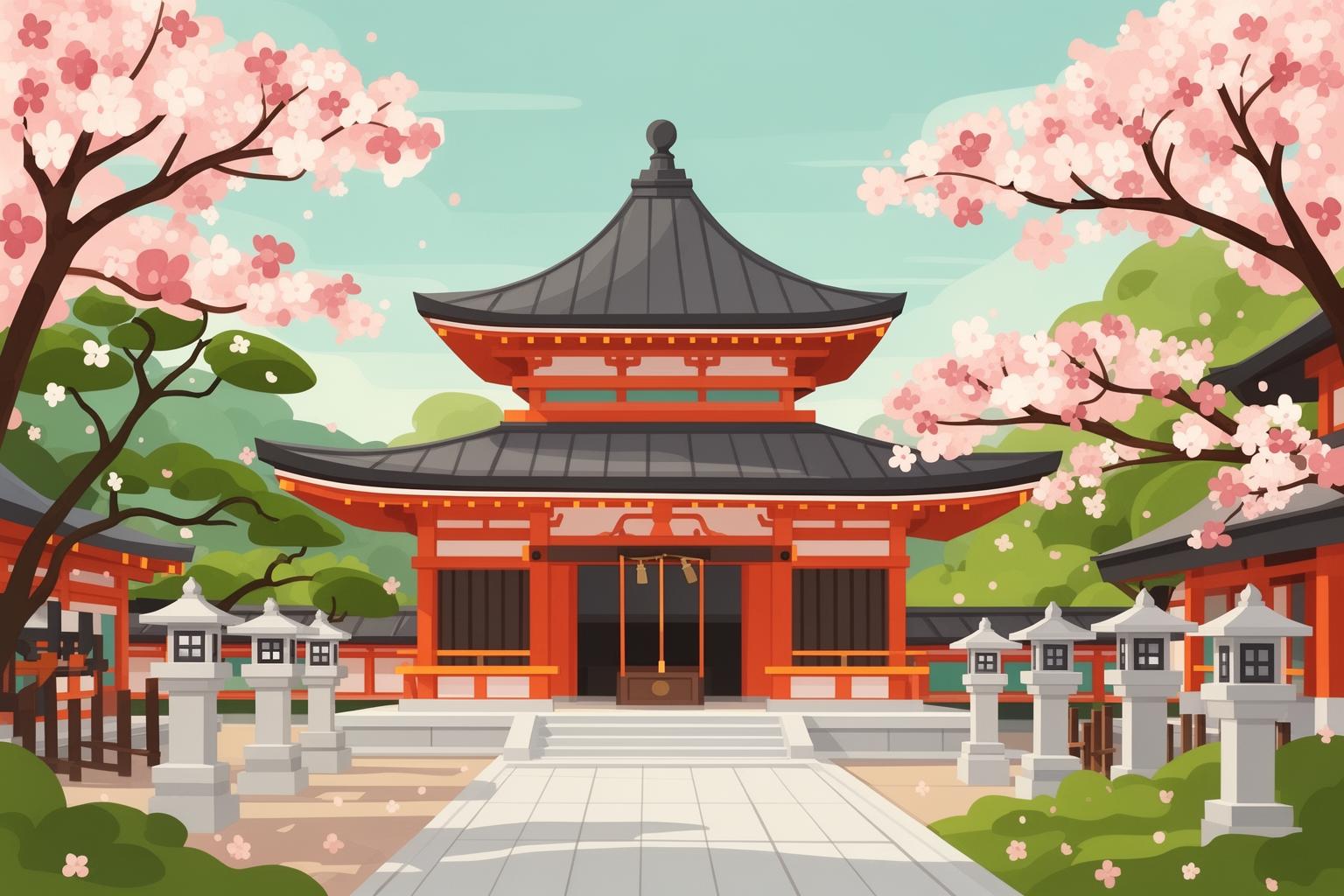
To understand seichi junrei, you first need to grasp the significance of place in the Japanese cultural psyche. Shinto, Japan’s indigenous religion, is animistic; it perceives divinity not in a single, abstract god but in the rocks, trees, mountains, and waterfalls of the natural world. A particularly majestic tree or an unusually shaped rock can be regarded as a yorishiro, a vessel that can host a spirit, or kami. These places radiate a certain power, an aura. They are sacred due to their inherent nature and the stories that surround them.
Now, apply that perspective to the 21st century. For many people, the grand narratives of religion have been replaced by the grand narratives of fiction. The stories that offer moral guidance, emotional catharsis, and a sense of belonging are found within the pages of manga or the carefully animated scenes of a film. The characters become contemporary archetypes, their struggles and victories resonating on a deeply personal level. It naturally follows that the places they inhabit would also acquire a form of sacred energy.
From Ancient Trails to Animated Streets
The historical foundation of pilgrimage is the cornerstone of seichi junrei. Traditional pilgrimages were rites of passage, acts of devotion, and journeys for purification or healing. The path itself was part of the ritual. Walking the same route as countless others before you created a connection across time, a shared spiritual experience. The modern anime pilgrim taps into this very same impulse. They are not seeking the favor of a Buddhist deity, but rather a connection—to the story, its creator, and its community of fans.
The language itself offers the clearest indication. The fans who participate in this practice deliberately chose the word junrei. They could have called it anime ryokō (anime travel) or something more straightforward. By referring to it as a pilgrimage, they elevate the act from a simple trip to a meaningful quest. The sacred has been redefined. The object of reverence is no longer a kami but the creative vision of an author or director. The temple is now a train station. The sacred text is a volume of manga. The emotional impact of a story, its capacity to move and inspire, has become a new kind of spiritual power—one powerful enough to transform an ordinary convenience store into a destination worthy of a cross-country journey.
The Power of Place: Authenticity and Aura
One of the main motivations behind seichi junrei is the excitement of authenticity. An anime might be fictional, but discovering that its beautifully depicted world is based on a real, tangible place makes the story feel more grounded, more plausible. It narrows the gap between fantasy and reality. When you stand on that bridge, in that classroom, or at that bus stop where a key scene took place, the story’s world melds with your own. For a moment, the barrier of the screen disappears.
This brings us to the idea of aura. The physical location becomes infused with the emotional energy of the narrative. The most famous example is the red-railed staircase in Yotsuya, Tokyo, featured in the climactic scene of Makoto Shinkai’s blockbuster film Your Name.. Objectively, it is merely a public staircase connecting two streets. But for anyone who has seen the film, it is the site of a heart-wrenching, decade-spanning reunion. It is charged with hope, longing, and destiny. Visiting it is to sense a faint echo of those powerful emotions. Pilgrims climb the stairs, pause at the top, and look back over their shoulders, just as the characters did. They are not simply viewing a scene; they are partaking in a feeling. The place carries an aura bestowed by the story, and the pilgrimage is an act of immersing oneself in that aura.
More Than Just a Photo Op: The Rituals of the Modern Pilgrim
Observing seichi junrei participants unveils a set of distinct, unwritten rituals that extend well beyond typical tourist behavior. These actions are what genuinely define the practice as a pilgrimage, turning it from passive sightseeing into an active, immersive experience that strengthens the fan’s bond with the work.
The Act of Reenactment
The most prevalent ritual is a form of photographic devotion. As I witnessed on that bridge, pilgrims go to great lengths to replicate a specific shot from the anime. This practice is often referred to as angle-awase (angle-matching). Using a phone or a printout of the scene, they locate the exact spot where the “camera” was positioned in the animated world. They adjust their height and angle, waiting for pedestrians or cars to clear the frame. They may even wait for the weather or time of day to match the scene, whether it’s the golden light of late afternoon or the moody blue of a rainy day.
This reenactment is not mere imitation; it’s a form of communion. By aligning their perspective with that of the creators, they see the world through the story’s eyes. In that moment of perfect alignment, they become part of the narrative. They are no longer just spectators but participants, sharing the same view as their favorite character. Sharing these photos online with other fans becomes a communal affirmation. It’s a way of saying, “I was there. I saw it. It’s real,” and in doing so, they collectively reinforce the location’s status as a sacred site.
The Exchange with the Local Community
Another intriguing aspect of seichi junrei is its intersection with local customs and communities. Often, the pilgrimage sites are not famous landmarks but quiet rural towns or suburban neighborhoods. The sudden influx of devoted fans could easily cause tensions, but more often than not, it leads to a uniquely symbiotic relationship.
One of the most heartfelt rituals is the adoption of traditional practices. If a local Shinto shrine appears in an anime, it’s nearly certain its racks of ema—small wooden plaques where worshippers write their prayers—will soon be adorned with beautifully drawn illustrations of the anime’s characters. A fan’s prayer for a character’s happiness hangs alongside a local’s prayer for business success. It’s a beautiful, organic blend of pop culture and ancient tradition.
Moreover, local businesses and residents often create spaces for pilgrims to connect with one another. A train station, a local sweets shop, or a small museum might provide a kōryū nōto, or “exchange notebook.” In these notebooks, fans from across Japan and around the world leave messages, drawings, and notes about their journey. They may recommend other spots, share favorite scenes, or simply express their love for the story. A pilgrim arriving today can read entries from yesterday or last year, feeling an immediate bond with a community of like-minded people who have stood in the same spot, all drawn by the same story. It transforms a solitary journey into a shared experience.
The Psychology of Belonging: Why This Niche Thrives
The enduring appeal of seichi junrei reflects a profound human desire for community and a way to find significance in everyday life. It offers a tangible outlet for a passion that is often deeply personal and primarily experienced through digital means.
Finding Your Tribe in the Real World
Being a passionate fan of something can sometimes feel isolating. You might watch your favorite anime alone in your room, and while online interactions are valuable, they lack the depth of in-person connections. Seichi junrei provides an answer. It encourages fans to step away from their screens and into the world, navigating a landscape that is both recognized and validated by their shared enthusiasm.
There is a subtle, powerful magic in arriving at a quiet mountain train station and spotting another fan there, phone in hand, trying to capture the perfect angle. Words aren’t necessary—a simple nod or a brief smile suffices. It’s a moment of mutual recognition: “You belong here. You understand.” This sense of belonging, of having your passion acknowledged and shared by a stranger, is deeply affirming. It stands in sharp contrast to the noisy, commercialized frenzy of large anime conventions. Pilgrimage is often a quiet, reflective journey, punctuated by these moments of understated community connection.
The Search for “Mono no Aware” in Everyday Scenery
Many of the anime that inspire the most devoted pilgrimages are not grand epics but rather slice-of-life stories. These narratives excel at uncovering the beauty and poignancy in ordinary moments—a school corridor, a sunset by the river, a pedestrian crossing. They imbue these commonplace scenes with profound emotional meaning. This resonates directly with the traditional Japanese aesthetic concept known as mono no aware (物の哀れ), which translates as “the pathos of things” or a gentle, wistful awareness of the transience of beauty.
The pilgrimage becomes a journey to experience this feeling firsthand. Fans visit these sites not to witness something spectacular, but to encounter something deeply moving. They stand by the very riverbank where the characters shared a heartfelt conversation, hoping to catch a glimpse of that same bittersweet emotion. They seek to perceive the real world through the heightened emotional lens of the anime. The story has taught them that this ordinary place holds profound meaning, and the pilgrimage is their way of accessing it. In this manner, seichi junrei turns into a practice of mindfulness, inviting people to discover the extraordinary within the ordinary and the sacred within the mundane.
The Economic and Cultural Ripple Effect
What started as a niche fan activity has surged into a major cultural and economic phenomenon. This trend, now commonly known as “contents tourism,” has shown an impressive capacity to transform local economies and identities, demonstrating that the impact of a compelling story can reach far beyond the screen.
From Niche Hobby to Tourism Powerhouse
For many small, rural towns in Japan struggling with aging populations and economic downturns, being featured in a popular anime can feel like hitting the jackpot. One successful series can attract a wave of visitors and revenue, revitalizing local businesses and putting the town on the map. Ōarai in Ibaraki Prefecture serves as a prime example. Once a quiet seaside town, it became the backdrop for the anime Girls und Panzer. The town wholeheartedly embraced its new identity. Cardboard cutouts of characters welcome visitors in shops, local products are rebranded with anime motifs, and the annual anglerfish festival has evolved into a huge fan event. The anime brought more than just tourists; it infused the town with a renewed sense of pride and vibrant, youthful energy.
This phenomenon has grown so important that it is now being institutionalized. The Anime Tourism Association, supported by both corporations and government, was created to promote and organize this movement. Each year, it publishes a list of “88 Anime Spots,” intentionally echoing the 88 temples of the Shikoku pilgrimage route. This formal recognition provides fans with a checklist and encourages further domestic and international travel. What began as a grassroots subculture has become a cornerstone of Japan’s tourism strategy.
The Question of Authenticity and Overtourism
Naturally, this rapid expansion and commercialization raise concerns. Does the official promotion of seichi junrei undermine the grassroots authenticity that initially made it special? When a town fills its streets with merchandise and aggressive marketing, does the pilgrimage risk turning into just another theme park?
There are indeed potential drawbacks. Popular sites can suffer from overtourism, causing overcrowding and sometimes creating tension with local residents not involved in the industry. There is also the danger of a location becoming frozen in time, pressured to maintain the exact look from the anime, which can inhibit natural change and development. However, the situation is often more positive than expected. Visitors tend to view themselves as pilgrims rather than ordinary tourists, which makes them generally more respectful. They come out of genuine love for the place and a desire to support the community. This often leads to collaboration, with fans and locals working together to maintain the special atmosphere. The most successful cases are those where the anime integration stems from authentic local affection, rather than a purely corporate strategy.
In the end, seichi junrei highlights the enduring human desire to find ourselves within the stories we cherish. It represents a modern form of a timeless urge, blending ancient ritual with contemporary media in a way that feels distinctly Japanese. It reveals that the boundaries between reality and imagination, the sacred and the secular, are not as rigid as we might assume. Walking the streets of a beloved anime is an act of creative belief. It’s a way of affirming that the magic isn’t confined to the screen—if you know where to look, you can discover it waiting for you down a quiet side street, on an ordinary bridge, or reflected in the window of a local train.