If you’re of a certain age, you probably have a memory of the classic American arcade in its final, fading days. It’s a hazy, nostalgic image tinged with a bit of melancholy. The floors were sticky with ancient soda spills. The air was thick with the smell of stale popcorn and ozone. A few lonely machines blinked in the gloom, their demo screens playing on a loop for an audience that had long since gone home to their Nintendos and PlayStations. By the late 90s and early 2000s, the arcade felt like a relic, a charming but doomed dinosaur from a bygone era. The conventional wisdom was simple: why go out and pay per play when you could have a richer, more complex gaming experience in the comfort of your own living room?
So, you can imagine the cognitive dissonance when you first step into a game center in Japan. It’s not a sad, forgotten space. It is a multi-story, vertical cathedral of light and sound, roaring with energy. It’s packed, not just with teenagers, but with office workers in suits, couples on dates, and solo players in deep states of flow. The ground floor assaults you with a forest of UFO catchers, their glass cases filled with limited-edition anime figures and impossibly cute plushies. Ascend the escalator and you’re hit with a wall of sound from the rhythm game section, where players perform intricate, full-body routines with astounding precision. Higher still, you find the fighting game floor, a tense theater of digital combat where local legends hold court. This isn’t a dying industry; it’s a thriving, evolving ecosystem. And it immediately begs the question: Why here? What did Japan understand about the arcade that the rest of the world missed? The answer, it turns out, has less to do with the games themselves and everything to do with the unique social and spatial needs of Japanese urban life. The game center isn’t just a place to play games. It’s a vital piece of social infrastructure, a masterfully designed “third place” that home consoles could never hope to replace.
This vibrant cultural ingenuity is also evident in Japan’s knack for transforming the mundane into creative masterpieces, as showcased by its innovative plastic pop art.
The Logic of a Crowded Island
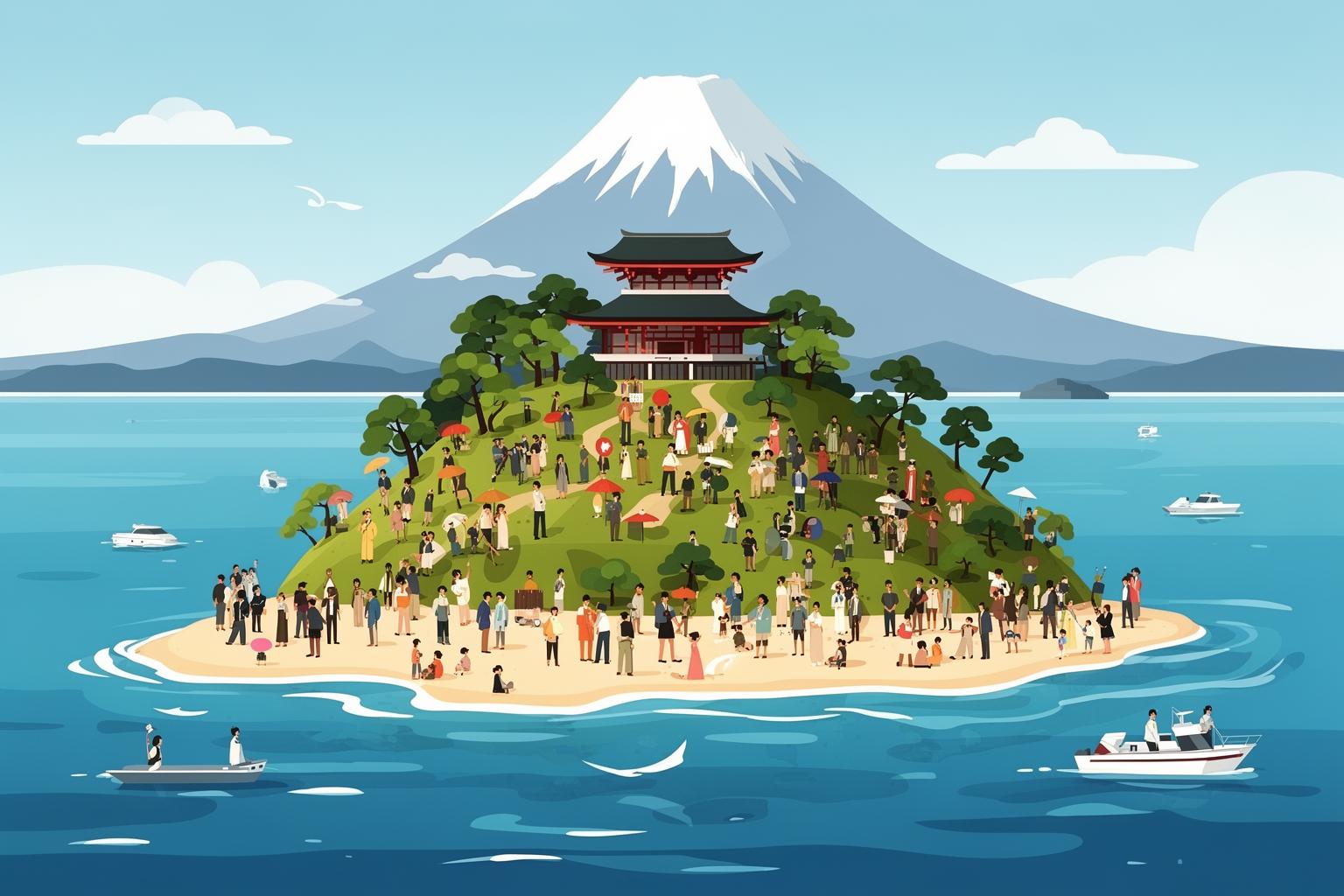
To understand the game center, you first need to grasp the spaces it complements and competes with—namely, the Japanese home. For many Westerners, especially those raised in suburban settings, the home serves as the default social hub. You invite friends over, hang out in the basement, and make noise. This entire model depends on having the space and privacy to do so.
The Home as a Private Sanctuary
The typical urban Japanese home is quite different. Apartments are small, designed for efficiency and private family life rather than entertaining large groups of friends. Walls tend to be thin, and there is a strong cultural emphasis on not disturbing neighbors. Inviting a group of lively high school friends over to shout at a screen for hours is, for many, neither practical nor polite. The living room often serves as a shared family space instead of a teenager’s personal domain. This creates a strong, ongoing demand for a neutral place to gather—a spot where friends can meet without getting in the way or causing disruption.
Moreover, the home is regarded as a very private sphere. Inviting someone inside is a significant social gesture. This drives the need for more casual, low-pressure environments to socialize. People want places to meet that don’t carry the social weight of a home invitation. Restaurants and cafes fulfill this role, but they typically require conversation and a certain level of social focus. The game center offered something different: a place to simply be together.
The Power of the Train Station
This need for a public social hub is heightened by the very layout of Japanese cities. Life revolves around the train station. It serves as the center of commerce, transportation, and social activity. Your daily commute, shopping, and dining plans all center around these busy hubs. And what do you find clustered near every major—and even minor—train station? A game center. Always.
Their placement is no accident. It’s a stroke of strategic brilliance. They are ideally located to capture foot traffic and, more importantly, to address the problem of idle time. Have thirty minutes before your train? Drop into Taito Station. Meeting a friend after school or work? Tell them to find you on the third floor of Round1. It’s raining and you don’t want to wander outside? The game center offers a loud, bright, climate-controlled refuge. It became the go-to waiting room, the pre-party spot, the post-dinner hangout. Its convenience turned it into an essential part of urban life—a utility as much as an entertainment venue.
The Social Physics of the Arcade Floor
The city’s layout draws people in, but what makes them stay? What makes the experience compelling enough to keep them returning, 100 yen at a time? It’s the way the space itself is designed to enable a distinctly Japanese style of social interaction.
Privacy Amid the Chaos
Your first encounter with a Japanese game center is a sensory overload. It is an unapologetically intense cacophony—the triumphant jingles of UFO catchers, the rhythmic pounding of taiko drums, the frantic commentary of a fighting game—all merging into one roaring wave of sound. Though it seems the opposite of a comfortable environment, this noise serves a vital psychological function: it creates privacy.
The sheer volume acts as an invisible barrier around each player, allowing for a state of being “alone, together.” You are surrounded by people but also immersed in your own world, focused on the screen before you. This is incredibly liberating. It allows you to practice a difficult rhythm game song and fail miserably without suffering public embarrassment. No one can hear your mistakes over the clamor, and no one pays much attention unless you’re performing at an exceptional level. This sonic shield reduces social friction and self-consciousness that might otherwise prevent trying something new or challenging. You are free to be awkward, to learn, to improve in public without feeling scrutinized.
The Art of Watching: Spectatorship as Social Bond
While the noise offers cover for beginners, it also creates a stage for experts. In Japanese game centers, watching is as integral to the culture as playing. Visit the fighting game or rhythm game areas, and you’ll inevitably see small crowds gathered quietly behind skilled players, observing with respect. This is neither strange nor intrusive; it’s a core part of the arcade’s social fabric.
This culture of spectatorship provides a low-key form of social interaction. You can share in the thrill of an intense match or flawless performance without the pressure of direct engagement. You experience a collective moment of excitement or anticipation with those nearby, without needing to speak. It’s a form of parallel play for adults, fulfilling the human need for connection without requiring conversational effort. For a culture that often values indirect communication and avoiding overt social imposition, this suits perfectly. You can learn strategies from the masters, feel a sense of community, and quietly slip away without a word.
The Dojo of Digital Combat
The fighting game floor is perhaps the clearest expression of the arcade as a community hub. Before online multiplayer became widespread, the arcade was the only place to test your skills against real human opponents. It was the dojo, the training ground, the arena. The system was simple and unforgiving: two people play, and the winner remains to face the next challenger who inserted their 100-yen coin.
This straightforward mechanic cultivated a powerful social ecosystem. It bred local heroes, fierce rivalries, and a clear sense of hierarchy. Being the best Street Fighter player at your local arcade carried meaning. It was a status earned through dedication and public display. Players developed unique styles, and regulars became familiar faces. You might not know their names, but you recognized their main characters and signature combos. This face-to-face competition—the chance to look your opponent in the eye after a match—created bonds and a sense of community that the anonymous, often toxic, world of online gaming has struggled to replicate. It was a scene, a subculture with its own etiquette, legends, and shared history, all centered around a few square feet of linoleum in front of a glowing screen.
More Than Just High Scores: Expanding the Definition of ‘Game’
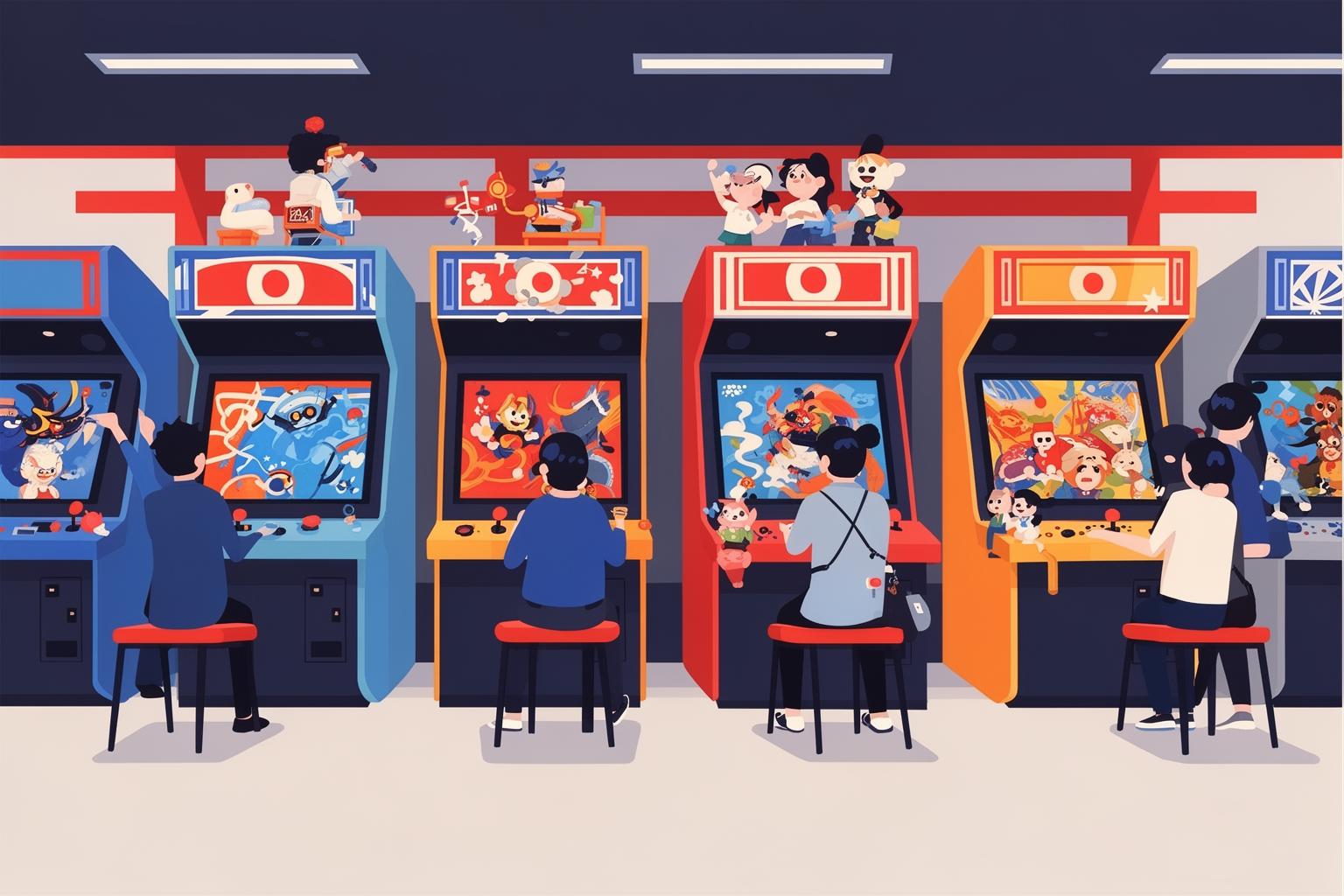
The brilliance of the Japanese game center lies in its continuous evolution. While in the West, arcades were seen as spaces exclusively for a core group of young, male gamers, Japanese operators recognized that long-term success relied on expanding their appeal. They accomplished this by introducing entire categories of machines that were not “games” in the traditional sense, but social experiences cleverly disguised as games.
The Attraction of the UFO Catcher
Step into any modern arcade in Japan, and the most prized real estate—the ground floor—is dominated by UFO catchers, or crane games. The prizes inside are far from the generic, low-quality stuffed animals often found elsewhere. Instead, they are high-quality, often limited-edition merchandise linked to the most popular anime, manga, and video game franchises. For fans, this is often the only way to obtain a specific figure or keychain of a beloved character.
Yet the appeal goes beyond that. Playing a crane game is a shared experience. It becomes a group activity, with friends shouting advice and encouragement. It’s also a favored date activity, providing a low-pressure way to impress a partner by winning them a prize. The game itself often takes a back seat to the ritual: the challenge, the collective gasp when the claw nearly snags the prize, and the shared joy of victory. This turned a part of the arcade from a solo grind into a stage for lighthearted social interaction.
Purikura: The Tradition of Capturing Friendship
Perhaps the most influential innovation in widening the arcade’s audience was the purikura booth. These are far from ordinary passport photo booths. Purikura are compact, high-tech photo studios designed specifically for groups of friends, typically teenage girls. You squeeze into the booth, take a series of photos with fun digital backgrounds, and then spend more time at a connected terminal decorating the pictures with virtual stamps, glitter, and handwritten notes. In the end, you receive a sheet of small, shareable stickers.
Purikura transformed the game center into a vital destination for an entirely new crowd. It became a ritual, a must-stop on any outing with friends. The focus wasn’t on getting a high score, but on creating a tangible keepsake that celebrated their friendship and youth. These decorated photo strips were collected, traded, and cherished. For a generation of young women, the arcade wasn’t about video games at all; it was about expression, creativity, and documenting their social lives. This firmly established the game center as a place where memories were made.
The Arcade as a Venue: Rhythm and Performance
Lastly, the rise of rhythm games like Dance Dance Revolution, Taiko no Tatsujin, and the more intricate maimai and Sound Voltex created yet another distinct appeal. These games are inherently performative. They require physical movement, and at advanced levels, become astonishing displays of skill and endurance. The area around these machines naturally evolves into a performance space.
Players who excel at these games are not just gamers; they are performers who draw an audience. This added another reason to visit the arcade: to witness a local DDR expert flawlessly executing routines, or a Taiko master drumming at lightning speed. It invokes the same excitement as watching street performers, bringing live entertainment into the arcade environment. Whether as a player or spectator, everyone becomes part of a uniquely engaging live event.
The Business of Constant Novelty
This social and spatial engineering would not be sustainable without a clever business model supporting it. The Japanese arcade industry flourished by mastering the balance of keeping the experience fresh while maintaining a low barrier to entry.
The Power of the 100-Yen Coin
The entire economy of the game center revolves around the 100-yen coin. It’s a small, nearly insignificant amount of money—like the change you get from a vending machine. This micro-transaction system is psychologically savvy. Spending 100 yen on a single play feels negligible, encouraging casual, spontaneous participation. You don’t have to commit to a $70 purchase; you only need to commit to the next five minutes. This model perfectly suits the arcade’s role as a place to pass time, lowering the threshold for participation to almost nothing, ensuring a steady stream of players, from the deeply engaged to the casually curious.
An Ever-Changing Landscape
Importantly, Japanese arcades are not static museums; they are in a continual state of evolution. Operators such as Sega (now GIGO), Taito, and Bandai Namco are locked in fierce competition for customers’ attention. This drives constant updates to machines with new software, songs, and features. Prizes in UFO catchers rotate weekly, aligned with the latest entertainment releases. Tournaments and special events are regularly hosted, creating a sense of urgency and encouraging repeat visits.
This ongoing cycle of renewal guarantees that the game center never becomes dull. There is always a new challenge to conquer, a new prize to win, a new experience to enjoy. It’s not a place you visit once; it’s a place you return to regularly, so you don’t miss out. This dynamism is what sets it apart from its static, declining Western counterparts. It’s not merely a collection of games; it’s a living, breathing entertainment service.
The End of an Era, or a New Beginning?
It would be misleading to portray today’s situation as one of unqualified success. The Japanese game center faces significant challenges. The ongoing rise of mobile gaming, the economic fallout from the pandemic, and shifting demographics have resulted in the closure of many iconic venues, including the devastating shutdown of the legendary Sega Akihabara Building 2. For many, it seems the golden age has truly come to an end.
However, declaring the game center dead misses the point entirely. While the large, multi-story arcades may be consolidating, the arcade spirit endures. The need it met—a public “third place” for casual socializing, community, and an escape from work pressures and home constraints—has not disappeared. It’s simply evolving. Smaller, more specialized arcades are thriving, focusing on niche retro scenes or dedicated fighting game communities. The fundamental principle of offering a physical space for shared digital experiences remains as strong as ever.
The Japanese game center survived and flourished for so long because it was never just about the video games. It was a brilliantly crafted, hyperlocal response to a universal human need for connection and community, tailored to the unique pressures and opportunities of Japanese urban life. It served as a safe haven for teenagers, a training ground for competitors, a stage for performers, and a studio for friends. It was a place where you could be alone in a crowd or find your tribe without speaking a word. It remains a masterclass in social design, all beneath the dazzling lights and roaring sounds of the games—a legacy no home console can ever render obsolete.