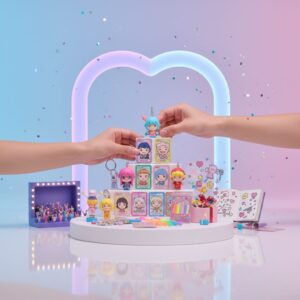
It starts with a sound. Gacha-gacha-gacha. The heavy, satisfying turn of a plastic crank against internal gears. A moment of suspended anticipation. Then, pon. The hollow clatter of a plastic capsule dropping into the collection tray. It’s a sonic sequence known to every child in Japan, the anthem of the small treat, the pocket-money prize. You see the machines everywhere—serried ranks of them outside electronics stores, tucked into the corners of train stations, guarding the entrances to supermarkets. They are a ubiquitous part of the urban landscape, as common as vending machines or convenience stores.
From the outside, it looks simple: a child’s game of chance. A way to quiet a nagging five-year-old. But look closer. Notice the people standing there, carefully studying the vibrant display cards advertising the treasures within. They aren’t all children. In fact, many are adults, their expressions a mixture of focused strategy and hopeful anticipation. They are part of a massive, intricate subculture that elevates these capsule toys from mere trinkets into coveted objects of art and obsession. This isn’t about killing five minutes with a few spare coins. This is a serious hunt, a form of collecting as dedicated as stamps or vintage vinyl, but infinitely more accessible and varied. To understand the world of adult gachapon collectors in Japan is to open a small plastic sphere and discover something profound about the country’s relationship with craftsmanship, consumerism, and the quiet, potent joy found in small, perfect things.
This intricate subculture, where focused strategy meets mechanical precision, mirrors the nuanced world of Japan’s vending culture that shapes everyday urban life.
From Gumball Knock-off to Miniature Masterpiece
The concept is not uniquely Japanese. Its direct predecessor is the American gumball machine, a simple dispenser of cheap candies and even cheaper toys that first arrived in Japan during the 1960s. The early models were basic, dispensing poorly molded plastic charms you’d forget about before you got home. But Japan, as it often does with imported ideas, didn’t merely adopt it; it absorbed, refined, and ultimately elevated it into a distinct art form. The turning point came in the late 1970s when Bandai, the toy and entertainment giant, trademarked the name “Gashapon” and launched a focused effort to enhance the quality of the prizes. The true game-changer was licensing. Suddenly, kids could get miniature, well-crafted versions of their favorite superheroes or anime robots. The capsule toy ceased to be a generic trinket; it became a tiny fragment of a beloved universe.
The name itself reflects this refinement. While Bandai’s brand name is gashapon, the more common, generic term is gachapon, a charming onomatopoeia capturing the entire sensory experience. Gacha-gacha is the sound of the crank turning, a tactile, mechanical noise. Pon is the light, definitive sound of the capsule dropping into the tray. It’s a word that encapsulates the experience, making it distinctly Japanese.
Over the decades, the increase in quality has been dramatic. What began as poorly painted, single-piece figures transformed into complex, multi-part, pre-painted kits that require minor, satisfying assembly. The detail became microscopic, the paint applications flawless, the plastics of higher quality. The industry matured, with major players like Bandai, Takara Tomy A.R.T.S., Kitan Club, and Kaiyodo competing to push the limits of what could fit inside a 65mm plastic capsule. They began collaborating with famous artists, respected designers, and even national museums. Today, gachapon series faithfully reproduce ancient Buddhist statues from the Tokyo National Museum or miniature, perfectly functional versions of iconic designer chairs by brands like Karimoku. The price has risen accordingly—from 20 yen in the early days to 100, then 200, and now premium machines commonly charge 500 yen or more per turn. This isn’t inflation for the same old junk; it reflects the transformation of the product into a genuine, high-fidelity collector’s item.
The Anatomy of Obsession: Why Adults Collect
What motivates an adult—someone with a job and responsibilities—to spend an afternoon inserting coins into a machine for a one-in-six chance of obtaining a tiny plastic frog wearing a party hat? The answer lies in a complex and fascinating blend of raw psychology, artistic appreciation, and deep-rooted cultural conditioning. It’s a layered appeal that captivates people and keeps them coming back for just one more turn.
The Low-Stakes Thrill of the Hunt
At its core, the gachapon experience is a sanitized, low-cost form of gambling. It skillfully exploits the same psychological mechanism—the variable reward schedule—that makes slot machines and loot boxes in video games so addictive. You never know what you’ll get, and that uncertainty generates a tangible sense of excitement and anticipation. Each crank of the handle is a small, self-contained drama. Will it be the one I want? The one I need to complete the set? Or will it be my fourth duplicate of the grumpy-looking Shiba Inu? The thrill lies in the reveal, the moment you open the plastic sphere to discover your fate.
Importantly, the stakes are incredibly low. At 300 or 500 yen per try (approximately $2-$3 USD), it’s an affordable indulgence. You can enjoy the dopamine rush of a win or the mild, humorous disappointment of a duplicate without risking any significant financial damage. This accessibility is central to its widespread appeal. But the true draw for collectors isn’t merely obtaining any prize; it’s the determined pursuit of a complete set. The display card on the front of the machine acts as both a menu and a challenge, showing, for instance, six different historic Japanese castles or eight varieties of sushi that can also transform into cats. Getting one is enjoyable. Collecting them all becomes a mission. This “completionist” drive is a powerful motivator, turning a casual purchase into a dedicated quest. Manufacturers enhance this by occasionally including a “secret” or “chase” item not shown on the display—a rare variant that sends devoted collectors into a frenzy and sparks online speculation.
Miniaturization as an Art Form
To dismiss modern gachapon as mere cheap plastic is to fundamentally misunderstand their allure. Many of these items are miniature sculptures, marvels of industrial manufacturing and artistic craftsmanship. The level of detail in a two-inch figure is often astonishing. Take the “Nature Techni Colour” series by Kitan Club, which produces museum-quality replicas of Japanese wildlife, from the iridescent sheen on a beetle’s shell to the delicate fins of a deep-sea fish. These models are so precise that they are sometimes used as educational resources.
Or consider the hyper-realistic food miniatures, a genre all their own. A tiny bowl of ramen might feature individually sculpted noodles, a glistening broth effect created with translucent resin, and perfectly positioned, minuscule toppings. A miniature slice of cake will reveal distinct textural layers. This dedication to craft resonates strongly with a Japanese aesthetic long fond of small, intricate objects—from the exquisitely carved netsuke (miniature toggles used on kimono sashes) of the Edo period to the meticulously cultivated art of bonsai. The gachapon capsule is a modern, democratic vessel for this ancient appreciation of miniatures. Collectors aren’t simply amassing toys; they are curating a personal gallery of tiny, affordable art pieces. The artistry can be realistic or delightfully surreal. The work of artists like Toshio Asakuma, who sculpts animals in amusing, human-like poses (such as a praying otter or a thoughtful gorilla), has turned into best-selling gachapon series. It’s a platform that celebrates both high fidelity and high comedy.
The Currency of Nostalgia and Niche Identity
Gachapon also acts as a potent medium for nostalgia, a phenomenon with enormous cultural and commercial influence in Japan. A sizable segment of the market revives characters, logos, and products from the Showa (1926-1989) and Heisei (1989-2019) eras. For a 40-year-old office worker, acquiring a miniature figure of a robot from an anime they watched as a child is a powerful act of reminiscence. It provides a tangible connection to their past, a small, affordable way to reclaim and display a piece of their youth. Machines may dispense tiny, perfect replicas of classic Sony Walkmans, 80s-era drink logos, or characters from long-ended manga series.
Beyond broad nostalgia, gachapon is the ultimate celebration of niche interests. It proves that no passion is too obscure, no subject too odd, to be miniaturized and collected. There are gachapon series depicting miniature public mailboxes, historically accurate samurai helmets, photorealistic mushrooms, tiny replicas of triangular orange construction barricades, and cats designed to hang from the rim of your glass. A famous, enduring series called “Shakurel Planet” features animals with exaggerated protruding chins. There’s no rational reason for its existence, yet it remains wildly popular. This unapologetic embrace of the bizarre and specific lets people express their unique interests and identities. Owning a complete set of miniature Japanese manhole covers is not just about the objects themselves; it’s a declaration of individuality. It says, “I am the kind of person who appreciates the beauty in municipal infrastructure.” In a society that often prioritizes group harmony, gachapon offers a safe, affordable, and playful outlet for personal eccentricity.
The Landscape of the Modern Hunt

The way people engage with gachapon has transformed just as much as the toys themselves. The pursuit has expanded beyond the solitary machine at the corner store into specialized temples of the craft, supported by a thriving digital and physical secondary market.
From Street Corner to Specialty Store
While machines can still be found in their traditional settings, the real excitement for serious collectors is in specialty stores. Over the past decade, the “Gachapon no Depāto” (Gachapon Department Store) or similar large-scale shops have emerged, often located in major shopping malls or otaku-focused districts like Tokyo’s Akihabara and Ikebukuro. Stepping into one of these stores is an immersive sensory experience. Hundreds, sometimes thousands, of machines stand in gleaming white rows, forming vibrant canyons of color and possibility. The air buzzes with the rhythmic sounds of cranking handles and falling capsules. You’ll encounter a cross-section of contemporary Japan: teenagers hunting for charms of their favorite anime characters, young couples on dates, parents with children, and solitary collectors meticulously scanning each machine, sometimes using notebooks or phone apps to track their collections. These stores are repositories of niche interests, tangible extensions of the internet’s long tail, where you can discover everything from miniature Buddhist altars to figures of pigeons with muscular, buff arms.
The Secondary Market: Trading and Reselling
What do you do when you end up with your fourth angry Shiba Inu? This is where the ecosystem becomes truly fascinating. Casual collectors trade duplicates among friends or coworkers. For serious enthusiasts, however, the secondary market is crucial. Online platforms like Mercari and Yahoo! Auctions abound with listings for individual gachapon figures. Sellers offload duplicates to fund more plays or to purchase specific figures they lack, bypassing the randomness of the machine. This digital marketplace has professionalized the hobby and exposed the true market value of certain items. A rare “secret” figure that originally cost 500 yen from the machine can fetch ten or twenty times that amount online.
For a more tangible experience, one can visit physical trade hubs such as the glass display cubes at Nakano Broadway in Tokyo. Resellers rent small cases curated with complete gachapon sets or rare individual figures. Standing before these displays, the hobby reveals itself as a genuine collector’s market. A full set of five figures that might have cost 2,500 yen by chance (if you were incredibly lucky) could sell for 4,000 yen—a reasonable price to avoid the hassle and risk of duplicates. This confirms that these items are more than mere toys; they are commodities with fluctuating values influenced by rarity, popularity, and condition.
The Community and the Art of Display
Gachapon collecting is far from a solitary activity. The community aspect is significant, largely fueled by social media. On Instagram, X (formerly Twitter), and YouTube, the hashtag #ガシャポン (gashapon) reveals a flood of activity. Collectors share photos of their “hauls,” celebrate completing sets, and commiserate over unlucky duplicate pulls. They exchange tips on locating new machines and review series quality. The most devoted fans go beyond collecting—they create. They construct detailed dioramas for their figures, using miniature furniture and props (many sourced from gachapon machines themselves) to stage elaborate scenes. Animal figures might be assembled in a tiny campsite; anime characters arranged within a perfect replica of a classroom. This curation and display process is a vital facet of the hobby. It’s not about cramming plastic toys into a shoebox; it’s about honoring the artistry of the pieces and crafting a miniature world. This creative act elevates collecting into something more personal and expressive.
What Gachapon Reveals About Modern Japan
Beyond the plastic and paint, the gachapon phenomenon provides a captivating perspective on broader trends in Japanese society, ranging from economic anxiety to the enduring appeal of tangible objects in a digital era.
Affordable Luxury and Small Indulgences
In an economy marked by periods of stagnation, where wages have not always kept up with living costs, gachapon offers a compelling form of affordable luxury. While major purchases like cars or houses may be unattainable for many, the excitement of acquiring and owning something new and well-crafted can be enjoyed for just a few hundred yen. It’s a small, accessible indulgence that delivers a moment of genuine delight and a tangible reward without financial guilt. In this way, gachapon can be viewed as a form of iyashi, or healing—a modest, inexpensive escape from daily pressures and routine, providing a brief moment of playfulness and possibility during an otherwise structured day.
A Culture of Collecting and Categorizing
Japan’s deep-rooted culture of collecting long predates modern consumerism. The impulse to gather, organize, and appreciate sets of objects is longstanding. Gachapon represents the most contemporary and democratized expression of this tendency. It engages the same mindset that fuels otaku’s intense dedication to their fandoms and the meticulous organization evident in many aspects of Japanese life. Additionally, the miniature scale of these collections fits perfectly with the realities of Japanese living spaces. In a country where homes and apartments are often compact, collecting tiny two-inch figures is far more practical than amassing large statues or bulky memorabilia. Gachapon satisfies the collector’s urge fully while occupying a minimal physical footprint.
The Ephemeral and the Tangible
In a world increasingly dominated by the digital and fleeting—scrolling social media feeds, streaming content, playing mobile games—gachapon offers a compelling counterpoint: a physical, tangible object. You can hold it, feel its weight and texture, and display it on your desk. This physicality is central to its appeal, especially compared to the digital “gacha” mechanic in mobile games, where players spend real money for a chance at random digital items that exist only on servers. The plastic frog on your desk is real. It’s present.
This physical nature is paired with a cleverly managed sense of ephemerality. Gachapon series are known for rapid product cycles. A machine available today might be gone next week, replaced by an entirely new series. This creates an ongoing sense of urgency and a low-level “fear of missing out” that drives consumption. If you spot a series you like, you have to collect it now, because it might disappear forever. This fleeting availability makes each successful acquisition feel more special—like a small treasure rescued from the relentless march of consumer culture.
So next time you pass a row of those colorful machines, don’t just see toys for children. See a window into a complex and fascinating subculture. See the result of decades of design innovation, a masterclass in consumer psychology, and a testament to the human desire for discovery, artistry, and collecting. See a world of miniature art, fueled by a few hundred yen, the satisfying sound of a crank, and a great deal of passion.