
Walk into any major city on the planet—Paris, New York, São Paulo, Madrid—and you’ll see them. You’ll see a kid with a Son Goku keychain dangling from their backpack, a teenager wearing a t-shirt emblazoned with the Straw Hat Pirates’ Jolly Roger, or a commuter on the metro scrolling through the latest chapter of Jujutsu Kaisen on their phone. These characters, born from the ink-filled pages of a Japanese comic magazine, have become as globally recognizable as any superhero from Marvel or DC. It’s a quiet, decades-long conquest of global pop culture, and its command center is a single, unassuming publication: Weekly Shōnen Jump.
For anyone who has ever fallen down the rabbit hole of manga or anime, the name is legendary. But to the uninitiated, its influence can be hard to grasp. It’s not just a magazine; it’s a kingmaker, a cultural engine, and a weekly ritual for millions. At its core, Weekly Shōnen Jump is an anthology, a thick, phonebook-sized collection of serialized manga chapters released every single week, primarily aimed at a target audience of shōnen, or young boys. But that simple description belies its true nature. This magazine is the crucible where series like Dragon Ball, Naruto, One Piece, and Demon Slayer were forged. It’s a high-stakes arena where new stories fight for survival and legendary creators build entire universes, one week at a time. The story of Shōnen Jump isn’t just about comics; it’s about how a simple formula for storytelling, combined with relentless commercial savvy, created a subculture that broke out of Japan and redrew the map of modern entertainment.
This global impact extends beyond manga, reflecting how Japan’s vibrant model kit culture continuously inspires creative expression around the world.
The Birth of a Giant: Forging the Jump Identity

To truly understand Jump, you need to grasp the context in which it emerged. The magazine debuted in 1968, during Japan’s post-war economic boom. The country was rebuilding, cities thrived with renewed energy, and a generation of children grew up filled with optimism and a desire for new heroes. Manga was already well-established, with competitors like Kodansha’s Weekly Shōnen Magazine and Shogakukan’s Weekly Shōnen Sunday leading the market.
Shueisha, the publisher of Jump, was the underdog. To stand out, they needed a unique identity—a philosophy that would deeply connect with their young audience. They discovered this in a simple yet powerful three-part slogan that would become the magazine’s core mantra: Yūjō, Doryoku, Shōri. Friendship, Effort, and Victory.
The Three Pillars: A Blueprint for Heroism
This slogan was more than just a marketing catchphrase; it was an editorial directive that shaped every hit story within its pages. It formed the essential DNA of a Shōnen Jump hero, a formula that proved nearly alchemical in its success.
Friendship (友情, Yūjō): The hero is never truly alone. Surrounded by loyal friends, rivals, and mentors who support, challenge, and fight alongside them—like the close-knit Straw Hat Pirates in One Piece, or Naruto Uzumaki gradually winning over his entire village, turning former foes into allies. This pillar speaks to a basic human need for connection and belonging. It emphasizes that strength comes not just from individual power, but from the bonds one builds.
Effort (努力, Doryoku): Victory isn’t handed to the protagonist; it must be earned through intense training, persistence against daunting odds, and an unyielding will to persevere. This underlies countless training sequences—Goku perfecting the Kamehameha, Izuku Midoriya mastering his Quirk in My Hero Academia. It conveys an aspirational message to young readers facing their own challenges that hard work truly pays off.
Victory (勝利, Shōri): Ultimately, with effort and the support of friends, the hero prevails. They defeat villains, win tournaments, or protect the innocent. This provides the emotional payoff and catharsis that make the journey meaningful. Victory is not merely winning a fight; it validates the hero’s struggles and reaffirms their values. It demonstrates that friendship and effort can overcome any obstacle.
This trio created a powerful feedback loop. Young readers navigating their own difficulties in school, friendships, and self-doubt saw their experiences mirrored in these stories. Jump heroes were more than super-powered figures; they were underdogs who triumphed through relatable principles. This formula became the magazine’s secret weapon—crafting tales that were thrilling, emotionally impactful, and endlessly reinvented in fresh, creative ways.
The Golden Age: The 80s and the Making of Legends
If the 1970s were about establishing the formula, the 1980s marked the period when Shōnen Jump perfected it and soared to unprecedented heights. During this decade, the magazine became a cultural institution in Japan, a weekly staple for an entire generation. Its circulation numbers swelled, eventually peaking at an astronomical 6.5 million copies sold each week in the mid-90s. This surge was fueled by a pantheon of series now regarded as timeless classics.
The Dragon Ball Effect
At the center of this golden era was one series that changed everything: Akira Toriyama’s Dragon Ball. Launching in 1984, it started as a lighthearted adventure inspired by the classic Chinese tale Journey to the West, but quickly evolved into the model for modern action manga. Toriyama’s clean, dynamic art style made the action practically leap off the page. The introduction of power levels, spectacular energy blasts, and dramatic transformations created a visual language adopted by an entire genre.
Dragon Ball was more than just a manga; it was a national phenomenon. The story of Son Goku, the kind-hearted alien warrior who constantly pushes his limits through effort and protects his friends, perfectly embodied the Jump philosophy. The anime adaptation became must-watch TV, and the series’ immense popularity sparked urban legends that it caused noticeable drops in worker and student attendance on days major episodes aired. Dragon Ball demonstrated that a single series could carry the magazine and spark a cultural tidal wave across the country.
The Pantheon of Heroes
While Dragon Ball reigned supreme, the strength of the Golden Age lay in its remarkable diversity of heroes, each adhering to core values in their own unique way. Jump wasn’t a one-hit wonder; it was a hit factory.
Fist of the North Star offered a darker, grittier alternative. Set in a post-apocalyptic wasteland, its hyper-masculine hero, Kenshiro, protected the weak with a deadly martial art. Violent and dramatic, it appealed to a slightly older segment of the shōnen audience.
Saint Seiya introduced a touch of mythological glamour. Its heroes were handsome young men clad in celestial armor based on constellations, fighting for the goddess Athena. The series was a huge hit, especially with female readers, and influenced countless stories featuring specialized teams of fighters.
Captain Tsubasa applied the Jump formula to the soccer field. The hero, Tsubasa Ozora, dreamed of winning the World Cup for Japan. His journey of relentless effort and deep friendship with teammates inspired a generation of real-life football players not only in Japan but worldwide. Legends like Zinedine Zidane and Andrés Iniesta have cited the series as an early influence.
This incredible lineup meant that every week, readers received a dose of high-octane action, epic adventures, thrilling sports drama, and more. Buying Weekly Shōnen Jump was not like purchasing a single comic book; it was like securing a ticket to a dozen different universes. This variety cemented its status as the definitive entertainment package for young Japan.
Navigating the 90s: Competition, Crisis, and a New Generation
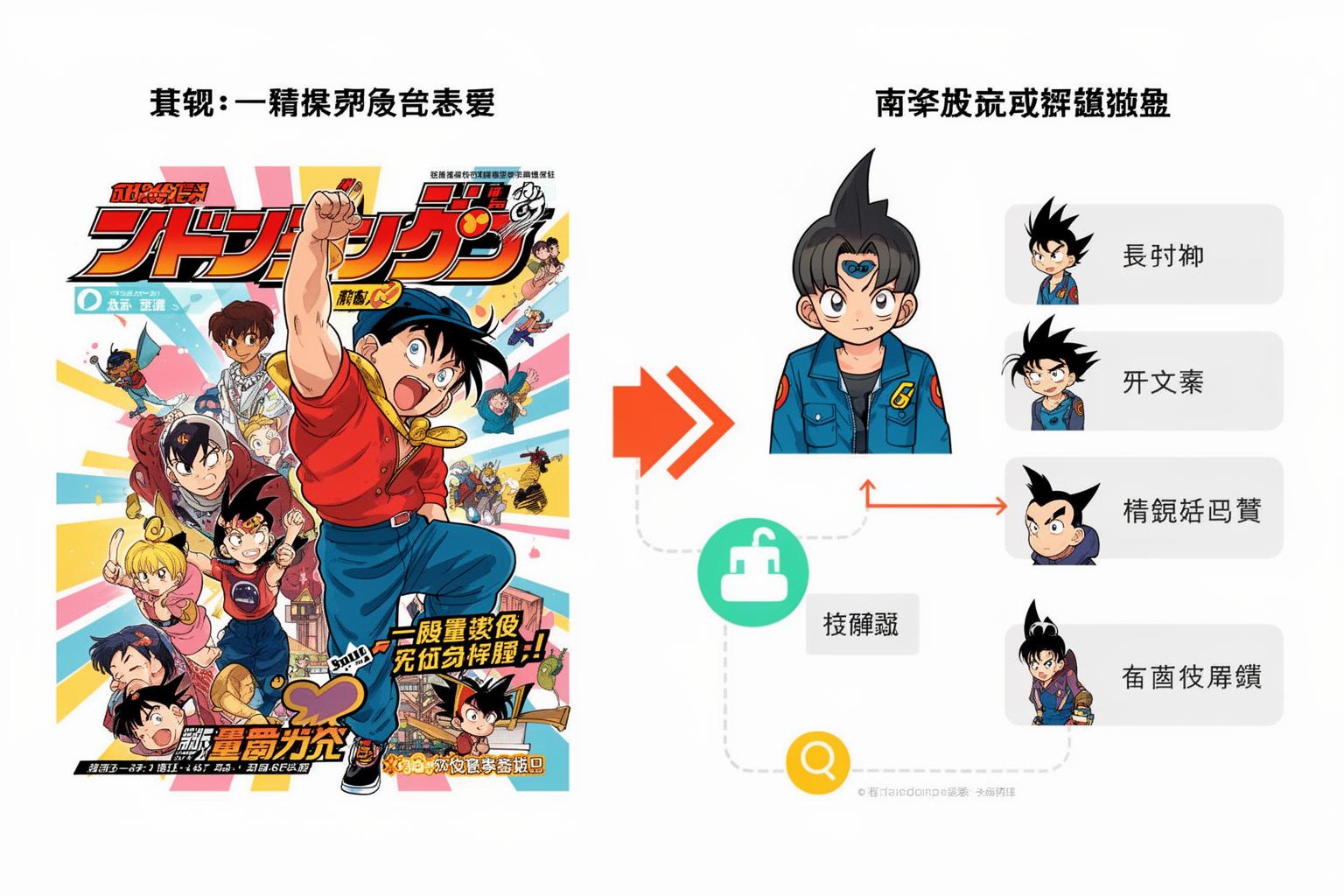
Every golden age eventually ends. For Shōnen Jump, the mid-1990s marked a time of significant challenge. The magazine confronted what became known as the “Dragon Ball Problem.” When Akira Toriyama’s epic saga, along with another major hit, the basketball manga Slam Dunk, ended in 1995 and 1996 respectively, it left a massive gap. Readers who had purchased the magazine for years primarily for those series suddenly had fewer reasons to buy it. Circulation, which had soared to an incredible 6.53 million copies, began to sharply decline.
The editorial team embarked on a desperate hunt for the “next big thing.” It was a period marked by intense pressure and experimentation. New series were launched and cancelled with ruthless speed. The magazine had to prove it was more than just the home of its former glories. It needed a fresh generation of heroes to carry the torch into the new millennium.
The Rise of the “Big Three”
From this crucible of competition, three new pillars emerged in the late ’90s. Not only did they save the magazine, but they also became the forefront of the global manga and anime boom of the 2000s. Fans now know them as the “Big Three.”
One Piece by Eiichiro Oda debuted in 1997. Initially, it seemed to follow the Dragon Ball adventure formula, but it quickly proved to be much more ambitious. Oda’s tale of Monkey D. Luffy and his quest to become the Pirate King is a masterclass in world-building. With its incredibly intricate plot, expansive and diverse world, and a huge cast of unforgettable characters, One Piece built on Jump’s foundations of friendship and adventure, scaling them into an epic, multi-decade saga that continues today. It eventually became the best-selling manga of all time, a testament to its lasting heart and limitless imagination.
Naruto by Masashi Kishimoto launched in 1999. It centers on a lonely, ostracized orphan boy who dreams of becoming the leader and greatest ninja of his village. Naruto focuses on the emotional core of the Jump philosophy. Its exploration of themes like loneliness, acceptance, the cycle of hatred, and the pain of loss resonated deeply worldwide. While the action was spectacular, it was the raw emotional drama and complex relationships among its characters that turned it into a global phenomenon.
Bleach by Tite Kubo arrived in 2001, offering a different flavor of shōnen action. With its emphasis on Soul Reapers, supernatural monsters, and the afterlife, Bleach is defined by its striking style. Kubo’s character designs were sleek and cool, his fight choreography cinematic, and the series as a whole exuded a modern urban fantasy chic. It became the stylish, edgy member of the trio, appealing to readers who wanted their action served with a dose of high fashion and mystique.
Together, these three series formed a new holy trinity for Shōnen Jump. They defined the magazine for a new generation and, importantly, were the series that soared in popularity overseas as the internet made manga and anime increasingly accessible. They were the ideal ambassadors to carry the Jump brand around the world.
From Print to Pixel: Jump in the Digital Age
The 21st century posed a new and existential challenge to Shōnen Jump: the decline of print media alongside the rise of the internet. The very model that had driven its success—a physical, weekly publication—was now under threat. Circulation numbers steadily dropped from their peak in the 1990s as young people shifted their media consumption habits online. Additionally, the internet led to the emergence of “scanlations”—unauthorized, fan-translated digital copies of manga chapters often available for free days before their official release.
For a time, the industry struggled to adapt. However, rather than continuing a losing battle against piracy, Shueisha eventually made a smart strategic shift: they chose to compete directly by offering a superior, official product.
Shōnen Jump+ and Manga Plus: The Global Strategy
The answer was to take Jump digital and global. In Japan, they introduced the Shōnen Jump+ app, a platform that provides access to both the weekly magazine and a range of exclusive, digital-only manga. The truly groundbreaking move came with the launch of Manga Plus in 2019—a free, global app and website that released the latest chapters of Jump‘s top series simultaneously with their Japanese release, officially translated into English, Spanish, and other languages.
This was revolutionary. It completely removed the delay that had long driven piracy. Fans in Boston or Barcelona could read the newest chapter of One Piece at the exact same time as those in Tokyo. By offering a free, legal, and high-quality alternative, Shueisha effectively undercut the main appeal of scanlation sites. This bold approach recognized the reality of a global, interconnected fandom and transformed Jump‘s business model for the digital era.
More Than a Magazine: The Transmedia Empire
Alongside its digital transformation, Jump also refined its strategy as a multimedia intellectual property (IP) incubator. The magazine itself is only the first step in a lucrative chain. A successful manga series in Jump doesn’t remain just a manga; it evolves into a cultural franchise.
This process is highly efficient. A popular series receives an anime adaptation, which serves as a major commercial, introducing the story to a far broader audience. This, in turn, boosts sales of the original manga volumes. Following that come video games, feature films, toys, apparel, and an endless array of merchandise. Events like the annual Jump Festa in Tokyo are grand celebrations where fans engage with their favorite franchises, witness exclusive announcements, and purchase limited-edition goods. Shōnen Jump has become more than just a magazine; it’s in the business of creating worlds and marketing every possible facet of them. The weekly anthology acts as the testing ground—the ultimate focus group—to identify which stories have the potential to become the next billion-dollar global franchise.
The Modern Vibe: What Shōnen Jump Represents Today

Today, Shōnen Jump is a completely different entity compared to the thick, printed weekly magazine of the 1980s, yet its core spirit remains remarkably preserved. The current generation of blockbuster hits like Jujutsu Kaisen, My Hero Academia, and the recently concluded sensation Demon Slayer: Kimetsu no Yaiba still carry the unmistakable DNA of Friendship, Effort, and Victory. However, the themes have evolved to mirror a more complex world.
A New Wave of Storytelling
The new wave of Jump heroes often faces more nuanced internal conflicts. Demon Slayer’s Tanjiro Kamado is motivated by a fierce, protective love for his sister, yet the series is also imbued with profound sadness and loss. Jujutsu Kaisen plunges into darker, horror-influenced realms, tackling themes of existential dread and the nature of curses. My Hero Academia is set in a world where heroism is a formal profession, examining the societal pressures and mental burdens involved in being a hero.
While epic battles and triumphant victories remain, the stories now tend to be more psychologically intricate, reflecting the anxieties of a new generation. The boundary between hero and villain often blurs, and the price of victory is weighed more heavily. The “shōnen” label itself has shifted to more of a genre marker for action-driven tales with young protagonists, rather than a strict demographic category. The audience is now older, more diverse, and more international than ever before.
The Community and the Ritual
Perhaps the greatest change is the fandom itself. Being a Jump fan today is a global, real-time experience. The weekly cycle has become a ritual shared by millions. It starts with the anticipation and sharing of early leaks or “spoilers” mid-week, followed by the official chapter release on Sunday. Immediately, social media platforms and forums light up with discussions, analyses, and fan theories. Reading the latest chapter is only half the experience; the other half is engaging in the vast, ongoing global conversation around it.
This digital community has transformed Shōnen Jump from a one-way broadcast into an interactive subculture. It’s a shared language connecting people across continents. Friendships form over debates about power levels, emotional moments spread through memes, and excitement for the next chapter builds collectively. The “vibe” of modern Jump fandom is a constant, energetic pulse of shared passion.
An Unlikely Cultural Ambassador
Through this transformation, Weekly Shōnen Jump has become one of Japan’s most powerful and effective forms of soft power. For countless people worldwide, a Jump series was their first introduction to Japanese culture. It acts as a gateway that leads them to explore Japanese language, mythology, cuisine, and social customs, all filtered through the lens of fantasy and adventure.
From its modest beginnings as a domestic comic for young boys, it has grown into a global entertainment powerhouse. It accomplished this not by abandoning its core principles, but by adapting how those principles are delivered and presented. The magazine grasped a fundamental truth about storytelling—that the desire to see an underdog struggle, fight alongside friends, and ultimately succeed is universal. It refined that formula for decades, then unleashed it upon the world. The legacy of Shōnen Jump lives not only on the printed page but within the imaginations of millions who learned what it means to be a hero through its stories.