Your first encounter is usually one of pleasant confusion. You step off the train in a small, provincial Japanese town, and there it is: a seven-foot-tall, vaguely pear-shaped creature with unnervingly wide eyes, flailing its limbs with the frantic energy of a speed-metal drummer. A crowd of locals, from toddlers to grandmothers, cheers with genuine affection. It’s not a corporate promotion for a new soda. It’s not a theme park character who has wandered far from home. It is, you learn, the official mascot of the city. Its job is to simply… exist. And to be loved.
This is the world of Yuru-kyara (ゆるキャラ), a term that neatly fuses yurui (loose, gentle, laid-back) and kyarakutā (character). On the surface, it’s a nationwide obsession with creating cute, often bizarre, mascots for literally everything: prefectures, cities, airports, tax offices, prisons, historical landmarks, and local produce. You can find a mascot for the Japan Self-Defense Forces, for specific dams, and for dental associations. The sheer ubiquity of these characters can feel like a fever dream, a whimsical marketing scheme that has spiraled beautifully out of control.
But to dismiss them as just quirky branding is to miss the point entirely. These fluffy, awkward ambassadors are not just a modern fad. They are the brightly colored, commercially viable descendants of a much older, deeper-seated belief system that runs through the very bedrock of Japanese culture. They are a window into a worldview where the world is not inert, but animate—a place where everything, from a mountain to a municipal bond, possesses a spirit, a personality, and a face. To understand the Yuru-kyara phenomenon is to understand Japan’s ancient and enduring relationship with the soul of things.
This animistic worldview, where objects possess a spirit, finds a parallel in the cultural significance of other Japanese artifacts, such as the haunted soul of Kokeshi dolls.
Beyond Kawaii: The Unspoken Rules of a True Yuru-kyara
The mascot boom, as we understand it today, is a relatively recent development, formalized and propelled into national awareness by cultural critic and illustrator Miura Jun in the early 2000s. He noticed these charmingly amateurish local characters appearing at festivals and events and gave them a name. More importantly, he provided them with a philosophy. A character isn’t a Yuru-kyara simply because it’s cute; it must follow a certain unrefined ethos.
Miura defined three core principles that make a character truly yurui:
First, it must express a strong love for its hometown or local region. The character’s design nearly always serves as a rebus, a visual puzzle combining well-known local products, landmarks, or historical figures. A bird might wear a castle-shaped hat, or a vegetable might sport the face of a samurai. It’s a walking, dancing symbol of local pride.
Second, the character’s movements and behavior must be unstable, awkward, or distinctive. This is essential. A polished, smoothly animated character from Sanrio or Disney is not a Yuru-kyara. A true Yuru-kyara may struggle to pass through doorways. It might waddle with an endearing clumsiness. Its appeal lies in its imperfections, its very human (or vegetable) vulnerability. This slight awkwardness makes it feel approachable and genuine, rather than a corporate product molded into sterile perfection.
Third, and most importantly, it must embody yurusa—looseness and unsophistication. They should look as if they were designed by a town hall employee on their own time, not a high-powered Tokyo advertising agency. This low-fi style is a conscious rejection of corporate sleekness. It conveys a grassroots sincerity that focus groups cannot replicate.
The annual Yuru-kyara Grand Prix, which ran for a decade, became the national platform for these principles. Hundreds, then thousands, of characters competed for votes, transforming obscure local mascots into national celebrities. This competition was not merely a beauty pageant for felt creatures; it was a contest for regional identity, tourism revenue, and the intangible yet powerful currency of national affection.
Animate Nature: The Shinto Roots of Everything Having a Spirit
So, why does this concept resonate so profoundly in Japan? What drives the urge to assign a face to a city or a personality to a tax form? The explanation lies in the subtle yet pervasive influence of Shinto, Japan’s native religion. Unlike the monotheistic religions of the West, Shinto is a form of animism, blurring the boundaries between the spiritual and the physical, the divine and the everyday.
Central to Shinto is the idea of Yaoyorozu no Kami (八百万の神), meaning the eight million gods or spirits. This figure is not literal but rather a poetic expression indicating that kami are infinite and present in everything. Powerful kami inhabit majestic natural landmarks like Mount Fuji or ancient cedar trees, but they also dwell in modest places such as a small stream, a uniquely shaped rock, or even a kitchen stove. From this perspective, the world overflows with spiritual energy and presence.
This belief also extends to man-made objects through the intriguing concept of Tsukumogami (付喪神). Folklore holds that an object reaching its hundredth year—whether it’s a sandal, a paper umbrella, or a tea kettle—can gain a spirit and come to life. These beings are not usually harmful; instead, they naturally result from an object’s long existence, use, and the history it accumulates. It’s a beautiful notion—that extended use and care can endow inanimate things with a soul.
Now, consider Yuru-kyara. Aren’t they a kind of modern, accelerated Tsukumogami? We no longer wait a century; rather, we intentionally give a spirit to a concept or place from the very beginning. We take the abstract idea of “Kumamoto Prefecture” or the intangible duty of “airport security” and embody it with a body, a face, and a personality. The mascot becomes the vessel for the collective spirit of that place or institution—a local kami brought to life in foam and felt, a friendly avatar for something that would otherwise remain faceless and distant.
A Tour Through the Mascot Kingdom
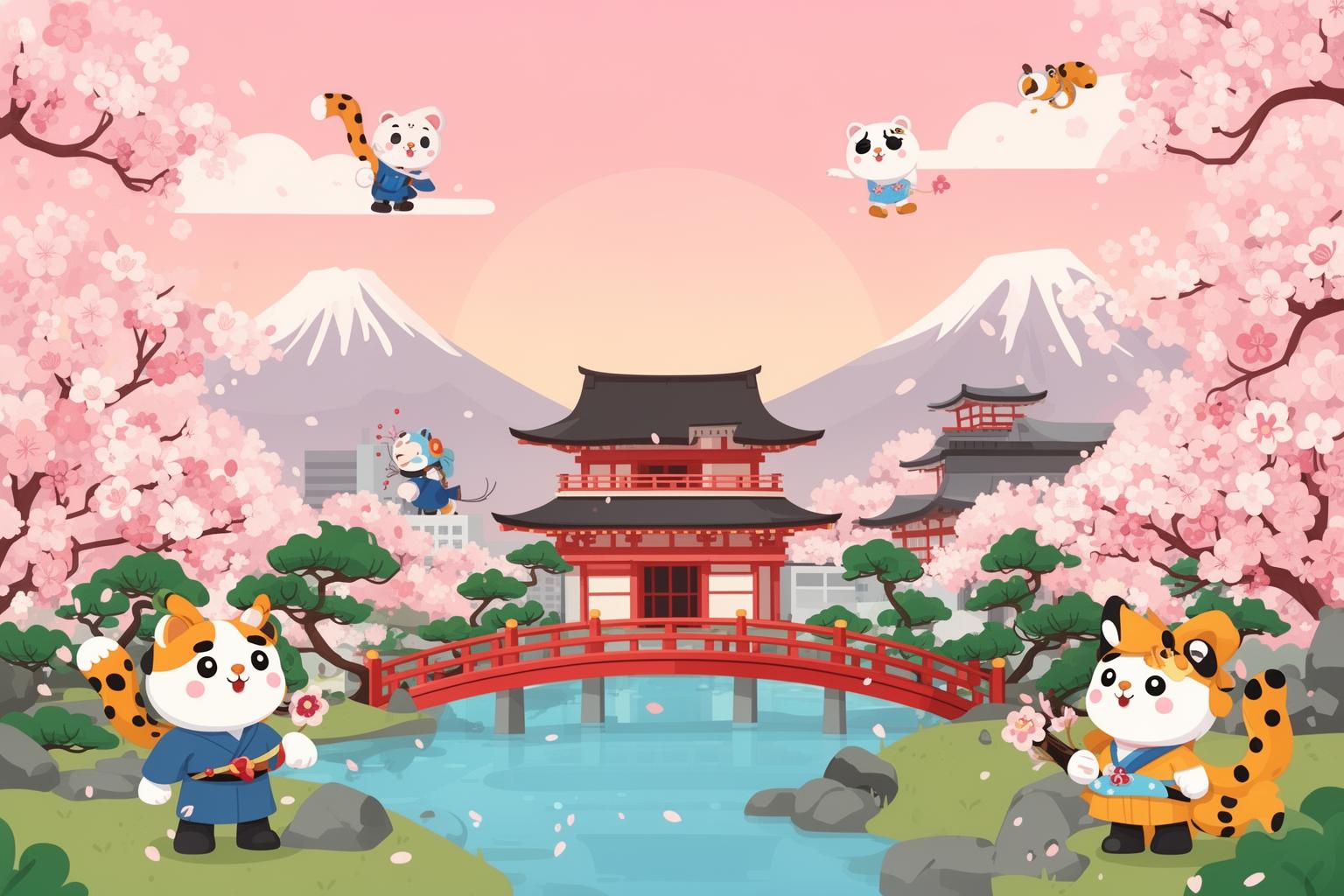
Once you begin to view Yuru-kyara through this animist perspective, the landscape of Japanese mascots shifts from a strange collection into a vibrant cultural mosaic. The designs, the backstories, and the very absurdity all start to take on a new kind of meaning.
The Regional Superstars
At the summit of the hierarchy are the national treasures—characters who have risen above their local roots to become icons. The undisputed leader is Kumamon, the rosy-cheeked black bear from Kumamoto Prefecture. Created in 2010 to attract tourists to the newly opened Kyushu Shinkansen line, Kumamon’s rise was meteoric. But he’s more than just a bear. He holds an official government role as both the Sales Manager and Happiness Manager of Kumamoto.
Kumamon’s brilliance lies in his simplicity and the prefectural government’s savvy choice to make his image free for anyone promoting Kumamoto products. This transformed him from a mere mascot into an open-source emblem of regional pride. He became a tool for economic revival, his cheerful visage appearing on everything from instant ramen to luxury cosmetics. After the catastrophic 2016 Kumamoto earthquakes, he emerged as a symbol of resilience and hope, his presence offering comfort at evacuation centers to displaced families. He’s not just marketing; he is a cherished public servant and the spiritual embodiment of his home.
The Lovably Bizarre and Kimo-Kawaii
For every traditionally cute character like Kumamon, dozens exist within the uncanny valley of kimo-kawaii (creepy-cute). These characters embrace their oddity, and it’s precisely this strangeness that makes them unforgettable.
Consider Okazaemon, Okazaki City’s mascot. He is a pale, lanky humanoid with a deadpan expression, unnervingly small eyes, and the characters for ‘Okazaki’ (岡崎) emblazoned on his face. He is profoundly and intentionally strange. He doesn’t dance; he shuffles. He doesn’t wave; he strikes awkward poses. Yet he became a national sensation. His off-putting appearance is a purposeful artistic choice, a rejection of saccharine cuteness that makes him stand out in a crowded field.
Then there’s Nishikokun, a mascot from Nishi-Kokubunji in Tokyo. Nishikokun is… hard to describe. It’s a gray, lumpy, vaguely humanoid figure with legs but no arms or torso. Its shape is inspired by an ancient clay tile found locally. It communicates by wiggling. It’s deeply abstract and slightly unsettling, yet it has a devoted fan base. Nishikokun shows that a mascot doesn’t need to be a cuddly animal to capture the public’s imagination—it just needs to have a soul, no matter how strange its form.
Food Personified: The Walking, Talking Produce
The impulse to animate the world is most obvious with food. In Japan, local produce is a profound source of regional pride, and giving it a personality is the highest honor.
Funassyi, the unofficial mascot of Funabashi, Chiba, is perhaps the most famous case. A “pear fairy,” Funassyi is a yellow, ridiculously hyperactive entity who shrieks, jumps, and headbangs with the energy of a punk rock frontman. Unlike official mascots, Funassyi is independent, allowing for a chaotic, unfiltered personality that has won millions of fans. Funassyi isn’t just a pear; it is the anarchic spirit of Funabashi’s famous pears brought to life.
On a more aggressive note is Melon-kuma from Yubari, Hokkaido. Yubari is renowned for two things: melons and bears. Melon-kuma is a brilliantly terrifying blend of both: a bear’s head that splits open to reveal the flesh of a Yubari King melon. Its signature move is to “attack” other mascots and celebrities by playfully biting their heads. It’s a perfect example of kimo-kawaii, transforming the sweetness of the local product into something edgy and unforgettable.
The Social Function of a Fluffy Friend
Beyond their spiritual and economic significance, Yuru-kyara fulfill an important social role in a culture that often values indirect communication and social harmony (wa).
Softening the Edges of Authority
Why does the Tokyo Metropolitan Police Department have a mouse-like mascot called Pipo-kun? Why do the Japan Self-Defense Forces employ various cute, anime-style mascots to represent their different branches? These characters function as cultural softeners, bridging the psychological gap between the public and powerful, potentially intimidating institutions.
A uniformed police officer symbolizes authority, rules, and the possibility of conflict. In contrast, Pipo-kun, with his large ears and friendly antenna, appears approachable. He serves as a non-threatening representative of the police force, appearing on children’s safety posters and at community events. The mascot provides a warm public face for a rigid bureaucracy, making the institution seem more connected to the community it serves rather than an imposing entity above it.
A Tool for Regional Revitalization
In an era marked by a declining and aging population, especially in rural areas, Yuru-kyara have emerged as a vital asset in machi-okoshi, or regional revitalization efforts. For a small town with a shrinking population and limited industries, a successful mascot can serve as an economic lifeline.
A popular character can attract tourists eager to visit its “hometown.” It can generate millions of yen in merchandise sales, with profits often reinvested into local services. The mascot offers the town a distinct brand identity and a story to share with the rest of the country. It acts as a declaration of resilience in a crowded cultural landscape. Supporting your local mascot becomes a form of civic engagement—an enjoyable and accessible way to back your community.
The Dark Side of Cuteness
Of course, the system is not without its issues. The success of early characters like Kumamon sparked a “mascot bubble.” Every town, city, and government agency felt the need for its own character, leading to significant oversaturation. At its height, there were well over 3,000 official and unofficial mascots across Japan.
This gave rise to a new problem: mascot bloat. Municipalities were spending public funds to create and maintain mascots that generated little to no return. Some, such as the city of Osaka, had dozens of mascots for various departments, resulting in confusion and redundancy. This prompted government-mandated mascot “culls,” forcing departments to consolidate or retire underperforming characters—a process that sounds both grim and amusing.
There is also the danger of losing the original yurusa spirit. As expectations rose, some municipalities hired costly design firms to create polished, market-tested characters. However, this often backfired. The public perceived a lack of authenticity. A character that feels too corporate loses the charm and sincerity that initially made the phenomenon special.
Ultimately, Yuru-kyara are more than just a marketing fad. They are a revealing cultural quirk, a playful expression of a worldview shaped by animism. They embody the belief that community, place, and even bureaucracy possess a spirit best communicated not through mission statements or press releases, but through a clumsy, wide-eyed, felt creature.
Next time you’re in Japan and see a dancing mascot shaped like a piece of fermented squid, don’t simply laugh at the absurdity. Look closer. You’re not just seeing a funny costume—you’re peering through a small, fluffy window into a culture’s soul, a world where everything deserves a face, a personality, and a little bit of love.