You hear them before you see them. It’s a sound that doesn’t just enter your ears; it vibrates through the soles of your feet, up your spine, and rattles your teeth. It’s a ragged, deafening, metallic scream—the sound of a dozen two-stroke engines with their baffles ripped out, deliberately tuned to be as obnoxious as possible. It’s the sonic signature of the bosozoku, Japan’s notorious youth biker gangs. For decades, this roar was the soundtrack of rebellion, a nightly protest against the crushing conformity of Japanese society. But tonight, on the sprawling expressways looping around Tokyo, the sound is faint. It’s an echo, a ghost. The legendary wolf packs that once numbered in the tens of thousands have dwindled to a handful of straglers. The question isn’t just what they were, but where they went. The story of the bosozoku is more than just a tale of delinquent kids on loud bikes. It’s a window into the pressures, contradictions, and shifting identity of post-war Japan, a story of how a nation’s rebellion found its voice in the engine of a motorcycle, and how, eventually, that voice fell silent.
This fading roar mirrors the disappearance of other unique subcultures, such as the quest for Japan’s lost musical grooves.
The Performance of Defiance: What Makes a Bosozoku?
To truly grasp the bosozoku, you need to understand one fundamental fact: it was never about speed. While a Western biker gang might value a Harley-Davidson for its horsepower and long-distance touring capabilities, a bosozoku’s bike—a heavily modified Japanese road bike known as a kaizosha—was an entirely different creature. It functioned as a rolling piece of performance art, a mobile sculpture of defiance. The aim was not to travel quickly from point A to point B, but to make the journey as loud, visible, and disruptive as possible. This was rebellion designed as public spectacle.
The defining features of this subculture are unmistakable. First, the bikes: small-displacement domestic models of 250cc or 400cc—the types accessible to high school students—were stripped down and rebuilt into grotesque caricatures of American choppers and British café racers. The most iconic element was the impossibly tall, three-pronged sissy bar, often called a sanren rocketto, soaring several feet into the air. Handlebars were squeezed inward and pulled back (shibori handoru), forcing riders into a hunched, prayer-like stance. Exhaust pipes were cut, bent, and welded into elaborate, multi-tailed monstrosities designed to maximize noise rather than performance. The paint jobs were theatrical: shimmering flakes, rising sun motifs, aggressive kanji slogans, and cherry blossoms, often paying tribute to World War II kamikaze pilots.
Next was the uniform, the tokko-fuku. These military-style jumpsuits resembled workwear for factory laborers or fighter pilots but were taken to an extreme level of customization. Typically white, black, or a bold primary color, they were covered in intricate embroidery. The gang’s name and emblem adorned the back, while the sleeves and legs bore a litany of aggressive, often nationalistic or pseudo-philosophical slogans: “Rule the Heavens,” “One Man Against a Thousand,” or phrases drawn from Buddhist scripture twisted into declarations of ego. The outfit was completed with a hachimaki headband tied around a signature “punch perm” hairstyle, and often a surgical mask to conceal their identity—a practice that long preceded the pandemic, contributing to their intimidating, anonymous presence.
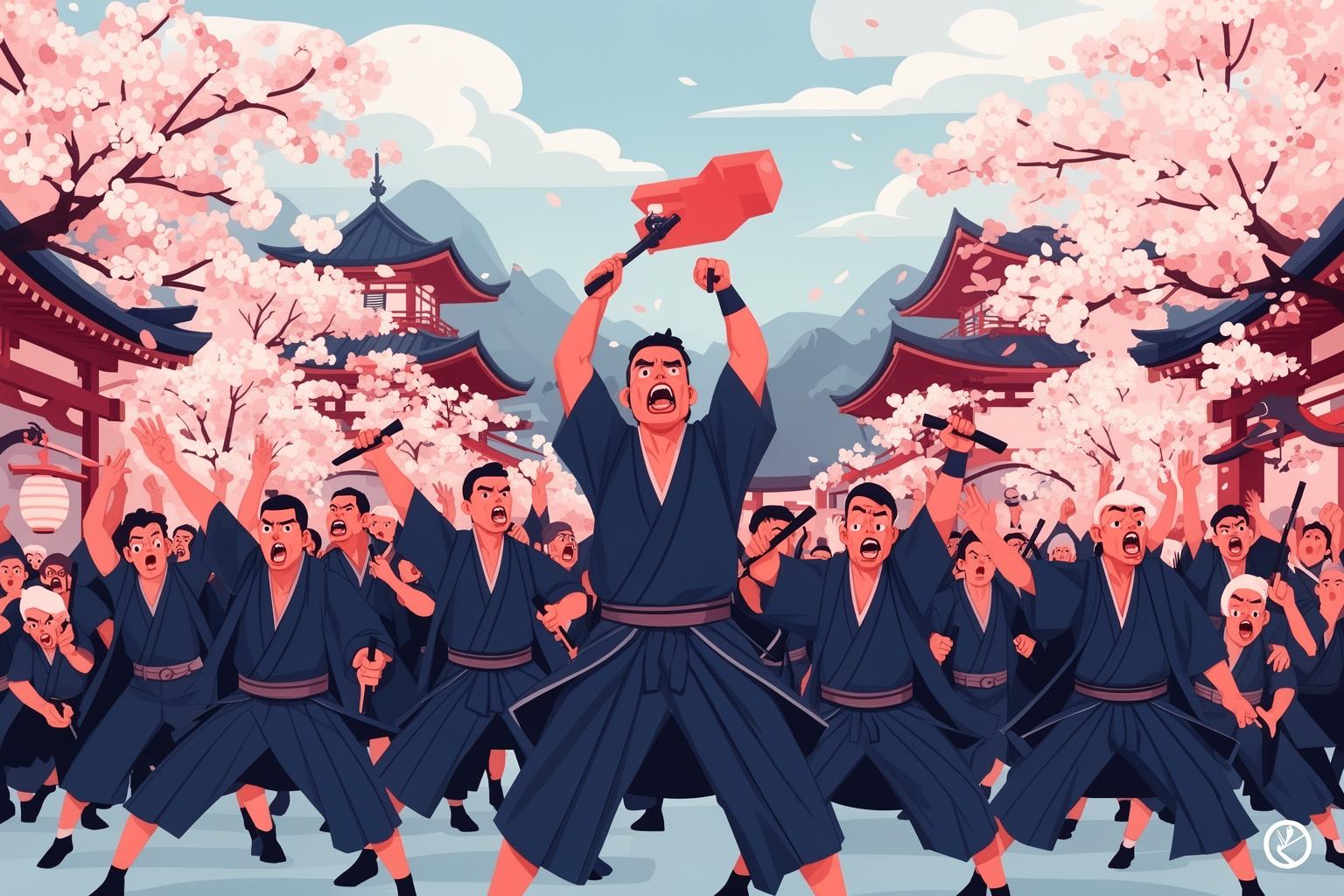
Finally, there was the act itself: the mass ride. Moving slowly in a deliberate procession called serpent-running (dako unten), they wove across all lanes of highways, blocking traffic for miles. They revved their engines in rhythmic patterns, a technique known as enjin-kooru or “engine calling,” producing a symphony of noise. They ran red lights, taunted police, and waved massive imperial flags from their bikes. It was a purposeful, confrontational occupation of public space—a temporary seizure of the carefully ordered arteries of urban Japan. They weren’t merely breaking the law; they were mocking the very idea of social harmony.
From Kamikaze Echoes to Bubble-Era Kings
The roots of the bosozoku are entwined with the ashes left by World War II. In the 1950s, Japan was a nation struggling with defeat, occupation, and a fractured sense of identity. The initial emergence of this culture came from the kaminari-zoku, or “thunder tribes,” young men from the growing working class who found freedom in affordable, domestically produced motorcycles. Some were former kamikaze pilots, trained to sacrifice themselves for the Emperor, who now found themselves directionless in a country that had abandoned its military past. The discipline, camaraderie, and risk-taking experienced in the cockpit were transferred to the motorcycle saddle.
The Birth of a Menace
By the 1970s, as Japan’s economic miracle gained momentum, these scattered groups merged into the more organized and confrontational bosozoku. The name, meaning “violent running tribe,” was coined by the media. This was their golden age. Gangs with intimidating names like the Black Emperors and the Specters claimed territories across Japan’s major cities. Their ranks swelled to tens of thousands, drawing from a generation of working-class youth alienated by the nation’s rising corporate prosperity. For boys destined for factory work and strict social roles, the bosozoku offered an alternative identity, a sense of belonging, and a taste of power.
This period was characterized by large, violent encounters with the police. Riots involving hundreds of bikers were frequent. They armed themselves with wooden swords, metal pipes, and Molotov cocktails, turning suburban streets into battlegrounds. The media eagerly covered these events, plastering images of snarling, uniformed rebels across newspapers and television. This created a feedback loop: the more the establishment condemned them as a social threat, the more their legend grew among disaffected youth. They became anti-heroes, symbols of resistance against a system that offered them little pride.
Riding the Bubble
The 1980s, the height of Japan’s bubble economy, saw the bosozoku aesthetic become more flamboyant and theatrical. With increased wealth in society, bike modifications grew more extreme, and uniforms became more elaborate. It shifted from raw street violence to style and spectacle. This was the era of the giant, rocket-shaped fairings and exaggerated seatbacks that now define the bosozoku look in popular culture. They were a noisy, glittering paradox: a working-class rebellion embracing the era’s excess, transforming their alienation into a bold, aggressive fashion statement. They stood as a perfect, chaotic contrast to the decade’s sleek, corporate image of “Japan Inc.”
The Code of the Road: Anatomy of a Subculture
Although their public image was one of utter chaos, the internal world of a bosozoku gang was paradoxically characterized by strict structure and rigid tradition. They mirrored the hierarchical Japanese society they professed to reject, but operated under a different set of rules. The core principle organizing them was the strict senpai-kohai (senior-junior) relationship. Absolute obedience to one’s seniors was expected. A junior member (kohai) was required to run errands, clean the senpai’s bike, and endure punishment without protest. This discipline was frequently maintained through casual brutality.
Hierarchy and Ritual
Leadership was earned by age, loyalty, and fighting skill. The gang leader, or sōchō, wielded absolute authority. Beneath him were lieutenants and other ranks, forming a quasi-military hierarchy. Leaving the gang was as ritualized as joining it. When a member turned 20—the legal age of adulthood in Japan—they would “retire” in a formal ceremony. Their final ride was a celebratory event marking their transition from delinquency to a more conventional adult life or, for some, to the lower ranks of the yakuza.
This rigid framework provided a sense of order and purpose often missing from their home or school lives. For many, the gang was their family, offering identity and mutual protection. It was a world with clear rules, clear consequences, and a defined path to earning respect, however temporary.
The Forgotten Rebels: The ‘Ladies’
Often overlooked in the male-dominated narrative of bosozoku are the all-female gangs, known as rediisu (ladies). These women created their own version of the subculture, often riding smaller scooters or bikes, but with equally strong dedication to customized aesthetics and rebellious spirit. They wore the tokko-fuku, sometimes in more feminine colors, proudly embroidery their own slogans of defiance. Though a minority, their presence challenged the notion that bosozoku was exclusively male. They carved out a space for rebellion within a society deeply rooted in patriarchy. The ladies’ gangs fought battles on two fronts: against mainstream society and the sexism they frequently encountered from their male counterparts.
The Engine Stalls: Why the Bosozoku Disappeared
The roar of the bosozoku that resonated throughout the Showa and early Heisei periods has now quieted to a mere whisper. Their transition from a widespread national menace to an occasional curiosity was not triggered by a single event, but by a combination of legal, social, and economic forces that rendered their unique form of rebellion outdated.
The Law Cracks Down
The most immediate cause was a series of focused legal reforms. For years, police struggled to effectively prosecute bosozoku members. Riders wore masks, often obscured their bikes’ license plates, and it was difficult to attribute specific crimes to individuals within a disorderly group. The turning point arrived with the 2004 revision of the Road Traffic Act. These new laws made it illegal to ride in large, disruptive groups—the very heart of a bosozoku run. Authorities gained broad powers to arrest riders solely for participating in dangerous group activities, without needing proof of other offenses. They could confiscate bikes on the spot, delivering a severe blow to members who had invested significant time and money in their machines. The risk simply became too great. Police enforced the crackdown vigorously, pushing gangs, which thrived on visibility, off the main roads and into obscurity.
A New Definition of Rebellion
More fundamentally, Japanese youth culture evolved. The bosozoku style, once the epitome of delinquent cool, began to seem outdated, even ridiculous. It was a very analog, highly physical form of rebellion in an increasingly digital age. Why risk arrest or injury on a cold highway when you could build a reputation and find a community online? The meaning of rebellion shifted. It became less about loud exhausts and street confrontations and more about curating a distinctive online identity, mastering niche subcultures like anime or gaming, or expressing dissent through subtle, individualistic fashion. The theatrical, group-based defiance of bosozoku felt like a relic of another era. It became dasai—unfashionably uncool.
The Economic Squeeze
Lastly, the economic conditions of post-bubble Japan played a significant role. The bosozoku lifestyle was surprisingly costly. Custom bike parts, embroidered uniforms, and fuel expenses all added up. During the economic boom, part-time jobs were plentiful and cash was more accessible. But as Japan entered its prolonged “lost decades” of stagnation, teenagers’ disposable income diminished. The elaborate and expensive hobby of being a bosozoku turned into an unaffordable luxury for the very working-class youth who once formed its base. Simple economics made sustaining the rebellion more difficult.
Echoes in the Exhaust: The Bosozoku Legacy
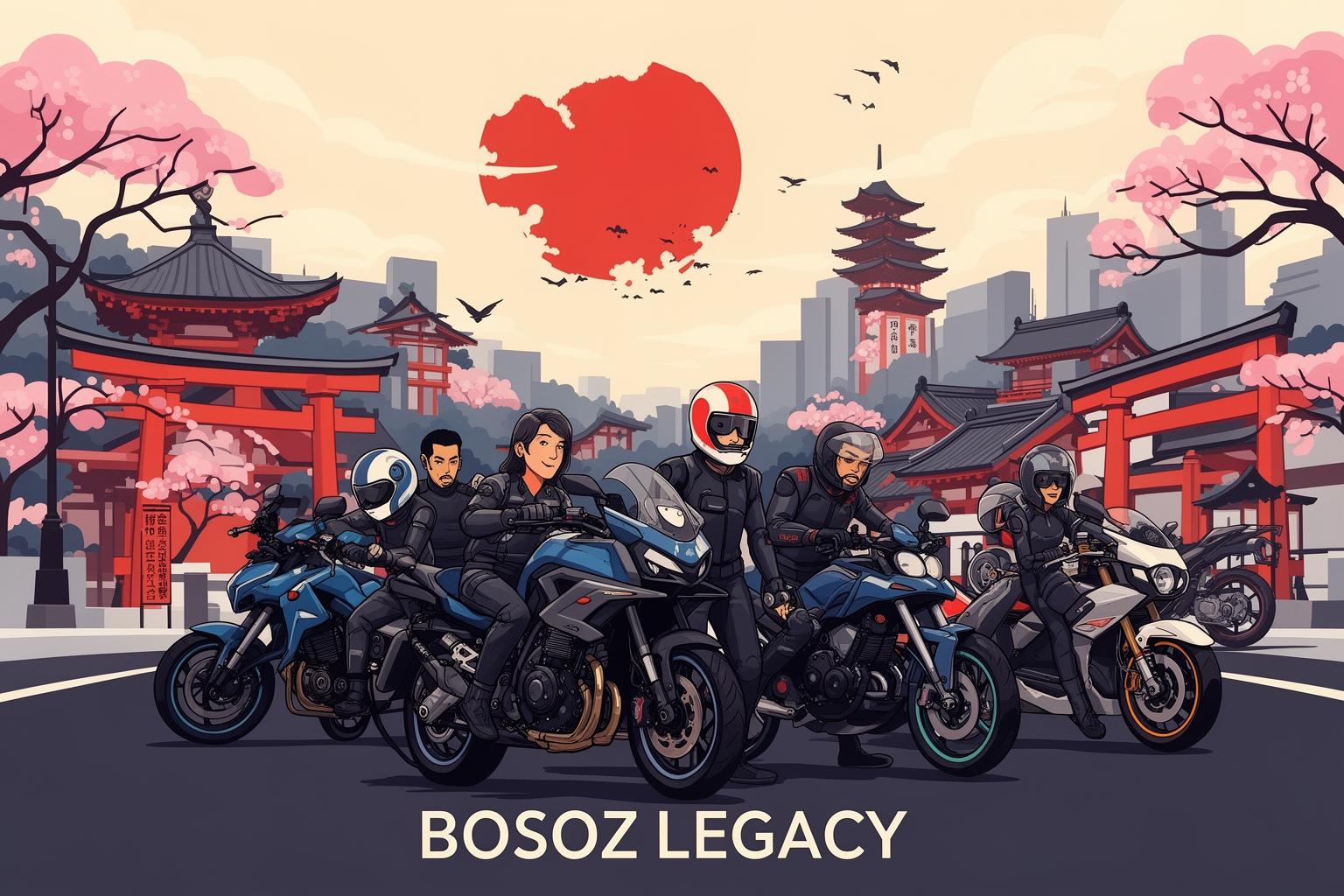
Although the gangs themselves have mostly disappeared from the streets, the spirit and style of the bosozoku have not vanished completely. They have evolved and persisted in two distinct forms: in nostalgic gatherings of older enthusiasts and as a powerful, romanticized trope within popular culture.
The Old Guard: From Gangs to Clubs
Nowadays, you might occasionally spot a classic bosozoku-style bike on the road, but the rider is more likely to be a man in his 40s or 50s than a teenage troublemaker. These are the kyushakai, or “old car clubs.” They consist of former bosozoku members or younger admirers who appreciate the style but reject the illegal behavior. They carefully restore and maintain vintage bikes in the traditional 80s bosozoku fashion. Their rides are organized, legal, and usually take place during daylight hours. They preserve the aesthetic as a form of cultural heritage, separate from its original roots in youthful rebellion. It’s a hobby, a nostalgic tribute to their own wild youth, rather than a battle against society.
Immortalized in Ink and Animation
The bosozoku’s most powerful legacy lies in their immortalization in manga and anime. From classics like Akira, where the protagonist Kaneda leads a biker gang through the dystopian streets of Neo-Tokyo, to high-school delinquent comedies such as Shonan Junai Gumi (the prequel to GTO), the bosozoku archetype has become a staple of Japanese pop culture. More recently, the huge success of Tokyo Revengers introduced the bosozoku world to a new global audience, romanticizing the loyalty, honor, and dramatic conflicts of the gangs.
In these fictional worlds, bosozoku are often depicted as misunderstood heroes, modern-day samurai bound by a code of honor, fighting for their friends and their turf. The grit, violence, and harsh real-world consequences are smoothed over, replaced by a stylized, compelling fantasy of rebellion. For millions of young people worldwide today, the bosozoku is not a real social phenomenon but a character type, a cool look, an aesthetic to borrow. They live more vividly on the page and screen than on Japan’s highways.
The bosozoku were a uniquely Japanese response to a universal question: how do you find your place in a world that seems determined to crush your individuality? Their answer was loud, elaborate, and dangerous. They were shaped by the particular social and economic conditions of their era—a roaring engine of discontent in a society that prized quiet conformity above all else. That engine has now been silenced, dismantled by laws, economics, and the steady march of time. But listen closely on a quiet night, and you can still catch the faint, ghostly roar of their engines—a story of a rebellion that chose to burn brightly, and inevitably burn out.