
Every culture has its archetypes, those figures who seem to explain an entire era in a single silhouette. America has the swaggering cowboy, the lone figure on a vast frontier. For Japan during its dizzying post-war economic ascent, the defining figure was the sararīman, the salaryman. But not just any office worker. The hero of that story, the engine of the miracle, was a specific, almost mythic breed: the Mōretsu Shain, the “fierce” or “violent” corporate warrior.
Picture him. Dark suit, sensible shoes, a briefcase full of documents. He is the first to arrive at the office and the last to leave, his face illuminated by the fluorescent glow of the desk lamp long after the city outside has gone to sleep. He moves with a quiet, relentless purpose, fueled by caffeine, nicotine, and an unshakeable belief in the company. This wasn’t a job; it was a crusade. He and his colleagues weren’t just building a company; they were rebuilding a nation. And for decades, this unwavering devotion was not seen as a sickness, but as the highest form of professional virtue.
But if you look closely at this figure, another, much older one comes into focus. A creature from folklore, lurking in the misty mountain forests of the Japanese imagination: the Tengu. These are powerful, supernatural beings, often depicted with a red face, stern expression, and a defiantly long nose—a physical manifestation of their immense pride. They are masters of their domain, skilled swordsmen and powerful sorcerers, but their hubris is their undoing. The saying Tengu ni naru, “to become a Tengu,” is still used today to warn someone who has grown arrogant and lost perspective. The Mōretsu Shain, in his corporate fortress of glass and steel, became the perfect modern incarnation of this proud, powerful, and ultimately tragic figure. His story is a quintessentially Japanese cautionary tale about what happens when devotion curdles into obsession, and pride isolates you on a peak of your own making.
The relentless drive of corporate warriors finds an unexpected counterpoint in the gentle pulse of Tokyo’s coastal energy, a contrast vividly explored in Tokyo’s bayshore charm.
Forging the Warrior: The Rise of the Mōretsu Shain
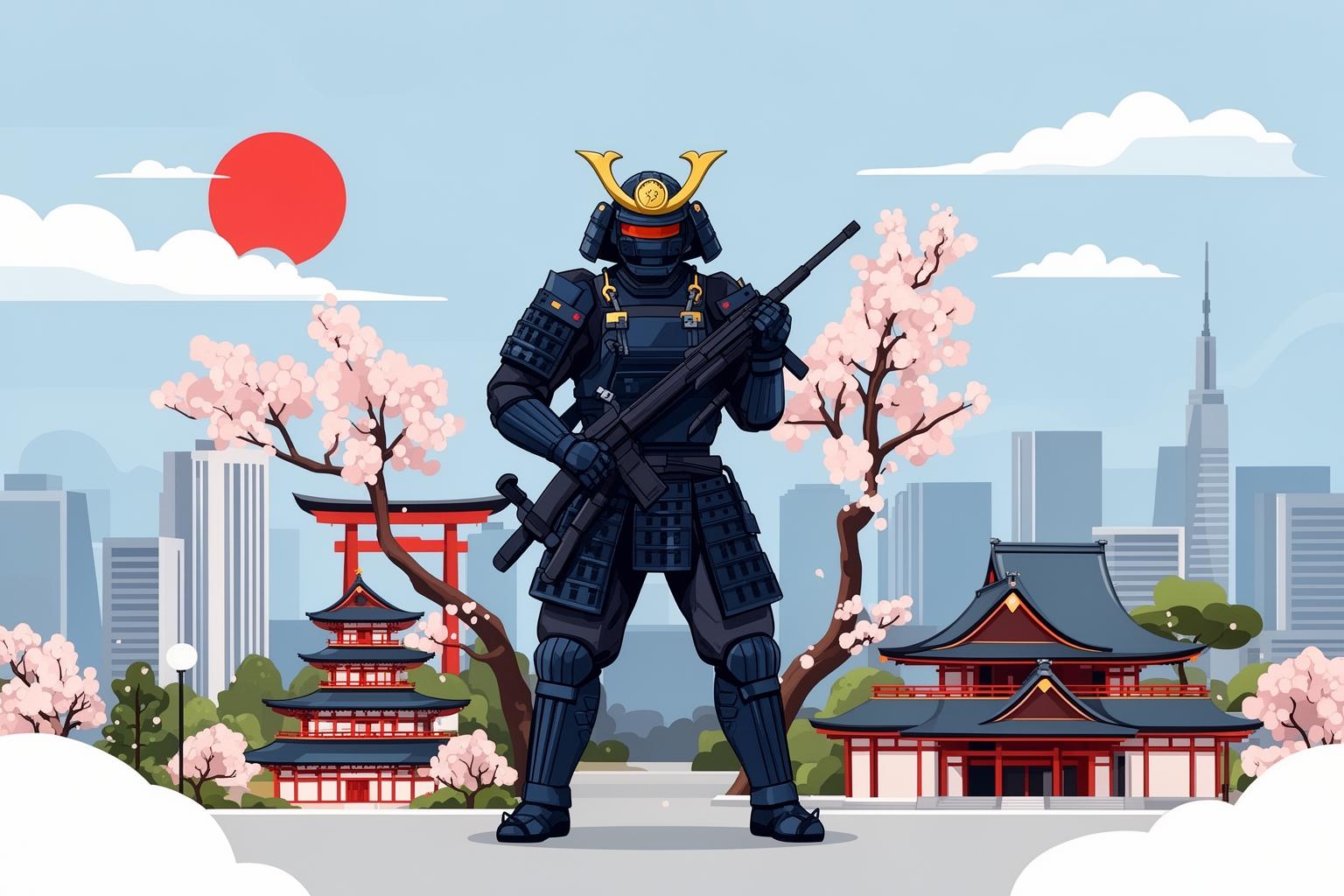
To grasp the concept of the Mōretsu Shain, one must first comprehend the world that shaped him. This world emerged from complete devastation. Post-World War II Japan lay in ruins, stripped of its military and imperial ambitions. The national psyche craved a new purpose, a new battlefield on which to prove its value. That battlefield became the global economy.
A Nation Reborn from Ashes
The corporation took the place of the old domain, becoming the new feudal fiefdom. The national mission shifted from military conquest to economic reconstruction and, eventually, supremacy. This shared objective created an extraordinary social contract between company and employee. In return for total, unconditional loyalty, the great corporations provided a cradle-to-grave security system. This era saw the rise of the “Three Sacred Treasures” of Japanese employment: lifetime employment (shūshin koyō), seniority-based wages (nenkō joretsu), and enterprise-based unions. Life was set: one joined a company like Mitsubishi or Panasonic straight out of university and stayed until retirement. The company served as the provider, community, and identity.
This system cultivated a distinct mindset. People didn’t just work for a company; they belonged to it. A man’s introduction was not “I’m a sales manager,” but rather, “I am of Toyota,” or “I am a Sony man.” The individual ego merged into the corporate collective. For many, this was not drudgery but a profound source of meaning. They were the shock troops of Japan Inc., and their relentless work ethic was a patriotic act. Every product sold, every market conquered, represented a victory for the nation.
The Anatomy of a Fierce Employee
The daily life of the Mōretsu Shain exemplified this dedication. The idea of “work-life balance” was alien and would have been perceived as weakness or lack of commitment. Long hours were the baseline expectation, a visible demonstration of loyalty. The term karōshi, meaning “death from overwork,” entered the lexicon during this time, a grim reflection of the extremes of corporate zeal. It was the dark, unspoken shadow of the economic miracle.
The core principle was kaisha-daiichi, or “company-first.” Everything else came far second. Family life often revolved around the father’s near-total absence. He would leave before the children awoke and return long after they slept. Sundays might be spent on the golf course with clients or the boss. The family was expected to understand that he was making a noble sacrifice for their shared future.
This sacrifice extended into the night. The workday didn’t end when people clocked out; it simply shifted to the bars and restaurants of districts like Shinjuku and Ginza. These after-work drinking sessions, or nomikai, were not optional social events. They were a vital, quasi-mandatory extension of the office, where hierarchies softened temporarily, honest opinions were shared over sake, and crucial bonds of trust and loyalty were built. Declining an invitation from your boss was a serious, often career-limiting mistake. It was all part of the unwritten code of the corporate warrior.
Echoes from the Mountain: The Tengu’s Tale
While the Mōretsu Shain was engaged in battles within boardrooms and factory floors, his spiritual predecessor, the Tengu, lingered in the cultural subconscious. These mountain goblins rank among Japan’s most iconic mythological figures, and their story offers a striking perspective on the salaryman’s struggles.
More Than Just a Monster
Tengu are intricate beings. They are not merely malevolent demons. In early folklore, they were viewed as omens of war and chaos, but over time their image transformed. They became protectors of the mountains, fierce and untamed, living beyond the constraints of human society. They are generally categorized into two types: the lesser, crow-beaked Karasu-tengu, and the more powerful, anthropomorphic Daitengu, or “Greater Tengu.” It is the Daitengu, with his striking red face and long nose, who provides the clearest analogy.
These beings possess extraordinary skills. They are portrayed as unmatched masters of martial arts; the legendary samurai Minamoto no Yoshitsune was purported to have learned swordsmanship from the King of the Tengu. They wield supernatural abilities and carry a magical fan made of feathers (ha-uchiwa) that can summon powerful winds. They dwell in a realm of their own, deep within forests, far removed from the everyday concerns of human life.
The Sin of Pride
The principal message of the Tengu mythos, however, is not about their strength, but their fatal flaw: pride. The long nose symbolizes this. It is a tangible representation of their arrogance, vanity, and steadfast belief in their superiority. Buddhist teachings adopted the Tengu as a warning figure, interpreting them as the reincarnation of arrogant or heretical priests. These were individuals who had gained great knowledge and skill in life but whose pride obstructed their path to true enlightenment. Consequently, they were reborn as powerful yet ultimately fallen beings, ensnared by the very ego they had nurtured.
This is the heart of the analogy. The Tengu’s pride in its secret knowledge and martial skill reflects the Mōretsu Shain’s pride in his work. His pride lay in his endurance, his deep understanding of the company’s inner workings, and his willingness to sacrifice his personal life for the benefit of the corporate entity. He, too, was an expert in a specific, isolated domain. And he, too, would eventually be undone by the very trait that had made him strong.
When the Mountain Becomes the Office
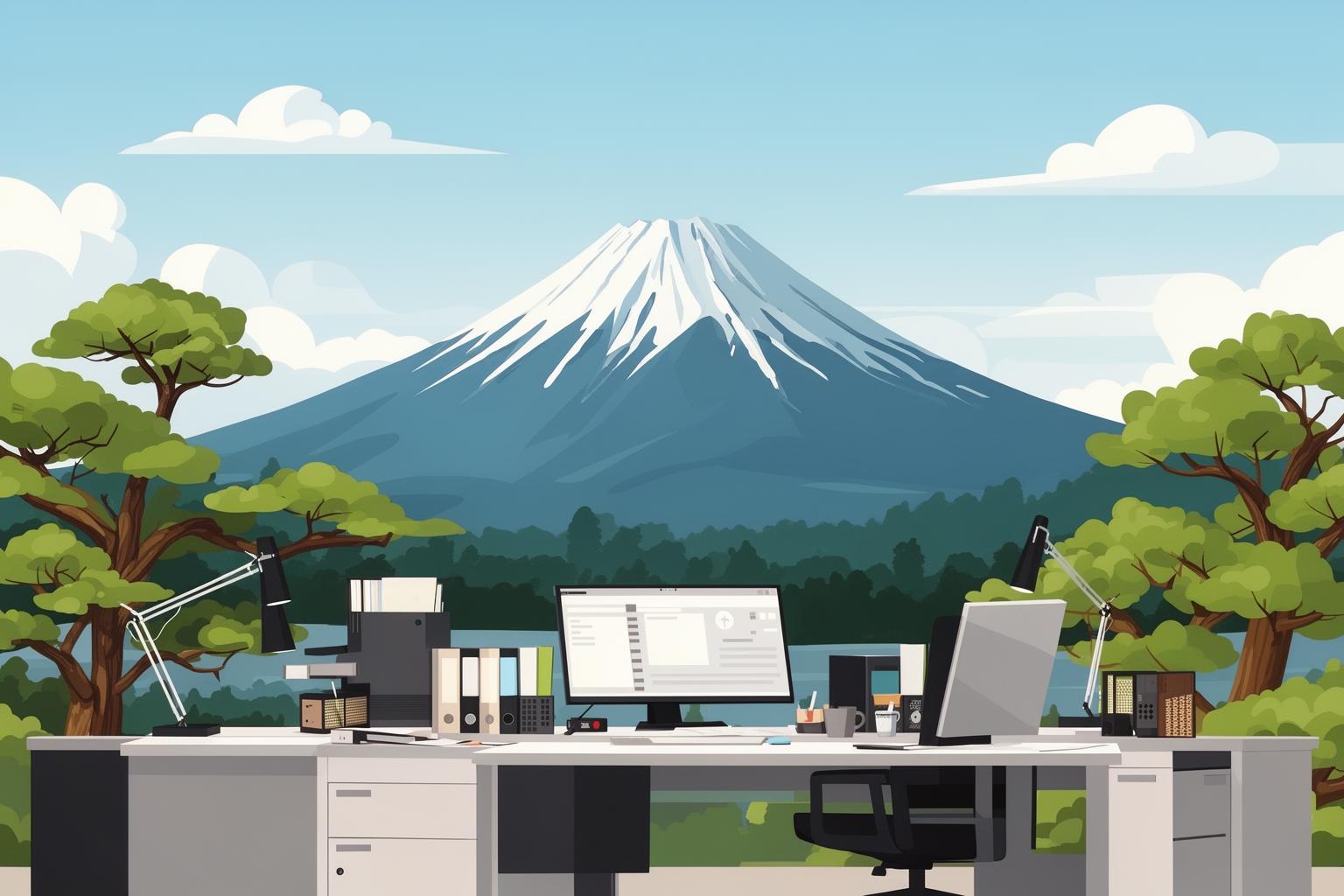
The Mōretsu Shain did not literally live in a mountain forest, but the corporate world he inhabited was equally isolated, with its own harsh landscape, its own revered peaks, and its own relentless deities embodied by senior management.
The Corporate Mountain and Its Solitary Peaks
The Japanese corporation during the boom years functioned as a self-contained ecosystem. It had its own language filled with acronyms and jargon, its own intricate political hierarchies, and its own unwritten codes of behavior. Success in this environment demanded complete, all-consuming dedication. The Mōretsu Shain, like the Tengu, became a master of this unique realm. He could skillfully navigate office politics, anticipate his boss’s needs, and deliver results with extraordinary endurance. Within those glass walls, he was a hero.
Yet this mastery came with a heavy price: profound isolation. By devoting his life to the company, he grew distant from his family. Though he had colleagues, he had few friends beyond the corporate world. His existence narrowed to the office, the commute, and the late-night bar. The Tengu’s long nose, a symbol of blinding pride, found its modern counterpart in the salaryman’s relentless focus on work. It granted him power in his chosen mountain but left him blind and powerless outside it.
The Shattered Nose: The Fall of the Salaryman Ideal
For decades, the arrangement held firm. The sacrifice was rewarded with security. But then, in the early 1990s, the music stopped. Japan’s “bubble economy” burst, propelling the country into the “Lost Decade.” The myth of Japan Inc.’s invincibility was destroyed. For the first time in generations, major corporations did the unthinkable: they laid off employees. They restructured, streamlined, and abandoned the sacred promise of lifetime employment.
This was when the Mōretsu Shain’s world collapsed. His steadfast loyalty proved to be one-sided. The company, the entity to which he had devoted his youth, health, and family, could discard him to protect its bottom line. This marked the modern Tengu’s fall from grace. The fierce warrior was suddenly just a middle-aged man in a suit, his specialized skills and political leverage worthless outside the corporate mountain from which he was cast out.
This triggered an identity crisis for a whole generation of men. Many remained on the payroll but were relegated to meaningless roles, becoming the madogiwazoku, the “window-seat tribe,” gazing out at a city they no longer identified with. The pride that had once defined them vanished, replaced by confusion and betrayal. The long nose of hubris had been broken.
The Ghost of the Tengu in Modern Japan
The era of the Mōretsu Shain has ended, but his spirit still lingers. Although the economic and social conditions that shaped him have evolved, the cultural pressures he represented have not disappeared entirely. The Tengu continues to haunt Japanese workplaces, serving as a reminder of a legacy that is both powerful and painful.
Legacies of the Fierce Warrior
While the promise of lifetime job security has diminished, the expectation of intense dedication and long hours remains deeply rooted in many areas of Japanese corporate culture. The pressure to prove loyalty through face-time, prioritize the group over the individual, and engage in mandatory after-work rituals remains very real. The difference now is that the reward is no longer guaranteed. The social contract has been broken, yet some of its most demanding terms persist in the fine print of company life.
In response, younger generations are actively rejecting this model. Having witnessed their fathers devote everything to a company only to be dismissed or sidelined, they are profoundly skeptical of the Mōretsu Shain ideal. They are more inclined to seek a healthier work-life balance, change jobs if dissatisfied, or bypass the traditional corporate ladder altogether by becoming freelancers or “freeters.” They have seen this cautionary tale unfold in their own homes and are taking its warning seriously.
Heeding the Cautionary Tale
The intertwined stories of the Mōretsu Shain and the Tengu form a powerful cultural narrative about the dangers of single-mindedness. Whether the aim is mastering esoteric Buddhist texts, perfecting the art of the sword, or reaching quarterly sales targets, the lesson remains the same: when one pursuit consumes your entire being, you lose perspective. You become arrogant, isolated, and fragile.
Today, Japan is still dealing with the consequences of this archetype’s decline. The nation is struggling to create a new work model—one that offers purpose and fosters innovation without demanding the total sacrifice of the individual. As companies experiment with flexible hours, remote work, and increased focus on employee well-being, they are, in a way, attempting to exorcise the spirit of the fierce corporate warrior. The long-nosed mountain goblin remains a potent symbol, a lasting reminder in cultural memory of the heavy cost of soaring too high, and too alone.