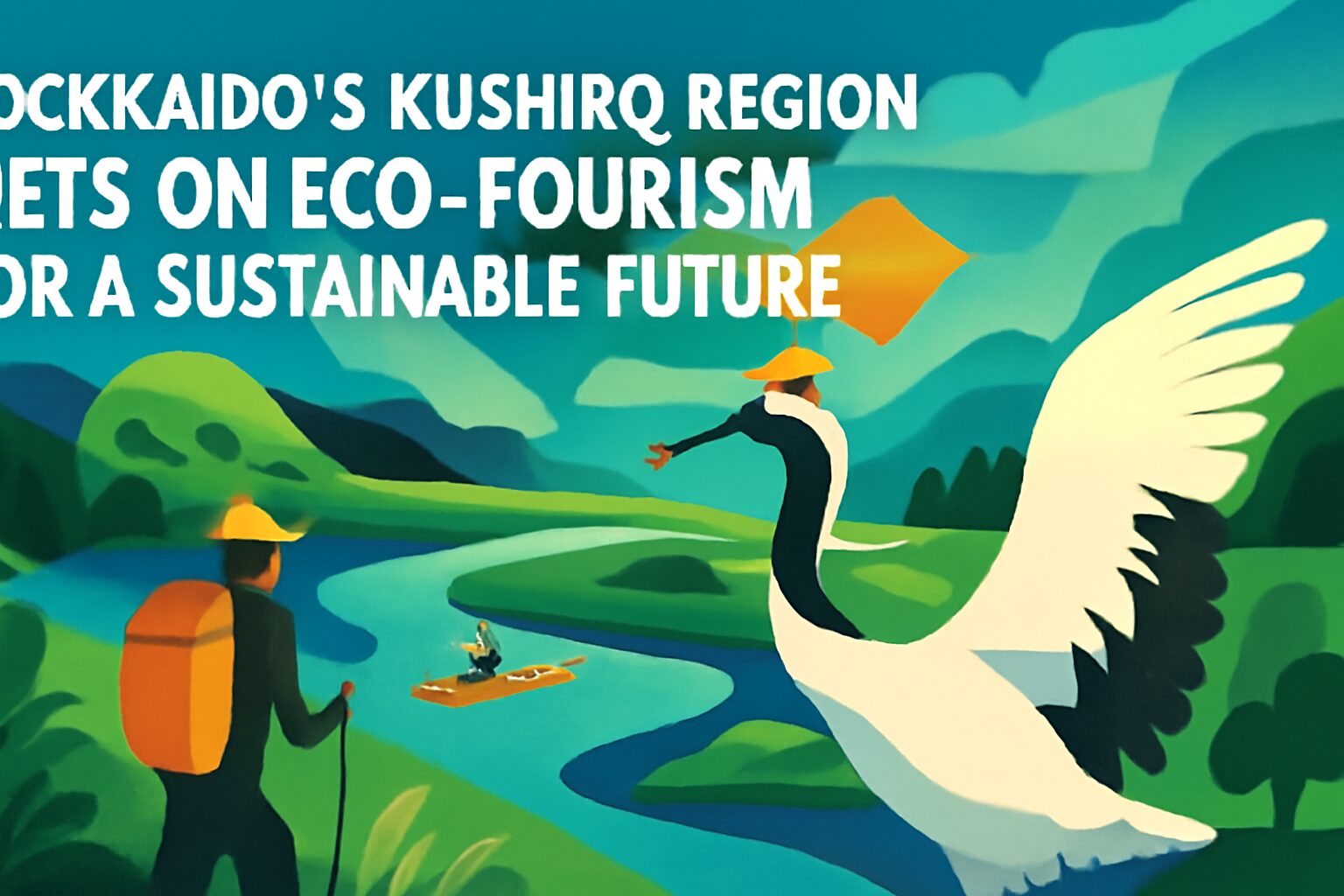
The Kushiro region of Hokkaido, a vast expanse of pristine nature in Japan’s northernmost island, has officially launched an ambitious eco-tourism initiative designed to breathe new life into its local economy. Announced on April 18, 2026, the plan signals a strategic shift away from conventional mass tourism towards a more sustainable, high-value model centered on the region’s unparalleled natural and cultural assets.
A New Vision for Travel in Eastern Hokkaido
At the heart of the initiative is a commitment to leveraging Kushiro’s most famous treasures: the Kushiro Shitsugen National Park, Japan’s largest wetland, and its iconic resident, the red-crowned crane. Rather than simply attracting more visitors, the plan focuses on enriching the visitor experience while ensuring minimal environmental impact.
Key components of the new strategy include:
- Sustainable Accommodations: Development and promotion of eco-lodges and green-certified hotels that operate in harmony with the surrounding environment.
- Expert-Guided Nature Tours: Offering small-group, in-depth tours led by local experts. These will focus on wildlife observation, wetland ecology, and responsible photography, providing a deeper educational experience.
- Authentic Ainu Cultural Experiences: Collaborating with the local Ainu community to offer authentic programs that share their deep connection to the land, their traditions, language, and cuisine. This aims to provide a unique cultural immersion that goes beyond surface-level sightseeing.
The Driving Force: Tackling Deep-Rooted Regional Challenges
This forward-thinking plan was born out of necessity. Like many rural areas in Japan, the Kushiro region has been grappling with serious socio-economic challenges for decades. The initiative is a direct response to these pressing issues.
Demographic Headwinds
The region faces a severe battle with depopulation and a rapidly aging society. Kushiro’s population has declined sharply from a peak of over 230,000 in the 1980s to just over 160,000 today. Furthermore, the aging rate has surpassed 35%, significantly higher than Japan’s national average of around 29%. This has led to a shrinking workforce and a decline in the vitality of local industries, making economic revitalization an urgent priority.
A Shift from Volume to Value
For years, tourism has been a key industry, but the focus has often been on volume. The new strategy recognizes the limitations of this model, which can strain local infrastructure and the environment without necessarily maximizing economic benefits for the community. By targeting travelers who are willing to pay a premium for exclusive, sustainable, and meaningful experiences, Kushiro aims to increase revenue per visitor, creating a more resilient economic foundation.
Future Outlook: A Blueprint for Revitalization?
If successful, the Kushiro eco-tourism initiative could have a profound and lasting impact on the region and potentially serve as a model for other rural areas in Japan.
Economic and Social Impact
The focus on high-value tourism is expected to create new, specialized jobs—from nature guides and cultural interpreters to roles in sustainable hospitality. It aims to empower local small businesses, such as restaurants and craft shops, by connecting them with a discerning international clientele. By celebrating and preserving Ainu culture, the initiative also plays a crucial role in safeguarding invaluable cultural heritage for future generations.
Environmental Preservation
This model inherently ties economic prosperity to environmental health. The Kushiro Shitsugen National Park, which covers approximately 288 square kilometers and was Japan’s first wetland to be registered under the Ramsar Convention in 1980, is a delicate ecosystem. Low-impact tourism ensures its preservation, reinforcing the idea that nature is the region’s most valuable asset, one that must be protected to be profitable.
While challenges such as developing the necessary infrastructure and training a skilled workforce remain, the Kushiro region’s bold step represents a hopeful vision for a future where tourism not only drives economic growth but also fosters environmental stewardship and cultural pride. For international travelers seeking an authentic and responsible journey through one of Japan’s last great wildernesses, Kushiro is positioning itself as a destination of choice.