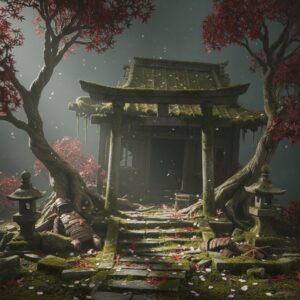
I was sitting on the polished wooden veranda of a temple in the hills of eastern Kyoto, the kind of place that doesn’t make it into the major guidebooks. It was late afternoon in autumn, and the air was crisp and smelled of damp earth and pine. In front of me, a small, meticulously raked gravel garden unfolded. A few moss-covered stones were arranged with what seemed like casual perfection, and a single maple tree, its leaves a fiery crimson, stood off to one side. But my eyes, and my entire sense of being, were pulled past the garden wall. Through a perfectly composed gap in the surrounding forest, the gentle, blue-grey slope of a distant mountain rose into the sky, its peak softened by a thin layer of haze. The mountain didn’t feel like a backdrop; it felt like it was the final, most important rock in the garden. It felt like it was part of the temple grounds.
I realized then that I wasn’t just looking at a beautiful view. I was experiencing a fundamental principle of Japanese aesthetics, one that subtly reshapes your perception of space, ownership, and your own place in the world. This is the art of shakkei, or “borrowed scenery.”
The word itself is beautifully direct. It’s composed of two kanji characters: 借 (shaku), meaning to borrow or rent, and 景 (kei), meaning scenery or landscape. It’s not “captured scenery” or “framed scenery.” It’s borrowed. The term implies a temporary arrangement, a humble agreement with the world outside your small patch of land. It’s a design philosophy that, instead of building walls to create a private world, strategically dissolves them to invite the wider world in.
Most of us are familiar with the idea of a picture window. We build houses with grand panes of glass to frame a stunning vista—a coastline, a cityscape, a rolling valley. But the very act of framing creates a separation. The glass is a barrier. The view is a possession, a static image hung on the wall of our home. It’s a landscape we look at. Shakkei is different. It’s a philosophy that seeks to integrate, not isolate. It aims to create a continuous experience, blurring the line between the man-made and the natural, the garden and the wilderness, the inside and the outside. It’s about creating a space you look through, into a larger, living composition. Understanding shakkei is about more than just garden design; it’s about unraveling a core aspect of the Japanese worldview and its relationship with nature.
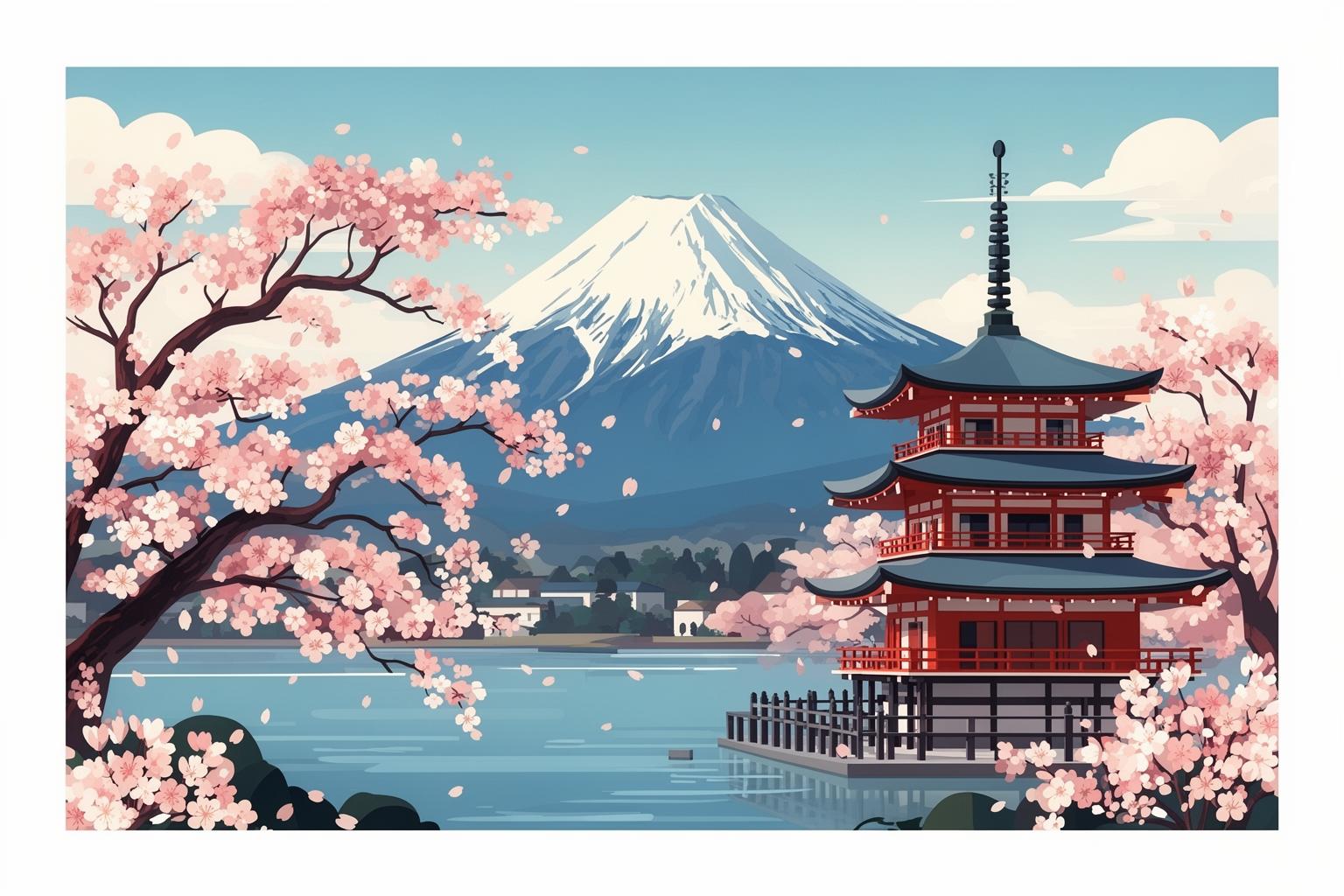
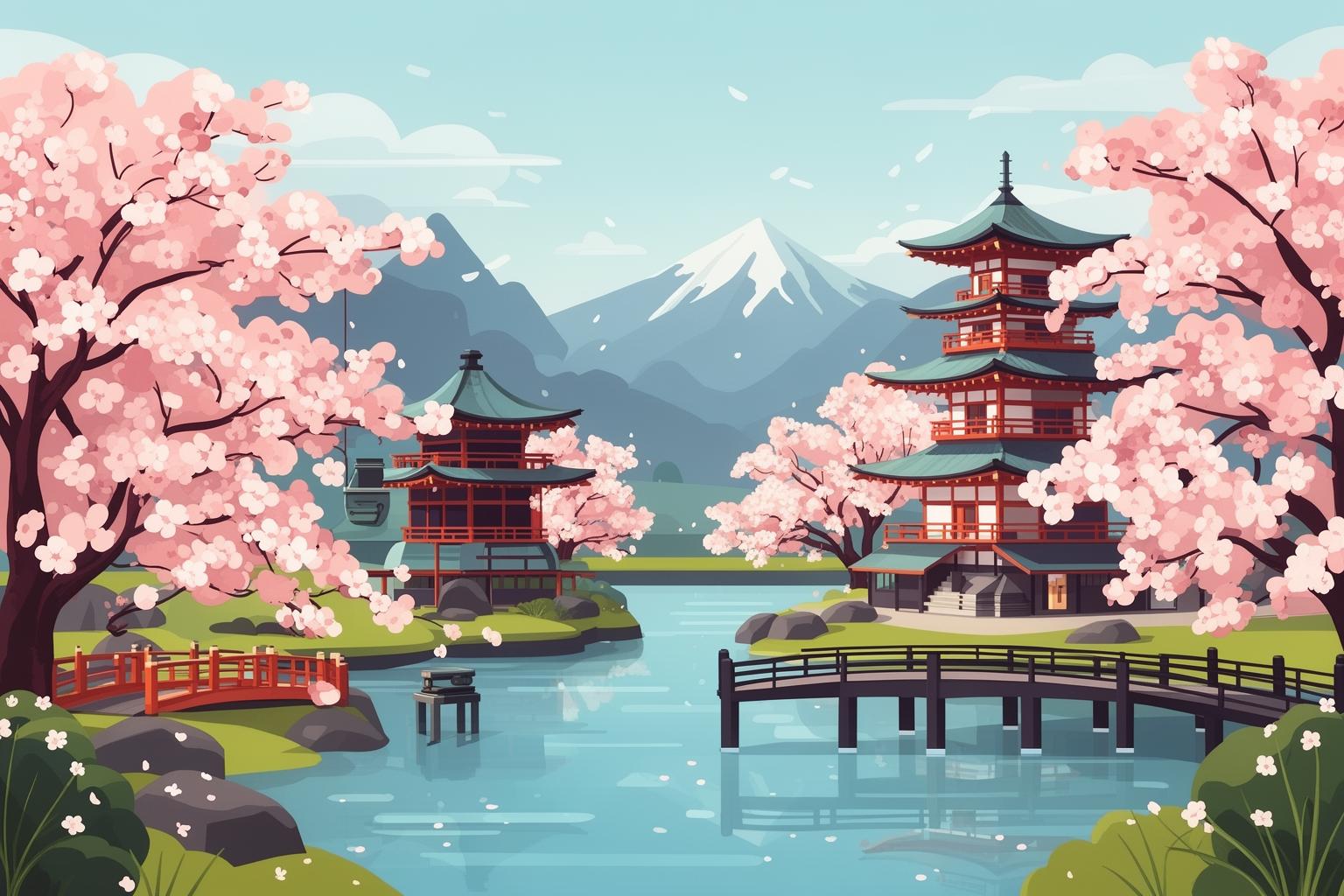
By embracing a design philosophy that dissolves traditional boundaries, some Japanese gardens extend their living landscapes through techniques like borrowing a mountain where natural elements become a seamless part of the overall aesthetic.
The Art of the Un-Frame: More Than a Pretty View
To truly understand what shakkei is, it helps to first recognize what it is not. Western architectural tradition, especially since the Renaissance, has often treated a view as though it were a painting. The window acts as the frame, and the landscape as the subject. Consider the grand Palladian villas of the Italian countryside or the stately English homes, where windows are symmetrically arranged with geometric precision to create a balanced, controlled image of the manicured grounds outside. Nature is tamed, organized, and presented for admiration from a comfortable, civilized interior. This beauty is striking, yet it is founded on separation and control.
The modern picture window descends directly from this concept. It aims to deliver a maximum visual impact, often with a sense of spectacle. A floor-to-ceiling window in a Manhattan penthouse frames the city skyline as a dynamic, glittering work of art. A panoramic window in a Californian beach house captures the endless blue of the Pacific. In both instances, the glass acts as an invisible barrier, shielding inhabitants from the elements, noise, and chaos. The world outside becomes a cinematic experience to be enjoyed from a safe, climate-controlled vantage point—you are the audience, and the world is the stage.
Shakkei is founded on a completely different idea. It doesn’t simply want to show you the mountain; it seeks to make the mountain an active participant in the garden’s design. The objective isn’t to create a beautiful picture, but to extend the sense of space and deepen the connection to the environment. This is achieved through a series of refined, almost psychological techniques that deceive the eye and dissolve the perceived boundaries of the property.
The Middle Ground Vanishes
The most crucial technique in shakkei is the intentional concealment of the middle ground. This is the secret ingredient that works the magic. A garden designer strategically employs foreground elements—a carefully pruned hedge, a low wall topped with tiles, a bamboo grove, or even the building’s architecture—to obscure the visual clutter lying between the garden and the distant borrowed view. This might include a road, a fence, a neighboring house, power lines, or an unkempt field.
By eliminating this intervening space, the designer creates a seamless visual transition. Your eye leaps directly from the garden’s foreground (a stone lantern, a raked gravel sea) to the distant scenery (a forest, a pagoda, a mountain range). The brain, no longer recognizing the usual markers of separation, merges the two spaces into one continuous whole. That faraway mountain no longer feels miles away; it becomes the dramatic backdrop of your garden. The neighbor’s cherry tree, its blossoms drifting over your fence, becomes your cherry tree for the season. This act of visual editing transforms a simple view into authentic shakkei. It is not passive framing but active curation.
A Living, Breathing Canvas
Because shakkei incorporates elements beyond the owner’s control, the garden becomes a living, ever-changing entity. A framed painting is static, but a garden that borrows a mountain is constantly evolving. Each shift in light, weather, and season offers a new experience.
Imagine a garden borrowing the view of a nearby forest. In spring, you witness the tender green of new leaves unfurling; in summer, it becomes a wall of lush, deep emerald. Autumn transforms it into a tapestry of crimson and gold, while winter’s bare branches dusted with snow create a stark, monochrome ink painting. The garden is never finished, never the same twice. A foggy morning may obscure the borrowed view entirely, turning the garden into an intimate, enclosed space; a clear evening might reveal a moon rising over distant hills, making the garden feel infinite.
This embrace of impermanence is closely tied to the Japanese aesthetic of mono no aware—the gentle, poignant awareness of the fleeting nature of all things. A shakkei garden serves as a constant reminder that we are part of a vast, ever-changing natural cycle. It teaches quiet acceptance that beauty is transient and all the more precious for it. You don’t own the mountain or control the weather; you are simply a fortunate observer, granted a temporary seat to witness the endless, beautiful unfolding of time.
The Four Scales of Borrowing
Japanese garden masters, through centuries of refinement, classified shakkei into four distinct types based on the scale and direction of the borrowed elements. Understanding these categories helps to appreciate the subtlety and versatility of the concept. It’s not always about a grand mountain; shakkei can be discovered even in the smallest, most intimate spaces.
Enshaku (遠借): Distant Borrowing
This is the most classic and dramatic form of shakkei. Enshaku involves incorporating a large, distant natural feature, such as a mountain or a significant body of water, into the garden’s design. The key lies in scale. The garden’s elements are crafted to echo or complement the distant view, creating a sense of grandeur and continuity. One of the best-known examples is the garden at the Shugaku-in Imperial Villa in Kyoto. The upper garden has a large pond, and from its edge, the view is carefully composed. The middle ground is concealed by sculpted hedges and trees, so the eye leaps directly across the pond to the surrounding mountains, especially Mount Hiei. The rolling shape of the pruned azalea bushes in the foreground deliberately mimics the soft contours of the distant peaks, producing an astonishing unity between the man-made garden and the wild landscape.
Rinshaku (隣借): Adjacent Borrowing
Rinshaku is a more intimate and neighborly form of borrowing. It incorporates elements from an adjacent property. This might be a beautiful grove of trees in a neighboring park, the elegant roofline of a nearby temple, or even a single magnificent tree in a neighbor’s yard. This form of shakkei is particularly relevant in dense urban settings. A designer may place a window or create a gap in a wall specifically to frame the view of a neighbor’s blossoming plum tree, effectively bringing its beauty into their own space without owning the land it grows on. It’s a beautifully communal and resourceful design approach, suggesting a shared appreciation of beauty that transcends property boundaries.
Gyōshaku (仰借): Upward Borrowing
This type of borrowing looks to the heavens. Gyōshaku is the art of incorporating the sky, clouds, or even the moon into the garden’s design. This is often done in small, enclosed courtyard gardens (tsuboniwa) where a horizon view is impossible. By planting a tall, slender bamboo or a tree with a delicate silhouette, the designer draws the eye upward. The garden becomes a frame not for a landscape, but for the ever-changing sky. The garden’s atmosphere shifts dramatically as clouds drift by or as the sky changes from the brilliant blue of midday to the soft lavender and orange of sunset. It’s a way of creating a sense of infinite space within a very confined area.
Fushaku (俯借): Downward Borrowing
Fushaku is the most introspective form of borrowing. It involves looking downward, incorporating elements at a lower elevation. The most common example is using the surface of a pond or water basin to reflect the sky, the surrounding trees, or the building itself. The reflection becomes a world within a world, a shimmering, fleeting copy of the scenery above. It adds depth and complexity to the garden, inviting contemplation. Another form of fushaku might involve designing a veranda or pavilion on a slope to overlook a stream, rocks, or a moss garden below, making those lower elements the central focus of the composition.
The Philosophy Behind the Technique: Why Borrow, Not Own?
To view shakkei simply as a clever landscaping technique misses the deeper significance entirely. It embodies a profound cultural and philosophical view of the relationship between humans and nature. The choice to “borrow” a view rather than “own” it is a powerful expression of humility and interconnectedness.
Humility in the Face of Nature
In many cultures, the height of landscape architecture is marked by the assertion of human dominance over nature. The formal gardens of Versailles exemplify this perfectly. Here, nature is manipulated, structured, and confined into precise geometric forms. Trees are trimmed into cones and cubes, and water is directed into elaborate, gravity-defying fountains. The entire landscape orbits the central palace, boldly declaring the king’s absolute control over his realm. It stands as a monument to mastery.
Shakkei represents the opposite philosophy. It starts with the humble acknowledgment that the grandest elements of beauty—a mountain, the sea, the sky—are far beyond human control or possession. You cannot own Mount Fuji; you can only appreciate the privilege of seeing it. By borrowing the view, the garden creator admits that their own work is subordinate and unfinished. The garden achieves its fullest expression only by relating to the vast, untamed world beyond its boundaries. It is an act of reverence, a recognition that humanity is a small part of an extensive, interconnected natural system, not its ruler.
Porous Boundaries and the Concept of Ma (間)
Japanese architecture has traditionally embraced ambiguous, transitional spaces that blur the boundaries between inside and outside. The engawa, or veranda, is a classic example. Is it part of the house, or part of the garden? It is simultaneously both and neither—a space of transition. Likewise, traditional Japanese interiors, with their sliding paper screens (shōji) and opaque panels (fusuma), create flexible, permeable boundaries rather than fixed, solid walls. Rooms can be opened and reshaped, flowing into one another and merging with the surrounding nature.
Shakkei is the ultimate expression of this architectural permeability. It dissolves the final, most concrete boundary—the property line itself. This idea connects with the Japanese aesthetic concept of ma (間), which can be understood as negative space, an interval, or a gap. Ma is not merely emptiness; it is the space between things that gives them shape and meaning. In a shakkei garden, the borrowed scenery resides in the ma beyond the garden’s edge. The garden is deliberately left unfinished, creating a “meaningful void” that invites the distant landscape to fill it. The design emphasizes as much what is omitted as what is included, generating a sense of dynamic tension and openness, encouraging the mind to complete the picture and feel the connection across the intervening space.
Shakkei Today: Borrowing in the Modern Metropolis
One might assume that an ancient art form so dependent on natural landscapes would hold little relevance in Japan’s bustling, modern cities. However, the philosophy of shakkei is more flexible than it appears, and its principles continue to subtly and powerfully shape contemporary Japanese architecture and design.
Architects in Tokyo or Osaka may lack a mountain to borrow, yet they can creatively apply the principles of rinshaku (adjacent borrowing) and gyōshaku (upward borrowing). For instance, a small apartment balcony might feature a planter box perfectly aligned with the branches of a single tree in a nearby park, creating a green pocket that feels like an extension of the living area. A window in a minimalist concrete home might be strategically placed not for a grand view, but to frame a sliver of sky between two skyscrapers, an act of urban gyōshaku that brings a sense of openness and light into a dense setting.
Contemporary architects such as Kengo Kuma excel in modern shakkei. His designs often incorporate natural materials like wood and bamboo arranged in slatted or layered formations, forming semi-transparent screens that filter light and views. These structures do not create rigid walls but rather porous veils, allowing glimpses of the surrounding environment to penetrate the interior. The building does not stand apart from its context; it engages in a dialogue with it, borrowing light, shadow, and fragments of the urban or natural landscape.
Even in interior design, the spirit of shakkei endures. Positioning a mirror to reflect a window view and bring it further into a room is a form of downward borrowing (fushaku). A minimalist interior that clears the space around a window, letting the outside view become the focal artwork, practices the essential principle of shakkei: integrating the world beyond as part of the living space.
This adaptability highlights the strength of the underlying philosophy. Shakkei is ultimately a mindset—a way of seeing and designing that seeks connections rather than separations. It reminds us that even in the most crowded city, we can cultivate a sense of spaciousness and tranquility by thoughtfully engaging with the world beyond our immediate surroundings.
The Unframed View
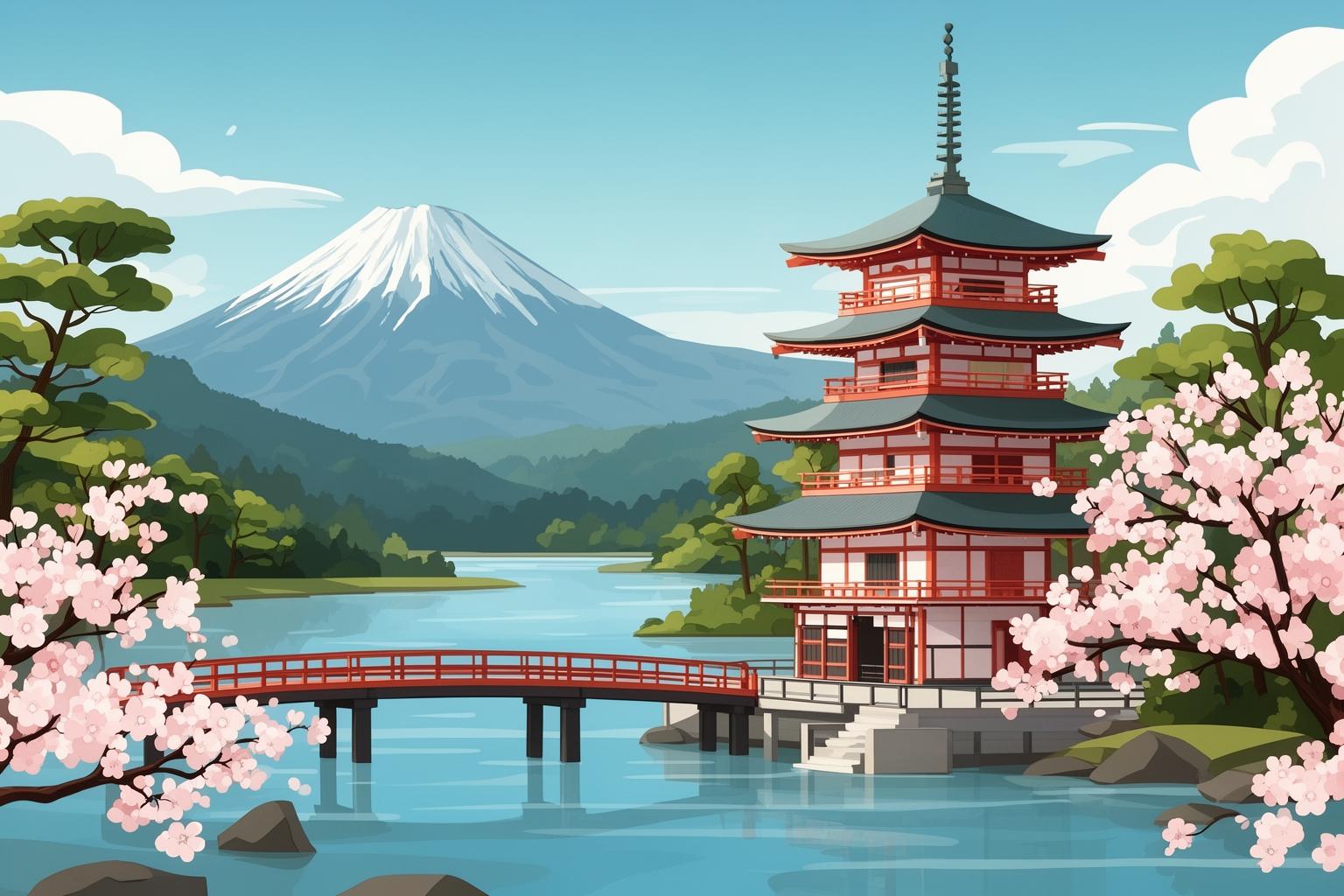
Returning to that temple veranda in Kyoto, what I experienced was more than mere aesthetic appreciation. It was a subtle yet profound shift in perspective. The seamless transition from the raked gravel to the distant mountain dissolved my sense of confinement. The space felt limitless. In that moment, the temple was not simply a building with a garden; it was a thoughtfully crafted gateway to the entire valley.
This is the ultimate gift of shakkei. It is an art form that encourages us to perceive the world differently. It gently resists our instinct to possess, to frame, and to control. It proposes that true beauty is found not in what we own, but in what we connect with. It discovers grandeur in humility and expansiveness in leaving things unfinished.
In a world that increasingly feels fragmented and enclosed, the philosophy of borrowed scenery offers a quiet yet radical alternative. It reminds us that no space exists in isolation. By deliberately blurring the boundaries between our small worlds and the larger one beyond, we don’t merely create a more beautiful garden or a more inviting home. We nurture a broader, more connected, and ultimately more peaceful sense of our place within the vast, ever-changing landscape of life itself.