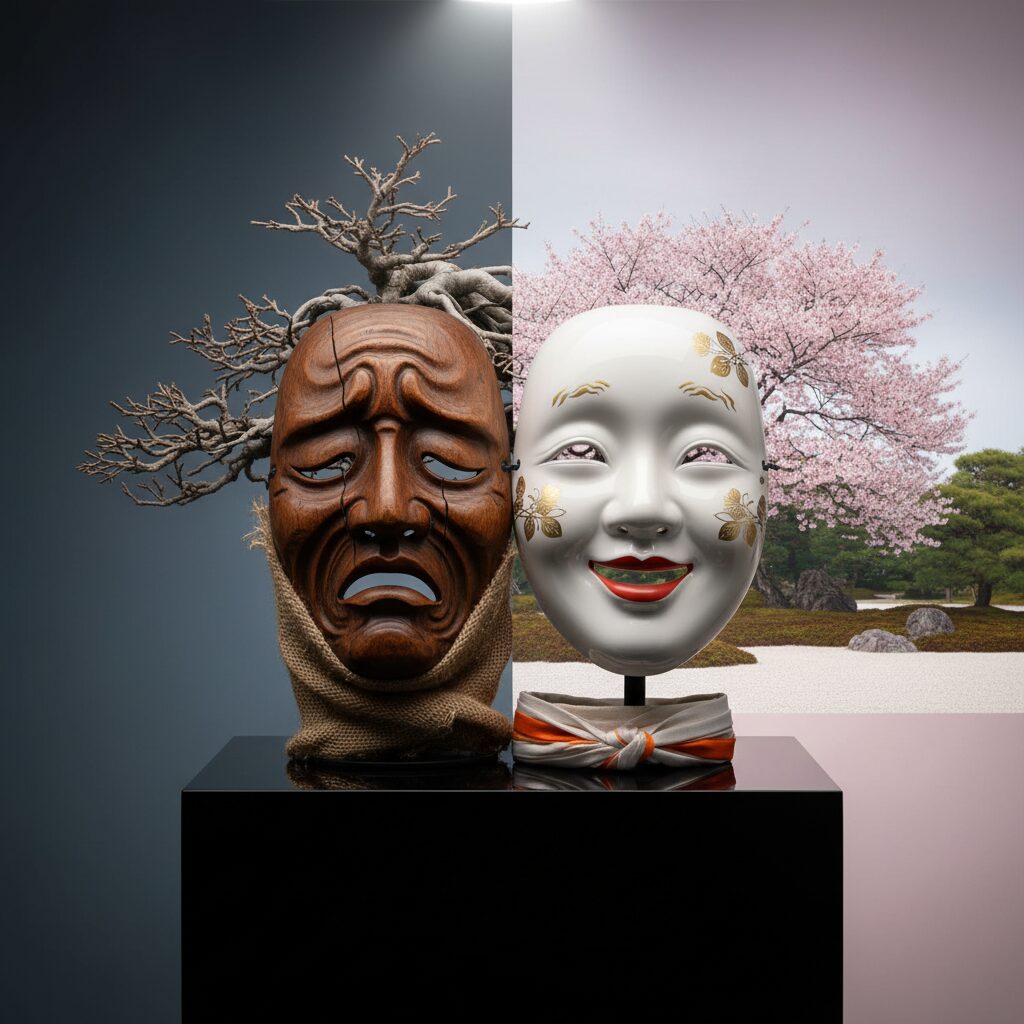
Someone in Japan once paid me what I thought was a fantastic compliment. After I gave a presentation at a small community center in the countryside, a man in the front row, a respected local leader, approached me. He beamed. “Your Japanese is so skillful,” he said, using the word ojouzu. I was thrilled. For months, I’d been wrestling with complex grammatical forms, and his praise felt like a validation of all that effort. I puffed out my chest a little and said, “Thank you so much!” He just smiled, nodded, and walked away.
Later, my Japanese friend gently pulled me aside. “He was being polite,” she explained. “Using ojouzu to a non-native speaker, especially an adult, can be a bit… condescending. It’s what you say to a child who has just drawn a picture.” My face burned. The compliment wasn’t a compliment at all. It was a polite, socially acceptable placeholder, a way of acknowledging my effort without actually offering a real critique. It was a perfect, if slightly painful, lesson in one of the most fundamental concepts of Japanese society: the ever-present dance between honne and tatemae.
If you’ve spent any time in Japan, you’ve felt it, even if you couldn’t name it. You’ve experienced the enthusiastic agreement that leads nowhere, the vague refusal that feels like a brick wall, the polite smile that masks something you can’t quite decipher. You’ve asked yourself, “Are they being dishonest? Why won’t they just say what they mean?”
The answer isn’t about honesty or dishonesty. It’s about a completely different framework for social interaction, one built on two pillars: honne (本音), your true, private feelings, and tatemae (建前), the public facade you present to the world. Understanding this duality is the key to unlocking not just Japanese communication, but the cultural logic that underpins the entire society. It’s the difference between hearing the words and understanding the music.
The subtle balance between genuine sentiment and public decorum extends into the professional realm, a phenomenon clearly illustrated by the unspoken dynamics of karoshi culture, where societal pressures manifest in life-altering ways.
What Are Honne and Tatemae, Really?

At their essence, these concepts appear surprisingly simple. Honne consists of the characters for “true” (本) and “sound” (音). It represents your “true sound”—the raw, unvarnished thoughts, desires, and opinions swirling inside you. It’s the inner voice that thinks, “This meeting is a waste of time,” or “I really don’t want to work this weekend.”
Tatemae, in contrast, is made up of characters meaning “to build” (建) and “in front” (前). It refers to the face you “build in front” of yourself for public display. It’s the carefully crafted set of words and behaviors appropriate to a given social context. It’s the voice that says, “Thank you for this productive meeting,” or “Of course, I’ll do my best to finish the project on time.” One represents reality, the other a performance. And in Japan, the performance is equally—often more—important.
The Sound of Your Heart: Defining Honne (本音)
Honne is reserved for a very small, trusted circle. Think of it as the emotional and intellectual equivalent of being in your pajamas at home: comfortable, unguarded, and never intended for public view. You share your honne with your spouse, closest family members, and perhaps one or two lifelong friends. Revealing your honne to someone is an act of deep intimacy and trust, signaling that you consider them part of your innermost group, your uchi.
Expressing your true feelings carelessly around colleagues, acquaintances, or strangers is not seen as “authentic” or “real.” Rather, it is perceived as socially unskilled, selfish, or even immature. Why? Because unfiltered emotions can easily disrupt group harmony, cause offense, or create awkwardness. In a society that values smooth social functioning above all else, the unchecked individual ego is a disruptive force. Therefore, honne is kept under lock and key, revealed only when it is safe—and necessary—to do so.
Building the Facade: Defining Tatemae (建前)
If honne is your pajamas, tatemae is your work suit, formal attire, your social uniform. It’s the polished version of yourself you present to the outside world. Importantly, it is not a lie. This distinction is often missed by outsiders. Lying implies a malicious intent to deceive for personal gain, but tatemae is not about deception; it’s about consideration. It is a form of social etiquette meant to make interactions predictable, smooth, and free of conflict.
When a shopkeeper is unfailingly polite to a difficult customer, that’s tatemae. When a colleague disagrees with your idea but says, “That’s an interesting perspective, we should consider it,” that’s tatemae. It serves as the social lubricant that allows the machinery of a densely populated, group-oriented society to operate without friction. It embodies a collective agreement to prioritize group comfort over individual expression. Everyone understands that polite words might not reflect true feelings, but they also recognize that this shared performance is what holds everything together.
The Cultural Roots: Why Did This System Evolve?
This style of communication didn’t emerge suddenly. It is the result of centuries of history, philosophy, and geography that have influenced the Japanese mindset. To truly grasp honne and tatemae, one must understand the cultural environment from which they originated.
The Weight of the Group: Harmony (和) as the Ultimate Goal
The most crucial concept for understanding Japan is wa (和), which roughly means harmony, balance, and order. For much of its history, Japan was a country of rice farmers, a task that was far from solitary. It required a vast, coordinated group effort. Planting, watering, and harvesting all depended on the entire village working together perfectly. A single individual who refused to cooperate could endanger the whole community’s survival. In such a context, open conflict was not just unpleasant—it was disastrous.
This historical circumstance instilled a strong cultural preference for group unity over individual expression. As the well-known proverb says, the nail that sticks up gets hammered down. Tatemae developed as the main tool for preserving wa. By establishing a shared code for social interaction, it prevents personal disagreements and uncomfortable truths from disturbing the fragile harmony of the group.
Reading the Air: The Art of Kuuki wo Yomu (空気を読む)
Since direct communication is often avoided, another skill becomes essential: the ability to kuuki wo yomu (空気を読む), or “read the air.” This subtle art involves sensing the atmosphere, comprehending unspoken dynamics, and interpreting the real meaning behind polite expressions. Japanese communication relies heavily on context. The meaning lies not only in the words but also in the pauses, tone, body language, and overall situation.
When your boss says, “I’ll leave it up to you,” they are not giving you free rein. They are conveying a desired outcome through the context, trusting you to “read the air” and understand it. When a friend responds to an invitation with, “It might be a bit difficult,” they are not suggesting a chance to attend. They are politely but firmly saying “no.” Listeners are expected to pick up on these hints and react appropriately, without forcing the speaker to be more direct and cause a loss of face for both parties. Failing to read the air earns you the label KY—someone socially clueless.
Inside and Outside: The Uchi-Soto (内 Soto) Divide
Communication rules in Japan shift significantly depending on who you are talking to. This is guided by the concept of uchi-soto (内 Soto), meaning “inside” and “outside.”
Your uchi group includes your family, company, team—your close circle. With these people, boundaries are more relaxed. You can speak more directly, use casual language, and reveal more of your honne.
Everyone else belongs to the soto, or outside, group, such as customers, people from other companies, or even colleagues from different departments. When dealing with soto people, communication becomes more formal, polite, and dependent on tatemae. The distinctions are strict. You use humble language to describe your own company (uchi) and honorific language for the client’s company (soto). This constant, often unconscious, behavior shifting is a fundamental aspect of daily life. Honne and tatemae serve as the key tools to navigate this complex social landscape.
Honne and Tatemae in Action: Real-World Scenarios
Theory is one thing, but witnessing this dynamic in action is quite another. Once you know what to watch for, you’ll begin to see it everywhere.
In the Workplace
Japanese offices are genuine stages for tatemae. A subordinate almost never openly contradicts their boss during a meeting. Rather than saying, “I think your plan is flawed,” they might say, “Thank you for sharing your thoughts. May I humbly offer an alternative viewpoint for consideration?” This choice of words honors the hierarchy while subtly introducing a different perspective. The aim is to contribute without causing confrontation.
A classic example is the phrase kentou shimasu (検討します), which literally means “I will consider it.” To a foreign businessperson, this can sound like a positive step. However, in many cases, it is a polite, non-committal way of saying “no.” It concludes the conversation without awkwardness, allowing the proposal to fade quietly rather than being rejected outright.
In Social Settings
Picture inviting a Japanese acquaintance to a party. If they are unable or unwilling to attend, you are unlikely to receive a direct “No, I can’t.” Instead, you’ll experience a masterclass in indirect refusal. The response may be something like, “Wow, thank you for the invitation! That sounds so fun! Let me check my schedule… ah, that day is a little…” The sentence might trail off or they might use the phrase chotto youji ga… (“I have a little something on…”)
This ambiguity is the signal. It’s a polite tatemae that conveys a “no” while protecting your feelings. The expected response is not to push for details but to read the atmosphere and say, “Oh, that’s too bad! Maybe next time!” This allows both parties to save face and maintain harmony.
Even gift-giving carries this subtlety. When you offer a gift, it is often met with reluctance like, “Oh, you shouldn’t have!” The recipient may initially refuse it as a demonstration of humility. The gift itself is often accompanied by the phrase, “Tsumaranai mono desu ga…” which means, “It’s a trivial/insignificant thing, but…” even if it’s a valuable item. This is pure tatemae—a ritualistic display of modesty.
In Customer Service
Japan’s famed customer service, or omotenashi, is perhaps the ultimate example of professional tatemae. The consistent politeness, the deep bows, the meticulous attention to detail—all form a carefully crafted facade designed to make the customer feel valued and respected. The employee’s personal feelings—their honne—are entirely irrelevant. Even if they are having the worst day, the tatemae of perfect service remains intact.
This is why you rarely hear a direct “we can’t do that” in a Japanese store. Instead, you’ll be met with numerous apologies and an explanation that it is “difficult” (muzukashii) under the current circumstances. The message is the same, but the delivery is softened to avoid any hint of conflict.
Navigating the Nuance: A Guide for Outsiders

For those of us who were not raised in this system, navigating this world can feel like trying to read a map written in invisible ink. But it is not impossible; it just requires a shift in perspective.
Listen for What Isn’t Said
In a low-context culture, attention is placed on the words spoken. In Japan, you must learn to listen to the silence between them. Notice hesitation, vagueness, and non-committal language carefully. Phrases such as “I’ll think about it,” “That’s difficult,” or “I’ll do my best” often do not signal possibility but rather gentle, face-saving refusals. The less direct and specific the language is, the more likely the answer is no.
The Izakaya Exception: Where Honne Flows Freely (Sometimes)
There is one place where the rigid wall of tatemae is permitted to break down: the izakaya, or Japanese pub. The after-work drinking session, or nomikai, serves as a crucial social pressure release. Under the influence of alcohol, colleagues and even bosses feel freer to share their honne. This ritual, sometimes called nomunication (a portmanteau of nomu, to drink, and communication), is where frustrations are vented, honest opinions are expressed, and bonds are built.
However, this freedom comes with its own set of unwritten rules. What is said during a nomikai is often unofficially understood to be forgotten by the next morning. It exists within a temporary, socially accepted bubble, allowing the group to vent and reset, preventing unspoken tensions from festering and harming the crucial harmony of the workplace.
Don’t Mistake It for Dishonesty
It is easy to misread tatemae as insincerity or weakness. This is a fundamental misconception. In the West, honesty is often equated with directness. Being authentic means speaking your mind. In Japan, sincerity is shown through consideration for others. A sincere person goes to great lengths to ensure others feel comfortable and that the social fabric stays intact.
Tatemae is not a lie; it is a different kind of truth. It is the truth of the social contract. It recognizes that society is a complex machine requiring each individual to play their role, wear the appropriate uniform, and sometimes subordinate personal feelings for the collective good. It is an ongoing, quiet negotiation between the self and the group, a dance everyone learns from birth.
Learning to perceive the interplay of honne and tatemae is like gaining a new sense. The polite but frustrating vagueness that once confused you begins to make sense. You start to appreciate the elegance of a well-crafted indirect refusal, the warmth hidden in a formulaic pleasantry, and the deep trust implied when a friend finally lets their tatemae drop and reveals their true feelings to you. You realize that communication isn’t always about transmitting raw data; sometimes, it’s about preserving a beautiful, fragile, and essential harmony.