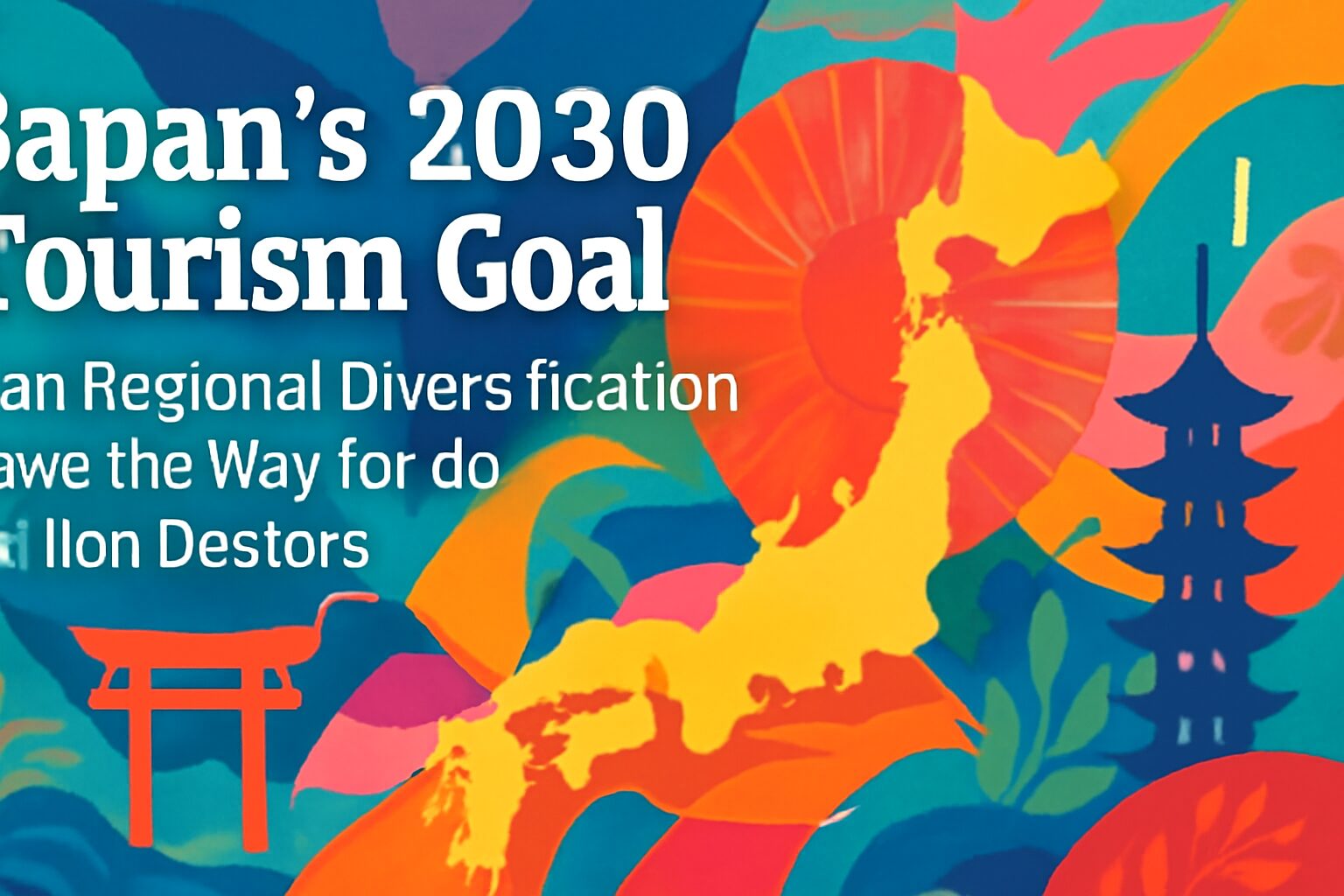
The Japanese government has set a bold target: to welcome 60 million international visitors by 2030. This ambitious goal, nearly double the pre-pandemic record, hinges on a crucial strategy—decentralizing tourism and guiding travelers beyond the well-trodden paths of Tokyo, Kyoto, and Osaka. Success will not only depend on attracting more visitors but on fundamentally reshaping how they experience Japan.
The Post-Pandemic Boom and an Old Challenge
Japan’s tourism industry has experienced a remarkable recovery since reopening its borders. In 2023, the country welcomed over 25 million visitors, and 2024 is on track to surpass the all-time high of 31.88 million set in 2019. However, this resurgence has also magnified a long-standing issue: overtourism.
Data from 2019 shows a heavy concentration of tourists along the “Golden Route.” Statistics from the Japan Tourism Agency revealed that Tokyo was visited by approximately 50% of all international tourists, followed by Osaka (39%) and Kyoto (35%). This concentration places immense strain on public transport, accommodation, and popular landmarks, diminishing the experience for both tourists and residents. To achieve the 60 million visitor goal sustainably, spreading this influx across the nation’s 47 prefectures is not just an option, but a necessity.
The Hurdles to Regional Tourism
Diverting millions of travelers to regional areas presents significant challenges. The government’s vision requires a multi-faceted approach to overcome key obstacles.
Infrastructure and Capacity
Major international gateways like Narita, Haneda, and Kansai airports are already facing capacity constraints. Expanding regional airports to handle more direct international flights is a critical step. Furthermore, many rural areas lack the necessary infrastructure to accommodate a large increase in visitors. This includes a shortage of hotels, inadequate public transportation, and a need for more multilingual services and digital tools like cashless payment systems.
Investment and Awareness
Attracting private investment for developing new hotels, attractions, and tour experiences in lesser-known regions is vital. Many potential destinations possess rich cultural heritage, stunning natural landscapes, and unique local cuisine but lack the marketing reach and resources to attract a global audience. Building international awareness for these “hidden gems” is a core component of the government’s strategy.
Future Outlook: A More Diverse and Sustainable Japan
If Japan successfully executes its regional diversification strategy, the impacts could be transformative.
Economic Repercussions
The government’s plan aims to triple the annual tourism spending to ¥15 trillion (approximately $100 billion USD) by 2030, a significant jump from the record ¥4.8 trillion in 2019. By spreading tourism, these economic benefits will flow into regional economies, creating jobs and revitalizing local communities that have faced population decline. This could support traditional crafts, local festivals, and small businesses that are the heart of Japan’s cultural fabric.
The Evolving Traveler Experience
For international visitors, this shift promises a richer and more authentic travel experience. Instead of crowded cities, tourists can discover unique adventures, from cycling the Shimanami Kaido, exploring the art islands of the Seto Inland Sea, to powder skiing in Tohoku or experiencing the spiritual trails of the Kii Peninsula. This strategy encourages a move towards sustainable and high-value tourism, focusing on unique experiences rather than just volume.
The Path to Sustainability
Dispersing tourists is also a direct response to the negative impacts of overtourism. It can help preserve the cultural and natural environments of iconic sites while ensuring that tourism remains a positive force across the country. Success will require careful planning to ensure that regional development is sustainable and protects the very assets that make these areas attractive.
Ultimately, Japan’s journey to 60 million visitors is a marathon, not a sprint. The goal is not merely to hit a number but to build a more resilient, diverse, and sustainable tourism model that benefits the entire nation and offers a deeper, more rewarding experience for all who visit.