You’ve heard it, even if you don’t know its name. It’s the sound of a Wes Anderson dolly shot, the breezy optimism of a late-90s indie film, the background music in a painfully chic café where the baristas know more about French New Wave cinema than you do. It’s a collage of crisp drum breaks, bossa nova guitars, whispering vocals, and orchestral swells lifted from forgotten film scores. This sound, a hyper-curated, joyful, and relentlessly stylish form of pop music, has a name and a place of origin: Shibuya-kei. Born in the record shops and small clubs of Tokyo’s Shibuya district during the 1990s, it wasn’t so much a genre as it was a shared sensibility—a testament to a generation of Japanese musicians who acted less like songwriters and more like pop-culture archivists, meticulously crafting the future from the most beautiful scraps of the past.
To understand Shibuya-kei, you have to understand the context. Japan in the early 1990s was in a strange, fascinating limbo. The dizzying heights of the 80s “Bubble Economy” had just collapsed, but the cultural confidence it instilled remained. This was a generation that grew up with disposable income, global access, and an insatiable appetite for culture, both domestic and imported. Before the internet flattened the world into a single, searchable database, taste was a form of currency, and knowledge was earned. It came from hours spent digging through dusty crates in the import sections of Shibuya’s legendary, multi-story record stores like HMV and Tower Records. This act of discovery—of unearthing a rare Serge Gainsbourg B-side, a kitschy Burt Bacharach arrangement, or a jangly single from an obscure Scottish indie band—was the very soul of the movement. Shibuya-kei artists were DJs and collectors first, musicians second. Their creative process wasn’t about raw invention but about brilliant curation and re-contextualization. They were building a sophisticated sonic world from a global palette, filtering it all through a uniquely Japanese lens of pop craftsmanship and playful irony.
Shibuya-kei’s inventive blending of past and present finds a fascinating parallel in Japan’s city pop phenomenon, which similarly transformed nostalgic sounds into a forward-thinking cultural statement.
The Anatomy of a Vibe

Trying to define Shibuya-kei with a rigid musical description is a futile task. It’s an ethos, not a fixed pattern. One track might be a flawless piece of French yé-yé pop sung in Japanese, the next a wild mix of jazz samples and hip-hop beats, followed by a soft acoustic tune that sounds like it was recorded in a sunlit Laurel Canyon studio in 1971. The link between them wasn’t a shared tempo or chord progression, but a common record collection.
More of a Library Than a Genre
The core principle of Shibuya-kei was its collage-like essence. The artists were connoisseurs of cool. Their brilliance was in their ability to pick out the most captivating elements from decades of Western pop music and blend them into something that felt both nostalgic and fresh. They worked with the idea that a well-chosen sample or clever tribute could carry as much emotional significance as an original melody. This approach raised the DJ and producer to the status of auteur. The primary skill was not merely musical ability, but taste—an almost scholarly knowledge of pop history combined with a playful, postmodern dismissal of genre boundaries. It was a celebration of the obscure, a love letter to the liner notes, and a statement that everything was open to reinvention.
The Sonic Ingredients
If you were to break down a typical Shibuya-kei track, you would find a rich array of influences. The sonic DNA was extraordinarily diverse, drawing from specific, often niche, areas of the musical world. French pop from the 1960s was a foundation, especially the work of Serge Gainsbourg, known for his talk-sing style, lush orchestrations, and collaborations with female vocalists like France Gall and Brigitte Bardot. This Gallic chic shaped much of the scene’s aesthetic framework. Equally vital was American lounge and sunshine pop, represented by Burt Bacharach’s intricate, bittersweet arrangements and The Beach Boys’ complex vocal harmonies. The breezy, wistful coolness of Brazilian bossa nova, notably the work of Antônio Carlos Jobim, was another key ingredient, lending gentle rhythms and sophisticated jazz chords to the blend. Add the theatrical drama of Italian film scores by composers like Ennio Morricone, the sweet, jangly guitars of British indie bands from labels like Postcard and Sarah Records, and a touch of early electronic music, and you begin to see the movement’s wide-ranging palette. These were not just influences; they were the raw materials.
The Architects of the Sound
While the scene was expansive and collaborative, a few key artists acted as its foundational pillars, shaping its boundaries and propelling it onto the international stage. Their work offers an essential guide for anyone seeking to understand Shibuya-kei’s development and influence.
Flipper’s Guitar: The Ground Zero
Before the scene had a name, Flipper’s Guitar existed. The duo of Keigo Oyamada and Kenji Ozawa were the Lennon and McCartney of the movement, the brilliant originators who set down the blueprint. Initially a straightforward indie-pop band, they quickly evolved, weaving in a dizzying variety of samples and stylistic changes. Their final album, 1991’s Doctor Head’s World Tower, stands as a landmark—a dense, exhilarating collage of shoegaze guitars, hip-hop beats, and pop-culture references. When they split acrimoniously at the height of their fame, it fractured the scene’s creative core but also launched its two most influential figures onto separate paths, creating two powerful new centers of gravity.
Pizzicato Five: The Global Ambassadors
If Flipper’s Guitar were the cerebral pioneers, Pizzicato Five were the glamorous, globe-trotting superstars. Led by the endlessly knowledgeable producer and bassist Yasuharu Konishi and fronted by the effortlessly stylish Maki Nomiya, they perfected the Shibuya-kei formula and exported it worldwide. Their music was a whirlwind of high-energy lounge, spy-movie drama, and danceable pop, all delivered with a playful wink. Tracks like “Twiggy Twiggy” and “The Night Is Still Young” were impeccably crafted, blending retro aesthetics with a contemporary, club-ready vibe. Pizzicato Five weren’t just making music; they were building a fully realized universe of fashion, design, and sound. Their international success in the mid-90s, especially on American college radio, became a gateway for many Western listeners into this vibrant sector of Japanese music, helping to shape the emerging “Cool Japan” image abroad.
Cornelius: The Mad Scientist
After Flipper’s Guitar dissolved, Keigo Oyamada reinvented himself as Cornelius, taking the sample-heavy spirit of his former band to its logical, mind-bending conclusion. He became the scene’s avant-garde experimentalist, a studio wizard who treated sound itself as an instrument. His 1997 masterpiece, Fantasma, is a landmark album in electronic pop. It’s a carefully crafted audio art piece where samples ranging from The Beach Boys to toy robots are sliced, diced, and reassembled into catchy, yet intricate, pop songs. The album’s international release brought him critical acclaim and a devoted fanbase, solidifying his status as a global indie icon. Cornelius proved that the Shibuya-kei style wasn’t just about retro pastiche but could serve as a launching pad for genuine sonic innovation.
The Physical Epicenter: Why Shibuya?
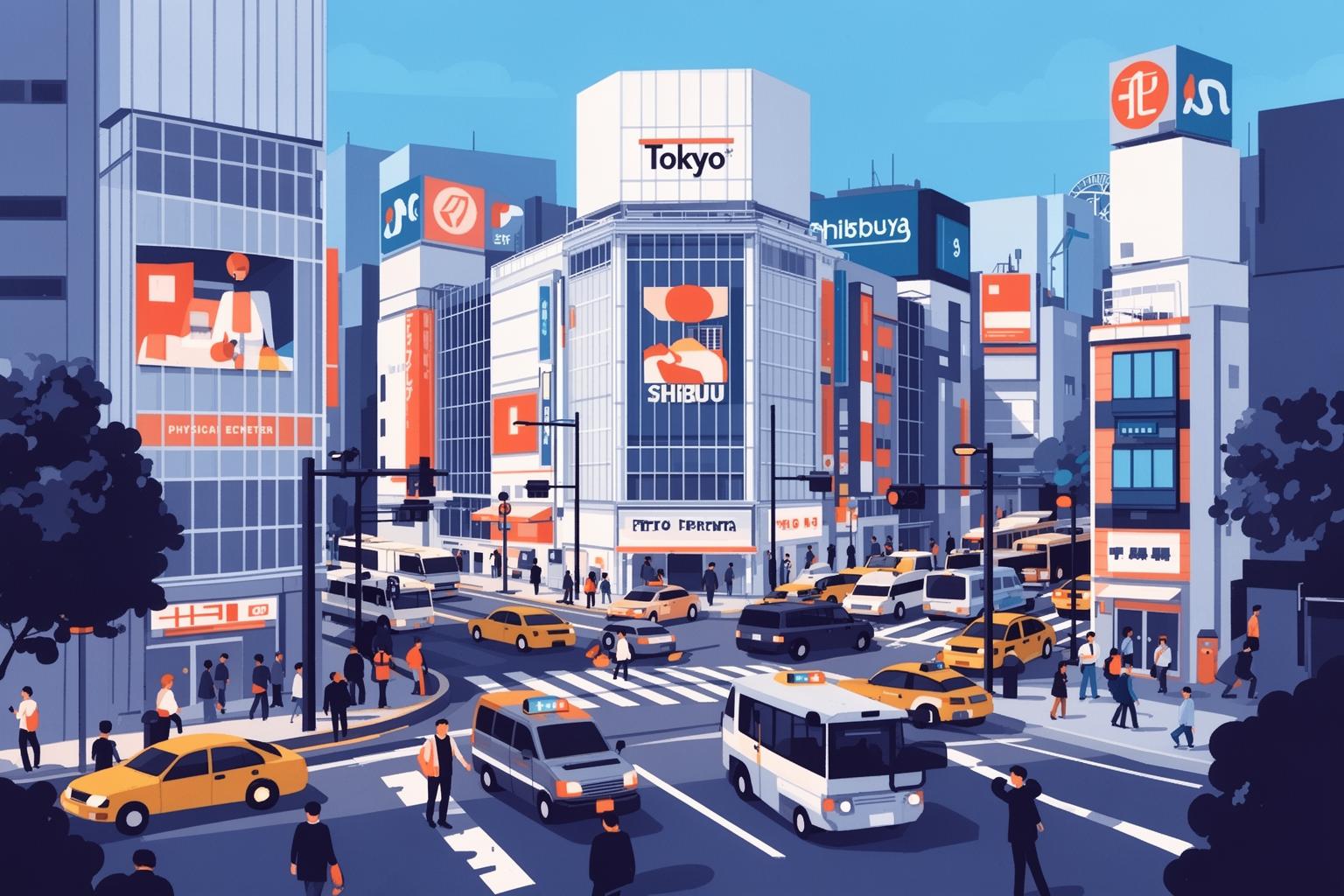
The scene’s name was no coincidence. The geography of Shibuya in the 1990s was as vital to the movement as the artists themselves. The district was a lively center of youth culture, fashion, and, most importantly, music consumption on a scale that’s difficult to imagine today.
A Mecca for Music Enthusiasts
At the core of Shibuya-kei were the district’s enormous, multi-level record stores. Flagship branches of HMV and Tower Records weren’t just retail spaces; they were cultural landmarks. They featured vast, expertly curated import sections that allowed Japanese fans to explore Western musical history deeply. For the musicians and DJs in the scene, these stores served as both a library and a laboratory. Spending an afternoon browsing through vinyl bins could spark inspiration for numerous new tracks. The physical act of digging was integral to the culture, a treasure hunt where deep knowledge and a bit of luck could reveal the perfect, forgotten sound.
The “Shibuya-kei” Shelf
The term “Shibuya-kei,” meaning “Shibuya-style,” was reportedly coined not by a music journalist, but by an HMV record store employee. It was a practical answer to a classification challenge: where should this new wave of Japanese artists, who sounded like a blend of French pop, British indie, and Brazilian jazz, be placed? Staff created a dedicated section to group these similar bands together. This act of retail curation had a significant impact. It gave the emerging scene a name, an identity, and a physical space where fans could discover it. A simple label on a shelf helped cement a musical movement, creating a feedback loop where artists and fans began to embrace the term, shaping their own work and tastes in response.
A Complete Aesthetic Package
Shibuya-kei was never solely about the music. It was deeply connected to a broader world of design, fashion, and lifestyle. Album artwork played a crucial role, often showcasing clean, modernist graphic design, retro-futuristic illustrations, or stylish photography that echoed 60s European aesthetics. Artists like Pizzicato Five were as much fashion icons as they were musicians, and their style—a blend of mod, space-age, and French chic—was widely copied. The entire scene radiated a sense of sophisticated, intellectual cool. It was a fully realized subculture where the music you listened to, the clothes you wore, and the magazines you read all reflected a shared, carefully curated sensibility.
The Fading Echo and Lasting Legacy
Like all vibrant subcultures, Shibuya-kei’s golden era was limited. By the early 2000s, the scene had started to fade, its energy absorbed into the broader culture it helped shape. Various factors contributed to its decline, ranging from creative burnout to the transformative effects of new technology.
The Double-Edged Sword of Success
As the scene gained popularity, its core elements were inevitably absorbed by the mainstream. Major labels began producing diluted imitations, and the formerly niche sound became a common presence in commercials and TV shows. The excitement of belonging to an exclusive, in-the-know subculture diminished as its symbols became widespread. For the original artists, this often sparked a desire to move forward and explore new sonic directions, pushing beyond the stylistic framework they had helped create.
The Internet Changes Everything
The rise of the internet was the most significant factor in the scene’s decline. Shibuya-kei emerged from a pre-digital world characterized by scarce information. The mystique and cultural value tied to “crate-digging” relied on the challenge of sourcing rare records. When Napster, followed by YouTube and streaming platforms, made the entire history of recorded music just a click away, the DJ’s role as a cultural gatekeeper fundamentally changed. The painstaking act of discovery that defined the scene was replaced by algorithm-driven recommendations. The world that nurtured Shibuya-kei had simply vanished.
From Scene to Influence
However, Shibuya-kei didn’t disappear; it simply became part of the global musical fabric. Its influence is widespread and can be heard everywhere. In Japan, its refined pop sensibilities were integrated into the J-Pop mainstream, with producers like Yasutaka Nakata (the genius behind Perfume and Kyary Pamyu Pamyu) continuing its legacy by blending catchy melodies with complex, eclectic electronic production. In the West, its impact resonated across the indie music scene. Artists like The Avalanches created entire albums based on the same collage-style philosophy, and the carefully curated, retro-inspired soundtracks of filmmakers such as Wes Anderson feel like a direct cinematic continuation of the Shibuya-kei spirit. Perhaps its most lasting legacy was its role as a cultural ambassador. For numerous anime fans and curious listeners in the 90s and 2000s, Shibuya-kei’s soundtracks and artists offered a stylish, accessible gateway into the broader world of Japanese pop culture.
Ultimately, Shibuya-kei was more than a passing trend. It was a celebration of connoisseurship, a tribute to the power of curation, and a deeply hopeful project. It suggested that by thoughtfully selecting and lovingly reassembling the most beautiful fragments of the past, something entirely new and exciting could be created. It was the sound of a city, a generation, and a brief, magical moment when a record store shelf could hold the entire world.