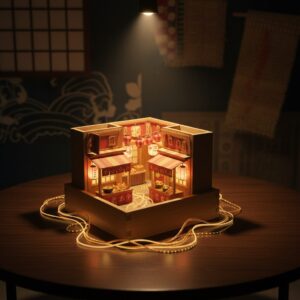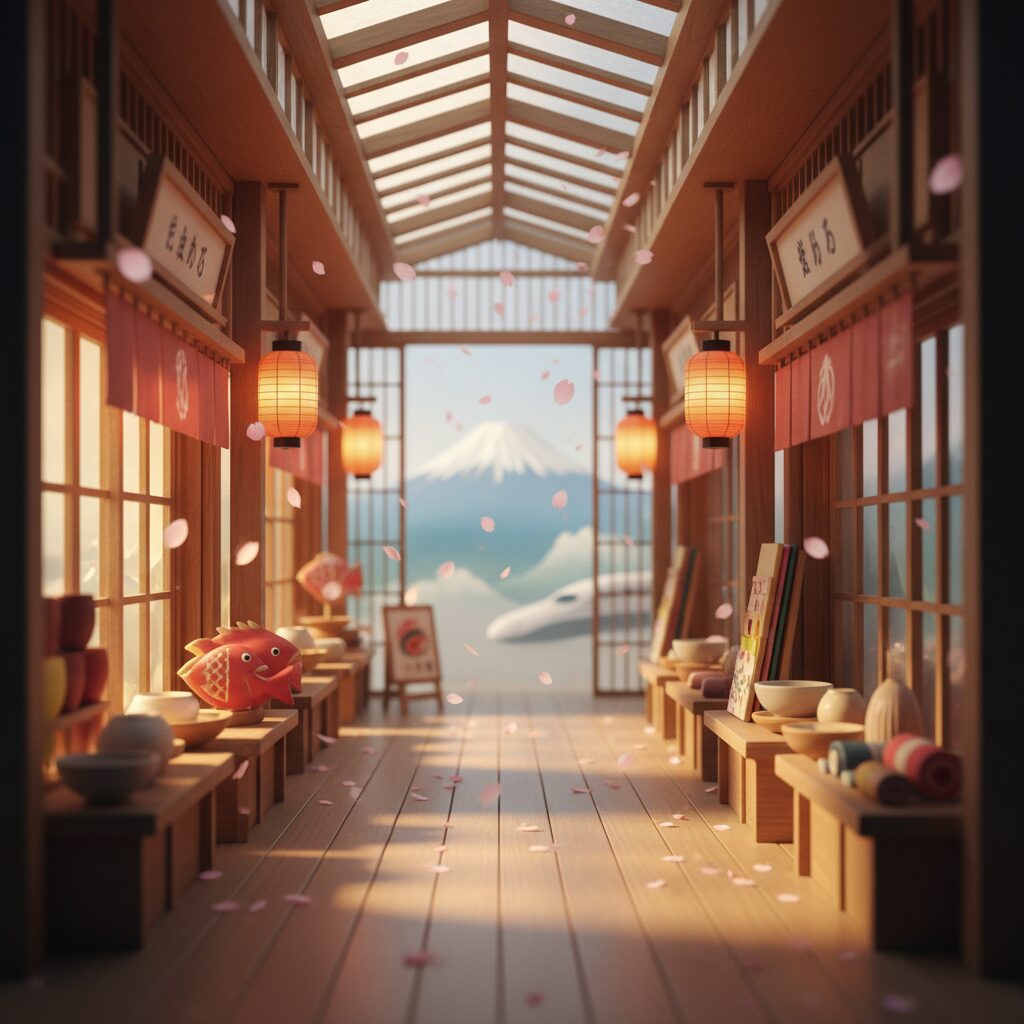
Remember the first time you booted up a classic Japanese role-playing game? You appear in a starting village, a cozy hamlet with a distinct musical theme, a handful of buildings, and a cast of characters who repeat the same few lines of dialogue. There’s an item shop run by a kindly old woman, a weapon smith hammering away, and an inn where you can rest and save your progress. You probably thought it was just charming fantasy. A world built of convenient, archetypal parts. But what if I told you that place is real? It exists all over Japan, hiding in plain sight. It’s called a shotengai.
At its simplest, a shotengai is a local shopping street. But that description is woefully inadequate. It’s more like the artery of a neighborhood, a living, breathing ecosystem of commerce and community that has existed for generations. Often covered by a glass or plastic arcade roof, these pedestrian-friendly streets are a throwback to a time before megamalls and online retailers. They are the tangible, walkable version of a JRPG town map, complete with their own unique NPCs, side quests, and hidden treasures. Forget the gleaming, futuristic skylines of Tokyo for a moment. If you want to understand the heart of daily life in Japan, you need to turn off the main road and enter the arcade. This is your guide to exploring these enchanting, anachronistic worlds.
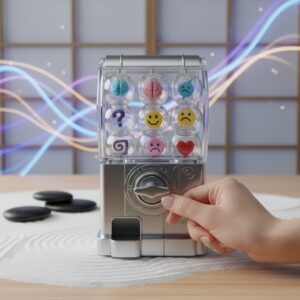
As you wander through these bustling streets, you might also appreciate how modern phenomena like Japanese gacha game psychology mirror the intricate interplay of chance and tradition that defines Japan’s vibrant local culture.
The Cast of Characters: Finding Your NPCs
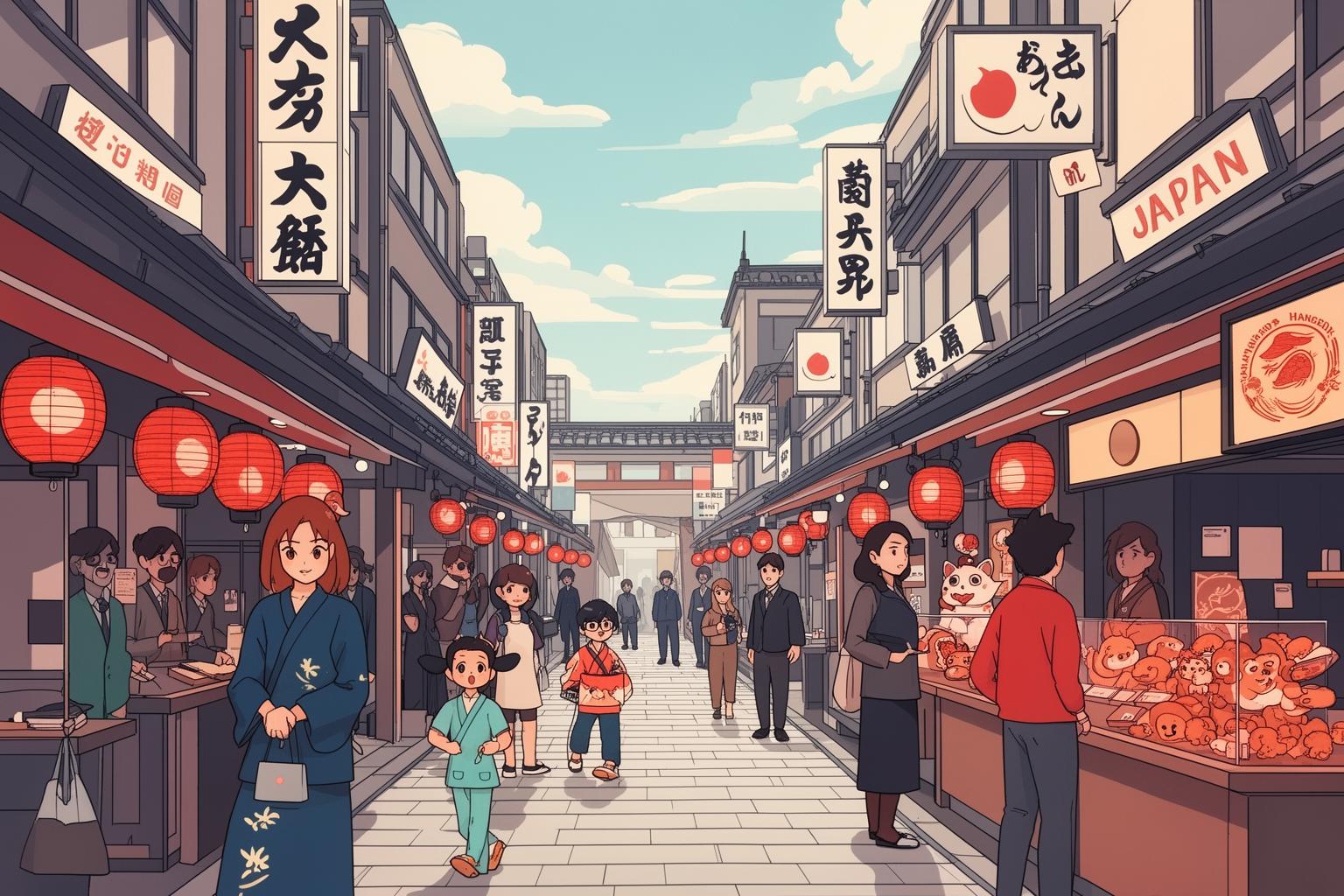
Every memorable JRPG town is shaped by its residents. They aren’t merely vendors; they are integral parts of the world, each fulfilling a unique role. The shotengai is no exception. The shopkeepers here aren’t faceless, uniformed workers. They are lifelong caretakers, often representing the second or third generation running the family business. These NPCs are the keepers of the neighborhood’s history and lore.
The Item Shop Proprietor
You’ll encounter them in the cramped, dimly lit pharmacy that offers everything from headache remedies to potent energy drinks that seem like they might grant a status buff. Or perhaps it’s the dagashiya, the traditional penny candy shop, where an elderly woman oversees a colorful chaos of inexpensive sweets. She has watched generations of children grow up, their tastes shifting from pickled squid legs to fizzy ramune. She doesn’t just sell items; she guards a gateway to the past. Buying a simple treat here can unveil a piece of local history, a tale about the neighborhood from decades ago. She is the essential first stop for any adventurer preparing for their journey.
The Town Blacksmith
The steady clang of hammer on anvil may have faded, but the blacksmith’s spirit endures in the shotengai’s specialty shops. Look for the knife sharpener, a master craftsman working in a tiny shop surrounded by whetstones and grinding wheels. He might say little, but his hands reveal a tale of exceptional skill. He maintains the neighborhood’s kitchen knives—and by extension, its family meals. Or it could be the hardware store owner, who oversees a labyrinth of wooden drawers filled with every screw, nail, and hinge imaginable. These shops supply the vital tools of daily life, the real-world analog of forging a new sword. They embody a legacy of craftsmanship that feels increasingly rare in a disposable age.
The Innkeeper and the Barkeep
Every adventurer needs a place to rest, gather news, and catch the local gossip. In the shotengai, this role is fulfilled by two central establishments: the kissaten and the izakaya. The kissaten is the classic Japanese coffee shop, a time capsule of dark wood paneling, velvet seats, and the lingering aroma of coffee and tobacco. Here, the “innkeeper” is the skilled barista behind the counter, carefully brewing coffee with siphon brewers. Regulars sit quietly, reading newspapers or manga. It’s the perfect spot to pause, observe, and absorb the neighborhood’s rhythm.
The izakaya, the local pub, serves as its nighttime counterpart. Often tiny and cramped, these spots invite you to squeeze in at the counter. The barkeep serves sake and beer while grilling skewers or preparing small dishes. Here, local salarymen and shop owners unwind. Listen closely, and you’ll catch the town’s “rumors”—talk of local politics, sports, and happenings. A friendly nod and a simple order can spark conversations that reveal the true character of the place, much like speaking to an NPC to unlock the next stage of your quest.
Level Design: Reading the Map
Shotengai are more than just random assortments of shops; their physical arrangement serves as a form of environmental storytelling. Grasping the design of the “level” is essential to uncovering its secrets. They act as a purposeful architectural expression of community and commerce—a space meant for human interaction, not merely efficient shopping.
Main Quest vs. Side Quests
The main covered arcade represents the obvious route, the “main quest” line. It’s where you’ll encounter butchers, fishmongers, tofu makers, and fruit vendors. Following this path provides the core experience. Yet the real magic, as in any well-designed game, lies in the side quests. Seek out the narrow, unmarked alleys branching off from the main street. These hidden paths lead to the game’s best secrets.
In one of these alleys, you might discover a tiny shrine nestled between two buildings, a quiet, sacred space amid the commerce. Another might reveal a single, highly specialized shop, such as one selling only kombu (seaweed) or another dedicated to crafting traditional hanko seals. These hidden routes reward the curious. They disrupt the linear progression and invite deeper exploration of the world. Here, the shotengai shows its true complexity, proving it’s far more than a single street.
The Importance of Verticality
Don’t forget to look upward. The ground floor tells only half the story. Many shotengai buildings feature second or even third floors, reached by steep, narrow staircases. Signs, often faded, hint at the businesses upstairs: a mahjong parlor, a go club, a fortune teller, or a cozy “snack bar” run by a charismatic mama-san. These upper levels serve as bonus stages, hidden areas on the map. They represent another layer of the community, one that’s less visible but equally important. Climbing one of these staircases can feel like entering a different world—a more private and mysterious facet of the town’s life.
Atmospheric Storytelling
The architecture and sensory details of a shotengai narrate a story of time. The structure itself acts as a historical record. Notice the blend of architectural styles: Showa-era tilework beside faded mid-century signage and occasional modern storefronts. The arcade’s roof, sometimes letting in shafts of light, creates a unique, constant twilight. The sounds form the level’s soundtrack: the cheerful, looping jingle of the local butcher, the sizzle of tempura frying, the distant clatter of a pachinko parlor, and the ever-present, often nostalgic enka music drifting from tinny speakers. These aren’t mere background noises; they compose the soundtrack of a specific way of life, one that has been playing for decades.
The Economy of Trust: More Than Just Transactions
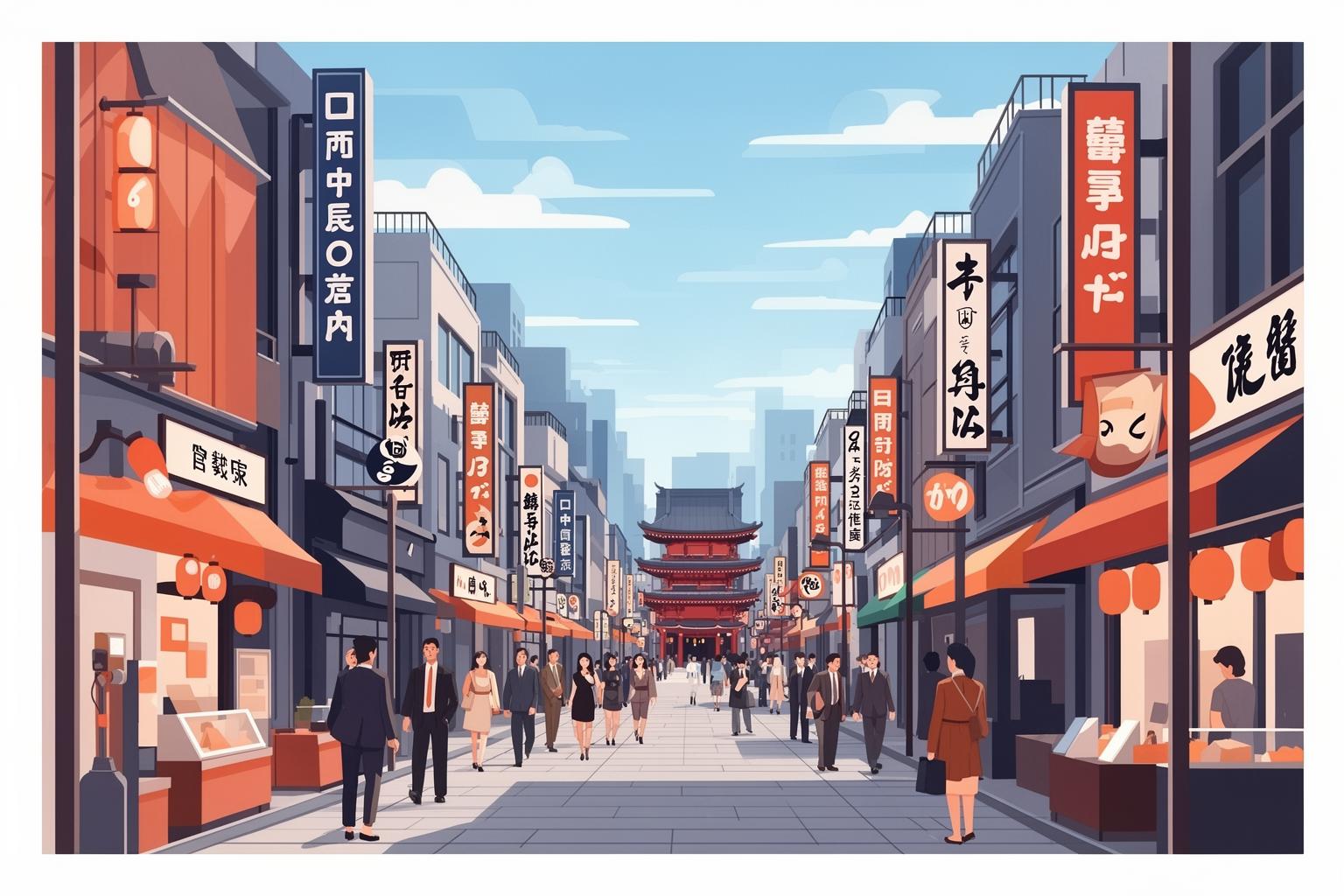
In a JRPG, you purchase an herb from a shopkeeper, and the transaction ends there. In a shotengai, the exchange feels much more personal. This is a world rooted in relationships, not anonymous consumerism. When you buy your vegetables here, you’re not merely a customer; you’re a neighbor.
The Dialogue Tree of Commerce
Interaction is the central mechanic. A simple “Konnichiwa” (hello) when entering a shop and “Arigatou gozaimasu” (thank you) when leaving are the basic commands. But the dialogue tree branches further. Ask the fishmonger what’s fresh today, and he won’t just point; he’ll share the best way to prepare it. Compliment the tofu maker on his product, and he might recount how his father taught him the craft. These are not scripted exchanges. They are genuine moments of human connection.
This often leads to the delightful system of omake, the small, unasked-for bonus. The fruit seller might toss an extra mandarin into your bag. The baker might give you the slightly misshapen roll for free. This isn’t a calculated business tactic; it’s a gesture of goodwill, a way of strengthening the bond between shopkeeper and customer. It’s the real-world equivalent of an NPC giving you a free potion just for being a good adventurer.
The Final Boss: The Threat of Modernity
Every compelling story needs conflict, and for the shotengai, the antagonist is clear: the relentless advance of modernity. Giant, sterile supermarket chains like Aeon and Ito-Yokado, with their vast parking lots and one-stop-shop convenience, have been steadily draining the life from these local arcades for decades. The rise of online shopping has only hastened the decline. The result is the tragic phenomenon of the “shutter-gai,” a shopping street where more shutters are permanently closed than open. It’s a sad, ghostly sight, a level where all the NPCs have vanished.
Yet many shotengai endure. They survive not by competing on price or convenience, but through community and specialization. They are fighting back. Some have rebranded themselves as retro destinations, attracting tourists and younger generations with nostalgic Showa-era charm. Others have embraced their strengths, focusing on high-quality, artisanal products that supermarkets simply can’t offer. Their ultimate weapon is the human connection they nurture. People continue to shop there because they know the owners, they trust the quality, and they want to be part of something with history and soul.
When you choose to stroll through a shotengai and buy something—anything—you’re doing more than just shopping. You’re participating in this struggle. You’re casting a vote for a more personal, local way of life. You’re helping these real-world JRPG towns survive another day. The quest is to keep the community alive, and by simply being there, you’ve chosen to help.