You’ve probably seen the stereotype in a movie or an old anime. The Japanese salaryman, suit slightly rumpled, briefcase in hand, swaying on the last train home long after midnight. He’s a figure of both pity and a strange sort of respect—a loyal soldier in a corporate army. But to understand him, you have to go back to a time when this wasn’t a stereotype, but a national ideal. You have to go back to the shimmering, frenetic, and ultimately doomed optimism of the Bubble Era and ask the question that defined it: “Can you fight 24 hours a day?”
This wasn’t a rhetorical question. It was the electrifying tagline from a 1989 television commercial for an energy drink called Regain. The ad featured a charismatic actor, Yuki Jiro, playing a high-flying international businessman. He zips between Tokyo, New York, and Hong Kong, barking orders into a comically large mobile phone, all while a triumphant jingle cheers him on: “Kigyo senshi, kigyo senshi… Japanese Businessman!” The corporate warrior, the commercial declared, fights around the clock. And this little bottle of yellow liquid was his ammunition.
The ad was an instant sensation because it didn’t invent an idea; it perfectly captured the spirit of the age. In the late 1980s, Japan was at the apex of its economic power. The Nikkei stock index was soaring to unimaginable heights, Tokyo real estate was worth more than all of California, and Japanese companies were buying up American icons like Rockefeller Center and Columbia Pictures. The national mood was one of unstoppable momentum. The post-war struggle was over, and Japan had won. The foot soldiers of this victory were the millions of men in dark suits, the kigyo senshi.
But this ethic wasn’t just about making money or working long hours. It was a complex social contract, a philosophy of life rooted deep in Japan’s post-war journey. It was about loyalty, sacrifice, and a collective identity that subsumed the individual. To unpack the “Can you fight 24 hours?” mindset is to understand the soul of modern Japan—the engine of its incredible rise and the source of some of its most persistent social challenges. This is the story of how the company became a country, the employee became a samurai, and work became a battlefield.
Japan’s corporate warrior ethos might evoke images of relentless ambition, yet the subtle traditions embodied in omiyage culture reveal another layer of social gratitude that has quietly shaped the nation’s identity.
The Forging of the Corporate Samurai
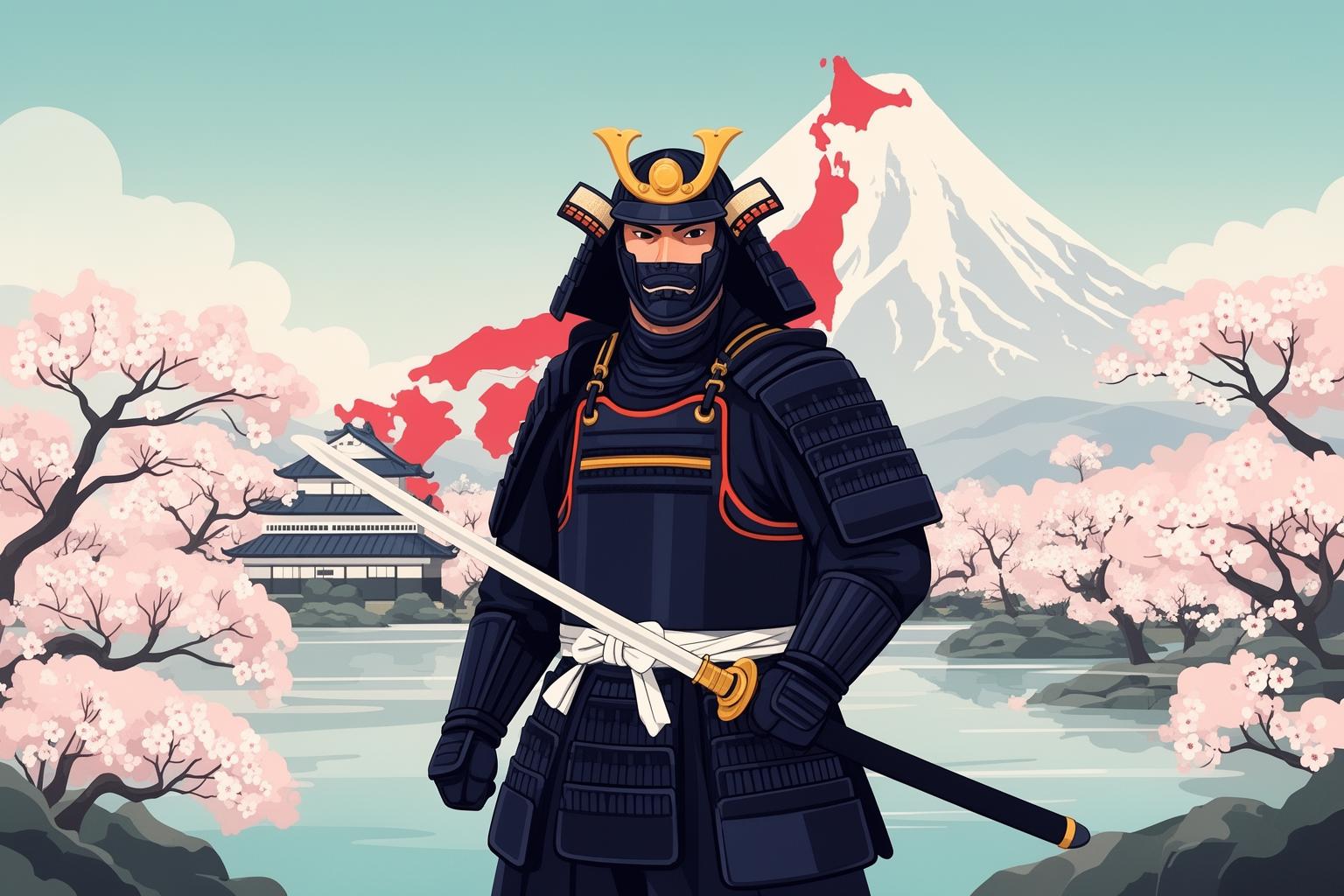
To understand why an entire generation of men willingly sacrificed their lives for a company, you can’t begin in the flashy 1980s. You have to start in the ruins of 1945. The end of World War II left Japan completely devastated. Its cities lay in rubble, its empire was dismantled, and its national identity was broken. The samurai warrior spirit and the divine authority of the emperor had led to disaster. A new purpose was necessary, a new battle to fight.
That battle was economic reconstruction. The collective energy once directed toward military expansion was fiercely redirected toward industry. Companies like Sony, Honda, and Matsushita became the new battlefronts. The nation’s recovery and future pride relied on them.
The Post-War Pact: A Company for a Lifetime
From this national mission, a distinctive social structure arose, one that would shape Japanese society for fifty years: the system of lifetime employment (shushin koyo). It was an unspoken agreement between corporation and employee. The company essentially promised to care for you for life. From the moment you graduated university and stepped through its doors, you were family. You would earn steady promotions based on seniority (nenko joretsu), not merely merit. You received a stable salary, biannual bonuses, company housing, subsidized vacations with colleagues, and even assistance in finding a spouse. The company was a cradle-to-grave support system. It was your clan, your feudal domain.
In exchange, the employee gave something profound: absolute loyalty. You weren’t just lending your skills from nine to five; you were dedicating your entire being to the group’s prosperity. Your identity became intertwined with your employer. When introducing yourself, you wouldn’t say, “I’m a marketing manager.” You’d say, “I’m from Mitsubishi,” or “I’m a Sony man.” The company’s honor was your honor. Its success was your success. This psychological framework transformed the Japanese employee from a mere worker into a kigyo senshi—a corporate warrior sworn to serve his lord.
From Recovery to Global Domination
For decades, this system worked brilliantly. Japan’s economy surged at a breathtaking pace, turning it from a devastated nation into an industrial giant. By the 1980s, the mission was no longer just rebuilding; it was about conquering. “Made in Japan” had evolved from a joke to a mark of unrivaled quality and innovation. Japanese cars dominated American roads, and Japanese electronics filled every home.
The economic boom escalated into the notorious Bubble Economy. Money flowed like a river. It was a time of outrageous extravagance. Tales from that era now sound like legends: executives blowing thousands of dollars in a single night on company expense accounts; firms purchasing renowned European paintings for record prices; people flipping condos for enormous profits in mere weeks. There was a strong feeling that Japan was now number one, the new center of the world.
This sense of invulnerability fueled the corporate warrior ethic even further. The fight was no longer simply a domestic struggle for stability but a worldwide campaign for supremacy. And every salaryman was on the front lines. Long hours were not just about completing projects; they were about driving Japan further ahead of its Western competitors. The “24-hour fight” was the ultimate expression of this nationalistic economic zeal. It was a statement that Japanese businessmen were tougher, more devoted, and simply superior to anyone else.
Anatomy of a 24-Hour Fight
What did it truly mean to “fight 24 hours”? It certainly wasn’t 24 hours of nonstop, productive work. Rather, it was a grueling, ritualized display of endurance and dedication—a lifestyle centered around the office, not the home. The typical corporate warrior’s day was a marathon pushing the limits of both body and mind.
The Daily Ritual: From First Train to Last Call
The struggle started early. The warrior would wake up in his small suburban home, often located an hour or more from the city center. After a quick breakfast prepared by his wife, he joined the flow of other dark-suited men entering the train station. The commute was itself a trial—packed so tightly in the carriage you couldn’t read a newspaper, moving in unison with the faceless crowd. It was a daily exercise in suppressing individuality for the sake of the collective journey.
Once at the office, the true performance began. Work officially commenced at nine, but arriving exactly on time was frowned upon. You were expected to be at your desk early, getting ready for the day. Leaving at five was out of the question. The official workday’s end was merely a formality. Real work, and more importantly, the appearance of work, stretched deep into the night.
This was the culture of “service overtime” (sa-bisu zangyo), unpaid hours worked out of a sense of obligation. The aim was not necessarily productivity, but presence. Leaving before your section chief or department head was unthinkable—it would signal disloyalty, showing that you valued personal time over the team’s mission. So men sat at their desks, sometimes just shuffling papers or pretending to read documents, waiting for the senior-most person to finally declare the day done. This “face time” phenomenon was a powerful, unspoken rule. Your commitment was measured by the hours you were visible at your post.
Fueling the Machine
Sustaining this lifestyle demanded artificial stimulants. The desks of the 1980s were cluttered with the tools of the trade. Ashtrays overflowed as cigarettes were chain-smoked to manage stress and stay alert. Cans of UCC coffee, available in vending machines on every corner, provided a steady stream of caffeine. And, of course, there were the little brown bottles of eiyo dorinku, or nutritional energy drinks. Regain was the most renowned, but brands like Lipovitan D were staples.
These drinks were powerful blends of B vitamins, taurine, and caffeine, marketed not as refreshments but as medicinal tonics against fatigue. They were the salaryman’s secret weapon—a quick boost to survive a long afternoon or rally for the second half of the evening. The ads promised to combat fatigue and give the power to keep going. They weren’t selling a drink; they were selling endurance itself.
Nomikai: The Mandatory Second Shift
For many, the day didn’t end once they left the office. It simply shifted to a new venue: the izakaya. This was the realm of the nomikai—company drinking parties. And they were never optional.
A nomikai was a vital extension of the workplace, but with its own distinct rules. It was the designated space for nomi-nication (a blend of nomu, to drink, and communication), a time to break down the rigid office hierarchies. Over beers and sake, the strict division between boss and subordinate relaxed. This was where you could express your true feelings (honne) rather than the polite facade (tatemae) maintained at your desk. It was where trust was built, information shared informally, and alliances forged.
Declining a nomikai invitation was a serious social misstep. It marked you as not a team player, unwilling to bond with colleagues. These gatherings could last for hours, often continuing to a second (nijikai) or even third (sanjikai) location. The pressure to match drink for drink with your boss was intense. The night frequently ended with a frantic rush to catch the last train home. Missing it meant spending the night in a capsule hotel or paying for an expensive taxi—a badge of honor for some, a miserable ordeal for all.
This cycle repeated day after day. The corporate warrior fought on multiple fronts: against deadlines, competitors, physical exhaustion, and the immense social pressure to conform. Home life was a distant notion—a place to return only to sleep for a few hours before the battle started again. Family life was entirely outsourced to the wife, who was expected to manage the household and raise the children alone, providing a stable base from which her husband could launch into his 24-hour fight.
The Logic of the System: Why Did They Do It?
From a modern Western viewpoint, this lifestyle appears absurd, even inhumane. Why would millions willingly subject themselves to such a grueling existence? It wasn’t simply due to a love of work. The answer rests in a powerful blend of cultural values, social pressures, and the comprehensive security the system promised.
The Company as the Ultimate Family
The lifetime employment system forged a strong psychological bond. The company was more than just a place to earn a paycheck; it was the central pillar of one’s life. It provided a sense of belonging and identity often stronger than that found within one’s own family. In a society where individualism has traditionally been de-emphasized, the corporate group offered a profound sense of community.
Your colleagues were not just coworkers; they were comrades-in-arms. You faced challenges together, celebrated victories together, and endured hardships together. The company organized sports days, family outings, and annual trips. This cultivated an environment where the boundaries between professional and personal life virtually disappeared. The company was your tribe. To betray it by not giving your all was to betray your very identity.
This exchange—total dedication for total security—was, for a long time, a bargain most were willing to accept. The promise of a stable job for life, steadily increasing salary, and a comfortable pension was highly attractive in a country still marked by memories of post-war poverty. You endured hardships in youth with the hope of security in old age.
The Unspoken Power of the Group
Japanese culture places great importance on wa (和), or group harmony. The smooth operation of the group is valued above individual desires or opinions. This principle was the silent enforcer in the Japanese workplace. The pressure to work late was not always a direct order from a manager but a tacit, collective understanding.
No one wanted to be the person disrupting harmony. If everyone else stayed late, you stayed late. If the team took on a massive project, you sacrificed your weekend without complaint. This is the logic behind the well-known Japanese proverb, “The nail that sticks out gets hammered down” (Deru kui wa utareru). Standing out by, for example, fully using your vacation days or leaving promptly at 5:01 PM was seen as selfish. It indicated a lack of full commitment to the group’s welfare.
This created a self-reinforcing cycle of overwork. Because nobody wanted to be the first to leave, no one left. It was not about efficiency but about social cohesion and demonstrating loyalty as an employee. Your value was shown through visible sacrifice.
A Rigid Definition of Masculinity
The corporate warrior ideal was exclusively male. The system depended on a strict division of labor between genders. The man’s domain was the company, the public sphere. His worth as a man, husband, and father was measured by his rank in the corporate hierarchy and his dedication to work. Being a kaisha ningen (company man) was the pinnacle of masculine success.
Meanwhile, the woman’s domain was the home, the private sphere. The role of the professional stay-at-home wife (sengyo shufu) was not only common but essential to the system supporting the corporate warrior. She managed all the family logistics, from the children’s education—an intensely competitive and demanding responsibility—to family finances and elder care. She created a seamless home environment that allowed her husband to devote himself fully to his company.
This arrangement was portrayed as a partnership, but one where the man was the public figure and the woman the invisible support. A man who spent too much time at home or was deeply involved in childcare risked suspicion from colleagues and superiors. It might be seen as a sign his priorities were misplaced—away from the company. The 24-hour struggle was thus a performance of a very specific, all-consuming form of masculinity.
The Bubble Pops, The Ghost Lingers
No party lasts forever. In the early 1990s, Japan’s economic bubble burst with astonishing speed. The stock market collapsed, real estate prices tumbled, and the country descended into a prolonged period of economic stagnation known as the “Lost Decades.” The era of endless growth and corporate invincibility had come to an end.
The End of the Pact
The economic downturn destroyed the foundations of the corporate warrior system. Companies struggling to survive could no longer afford the luxury of lifetime employment and seniority-based wages. The sacred pact was broken. Restructuring and layoffs, once unthinkable, became routine. Loyalty became a one-sided expectation; employees were still required to be loyal, but companies could no longer guarantee loyalty in return.
The very idea of the kigyo senshi shifted from heroic to tragic. Men who had devoted their entire lives to a single company were suddenly discarded. Their identities, so tightly tied to their corporate affiliation, were erased. This triggered a deep sense of disillusionment and anxiety that spread through society.
Karoshi: The Ultimate Price
During this period, the dark side of the 24-hour work ethic also became more visible. The phenomenon of karoshi, or “death from overwork,” gained media attention. It was a grim reminder that the metaphorical battle was taking real lives. People weren’t just exhausted; they were dying from stress-related heart attacks, strokes, and suicides directly linked to excessive working hours.
High-profile incidents, such as the case of a 29-year-old employee at a major advertising agency who logged over 140 hours of overtime in a single month before committing suicide, sparked a national debate. The government began acknowledging karoshi as a serious social issue and launched labor reforms aimed at reducing excessive overtime. The heroic image of the corporate warrior gave way to that of the overworked victim.
Echoes in the Modern Workplace
So, is the 24-hour corporate warrior dead? Both yes and no. The economic conditions and social contract that produced him have vanished. The younger generation of Japanese workers holds a very different view. Having witnessed their fathers sacrifice health and family life for companies that ultimately failed to protect them, they tend to prioritize work-life balance, personal time, and job mobility far more than previous generations.
Yet, the ghost of the Bubble Era still lingers in Japanese workplaces. Old habits are difficult to break. The pressure to work unpaid overtime remains strong in many industries. The fear of being the first to leave the office is still tangible. Many workers hesitate to take their full paid holidays for fear of being perceived as uncooperative. The software may have been updated, but the old operating system still runs in the background.
Government initiatives like “Premium Friday,” encouraging employees to leave early one Friday a month, have met with limited success. The ingrained belief that long hours equal dedication continues to dominate the culture.
The slogan “Can you fight 24 hours?” now sounds like a relic from another era. It represents a unique fusion of post-war ambition, economic euphoria, and entrenched cultural norms unlikely to ever recur. It was the anthem of a nation on a mission, a time when the individual was absorbed into a collective economic crusade.
The battlegrounds have shifted. The fight for market share has been replaced by a quiet, personal struggle for stability and a sense of fulfillment. For Japan’s new generation of workers, the question is no longer whether they can fight for 24 hours, but why they ever should. Increasingly, the answer is a firm and revolutionary “no.” The armor of the corporate warrior is finally being set aside, but his faint battle cry still echoes in the quiet hum of the late-night office.