
There’s a particular kind of silence you find only in a place that was once deafeningly loud. Stand in the middle of a colossal, abandoned factory in provincial Japan, and you’ll feel it. It’s a silence thick with the ghosts of sound—the phantom shriek of machinery, the imagined shouts of men in hard hats, the hum of a million watts of electricity that no longer flows. Sunlight streams through shattered skylights, illuminating dust motes dancing over gantries frozen mid-air. Nature is already staging its patient, inexorable coup. Moss softens the edges of brutalist concrete, and vines snake their way through the control panels of a forgotten era. These places are known as haikyo—literally, “ruins.” And while Japan has its share of crumbling castles and ancient temples, these industrial giants tell a much more recent, and arguably more poignant, story about the nation’s modern soul.
This isn’t about the picturesque, moss-covered stones of antiquity. This is about the monumental failures of the very near past. Specifically, we’re talking about the concrete skeletons of the Japanese asset price bubble, that delirious fever dream of the late 1980s when the country seemed poised to economically conquer the world. During that period of unchecked ambition, Japan didn’t just build skyscrapers and resorts; it erected massive cathedrals to industry—sprawling semiconductor plants, automated steel mills, and chemical factories that were the envy of the world. They were built with the bullish certainty of a future that never arrived. When the bubble burst with a deafening pop in the early 1990s, it plunged the nation into the “Lost Decade,” and these industrial titans were left to die. They are the tombs of a specific, spectacular ambition, and exploring them offers a raw, unfiltered look into the country’s psyche that you simply cannot get from a gleaming Tokyo skyscraper or a serene Kyoto garden.
Amid the silent decay of industrial giants, Japan’s enduring cultural allure also surfaces in the form of preserved time-capsule kissaten that offer a window into its layered past.
The Anatomy of a Dream: The Bubble’s Concrete Legacy
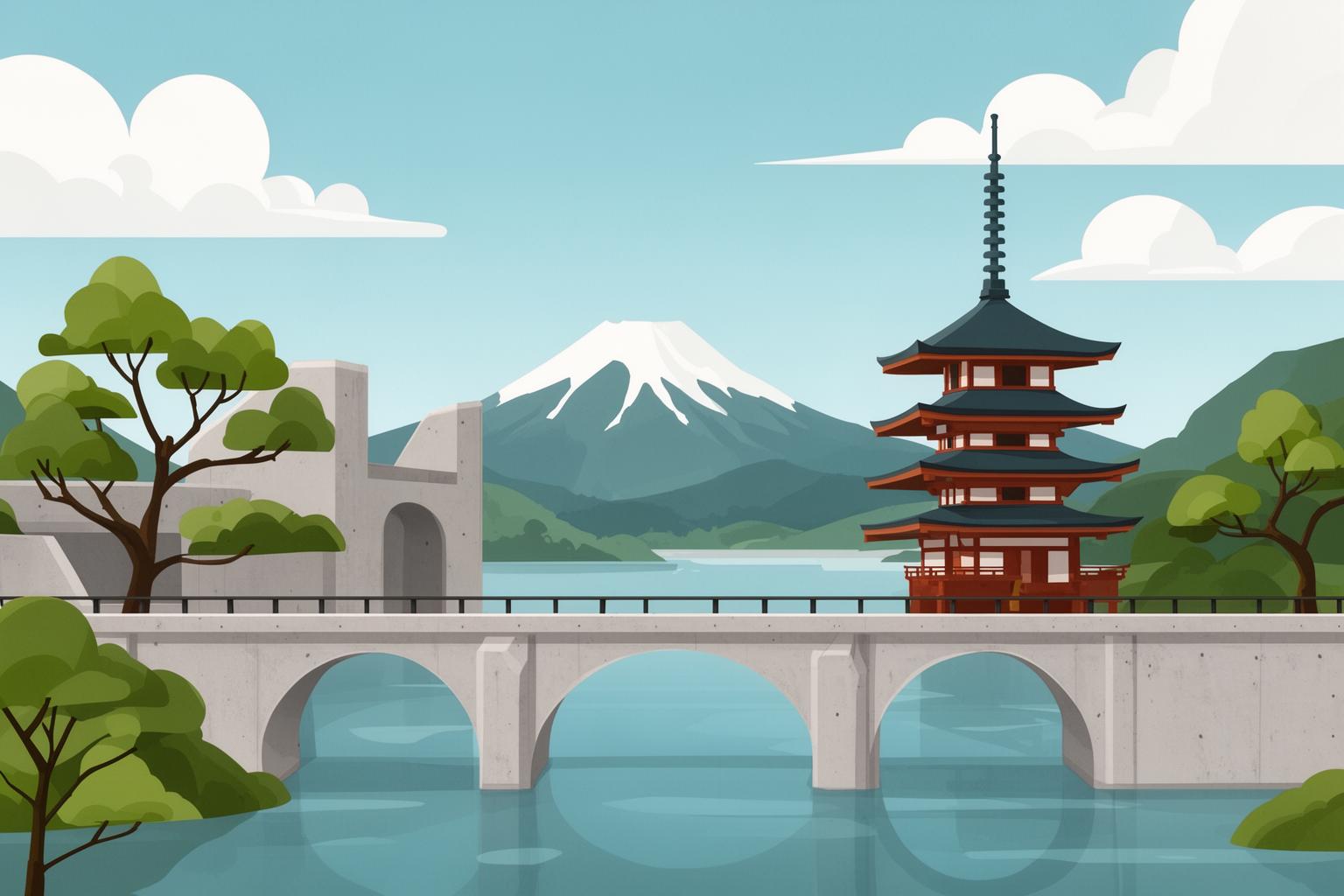
To grasp these ruins, you must first grasp the sheer frenzy that created them. The late 1980s in Japan were characterized by almost absurd prosperity. Tales from that era sound mythical: Tokyo real estate was allegedly so valuable that the Imperial Palace grounds were worth more than the entirety of California; executives commuted to golf courses by helicopter; corporations purchased foreign landmarks as if they were Impressionist paintings at auction. An ethos of “Japan as Number One” infused every aspect of life. The nation was not merely catching up to the West; it was overtaking it, with the industrial sector driving this rise.
This confidence was channeled, quite literally, into concrete and steel. The industrial complexes built during this period were more than functional—they were declarations of ambition. Constructed on a scale verging on the pharaonic, they were engineered for an era of boundless growth. Picture vast, windowless semiconductor fabrication plants—so-called “clean rooms”—that functioned as sterile temples to the microchip. Envision automated warehouses where robotic arms moved silently along miles of shelving, a glimpse of a futuristic industry without workers. Think of the sprawling chemical plants, a complex maze of pipes, distillation towers, and pressure vessels resembling dazzling, sci-fi cities shining under the sun.
Architecturally, these sites often stood as masterpieces of utilitarian brutalism. Form followed function, but the function was so immense and intricate that the form assumed a sublime and imposing beauty. Their design carried a certain arrogance. Companies constructed not only factories but entire ecosystems surrounding them: vast employee dormitories, luxurious recreational facilities, and grand, marble-faced administrative buildings. They were built to endure forever, monuments to corporate and national power that seemed invincible. They embodied a belief system—the gospel of endless economic growth made physical. Every rivet, every I-beam, every square meter of reinforced concrete testified to a future believed to be inevitable.
When the Music Stopped: The Great Collapse and the Birth of Haikyo
The fall was as rapid and harsh as the rise had been meteoric. Beginning around 1991, the bubble burst. The stock market crashed, real estate values collapsed, and the easy credit that had driven the expansion disappeared. The “Lost Decade” commenced, a time of economic stagnation and national introspection from which some argue Japan has never fully recovered. The corporate giants responsible for these industrial cathedrals suddenly found themselves drowning in debt. The global market shifted, demand vanished, and the costs of running these massive enterprises became an anchor pulling companies down.
The abandonment was not a single event but a gradual, creeping demise. Production cuts came first. Then layoffs followed. Eventually, one day, the last shift ended, the main power switch was turned off, and the gates were padlocked for good. Companies either folded, consolidated their operations, or relocated production to cheaper sites in Southeast Asia. These enormous, highly specialized industrial plants turned into billion-yen burdens. And this is where the story of haikyo truly begins.
Why weren’t they just demolished? The reasons are a complex combination of economics and logistics. Demolishing a structure the size of a small town is immensely costly. The expense of dismantling steel, pulverizing concrete, and hauling everything away can easily reach millions of dollars. Additionally, many of these sites were environmental hazards, laden with asbestos, PCBs, and a mix of industrial chemicals that had contaminated the soil. Cleanup costs alone would be staggering. Often, ownership of the land and buildings was a complicated tangle of bankrupt parent companies, subsidiary shell corporations, and creditor banks, making it impossible to determine responsibility. So, the easiest and cheapest option was to do nothing. Just walk away. Lock the gates and let time and nature take their course. They became industrial fossils, frozen at the precise moment the economic music stopped.
The Aesthetics of Decay: More Than Just Rust and Ruin
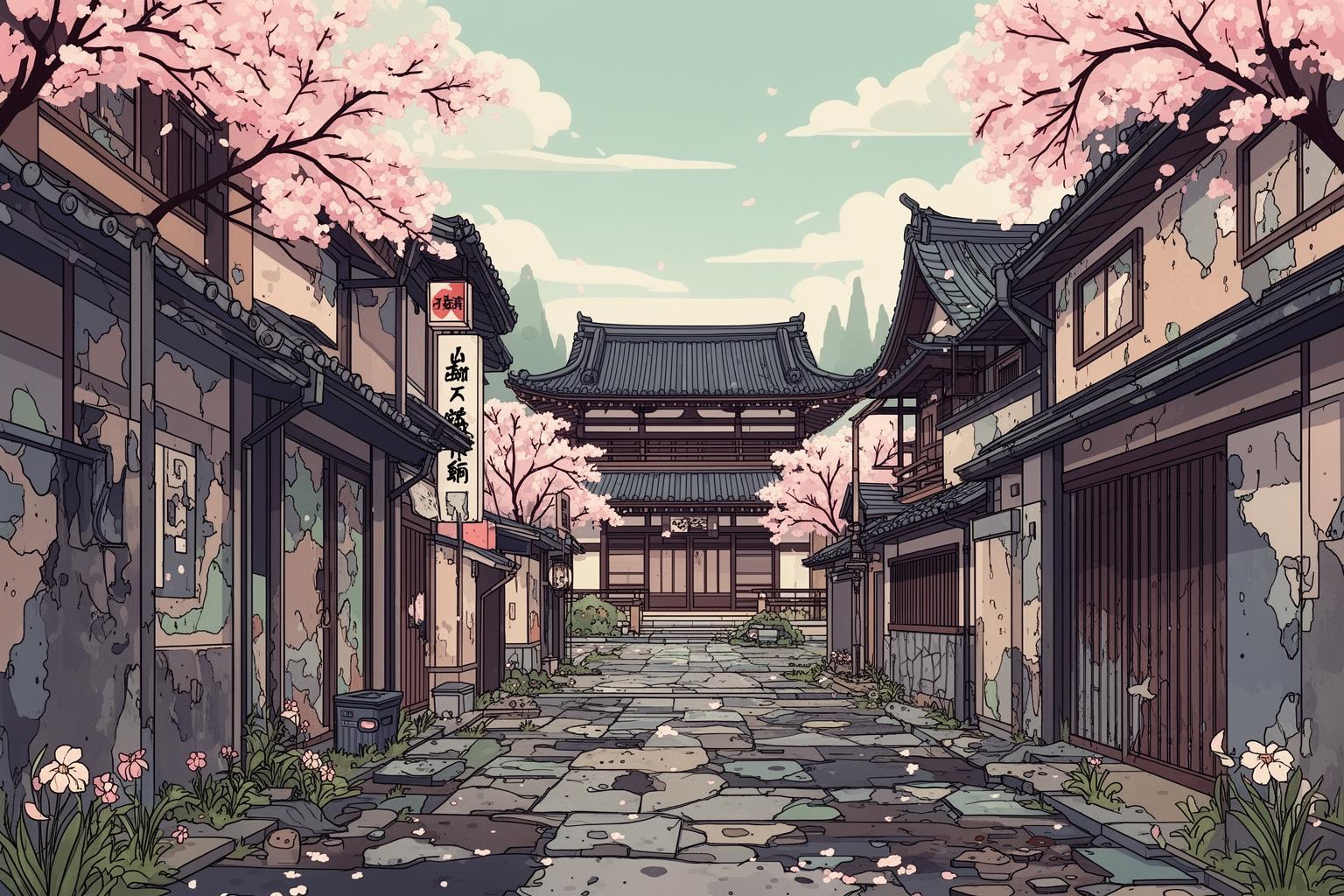
To an outsider, a decaying factory might appear as nothing more than an unsightly and hazardous eyesore. However, to those who seek them out, and to anyone attuned to certain currents in Japanese aesthetics, these sites possess a profound and unexpected beauty. The allure of haikyo lies not in decay as destruction, but in decay as transformation. It is within these forgotten industrial landscapes that some of Japan’s oldest aesthetic principles are expressed in strikingly modern ways.
Wabi-Sabi in an Industrial Age
Central to this appreciation is the concept of wabi-sabi. Often considered difficult to translate, it essentially means finding a deep, melancholic beauty in imperfection, impermanence, and incompleteness. It is the aesthetic reflected in the weathered stone lantern, the slightly asymmetrical tea bowl, and the fleeting beauty of a cherry blossom. Within an industrial haikyo, wabi-sabi is omnipresent. It emerges in the patina of rust spreading across a steel sheet, creating ochre, red, and brown patterns no artist could mimic. It appears in the way a perfectly ordered grid of factory windows is made beautifully imperfect by a few broken panes. It is the vision of a powerful, man-made machine quietly and gracefully reclaimed by nature’s patient forces—water, wind, and vegetation. A thick moss carpet covering a control panel, its delicate green softness softening the harsh lines of plastic and metal, perfectly embodies wabi-sabi. It is a visual poem about the transient nature of all things, even those seemingly as enduring as a steel mill.
The Power of ‘Ma’ (Negative Space)
Another essential concept is ma, often translated as “negative space,” but more precisely understood as an awareness of place—not by the objects contained within it, but by the intervals and emptiness between them. In traditional Japanese arts, from ink painting to garden design, ma is a dynamic and vital element. It is not absence, but presence. A vast, empty factory floor represents the ultimate expression of industrial ma. The cavernous space, once filled with the noisy bustle of production, is now defined by its profound emptiness. The silence is not merely a lack of sound; it is a tangible presence filling the hall. Your mind instinctively fills the void, imagining the absent workers and machinery. Empty hooks dangling from ceiling cranes, vacant loading bays, and silent conveyor belts stretching into darkness—all these intervals communicate more powerfully than any object could. The space is infused with the energy of what has been lost, making the emptiness itself the central focus.
Mono no Aware: The Pathos of Things
Lastly, there is mono no aware, a gentle, empathetic sadness for the impermanence of things. It is a feeling of pathos, an awareness of the inevitable passing of all beings and objects. Industrial haikyo are deeply suffused with this sentiment. It’s what you sense when you come across a yellowed newspaper from 1992 on an abandoned office desk, its headlines promising a bright future. It is seen in a child’s drawing pinned to a locker, a forgotten coffee mug, or a pair of work gloves resting on a railing as if the owner simply stepped away briefly. These small, human relics transform the ruin from a mere collection of decaying buildings into a profoundly moving story. They serve as poignant reminders of the countless individual lives woven into this grand economic narrative—the hopes, the daily routines, the abrupt and jarring end. What you feel is a quiet mourning not only for the crumbling structure but also for the lost era and the particular future these people strove to build—a future that vanished into thin air.
The Keepers of the Story: The Haikyo Explorers
Those who venture into these forbidden zones form a subculture all their own. Known as haikyoists or simply ruin explorers, they comprise a diverse group—photographers, history enthusiasts, architects, or individuals seeking a quiet refuge from the rigid order of modern Japanese life. Their motivation is neither vandalism nor theft; rather, the community abides by a strict, unspoken code: “Take only pictures, leave only footprints.” Their aim is to document these places as they are, bearing witness to their slow, graceful decay before eventual demolition or collapse.
The experience itself is a sensory immersion. It starts with the excitement of finding a way inside, often through a gap in a fence or an unlocked door—a moment that feels like stepping through a portal into another era. Inside, the air feels different—cool, damp, and thick with the scent of wet concrete, rust, and decaying organic matter. The acoustics are unusual; a footstep might echo endlessly down a long corridor, while the main factory floor can absorb sound entirely. The primary soundtrack is the gentle drip of water, the cooing of pigeons nesting in the rafters, and the eerie groan of metal shifting in the wind.
Light becomes a vital element. In the vast open spaces, sunlight streams in from above, casting dramatic shafts that illuminate the swirling dust. In the darker, labyrinthine corridors of the administrative blocks, explorers rely on flashlight beams to reveal haunting details amid the gloom: a faded safety poster warning of industrial accidents, a wall of electrical breakers with labels still perfectly readable, a clock on the wall frozen at the exact moment the power was cut. It is an act of archaeology performed in the present tense. Naturally, the practice is fraught with danger. Beyond the obvious illegality of trespassing, the structures are often dangerously unstable. Floors may be rotten, roofs on the brink of collapse, and unseen chemical hazards can linger in the air and soil. This inherent risk only deepens the explorers’ sense of commitment. They are no casual tourists; they are archivists of the forgotten, risking their safety to capture the final chapter of these concrete giants.
Concrete Tombs, Living Narratives
It’s easy to view these post-bubble industrial complexes as symbols of failure, embarrassing reminders of an era marked by hubris and excess. And in many ways, they are. They starkly contrast with Japan’s official image—a nation defined by efficiency, pristine modernity, and seamless technological mastery. These ruins reveal the messy, inconvenient truth; they are the tangible evidence of the hangover that followed the great economic celebration.
Yet, to dismiss them as mere failures overlooks the deeper narrative they convey. They are not lifeless spaces. Instead, they represent living stories—environments where past and present engage in a continuous, dynamic conversation. They serve as canvases upon which the slow, beautiful, and relentless forces of nature are painted over the rigid, ambitious lines of human industry. They raise profound questions: What is the real cost of ambition? What happens when a collective dream fades? How do human creation and the natural world relate? They stand as a powerful memento mori for our era of relentless development, quietly reminding us that the systems and structures we deem permanent are, in the grand scheme, deeply fragile.
Ultimately, finding beauty in these industrial haikyo is an act of historical empathy. It allows us to look beyond official histories and polished guidebooks to uncover a more honest, complex, and profoundly human story of modern Japan. These sites do not appear on tourist maps. They are the ghosts within the national machinery—the quiet roar of a past that refuses erasure. To stand within their silent halls is to hear that roar and, through it, to grasp something fundamental about the cyclical nature of ambition, decay, and rebirth that shapes not only a nation but all human endeavor.