
I still remember the meeting with painful clarity. It was early in my career in Tokyo, and I was proud of a proposal I’d spent weeks developing. I presented it to my boss, a kindly, silver-haired man named Tanaka-san. He listened patiently, nodding, a gentle smile on his face. When I finished, he tilted his head and said, “This is a very ambitious and interesting perspective, Brown-san. We will take it forward for positive consideration.” I was ecstatic. I went back to my desk and messaged my husband: “I think they loved it!”
Weeks passed. Nothing happened. When I finally gathered the courage to ask Tanaka-san about it, he looked almost pained. “Ah, about that matter,” he said, avoiding my eyes. “Circumstances have become… a little difficult.” It was then that a more experienced colleague took me aside and gently explained my mistake. “Positive consideration” didn’t mean they loved it. “A little difficult” didn’t mean there was a small logistical hurdle. Both were exquisitely polite ways of saying no, and everyone in the room knew it but me. I hadn’t just failed to get my project approved; I had failed to read the room. I had taken the performance at face value.
That experience was my brutal, but necessary, introduction to one of the most fundamental concepts of Japanese society: the twin forces of honne (本音) and tatemae (建前). You simply cannot understand Japan—not its business culture, its friendships, its art, or its incredible social cohesion—without grasping this dynamic. It’s the invisible software running in the background of almost every interaction. To a Westerner, raised on a diet of “be authentic,” “speak your truth,” and “say what you mean,” it can initially feel like a world of bewildering dishonesty. But it isn’t about lying. It’s about something far more complex and, in its own way, beautiful: the art of preserving harmony.
Think of honne as your true sound, your private, unfiltered reality. It’s what you actually think about your colleague’s terrible idea, your exhaustion at the end of a long day, your secret desire to skip the mandatory after-work drinks. Tatemae is the façade, the carefully constructed public face you present to the world. It’s the polite praise for the terrible idea, the cheerful smile when you’re exhausted, the enthusiastic agreement to go for just one more drink. This article is your guide to understanding this essential duality. We’re not just going to define the terms; we’re going to explore why this system is the bedrock of Japan’s social fabric, and how learning to see it will feel like you’ve suddenly been given a key to a secret room.
Understanding Japan’s subtle dance between public facades and private truths, one may also appreciate how everyday rituals like a kotatsu retreat encapsulate warmth and connection in modern Japanese life.
What Are Honne and Tatemae, Really?
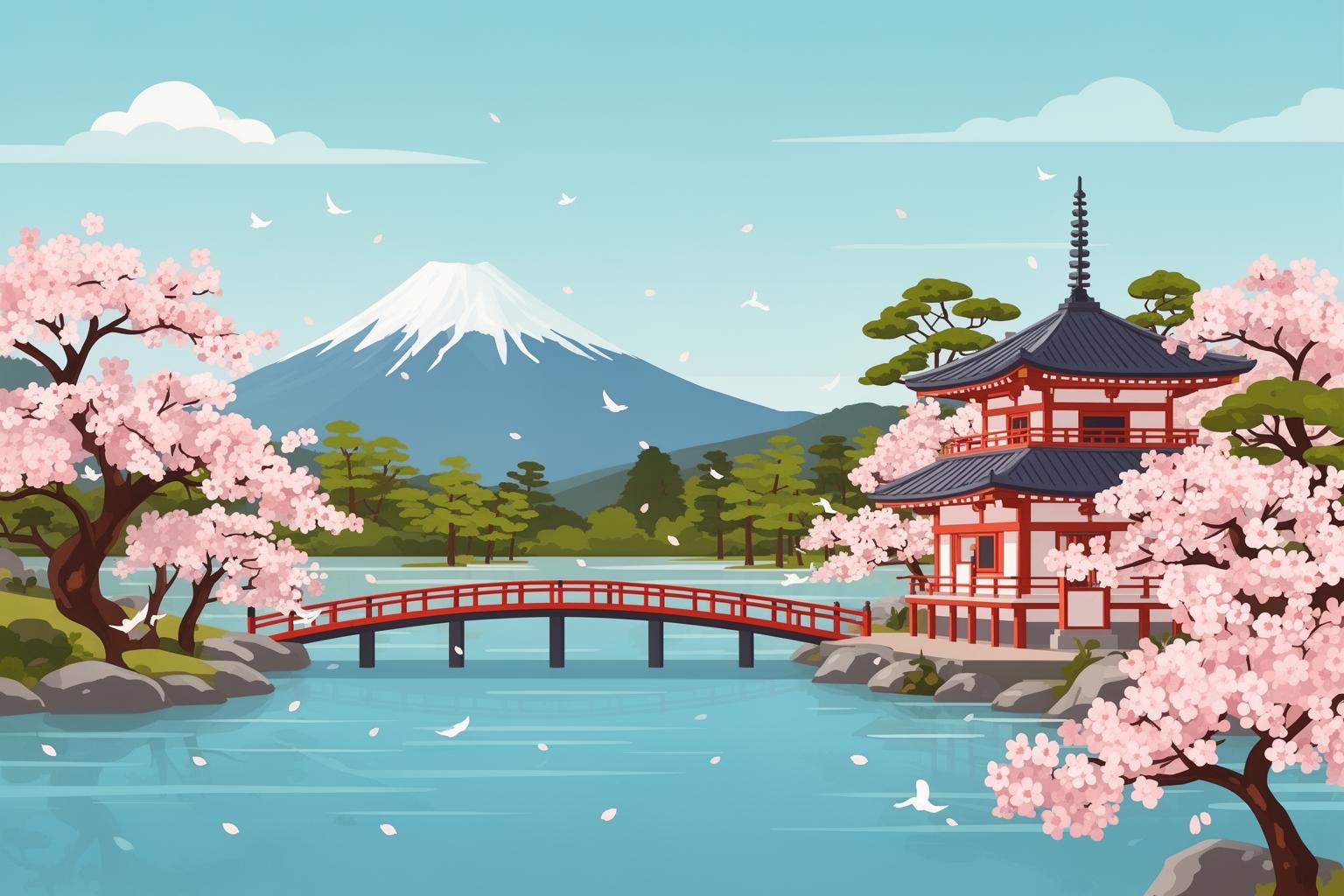
To genuinely understand this, we need to look beyond simple translations like “private feelings” and “public face.” These concepts are deeper, more nuanced, and deeply embedded in the very fabric of Japanese communication. They embody a conscious choice to prioritize the group over the individual—a philosophy that influences every aspect of daily life.
Defining the Core Concepts
Let’s explore them. Honne (本音) consists of two kanji: hon (本), meaning “true” or “real,” and ne (音), meaning “sound.” It represents your “true sound.” This is the raw, unfiltered expression from your heart and mind. It’s the impulsive opinion, selfish desire, hidden frustration, and genuine, unguarded joy. Because it is so pure and unchecked, it is also seen as potentially dangerous. Your honne can disrupt, offend, or create conflict. For this reason, it is treated with great caution. You don’t share your honne with just anyone; it is a treasure—or a weapon—reserved for a very small, trusted inner circle, if anyone at all.
Tatemae (建前), by contrast, is a masterpiece of social engineering. The characters are tate (建て), meaning “to build,” and mae (前), meaning “in front.” It is the “façade you build.” This is the carefully crafted set of words, actions, and expressions you choose to display publicly. It is not deceit in a malicious sense; rather, it is a performance. It’s a uniform worn to show that you are a competent and considerate member of society. The aim of tatemae is not to deceive but to ensure smooth interactions, prevent discomfort, and maintain the delicate balance of the group.
When a shop clerk bows and thanks you with what feels like genuine sincerity, that is tatemae. When a coworker whose lunch you accidentally took says, “Oh, please don’t worry about it at all!” that is tatemae. When you ask someone for a favor they cannot grant and they respond, “I’ll check my schedule and see what’s possible,” that is tatemae. It serves as the lubricant in the workings of a high-context, densely populated society.
The All-Important ‘Why’: The Logic of Social Harmony (和, Wa)
So, why go to such lengths? Why not just say what you mean? The answer lies in a single, potent concept: Wa (和), or social harmony. In many Western cultures, the individual is the primary unit of society. Self-expression, authenticity, and individual rights are revered as ultimate virtues. In Japan, however, the group is the fundamental unit. The health, stability, and success of the family, team, or company take precedence over the desires of any individual member.
Wa is the state of peaceful unity and conformity within a group. Anything that disturbs this is considered a threat. Direct confrontation, open disagreement, showing strong negative emotions, or bluntly refusing a request are all seen as profoundly selfish acts. They insert a sharp edge into the smooth fabric of the community. You are not merely disagreeing with someone; you are causing a problem for everyone. You are creating waves.
Tatemae is the primary means of preserving Wa. It is a shared social contract in which everyone agrees to smooth their own rough edges for the collective good. It reflects a mutual understanding that we all play a part in protecting each other from unnecessary discomfort and conflict. From this perspective, blurting out your raw honne isn’t courageous or authentic; it is childish and inconsiderate. It’s like shouting in a library. You prioritize your need for self-expression over the entire group’s need for peace. This fundamental philosophical difference, once understood, clarifies the entire system of honne and tatemae. It’s not about being fake; it’s about showing consideration on a societal scale.
Tatemae in Action: Reading the Air
Grasping the theory is one thing, but identifying and navigating tatemae in real life is a completely different skill. It demands a sort of social sixth sense—a continuous, subtle awareness of context, subtext, and non-verbal signals. This is what the Japanese refer to as kūki o yomu, or “reading the air.”
The Art of Saying ‘No’ Without Actually Saying ‘No’
This is perhaps the most frequent and perplexing expression of tatemae for outsiders. A straightforward “no” (いいえ, iie) is seen as extremely harsh and confrontational. It can cause the other person to lose face, which is a major breach of Japanese social etiquette. As a result, a whole vocabulary of indirect refusals has developed. Recognizing these is essential.
When your boss says, “That’s a little difficult,” (chotto muzukashii desu ne), it is a firm ‘no.’ For a Japanese listener, there is no ambiguity. The word “difficult” is definitive. Pressing beyond it would be regarded as pushy and insensitive.
If someone responds to a request with, “I will consider it,” (kentou shimasu) or “I’ll think about it,” (kangaete okimasu), in most non-business settings, this politely signals a refusal. They are offering a graceful way out, allowing both parties to end the conversation without awkwardness. The ‘consideration’ represents the tatemae; the refusal is the honne.
Other methods include changing the subject, providing vague, non-committal answers about one’s availability, or expressing discomfort by sucking air through the teeth with a strained look. These are all cues. The Japanese language is exquisitely crafted for ambiguity, enabling speakers to float ideas and gauge responses without ever committing firmly. The atmosphere is dense with meaning, if you know how to interpret it.
Compliments and Invitations: A Foreign Minefield
Social rituals are also steeped in tatemae. Take compliments as an example. In Australia, if someone says, “You speak Japanese so well!” the typical reply is a simple, “Thank you!” In Japan, that response might seem arrogant. The tatemae script requires deflection. The appropriate reply is something like, “Ie ie, mada mada desu” (“No, no, I’m not there yet”) or “Sonna koto nai desu” (“That’s not true”). This is not low self-esteem but a ritualized expression of humility, aimed at maintaining conversational harmony. By rejecting the compliment, you demonstrate that you do not place yourself above the giver.
Invitations are another classic trap. The phrase, “Kondo gohan demo ikimashou” (“Let’s go for a meal sometime”), is often used to close a pleasant conversation. To a foreigner, it sounds like a definite invitation, prompting an awaited message with proposed plans that never arrives. This is because it often serves as social glue—a warm, fuzzy tatemae way of saying, “I enjoyed our interaction and wish you well.” A genuine invitation, expressing a honne desire to meet, will almost always include specifics: “How about next Friday? Are you free for dinner?” The difference is subtle but significant.
Kūki o Yomu (空気を読む): Japan’s Social Sixth Sense
All these elements contribute to the master skill of kūki o yomu, or “reading the air.” This ability involves perceiving the unspoken social dynamics, the concealed emotions, and the true meaning beneath surface conversations. It means noticing slight hesitations before agreement, sensing avoided topics, and gauging the collective mood. It’s about understanding what remains unsaid.
Someone who lacks this skill is labeled KY—kūki yomenai. This is a harsh critique, similar to being called oblivious or socially awkward in English, but stronger. A KY person disrupts the delicate fabric of tatemae by interpreting everything literally, airing their honne at inappropriate moments, and generally causing discomfort. They burden the group by forcing others to be more direct, which unsettles everyone.
For Japanese people, this skill is absorbed from infancy. It’s present in how parents teach children to defer to others, how teachers manage classroom dynamics, and how the senpai-kohai (senior-junior) relationships operate in the workplace. For foreigners, it is a skill that must be deliberately and carefully acquired. It requires shifting focus from just hearing words to tuning into the overall social atmosphere.
The Inner Sanctum: Where Honne Lives
If society is a stage where everyone performs their tatemae role, does anyone truly get to unwind and be themselves? Absolutely. However, the boundary between the stage and the backstage is sharply—and almost reverently—defined. This is where the concept of uchi-soto becomes relevant.
Uchi-Soto (内 Soto): Circles of Trust
Uchi-soto means “inside/outside.” It’s a concept that divides the world into concentric circles, with you at the center. Your uchi is your “inside” group. At its heart, this is your immediate family, but it can also extend to your closest, most trusted friends—those with whom you share a long history and deep connections. Within your uchi circle, you can let down your tatemae mask. You can reveal your honne. You can vent about work, express frustration, be vulnerable, and essentially show your true self.
Everyone and everything else is soto, or “outside.” This includes colleagues, neighbors, your boss, acquaintances, and the public. In the soto realm, you must maintain tatemae. The degree of formality may vary—you’ll speak more formally with a client than a teammate—but the principle remains: you’re performing a role. A common mistake foreigners make is misreading this boundary. They might perceive a friendly rapport with a coworker as an invitation into their uchi circle, leading to oversharing or excessive casualness, which is then met with a polite but clear withdrawal.
This boundary isn’t a rigid binary but a spectrum. Your work team might be closer to uchi than other departments, yet they remain soto compared to your family. Understanding your social position relative to others at any moment is essential for selecting the appropriate social behavior. This ongoing, often unconscious, calculation governs Japanese social interactions.
The Izakaya Confessional: Alcohol as a Social Release Valve
Given the substantial pressure to uphold the tatemae facade throughout the day, a release valve is necessary. That valve frequently takes the form of alcohol. The after-work drinking session at an izakaya (a Japanese pub) is more than just socializing; it’s a vital cultural ritual. Here unfolds the world of nominication—a blend of nomu (to drink) and “communication.”
In the warm haze of beer and sake, strict social rules are temporarily loosened. It becomes acceptable to lower your guard and let some honne shine through. Junior employees might feel empowered to voice honest complaints to their managers, or colleagues may share personal struggles they wouldn’t dare mention at work. This is often governed by the unspoken rule of bureikō (無礼講), which acknowledges that, for this brief time, the usual hierarchy and etiquette are set aside.
Importantly, what is said during these gatherings is often unofficially forgotten by the next day. It’s as if the drinking creates a temporary bubble where honne can be expressed without lasting repercussions. This facilitates genuine exchanges and bonding that are impossible during the structured workday. It’s a managed, ritualized method of releasing the pent-up pressures imposed by tatemae. It’s an acknowledgment that the system is demanding and that people need a sanctioned space to be human.
Is It Hypocrisy? A Westerner’s Guide to Reframing
The most common obstacle for Westerners attempting to grasp honne and tatemae is the immediate assumption that it’s merely a form of hypocrisy. We are taught that our public and private selves should align, with authenticity regarded as the highest virtue. So, how do we bridge this philosophical divide?
Authenticity vs. Consideration
The first step is to realize that we are comparing fundamentally different value systems. The Western ideal of authenticity is grounded in individualism, where “being true to yourself” is the ultimate aim. Within this framework, tatemae appears as a betrayal of the self.
However, the Japanese value system is based on collectivism. The highest virtue is not authenticity but omoiyari, or consideration for others. Omoiyari means the ability to anticipate and care for the needs and feelings of others, acting in ways that prioritize their comfort. In this context, tatemae represents the ultimate expression of omoiyari. It involves choosing actions that ensure the smoothest and most pleasant interaction for others, even if it conflicts with one’s inner desires. This means intentionally shielding others from one’s honne.
So, is a service worker who smiles and wishes you a good day despite feeling miserable behaving hypocritically? Or are they showing consideration by providing a pleasant, frictionless experience? Is a colleague who softens harsh criticism into a gentle suggestion being two-faced? Or are they showing respect by preserving your dignity? It’s less about truth versus falsehood and more about which social good you decide to prioritize: individual expression or collective harmony.
The Benefits of a Predictable World
Living in a society guided by tatemae brings profound benefits. It fosters an environment marked by remarkable predictability and surface-level kindness. You seldom have to contend with others’ bad moods. Customer service is, with rare exceptions, impeccable, driven by a strict tatemae script rather than personal feelings.
Interactions are smooth and efficient. You don’t waste emotional energy trying to decode a stranger’s mood or preparing for conflict. There is a shared understanding of how interactions should unfold, and generally, everyone adheres to it. This can be deeply reassuring and significantly reduce everyday social stress. The public sphere remains orderly and peaceful, serving as a refuge from the potential chaos of raw, unfiltered human emotion.
The Psychological Toll
Of course, this system carries costs. The ongoing pressure to perform, suppress genuine feelings, and accurately “read the air” can be extremely stressful. Maintaining a flawless façade may cause alienation from one’s own emotions and a deep sense of loneliness, even when surrounded by others. For some, the gap between their honne and the tatemae they must uphold becomes unbearable.
This relentless strain is often linked to serious social issues in Japan, such as high burnout rates and, in extreme cases, social withdrawal (hikikomori). The system demands substantial emotional labor, and not everyone can sustain it consistently. Recognizing this darker aspect is crucial for a complete understanding. While tatemae is a powerful tool for social stability, it can impose a heavy psychological burden on individuals.
Navigating Japan with This New Knowledge
With this understanding in mind, how should you, the curious outsider, conduct yourself? The aim is not to perfectly replicate Japanese behavior, which can seem unnatural. Rather, it is to become a more sensitive and informed observer, someone who can appreciate the subtle nuances of the culture you’re engaging with.
Practical Tips for the Curious Outsider
First, listen more than you speak. In meetings and social settings, pay attention to silences, hesitations, and non-verbal signals. Try to grasp the flow of the conversation before you speak up.
Second, learn to accept and even value ambiguity. Avoid pushing for a definitive “yes” or “no.” If you receive a vague, muzukashii-style response, understand it as a polite refusal and move on gracefully. Pressing for clarity will only create discomfort for everyone involved.
Third, master the art of humble deflection. When given a compliment, especially about a skill like language ability, respond with something like, “Thank you, I’m still practicing,” instead of a simple “Thanks.” This shows you recognize the cultural script.
Fourth, respect the uchi-soto boundary. Treat professional relationships as soto interactions. Be friendly and warm, but avoid sharing personal problems or strong opinions too early. Allow trust to develop gradually over time.
Finally, shift your perspective. When faced with tatemae, try not to interpret it as dishonesty. See it as a form of respect. The person you’re interacting with is making an effort to fulfill their social role appropriately for your sake. They are smoothing the way for you. Acknowledging this effort is the first step toward truly appreciating the culture.
The ‘Oh, NOW I Get It’ Moment
Let’s revisit my meeting with Tanaka-san. At first, I felt confused and misled. He said he was considering my proposal, but his true feeling—his honne—was a clear no. My Western mindset saw this as a lie.
However, through the lens of honne and tatemae, the situation looks different. Tanaka-san’s honne was likely, “This idea is not feasible and reflects a misunderstanding of our clients.” Saying that directly would have embarrassed me and disrupted team harmony. Instead, he chose a tatemae response. He complimented my effort (“ambitious and interesting”) to acknowledge my work, and gave a polite refusal (“positive consideration”) to gently close the door. He wasn’t lying to me; he was performing a social ritual for me and the group. He was protecting my feelings and preserving Wa. His action was not deceptive but rooted in deep, culturally ingrained consideration.
This is the moment of clarity. Honne and tatemae aren’t about truth versus lies. They’re about managing which truth is appropriate in each context. For us outsiders, the challenge isn’t to constantly uncover the “real” honne behind every interaction. The skill is to understand the role and meaning of tatemae itself, to interpret its signals, and to appreciate it as a sophisticated, though demanding, social tool for living harmoniously in a complex society. When you recognize a polite refusal not as insincerity but as an act of grace, you move beyond being just a visitor in Japan. You begin to truly understand.