Step out of the overwhelming, hyper-modern stream of a Japanese city street and into a kissaten. The air changes instantly. The frantic energy of the outside world is replaced by a hushed, reverent calm. The light is dimmer, filtered through lace curtains or stained glass, falling on dark wood paneling and worn velvet booths. The soundtrack isn’t the latest J-pop, but the quiet melancholy of a jazz piano or the dramatic sweep of a classical symphony. In the corner, a lone salaryman reads a newspaper, a cup of siphon-brewed coffee cooling beside him. This isn’t just a café. This is a time capsule.
And in this time capsule, the food is a language all its own. The menu is a catalogue of comforting, nostalgic, and—to an outsider’s eye—slightly bewildering creations. You won’t find avocado toast or oat milk flat whites here. Instead, you’ll find Napolitan Spaghetti, a dish of soft noodles stir-fried with sausage and onions in a ketchup-based sauce. You’ll find the Melon Cream Soda, a confection of electric-green soda topped with a perfect scoop of vanilla ice cream and a single, almost luminous maraschino cherry. These aren’t just dishes; they are icons, edible artifacts of a bygone era that refuse to fade away.
It’s easy to dismiss them at first glance. Ketchup on pasta? A soda that tastes nothing like actual melon? It sounds like culinary heresy or a child’s fever dream. Yet, these items are not just surviving; in many ways, they are thriving, cherished by grandparents and rediscovered by their social-media-savvy grandchildren. The question is, why? What is it about these seemingly simple, almost kitschy foods that grants them such a powerful, enduring hold on the Japanese heart? The answer has little to do with gourmet technique and everything to do with history, memory, and the profound comfort of things that never change.
The rich layers of memory and tradition here resonate with the evocative imagery of the shime ritual, which elegantly captures Japan’s artful approach to concluding an evening.
What Exactly is a Kissaten? More Than Just a Coffee Shop
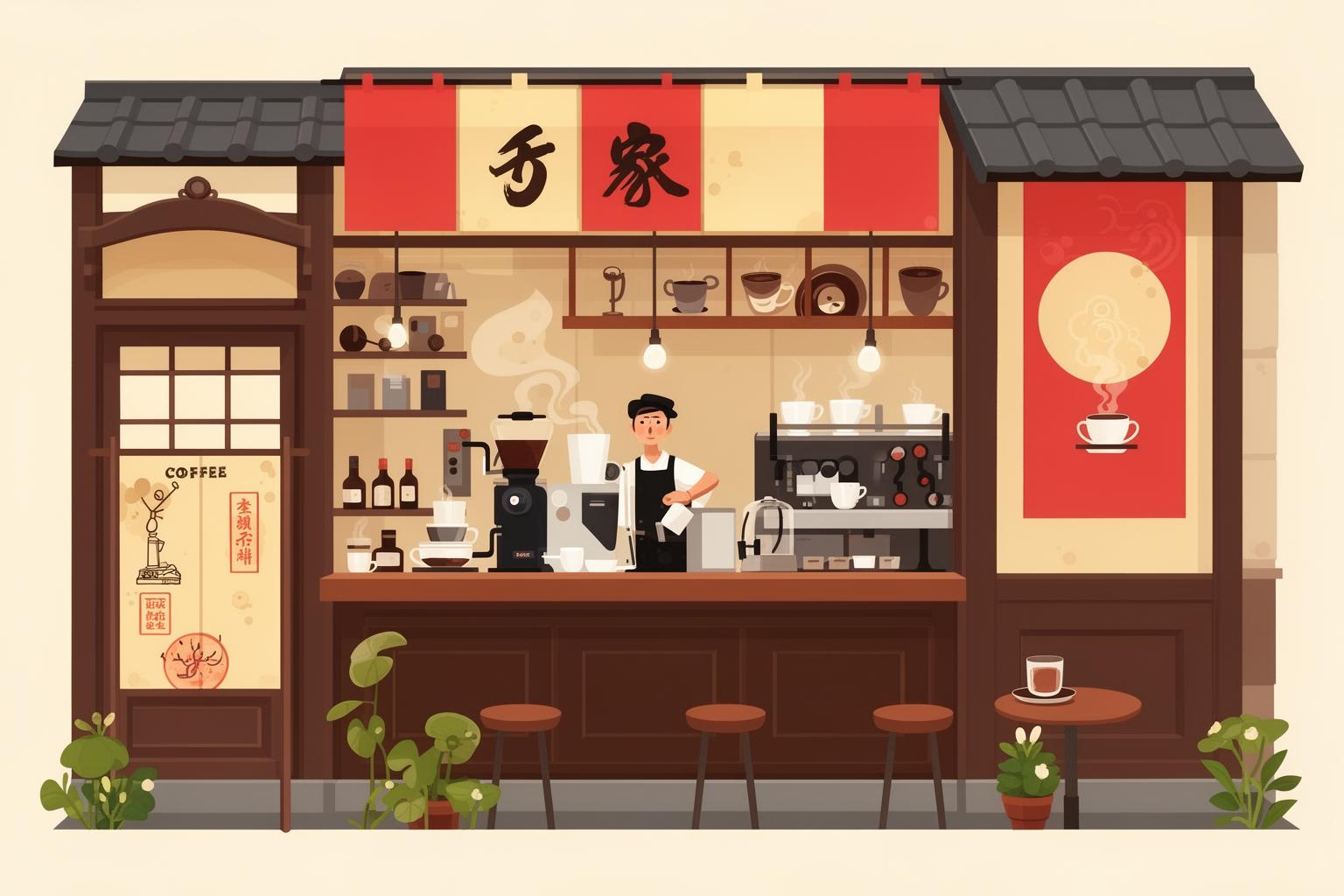
Before we can truly appreciate the food, we must first understand the space. A kissaten (喫茶店) differs fundamentally from the modern, globally widespread kafe (カフェ). Even the name tells a story. The kanji characters divide into kissa (喫茶), meaning “to drink tea,” and ten (店), meaning “shop.” This term originated in a time when coffee was still an exotic Western import, and these establishments were places for its quiet, thoughtful enjoyment.
While a contemporary café often serves as a transient spot—for grabbing a quick espresso, answering emails between meetings, or taking a photo for Instagram—the kissaten is a place to linger. The seating is designed for comfort, not rapid turnover. Plush, high-backed booths create intimate worlds, ideal for private conversations or solitary reflection. The lighting is deliberately soft, fostering a womb-like retreat from the city’s glare and noise. It acts as a public living room, a sanctuary where the cost of a cup of coffee grants you an hour or two of peace.
Central to the kissaten is the “Master.” This is not a rotating staff of casual baristas; it is usually the owner-operator, a figure of deep dedication who has often stood behind the same counter for decades. They move with unhurried, skilled grace, whether meticulously preparing coffee with a siphon, trimming crusts off sandwiches, or polishing glassware. The Master quietly maintains the atmosphere, ensuring its consistency. Their presence is a vital part of the experience, a silent assurance that you are in a place of steadiness and care.
This entire environment—the calm, the comfort, and the consistency—forms the backdrop for the classic kissaten menu. The food is not an afterthought; it is an extension of the space’s central purpose: to offer comfort and a gentle escape from the pressures of modern life.
The Birth of a Legend: Napolitan Spaghetti
Among all the dishes in the kissaten pantheon, Napolitan Spaghetti is arguably the most renowned and the most often misunderstood. It stands as a cornerstone of yōshoku, or Western-style Japanese cuisine—a category that emerged from Japan’s interactions with the West in the late 19th and early 20th centuries. Like many yōshoku dishes, its origin story is a captivating tale of adaptation and creativity.
Not Italian, Not American, Completely Japanese
The name itself is a charming misdirection. Napolitan has very little connection to Naples. It is not an authentic Italian pasta dish, nor was it ever intended to be. Its origins trace back to the immediate aftermath of World War II in the port city of Yokohama. The most widely accepted origin credits Shigetada Irie, head chef at the esteemed Hotel New Grand. During the American occupation, he noticed the GIs mixing canned spaghetti with ketchup and crafted a more refined version for the hotel’s restaurant.
Yet, this was not merely an act of imitation. It was a creative cultural translation. In post-war Japan, where scarcity prevailed, tomato purée was a luxury, while ketchup was more readily available thanks to the American military presence. Chef Irie utilized this familiar, accessible ingredient as the base for a stir-fried pasta dish, adding common ingredients like onions, green peppers, and either ham or Vienna-style sausages. The outcome was something entirely new—a dish hinting at Western influence but fundamentally Japanese in conception and flavor balance.
From the upscale hotel, the recipe gradually spread nationwide, finding its ideal home in the cozy kissaten. It was hearty, affordable, and deeply satisfying. Crucially, its flavor profile was perfectly tailored to the Japanese palate of the era, which was beginning to embrace bolder, Western-style seasonings. The sweet and tangy ketchup sauce was novel yet comforting, standing apart from the traditional soy sauce and dashi-based flavors of Japanese cuisine.
The Anatomy of Comfort
To truly appreciate Napolitan, one must set aside any preconceived ideas of how spaghetti should be. The noodles are not served al dente. In fact, their softness is an essential characteristic. Often pre-boiled and allowed to sit, the noodles absorb the sauce better when stir-fried, resulting in a uniquely tender, comforting texture. This softness is a feature, not a flaw.
The sauce unapologetically relies on ketchup. It is not a complex marinara simmered for hours with fresh herbs. Instead, it offers a simple, glossy coating of sweet and savory flavor, often enriched with a touch of butter or Tonkatsu sauce for added depth. The accompanying ingredients—the savory snap of sausage, the slight bitterness of green peppers, the sweetness of sautéed onions—remain consistent. They form the reliable supporting cast in this nostalgic culinary story.
The ritual of eating Napolitan adds to its charm. In many classic kissaten, it arrives sizzling on a cast-iron skillet, or teppan. Sometimes, a raw egg is cracked onto the hot plate just before serving, cooking in the residual heat and creating a creamy, self-made sauce as you mix it in. The sound and aroma—the sizzle of ketchup caramelizing on the hot metal—serve as an overture building anticipation. This is a meal that demands no critical analysis. There is no need to dissect its flavor notes or admire its presentation. It is simply meant to be eaten and enjoyed for its straightforward, heartfelt, and deeply satisfying character.
The Jewel of the Kissaten: The Melon Cream Soda

If Napolitan is the hearty, soulful patriarch of the kissaten menu, then the Melon Cream Soda is its dazzling, joyful offspring. This beverage is also a dessert—an experience that delights both the eyes and the palate. Watching one arrive at a nearby table evokes a pang of childlike wonder.
A Technicolor Dream in a Glass
The visual charm of the Melon Cream Soda is undeniable, a pure celebration of whimsy. It is served in a tall, elegant glass, brimming with a carbonated drink of an almost impossibly bright, artificial green. Resting serenely atop this emerald sea is a perfectly rounded scoop of hard-packed vanilla ice cream. Crowning the entire concoction, like a single ruby, is a bright red, long-stemmed maraschino cherry.
It looks like something from a cartoon or a fantasy world—and in many ways, that’s exactly the intention. The name “Melon Soda,” like Napolitan, is a delightful fiction. Its flavor bears little resemblance to any real melon one might find in nature. Instead, it offers its own unique, sweet, slightly tangy taste—the flavor of “green,” the flavor of “melon soda.” To fault it for not tasting like honeydew would miss the entire point. Its artificial nature defines its identity.
This creation reflects the Showa-era (1926-1989) fascination with the colorful, optimistic, and somewhat futuristic vibe of American soda fountains and diners. It captures that Western pop-culture sparkle and reinvents it in a distinctly Japanese way. It’s playful, innocent, and utterly unpretentious—pure, simple fun in a glass.
More Than a Drink, It’s an Experience
The Melon Cream Soda is rarely ordered as a mere thirst-quencher. It’s a treat, an indulgence, a small celebration. For generations of Japanese families, it embodies the taste of a special outing with a parent or grandparent. It’s the fancy drink a child was permitted while the adults drank their serious, bitter coffee. It symbolizes a brief moment of luxury and joy.
Drinking it becomes a personal ritual. Do you dive into the ice cream first, savoring it with the long spoon before it melts? Or do you let it slowly dissolve, creating creamy green swirls in the soda and turning the drink into a rich, sweet float? Do you reserve the chemically sweet cherry for the very last bite? There’s no wrong choice. The small ceremony of deciding how to enjoy your Cream Soda adds to its charm.
As the ice cream melts, the drink’s character shifts, becoming softer, richer, and less fizzy. It is a beverage with its own narrative arc, beginning as a sharp, bubbly soda and ending as a sweet, creamy dessert. This gentle transformation perfectly mirrors the kissaten experience itself—a slow, pleasant journey that invites you to savor the moment.
The Supporting Cast: Other Kissaten Classics
While Napolitan and Melon Cream Soda are the main attractions, the kissaten menu boasts an entire cast of beloved supporting items, each with its own story and comforting charm.
The Sandwich Situation: Katsu Sando and Tamago Sando
The Japanese take on the sandwich, or sando, is a masterclass in texture and precision, with the kissaten serving as its spiritual home. The bread is almost always shokupan, a fluffy, slightly sweet white milk bread, with the crusts carefully removed.
The Katsu Sando is a marvel of contrasts. A thick, juicy pork cutlet (tonkatsu), breaded and deep-fried to a perfect golden crisp, is nestled between two slices of this impossibly soft bread. The entire sandwich is slathered in tangy, fruity Tonkatsu sauce that soaks slightly into the bread. The result is a perfect harmony of crispy, soft, savory, and sweet. It’s a substantial, satisfying meal that feels both rustic and refined.
Then there is the Tamago Sando, the humble egg sandwich elevated to an art form. Typically, there are two main styles. The more common version features a creamy egg salad, perfectly seasoned and generously packed between slices of shokupan. The other, most associated with the Kansai region, includes a thick, warm, savory slab of Japanese rolled omelet (atsuyaki tamago) tucked inside the bread, often with a hint of mayonnaise and mustard. Both celebrate the beauty of simplicity.
Toast and Its Transformations
Shokupan also serves as the foundation for another kissaten staple: thick-cut toast with various toppings. Pizza Toast is a nostalgic favorite. A thick slice of bread is topped with a ketchup base (of course), melted cheese, and the classic trio of green peppers, onions, and mushrooms or sausage. It’s an open-faced pizza-sandwich hybrid that tastes like the ultimate after-school snack.
Another beloved variation is Ogura Toast, a specialty that originated in Nagoya but is now enjoyed throughout Japan. A thick, toasted slice of shokupan is spread with butter or margarine and topped with a generous dollop of anko, a sweet paste made from adzuki red beans. The combination of salty, melted butter and the earthy sweetness of the red bean paste is surprisingly delicious and incredibly comforting.
The Drink Menu Beyond Coffee
The creativity of the kissaten extends beyond its signature soda. Coffee Jelly is a uniquely Japanese dessert that highlights the establishment’s core product. It consists of cubes of lightly sweetened, chilled black coffee set with gelatin. It’s often served simply with a small pitcher of heavy cream or topped with a scoop of vanilla ice cream. It is a sophisticated, refreshing, and surprisingly light dessert for true coffee lovers.
For a non-caffeinated treat, there’s the Mixed Juice (Mikkusu Jūsu). Born in Osaka, this is the retro predecessor to the modern smoothie. A thick, frothy blend of canned or fresh fruits—typically banana, orange, peach, and pineapple—is mixed with milk and a little syrup. It’s wholesome, sweet, and tastes like a glass of pure, unpretentious sunshine.
The Psychology of Nostalgia: Why We Still Crave These Tastes
The lasting charm of these dishes cannot be attributed to their ingredients alone. Their appeal is deeply psychological, rooted in a powerful mixture of cultural memory, personal history, and a desire for stability.
Showa-Era Romanticism (昭和レトロ)
Many of these foods serve as edible symbols of Showa Retro (昭和レトロ), a widespread nostalgia for the mid-Showa era (roughly the 1950s through the 1970s). This period was marked by great optimism and rapid economic growth in Japan. It was an age when new technologies entered homes, consumer culture flourished, and there was a collective hope for a brighter future. The kissaten and its menu are inseparably connected to this time.
For many, enjoying a plate of Napolitan or savoring a Melon Cream Soda feels like stepping back into that idealized past. It conjures a sense of a simpler, more straightforward era. These flavors connect them to the Japan of their parents’ or grandparents’ youth—a world they might have only seen in old films or family photographs. It’s a kind of time travel where the entry fee is a humble meal.
The Taste of a First “Grown-Up” Experience
For countless Japanese people, the kissaten was the backdrop for important life milestones. It was the first place they went on a date, trying to appear grown-up over a cup of coffee. It was where they studied late into the night for university entrance exams with friends, energized by Pizza Toast. It was where they went to read a novel alone, feeling a newfound independence.
The food they ate during these moments became inseparably linked to the emotions of those experiences. Napolitan wasn’t just a meal; it was the flavor of nervous excitement on a first date. Cream Soda wasn’t merely a drink; it was the taste of a special reward after a long school week. These dishes are far more than their ingredients; they are like Proust’s madeleine, stir-fried with ketchup. They unleash a flood of personal memories and emotions, offering comfort that goes well beyond mere nourishment.
The Comfort of Unchanging Things
Most importantly, in a society that prizes innovation and is in constant change, the kissaten stands as a rare and welcome symbol of stability. Japan’s cities are continuously rebuilding themselves. Trends appear and disappear at a dizzying pace. Yet inside the kissaten, time seems to slow down.
The menu rarely changes. The recipe for Napolitan is the same as it was thirty years ago. The Master still stands behind the counter, carrying out the same quiet rituals. This steadfast resistance to change is not a sign of stagnation; rather, it is a profound source of comfort. In a chaotic world, the kissaten promises that some good things endure. You know exactly what to expect, and that reliability is deeply reassuring and invaluable.
The Modern Kissaten Revival: A New Generation Discovers the Classics
Far from fading into obscurity, the classic kissaten and its menu are enjoying a remarkable revival, largely fueled by younger generations discovering their unique charm for the first time.
Instagram and the Aesthetic Appeal
The visually rich nature of kissaten culture is ideally suited to the era of social media. The retro decor, elegant glassware, and photogenic dishes create a perfect blend for platforms like Instagram. The jewel-toned vibrancy of a Cream Soda or the artful simplicity of a Tamago Sando make irresistible subjects. A new generation, attracted by the aesthetics of Showa Retro, visits these vintage establishments to capture the perfect photo.
However, what begins as a search for a good picture often turns into genuine appreciation. Visitors may come for the photo opportunity, but they stay for the tranquil atmosphere. They find that the Napolitan is truly delicious on its own, and that the calm, unhurried environment offers a refreshing break from their overstimulated digital lives. In this way, social media has unexpectedly become a force for cultural preservation, introducing a new audience to these charming time capsules.
Neo-Kissaten: Evolution of a Genre
This resurgence has also given rise to the “neo-kissaten.” These are new cafes opened by younger owners who cherish the classic kissaten but aim to modernize it for the 21st century. They carefully recreate the Showa-era aesthetic—the dark wood, vintage furnishings, jazz soundtracks—but with some key updates.
The coffee might be specialty-grade, sourced from single-origin beans. The bread for the sando could come from an artisanal bakery. The menu still features the classics, but with slightly upgraded ingredients. Importantly, many of these new spots are entirely non-smoking, a notable shift from the smoke-filled haze of many traditional kissaten and a big draw for younger, health-conscious patrons.
These neo-kissaten are not soulless replicas but thoughtful tributes, demonstrating that the core values of the kissaten—comfort, quality, and a peaceful atmosphere—are timeless. They keep the spirit alive by adapting it for a new era, ensuring the legacy of Napolitan and Cream Soda endures for generations to come.
Ultimately, the food of the kissaten speaks a culinary language of memory. It narrates Japan’s post-war journey, its creative embrace of Western culture, and its deep appreciation for consistency and comfort. Napolitan Spaghetti isn’t attempting to be authentic Italian pasta, and Melon Cream Soda makes no claim to be a gourmet dessert. Their power and enduring appeal lie in their absolute, unapologetic, and deliciously Japanese identity.
So next time you wander the dazzling, sometimes overwhelming streets of a Japanese city, watch for the quiet storefront with the modest sign and lace curtains in the window. Step inside. Order something that feels like a relic from another era. You won’t just be having a meal; you’ll be tasting a piece of the country’s soul, served with care on a sizzling skillet or in a tall, sparkling emerald-green glass.