You see them everywhere. Clustered outside a sleepy neighborhood candy shop, standing in silent, colorful ranks in the echoing halls of an arcade, or packed floor-to-ceiling in a dedicated subterranean temple of plastic in Akihabara. They are the gachapon machines, and they are one of the most wonderfully persistent and democratic fixtures of Japanese daily life. From a distance, they might look like simple toy dispensers, the kind of thing you’d see in a North American supermarket lobby, spitting out chalky gumballs or a sticky, misshapen rubber ball. But to dismiss them as such is to fundamentally misunderstand a national obsession.
This isn’t just for children. In fact, the most fervent devotees, the people who keep this multi-billion yen industry humming, are adults. They are office workers on their lunch break, university students between classes, and serious collectors who travel across cities hunting for a specific, rare prize. The simple, physical act of feeding a few coins into a slot, turning a stiff plastic crank—that satisfying gacha-gacha or gachapon sound that gives the machines their name—and waiting for the pon, the thud of a capsule dropping into the retrieval tray, is a ritual that has captivated millions.
But why? In a nation that gave the world the PlayStation and the bullet train, a country at the bleeding edge of robotics and digital entertainment, why does this profoundly analog, low-stakes game of chance hold such a powerful grip on the collective imagination? It’s a question that goes far beyond the toys themselves. To understand gachapon is to understand something essential about the Japanese approach to hobbies, collecting, and the pursuit of small, accessible joys in a complex modern world. It’s a subculture built on surprise, powered by artistry in miniature, and defined by a community of collectors who find meaning in the meticulous curation of the tiny and the specific. This is the story of how a simple crank machine became a vessel for art, obsession, and a unique form of cultural expression.
The delicate magic of these capsule machines finds a parallel in Japan’s innovative purikura culture, which similarly transforms fleeting moments into vibrant expressions of art and identity.
From Gumball Knock-off to Cultural Icon: A Brief History of the Crank
The story of gachapon, like many modern Japanese cultural icons, begins with an imported concept that was refined, perfected, and ultimately transformed into something distinctly Japanese. The mechanical origins of the gachapon machine trace directly back to vending machines in the United States, especially the penny gumball dispensers of the early 20th century. However, it was not until the 1960s that the idea truly took hold in Japan, marking a significant evolutionary leap.
The American Origin and the Japanese Innovation
In 1965, Ryuzo Shigeta, having observed the success of these machines abroad, decided to bring them to Japan. He established his company, Penny Shokai, and began placing machines stocked with inexpensive toys and sweets in various locations. The initial response was muted. The toys were generic, the quality was poor, and the experience felt transactional rather than enchanting. For a decade, the business remained a minor novelty, a subtle presence in the rapidly modernizing post-war Japanese landscape. The machines existed but had yet to capture the public’s imagination.
Everything changed in 1977. That year, Bandai, already a giant in the toy industry, entered the scene. Bandai didn’t just aim to sell toys in capsules; they sought to build a brand and an experience. They trademarked the name “Gashapon” (a slightly different onomatopoeia, but with the same concept) and made a pivotal decision that would shape the industry forever: they began placing high-quality, licensed characters from popular culture into the capsules. Their first major success was a series of small rubber figurines based on the wildly popular Kinnikuman manga and anime, which featured surreal intergalactic wrestling. Suddenly, consumers weren’t just buying random trinkets; they were buying a chance to own a tiny piece of a beloved world. This was the turning point. The link to recognized fandoms transformed a passive purchase into an active quest.
The Capsule Contents’ Transformation
The Kinnikuman triumph laid down a model the entire industry would embrace. The 1980s and 90s saw an explosion of gachapon tied to the golden age of anime and video games. Dragon Ball, Sailor Moon, Gundam, Super Mario—if it was popular, it had a gachapon series. This mutually beneficial relationship was ideal. Gachapon served as affordable, accessible merchandise for fans, while the franchises’ popularity drove steady traffic to the machines. The quality of the toys also improved significantly. What began as simple, single-color rubber erasers or keychains evolved into complex, multi-part, pre-painted miniatures requiring assembly. The act of assembling the tiny figures became part of the enjoyment, adding an extra layer of engagement.
By the 2000s, the market had matured and diversified beyond recognition. Producers realized the appeal extended far beyond children and anime enthusiasts. They began creating gachapon for entirely new demographics. Hyper-realistic models of insects, animals, and historical artifacts emerged, targeting hobbyists and educational markets. Quirky, humorous, and sometimes downright bizarre concepts found a place in gachapon, catering to a uniquely Japanese sense of humor. The technology inside the capsules advanced as well. Injection molding techniques became more refined, enabling astonishing detail at a tiny scale. Pad printing allowed for intricate logos and facial expressions. What was once a simple plastic bubble had evolved into a vessel for tiny, affordable works of art. The gachapon machine had fully completed its transformation from a novelty import into a cornerstone of Japanese subculture, a platform for creativity as diverse as the nation itself.
The Anatomy of Addiction: Deconstructing the Gachapon Experience
To grasp why gachapon so deeply captivates the Japanese psyche, you need to look beyond the plastic prizes. The entire experience is a carefully crafted ritual, a series of physical and psychological triggers that engage fundamental human impulses. It creates a low-cost, high-reward cycle offering a potent mix of anticipation, surprise, and satisfaction. Analyzing this process shows why turning that crank feels far more compelling than simply clicking on a screen.
The Ritual of the Turn
Above all, gachapon is a tactile experience. In an increasingly digital world, this physical aspect is a huge part of its charm. It starts with the coins—you hold solid, cold metal, sliding it into a mechanical slot with a clear clink. There’s no tapping a card or scanning a QR code; it’s a nostalgic, analog interaction. Next is the crank, often stiff, providing a satisfying resistance that requires a purposeful, two-handed grip. You sense the gears inside engaging as you turn it. This physical effort turns you into an active participant rather than a passive consumer.
The auditory signals are equally vital. The cranking sound—the gacha-gacha—represents possibility. It’s a mechanical whir that builds suspense. Then comes the climax: the pon. A hollow, decisive thud occurs as the capsule is released into the collection tray. That sound signals the gamble’s end and the awaited result. It acts as a Pavlovian trigger for excitement. The whole sequence—the weight of the coins, the crank’s resistance, the drop’s sound—is a ritual that anchors you in the moment, a small ceremony of chance.
The Dopamine Hit of the Unknown
At its essence, gachapon is a lottery. You know the set of possible items—the small poster on the machine displays them all—but you can’t predict which one you’ll receive. This is the essence of the “blind box” mechanic, which is psychologically powerful. Our brains are wired to respond more intensely to variable rewards than to predictable ones. If you knew exactly what you’d get, it would just be a purchase. The uncertainty is what makes it exciting. This principle, called intermittent reinforcement, is the same that fuels the addictiveness of slot machines and social media feeds. Each crank turn is like pulling a lever, refreshing a page. The chance of winning the rare “secret” item or the particular character needed to complete your set triggers a small burst of dopamine, the brain’s pleasure chemical. For a few hundred yen, you’re buying not just a toy, but a genuine, heart-pounding moment of suspense. Opening the capsule is the high point of this experience—a tiny Christmas morning, a mini unboxing video happening in your hand.
Curation and ‘The Complete Set’: The Collector’s Mindset
While the thrill of uncertainty is the initial lure, the drive to collect creates devoted followers. Gachapon makers expertly fuel this impulse. A typical series includes five to eight different items—a perfect number: small enough to feel attainable yet large enough to require multiple tries. The serious player rarely aims to get just one item; the goal is the complete set.
This changes the activity from mere chance into a focused quest, giving meaning to repeated plays. Getting duplicates, though frustrating at first, isn’t a total loss. They become social currency, tradable with friends, sellable online, or exchangeable with other collectors at machine banks. This sense of progress—gradually filling gaps in your collection—is deeply rewarding. It taps into our innate need to create order, categorize, and finish a project. Manufacturers often enhance this by including a rare “secret” item not shown on the display card. The hunt for this hard-to-find prize can spark a frenzy among collectors, boosting sales and fostering a passionate community centered on shared obsession. Displaying a complete set on a shelf becomes a trophy, symbolizing your luck, dedication, and role within the subculture.
More Than Just Toys: The Astounding Diversity of Gachapon
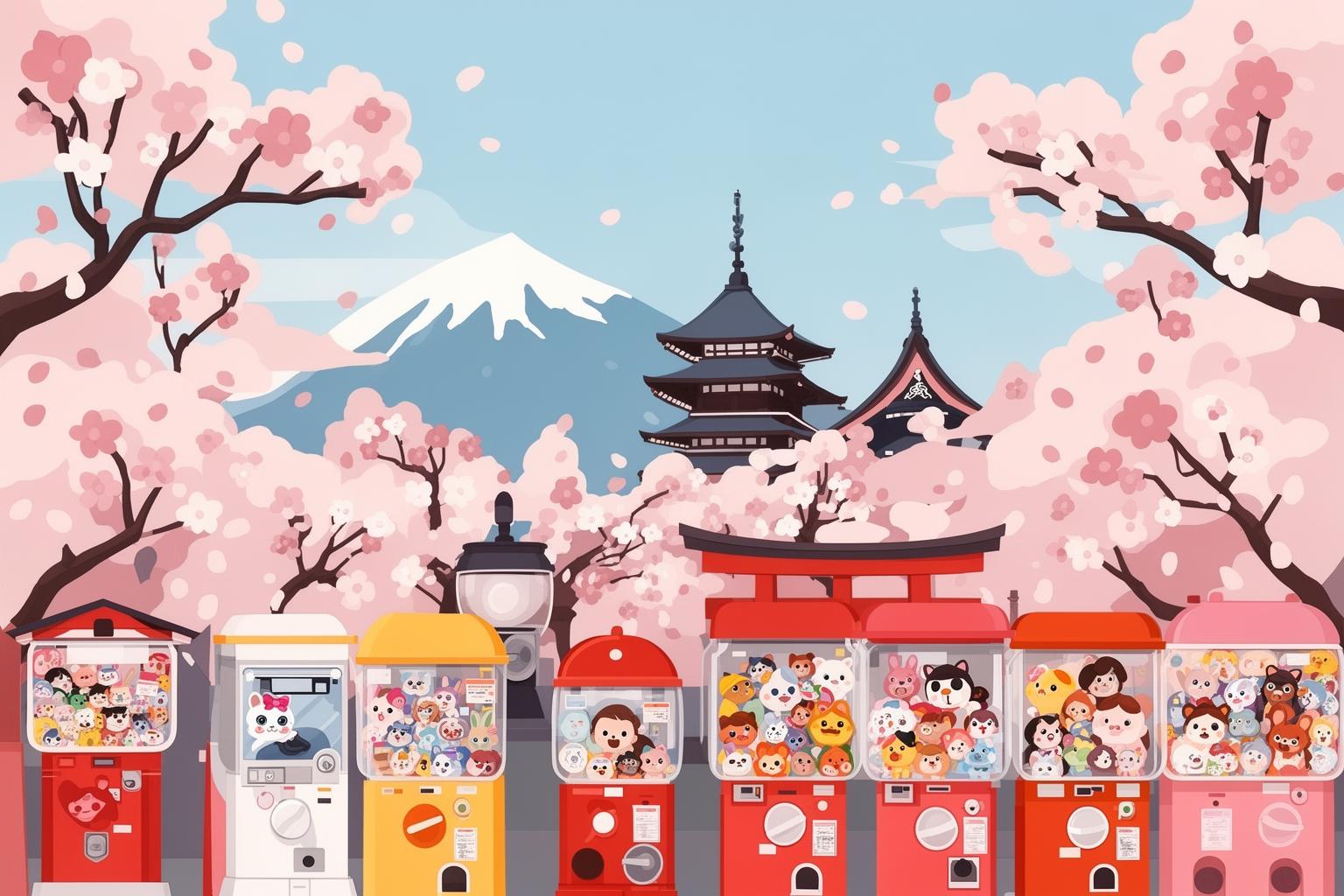
One common misconception about gachapon is that it revolves solely around anime characters and cute mascots. While this is a significant part of the market, it represents only the surface. The immense variety and creativity found inside these plastic capsules are astonishing and reflect a culture that embraces niche interests and discovers artistry in the everyday. The world of gachapon acts as a mirror, showcasing the vast, diverse, and often wonderfully eccentric landscape of Japanese hobbies and aesthetics.
The Otaku Connection: Anime, Manga, and Video Games
This forms the foundation of the gachapon industry. For enthusiasts of Japanese pop culture, gachapon machines provide an affordable way to obtain high-quality merchandise. Strolling through Akihabara, one can find entire floors dedicated to machines dispensing keychains, character stands, and miniature figures from virtually every series imaginable, ranging from mainstream hits like One Piece and Jujutsu Kaisen to the most obscure indie games. These items serve as tangible connections to the fictional worlds fans cherish. For 500 yen (roughly $3.50), you can acquire a beautifully sculpted, intricately painted miniature of a favorite character. It’s an accessible method to express fandom, decorate personal spaces like desks or bags, and show loyalty to a particular community. New gachapon series often launch alongside new anime seasons or game releases, making these machines a dynamic part of the fan experience.
Miniature Realism: The Rise of the Hyper-Detailed Model
Perhaps the most surprising area for outsiders is the realm of ultra-realistic miniatures. These gachapon series target not anime fans but hobbyists, designers, and anyone who appreciates detailed craftsmanship. Some machines dispense perfectly scaled replicas of classic film cameras with removable lenses and tiny buttons. Others feature miniature versions of famous artworks, like Roman emperor busts or Hokusai’s Great Wave. There are astonishingly accurate models of venomous insects, deep-sea creatures, or dinosaur skeletons that require careful assembly. These are not traditional toys but collector’s items—tiny sculptures showcasing the height of modern manufacturing. They appeal to a different kind of passion, centered on precision, accuracy, and the elegance of well-crafted objects. This category highlights that the gachapon format is a legitimate artistic medium, distributing affordable, high-fidelity models to the masses.
The ‘Shun’ of the Season
A subset of this realism captures the transient beauty of Japan’s distinct seasons. Known as shun, the celebration of seasonal motifs and ingredients is central to Japanese culture, and gachapon reflects this perfectly. In spring, machines offer tiny sakura branches or figures enjoying hanami picnics. Summer features miniature festival masks, shaved ice machines, or cicada models. Autumn brings capsules with tiny maple leaves or chestnuts, and winter presents snow globes or animals huddled under a kotatsu. These series are often limited editions, available just for a few weeks. Their fleeting nature makes them highly collectible, turning them into tiny souvenirs of a specific time and place.
The Weird and the Wonderful: Japan’s Penchant for the Absurd
This is where gachapon truly shines as a unique cultural creation. Japan has a profound appreciation for the surreal, the cute-but-strange (kimo-kawaii), and the outright bizarre, with gachapon serving as the ultimate outlet for this creative impulse. This category is a rabbit hole of delightful absurdity. There are entire series devoted to cats wearing hats made of fruit or vegetables. Other figurines depict animals bowing deeply in apology. One popular series features miniature, highly detailed public toilets, while another, called “Too-Free Goddess,” reimagines the Statue of Liberty in undignified poses, such as sleeping on a park bench or doing a limbo dance.
These ideas stem from a playful, surrealist sense of humor that doesn’t always translate perfectly but remains endlessly fascinating. They serve as conversation starters—tiny pieces of Dadaist art for your desk. They cater to those weary of the mainstream who seek something that reflects a more offbeat sensibility. This is gachapon at its most inventive and free-spirited, offering insight into a national sense of humor that delights in the unexpected and the whimsically pointless.
Practicality in a Pod: The Unexpectedly Useful Gachapon
Though most gachapon items are purely decorative, an expanding category offers small, functional products. This speaks to the format’s versatility, dispensing genuinely useful items. You can find tiny foldable eco-bags that compress into minuscule pouches, adorable animal-shaped “cable huggers” to organize charging cords, and high-quality microfiber cloths with beautiful traditional Japanese patterns for cleaning glasses or phone screens. Some capsules contain tiny pouches, coin purses, or miniature lanterns that actually light up. These items combine the surprise and collectibility of gachapon with everyday practicality, appealing to a broader audience—people who might not be interested in figurines but always appreciate a cleverly designed small accessory.
The Gachapon Ecosystem: Where to Find Your Fix
The experience of gachapon is deeply tied to the locations where it takes place. The machines aren’t randomly placed; rather, they exist within a thoughtfully designed ecosystem of spaces, ranging from a simple street corner to a multi-story palace of plastic. Understanding these settings reveals how the subculture is structured and how it caters to diverse enthusiasts, from casual players to obsessive collectors.
From Street Corner to Sanctuary
The most basic gachapon setting is a single machine or a small cluster stationed outside a local supermarket, bookstore, or train station. These serve as entry points, often featuring mainstream, family-friendly characters designed to attract the attention of passersby. This is where a child might experience gachapon for the first time, or an adult might make a spontaneous decision during their commute.
One step beyond is the dedicated gachapon corner, typically found within larger entertainment venues like arcades or electronics stores such as Yodobashi Camera. Here, dozens or even hundreds of machines are arranged in orderly rows. The selection is more varied, targeting specific fandoms and interests. This is where casual players begin to transition into hobbyists, exploring different series and coming to appreciate the vastness of the gachapon world.
At the pinnacle of this ecosystem are the specialized gachapon stores. These are the sacred places for true enthusiasts. Locations like Akihabara Gachapon Hall or Bandai Namco’s expansive Gashapon Department Store in Ikebukuro serve as destinations in their own right. They house thousands of machines spanning every imaginable genre. These stores are carefully organized, often dedicating sections to new releases, pop culture icons, and the bizarre and unique. They also feature coin exchange machines and “capsule recycling” bins, ensuring a smooth and efficient collecting experience.
A Space for Solitary Exploration
One notable aspect of these larger gachapon centers is their atmosphere. Unlike the loud, chaotic arcades, they tend to be surprisingly quiet and orderly. The aisles are designed for browsing, allowing visitors to explore at their own pace while closely examining each machine’s display cards. The experience is less about socializing and more about a personal journey. Individuals immerse themselves in their own quests. This solitary aspect aligns with the Japanese view of hobbies as focused, personal enrichment rather than group activities. The gachapon store becomes a refuge for the individual collector, a library of possibilities where one can indulge specific passions without judgment.
The Aftermarket: Trading, Selling, and the Pursuit of Rare Treasures
For the most devoted collectors, the adventure doesn’t end at the machine. The “gacha” element—the element of chance—can be frustrating when one item is missing to complete a set. This has sparked a vibrant secondary market. In places like Nakano Broadway in Tokyo, numerous small shops specialize in buying and selling individual gachapon figures. Here, chance is removed; the toys are displayed outside their capsules with price tags attached. Common items may be priced below the cost of a single turn, while rare “secret” items from popular series can fetch prices many times higher.
This aftermarket plays a crucial role in the ecosystem. It allows collectors to fill the last gaps in their collections and provides a venue for trading unwanted duplicates. It turns the hobby into something akin to stamp or coin collecting, complete with established market values and a pursuit of rare treasures. Online platforms and social media groups further facilitate lively trade among enthusiasts nationwide, fostering a community bonded by the shared goal of completion.
The Soul of the Machine: What Gachapon Says About Modern Japan
When you take a step back and observe the entire phenomenon, it becomes evident that gachapon is more than just an ingenious business model. It serves as a cultural barometer, reflecting some of the fundamental principles of contemporary Japanese life. The simple act of turning a crank for a surprise toy captures deeply rooted values connected to art, consumerism, and the pursuit of meaning in a fast-moving world.
Affordable Art, Accessible Joy
In a country where living spaces are often small and urban life can be rigid and stressful, gachapon provides a powerful remedy: a small dose of joy. For just a few hundred yen, you experience a moment of excited anticipation and receive a tangible, physical prize. The item is compact enough to fit on any desk or shelf, requiring no major commitment of space or money. Essentially, it is an exceptionally democratic and approachable form of art collecting. The craftsmanship and creativity packed into these tiny capsules rival those of far more expensive items, enabling ordinary people to become curators of their own miniature galleries, surrounding themselves with small objects that bring happiness and express their identity.
The Celebration of Niche
The remarkable variety of gachapon reflects a culture that not only accepts but actively celebrates niche interests. The fact that a company can successfully produce and distribute figurine series based on, for example, miniature foldable chairs or different types of mushrooms, demonstrates a profound respect for specialization. In the world of gachapon, no interest is too obscure. This echoes the otaku spirit, which honors deep, scholarly dedication to a particular subject. Gachapon affirms these passions, telling people that their unique interests, no matter how small, deserve to be immortalized in plastic. It fosters a sense of belonging for those whose hobbies fall outside mainstream culture.
Analog in a Digital World
Perhaps the most striking feature of gachapon in the 21st century is its steadfast physicality. In an age dominated by digital downloads, streaming, and virtual goods, gachapon remains resolutely analog. You cannot download a gachapon. You must physically visit a machine, use real currency, and engage a mechanical process. The prize is a solid object you can hold, feel its weight and texture, and display on your shelf. This tangible reality provides a grounding experience, a welcome contrast to the fleeting nature of digital life. Its lasting popularity points to a deep human craving for physical rewards and real-world rituals—needs that the smooth, seamless world of apps and algorithms often fails to fulfill.
A Microcosm of ‘Cool Japan’
Ultimately, gachapon perfectly encapsulates what makes modern Japanese pop culture so globally influential. It embodies the concept of monozukuri—the spirit of craftsmanship and dedicated artistry in production. It showcases wild creativity and a distinctive sense of humor that can create both a beautifully detailed samurai helmet and a figurine of a Shiba Inu refusing to go for a walk. Closely tied to the realms of anime, manga, and video games, it has expanded to embrace much more. From the elegant design of the toys to the addictive psychology of the hunt, the entire gachapon experience is a beautifully contained blend of fun, artistry, and obsession. It’s a small machine that offers a glimpse into the very soul of Japanese subculture.