I’ll never forget my first encounter with the phenomenon. I was wandering through a covered shopping arcade in a small Japanese city, the sound of a gentle rain drumming on the translucent roof. Drawn in by a warm, inviting glow, I pressed my face closer to the window of a small, family-run restaurant. Inside the brightly lit glass case was a scene of pure culinary perfection. A bowl of ramen with a broth so rich you could almost feel its warmth, slices of pork arranged just so, a soft-boiled egg with a jammy, glistening yolk. Next to it, a plate of tonkatsu, its panko breading a masterpiece of golden-brown texture, looking impossibly crisp. My stomach audibly growled. It was only when I noticed the complete lack of steam, the static perfection under the fluorescent lights, that the truth dawned on me with a jolt. None of it was real.
Every last noodle, every grain of rice, every glistening drop of sauce was a meticulously crafted replica made of plastic and resin. My initial reaction was a mix of awe and bewilderment. Why would anyone go to such extraordinary lengths to create such a perfect lie? In many other cultures, this might be dismissed as tacky or kitsch, a cheap gimmick for a tourist trap. But in Japan, these food models, known as `shokuhin sampuru` (食品サンプル), are anything but. They are a serious art form, a powerful business tool, and a fascinating window into the Japanese cultural psyche. They represent a silent, visual contract between a restaurant and its customers—a promise of delicious things to come. This isn’t just about plastic food; it’s a deeply ingrained ritual of dining, rooted in a century of history and the relentless pursuit of perfection.
Moreover, the painstaking art of food modeling exists alongside Japan’s enduring tradition of wild mountain vegetables foraging, a seasonal practice that reveals another layer of its culinary ingenuity.
The Art of Deception: What Exactly Are Shokuhin Sampuru?
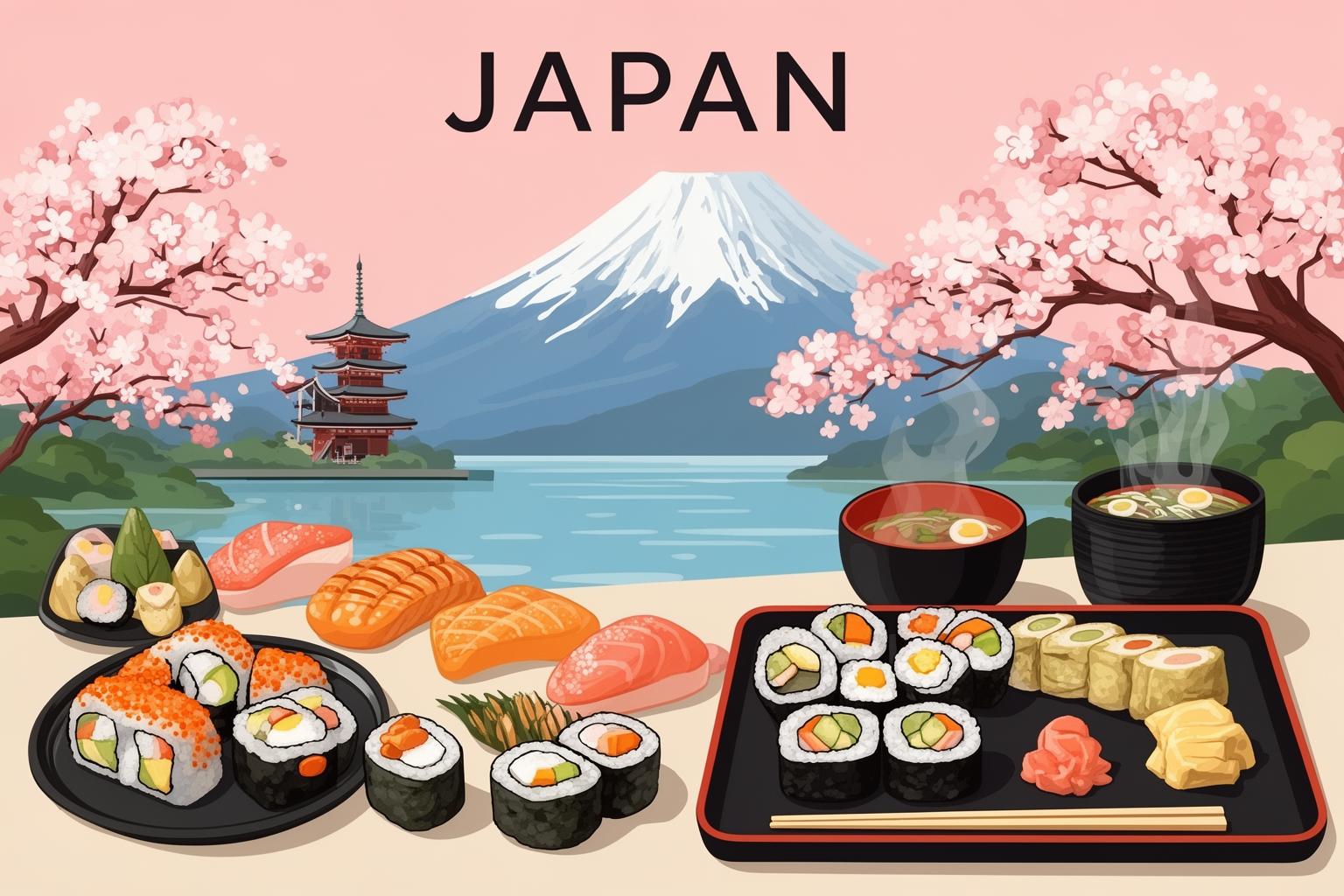
At its simplest, `shokuhin sampuru` translates to “food sample.” However, this clinical term greatly understates the craftsmanship involved. These are not mass-produced plastic toys found in children’s play kitchens; they are bespoke, handcrafted sculptures meticulously created for individual restaurants as exact one-to-one replicas of their dishes. Today, the main material is polyvinyl chloride (PVC), which replaced the more delicate and heat-sensitive paraffin wax used in the early days of the industry. The final product is durable, stable, and remarkably realistic.
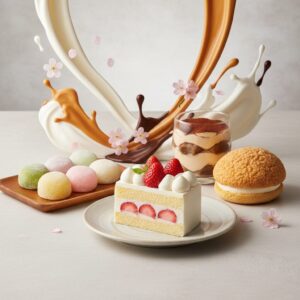
The level of detail is astonishing. Artisans replicate not only the shape and color of the food but also its very essence. They reproduce the delicate marbling of raw tuna, the airy, uneven holes in tempura batter, the subtle char marks on grilled eel, and the condensation on a chilled glass of beer. When viewing a high-quality display, you enter a peculiar perceptual zone—the uncanny valley of cuisine. Your brain recognizes it as food, your appetite is sparked, yet you know on some level it is an illusion. This brilliant deception is central to the art form. Each piece stands as a testament to the artisan’s skill and a lasting tribute to the chef’s fleeting creation, capturing its perfect form forever.
A Solution Born from Necessity: The Origins of Fake Food
Like many of Japan’s most intriguing cultural quirks, the story of `shokuhin sampuru` begins during a time of rapid social change. Although the craft traces its origins to ancient anatomical models, its culinary application surged in popularity in the early Showa period, starting in the late 1920s. Takizo Iwasaki, a craftsman from Gujo Hachiman—a small town in Gifu Prefecture that remains the heart of `sampuru` production today—is credited as the father of the industry. According to a popular tale, he created a wax model of a classic Japanese-style omelet, or `omurice`, so lifelike that it completely fooled his wife. He realized he had stumbled upon something significant.
His timing was impeccable. Japan was undergoing modernization, with Western culture and cuisine flooding in. Large department stores, the dazzling temples of consumerism, began opening upscale dining halls to attract shoppers. These venues offered a bewildering variety of new and exotic dishes: curry rice, spaghetti Napolitan, croquettes, and towering ice cream parfaits. For a Japanese public familiar with a traditional diet of fish, rice, and vegetables, these menus were daunting. Written descriptions often failed to clearly convey what these foreign foods actually were.
Iwasaki’s food models provided the ideal solution. They acted as a universal language. By displaying realistic models of each dish in window cases, restaurateurs could show customers what they were offering instead of just describing it. Diners could immediately see portion sizes, ingredients, and the dish’s overall presentation. This eased the anxiety of ordering unfamiliar foods and transformed curiosity into commerce. The `sampuru` became a silent but effective teacher and salesman, bridging the divide between traditional tastes and a new culinary world. It was a visual menu that democratized dining, making it both accessible and exciting for all.
The Silent Salesman: Its Role in the Modern Restaurant Experience

While photo menus have become widespread, the tradition of the `sampuru` display case remains remarkably strong throughout Japan, ranging from upscale department stores to modest ramen shops in rural areas. Its role has evolved beyond mere education into a refined combination of marketing psychology, customer service, and aesthetic philosophy.
Visually Setting Expectations
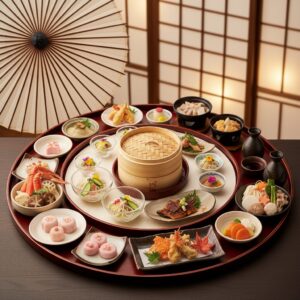
At its essence, the `sampuru` serves as a communication tool and an expression of `omotenashi`, Japan’s renowned spirit of wholehearted hospitality. It offers a “what you see is what you get” assurance. In a culture that prizes clarity and dislikes unpleasant surprises, this is especially significant. The model provides an exact, three-dimensional preview of your meal, showing portion size, garnishes, and presentation. This removes the uncertainty and potential disappointment that can arise from vague menu descriptions or misleading photographs.
For foreign visitors facing language barriers, these displays are invaluable. You can simply point to your choice, confident about what will arrive. But the benefit is equally important for locals. Trying a new restaurant always entails a bit of risk. The `sampuru` reduces that risk by delivering a transparent preview, enabling diners to make informed decisions visually before paying. It’s a sign of honesty and respect toward customers.
The Psychology Behind the Display Case
The display case acts as a restaurant’s primary advertisement, functioning around the clock. It is the first impression—a visual handshake. A bright, clean, and fully stocked case filled with vibrant, appetizing models signals a kitchen proud of its food and attentive to detail. On the other hand, a display with dusty, faded, or scarce models can serve as a warning, indicating neglect. The condition of the `sampuru` reflects the overall state of the restaurant.
Moreover, these displays excel in psychological persuasion. Food is a sensory experience, with sight being the first sense triggered. A carefully crafted model of a sizzling steak or an indulgent slice of cake can evoke a strong, instinctive response. It bypasses logical reasoning and appeals directly to appetite, sometimes sparking hunger when there was none or persuading someone to order the pricier set meal because it looks so satisfying in its plastic form. The meticulously arranged display performs as culinary theater designed to attract, influence, and ultimately sell.
Beyond Plastic: The Promise of `Oishisou`
Here, `shokuhin sampuru` goes beyond mere imitation to become an art form. The artisan’s aim is not only to produce a realistic model but one that looks intensely, mouth-wateringly delicious. This aligns with the Japanese concept of `oishisou` (美味しそう), meaning “looks delicious.”
The artist’s challenge is to capture the food at its utmost moment of appeal—it’s about idealization rather than simple replication. They expertly create the illusion of freshness and flavor: cheese on a model pizza captured in perfect, endless stretch; sauce on a bowl of `tendon` shining with a rich, glossy sheen that might last only seconds in reality; fake ice cubes in a whiskey glass exhibiting flawless crystalline clarity; and foam on a model beer remaining perpetually frothy. These artists sculpt an emotion—the sensation of hunger and eager anticipation. It is this commitment to capturing the idea of deliciousness that elevates the craft from a basic trade into a sophisticated art form.
The Artisans Behind the Curtain: A Meticulous Craft
The creation of a single food model is a meticulous, labor-intensive craft that combines scientific accuracy with artistic intuition. It stands in stark contrast to automated factory production and is deeply embedded in Japan’s `shokunin` artisan culture, where masters devote their lives to mastering a single skill.
From Real Food to Perfect Mold
The process starts with the real dish. A restaurant prepares a flawless version of their offering and sends it to the `sampuru` workshop. There, artisans carefully deconstruct the dish piece by piece, much like culinary surgeons. They then craft precise silicone molds for each element. For a complex dish like Nagasaki `champon`, this may involve making separate molds for dozens of components: noodles, pork slices, squid, shrimp, cabbage, bean sprouts, and bright pink slices of `kamaboko` fish cake. Even individual grains of rice are often molded to capture the perfect texture.
The Magic of Color and Texture
After the molds are made, liquid PVC is poured in and heated until it hardens. The resulting clear or opaque plastic pieces serve as blank canvases. The true magic occurs during assembly and painting. This phase showcases the artisan’s keen eye for color and detail. Using airbrushes and fine brushes, they apply layers of paint with astonishing subtlety to create a natural appearance. A grilled salmon piece, for example, might undergo ten or more layers of paint to replicate the gradient from pink flesh to gray skin and the dark, crispy char marks.
Texture creation is another specialized skill. The iconic lacy, crispy tempura batter is often formed by dripping hot wax into warm water. The wax rapidly spreads and solidifies into a web-like pattern, which is then carefully lifted and placed over a plastic model of a shrimp or vegetable. This method, developed by Iwasaki himself, continues to be used today. Every detail is meticulously crafted, from the fine droplets of oil sprayed on a plate to the delicate condensation on a chilled salad bowl.
A Lifelong Dedication
Becoming a `shokuhin sampuru` artisan is not something achieved quickly. It usually requires a long apprenticeship, often lasting up to ten years under a master’s supervision. It demands immense patience, a steady hand, and an almost obsessive focus on detail. These artisans are more than technicians; they are artists who understand the physics of food—how light interacts with sauce, how heat changes the hue of meat, how bread gains its crumb structure. They view themselves as collaborators with chefs, entrusted with the sacred responsibility of immortalizing the chef’s culinary vision in a permanent, tangible form.
Beyond the Restaurant Window: `Sampuru` in Pop Culture and Art

While its main function continues to be within the restaurant industry, `shokuhin sampuru` has evolved to enjoy a vibrant second life as both a pop culture icon and an engaging cultural experience.
From Functional Object to Coveted Souvenir
As photographic menus became widespread and the domestic restaurant market matured, `sampuru` companies smartly diversified. They started applying their remarkable skills to produce novelty items and souvenirs. Today, hyper-realistic food models appear in many other forms: keychains shaped like gyoza, flash drives disguised as sushi, detailed phone cases adorned with a full plate of curry rice, and even hair accessories resembling a strip of sizzling bacon. These items are extremely popular, especially among tourists seeking a unique and quirky keepsake from their visit to Japan. They are playful, exquisitely crafted, and embody a distinct eccentric charm that is uniquely Japanese.
The Art Gallery and the Workshop
For those wishing to explore this world further, there is Kappabashi-dori in Tokyo. Known as “Kitchen Town,” this long street is lined with wholesale shops offering everything a restaurant might need, from enormous pots and pans to chef’s knives and custom-made lanterns. Several of these shops are dedicated solely to `shokuhin sampuru`. Entering one feels like stepping into a surreal art gallery. You can purchase anything from a single, flawless plastic shrimp for a few dollars to an elaborate, multi-course banquet display costing thousands. More recently, many workshops, both in Kappabashi and in the historic town of Gujo Hachiman, have begun offering classes for visitors. Here, you can try your hand at the craft, usually making wax tempura or a colorful ice cream parfait. This has transformed `sampuru` from a static object to be admired into an interactive and memorable cultural activity.
A Symbol of Japanese Precision
Ultimately, the art of `shokuhin sampuru` perfectly embodies several fundamental Japanese cultural values. The unwavering commitment to realism and detail is a clear expression of `kodawari`, the cultural obsession with pursuing perfection regardless of the task’s scale. It’s the same spirit that drives a calligrapher to practice a single stroke thousands of times or an animator to obsess over a few frames of film. It’s the belief that immense value lies in making something as perfectly as possible. The `sampuru` celebrates craftsmanship, honors the beauty of food, and serves as a tangible reflection of a culture that finds art in everyday life.
A Feast for the Eyes, A Promise for the Palate
The next time you find yourself in Japan, take a moment to genuinely admire the gleaming display case outside a restaurant. Don’t write it off as just a novelty. Recognize it for what it truly is: a historical artifact stemming from a period of great change, an effective marketing tool, a refined art form requiring significant skill, and a subtle gesture of hospitality.
These beautiful, delicious illusions form part of a silent dialogue occurring throughout the country every day. They serve as a visual promise from the chef to you, the diner—a guarantee of the quality and care you are about to experience. In a culture where food presentation is valued as much as flavor, it makes perfect sense that the meal begins long before your first bite. It starts with your eyes, with a feast of flawless, lasting food that sets the stage for the real experience ahead.