
I get this question a lot, usually after someone’s just watched a Studio Ghibli film for the first time. They’ll ask, “Are there really places in Japan like the ones in Spirited Away or My Neighbor Totoro? Places that feel… well, other?” They’re talking about those moss-covered stone lanterns half-swallowed by tree roots, the endless stairs that seem to lead into a misty, unknowable world, and the profound, humming silence of a forest that feels ancient and aware. The short answer is yes. The longer, more interesting answer is that these places are not fantasy. They are an essential part of the Japanese spiritual landscape, a physical manifestation of a belief system where the border between our world and the spirit world is porous, and a simple gate made of wood can be the only thing separating them. These are the forest shrines of Shinto, and to walk through them is to understand Japan on a level that no city tour can ever offer. Forget the polished, brightly painted shrines of the major cities for a moment. They have their own grandeur. But the true, primal heart of Shinto, Japan’s indigenous faith, beats strongest in the deep woods. Here, long before the first prayer hall was ever built, divinity was found not in golden idols but in the whisper of wind through thousand-year-old camphor trees, the thunder of a waterfall, or the imposing silence of a mountain. The forest itself was the sanctuary. What we now see as shrines are often just focal points, man-made acknowledgements of a power that was already there. This is what Ghibli captures so perfectly: the sense that nature is not a backdrop for the gods, but the living body of the gods themselves. Visiting one of these shrines is less about religion in the Western sense and more about transition. It’s a journey, a deliberate walking away from the noise and logic of the everyday into a realm governed by different rules. Every element, from the crunch of gravel underfoot to the way the path curves to hide what’s ahead, is designed to prepare you for an encounter with the sacred, the unseen. You are stepping through a gateway, and you are meant to feel the change.
Stepping away from the ethereal hush of ancient forest paths, you might also discover a modern twist in Japan’s cultural narrative through its intriguing vending machine obsession that offers a quirky counterpoint to the timeless spirit of its natural shrines.
The Forest as the First Sanctuary
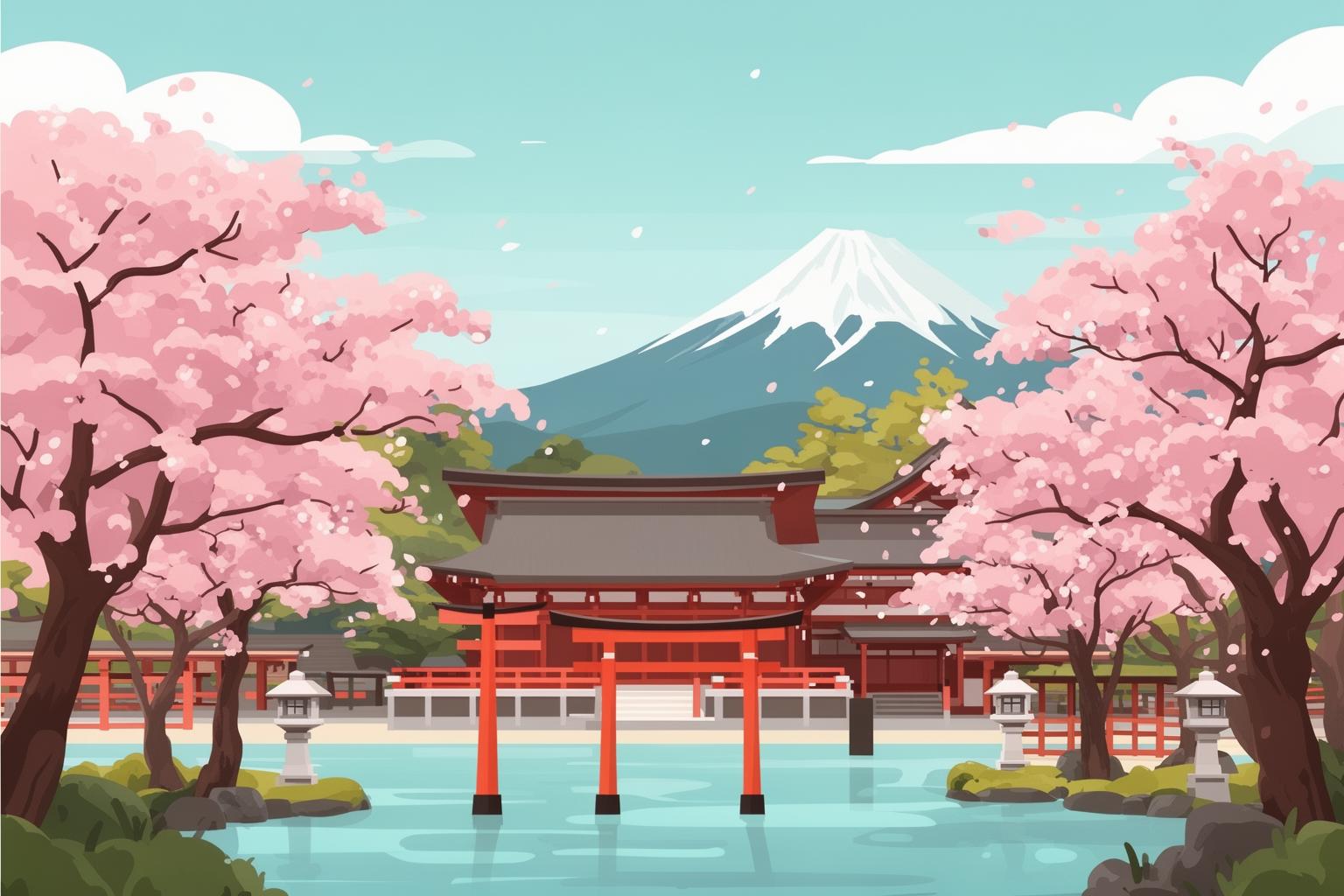
Before buildings with sweeping roofs and intricate carvings existed, there was only the forest. To truly understand the soul of a woodland shrine, one must grasp this fundamental idea: the architecture is a guest in nature’s home. The oldest form of Shinto reverence was directed toward nature itself. People perceived the kami—a term often translated as ‘gods’ or ‘spirits’, but more precisely meaning a divine essence or presence—in everything that inspired awe. A gnarled, ancient tree of great size was not merely wood; it was a shinboku, a sacred tree, a vessel for a kami. A uniquely shaped rock, a majestic mountain, or a roaring waterfall—these served as the original altars.
This deep respect for the natural world gave rise to the concept of chinju no mori, the “guardian forest.” Almost every village, and by extension every shrine, was sheltered by a sacred grove. This was not just a decorative park. It functioned as a spiritual barrier, a living wall that separated the sacred domain of the kami from the ordinary human world. These forests often remained untouched for centuries. Cutting down a tree within the chinju no mori was unthinkable, a sacrilege that would anger the local deity and bring misfortune. Consequently, these groves became remarkable pockets of biodiversity, preserving native flora and serving as living time capsules of the original landscape.
The shrine buildings appeared later. They were constructed to accommodate rituals and provide a clearer focal point for worship, but they were always built with respect to the surrounding environment. The forest was never cleared to make way for the shrine; rather, the shrine was carefully situated within the forest. This principle shapes the entire experience. One does not simply arrive at the sacred space; one must pass through it, allowing the ancient trees and the profound silence to dissolve the distractions of the outside world. The forest acts as a natural nave, a grand living cathedral that prepares the mind and spirit long before the first sign of a human-made structure is seen. It is an immersive process. The air cools. Light filters through in dappled shafts. The sounds of traffic and civilization fade away, replaced by the rustling of leaves and the call of a crow. You are entering the domain of the kami, and the journey through their home is the first, and perhaps the most significant, act of worship.
Crossing the Threshold: The Journey Inward
The approach to a forest shrine, called the sandō, serves as a masterful example of psychological and spiritual stage-setting. Rather than a direct path, it is a carefully choreographed sequence of experiences designed to alter your state of consciousness. By crossing this threshold, you are entering a meaningful journey where every element along the way guides you from the mundane to the sacred.
The Torii Gate: A Portal Between Worlds
The torii gate is the most emblematic symbol of Shinto. Its simple, elegant design—two vertical posts topped by two horizontal lintels—is immediately recognizable. However, its significance extends far beyond decoration. The torii formally announces that you are leaving the ordinary world and entering a sacred realm inhabited by a kami. Passing beneath it is a deliberate act of transition. Many individuals pause to bow briefly before stepping through, a small gesture honoring the deity whose domain they are about to enter.
Unlike the large, brightly painted vermilion torii often seen at prominent urban shrines such as Fushimi Inari in Kyoto, the gates at forest shrines tend to be more understated. They may be crafted from unpainted, weathered wood slowly reclaimed by moss or carved from stone as ancient as the surrounding hills. This rustic simplicity is intentional; it does not seek to dominate the landscape but to harmonize with it. A wooden torii fashioned from local cypress does not stand apart from the forest but rather stands alongside it, feeling like a natural portal that might have grown there. Sometimes, a shimenawa—a thick rope made of woven rice straw adorned with white paper streamers—is tied around a colossal, ancient tree, marking the tree itself as sacred and serving as a gateway to the divine.
The Whispering Path
Beyond the torii, the character of the path shapes the experience. The sandō at forest shrines is seldom straight or paved; it often winds along a trail of packed earth or neatly raked gravel. The gravel, or shirakawa-suna, is especially important. Its crunching beneath your feet compels a slower, more mindful pace, heightening your awareness and calming your mind. Rushing is impossible; walking mindfully invites observation.
The path almost always follows an indirect route. It curves, rises, and falls, revealing the shrine gradually. This is an intentional design grounded in Japanese aesthetics and spiritual principles. The winding path fosters mystery and anticipation, concealing the main sanctuary from immediate view and focusing your attention on the journey itself. Each bend unveils a new scene: a line of moss-covered stone lanterns (tōrō), a small subsidiary shrine nestled among the trees, or a stone bridge arching over a babbling stream. These features serve as waymarkers, drawing you deeper into the sacred atmosphere. Originally functional for illumination, the stone lanterns now stand as symbolic beacons along the quiet woodland path, reinforcing the sense that you are walking a special, protected way.
Cleansing Body and Spirit
Before arriving at the main prayer hall, you will almost always come upon the temizuya or chōzuya, a pavilion for water purification. This is a vital step in the cleansing ritual. The structure is simple—usually a stone basin filled with fresh, flowing water accompanied by several long-handled ladles, called hishaku. The ritual, called temizu, symbolizes the purification of both body and spirit.
You take a ladle in your right hand, fill it with water, and pour some over your left hand to rinse it. Then you switch hands and rinse your right hand. Returning the ladle to your right hand, you cup your left hand and pour water into it, then use that water to rinse your mouth. It is important not to touch the ladle directly to your lips or swallow the water; you discreetly spit it out onto the gravel beneath the basin. Finally, you rinse your left hand once more and tilt the ladle vertically, letting the remaining water run down the handle to cleanse it for the next person. The entire ritual is an act of purification and respect. You are washing away the dust and impurities—both physical and symbolic—of the outside world before presenting yourself to the kami. It is a moment of quiet reflection and final preparation before standing before the divine.
Architecture That Breathes With Nature
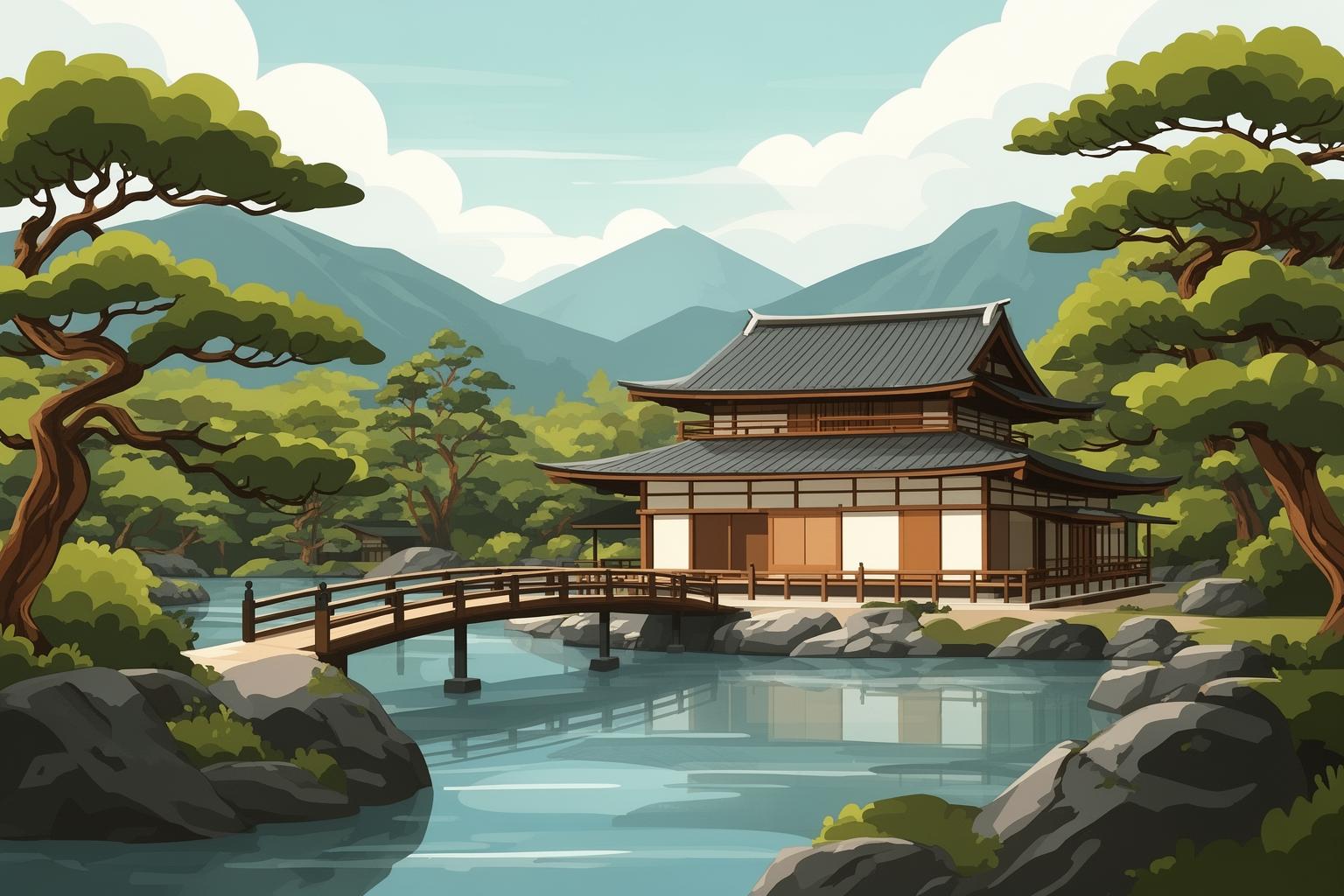
The buildings of a forest shrine are not intended to dominate the landscape. They are crafted to blend harmoniously with their surroundings, appearing as if they have naturally emerged from the earth alongside the trees. This architectural philosophy embodies reverence and integration, reflecting the Shinto belief that the kami dwells primarily in nature, with human structures remaining secondary.
Humility in Design
Venture away from urban areas, and you’ll observe a notable change in shrine architecture. The bright vermilion lacquer and elaborate gold-leaf adornments give way to a simpler, more natural style. Many forest shrines are constructed in traditional early styles, such as shinmei-zukuri (exemplified by Ise Grand Shrine) or taisha-zukuri (seen at Izumo Taisha). These styles emphasize elegant simplicity and the use of natural materials.
The wood is often untreated Japanese cypress (hinoki), which ages gracefully to a silvery-grey patina, blending effortlessly with the bark of nearby trees. The scent of cypress itself is considered both purifying and sacred. Roofs are commonly made from layers of thatched miscanthus reed or, more frequently, thick shingles of cypress bark (hiwada-buki), a meticulous technique producing a soft, textured surface that echoes the forest floor. These natural materials give the buildings a living quality. They breathe with the seasons, expanding in summer humidity and contracting in winter cold. Vulnerable to time, moss, and rain, these structures express a deep connection to the natural world they inhabit.
The Sacred Heart: Honden and Haiden
Shrine complexes generally include several buildings, but the two most significant are the haiden and the honden. The haiden, or hall of worship, is the more accessible building where visitors stand to offer prayers. You may toss a coin into the offering box, ring a large bell to announce your presence to the kami, then bow twice, clap twice, and bow once more. The haiden serves as the shrine’s public face and the space designed for communication between humans and the divine.
Behind the haiden, and often connected to it, lies the honden, the main sanctuary. This is the most sacred structure within the complex, as it houses the shintai. The shintai, or “god-body,” is the physical object believed to contain the spirit of the kami. It is not an idol for worship, but a vessel for the divine presence. The shintai may be a man-made item, such as a mirror, sword, or jewel (often the three sacred treasures of Japan), or a natural object like a uniquely shaped stone. Importantly, the shintai is almost never seen by anyone—even the priests. The honden’s doors remain closed, and the building is frequently surrounded by sacred fences (tamagaki), each adding another layer of sanctity and separation. This intentional concealment is key to the shrine’s power. The holiest space is a mystery; the presence of the kami is sensed, not seen, reflecting the unseen spirits of the forest itself. The architecture creates layers of privacy that culminate in an empty core, a void imbued with immense spiritual energy.
The Inhabitants of the Sacred Grove
A sacred forest is never truly empty. Within Shinto-animist beliefs, the natural world is alive with spiritual energy and innumerable beings, both kindly and mischievous. Shrine grounds serve as focal points for this activity, locations where the boundary between worlds is thin and the presence of spiritual inhabitants can be most strongly felt.
The Myriad Kami
Shinto is a polytheistic religion, famously describing yaoyorozu no kami, or eight million gods. This phrase is not a literal count but a poetic way to express an infinite number. There are kami of wind, rain, rivers, and mountains. Every ancient tree and moss-covered stone may possess its own spirit. While a shrine is typically dedicated to one or a few major deities—such as Amaterasu Omikami, the sun goddess, or Inari, god of rice and commerce—the entire surrounding forest is believed to be home to countless smaller, local kami. These are the resident spirits and guardians of that particular place. Walking the sandō means passing through their territory. The sensation of being watched or not alone, experienced by many visitors, reflects this belief. Even the air feels charged with their presence.
Guardians and Messengers
At the entrance to the inner grounds, you will almost always find a pair of fierce, statuesque figures. These are the komainu, often called “lion-dogs.” They are mythical guardians set to repel evil spirits. One typically has its mouth open, symbolizing the “a” sound, while the other’s mouth is closed, representing the “un” sound. Together, they embody the beginning and end of all things, a concept borrowed from Buddhism. These fierce sentinels and their stony stares serve as the first challenge you encounter.
Beyond these general protectors, many kami have specific animal messengers, known as shinshi or tsukai. The most well-known are the foxes (kitsune) that serve Inari. At Inari shrines, you’ll see dozens or even hundreds of stone fox statues, often depicted with a key or jewel in their mouths. At shrines dedicated to Tenjin, the messenger is the ox. At Kasuga-taisha in Nara, deer—allowed to freely roam the grounds—are sacred beings. These animals are not worshipped as gods, but revered as divine envoys, creatures that bridge the physical and spiritual realms. Their presence deepens the sense that the forest is a place where the natural world is infused with supernatural meaning.
Case Studies in the Ethereal
To truly grasp the emotions these places inspire, it helps to examine a few specific examples that seem straight out of folklore or a Studio Ghibli film. These shrines are more than just structures nestled in the forest; they are immersive experiences that transport you elsewhere.
Kamishikimi Kumanoimasu Shrine, Kumamoto
If there is any place in Japan that perfectly encapsulates the ethereal atmosphere we’re describing, it’s this shrine hidden in the mountains of Kyushu. The approach is both breathtaking and surreal. A seemingly endless staircase of over 260 stone steps, lined with moss-covered stone lanterns, climbs into a dark, dense forest of towering cedar trees. The air is cool and damp, often filled with thick mist that silences everything except the dripping of water and your footsteps. It feels less like a path to a shrine and more like a stairway to another dimension. The shrine itself is humble, tucked into a small clearing, but the true spiritual core lies just beyond: a massive rock formation with a 10-meter hole pierced through it, known as Ugeto-iwa. Legend says a demon kicked the hole in the rock while fleeing a local deity. Standing before this immense natural gateway, you can’t help but feel you’ve discovered an actual portal to the spirit world. It is raw, ancient, and deeply mysterious.
Kōtō-jinja, Kagawa
Perched on a hill overlooking the Ariake Sea on Shikoku Island, Kōtō-jinja has gained renown in recent years for its appearance in anime, though its spiritual power is timeless. The shrine is famous for its torii gate, which stands on a rocky outcrop and seems to float in the sky when viewed from the path below. Reaching it requires a climb through a dense, dark forest, and the sense of isolation is palpable. The main buildings are beautiful, but the true magic lies in the grove’s atmosphere. It’s a place seemingly untouched by time, where the wind brings the scent of salt and ancient wood, and the view from the summit makes you feel suspended between the sky, sea, and earth.
The Inner Shrine at Ise, Mie
Ise Jingu, the Grand Shrine of Ise, is the most sacred Shinto site and the spiritual heart of the Japanese people. Dedicated to Amaterasu Omikami, the sun goddess and mythical ancestor of the imperial family, the shrine complex is vast, but it’s the visit to the Inner Shrine, or Naiku, that best embodies the harmony of nature and spirit. To reach the main sanctuary, you cross the Uji Bridge over the Isuzu River, symbolizing the separation from the secular world. Then you walk nearly a kilometer along a broad gravel path through a forest of enormous, centuries-old Japanese cypress trees. Their trunks are as thick as columns, and their tops vanish into the canopy. The forest’s grandeur humbles you, making you feel small and insignificant. This ancient wood is not mere decoration; it’s integral to the shrine’s sanctity. In fact, the timber used to rebuild the shrine structures every 20 years during a renewal ritual comes from this very forest. The Isuzu River itself is a place of purification, and many visitors wash their hands in its clear waters before continuing. The final sanctuary lies hidden behind multiple fences, its simple thatched roof barely visible. At Ise, you come to understand that the shrine is not just the buildings; it is the entire ecosystem—the river, the stones, and above all, the magnificent living forest.
The Feeling of Being Watched: Awe and the Unseen
What, ultimately, generates the profound and often unsettling sense of presence in these sacred forests? It is a blend of physical surroundings, cultural conditioning, and a deep-rooted human reaction to awe and mystery. This experience is shaped by ideas central to the Japanese aesthetic and worldview.
The Power of Negative Space
In Japanese art and design, there is a concept called ma. It signifies the empty space, the interval, or the silence between things. Ma is not emptiness; it is a meaningful void, filled with potential. The strength of a forest shrine resides as much in its ma as in its tangible structures. It is found in the quiet between bird calls, the space among towering trees where mist gathers, and the silence that settles after ringing the prayer bell. The creators of these spaces recognized that what you don’t see often holds more power than what you do. By concealing the main sanctuary and designing a long, winding path, they build anticipation and leave room for imagination to complete the scene. You are left alone with your thoughts, the forest, and the tangible sense of the unseen. This is where the kami reside—in the silence, in the mist, in the potent, charged emptiness.
Modernity’s Antidote
In our fast-paced, brightly lit, and digitally saturated modern world, places like these offer a much-needed contrast. They serve as an antidote to noise, to certainty, and to the illusion that everything can be known and controlled. To enter a sacred grove is to surrender—to the quiet, to the vastness of nature, and to the possibility that forces older and greater than humanity exist. Here, you are not the master but a humble visitor. These shrines are physical reminders of a time when the world was filled with mystery and enchantment. They are not relics of a forgotten past but living, breathing spaces that continue to fulfill an essential spiritual role: providing a gateway. A gateway to the kami, yes, but also a gateway back to a part of ourselves too often silenced—the part that embraces wonder, feels awe, and understands, deep down, that the world is far more magical than it often appears.