
If you spend enough time in Japan, you’ll eventually hear the term. It might be whispered by a friend planning a weekend trip, or featured in a glossy magazine spread with maps and star ratings. The term is pawā supotto, or “Power Spot.” It refers to a place, usually a shrine, temple, or natural landmark, that is believed to emanate a special spiritual energy. People flock to these locations to soak up this energy, hoping it will grant them everything from better luck in love to success in business, or simply a sense of peace and purification. On the surface, it looks like a thoroughly modern phenomenon—a kind of spiritual tourism packaged for the wellness generation, complete with guidebooks and Instagram hashtags.
But to dismiss it as just another trend is to miss the point entirely. The truth is, the concept of a Power Spot is a contemporary rebranding of one of the oldest and most fundamental pillars of the Japanese worldview: the ancient, pre-Buddhist belief that divinity is not in some distant heaven, but right here, in the earth under our feet. It’s a direct line to an era when a gnarled old tree, a strangely shaped boulder, or a thunderous waterfall wasn’t just a part of the landscape; it was the god. This modern quest for spiritual energy is simply the latest expression of Japan’s enduring nature worship. To understand Power Spots, you have to look past the new-age label and see the ancient spiritual grammar that has shaped the Japanese landscape for millennia.
Exploring the vibrant pulse of Japan’s city pop culture further reveals how the nation’s deep-rooted fusion of ancient spirituality and modern creativity continues to shape its dynamic cultural landscape.
What Exactly Is a “Power Spot”?
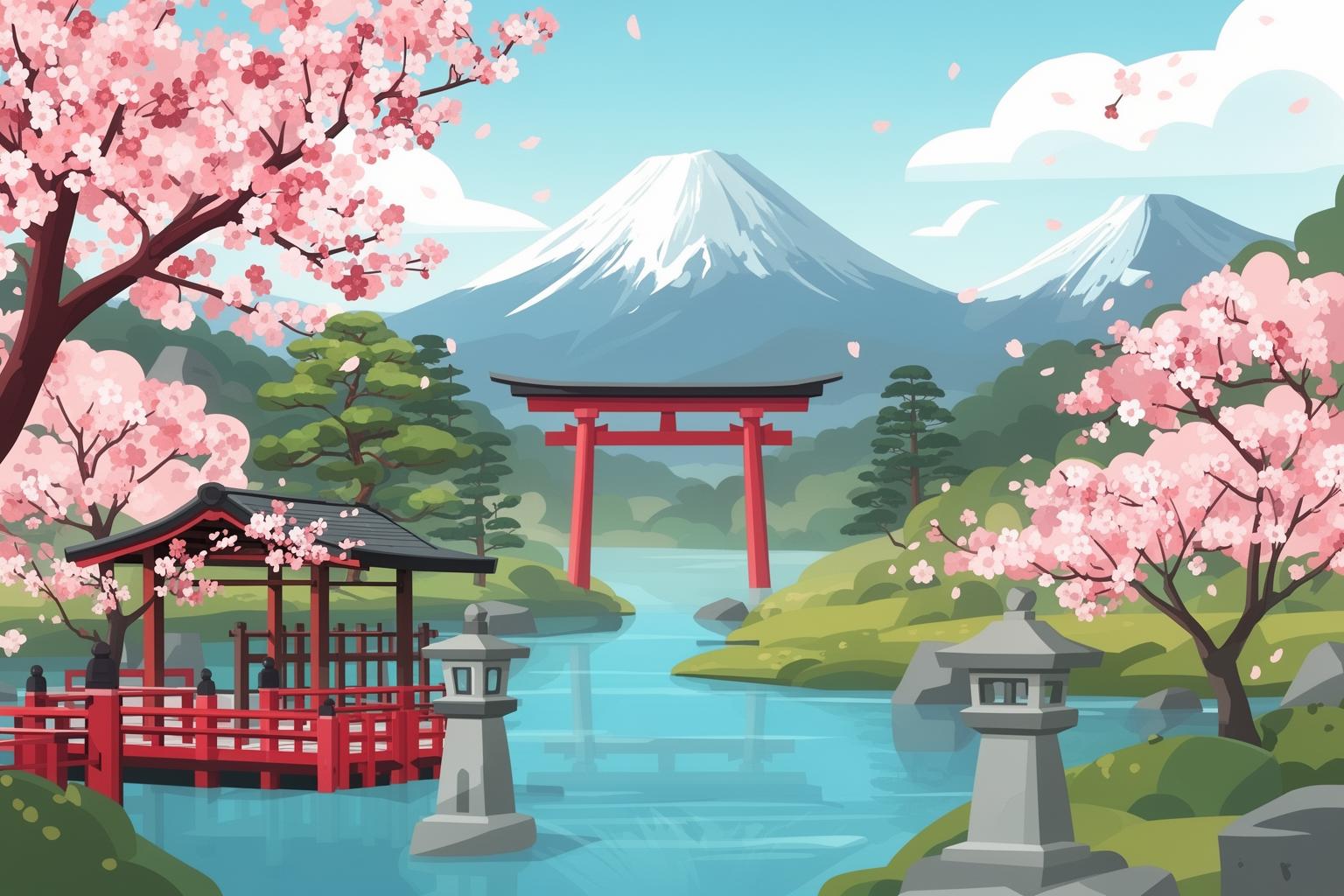
The term itself, borrowed from English and written in katakana—the script used for foreign words—signals that its popularization is fairly recent. It entered the mainstream vocabulary in the 2000s, driven by spiritualists and celebrity mediums on television. The concept caught on quickly. Suddenly, centuries-old shrines and natural wonders were being reinterpreted and promoted as destinations for spiritual rejuvenation.
What qualifies as a Power Spot is wide-ranging, but certain patterns stand out. The list is often dominated by Shinto shrines with long histories, especially those located in striking natural surroundings. You’ll find famous sites like Meiji Jingu in Tokyo, a vast forest shrine dedicated to an emperor, or the remote Takachiho Gorge in Kyushu, steeped in creation mythology. But it also includes notable natural features: the roaring Nachi Falls in Wakayama, the ancient Jomon cedars of Yakushima island, or even Mount Fuji itself, the quintessential Power Spot.
People who visit these places often seek concrete benefits. It’s a very practical form of spirituality. One spot might gain fame for helping find a romantic partner (enmusubi). Another might be known for bringing financial success or ensuring a safe childbirth. Visitors don’t simply wander; they participate in rituals. They line up to touch a specific rock, drink from a sacred spring, or photograph a particular tree, believing these acts help them absorb the site’s unique power. It’s a quest for personal gain, yes, but also a search for connection in a world that often feels fragmented and chaotic.
The commercial aspect is unmistakable. Train companies offer special Power Spot tour packages. Local shops sell distinctive charms (omamori) and souvenirs linked to the spot’s unique energy. Magazines publish annual rankings and guides. Yet, despite this contemporary commercial gloss, the reason these places were singled out is far from new. They were revered as sacred long before anyone called them Power Spots. The energy visitors seek is the enduring resonance of centuries of veneration.
The Ancient Blueprint: Shinto and the Indwelling Gods
To grasp the foundation of Power Spots, one must understand Shinto, Japan’s indigenous religion. Prior to Buddhism arriving from the continent in the 6th century—bringing with it intricate cosmology and grand temples—the native faith of the Japanese archipelago was a form of animism. This serves as the cornerstone of Japanese spirituality, centered around the concept of kami.
Kami is often translated as “god” or “deity,” but this is an incomplete and sometimes misleading translation. A kami is not necessarily a personified, omnipotent being like the God of Abrahamic faiths. Rather, kami are the spirits, essences, or divine presences residing within the natural world. A particularly majestic tree, an impressive mountain, a powerful river, the sea, the wind, or even a uniquely shaped rock could be, and indeed were, regarded as kami. The world was not created by gods; instead, the world was filled with gods. Divinity was inherent, not transcendent.
These sacred natural objects were the earliest places of worship. There were no temples or buildings—why would there be when a god was right there, embodied in a thousand-year-old camphor tree? Such sites were identified by specific terms. A sacred tree is called a shinboku (神木), and a sacred rock formation is known as an iwakura (磐座). These were the original and primal Power Spots.
This ancient practice remains visible across Japan today, if you know what to look for. The most recognizable indicator is the shimenawa, a thick, braided rope made of rice straw, often decorated with white paper streamers called shide. When a shimenawa is wrapped around a tree trunk or boulder, it doesn’t serve to make the object holy. Instead, it acts as a marker—a spiritual boundary rope—signifying that the object it surrounds is already regarded as the dwelling place of a kami. It signals, “This is sacred ground. A divine presence resides here.”
This is the vital connection. The famous “Married Couple Rocks” (Meoto Iwa) at Futami Okitama Shrine, bound by a massive shimenawa, exemplify a classic iwakura. The great camphor tree at Kinomiya Shrine in Atami, around which people walk for longevity, is a revered shinboku. Today’s Power Spot enthusiasts who line up to touch this tree are engaging in the same fundamental act of reverence as their ancestors did thousands of years ago. Although the vocabulary has evolved, the object of veneration and the belief in its indwelling power remain unchanged.
From Sacred Groves to Shrine Complexes
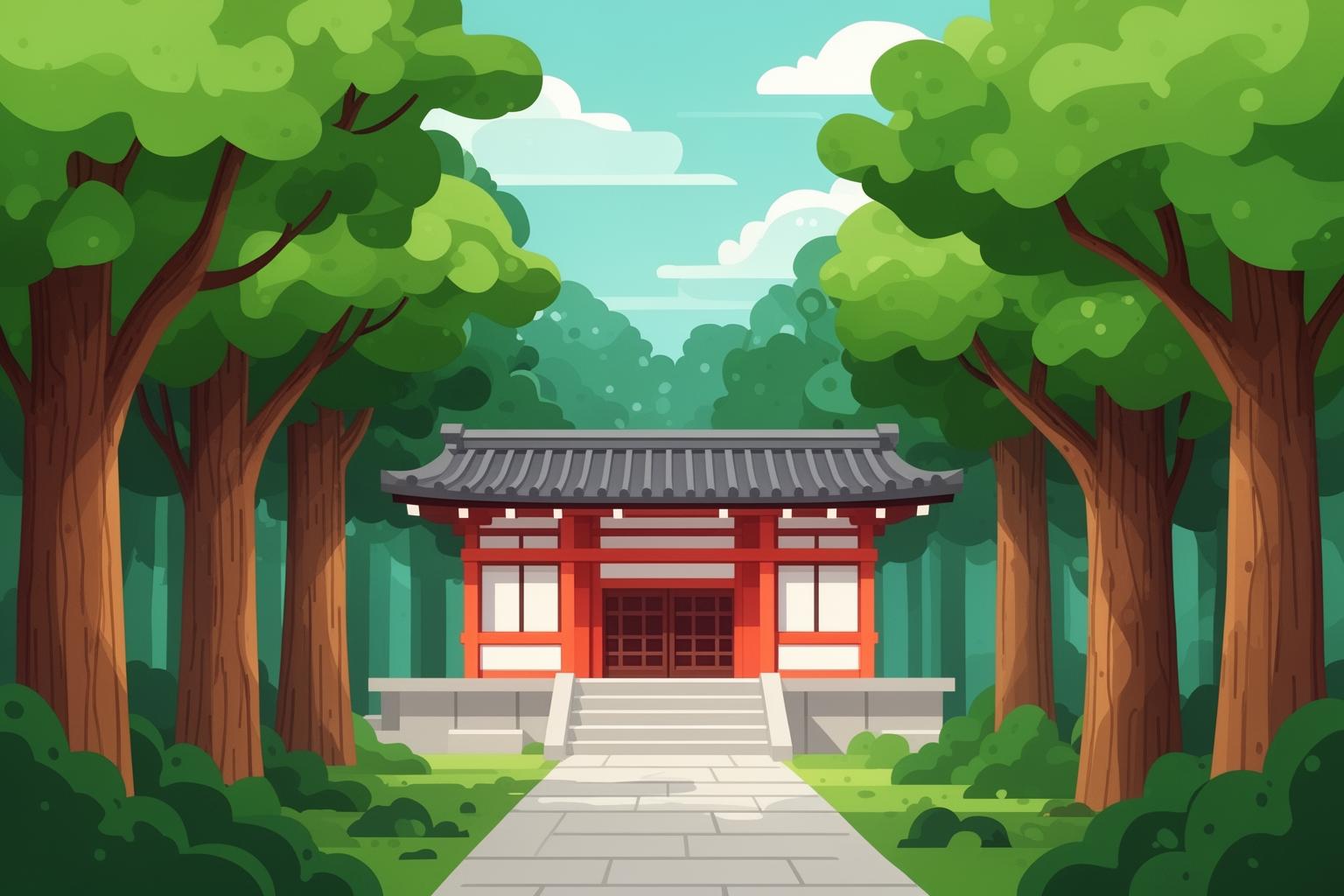
If the original places of worship were natural objects, how did the grand shrine complexes we see today come into existence? The transition from sacred rocks to architectural sanctuaries was a gradual development that illustrates how Shinto evolved while preserving its core principles.
At first, worship took place outdoors, directly before the iwakura or shinboku. People gathered in a cleared, purified space to pay homage. Over time, as rituals grew more formal and absorbed continental architectural influences, structures began to emerge. Initially, fences or simple enclosures (himorogi) were erected to mark the sacred space more permanently. Later, a building was constructed not to house the deity but to provide a place for humans to carry out rituals in honor of the deity, whose true residence remained the natural object itself. This worship hall is known as the haiden.
Eventually, another building, the honden or main sanctuary, was sometimes built to enshrine a symbolic object into which the kami‘s spirit could be invited to dwell. This object, called the goshintai (御神体, literally “sacred body of the god”), might be a mirror, sword, jewel, or another item, often concealed from view. However, in many of the most powerful and ancient shrines, the goshintai is not an object inside a building at all. Instead, the goshintai is the mountain behind the shrine or the waterfall beside it.
Nachi Taisha in Wakayama Prefecture serves as a perfect example. It is part of a UNESCO World Heritage site, a vast complex of beautiful vermilion structures. Yet, the true object of worship, the original kami of the region, is the magnificent Nachi Falls cascading down the nearby cliff. The shrine was constructed in reverence to the waterfall. The waterfall is the deity; the shrine acts as its administrative office.
Similarly, Miwa Shrine in Nara Prefecture is one of Japan’s oldest shrines. It has a haiden for worship but lacks a honden. Why? Because the shrine’s goshintai is the entire Mount Miwa, the perfectly conical mountain rising behind it. Worshippers face the mountain in prayer. The mountain itself is the divine body. When a modern visitor goes to Miwa Shrine, frequently praised as one of Japan’s most potent Power Spots, they connect with a tradition of mountain worship that predates the shrine’s first structure by centuries.
This pattern is repeated nationwide. The shrine often serves as a gateway or a focal point for venerating a much larger, natural sacred entity. The Power Spot phenomenon intuitively acknowledges this, guiding people beyond the prayer halls to discover the ancient tree on the grounds, the sacred spring in the rear, or the mountain peak on the horizon. It implicitly understands that the man-made structure is a conduit to the original, natural source of power.
The Modern Revival: Spirituality, Wellness, and Why Now?
Given this long history, the question arises: why did this ancient form of nature worship need to be rebranded as “Power Spots” in the 21st century? The reasons are a combination of social, cultural, and commercial influences that reflect contemporary Japanese life.
One major factor is the evolving nature of religious identity in Japan. While many people’s lives are still influenced by Shinto and Buddhist practices—such as visiting a shrine at New Year’s or holding a Buddhist funeral—few would label themselves as devoutly religious in a doctrinal sense. Formal religion can feel rigid and demanding. Power Spots offer an alternative: a de-ritualized, personalized, and accessible kind of spirituality. You don’t need to belong to a congregation or grasp complex theology to experience a sense of peace standing before an ancient tree. It provides a spiritual encounter without the commitments of organized religion.
Another significant driver is the stress and disconnection of modern urban life. Japan is one of the most urbanized nations globally. For millions living in vast cities like Tokyo and Osaka, daily life is dominated by concrete, steel, and crowded trains. The fundamental human need for connection to nature often goes unfulfilled. A weekend visit to a Power Spot becomes a form of therapeutic escape—a journey away from the artificial and back to the authentic, a chance to breathe fresh air, stand in a quiet forest, and feel grounded once more. In this context, the “power” people seek is as much psychological as it is spiritual—a remedy for burnout.
Naturally, media and commerce played a significant role in amplifying the trend. Once the term pawā supotto was introduced, it proved an incredibly effective marketing tool. It created a new tourism category, complete with its own language and a selection of sought-after destinations. TV shows, magazines, and websites framed trips not just as sightseeing but as journeys of self-improvement and spiritual growth. This commercialization can sometimes feel superficial, reducing deep-seated beliefs to a checklist of places to visit for specific benefits.
There is a subtle tension between ancient reverence and modern consumption of these sites. The traditional approach involved approaching the kami with humility, awe, and sometimes even fear. The kami were powerful and unpredictable forces of nature. Today’s approach resembles spiritual consumerism—visiting a spot to “absorb” energy, as if it were a resource to be tapped. Yet, even within this transactional mindset, the core belief remains: certain places in the natural world hold a special, life-affirming power.
How to Read the Spiritual Landscape
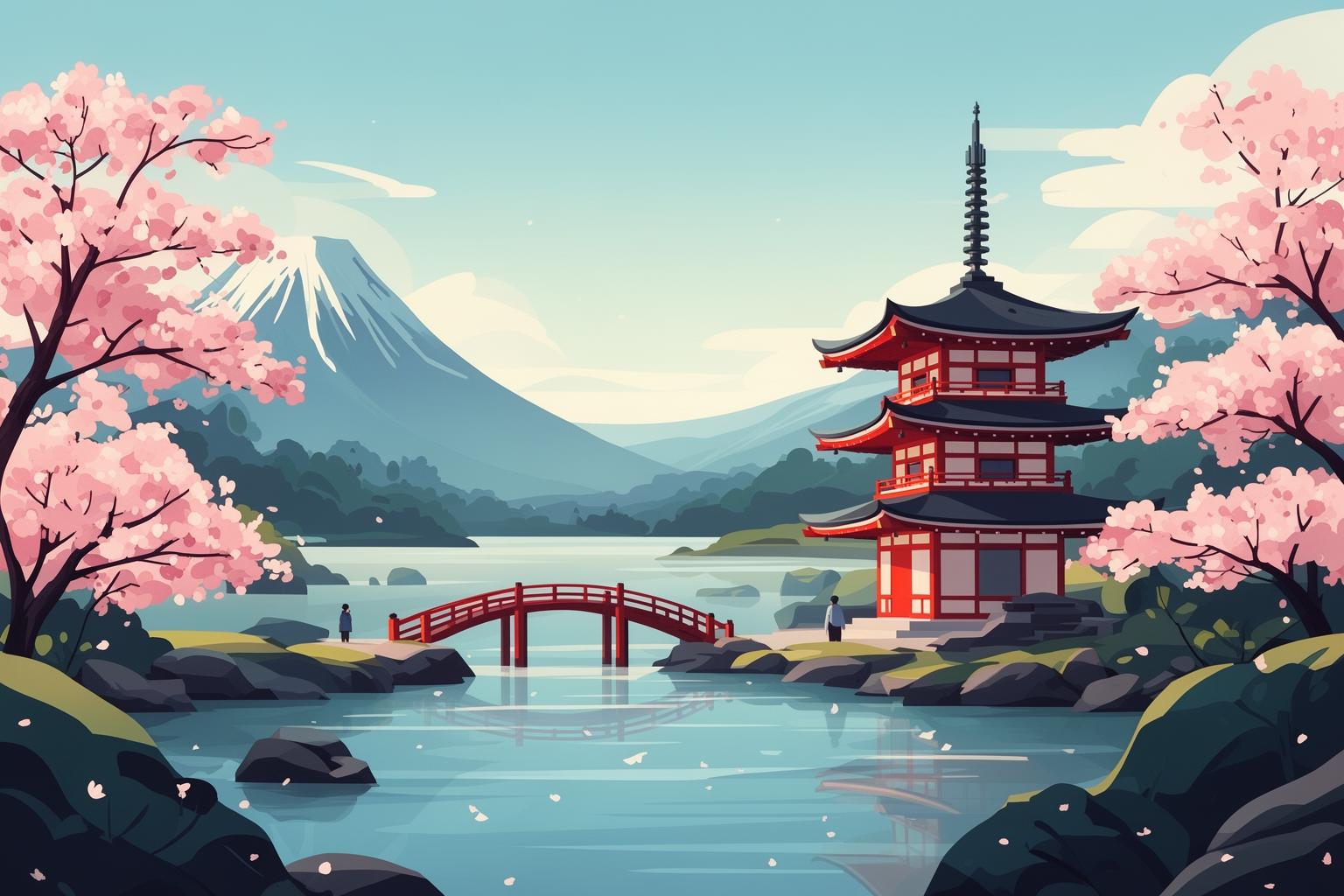
Once you grasp the connection between modern Power Spots and ancient animism, the entire landscape of Japan starts to appear differently. You begin to perceive the underlying spiritual framework that explains why things are situated as they are. You can even learn to identify these sacred places on your own, without needing a guidebook.
First and foremost, always watch for the shimenawa. This braided straw rope is the clearest indicator of a sacred presence. Whether wrapped around a rock, a tree, or stretched between two points, it unmistakably marks something revered as a kami or a boundary to a holy space.
Observe the relationship between a shrine and its surroundings. Don’t just concentrate on the buildings themselves. Notice what lies around them. Is the shrine positioned at the foot of a prominent mountain? Is it nestled among a grove of especially large, ancient trees? Is it near a coastline featuring a distinctive rock formation? More often than not, the location is intentional. The shrine was placed there to honor a natural feature already regarded as sacred.
Pay attention to the oldest and largest trees within shrine or temple grounds. These are almost always regarded as shinboku. They aren’t merely part of the scenery; they often hold as much importance as the main hall. You will often find small altars at their base or shimenawa encircling their trunks. These trees serve as anchors of the shrine’s spiritual power.
Consider the concept of the goshintai. When visiting a shrine, especially one recognized as a major Power Spot, ask yourself: what is the true object of worship here? Is it something concealed inside the main hall, or is it the natural world surrounding you? At places like Fushimi Inari Shrine in Kyoto, the thousands of red torii gates aren’t the final destination. They form a path, a pilgrimage route leading up to the sacred Mount Inari. The mountain itself is the goshintai, while the gates stand as a testament to centuries of prayers offered to the mountain’s kami.
By learning to interpret these signs, you move beyond being a mere tourist and begin to understand the deeper logic of the land. You start to see the world through a lens that blends the physical and the spiritual, where a waterfall can be a deity and a forest can be a cathedral.
The Unseen Current
The popularity of Power Spots might appear to be a passing fad, another transient phase in Japan’s long tradition of cultural adaptation. Yet, it is more lasting than that. While the term may be a modern introduction and the reasons for visiting may be influenced by contemporary concerns and desires, the practice itself—seeking out sacred natural sites for comfort, strength, and a connection to something greater than oneself—is one of the most enduring aspects of Japanese culture.
The young office worker snapping a photo of a sacred waterfall to share on Instagram, hoping for a promotion, stands in the same place where a medieval pilgrim once prayed for a safe journey, and where a prehistoric villager may have left an offering to calm the roaring spirit of the water. Although the language, tools, and goals have changed, the fundamental urge to recognize and engage with the power within the natural world has remained remarkably consistent.
Power Spots serve as a reminder that in Japan, the past is never truly gone. It is layered into the landscape, reflected in the placement of shrines, the reverence of ancient trees, and the enduring belief that the world is filled with divine presence. This is a modern expression of an ancient truth: sometimes, the most profound spiritual energy isn’t found in a sacred text or a grand temple, but in the simple, powerful presence of a rock, a tree, or a mountain. All one must do is pay attention.