It happens like a dream. You’re deep into a late-night YouTube session, letting the algorithm guide you through a gentle river of 70s soul, lo-fi beats, or obscure funk. Then, a new video loads. The thumbnail is a grainy, candid-looking photo of a Japanese woman with a warm, inviting smile, the title a string of characters you can’t read. You almost click away, but you let it play. A syncopated drum machine kicks in, clean and crisp. A buttery smooth bassline slides underneath. Then, a cascade of sparkling synthesizers and a bright, confident female voice begins to sing in Japanese. The melody is intoxicating—effortlessly cool, deeply melancholic, and yet incredibly optimistic. You have no idea what she’s saying, but you understand the feeling perfectly. It’s the sound of a city at dusk, of cocktails on a rooftop bar, of a bittersweet romance played out under neon lights. You’ve just discovered City Pop.
For millions around the world, the gateway was Mariya Takeuchi’s 1984 masterpiece, “Plastic Love.” Its unexpected and explosive viral popularity, decades after its release, pulled a forgotten genre out of the bargain bins of Japanese record stores and into the global internet consciousness. But City Pop is more than just one song. It’s the soundtrack to a specific, unrepeatable moment in Japanese history: the “Bubble Economy” of the 1980s. It was a time of dizzying wealth, technological prowess, and seemingly limitless futuristic promise. The music born from this era is a sophisticated fusion of American AOR, soul, funk, and disco, all filtered through a uniquely Japanese lens of meticulous craftsmanship and urban melancholy.
To listen to City Pop today is to experience a strange and powerful form of nostalgia for a past you never lived. It’s a phantom memory of cruising down the Shuto Expressway in a new Honda Prelude with the windows down, of seaside holidays and sophisticated urban life. So what exactly is this music? Why was it made, why did it vanish, and how did a YouTube algorithm resurrect it for a generation of listeners half a world and half a lifetime away? Let’s tune in and find out.
City Pop’s evocative blend of nostalgic urban rhythms and futuristic promise invites you to delve even deeper into Japan’s rich cultural tapestry by exploring Japan’s iconic mountains, which offer yet another unique perspective on the nation’s enduring allure.
The Soundtrack to an Economic Miracle
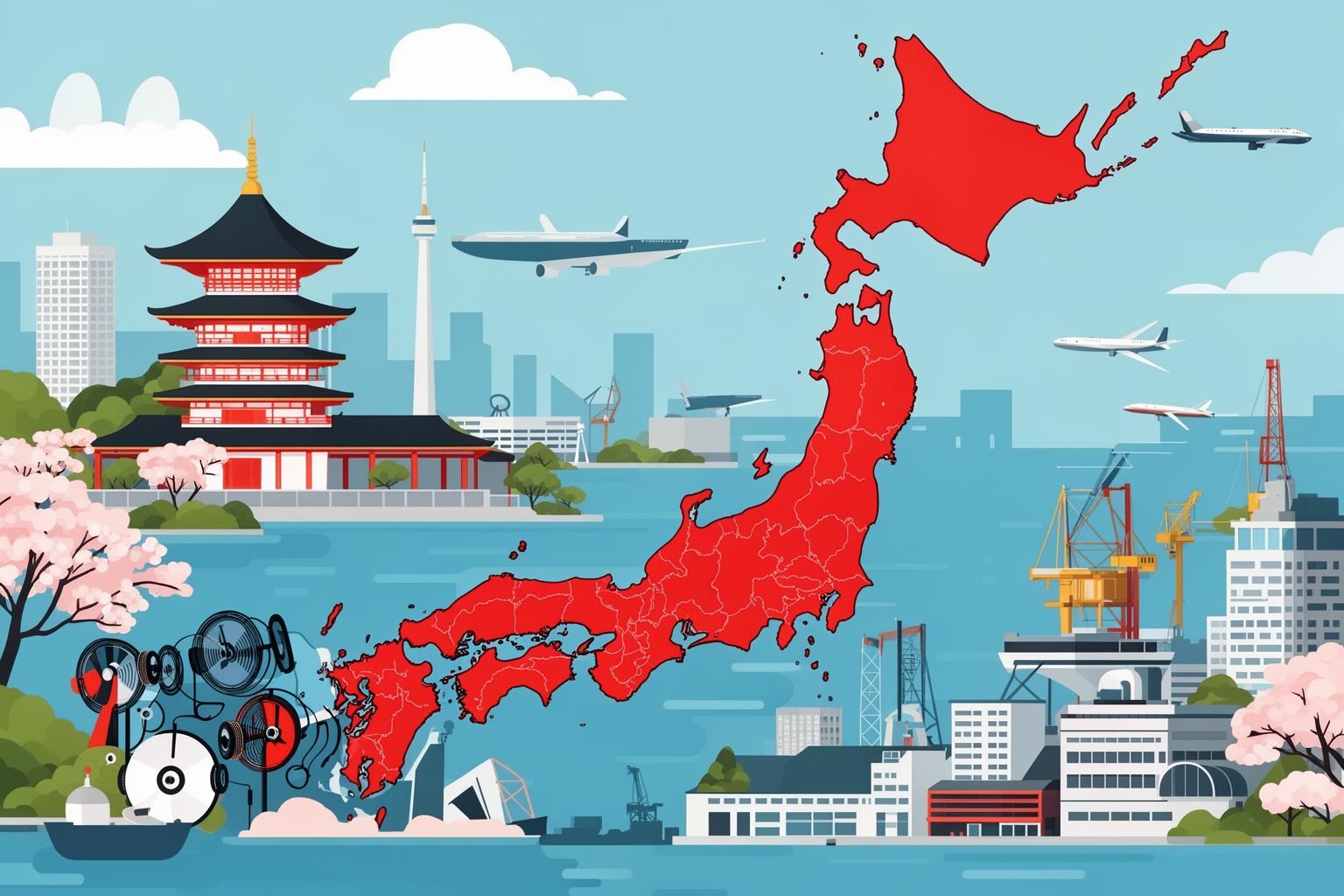
To understand why City Pop sounds the way it does, it is essential to grasp the world from which it emerged. Japan in the late 1970s and 1980s was experiencing an economic boom of unparalleled magnitude. After the destruction of World War II, the nation had transformed itself into an industrial and technological powerhouse. By the 1980s, Japanese brands—Sony, Toyota, Nintendo, Panasonic—were not only competing on the global stage but also shaping the future. This era saw the rise of the Walkman, the compact disc, and sleek, reliable cars that challenged American manufacturers. Money poured into Tokyo like a tidal wave, bringing with it a strong sense of national pride and optimism.
This period, known as the baburu keiki (Bubble Economy), gave rise to a new urban environment and a new social class. A generation of young Japanese, the first to grow up in sustained peace and prosperity, flocked to cities like Tokyo and Osaka. They were educated, socially mobile, and had disposable income. They adopted a lifestyle of refined leisure: designer fashion, gourmet dining, international travel, and nights out in stylish city neighborhoods. This was the culture that called for a fresh soundtrack.
City Pop was crafted specifically for this era. The name itself hints at its purpose: music for the city. Its themes moved beyond rural nostalgia or student protests that characterized earlier Japanese folk and rock. Instead, its lyrics depicted urban life: romance in high-rise apartments, solitary drives along the coast, the electric melancholy of city nights. This was aspirational music, reflecting and projecting the image of a cool, cosmopolitan, and comfortable modern existence.
This sound was enabled by the very technological advancements driving the economy. Japanese recording studios were equipped with the finest gear globally—much of it domestically produced, like Yamaha synthesizers and Roland drum machines. Record labels, flush with funds, provided artists and producers generous budgets to experiment and refine their sound. They could hire top-tier session musicians, including American legends from bands like Toto and The Crusaders, to create polished, sleek tracks. The result was impeccably produced music: clean, spacious, and layered with intricate arrangements. It was costly music for a prosperous era, the sonic equivalent of a perfectly tailored suit or a high-performance sports car.
Deconstructing the City Pop Sound
Although deeply rooted in a specific Japanese context, the musical DNA of City Pop is strikingly international. It represents a masterful fusion of Western popular music styles that Japanese musicians had been absorbing for decades. Rather than merely imitating, they reinterpreted and refined these influences into something entirely new.
American Roots, Japanese Polish
The main influence comes from American soft rock and AOR (Album-Oriented Rock). Consider the smooth, melodic, and meticulously produced sounds of bands such as Steely Dan, Boz Scaggs, and Hall & Oates. Japanese artists adopted this framework, infusing it with their own cultural aesthetic of precision and melodic sophistication. The chord progressions tend to be complex and jazz-inflected, moving in unexpected yet deeply satisfying ways. Vocal melodies are catchy but seldom simple, weaving intricate lines over a rich harmonic base.
Funk and soul drive the rhythmic core. The basslines are a defining characteristic of the genre—active, melodic, and locked into an irresistible groove alongside the drums. Influences from Earth, Wind & Fire are evident in the tight horn sections and the slinky, syncopated rhythms of artists like Toshiki Kadomatsu. This isn’t the raw, gritty funk of James Brown; it’s a smoother, more polished variant, perfectly suited for dancing in a chic urban nightclub.
Disco’s four-on-the-floor beat and lush string arrangements also resonate throughout the genre, adding an element of glamour and danceability. Yet, a layer of melancholy often distinguishes it from its purely celebratory American counterparts. This unique blend of uplifting grooves and wistful melodies is a hallmark of City Pop, capturing the bittersweet sensation of a fleeting perfect moment.
The Sound of the City and the Sea
More than just genre influences, City Pop evokes a strong sense of place. It’s often divided into two main vibes: the city and the sea. The “city” aspect is nocturnal and sleek, featuring sparkling synthesizers that mimic neon lights, punchy brass sections, and lyrics about late-night encounters and urban alienation. It’s the sound of driving through the Shinjuku district at 2 AM, with city lights blurring into vibrant streaks of color.
The “sea” side, sometimes referred to as “resort music,” is sunnier and more relaxed. It’s characterized by breezy tempos, mellow electric pianos, and saxophone solos that evoke images of cruising along the coast of Kanagawa Prefecture. Artists like Tatsuro Yamashita are masters of this sound, creating music that feels like the perfect summer afternoon you wish would never end.
This duality—the electric energy of the city and the tranquil escape of the resort—perfectly reflected the lifestyle aspirations of the 80s urbanite: work hard in the metropolis, play hard by the shore. It was a fully realized fantasy world expressed through sound.
Key Figures and Anthems
Though hundreds of artists helped shape the genre, a select few stand as its architects and most beloved icons. They weren’t just performers; many were skilled composers, arrangers, and producers who defined the sound for others.
Tatsuro Yamashita and Mariya Takeuchi: The Royal Couple
City Pop cannot be discussed without naming Tatsuro Yamashita. To many, he is the genre’s foundational genius. A brilliant songwriter, vocalist, and studio perfectionist, Yamashita’s production style—with its layered vocal harmonies and intricate arrangements (often called the “Yamashita Sound”)—set the gold standard. His 1982 album For You, featuring iconic cover art by Hiroshi Nagai, stands as a quintessential City Pop statement—an immaculate collection of sun-drenched funk and soulful ballads.
His wife, Mariya Takeuchi, started her career as a successful pop idol but reached legendary status with albums like Variety (1984), produced by Yamashita. This album included “Plastic Love,” a perfect storm of City Pop elements: a danceable beat, a melancholic yet unforgettable melody, and lyrics about the hollow feeling of superficial love. Takeuchi’s warm, emotive voice grounds the slick production in genuine human feeling, creating a timeless combination.
Anri and Toshiki Kadomatsu: The Up-Tempo Icons
If Yamashita and Takeuchi embody the soulful, AOR side of City Pop, Anri and Toshiki Kadomatsu represent its upbeat, funk-driven energy. Anri’s 1983 album Timely!! is a masterpiece of summer resort funk, packed with infectious tracks like “Cat’s Eye” and “Last Summer Whisper.” Her music radiates pure, unfiltered optimism and energy—the soundtrack of a perfect day at the beach.
Toshiki Kadomatsu, a prolific singer, songwriter, and producer, infused City Pop with a harder-edged funk and virtuosic musicianship. Albums like After 5 Clash (1984) deliver high-energy urban funk, featuring razor-sharp horn arrangements, blistering guitar solos, and complex rhythms. His music was designed for the peak hours of the night, not the gentle wind-down.
Miki Matsubara: The Voice of an Era
Miki Matsubara’s 1979 debut single, “Mayonaka no Door / Stay With Me,” became another viral hit of the genre decades later. Released as the 70s transitioned into the 80s, the song perfectly bridges the gap between earlier disco sounds and the emerging City Pop aesthetic. Its instantly memorable saxophone intro and Matsubara’s powerful, soulful vocals captured feelings of urban loneliness and romantic longing central to the genre. Her tragic early death adds poignancy to the song’s revival, making it feel like a beautiful message in a bottle from a lost era.
The Bubble Bursts, The Music Fades

For a decade, City Pop dominated the scene. It was the mainstream sound of Japan, filling the airwaves, television commercials, and the soundtracks of popular anime such as Kimagure Orange Road and City Hunter. Yet, just as swiftly as the bubble economy grew, it collapsed.
In the early 1990s, Japan’s stock market and real estate markets crashed dramatically. The era of easy money and boundless optimism came to an end, giving way to a prolonged period of economic stagnation known as the “Lost Decade.” The national sentiment shifted from confident ambition to uncertainty and reflection.
The lavish, aspirational sound of City Pop suddenly felt out of sync. It was the soundtrack of a party that had abruptly ended. Japanese popular music moved forward. The 1990s saw the emergence of the “J-Pop” phenomenon, characterized by the energetic, synthesized dance-pop of producers like Tetsuya Komuro. Alternative scenes like Shibuya-kei, blending an eclectic and often ironic mix of Western influences, also gained popularity.
City Pop didn’t disappear entirely, but it faded into the background. It became “dad rock” or “mom pop,” the music of the preceding generation. For years, its albums could be found for mere pennies in the discount bins of Tokyo’s record stores, their glossy, airbrushed cover art a relic of a past that felt increasingly remote and unfamiliar. The music wasn’t gone—it was dormant, waiting for a new context and audience to rediscover it.
The Algorithm’s Ghost: How YouTube Resurrected a Genre
The revival of City Pop wasn’t driven by record labels or nostalgic magazine pieces. It emerged accidentally as a grassroots phenomenon, born from the unusual new ways we explore culture in the internet era. The key player in this story isn’t a person, but an algorithm.
Around the mid-2010s, YouTube’s recommendation system began uncovering these forgotten treasures. For years, music collectors and fans of Japanese culture had been uploading rare tracks, but the algorithm started making connections. It realized that listeners of vaporwave—a budding internet genre based on slowed-down samples of 80s and 90s muzak and corporate training videos—also enjoyed these Japanese songs. It noticed that fans of 70s funk and soul often played tracks by Anri or Tatsuro Yamashita from start to finish.
Then came “Plastic Love.” An unofficial upload of an extended eight-minute remix, featuring a candid photo of Takeuchi from her single “Sweetest Music,” went viral. The algorithm relentlessly pushed it into the recommended feeds of millions worldwide. People clicked out of curiosity and stayed for the irresistibly catchy groove. The comments filled with questions from listeners around the globe: “What is this? Why haven’t I heard it before? And why does it evoke nostalgia for something I never lived through?”
This feeling has a name: anemoia. It’s nostalgia for an era you never experienced. City Pop is perhaps the perfect soundtrack for this sentiment. For a global audience of millennials and Gen Z—many of whom grew up amid economic downturns and digital dislocation—City Pop represents a kind of lost paradise. It’s a fantasy of a more hopeful past, a future imagined as sleek, prosperous, and filled with analogue warmth. It conjures an image of a sophisticated, stable adulthood that now feels increasingly unattainable. In a time of streaming and disposable digital media, the careful craftsmanship and rich instrumentation of these songs provide a sense of depth and permanence.
City Pop offers an aesthetic escape. The album art, created by masters like Hiroshi Nagai and Eizin Suzuki, with their clean lines, vibrant pastels, and scenes of idyllic poolsides and city skylines, is as vital as the music itself. Together, they form a complete, immersive world—stylish, calm, and free from present-day anxieties.
The journey of City Pop is a compelling story of cultural afterlife. A genre born for a very specific national moment has become a global source of comfort and inspiration. It is both a historical artifact—marking the height of Japan’s post-war confidence—and a timeless musical gem whose emotional impact transcends language and borders. The ghost in the machine—the YouTube algorithm—unexpectedly introduced us to the spirits of a bygone era, and in their breezy, wistful melodies, we found a strange and beautiful mirror of our own modern longings. Though the party ended in Japan in 1991, for the rest of the world, it feels like it’s only just beginning.