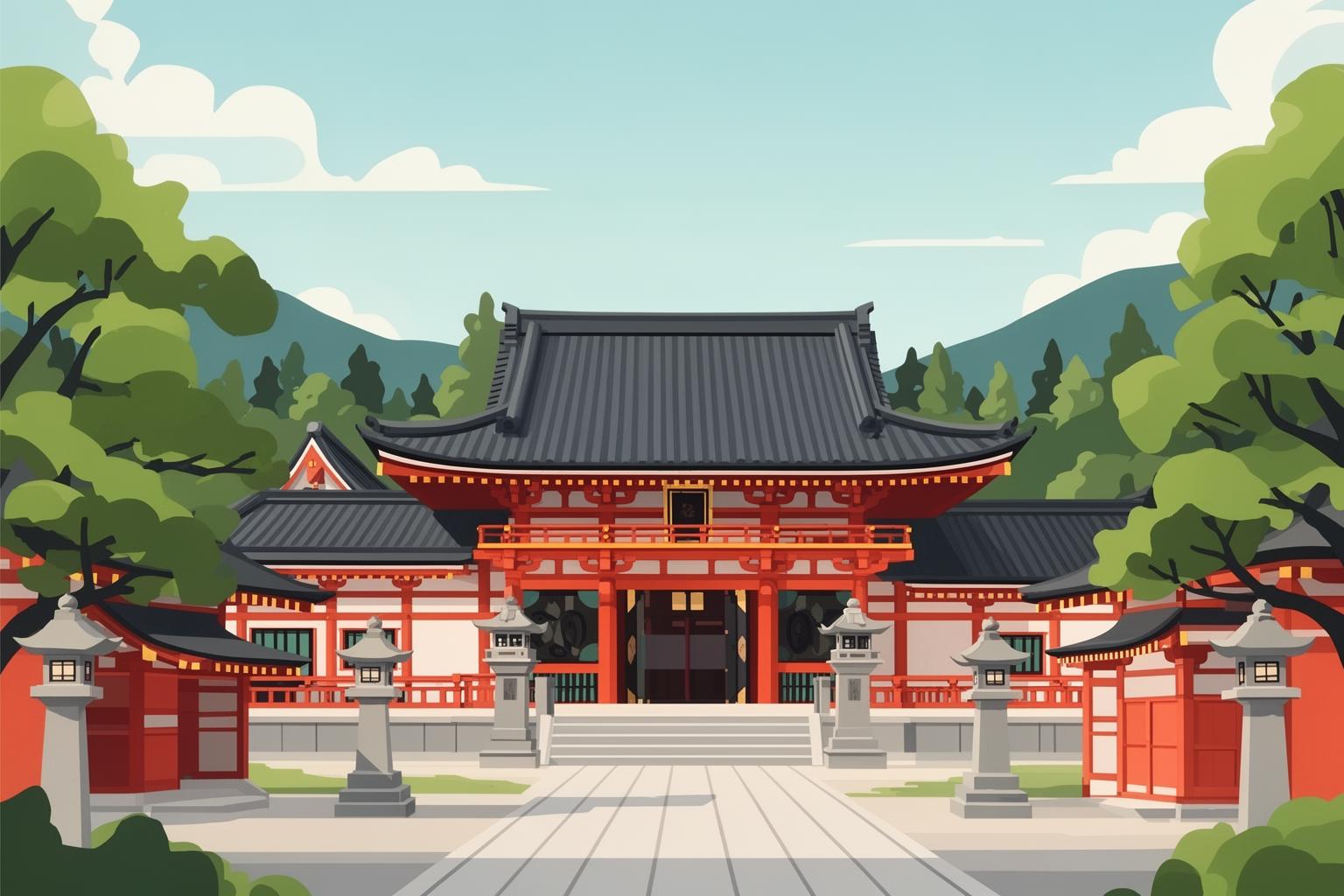
Walk into the grounds of a major Japanese temple or shrine, and you’ll inevitably see it. Past the towering gates and stone lanterns, beyond the clouds of incense and the quiet shuffling of feet on gravel, there’s often a small, unassuming office. Here, a queue forms, not for souvenirs or fortunes, but for something else entirely. People stand patiently, holding beautiful, accordion-style books bound in brocade fabric. They hand them through a window to a priest or a monk who, with practiced, deliberate strokes, takes up a brush, dips it in black ink, and begins to write. A moment later, a brilliant vermilion seal is pressed onto the page. This is the heart of goshuin meguri, a practice that is often translated as “stamp collecting” but is, in reality, worlds away from a simple hobby. It’s a pilgrimage in miniature, a tangible record of a spiritual journey, and one of the most quietly profound ways to engage with the sacred landscapes of Japan.
At its core, goshuin meguri (御朱印巡り) is the act of visiting Shinto shrines and Buddhist temples to receive their unique seal, or goshuin. But to see it as merely collecting is to miss the point entirely. This isn’t about ticking boxes or filling a book for bragging rights. Each goshuin is a piece of devotional art, a proof of worship that connects you, the visitor, to the history, the spirit, and the very ground of that sacred place. It’s a practice steeped in centuries of tradition, yet it’s currently experiencing a massive resurgence, particularly among younger Japanese who are discovering its meditative and aesthetic appeal.
Understanding goshuin is to understand a particular Japanese mindset—one that values process, reveres craftsmanship, and finds meaning in quiet, repeated action. It transforms sightseeing from a passive act into an active engagement. You’re not just looking at a temple; you are participating in its rhythm, following a prescribed etiquette that forces you to slow down, be present, and show respect. This guide is for anyone curious about that queue—for those who want to look past the tourist brochure and understand the cultural logic behind this beautiful tradition. We’ll explore what these seals mean, the crucial etiquette for receiving one, and why this seemingly ancient practice feels more relevant than ever in our fast-paced modern world.
Embracing goshuin meguri as a living ritual opens your eyes not just to spiritual landmarks but also to Japan’s broader cultural landscape, where exploring satoyama landscapes further reveals the country’s timeless connection to nature.
More Than a Stamp, A Sacred Seal
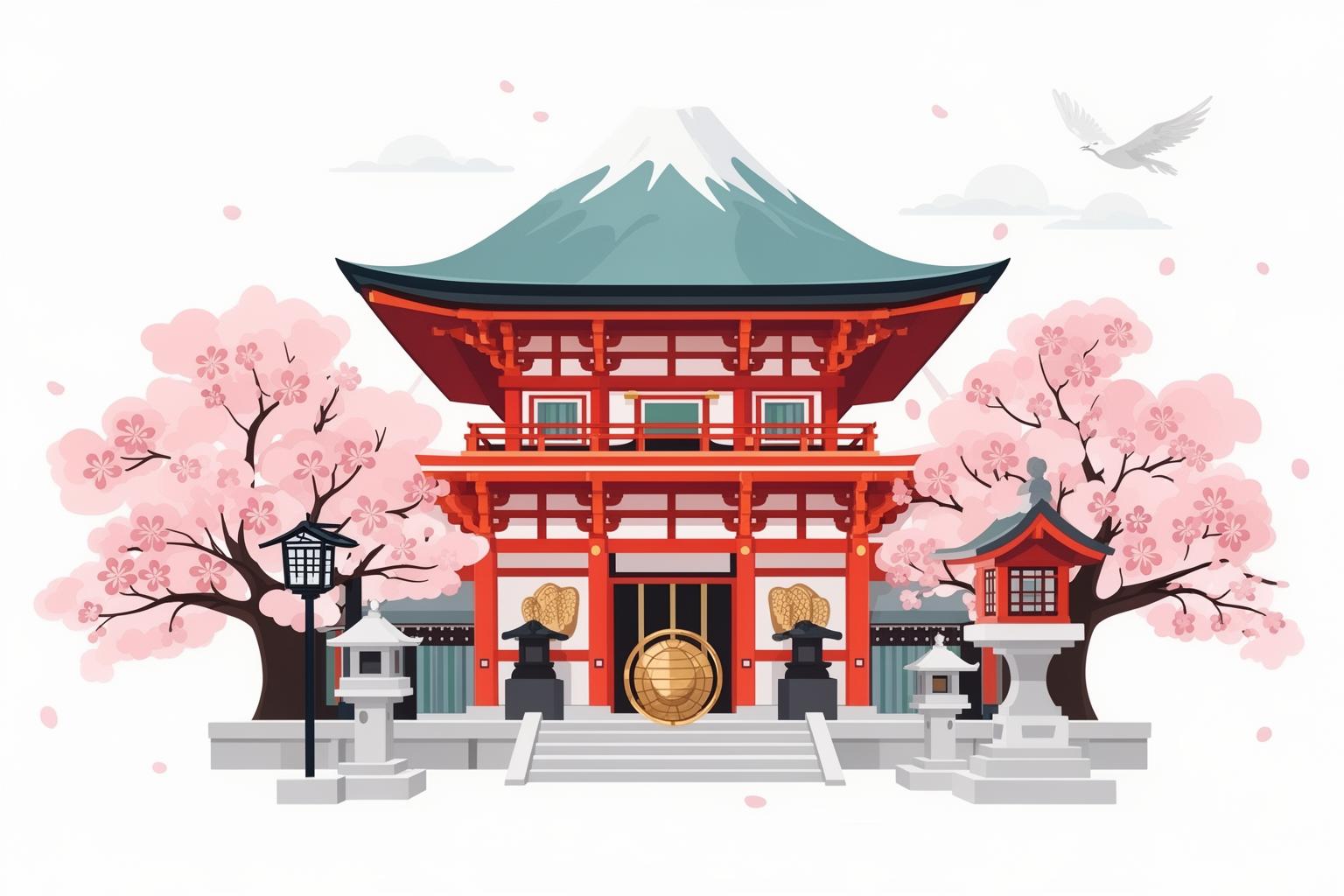
The first and most important thing to understand is that a goshuin is not simply a souvenir you purchase. It is something you receive after paying your respects. It represents a tangible connection to the deity of that place, a sacred keepsake deserving of reverence. Each goshuin is a unique, handcrafted piece of art, far removed from a mass-produced rubber stamp you might find at a tourist kiosk.
What Exactly is a Goshuin?
Although each goshuin is distinctive, most contain several key elements which, once recognized, tell a story about the site you have visited. It combines bold calligraphy with the institution’s distinctive red seal.
The most prominent feature is the seal itself, the shuin (朱印), from which the practice derives its name. These seals are usually carved from wood or stone and stamped in vermilion ink called shuniku. The red hue holds deep symbolism in both Shinto and Buddhism, linked to purification, protection from evil, and life itself. The seal serves as the official emblem of the shrine or temple, sometimes including its name, a symbol, or even a Sanskrit character representing its main Buddhist deity.
Flowing around and over the seal is the calligraphy, or sumi-gaki (墨書き), brushed in black ink by a priest, priestess (miko), or monk. This element makes each goshuin one-of-a-kind. While the content follows a standard format, the calligrapher’s individual hand ensures that no two are identical. The calligraphy almost always includes the date of your visit, written vertically in Japanese characters, and more importantly, features the name of the shrine (jinja-mei) or temple (jiin-mei). It will often also include the name of the principal deity worshipped there—the honzon in a Buddhist temple or the saijin in a Shinto shrine. Together, these elements create what is called sanpai no akashi, or “proof of worship.” It is a formal and artistic record of your presence and prayer at a specific sacred site on a specific day.
The Goshuincho: Your Personal Book of Pilgrimage
You cannot simply hand over a loose sheet of paper or a regular travel journal to receive a goshuin. This tradition requires a special book called a goshuincho (御朱印帳). Using an ordinary notebook is considered a serious breach of etiquette and will almost certainly result in a polite refusal. The goshuincho is purposefully designed for this practice, and its form is integral to the tradition.
These books are beautiful in their own right. Typically, they are accordion-style books, known as orihon, that unfold into a long, continuous sheet of paper, making it easy to display your collection. The pages are crafted from thick, high-quality Japanese paper, often layered to prevent the rich black and red inks from bleeding through. This design is both practical and symbolic, giving the book a substantial, weighty feel that befits its sacred contents.
The covers of goshuincho truly reflect the personality of the book—and its owner. You can find them at most major temples and shrines, as well as in large stationery stores such as Loft or Tokyu Hands. Designs range from elegantly traditional, wrapped in simple indigo fabric or rich silk brocade, to boldly modern. Many shrines and temples create their own unique goshuincho featuring designs inspired by their history, architecture, or surrounding nature. You might find a cover made of beautiful cedar wood from a shrine famous for its ancient trees, or one embroidered with a dragon from a temple known for its ceiling paintings. Choosing your first goshuincho becomes an important part of the journey, the vessel that will hold the memories of your pilgrimage.
The Art of Receiving: Etiquette and Process
How you receive a goshuin is just as important as what you receive. The act itself is a ritual—a dance of respect and quiet appreciation—that sets the mood for the entire experience. Rushing through it or treating it as a simple transaction is the quickest way to mark yourself as an oblivious tourist. However, following proper etiquette shows your respect for the culture and deepens your connection to the practice.
Before You Approach the Window
The absolute, non-negotiable first step is to worship. A goshuin serves as proof of your visit and prayer, so that must come first. Approaching the goshuin office before visiting the main hall is like asking an author to sign a book you haven’t read; it’s disrespectful because it overlooks the very reason the place exists. The proper sequence is straightforward but essential.
First, go to the temizuya, the water purification basin near the entrance, where you perform a ritual cleansing of your hands and mouth to purify yourself before approaching the gods, or kami. Then, proceed to the main hall of worship—the haiden at a shrine or the hondō at a temple. Stand before the altar, offer a small donation into the offering box (a five-yen coin is considered lucky), and say a prayer. At a shrine, this typically involves bowing twice, clapping twice, offering your prayer, and bowing once more. At a temple, you simply press your palms together in prayer and bow your head. It doesn’t need to be long or elaborate; a moment of quiet reflection and gratitude suffices. Only after completing this act of worship should you approach the goshuin office.
At the Goshuin Office (Shamusho/Nōkyōjo)
The office where goshuin are distributed is called the shamusho (社務所) at a shrine or the nōkyōjo (納経所) at a temple. Look for a sign with the characters 御朱印. When it’s your turn, there are a few small gestures that show your respect for the process.
First, open your goshuincho to the blank page where you want the goshuin to be inscribed. This simple courtesy saves the calligrapher time and avoids confusion. Hand the open book to them with both hands, a sign of respect in Japanese culture. A simple, polite “Onegaishimasu” (Please, I would like to request this) is sufficient.
There is a fee for the goshuin, considered a donation or offering rather than a payment. It’s called the hatsuhoryō (初穂料) at a shrine or nōkyōryō (納経料) at a temple. The amount is usually between 300 and 500 yen and is often posted on a sign at the window. It’s considered good manners to have the exact change ready. Place the money in the small tray provided rather than handing it directly to the person.
Now comes the most important part: waiting. Often, the calligrapher will work right in front of you. This moment should be cherished. Stand back quietly and watch them. Take in the focused energy, the confident glide of the brush, and the final, firm press of the seal. This is not the time to check your phone, chat with friends, or take intrusive photos. Your silent, appreciative presence is part of the exchange. You are witnessing living artistry, a tradition unfolding right before your eyes.
Receiving Your Goshuin Back
Once the ink is dry or a protective sheet of thin paper has been placed over the fresh calligraphy, the book will be returned to you. Accept it as you handed it: with both hands and a slight bow. A clear “Arigatou gozaimasu” (Thank you very much) is the appropriate response. Take a moment to appreciate the work before closing the book. From this point onward, your goshuincho is no longer just a book; it is a repository of sacred art, a physical chronicle of your travels and moments of reflection. Treat it with care and respect.
Deciphering the Art: Reading Your Goshuin
Obtaining a goshuin is one thing; truly understanding it is another. At first glance, the flowing script may appear indecipherable. However, once you grasp the basic layout and recognize a few key characters, you can start to interpret the story inscribed on the page. This adds an entirely new level of appreciation to your collection, turning it from a set of beautiful yet mysterious designs into a detailed record of your journey.
Common Calligraphic Elements
Most goshuin follow a similar design, read vertically from right to left, in the traditional Japanese manner. Though variations are countless, you can generally identify three main sections.
On the far right, you will almost always find the date of your visit, written using Japanese era names. For instance, May 20, 2024, would be represented as 令和六年五月二十日 (Reiwa rokunen, gogatsu, hatsuka nichi). This detail firmly anchors your goshuin to a specific point in time.
At the center lies the core of the goshuin. Dominating this area is the large vermilion seal of the shrine or temple. Overlaid in bold calligraphy, often directly on the seal, is the name of the institution. For example, you might recognize the characters for Kiyomizu-dera in Kyoto or Sensō-ji in Tokyo. The calligraphic style ranges widely, from the clear and precise kaisho (block script) to the highly artistic and flowing sōsho (cursive script). This stylistic choice often reflects the character of the site or the individual calligrapher’s hand.
On the left side, you may find the name of the main deity enshrined. At a Buddhist temple, this could be the name of a Buddha or Bodhisattva, such as Yakushi Nyorai (the Medicine Buddha). At a Shinto shrine, it might be the name of a kami, like Hachiman Ōkami (the god of war and archery). Some goshuin also include the character 奉拝 (hōhai), meaning “to worship respectfully,” typically placed at the top right. This character explicitly frames the goshuin as an act of devotion.
Shrines vs. Temples: Subtle Differences
Though the overall structure is similar, subtle visual cues can help you distinguish a goshuin from a Shinto shrine versus one from a Buddhist temple. These differences reflect the unique histories and aesthetics of Japan’s two main religious traditions.
Shrine goshuin tend to be simpler and more graphic in design. The central seal may display the shrine’s crest, or kamon, such as the three-comma tomoe symbol often associated with Hachiman shrines. The calligraphy is generally bold and straightforward, clearly stating the shrine’s name.
Temple goshuin, in contrast, can be more intricate. The main seal might be a bonji, a Siddham script character (an ancient Indic script used in Buddhism) representing the temple’s principal deity. This single, esoteric symbol can convey profound meaning to those who understand it. The calligraphy at temples might also include the temple’s mountain name (sangō) or its specific rank within the Buddhist sect.
Historically, it was customary to keep separate goshuincho for shrines and temples, a practice stemming from the enforced separation of Shinto and Buddhism during the Meiji Restoration in the 19th century. While this is no longer a strict requirement and most places accept a mixed book, some very traditional temples may still prefer it. Being mindful of this distinction demonstrates a deeper awareness of the cultural context.
The Modern Goshuin Boom: Why Now?
With roots extending back centuries, goshuin meguri is more popular today than ever before. Visit a famous temple in Kyoto on a weekend, and you’ll see that the line at the goshuin office includes not only elderly pilgrims but also young women, couples on dates, and solo travelers. This contemporary surge is a fascinating cultural phenomenon, fueled by a blend of social media aesthetics, a search for authenticity, and a renewed appreciation for mindful travel.
Aesthetics and “Insta-bae”
The visual allure of goshuin is undeniable. In an era dominated by visual social media, the elegant calligraphy, vibrant red seals, and beautifully crafted goshuincho are highly photogenic. In Japanese slang, they are insta-bae—ideal for Instagram. This has prompted many temples and shrines to get inventive, offering special, limited-edition goshuin (gentei goshuin) to commemorate certain seasons, festivals, or events. You might encounter goshuin adorned with colorful cherry blossom stamps in spring, maple leaves in autumn, or designs featuring the current zodiac animal.
This trend has sparked new excitement and collectibility around the practice. However, it also brings about some tension. Traditionalists sometimes worry that emphasizing aesthetics and rarity promotes a stamp-collecting mentality, potentially diverting attention from the spiritual essence of the practice. Yet, it’s clear that this visual attraction has served as an entry point, introducing a new generation to temples and shrines, who may then uncover the deeper, more meditative dimensions of the tradition.
A Search for Tangible Connection
The goshuin boom goes beyond just beautiful imagery. It can also be viewed as a response to our increasingly digital and intangible world. In an age of ephemeral social media posts and cloud-based storage, a goshuin is something wonderfully and refreshingly tangible. It is a physical object, created by hand, that you can hold. Each page in your goshuincho reflects a real visit to a real place. It’s a concrete link to a memory, a moment of calm, and a piece of history. Every ink smudge, every variation in brushstroke, testifies to its authenticity. This search for the tangible is a strong current in contemporary culture, and goshuin meguri fulfills it perfectly.
Moreover, the practice offers a gentle, meaningful structure for travel. Rather than simply moving from one famous site to another, goshuin meguri lends your journey a purpose. It encourages you to discover places you might otherwise overlook—quieter neighborhood shrines or remote mountain temples. It transforms an ordinary vacation into a personal pilgrimage, with the goshuincho serving as a beautifully illustrated travel diary.
Mindful Travel and Slow Tourism
Perhaps the most profound reason behind the resurgence of goshuin is its harmony with the principles of mindful, slow travel. The entire process is an exercise in slowing down. It cannot be hurried. You must walk the grounds, perform purification rituals, stand in line, and wait patiently. In a world that values speed and efficiency, waiting quietly for a piece of calligraphy to be completed is almost a radical act of mindfulness.
As someone who spends much time hiking in the mountains, I see a strong parallel between the rhythm of trekking a trail and the rhythm of collecting goshuin. Both involve a repeated, deliberate process that calms the mind. The journey from the gate to the main hall, the ritual of prayer, the respectful request at the window, and the quiet observation of the calligrapher at work—it all forms a meditative loop. It compels you to be present in your environment, to notice details of the architecture, the scent of incense, the sound of the wind in the trees. It’s a way to experience Japan not as a checklist of sights, but as a sequence of meaningful, memorable encounters.
Practical Advice for the Aspiring Collector

Starting your own goshuin journey is easy, but a bit of preparation can make the experience smoother and more enjoyable. Beginning this path is less about having all the knowledge and more about approaching it with respect and curiosity.
Where to Begin?
The simplest way to start is by visiting a large, well-known shrine or temple. Places like Meiji Jingu in Tokyo, Fushimi Inari Taisha in Kyoto, or Tōdai-ji in Nara are ideal starting points. They are accustomed to visitors of all backgrounds, including foreigners, and almost always offer a beautiful selection of goshuincho. You can buy your book and receive your very first goshuin at the same location, making it a perfect way to begin your collection. Once you have your book, you can obtain a goshuin at any temple or shrine that provides them.
Things to Keep in Mind
Remember that not every shrine or temple in Japan offers goshuin. While most larger ones do, very small neighborhood shrines or remote temples, often run by an elderly priest, may lack the staff or resources. Approach each visit with curiosity rather than expectation. Discovery is part of the joy.
Also, be mindful of the timing. Goshuin offices typically operate during the main visiting hours of the shrine or temple, generally opening around 9 AM and closing by 4 or 5 PM. Don’t expect to receive one if you arrive just before closing time.
During busy seasons like New Year’s or cherry blossom time, or at very popular sites, you might not get a hand-brushed goshuin directly in your book. To handle crowds, they may provide a pre-written one on a separate sheet of paper, called a kakioki (書き置き). This is entirely legitimate. You can take it home and carefully paste it into your goshuincho. Special glue sticks designed for this purpose are even available at stationery stores.
Your Journey, Not a Competition
Lastly, and most importantly, keep in mind that goshuin meguri is not a race. The value of your goshuincho is not in how full it becomes, but in the experiences and memories each page holds. Avoid rushing from place to place just to collect more seals. Some of my most treasured goshuin come from quiet, lesser-known temples I found by chance. Let your book fill naturally, reflecting your unique exploration. It’s your story, written in ink and seal, one respectful visit at a time.