The neon signs of Tokyo have just begun their nightly bleed across the wet pavement. It’s past seven, and the city’s human rivers are flowing at full force, pouring out of office towers and into the arteries of the subway system. Look closely at the faces in the crowd, and you’ll see a familiar mask: a polite, managed exhaustion. This is the face of the Japanese salaryman, the corporate warrior, after another long day in the trenches of the modern economy. His dark suit is a uniform, his briefcase a shield, and his posture carries the invisible weight of meetings, deadlines, and the crushing pressure of collective expectation.
Where does this soldier go to find a moment’s peace? You might imagine a quiet bar, a hushed temple, or the anonymous comfort of his apartment. And sometimes, that’s true. But more often than not, his sanctuary is far more humble. It’s a tiny shop, tucked into a narrow alleyway, marked only by a steam-fogged window and a simple cloth curtain, or noren, hanging in the doorway. Inside, there is no soft music or solicitous service. There is only the hiss of boiling water, the scent of pork broth simmering for hours, and the rhythmic, almost shockingly loud sound of slurping. This is the ramen-ya, the unofficial decompression chamber for the Japanese workforce.
To an outsider, it might just look like a quick, cheap dinner. But to understand Japan, you must understand that nothing is ever just what it seems. The act of a salaryman eating ramen is not merely sustenance. It is a deeply ingrained ritual, a form of secular communion, a fifteen-minute therapy session that costs less than ten dollars. It’s a fleeting, precious moment of individualism in a culture built on the group. The journey from the sterile, silent office to the boisterous, steamy ramen counter is a pilgrimage from the public self to the private soul. And the slurp? That’s not bad manners. It’s the sound of a man setting himself free.
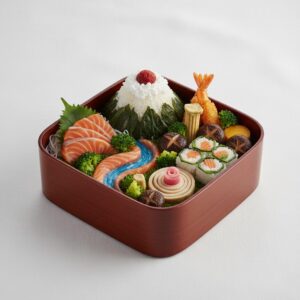
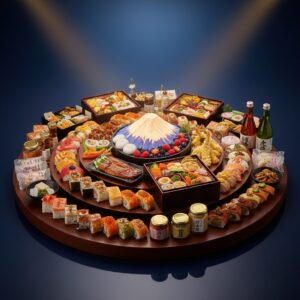
Amid the clamor of steaming bowls and liberated slurps, one can also appreciate how the paradox of modern Japan is artfully mirrored in fake food, revealing another layer of the nation’s urban introspection.
The Altar of Noodles: Anatomy of the Ramen-ya
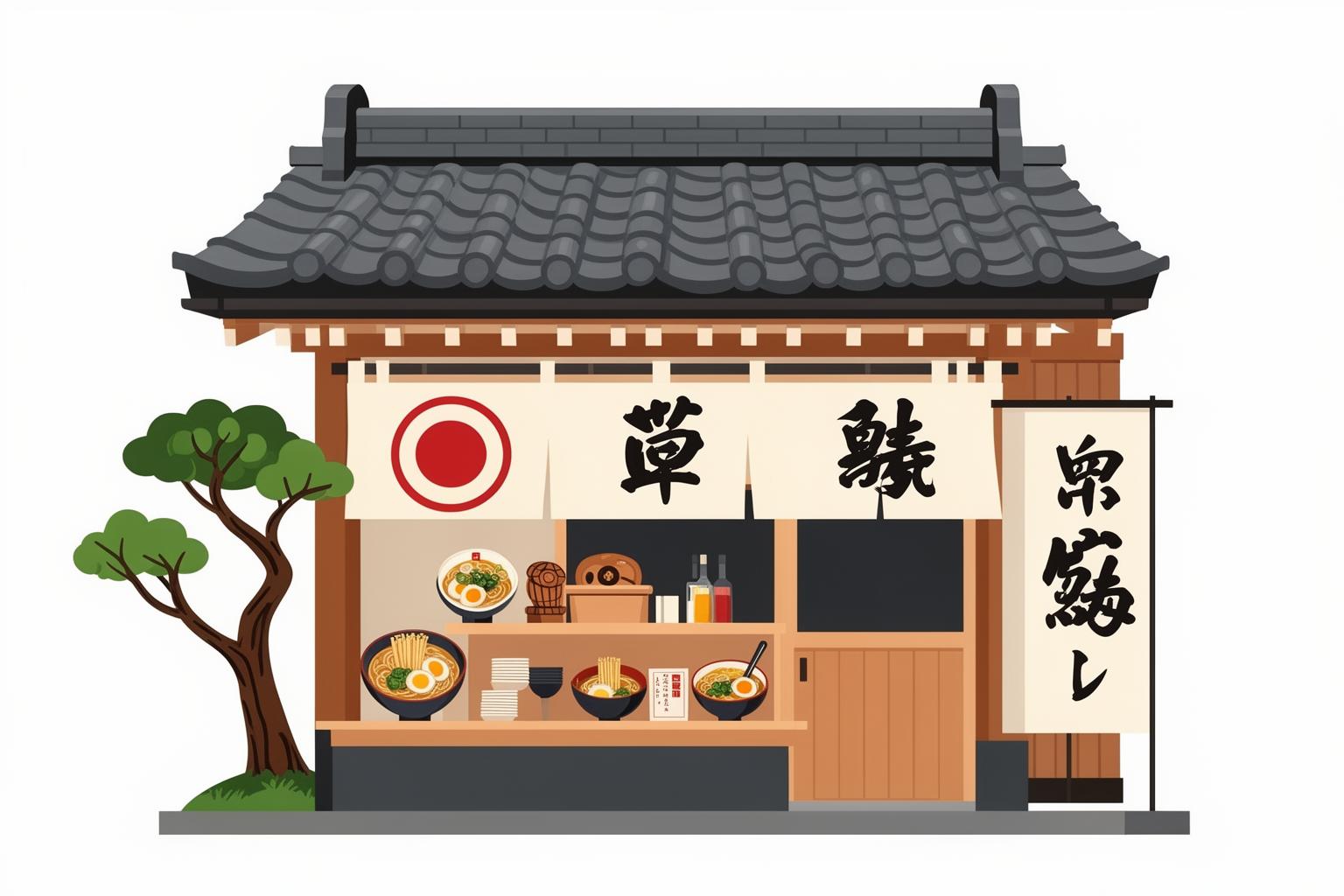
Before you can truly understand the ritual, you must first appreciate the temple. A traditional ramen shop exemplifies functional design, meticulously crafted for one clear purpose: the swift, solitary, and gratifying consumption of noodles. It’s a space that removes social pretense and sharpens every sense on the bowl before you.
The Counter: A Stage for Solitude
Step into most ramen-ya, and you won’t find tables arranged for two or four people. Instead, the room centers around a single, long counter. It might be aged, dark wood—worn smooth from countless elbows—or sleek, modern stainless steel. Customers sit side-by-side on simple stools, facing the open kitchen where the chef, or taisho, commands his domain. This design is deliberate and ingenious. It creates a sense of shared experience—you are surrounded by others on the same quest—while enforcing a deep sense of solitude.
There is no expectation to make eye contact or engage in forced conversation with the person beside you. Your world contracts to the narrow space ahead: your bowl, your spoon, your chopsticks, your glass of water. It’s an unspoken understanding. We are here together, yet we are all here alone. In a society where you are perpetually part of a team, a department, or a family, this anonymous intimacy is a rare and valuable gift. The counter acts as a shield against the social obligations that define the rest of a salaryman’s day. Here, he is neither manager nor subordinate. He is simply a customer—an appetite, a presence waiting to be satisfied.
The Silent Gatekeeper: The Ticket Machine
Often, your first contact at a ramen shop isn’t with a person but with a machine. Near the entrance stands the kenbaiki, or ticket vending machine. A grid of buttons, often illustrated with small photos, displays the menu: shoyu ramen, tonkotsu ramen, a side of gyoza, an extra egg. You insert your cash, make your choice, and a small plastic ticket emerges. You hand this ticket to the chef or an assistant, and the transaction is complete.
On the surface, this system is about efficiency. It streamlines ordering and eliminates the need for waitstaff to handle money. But its cultural significance runs deeper. It reduces social interaction to its bare minimum. There’s no need for pleasantries, no negotiation with a waiter, no awkwardness over splitting the bill. The machine is a silent, unbiased gatekeeper ushering you into the experience without any friction. It reinforces the idea that you are here for a specific purpose, a mission. You have come to eat, not to socialize. This is especially comforting for someone who has spent the entire day navigating complex social hierarchies and engaging in polite, exhausting conversation.
The Sensory Immersion
The atmosphere inside a ramen-ya is a deliberate assault on the senses, designed to pull you out of your thoughts. The air is thick with steam, carrying the rich, soul-warming aromas of slow-cooked pork bones, fermented soybean paste, and savory dashi. You hear the rhythmic clatter of bowls set on the counter, the slosh of broth being ladled, the sizzle of gyoza on the griddle. And above it all, the chorus of zuzutto—the unmistakable sound of vigorous slurping.
This dense sensory environment acts as a shield, blocking out the noise of the city and the worries of the mind. For the salaryman who has spent his day staring at a computer screen in a quiet office, this total immersion is a welcome jolt to the system. It’s impossible to fret over tomorrow’s presentation when your senses are wholly engaged by the immediate reality of hot soup and fragrant noodles. It’s a forced mindfulness, a delicious meditation.
The Salaryman’s Sacrament: Why Ramen?
Among all the foods found in Japan’s culinary landscape, why has ramen become the unofficial meal of the corporate workforce? The answer rests in a perfect blend of practicality, comfort, and psychology. Ramen is uniquely attuned to the needs of the weary soul.
Speed, Price, and Power
Ramen is, above all, fast food in its original and most respectful sense. From the moment you hand over your ticket to the time you finish your last sip of broth, the entire experience can take as little as fifteen minutes. The noodles cook in a minute or two, the broth is ready, and the toppings are assembled with practiced swiftness. This efficiency is crucial for someone with a long commute ahead. There is no time to waste. The culture of the ramen-ya expects you to eat purposefully and leave once you are done, allowing the next customer to take their turn. Lingering is considered a social faux pas.
It’s also remarkably affordable. A hearty, satisfying bowl rarely costs more than 1,000 yen (about $7-8 USD). This makes it a meal accessible to both junior employees and department heads alike. It’s a reward that doesn’t require a corporate expense account. This accessibility contributes to its appeal; it’s an honest meal for an honest day’s work.
And it is truly a power meal. This isn’t a light salad or a delicate piece of sushi. A bowl of tonkotsu ramen, with its rich, opaque pork bone broth, offers a potent mix of carbohydrates, protein, and fat. It’s a caloric bomb designed to recharge a drained body and spirit. It is the ultimate comfort food, the Japanese equivalent of a hug in a bowl. The warmth of the broth seems to penetrate deep into your bones, easing the tension built up in your shoulders throughout the day.
A Moment of Control
Life in a Japanese corporation is often marked by rigidity. Rules are followed, hierarchy is respected, and personal desires are subordinated to the good of the group. The day consists of obligations and expectations set by others. But in the ramen-ya, for a brief moment, the salaryman regains control.
Many shops offer customization. You can select the firmness of your noodles (katame for firm, futsuu for normal, yawarakame for soft). You can adjust the broth’s richness and oil content. You can add extra toppings like a seasoned egg (ajitama), extra pork (chashu), or bamboo shoots (menma). These may seem like small choices, but in a life of conformity, they are tiny, delightful acts of self-determination. For those few minutes, the world is tailored to his exact preferences. The bowl that arrives is his and his alone, a perfect reflection of his desires in that precise moment.
The Sound of Freedom: Unpacking the Slurp

Now we come to the core of the ritual, the aspect most puzzling and captivating to outsiders: the slurp. In many Western cultures, slurping is viewed as impolite, a sign of bad table manners. Yet in a Japanese ramen shop, it is not only accepted but anticipated. It is the sound of gratitude, the soundtrack of satisfaction.
The Practical Slurp
There are practical reasons behind slurping. Ramen is served boiling hot, and the noodles quickly become soft and lose their ideal texture if left sitting in the broth. Slurping is the most efficient way to eat them swiftly. The act of drawing in the noodles along with air rapidly cools them to a comfortable temperature as they enter your mouth. It lets you eat at the brisk pace the dish requires without burning your tongue.
Moreover, experts say slurping enhances the flavor. Much like aerating a fine wine, slurping mixes the broth and noodles with air, releasing the soup’s full aromatic compounds. As the noodles glide into your mouth, you inhale the steam and rich scent of the broth, creating a more complete and intense sensory experience. It’s about savoring with your nose as much as with your mouth.
The Psychological Slurp
But the real power of the slurp lies in its psychological effect. The Japanese office environment is one of quiet focus and great restraint. Voices are kept low. Emotions are controlled. The self is suppressed. The salaryman must present a calm, composed professionalism, regardless of inner turmoil.
The ramen shop stands in stark contrast. The slurp is a loud, uninhibited, almost primal act. It’s a moment of pure, unfiltered sensory indulgence. To slurp enthusiastically is to shed the social restraints that bind you all day. It’s a raw expression of enjoyment, a signal to the chef and to oneself that you are fully immersed in the pleasure of the meal. You are not thinking, you are simply doing. You are not performing, you are simply being.
This audible release is a form of catharsis. Each loud zuzutto is a small defiance against the quiet conformity of the office. It’s a way of saying, “I worked hard, and now I am going to relish this meal with every fiber of my being, regardless of who hears it.” In the shared space of the ramen counter, surrounded by fellow slurpers, this act feels not like a breach of etiquette but a deeply human and necessary release.
The Fifteen-Minute Transformation
Let’s follow the emotional journey of our salaryman as he goes through his nightly ritual. He pushes aside the noren, stepping out of the orderly, predictable world and into the chaotic, steamy sanctuary of the ramen-ya. The burden of his corporate identity begins to lift. He feeds his yen into the ticket machine, makes his selections, and finds an empty stool at the counter.
As he waits, he watches the taisho move with a fluid efficiency that borders on dance—a flick of the wrist to drain the noodles, a precise pour of broth, the careful arrangement of toppings. He is witnessing a master at work, a craftsman devoted to a single purpose. This focus is contagious. He puts his phone away. His mind, which has been racing all day with spreadsheets and emails, begins to settle.
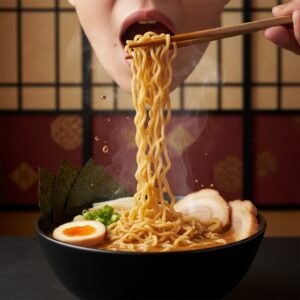
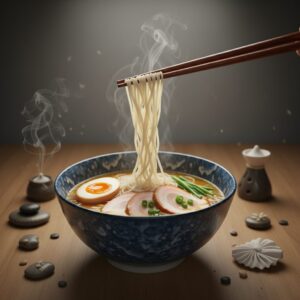
Then the bowl arrives. It is a perfect composition of color and texture. He takes a moment to appreciate it before picking up the ceramic spoon, the renge, for the first, sacred sip of broth. It’s a moment of truth, the broth fulfilling its promise of depth and flavor. Next, he takes his chopsticks, gathers a generous portion of noodles, and lifts them to his mouth. He leans over the bowl and releases his first uninhibited slurp.
For the next ten minutes, the outside world fades away. There is only the race against time to finish the noodles while they remain perfectly al dente, the interplay of textures between the firm noodles, tender pork, and crunchy bamboo shoots. His entire being is absorbed in this single, life-affirming task.
Finally, he tilts the bowl to his lips to drink the last of the rich, flavorful broth. He sets the empty bowl back on the counter, perhaps with a quiet “Gochisosama deshita” (“Thank you for the meal”), and rises. He feels warm, full, and deeply satisfied. The mask of exhaustion is replaced by a subtle glow of contentment. As he pushes the noren aside and steps back into the city night, he is a different man from the one who entered. He has been reset. Fortified and restored, he is ready for the train ride home, ready to do it all again tomorrow.
Having spent countless evenings in these wonderful little shops, I was initially hesitant. I tried to eat my noodles quietly, aware of the noise I was making. But then I looked around at the salarymen lining the counter, their faces serene, their focus absolute, their slurps rising in a chorus of shared relief. I realized I was the one with bad manners. I was treating this temple like a restaurant. By trying to be polite, I was refusing to join the ritual.
So, I took a deep breath, picked up my noodles, and gave in. The first slurp felt awkward, like a performance. But the second felt freeing. And by the third, I understood. I wasn’t just eating noodles. I was participating in one of the most honest and beautiful daily rituals in modern Japan—a simple, profound act of finding solace and selfhood in a humble bowl of soup.