Ask someone to picture a classic Japanese coffee shop, and their mind will likely conjure a very specific image. It’s a place steeped in a warm, amber glow, where the air is thick with the ghosts of cigarette smoke and the quiet hum of a Coltrane record. Dark wood paneling, worn velvet seats, and the gentle bubbling of a siphon coffee maker on the counter. This is the world of the kissaten, Japan’s traditional coffee house. For decades, it was more than a place to get caffeine; it was a sanctuary, a third space between the office and the tiny apartment, a time capsule where the frenetic pace of modern Tokyo or Osaka could be held at bay.
Then, something changed. Slowly at first, then all at once, a new kind of coffee shop began to appear. These places were bright, minimalist, and almost clinically clean. They smelled not of dark roast and nostalgia, but of something bright, fruity, and acidic. Instead of quiet masters in crisp vests, there were young, passionate baristas eager to tell you about the tasting notes of a single-origin bean from a specific farm in Ethiopia. This was the arrival of Third Wave coffee, a global movement that treated coffee not as a comforting brown beverage, but as an artisanal product, as complex and nuanced as fine wine. This wasn’t just a new trend; it was a philosophical clash. It posed a direct question to one of Japan’s most enduring urban institutions: What is a coffee shop for? Is it for quiet refuge, or for sensory exploration? Is it about the atmosphere, or is it all about the liquid in the cup? The story of how these two worlds collided, coexisted, and ultimately began to merge is the story of how Japan re-fell in love with coffee, on entirely new terms.
This evolution of tradition mirrors the deep cultural significance found in other Japanese practices, such as the spiritual ritual of Japanese fireworks.
The Enduring Soul of the Kissaten
To grasp the impact of the Third Wave, you first need to understand what the kissaten truly represents. These establishments are far more than just cafes. They serve as living archives of the Showa Era (1926-1989), emerging from a need for space and solace amid the rapidly modernizing cities of post-war Japan. They became essential anchors in the daily lives of millions.
More Than Just Coffee: A Third Place of Refuge
The traditional kissaten was designed as an escape. In an urban environment of small homes and crowded offices, it provided a private living room for the public. Businessmen, known as salarymen, held discreet meetings over a cup of dark, syrupy coffee. Young couples found intimacy impossible elsewhere in the dimly lit booths on their dates. Writers and students settled in for hours with a book, nursing a single cup, embraced by the anonymity the space offered. The kissaten mastered the art of being alone together.
The atmosphere is crucial. The design choices are intentional and consistent: dark wood, ornate light fixtures casting a gentle glow, and plush seating inviting you to sink in and linger. The soundtrack almost always features jazz or classical music, played softly enough to murmur rather than shout. Time seems to slow. The tick of a grandfather clock in the corner often stands as the loudest sound in the room. This environment is the product itself. The coffee, while essential, plays a supporting role. Typically a dark roast, it’s often brewed using a dramatic, science-experiment-like siphon brewer. The flavor is strong, bitter, and reliably consistent—a familiar comfort, not a challenge to the palate.
This is the home of the famous “morning set,” or mōningu sābisu. For a modest price, customers receive coffee, a thick slice of toasted milk bread (shokupan) with butter, and a hard-boiled egg. It’s a ritual, a quiet and civilized way to start the day that feels far removed from a hurried grab-and-go breakfast. The kissaten isn’t about efficiency; it’s about ceremony and carving out a peaceful moment.
The Master and the Counter
At the heart of every great kissaten is the masutā, or master. Usually an older man, he embodies quiet dignity and immense presence. He rules from behind the counter, polishing glasses, carefully preparing each order, and rarely engaging in idle conversation. The relationship between the master and his regulars relies on unspoken understanding. He knows their usual orders, the newspapers they prefer, and their need for solitude. He stands as a silent guardian of the space’s calm.
You don’t visit a kissaten expecting bubbly, American-style customer service. You come seeking stability. The master isn’t there to be your friend; he is there to provide a consistent, dependable environment. This quiet professionalism is a core part of the charm. In a culture that values non-imposition, the kissaten master is the ideal host, offering service without intrusion.
The Arrival of the Third Wave: A New Philosophy of Flavor
The Third Wave movement emerged in Japan as a subtle revolution, driven by a new generation of coffee enthusiasts with a radically different perspective. While the kissaten focused on creating an atmosphere, the Third Wave concentrated on isolating a single flavor. It deconstructed the coffee experience and reconstructed it around one central element: the bean itself.
From Commodity to Craft
At its essence, the Third Wave emphasizes provenance. It dismisses the notion of coffee as a generic, dark-brown powder made from anonymous blends. Instead, it elevates coffee to the artistry of viticulture. Suddenly, ideas like terroir—the unique environmental conditions of a particular farm influencing flavor—entered the discussion. Baristas talked about single-origin beans from Guatemala or Rwanda, exploring processing methods (washed, natural, honey-processed) and their impact on the final taste.
The roast profile marked the most immediate and noticeable shift. Whereas kissaten coffee was dark, oily, and sharply bitter, designed to be softened with milk and sugar, Third Wave coffee was roasted lightly. This gentle approach aimed to preserve the bean’s natural qualities—the bright, acidic, fruity, or floral notes that a darker roast would obliterate. To a palate used to the traditional style, a cup of Third Wave coffee could be startling. It was often tea-like in body, with pronounced acidity and complex flavors of citrus, berries, or jasmine. It wasn’t merely a different taste; it was a whole new category of beverage.
The Tools of the Trade: Science in the Service of Taste
This newfound emphasis on precision required a fresh set of tools. The romantic, theatrical siphon of the kissaten gave way to a lab-like collection of equipment. The Hario V60 dripper, the AeroPress, the Chemex—each became an emblem of this new era. Every cup was a carefully controlled experiment.
The process evolved into a different kind of performance. A Third Wave barista weighs the beans on a digital scale to the tenth of a gram. The water is heated to an exact temperature. Using a gooseneck kettle for a steady, precise pour, often timing the process with a stopwatch, they engage in a meticulous, almost scientific ritual designed to extract the perfect flavor profile. The barista is no longer a silent guardian but an eager educator, guiding you to understand why this Kenyan bean has notes of blackcurrant and helping you appreciate the delicate balance of acidity and sweetness in your cup.
A Tale of Two Spaces: Redefining the Coffee Shop Vibe
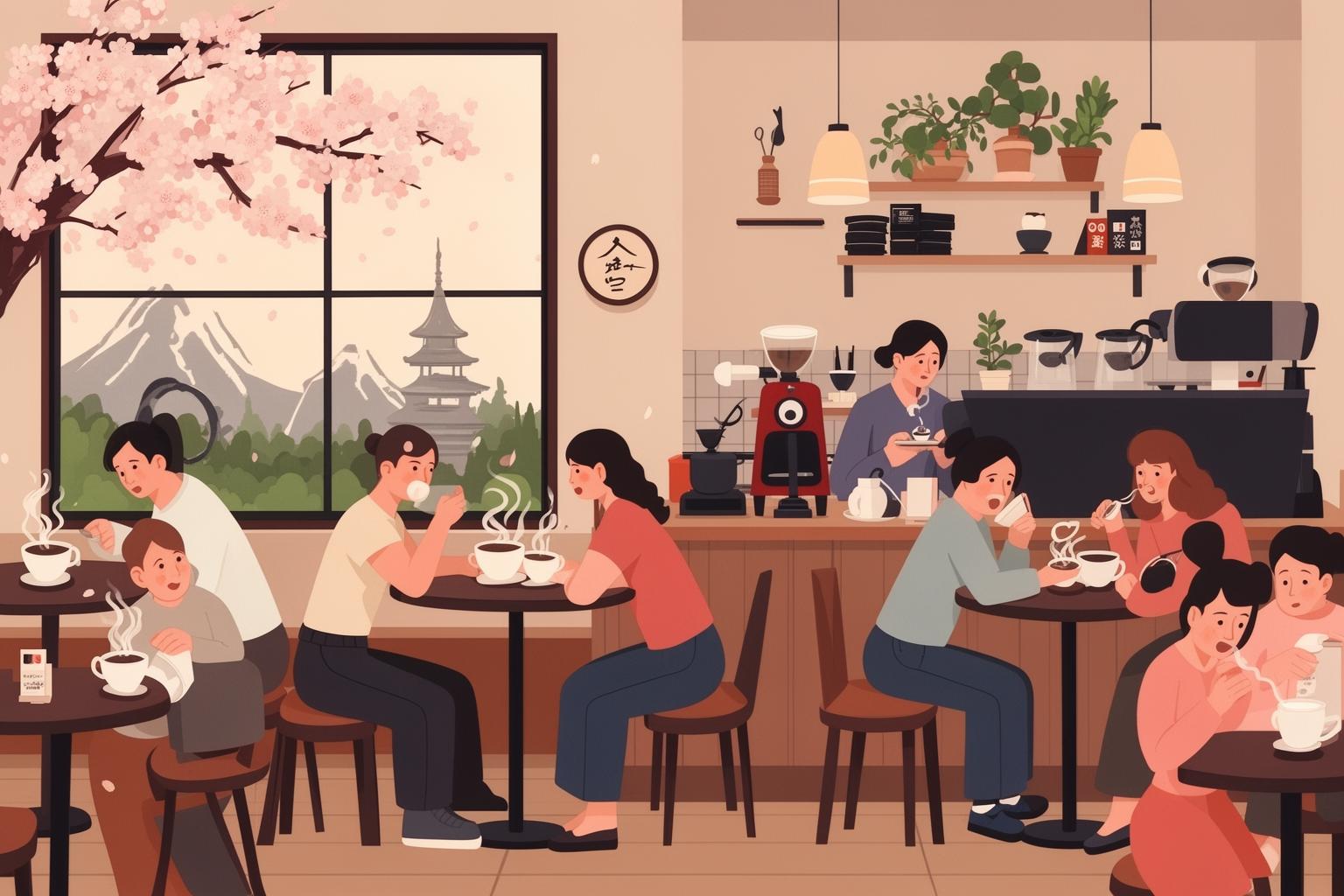
The philosophical differences between the two movements are most evident in the physical spaces themselves. The aesthetic of a Third Wave shop directly mirrors its values, offering a sharp contrast to the cozy clutter of the kissaten.
Light, Air, and Transparency
If the kissaten resembles a dark, enclosed womb, the Third Wave shop feels like a bright, open studio. Its design language embraces minimalism and transparency. Large windows flood the space with natural light, while the color palette features whites, greys, and light-toned wood. Polished concrete floors and exposed ductwork are common elements. The furniture tends to be simple, functional, and designed for shorter visits. Everything is meant to feel clean, modern, and uncluttered.
This aesthetic serves as a metaphor for the movement’s philosophy. The openness signifies a desire for transparency in the coffee supply chain. Customers can see the sacks of green beans from distant farms, watch the roaster in action, and observe every stage of the brewing process. Nothing is concealed. The clutter and mystery of the kissaten give way to a clear and accessible process that you are invited to witness and understand.
The Barista as Educator, The Customer as Connoisseur
The social dynamic shifted significantly. While the kissaten master cultivates a comfortable anonymity, the Third Wave barista seeks to build a community founded on a shared passion. They engage customers in conversation, not only about the coffee but also about their day. They remember not just your usual drink but also your brewing preferences.
This, in turn, transformed the role of the customer. In a kissaten, you are a patron seeking refuge; in a Third Wave shop, you become a participant, a student, a connoisseur. Curiosity is encouraged, as is asking questions and forming opinions on flavor profiles. The experience is interactive and educational. This fostered a new kind of social space—less about quiet contemplation and more about shared discovery. It attracted a younger, globally minded clientele who viewed coffee as a hobby and craft to be explored rather than simply a utility to be consumed.
The Convergence: When Old Meets New
For a while, it seemed these two coffee cultures would run on parallel paths, serving completely different demographics and preferences. However, Japan possesses a unique skill for assimilating foreign influences and blending them into something new. The sharp divide between old and new gradually faded, resulting in a captivating fusion that has enriched the nation’s coffee scene.
Kissaten Revival and the Neo-Kissaten
Interestingly, the emergence of sleek, minimalist Third Wave cafés triggered a renewed admiration for the traditional kissaten. A younger generation, who may have once regarded them as outdated and stuffy, started to appreciate their distinctive charm and historical significance. The very elements the Third Wave dismissed—the retro decor, the comforting food, the leisurely atmosphere—became fashionable once more. Preserving these historic venues turned into a matter of cultural pride.
This sense of nostalgia gave rise to the “Neo-Kissaten.” These newer establishments skillfully combine the aesthetics of the past with contemporary quality standards. A Neo-Kissaten might feature dark wood furnishings, velvet booths, and the classic jazz soundtrack of a Showa-era original. You can still order a melon soda float, a fruit sandwich, or a thick slice of pizza toast. Yet, when you order a coffee, it’s not a generic dark roast. Instead, the barista offers a choice of single-origin beans, prepared with the same precision and care as a top-tier Third Wave shop, often using a V60 or AeroPress.
This hybrid approach is an ideal compromise. It delivers the comfort and nostalgic warmth of the traditional kissaten while meeting the modern palate’s demand for high-quality, ethically sourced coffee. It demonstrates that atmosphere and quality can coexist.
The Enduring Appeal of Slow Time
Ultimately, what the Third Wave’s disruption revealed is that both traditions, at their best, aim for a similar goal: creating a meaningful pause in a fast-moving world. The ritual differs, however. A kissaten offers this pause through its timeless, unchanging atmosphere—a physical retreat from the modern rush.
Conversely, a Third Wave café provides it through its process. The five-minute manual pour-over ritual invites you to watch and wait as your cup is carefully crafted—a form of deliberate mindfulness. It is a moment of concentrated attention, a small ceremony amid a hectic day. Both environments, in their unique ways, resist the culture of speed and efficiency.
The arrival of the Third Wave didn’t eliminate the kissaten. It challenged it, thereby revitalizing Japan’s entire coffee culture. It sparked a discussion about what we cherish in our public spaces and daily rituals. The outcome is a richer, more diverse coffee scene where visitors and locals alike can select their experience. Do you seek the comforting, anonymous silence of a half-century-old institution where time seems to stand still? Or do you prefer the bright, vibrant, and flavorful world of modern craft coffee? The beauty is that in Japan today, you don’t have to choose—you can enjoy both, sometimes even under the same roof.