There’s a specific kind of ghost story popular in post-industrial countries. It’s not about spirits in a cemetery, but about the specter of ambition left to rot. It’s the story of a factory that once employed a whole town, now a hollowed-out brick skeleton. The story of a grand hotel on a forgotten highway, its empty swimming pool filled with rain and dead leaves. Japan, a nation that perfected the art of the economic miracle, has these stories in abundance. They are the physical evidence of the country’s infamous “Bubble Economy,” that surreal period in the late 1980s when it felt like the money would never run out and the party would never stop. And no place tells that story quite like a dead amusement park.
Imagine a perfect, sun-drenched copy of Disneyland’s Main Street U.S.A. Now imagine it abandoned for a decade. The paint on the charming storefronts is peeling away in sun-bleached sheets. Weeds erupt from cracks in the pavement. A child’s plastic ball sits forlornly in a dry fountain, coated in a fine layer of dust and grime. The iconic fairytale castle at the end of the street, once a beacon of manufactured joy, looms silently, its pastel pink facade stained with black streaks of mildew. This was Nara Dreamland, Japan’s most famous modern ruin, or haikyo. For years after its closure in 2006, it stood as an unofficial monument to a dream that burst, attracting a particular kind of pilgrim: the urban explorer. They came not for rides, but for ruins; not for fantasy, but for the profound, melancholic reality of what happens when the fantasy is over. Today, Dreamland is gone, completely demolished. But its legend, a perfect encapsulation of a uniquely Japanese subculture, is more potent than ever. We aren’t just exploring a place; we’re exploring a memory.
This exploration of a forgotten amusement park’s legacy mirrors the way other uniquely Japanese subcultures, like the vibrant social world of standing bars, capture a specific moment in the nation’s social and economic history.
The Birth of a Borrowed Dream
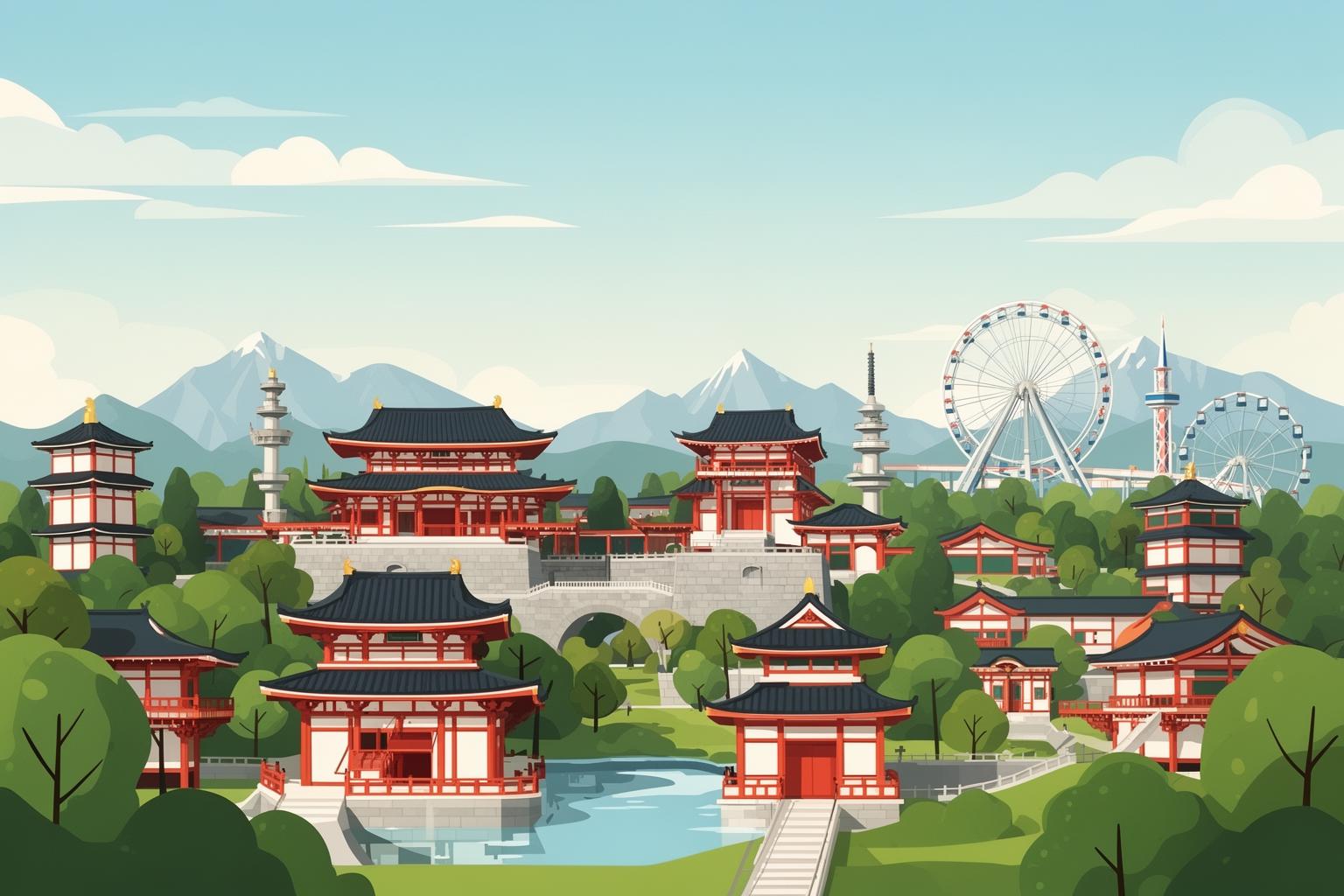
To understand why Dreamland was significant, you need to look back to 1961. Japan was in the midst of an incredible post-war recovery. The future looked bright, industry was thriving, and the country was enthusiastically embracing Western culture, especially Americana. A Japanese businessman named Kunizo Matsuo traveled to the United States and visited a brand-new, enchanting place in Anaheim, California: Disneyland. He was completely fascinated. He even met with Walt Disney himself, hoping to persuade him to build a Disney park in Japan’s ancient capital, Nara.
However, Disney was focused on its upcoming project in Florida. Unfazed, Matsuo decided that if he couldn’t have the real thing, he would create the next best alternative. He hired the same American engineers who had worked on Disneyland and began crafting a nearly identical replica. When Nara Dreamland opened in 1961, the similarities were bold and striking. It featured a Main Street, an Adventureland, a Fantasyland, and its own version of the Matterhorn Bobsleds. At its heart stood a pink, fairy-tale castle unmistakably reminiscent of Sleeping Beauty’s.
For a generation of Japanese families, especially in the Kansai region, this was their Disneyland. It was a place of magic, offering a domestic slice of an idealized America. It symbolized Japan’s soaring ambitions. The park enjoyed massive popularity for years, becoming a beloved institution that created countless cherished childhood memories.
The American Main Street in Yamato
The entrance was a masterful exercise in imitation. Visitors passed through turnstiles and stepped onto a broad boulevard lined with two-story buildings designed to resemble a quaint, early 20th-century American town. There was a City Hall, an Emporium, and even a red fire engine permanently stationed by a firehouse. It was a meticulously crafted illusion—a bubble of pure nostalgia for a time and place that never truly existed—transplanted into the heart of ancient Japan. At its peak, this street would have been lively, filled with the sounds of cheerful music, the aroma of popcorn, and the sight of families clutching character balloons. This manufactured wholesomeness was the park’s promise, the foundation on which the entire fantasy rested.
The Aska Roller Coaster: A Wooden Giant
Though much of the park was a copy, it did have its own distinctive crown jewel. Introduced in 1998 during a late attempt to rejuvenate the park, the Aska was a magnificent wooden roller coaster. Designed by the renowned American firm Bolliger & Mabillard, it was an expansive, intricate wooden lattice that wound its way over a large portion of the park’s grounds. It was a world-class thrill ride, adored by coaster enthusiasts for its rattling, wildly fast speed and classic design. The rhythmic roar of its cars and the joyous screams of riders became the park’s heartbeat. Aska was Dreamland’s one genuine original—a desperate, brilliant effort to stay competitive in an increasingly crowded market.
The Slow Fade into Silence
No dream lasts forever. In 1983, the genuine article arrived. Tokyo Disneyland opened, larger, shinier, and officially endorsed by Disney. The allure of the authentic experience was irresistible. Suddenly, Nara Dreamland revealed itself for what it was: a very good cover band overshadowed by the original artist. Attendance started a slow but steady decline.
The final blow came in 2001 with the debut of Universal Studios Japan in nearby Osaka. Surrounded by two huge, world-renowned theme parks, Dreamland was pushed out. Lacking the investment to compete, the park began to feel worn and outdated. Paint peeled away. Animatronics malfunctioned. The once-bright vision of the future started to resemble a relic of the past.
On August 31, 2006, after 45 years of operation, Nara Dreamland quietly closed its gates forever. There was no grand farewell, no public outcry. The park simply ceased to exist. The music stopped, the staff went home, and a deep silence settled over the fairytale kingdom. The gates locked, and nature, patient and relentless, began its work.
The Kingdom of Weeds: Life After People
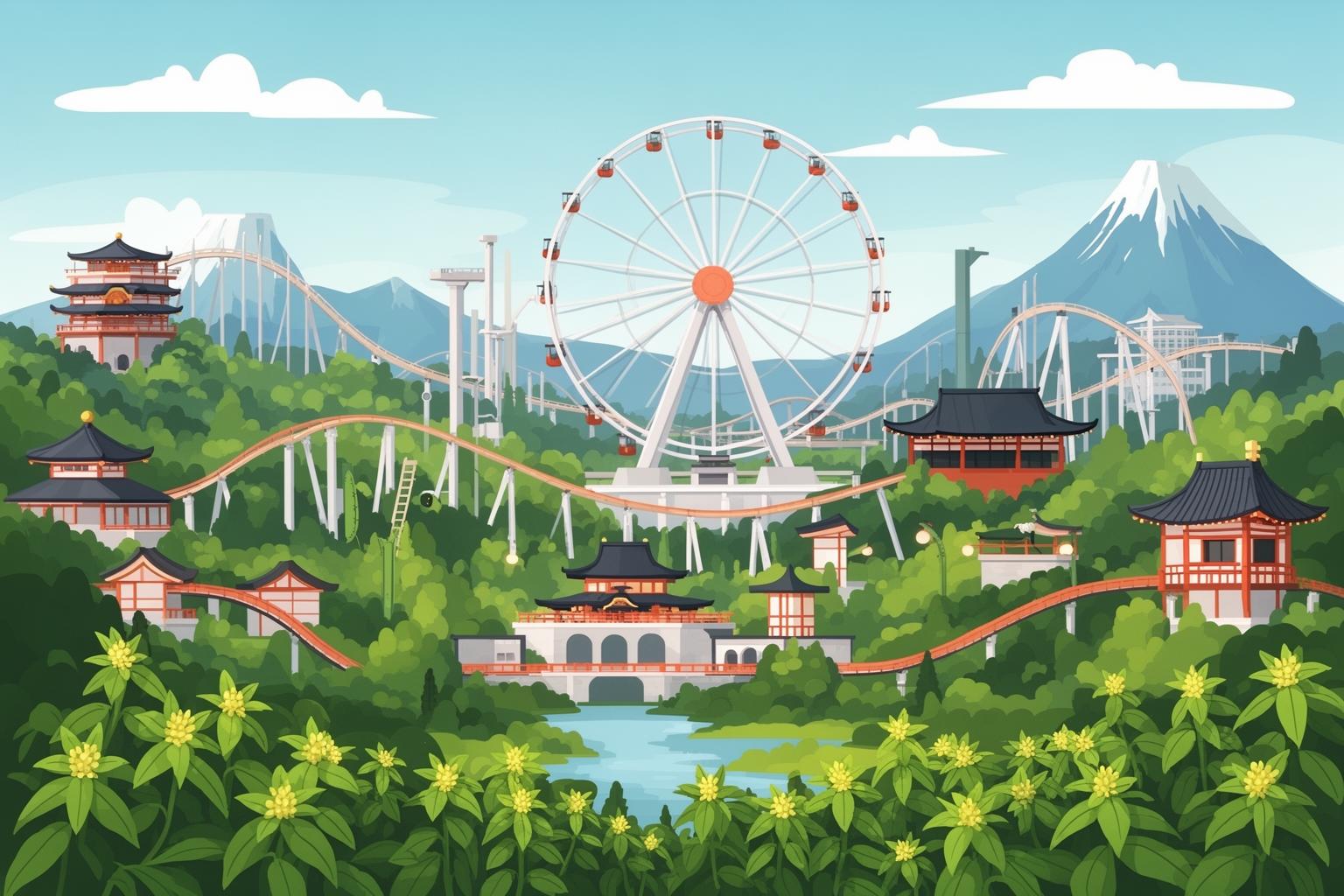
The decade after its closure is when Nara Dreamland became legendary. It evolved from a failed enterprise into one of the world’s most coveted destinations for urban explorers. The internet overflowed with hauntingly beautiful photos taken within its boundaries, portraying a world where human creations were gradually and inevitably overtaken by nature. It became a Mecca for haikyo enthusiasts, perfectly embodying the aesthetic of abandonment.
Crossing the Threshold
For those brave enough to enter, the experience was surreal. Gaining access usually involved finding a gap in the fence or a loosely guarded service entrance. The moment you stepped inside, everything changed. The city’s noise disappeared, replaced by an almost overwhelming silence, broken only by the rustling wind through ten-foot-tall weeds and the solitary caw of a crow. It felt like walking onto the set of a post-apocalyptic film. The air was thick with the scent of damp earth, rotting wood, and rust. Every step required caution on treacherous, broken pavement and hidden dangers. This was more than exploration; it was trespassing into a forgotten timeline.
A Tour of the Decay
The park was a landscape frozen in decline, a series of stunning, melancholic scenes.
The Sunken Place
The water park area was especially eerie. The once-vibrant twisting slides were coated in a uniform layer of black and green slime. The pools at their bases contained a thick, ink-colored liquid— a primordial soup from which new, unwelcome life was likely emerging. Rusted metal staircases led up to launch platforms offering panoramic views of the desolation, their surfaces slick with moss.
The Silent Scream
The rides stood as the most poignant skeletons. The teacups sat still, some filled with stagnant rainwater. The carousel horses, with painted smiles that resembled grimaces, were frozen mid-gallop, their gold leaf flaking away. The monorail, once a symbol of futuristic transit, rested on its elevated track, its cars slowly wrapped in vines climbing the concrete pillars. Towering above all, the Ferris wheel stood as a sentinel against the sky, its cabins gently swaying in the wind, groaning a metallic lament. And then there was Aska. The great wooden coaster was breathtaking. Weeds and small trees pushed through its intricate wooden structure, nature weaving itself into the bones of the man-made giant. Standing beneath it felt like an archaeologist discovering the skeleton of an immense prehistoric beast.
The Hollow Heart
At the center stood the castle. Up close, its artifice was clear. The stone was plaster, the grandeur a mere façade. Its pink paint blistered and peeled, exposing the grey concrete beneath like a skin disease. Inside, it was a hollow shell. Anything valuable had long been stripped away, leaving behind echoing, graffiti-covered chambers. Sunlight streamed through broken windows, illuminating dust motes dancing in still air. It was the ultimate symbol of the park’s story: a beautiful, empty promise.
The Haikyo Philosophy: More Than Just Trespassing
Urban exploration is often dismissed as mere thrill-seeking or breaking and entering. However, in Japan, the haikyo subculture is frequently motivated by a far deeper and more reflective impulse. It is grounded in cultural aesthetics that have influenced the Japanese mindset for centuries. The community’s unofficial motto is “Take only pictures, leave only footprints.” Serious explorers are not vandals; they consider themselves photographers, historians, and mourners.
Their fascination is linked to the concept of mono no aware, a gentle, wistful sadness for the impermanence of all things. It’s the feeling evoked by watching cherry blossoms fall, knowing their beauty is brief. A ruin like Nara Dreamland embodies mono no aware on a grand scale. It stands as a powerful, tangible reminder that everything—even a site created for eternal happiness—is fleeting. Additionally, there is an element of wabi-sabi, the appreciation of beauty in imperfection, age, and decay. The peeling paint, rust, and encroaching nature aren’t seen as defects, but as a different, deeper kind of beauty. The ruin tells a more authentic story than the pristine park ever did.
For those who explored Dreamland, it was a pilgrimage—quiet and meditative. Standing alone on the silent Main Street, one could almost sense the presence of the crowds and hear the echoes of parade music. It was a place to reflect on the vast hubris of human ambition and the awe-inspiring, relentless power of time and nature to reclaim what is theirs. It wasn’t about an adrenaline rush; it was about bearing witness.
The Final Curtain Call
The legend of Nara Dreamland grew so immense that it eventually became a burden. The city of Nara, which owned the land, grew weary of the ongoing trespassing and the safety hazards posed by the decaying park. After years of legal disputes and unsuccessful auctions, a buyer was finally secured. In late 2016, demolition crews arrived.
The global haikyo community watched with a sense of loss as their forgotten kingdom was dismantled bit by bit. Heavy machinery tore apart the fake storefronts of Main Street. The iconic castle was reduced to rubble. Lastly, they came for Aska, the wooden giant, which was carefully dismantled until nothing was left. By the end of 2017, Nara Dreamland had vanished. The land it once occupied is now a flat, empty stretch of dirt, awaiting new development, wiped clean of its history.
What a Ruin Remembers
An amusement park is meant to be a place outside of time, a hermetically sealed bubble of joy. Nara Dreamland did not succeed in this, yet through its failure, it became something far more intriguing. In its decline, it grew deeply tied to a particular time and place. It transformed into a physical ghost of the Bubble Era, a period of boundless optimism and borrowed dreams that ended in a prolonged, painful aftermath.
Its second life as a renowned ruin gave it a renewed purpose. It became a canvas for photographers, a quiet refuge for explorers, and a stark reminder of impermanence. The stories it now tells are not the polished fairy tales it was created for, but a more complex and honest narrative about ambition, memory, and the inevitable, beautiful decay of all things. Nara Dreamland is gone, but not forgotten. It lives on through thousands of photographs and in the memories of those who wandered its silent streets, showing that sometimes, the most lasting magic begins long after the park has closed.