Imagine you’re walking through Shibuya in 1995. You duck out of the world-famous scramble crossing, sidestepping the tidal wave of shoppers and salarymen, and slip into a side street in the Udagawacho district. The air changes here. The roar of the city softens, replaced by a complex tapestry of sound spilling from the open doorways of countless tiny record shops. But what you’re hearing isn’t the manufactured idol pop dominating the charts or the stadium rock blasting from arenas. It’s a dizzying, joyful collage: the breathy whisper of a 1960s French yé-yé singer, the sun-drenched chords of a Brazilian bossa nova guitar, the dramatic swell of an Italian movie soundtrack, all underpinned by a crisp, funky breakbeat that sounds like it was lifted from an obscure American soul record. This wasn’t one genre. It was all of them, all at once. This was the sound of Shibuya-kei.
Shibuya-kei, which translates simply to “Shibuya-style,” was less a genre of music and more of an aesthetic, a philosophy, a curatorial sensibility. It was a subculture born not in live houses or rehearsal rooms, but in the cluttered aisles of Tower Records and the dusty bins of specialist vinyl importers. Its practitioners weren’t just musicians; they were archivists, scholars, and DJs who treated the entirety of 20th-century pop culture as their sonic palette. They approached music-making with the obsessive passion of a collector, piecing together forgotten sounds from around the globe to create something sophisticated, playful, and unmistakably Japanese.
This niche emerged from a very specific moment in time. The extravagant, money-fueled Bubble Era of the 80s had burst, leaving a generation of young, creative Tokyoites with a sense of disillusionment towards mainstream consumerism. In its place grew a culture that valued taste over wealth, and deep knowledge over flashy possessions. Shibuya-kei was the perfect soundtrack for this shift. It was music for people who preferred to spend an afternoon hunting for a rare Serge Gainsbourg B-side than buying a designer handbag. It was a sophisticated retreat into a self-made world of cool, built from the discarded fragments of global pop history. It was the sound of falling in love with the past, and in doing so, creating the future.
This sophisticated retreat into a self-made world of cool, built from the discarded fragments of global pop history, mirrored the way a single video game rewrote Japan’s cultural landscape.
The Anatomy of a Sound: An Ethos, Not a Genre
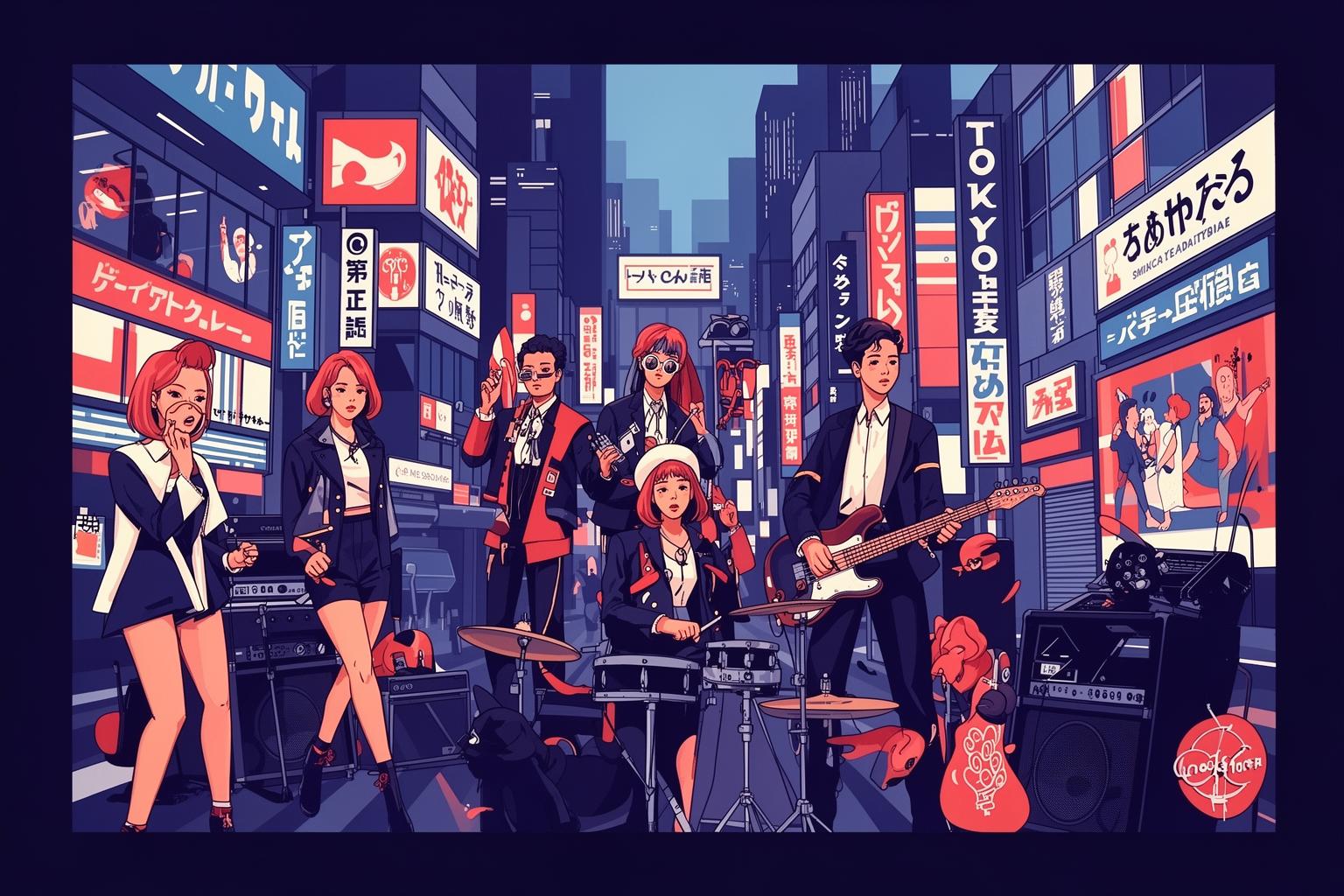
Trying to define Shibuya-kei through a simple sonic checklist is a pointless endeavor. You might highlight its breezy melodies, its frequently female vocals, and its intricate, sample-rich arrangements, but that would completely miss the point. The true essence of the movement lay in its approach: the art of creative consumption. It involved recontextualizing sounds, placing kitschy, forgotten lounge music alongside raw funk drum loops to reveal hidden connections. It was music about other music.
A Global Shopping List
The main elements were drawn from every corner of the globe and every decade of the 20th century. The foundation often rested on sophisticated 1960s pop. Think of Burt Bacharach’s complex, melancholic orchestrations, the sun-soaked harmonies of American “sunshine pop” acts like The Free Design, and the cool detachment of French pop legends such as Françoise Hardy and France Gall. From Brazil, they borrowed the gentle sway of bossa nova and the vibrant energy of Tropicália. From Italy came the dramatic, sweeping film scores by composers like Ennio Morricone and Piero Umiliani. The UK contributed jangly indie pop guitars and the driving beats of Northern Soul. From America, not only pop but also hip-hop’s foundational elements—the breakbeats and sampling techniques pioneered by Bronx producers—were incorporated.
This was no lazy pastiche. It was a rigorous, almost scholarly exercise in musical deconstruction. A Shibuya-kei producer didn’t merely sample a track; they understood its history, cultural context, and aesthetic framework. They were as much musical scholars as pop artists, using the recording studio as a laboratory to fuse disparate elements into a new, hyper-referential whole.
The Holy Trinity: The Architects of the Sound
Though the scene was expansive, three key acts essentially authored the Shibuya-kei playbook, each embodying a different aspect of its personality.
First came Flipper’s Guitar, the duo of Keigo Oyamada and Kenji Ozawa. They were the pioneers, brilliant students who laid the intellectual foundation. Starting as followers of British indie pop, their early work echoed bands like The Smiths and Orange Juice. But with their final two albums, Camera Talk and the seminal Doctor Head’s World Tower, they transformed the template. They wove in intricate jazz chords, bossa nova rhythms, and a dense tapestry of samples, crafting a sound at once chaotic and meticulously constructed. They embodied the obsessive “otaku” spirit of the scene, embedding musical quotes and references so deeply that only the most dedicated fans could uncover them all. When they broke up in 1991, they left behind a blueprint for the entire movement.
If Flipper’s Guitar were the nerdy architects, Pizzicato Five were the glamorous international ambassadors. Led by curator and DJ Yasunori Konishi, with the impeccably stylish Maki Nomiya as their frontwoman, they polished the Shibuya-kei ethos for a global audience. Their music was a whirlwind journey through a fantasy jet-set lifestyle, dripping with nods to 1960s spy films, high fashion, and cosmopolitan cool. Konishi was the ultimate crate-digger, a walking pop history encyclopedia who effortlessly blended a James Bond-style brass stab with a funky Motown bassline and Nomiya’s detached, chic vocals. They focused less on deconstruction and more on celebration, creating a perfect, sparkling cocktail of pop joy. Their success on American indie labels in the mid-90s introduced the term “Shibuya-kei” to the wider world.
Lastly, there was Cornelius, the solo project of Flipper’s Guitar co-founder Keigo Oyamada. He was the scene’s mad scientist, pushing sampling and collage techniques to their logical, often surreal extremes. On albums like 1997’s Fantasma, Oyamada treated sound as a physical object to be sliced, diced, and reassembled in playful, unexpected ways. Songs would shift genres in an instant, sounds would pan wildly across speakers, and familiar pop conventions were twisted into striking new forms. Fantasma was more than a collection of songs; it was an immersive, interactive audio experience. Oyamada extended Flipper’s Guitar’s intellectualism into a realm of pure sensory delight, proving that meticulously crafted music could also be immensely enjoyable.
The Record Store as a Temple
To truly grasp Shibuya-kei, you must understand the vital role played by the record store. In an era before the internet and music streaming, these shops served as the hub of the entire subculture. They were more than just retail spaces; they functioned as libraries, classrooms, and social hubs where the scene’s entire value system was created and sustained.
The Geography of Obsession
At the center was a small district within Shibuya called Udagawacho. In the 1990s, its winding streets housed an incredibly dense cluster of record stores. There were the large multi-story outlets like HMV and Tower Records, featuring impressive import sections essential for music discovery. Yet the true core of the scene lay in the smaller, independent specialty shops. Stores like Cisco, Manhattan Records, DJ’s Records, and various diskunion branches were revered landmarks. Each focused on a specific genre—rare groove, house, hip-hop, indie rock—and each employed staff who were themselves influential tastemakers.
A Saturday afternoon in Udagawacho was a ritual for musicians, DJs, and fans alike. You could spot Keigo Oyamada or Yasunori Konishi quietly browsing through bins, their arms heavy with potential source material. The act of “digging” was a public display of one’s taste and expertise. Knowledge wasn’t delivered by algorithms; it was passed on by trusted store clerks, handwritten recommendations posted on shelves, and simply observing what key figures in the scene were purchasing.
The Crate-Digging Mentality
“Crate-digging” was the central pursuit, but it went beyond simply finding great songs. It was a search for the obscure, the forgotten, and the overlooked. The aim was to unearth a rare groove B-side, an eccentric exotica album, or an out-of-print film soundtrack unknown to others. The rarer the discovery, the more cultural capital it granted its finder. This quest mirrored the post-bubble shift in values — the flashy consumption of the 1980s gave way to a more understated, intellectual status: conspicuous knowledge. Owning a rare French EP made a stronger identity statement than wearing an expensive watch.
This relentless pursuit of fresh sounds directly inspired the music. Artists would identify a unique drum break or an unusual string arrangement on a forgotten record and construct an entirely new track around it. The constraints of this physical search were, in fact, a creative advantage. It demanded deep engagement with the material. You couldn’t simply type a title into a search bar; you had to spend hours or even days sifting through vinyl, drawing connections, and mapping music history in your mind. This slow, intentional process of discovery is embedded in the essence of every Shibuya-kei track.
A Visual and Intellectual Universe
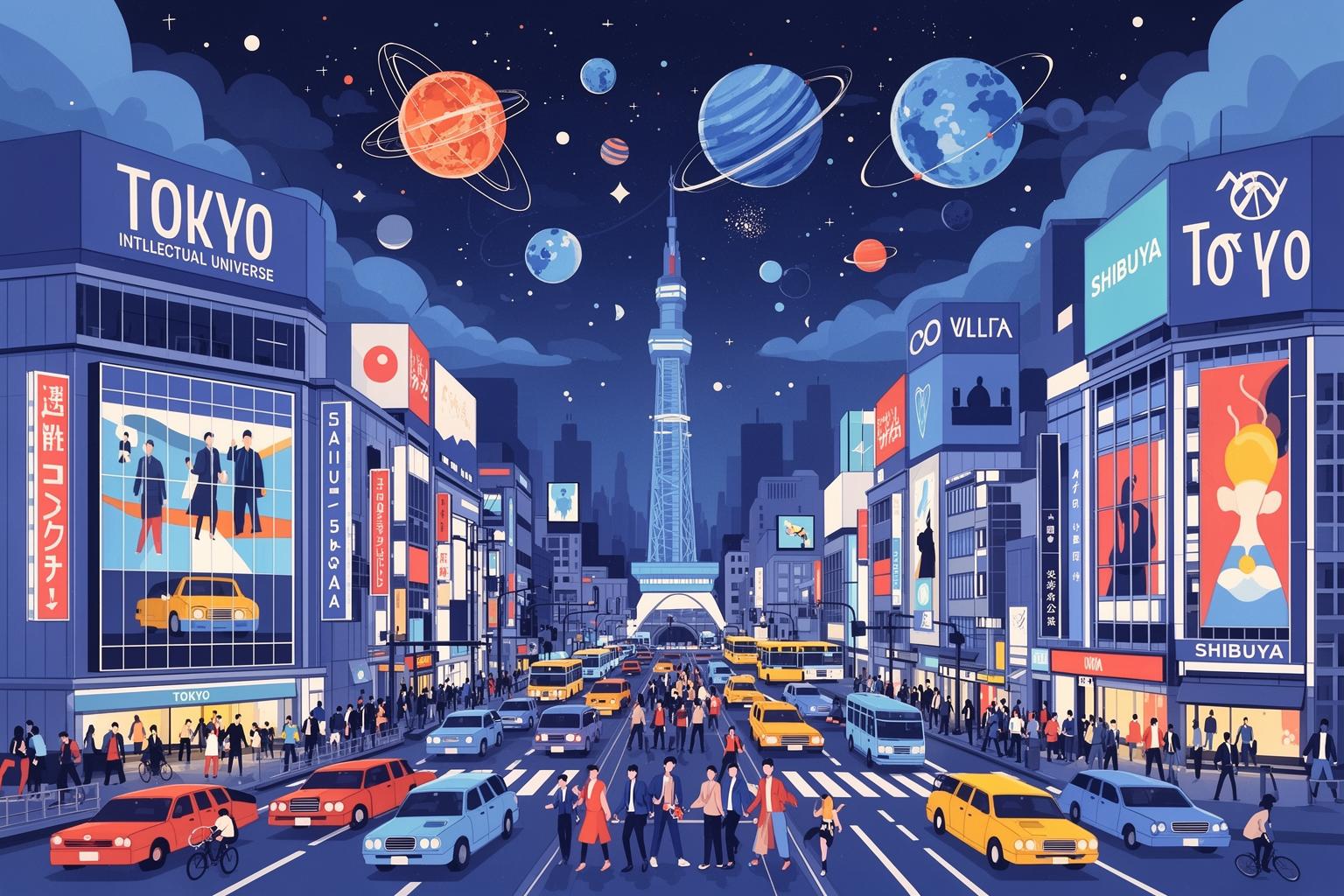
The Shibuya-kei ethos reached far beyond the music itself. It represented a complete aesthetic universe, encompassing fashion, graphic design, and a distinctive intellectual approach to culture. To be a fan meant being fluent in an entire system of references, both auditory and visual.
Designing the Sound
Album art was never an afterthought; it was an essential part of the package, a visual gateway to the music inside. The design style drew heavily from 1960s modernism, Swiss typography, and the sleek lines of Blue Note jazz records. Designers like Mitsuo Shindo of Contemporary Production crafted a unified visual language for the scene, employing retro color schemes, vintage photographs, and playful typography that conveyed a deep appreciation for mid-century design. Much like the music sampled the past, the artwork reinterpreted and remixed visual history. Spotting a Shibuya-kei CD on a record store shelf, one could instantly recognize the world it belonged to, long before hearing a single note.
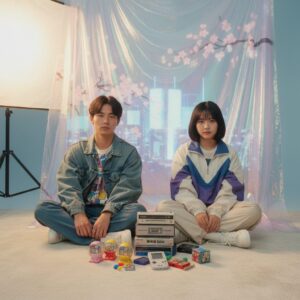
Fashion was equally referential. It combined 60s mod style, French New Wave cool, and preppy casual wear. Sharp suits, polo shirts, berets, and vintage sneakers were common sights. The look was smart and well put-together, yet effortless and bookish. It sent the message, “I spend more time in libraries and record stores than in nightclubs.”
A Critical Dialogue with the West
It might be easy to dismiss Shibuya-kei as mere imitation or a form of musical exoticism, but that would be a significant misunderstanding. The artists weren’t passively copying Western music. They were engaging in a thoughtful, critical, and often witty dialogue with it. They were superfans, certainly, but their fandom was analytical. They took these Western pop forms—often dismissed as disposable—and treated them with a seriousness and reverence seldom seen in their countries of origin.
This process filtered these global sounds through a uniquely Japanese cultural lens. There is a certain meticulousness, an attention to detail, and a profound “otaku” passion in Shibuya-kei that feels distinct. They weren’t just borrowing the cool vibes of a Burt Bacharach song; they were dissecting its chord progressions, analyzing its orchestral arrangements, and then reconstructing those elements into a new form. It was simultaneously an act of loving homage and radical reinvention. They were revealing to the West the hidden beauty within its own overlooked pop culture.
The Legacy: From Shibuya to the World
For a few years in the mid-90s, Shibuya-kei existed as a self-contained universe. However, its influence soon began to spread outward, eventually reaching the very Western artists it admired so much.
The Indie Connection
American and European indie labels started to take notice. Matador Records, a stronghold of 90s American indie rock, signed Pizzicato Five and Cornelius, bringing their music to a new audience that was both bewildered and intrigued. The Beastie Boys, themselves expert crate-diggers, became huge fans and released Cornelius’s work on their Grand Royal label. Suddenly, this highly specific Tokyo scene was part of a global conversation among music enthusiasts. International listeners found a kindred spirit in the Japanese artists’ encyclopedic knowledge and playful creativity. Shibuya-kei became a cornerstone of the emerging “Cool Japan” movement—an early cultural export that wasn’t anime or video games but rather sophisticated pop music.
Echoes in the Digital Age
Although the scene itself faded by the early 2000s, its DNA remains everywhere. You can hear its influence in the intricate sample-based soundscapes of artists like The Avalanches, in the genre-blending pop of Beck, and in the worldwide eclecticism of modern indie bands. More importantly, the core ethos of Shibuya-kei—curation as a creative act—has become the dominant way cultural content is consumed in the internet age.
Today, we all have access to the vast record collection that Shibuya-kei artists once only dreamed of. With a few clicks, we can explore the entire history of recorded music. But the artists of Shibuya-kei remind us of what’s been lost in that convenience: the thrill of the hunt, the joy of physical discovery, and the human connections formed in the shared space of a record store. They were doing the work of a thousand Spotify playlists, but by hand, with deep knowledge and contagious passion.
Shibuya-kei was more than just a musical style. It was a subculture built on the radical idea that listening could be as creative as performing. It transformed a generation of fans into curators and a small Tokyo district into a global hub of musical reinvention. In an era of infinite, algorithmically generated content, the deliberate, human-powered magic of Shibuya-kei feels more vital than ever. It was the beautiful, intricate sound of a city reassembling the world’s pop memories into a love letter addressed to itself.