Walk into any major train station in Japan—Tokyo Station, Shin-Osaka, Hakata—and you’ll be hit by a wave of organized chaos. The rhythmic click-clack of a thousand hurried footsteps, the melodic chimes announcing departures, the crisp, authoritative voices over the PA system. It’s a symphony of movement. But amidst this blur, you’ll find oases of vibrant color and tantalizing possibility: the Ekiben shops. These are not your sad, pre-packaged airport sandwiches. These are gleaming kiosks and dedicated stores showcasing hundreds of meticulously crafted lunch boxes, each a miniature work of art promising a taste of a specific place. This, my friend, is the world of Ekiben, a universe far richer and more meaningful than you might imagine.
At first glance, it’s just lunch for a train ride. Simple enough. But to see it that way is to miss the point entirely. The word itself, Ekiben (駅弁), is a straightforward portmanteau of eki (station) and bento (boxed meal). Yet, its cultural significance is anything but simple. An Ekiben is not merely sustenance; it’s a ritual, a souvenir, a statement of regional pride, and a physical manifestation of the journey itself. It’s a culinary postcard from a town you might only be passing through. Forget the dry guidebook entries; if you really want to understand the fabric of Japan, its fierce local identities, its obsession with seasonality, and its deep appreciation for aesthetics, you need to understand the humble train station bento. We’re about to unpack why this tradition is so much more than just a meal on the move.
To truly appreciate the depth of Japanese culinary rituals, from the regional journey of an Ekiben to the intimate, chef-led experience, one must also understand the silent theater of a Ginza omakase.
More Than Just a Packed Lunch: The Birth of a Travel Ritual

To truly understand the Ekiben, you need to go back to a time before bullet trains shrank the country. Picture Japan in the late 19th century, during the Meiji Restoration. The nation was undergoing rapid modernization, and a major part of this effort was building a national railway network. For the first time, long-distance travel became available to the general public, connecting a country previously divided into isolated domains. However, these trips were lengthy, steam-powered journeys that often took many hours or even days. Dining cars were yet to be introduced. Travelers needed to eat, and from this simple necessity, an entire industry emerged.
A Humble Beginning on the Rails
The most commonly accepted story of the first Ekiben dates to 1885 at Utsunomiya Station, north of Tokyo. It was a modest start. An innkeeper began selling simple lunch packages to travelers waiting on the platform. These included two onigiri (rice balls) seasoned with sesame and salt, alongside a few slices of bright yellow takuan (pickled daikon radish), all wrapped in bamboo leaves. It was affordable, portable, and filling—a practical solution to a straightforward problem.
But this simple concept quickly gained popularity. As the railway network grew, so did the custom of selling local meals at stations. Vendors carrying wooden trays hung around their necks would call out to passengers, offering food through open train windows during brief stops. This hurried exchange of coins for a warm meal became a classic image of Japanese travel for many years. The meal ceased being just fuel; it became an essential, anticipated part of the journey.
From Necessity to Experience
The change from a purely practical meal to a celebrated cultural experience happened gradually. As Japan prospered, so did the Ekiben. Local vendors understood they weren’t merely competing with one another; they were representing their hometowns. Why offer a generic meal when you could highlight the finest products of your region? This realization sparked the fierce regional rivalry and creativity that characterize Ekiben today.
The boxed meal became a symbol of local identity. The rice came from nearby paddies, the vegetables from local farms, and the main protein was often the town’s specialty—its meibutsu (名物), or renowned local product. The meal evolved from a traveler’s convenience into a destination’s ambassador. Choosing and eating an Ekiben became a deliberate way to connect with the place, to engage in its culture even while traveling. It turned into a ritual, a treasured moment on the journey when anticipation for the destination and appreciation of the present converged over a delicious and beautifully arranged meal.
A Culinary Map of Japan
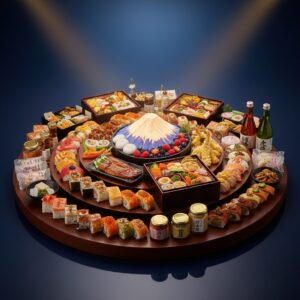
The true brilliance of Ekiben lies in how it serves as a comprehensive, edible map of the entire Japanese archipelago. With over 2,000 unique varieties available nationwide, traveling across the country can become a gastronomic adventure without ever leaving the train. Each box is a carefully curated expression of its place of origin—a concept known as terroir—where the environment, climate, and local culture of a region are reflected in its food. In Japan, this is taken very seriously.
Terroir in a Box: Capturing Regional Identity
Every prefecture, and often each major station within it, has its own signature Ekiben. This is not a marketing ploy; it reflects centuries of distinctive culinary traditions. A station in a port town will naturally highlight the fresh catch of the day, while a stop in a mountainous area will showcase local mountain vegetables, mushrooms, and perhaps game or beef. This hyper-local focus turns choosing an Ekiben into an act of geographical discovery. You are literally tasting the landscape rolling past your window.
Flavors of the North: Hokkaido & Tohoku
Travel north to the vast, wild island of Hokkaido, where Ekiben are dominated by the bounty of the cold northern seas—seafood is king. At Mori Station, you’ll find the legendary Ikameshi, a simple yet deeply satisfying dish of whole squid simmered in a sweet soy glaze and stuffed with glutinous rice. The packaging is modest, but the flavor offers an unadulterated taste of Hokkaido. Further east, in Akkeshi, famous for its oysters, the Kakimeshi bento is packed with plump, savory oysters cooked with rice, bamboo shoots, and shiitake mushrooms. It’s a briny, umami-rich meal that truly reflects its coastal origins.
In the Tohoku region just south of Hokkaido, flavors are hearty and earthy. Sendai, the region’s largest city, is famous for beef tongue, and the Gyutan Bento is a carnivore’s delight. What sets it apart is a clever heating element built into the box—you pull a string, a chemical reaction occurs, and minutes later your thinly sliced, grilled beef tongue over rice is piping hot. It’s a perfect example of how Ekiben marry tradition with ingenious modern convenience. From Yonezawa come luxurious wagyu beef boxes, and from the coast of Iwate, bentos brimming with sea urchin and abalone.
Tastes of the Central Plains: Kanto & Chubu
Central Japan presents a diverse array of flavors. In the mountains of Gunma Prefecture, at Yokokawa Station, you’ll find one of the most famous and beloved Ekiben in Japan: Toge no Kamameshi. First sold in 1958, this meal is served not in a plastic tray or wooden box but a handsome, reusable ceramic kama pot. Lifting the lid releases a cloud of steam, revealing perfectly cooked soy-flavored rice topped with chicken, chestnuts, burdock root, bamboo shoots, and shiitake mushrooms. It’s warm, comforting, and deeply nostalgic for many Japanese people. The pot itself becomes a cherished souvenir, a tangible memento of the journey.
Of course, Tokyo Station is a world unto itself, a hub where Ekiben from across the country converge. Yet the city has its own classics too, such as Fukagawa-meshi, a bento paying tribute to Tokyo’s Edo-period origins as a fishing village. It features plump clams simmered in miso and leeks, served over rice—a simple, savory taste of old Tokyo.
Savory Traditions of the West: Kansai & Chugoku
Heading west into the Kansai region, beef once again takes center stage. This area is home to the world’s most famous beef brands, including Kobe and Matsusaka. The Ekiben here reflect this heritage, offering luxurious boxes of tender, marbled steak or thinly sliced sukiyaki-style beef over rice. Though often pricier, they provide a truly decadent travel experience.
Further west, along the coast of the Seto Inland Sea, lies Hiroshima Prefecture. At Miyajimaguchi Station, the gateway to the iconic Itsukushima Shrine, the local specialty is eel. The Anago-meshi is a masterpiece of grilled saltwater conger eel, brushed with a sweet and savory soy-based sauce and laid over rice cooked in eel broth. It’s delicate, aromatic, and unforgettable.
Bounties of the South: Shikoku & Kyushu
Down in Kyushu, Japan’s southernmost main island, flavors grow richer and often sweeter. One classic from Fukuoka is Kashiwa-meshi, a beloved chicken and rice dish. Finely shredded chicken and thin strips of omelet and nori seaweed are scattered over rice cooked in a savory chicken broth. It’s a regional staple and a perfect example of home-style comfort food adapted for travel.
In Kagoshima, at the southern tip of the island, the local specialty is kurobuta, or Berkshire pork. Ekiben here highlight this tender, flavorful pork as tonkatsu (breaded cutlets) or simmered in a rich, dark sauce. The sheer variety across the country is astonishing, transforming Japan’s railway network into a series of culinary discoveries for travelers.
The Art of Presentation: A Feast for the Eyes

If you find the emphasis on local ingredients impressive, just wait until you turn your attention to the packaging. In Japanese culture, presentation is never an afterthought; it is an integral part of the experience. An Ekiben is more than just wrapped—it is carefully presented. The container serves as a promise of the quality and care inside, while the visual design of the food itself is a form of art. This commitment to aesthetics elevates the simple lunchbox into something truly special.
The Package as the Promise
The wrapping of an Ekiben, called hoso, is your initial encounter with the meal. It can range from simple, elegant paper adorned with calligraphy and traditional motifs to wildly imaginative and playful designs. You might discover a bento from the snowy northern regions in a box shaped like a snowman, or one from a coastal town contained in a crab-shaped container. Some Ekiben boxes are molded to resemble a Shinkansen bullet train, a Daruma doll, or even a beloved anime character. This creativity isn’t just for children; it adds to the enjoyment for everyone. The possibilities are endless.
The materials themselves are often carefully selected. Many traditional Ekiben still use thin, fragrant wood such as cedar or bamboo for their boxes. This choice isn’t merely aesthetic; the wood imparts a subtle, pleasant aroma to the rice and helps absorb excess moisture, keeping the food fresh. Unwrapping the exquisite washi paper, untying the delicate cord, and lifting the wooden lid creates a multi-sensory moment of anticipation.
A Calculated Composition
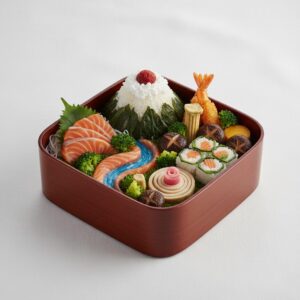
Lifting the lid reveals the second act of this visual performance: the food’s meticulous arrangement. A great Ekiben is a lesson in balance. The composition is never accidental. Each ingredient is placed with intention, creating a harmonious landscape of color, shape, and texture. This reflects the principles seen in high-end Japanese cuisine, like kaiseki. You’ll notice the vibrant orange of a carrot slice adjacent to the deep green of a snow pea, the bright yellow of tamagoyaki (rolled omelet) contrasting with the dark brown of a simmered mushroom.
Ingredients are cut into attractive shapes. Small dividers, sometimes as simple as a crinkled piece of decorative plastic grass called baran, help keep flavors from mixing and add another splash of color. The result is a box that delights the eye before you even take your first bite. It demonstrates deep respect both for the food and the person who will enjoy it. This careful arrangement transforms eating on a train from a mere necessity into a moment of quiet, personal pleasure.
The Ritual of the Ride: How to Eat an Ekiben
Understanding what makes up an Ekiben is one aspect, but truly appreciating its role in Japanese culture means recognizing the ritual of its consumption. The entire process, from choosing the meal to that final bite, serves as a ceremony marking the shift from ordinary life to the special identity of a traveler. It’s a series of small pleasures that together capture the essence of the Japanese travel experience.
The Anticipation and the Choice
The ritual begins even before you board the train. It starts at the Ekiben shop, the specialty store. Upon entering, you’re confronted with a vast array of options. Dozens, sometimes hundreds, of different boxes fill the shelves, each decorated with colorful images or plastic food replicas showcasing their contents. This moment sparks delightful indecision. Should you try a local specialty you’ve never tasted before? Or stick with a nostalgic favorite from your childhood? Do you decide based on the main ingredient, or are you drawn by the unique shape of the box?
This act of selection is a major part of the enjoyment. You consider your options, think about your destination, and make your choice. It’s your first official step as a traveler on this particular trip. You might also pick up a bottle of green tea or a can of beer to complement your meal. With your purchase tucked in a plastic bag, you make your way to the platform, anticipation mounting.
The Unveiling
Once aboard the train and settled in your seat, the next stage unfolds. There’s an unspoken etiquette here. Most people wait until the train has left the station and is gliding smoothly along the tracks. As the cityscape fades into countryside, that’s the signal. You set your Ekiben on the tray table in front of you. Then comes the unveiling.
The rustle of the paper wrapping being gently peeled back, the crisp snap of disposable chopsticks being separated—these sounds herald the start of the meal. Lifting the lid reveals the moment of surprise. You see at last the carefully arranged food you selected earlier. For a brief time, you enter a private world, fully focused on the small, perfect meal before you.
A Taste of Place, in Motion
Eating an Ekiben while watching Japan’s scenery glide past is a quintessential experience. Perhaps you’re enjoying a seafood bento from Sendai as you speed through Tohoku’s rice fields. Or savoring a beef bento from Kobe while gazing at the mountains surrounding Kyoto. The food anchors you. It offers a tangible, flavorful link to the region you’re physically passing through. The meal is not separate from the journey; it is intimately connected to it.
It’s a pause to slow down, even as you travel at 200 miles per hour. It’s a refined, mindful act amid a high-tech transit experience. You savor each bite, appreciating the different flavors and textures the chef carefully packed into the box. In its own subtle way, it creates a perfect moment.
The Modern Ekiben and Its Future
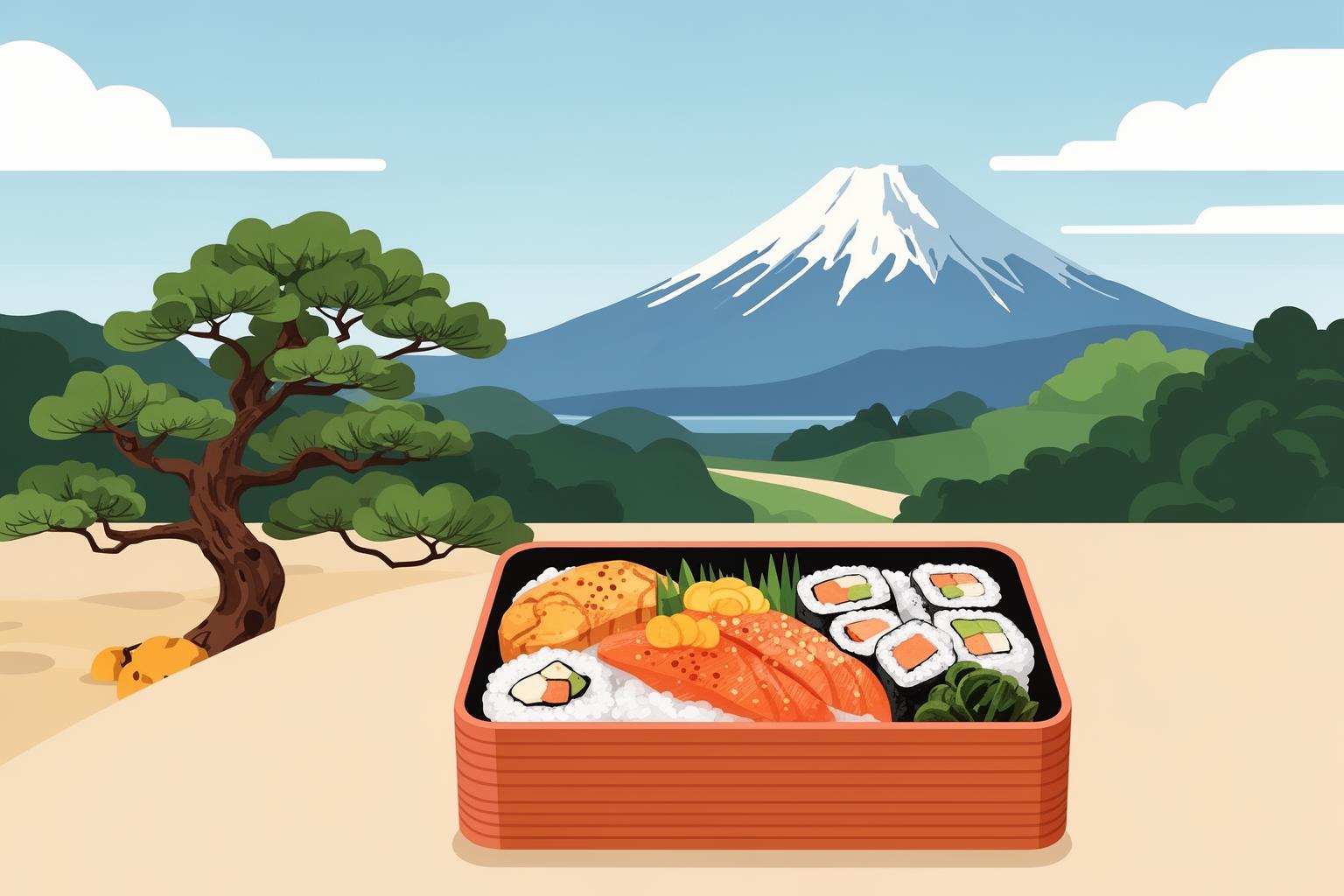
Despite its rich history and cultural significance, the world of Ekiben is far from a static museum exhibit. It is a vibrant, evolving industry that confronts contemporary challenges and consistently innovates. The golden era of long, leisurely train journeys is mostly behind us, and Ekiben must now contend in a landscape defined by remarkable speed and convenience.
Competing with Convenience
The greatest challenges facing traditional Ekiben come from the very hallmarks of modern Japan: speed and convenience. The Shinkansen can now carry you between Tokyo and Osaka in just two and a half hours—a trip that once took an entire day. With shorter travel times, the need for a full, elaborate meal diminishes. Why opt for an expensive Ekiben when you can simply wait to eat at your destination?
Additionally, every train station now hosts an impressive variety of convenience stores, or konbini, offering a wide range of affordable, high-quality foods such as onigiri, sandwiches, pasta, and their own bento boxes. These options pose a serious competition to traditional, often pricier Ekiben. As a result, the Ekiben industry has had to evolve to stay relevant.
Innovation and Nostalgia
And evolve it has. The industry’s approach has been twofold: embracing innovation while reinforcing the power of nostalgia. On the innovation side, collaborations with renowned chefs have produced high-end, gourmet Ekiben. Seasonal and limited-time offerings generate excitement and exclusivity. Partnerships featuring beloved characters—from Hello Kitty to historical icons—attract new generations of customers.
Yet, nostalgia plays an equally vital role. For countless Japanese people, Ekiben evoke memories of school trips, family vacations, and hometown roots. The taste of a particular Ekiben can instantly transport someone back to their childhood. With this in mind, producers continue to support timeless, classic products that serve as pillars of tradition. Major train stations have even developed unique destinations, such as Tokyo Station’s “Ekiben-ya Matsuri,” a vast store gathering famous Ekiben from across Japan, enabling travelers to embark on a culinary adventure without leaving the station.
A Symbol of Mindful Travel
Ultimately, the enduring appeal of Ekiben lies in what it represents beyond mere food. It symbolizes a more mindful, engaged mode of travel. In an era dominated by budget airlines and ever-increasing speed, Ekiben gently remind us to savor the journey itself. They invite passengers to gaze out the window, reflect on their surroundings, and savor the distinct flavors of each locale.
Small, portable, and delicious, Ekiben embody a culture that values the fleeting, finds meaning in details, and takes pride in regional diversity. So next time you find yourself in a Japanese train station, don’t just rush to your platform. Pause a moment, explore the colorful selection, make your choice, and bring a small piece of Japan’s culinary spirit with you on your trip. It’s the best souvenir you’ll ever taste.