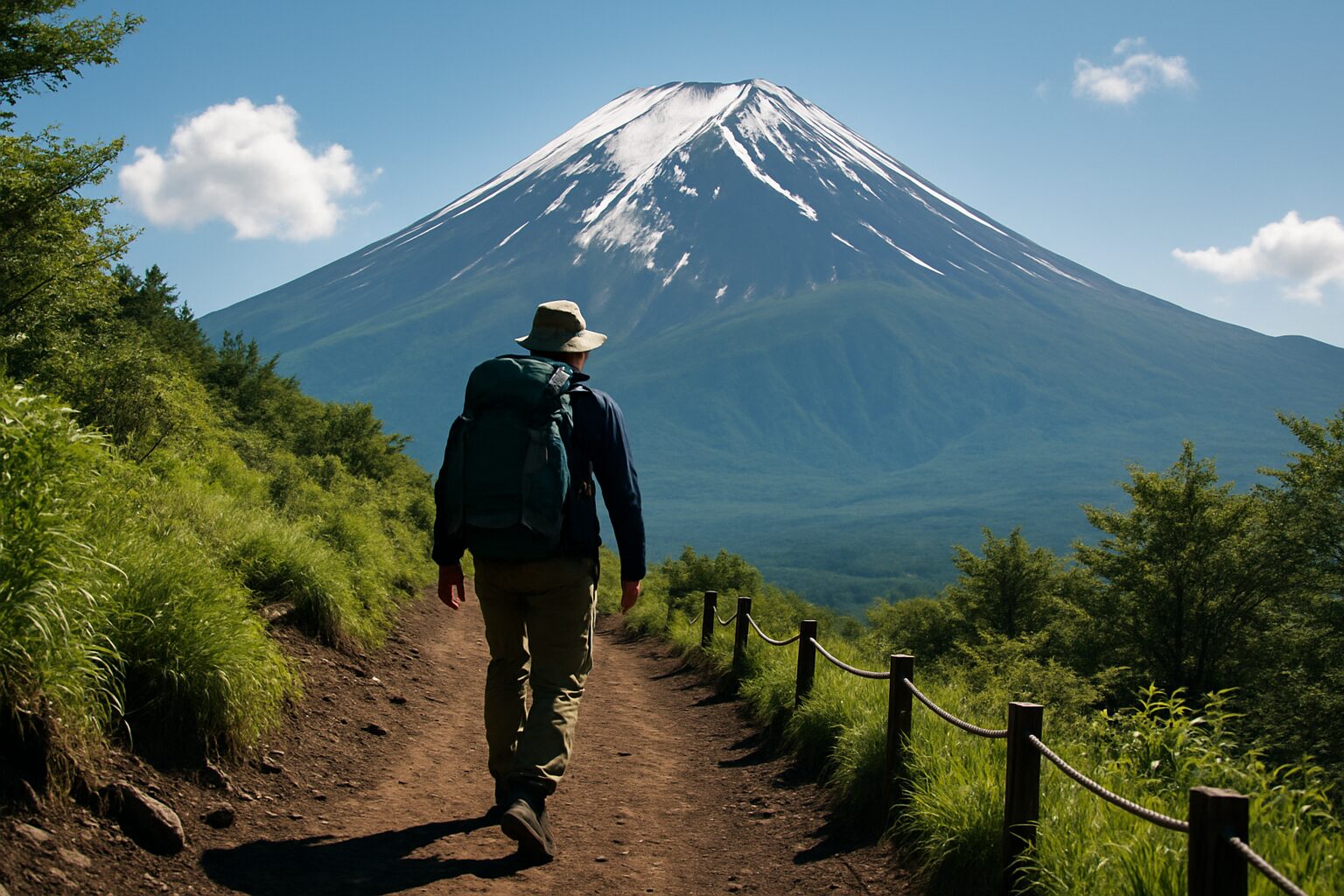
Yo, what’s up, world-travelers and adventure-seekers! Keiko here, coming at you from the heart of Tokyo. Let’s talk about the one and only Mount Fuji. You’ve seen it on postcards, in ukiyo-e prints, and splashed all over your IG feed. It’s that perfectly symmetrical, snow-capped cone that basically screams ‘Japan’. But looking at it is one thing. Climbing it? That’s a whole other level. It’s more than just a hike; it’s a pilgrimage, a spiritual journey, and a straight-up physical challenge that’ll have you digging deep. Since 2013, this majestic volcano has been a UNESCO World Heritage site, recognized not just for its insane beauty, but for its deep cultural and artistic inspiration. Climbing Fuji-san is a rite of passage, a story you’ll be telling for years. It’s about pushing your limits, bonding with fellow climbers under a blanket of stars, and witnessing a sunrise that will literally change your perspective on life. This isn’t your casual weekend stroll. It’s an epic quest. But don’t sweat it—even if you’re a total beginner, you can totally do this. You just need the right prep, the right mindset, and the right guide. And guess what? You’ve just found it. Let’s break down how you can conquer Japan’s most legendary peak and earn those insane bragging rights. Get ready, because this is the lowdown on everything you need to know to get to the top.
For a different perspective on the mountain, consider a serene kayaking trip on Lake Kawaguchiko to see Fuji’s famous reflection.
Why Climb Fuji? It’s More Than Just a Mountain, Bruh
First off, let’s set the mood right. Climbing Mount Fuji isn’t just about conquering a summit; it’s a deeply immersive cultural journey. For centuries, this volcano has been revered as a sacred site, a gateway to another realm, and a mighty deity in the Shinto religion. You’re literally treading on holy ground. You sense this energy from the moment you step onto the trail. It’s present in the quiet resolve of the elderly Japanese hikers, the ancient stone markers, and the small shrines scattered along the path. You’re not merely climbing; you’re taking part in a tradition that has lasted for generations. The true highlight, the main reason thousands undertake this climb every summer, is to witness Goraiko (御来光). This Japanese term refers to the sunrise from the summit, and trust me, the experience from 3,776 meters (12,388 feet) is unlike any other. Picture standing above a sea of clouds, watching the sky shift from deep black to rich purple, then to blazing orange and gold as the sun rises over the horizon. It’s a memory in the making, a moment of pure, unfiltered awe that makes every exhausting step worthwhile. You feel like you’re on top of the world—because you literally are on top of Japan. And then there are the bragging rights. Let’s be honest. Telling people you’ve climbed Mount Fuji is a serious flex. It’s proof of your endurance and adventurous spirit. It’s both a physical and mental challenge, and reaching the summit feels like a huge personal triumph. But perhaps the most underrated aspect of the experience is the sense of community. You’ll be sharing the trail with people from all corners of the globe. You’ll exchange tired smiles, share snacks, and offer words of encouragement in a dozen different languages. The shared struggle forges an instant bond. That feeling of camaraderie, with everyone striving toward the same incredible goal beneath a sky full of shooting stars, is pure magic.
The Nitty-Gritty: Picking Your Path to Glory
Alright, let’s cover the logistics. You can’t just show up at Fuji whenever you want. The official climbing season is very short, running from early July to early September. This is the only time the trails are clear of snow, mountain huts are open, and public transportation is operating at full capacity. Attempting to climb outside this period is extremely dangerous and reserved for experienced mountaineers with specialized equipment. For beginners, it’s a definite no-go. During this two-month window, you have four main trails to choose from, each starting at a different 5th Station partway up the mountain. Picking the right trail is crucial for a good experience, so let’s break them down.
The Yoshida Trail: The Popular Favorite
If Fuji trails were a high school cafeteria, the Yoshida Trail would be the popular kids’ table. It’s by far the most popular and well-developed route, making it the top choice for first-timers. It begins at the Fuji-Subaru Line 5th Station in Yamanashi Prefecture. The climb is lined with mountain huts, offering plenty of opportunities to rest, refuel, and use the restroom (for a small fee). The path is well-marked and zigzags up the mountain, helping to manage the steepness. A major advantage is that the ascent trail is separate from the descent trail, which helps handle the heavy foot traffic. Since it faces east, it provides some of the best spots to catch that iconic sunrise. The downside? It gets extremely crowded, especially on weekends and during the mid-August Obon holiday. You’ll likely find yourself in a slow-moving, single-file line of headlamps during the final push to the summit. It’s more of a massive high-altitude party than a quiet communion with nature. But for safety, amenities, and overall accessibility, it’s hard to beat.
The Subashiri Trail: The Scenic Alternative
Starting at the Subashiri 5th Station on the eastern side of Fuji, this trail offers a cool, indie alternative to the popular Yoshida. The early part of the climb takes you through a peaceful forest with plenty of tree cover—a blessing on sunny days. It’s significantly less crowded than Yoshida until you reach the 8th Station, where the two trails converge. So, you get a few hours of relative solitude before joining the main crowd. The real highlight of the Subashiri Trail is the descent, which features an exciting section known as the sunabashiri or “sand run.” You can literally race down a long, straight stretch of loose volcanic gravel, covering a great distance quickly. It’s an absolute blast and a wild way to finish your Fuji adventure. This trail is a solid pick for those who want a slightly more rugged experience, without straying too far from a popular route’s safety.
The Gotemba Trail: The Ultimate Challenge
Listen closely: the Gotemba Trail is not for beginners. This is the expert-level, ultimate challenge. It starts at the lowest elevation among all the 5th Stations, making it the longest and most physically demanding ascent by far. Expect a solid 7-10 hours just to go up. There are very few mountain huts, leaving you more exposed to the elements and requiring you to carry more supplies. The landscape is a vast, unforgiving stretch of volcanic scree, which can be mentally draining. However, for experienced hikers seeking solitude and a serious challenge, Gotemba is the ultimate reward. The crowds are practically nonexistent, offering a profound sense of the mountain’s raw scale and power. It also boasts the most epic sunabashiri on the descent, a legendary sand run among Fuji veterans. Beginners should save this one for their second or third climb. Seriously.
The Fujinomiya Trail: The Steep and Speedy Route
Located on the south side in Shizuoka Prefecture, the Fujinomiya Trail is the shortest path to the summit. It starts at the highest elevation of any 5th Station, which sounds good, right? But don’t be fooled. Shortest doesn’t mean easiest. This route is steep and relentlessly rocky almost from the start. It’s a direct, no-nonsense push to the top. It’s a popular choice for travelers from western Japan (like Kyoto or Osaka) since it’s easiest to access from the Tokaido Shinkansen. The ascent and descent follow the same path, so it can get crowded, and you have to watch for descending climbers while pushing upward. It offers stunning views of Suruga Bay on clear days, but the constant steepness is tough on your knees both ascending and descending. It’s a solid but intense option if you’re fit and short on time.
Gearing Up: Don’t Get Caught Slippin’
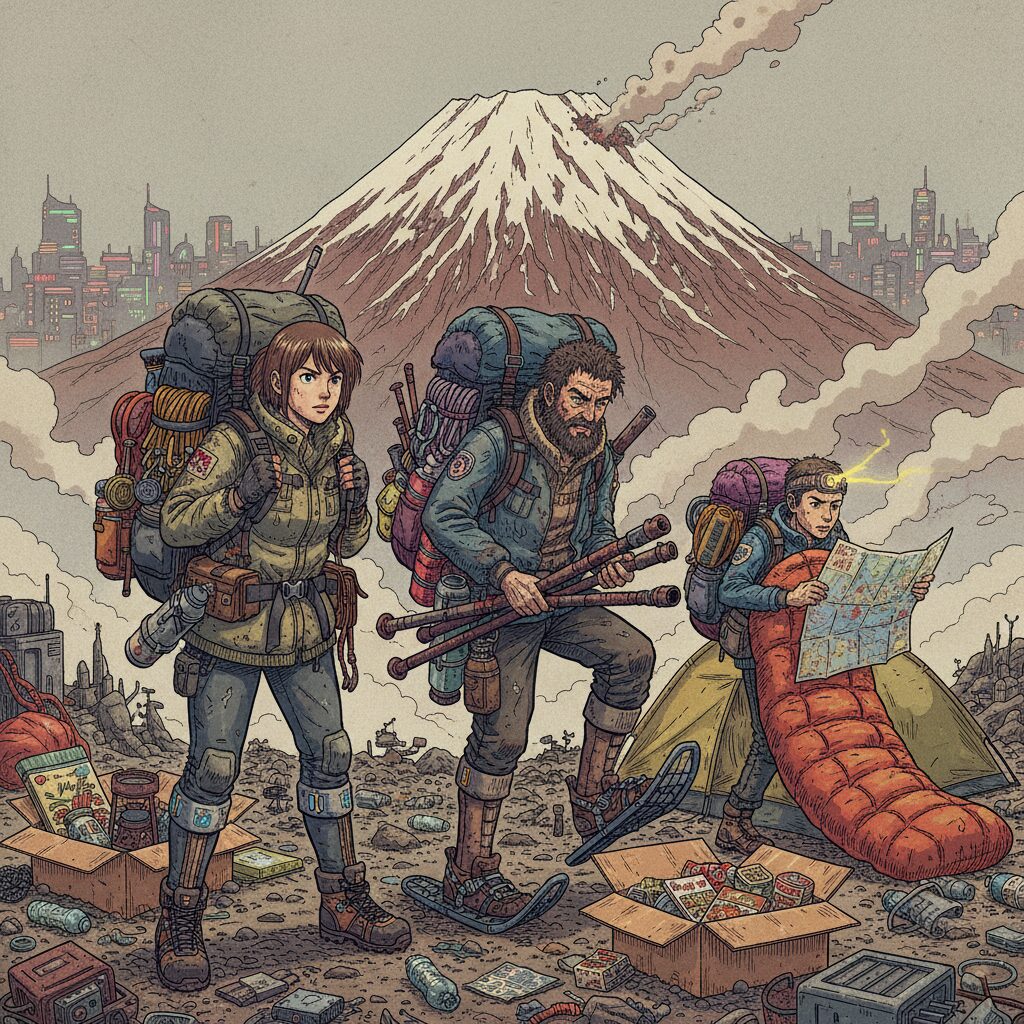
Your gear can make or break your Mount Fuji climb. The weather on this mountain is famously unpredictable and can shift suddenly, with summit temperatures often below freezing—even in August. Arriving unprepared is not only uncomfortable but also dangerous. So, let’s cover the essentials. This is a packing list you simply cannot compromise on.
Your Fit: Layers Are Key
Forget about style here; function is what matters most. The secret to staying comfortable is layering. You’ll be sweating on the lower slopes and freezing at the summit. You must be ready to adjust. Avoid cotton—it soaks up sweat and stays damp, which can lead to hypothermia. Instead, opt for a three-layer system. Start with a base layer made from synthetic fabric or merino wool that wicks moisture away from your skin. Next, add an insulating mid-layer like a fleece jacket or a lightweight down puffer for warmth. Finally, bring an outer shell—high-quality, waterproof, and windproof jacket and pants. Cheap ponchos won’t hold up against the fierce summit winds, leaving you exposed. This shell is your protection against the elements. Don’t forget a warm beanie and gloves. You’ll be grateful for them when you’re waiting for sunrise in 0°C wind chill.
Footwear: The Most Crucial Choice
If you take away only one piece of advice from this guide, make it this: invest in proper hiking boots. Not sneakers or trail runners, but sturdy, waterproof, well-broken-in boots with ankle support. The trail is littered with sharp, loose volcanic rocks that will tear up your feet and ankles if you’re not protected. Make sure to wear your boots on several smaller hikes before Fuji to confirm they fit well and don’t cause blisters. Pair them with quality hiking socks (wool or synthetic—no cotton). Comfortable feet mean a happier climber. This is one piece of gear you must never skimp on.
Essentials for Your Pack
Choose a comfortable hiking backpack around 30-40 liters. Here’s what you need inside. A headlamp is absolutely essential. You’ll be hiking in total darkness for hours, so don’t rely on your phone’s flashlight—you need your hands free. Bring extra batteries! Hydration is critical. Carry at least two, preferably three, liters of water. You can buy more at mountain huts, but prices rise the higher you climb. High-energy snacks will keep you fueled—think trail mix, chocolate, energy bars, and salty crackers. You’re burning a ton of calories, so keep refilling. Bring plenty of cash, especially 100-yen coins. Toilets on the mountain usually cost 100-300 yen per use and aren’t free. You’ll also need cash for food, drinks, and to get your hiking stick branded. Sun protection is a must; the UV rays at high altitude are intense. Pack sunglasses, a wide-brimmed hat, and high-SPF sunscreen. A basic first-aid kit with blister pads (such as Compeed), painkillers, and any personal meds is a smart idea. Trekking poles will be your knees’ best friends, especially on the descent—they take much of the strain off your joints. Finally, for the perfect keepsake, buy a wooden walking stick, a kongo-zue, at the 5th Station. At nearly every mountain hut, you can pay a small fee to have a unique brand burned into your stick, marking your progress. It’s a wonderful tradition and creates a one-of-a-kind souvenir of your climb.
The Climb Itself: A Step-by-Step Vibe Check
So you’re all set and at the 5th Station. Let’s get started. The first rule of Fuji Club is: acclimatize. Don’t just jump off the bus and rush up the mountain like a hero. Your body needs time to adjust to the thinner air. Spend at least an hour at the 5th Station. Walk around, enjoy a light meal, buy your walking stick, and simply breathe. This simple step can significantly lower your risk of altitude sickness. Most people follow a two-day itinerary, which is what we’ll focus on. It generally involves starting your climb in the early afternoon, hiking to a mountain hut around the 7th or 8th station, resting for a few hours, and then making the final push to the summit in the middle of the night to catch the sunrise.
Day One: The Ascent to Your Hut
Let’s take the Yoshida Trail as an example. The initial stretch from the 5th to the 6th Station is a relatively easy, wide path with a gentle incline. You’ll pass through the last remnants of forest, and the atmosphere is generally quite lively. This is your warm-up. From the 6th to the 7th Station, the trail tightens and becomes a series of steep, rocky switchbacks. This is where you find your rhythm and realize this is a serious climb. The section between the 7th and 8th Stations is the steepest and most technical part of the day’s hike. You might even need to use your hands to scramble over some rocky areas. It’s a tough section, but the views of the clouds below are already spectacular. After several hours of climbing, you’ll reach your mountain hut, or yamagoya. Don’t expect luxury. These are basic shelters designed for one purpose: to give climbers a place to rest. You’ll likely be sleeping shoulder-to-shoulder with strangers in a large communal room on bunk beds or tatami mats. Dinner is usually a simple but hearty meal like curry rice. Lights go out early, around 8 or 9 PM. It’s not glamorous, but sleeping at over 3,000 meters is crucial for acclimatizing and a quintessential part of the Fuji experience. Book your hut months ahead, as they fill up fast.
Day Two: The Summit Push and the Main Event
The wake-up call is early. Like, 1 or 2 AM early. After a quick breakfast, you’ll join the sea of bobbing headlamps heading up the final stretch. This is the coldest, windiest, and most crowded part of the climb. The air is thin, and every step takes effort. You’ll likely be in a slow-moving queue which, while frustrating, actually helps you maintain a slow, steady pace—key to avoiding altitude sickness. You’ll pass the 8.5 Station and see the stone lion-dog statues guarding the final approach to the summit shrine. Passing through that last torii gate and stepping onto the summit is pure exhilaration. You’ve made it. Now find a spot on the eastern edge, huddle against the cold, and wait. The show is about to start. Watching the Goraiko is a truly spiritual experience. The sky shifts through a palette of impossible colors, and as the sun finally rises, bathing the entire world below in golden light, a collective gasp and cheer ripple through the crowd. It’s breathtaking. Once the sun is up, take some time to explore. Visit the shrine, grab a hot bowl of ramen from one of the summit huts, and even send a postcard from the highest post office in Japan. For the ultimate bragging rights, take the one-hour trek around the crater, known as Ohachi-meguri. This will take you to Kengamine Peak, the true highest point in Japan, where a stone marker awaits your triumphant selfie.
Altitude Sickness: The Party Pooper You Need to Avoid
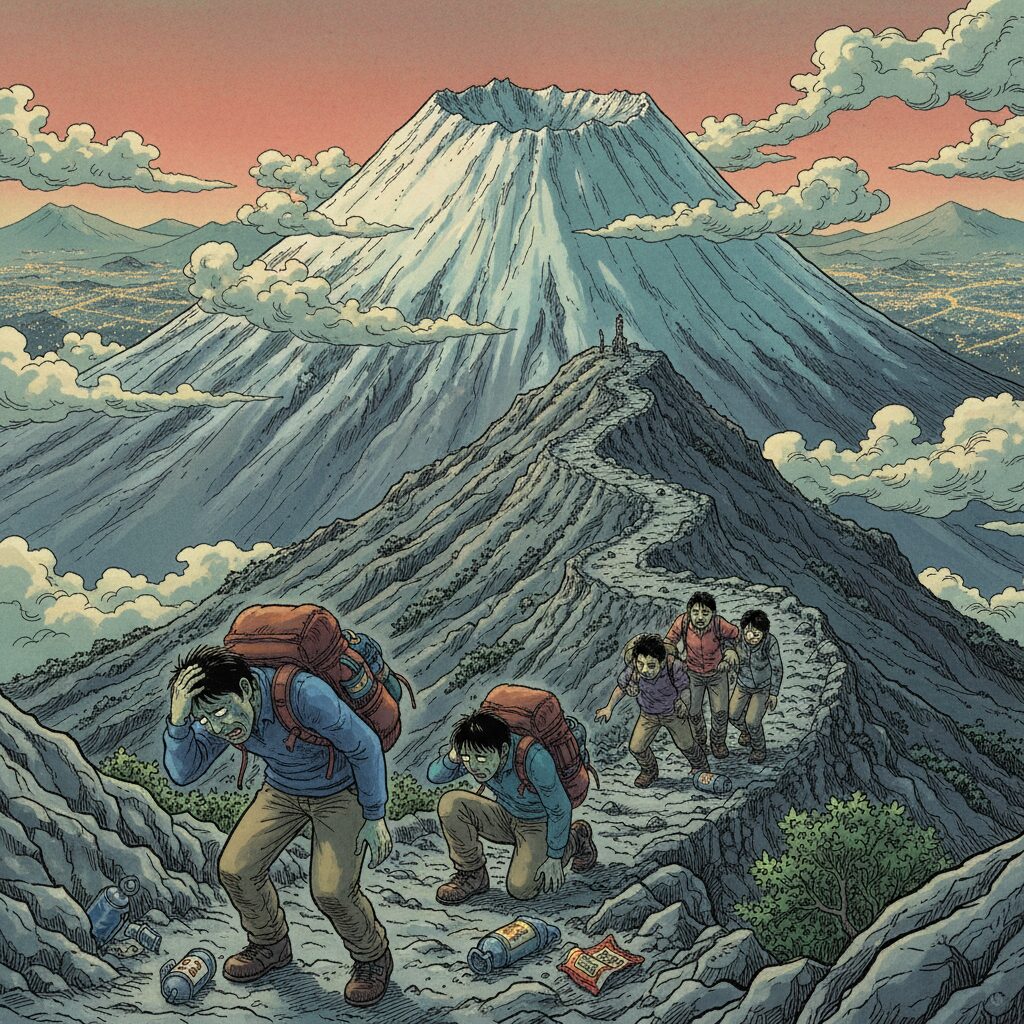
Altitude sickness, or kouzanbyou, is the greatest threat to achieving your summit goals. It can affect anyone, regardless of age or fitness. It occurs when you ascend too quickly to high altitudes where oxygen levels are lower. Symptoms begin with a headache and can develop into nausea, dizziness, and fatigue. Ignoring it can lead to serious complications. However, the risk is manageable. The top prevention method is to ascend slowly—really slowly. Maintain a pace where you can comfortably hold a conversation. The Japanese say: don’t walk, climb. It’s a marathon, not a sprint. The second crucial tip is hydration—drink water frequently, even if you’re not thirsty. The dry, thin air dehydrates you faster than you realize. Third, breathe deeply and intentionally, helping your body optimize oxygen intake. Staying in a mountain hut is an essential part of acclimatization, allowing your body several hours to adjust to the elevation before the final ascent. Some climbers carry small cans of portable oxygen for temporary relief. Above all, pay attention to your body. If you start feeling unwell, stop and rest. If symptoms worsen, the only cure is to descend. There is absolutely no shame in turning back—the mountain will still be there next year. Your safety comes first.
The Descent: What Goes Up Must Come Down (and it Hurts)
Reaching the summit is only part of the challenge. Many climbers find the descent even tougher than the ascent. It’s a long, exhausting trek that puts considerable strain on your knees, quads, and toes. The Yoshida Trail has a separate route for going down, consisting of countless, monotonous switchbacks covered in loose volcanic gravel. It’s not scenic, and after the thrill of reaching the top, it can feel like a grueling march. This is where your trekking poles become invaluable, protecting your joints from significant pain. If you take the Subashiri or Gotemba trails, you’ll experience the sunabashiri, which is much more fun but also messier. You’ll essentially be half-running, half-sliding down long stretches of sand-like gravel. It’s fast and exhilarating, but volcanic dust will get everywhere, so wearing gaiters to cover the tops of your boots is highly recommended. No matter the trail, the descent challenges your mental strength. Just put on some music, focus on placing one foot in front of the other, and think about the reward awaiting you at the bottom. And what is that reward? Soaking your tired body in a natural hot spring, an onsen. Areas around Mount Fuji, like Kawaguchiko and Hakone, are home to amazing onsen resorts. Shedding your dirty hiking gear and sinking into that hot, mineral-rich water is pure bliss. It’s the perfect way to celebrate your remarkable achievement.
Pro Tips from a Local: The Fuji Flex
Alright, you’ve mastered the basics. Now, here are some insider tips to make your ascent smoother. First, book everything well in advance—literally everything. Mountain huts for popular dates sell out as soon as reservations open. Long-distance buses from Tokyo to the 5th Station also fill up quickly. Plan ahead to avoid disappointment. If possible, try to climb on a weekday when the trails are much less crowded than on weekends, offering a far more enjoyable experience. Avoid Obon week in mid-August at all costs, unless you enjoy feeling like a sardine packed at 3,500 meters. Always carry plenty of 100-yen coins, as you’ll need them for pay toilets—you don’t want to find yourself desperate without one. Check the weather forecast obsessively right up until you start your climb using a reliable source like the Japan Meteorological Agency. But even if the forecast looks perfect, pack for the worst. Fuji’s weather is unpredictable; a sunny day at the base can turn into a blizzard at the summit. Now, about the “bullet climb”: this is an attempt to climb from the 5th Station to the summit and back in one go, without staying overnight in a mountain hut. Don’t do it—it’s extremely dangerous. It greatly increases the risk of severe altitude sickness, exhaustion, and injury, and local authorities actively discourage it. Take two days, reserve a hut, and respect the mountain. And that leads to the final point: respect. Fuji-san is a sacred place. Follow the ‘leave no trace’ principle. Carry out everything you bring in, don’t pick any plants, stay on designated trails, and be considerate of fellow climbers. A little respect goes a long way.
So, there you have it—your complete beginner’s guide to climbing Japan’s legendary Mount Fuji. It’s tough, no doubt about it. It will test you physically and mentally. You’ll be sore, tired, and covered in volcanic dust. But you’ll also be rewarded with some of the most breathtaking views on Earth, a deep sense of achievement, and a story to last a lifetime. With the right preparation and a positive mindset, you absolutely can reach the summit. Fuji-san is waiting. Are you ready to greet the sunrise above the clouds? Let’s go.