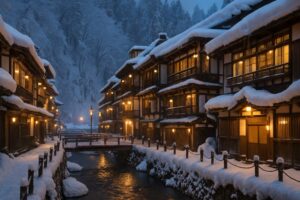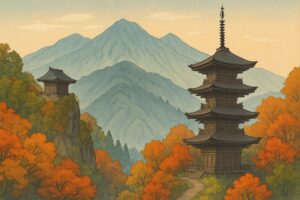
Yo, let’s talk about time travel. Not the sci-fi, DeLorean-hitting-88-mph kind, but the real deal. The kind where you turn a corner on a mountain road in northern Japan and suddenly, you’re not in the 21st century anymore. You’ve been dropped straight into a movie set, a living, breathing woodblock print, a place so picture-perfect it feels like a glitch in the matrix. That place is Ginzan Onsen in Yamagata Prefecture. Tucked away in a narrow valley, this hot spring town is a legit time capsule, perfectly preserving the aesthetic of the Taisho era—Japan’s equivalent of the Roaring Twenties. Imagine gas lamps casting a honey-gold glow on wooden ryokans, a gentle river whispering secrets under tiny arched bridges, and, if you’re lucky, the entire scene blanketed in a thick, silent layer of snow. It’s not just a destination; it’s a whole mood, a portal to a more romantic, elegant past. Forget your daily grind for a second. We’re about to dive deep into what it’s like to live out your own historical fantasy in one of Japan’s most stunningly atmospheric spots. This is the lowdown on how to soak, stroll, and get totally lost in the Taisho dream at Ginzan Onsen. Trust me, the vibe is immaculate.
The Vibe Check: What Exactly is Taisho Roman?
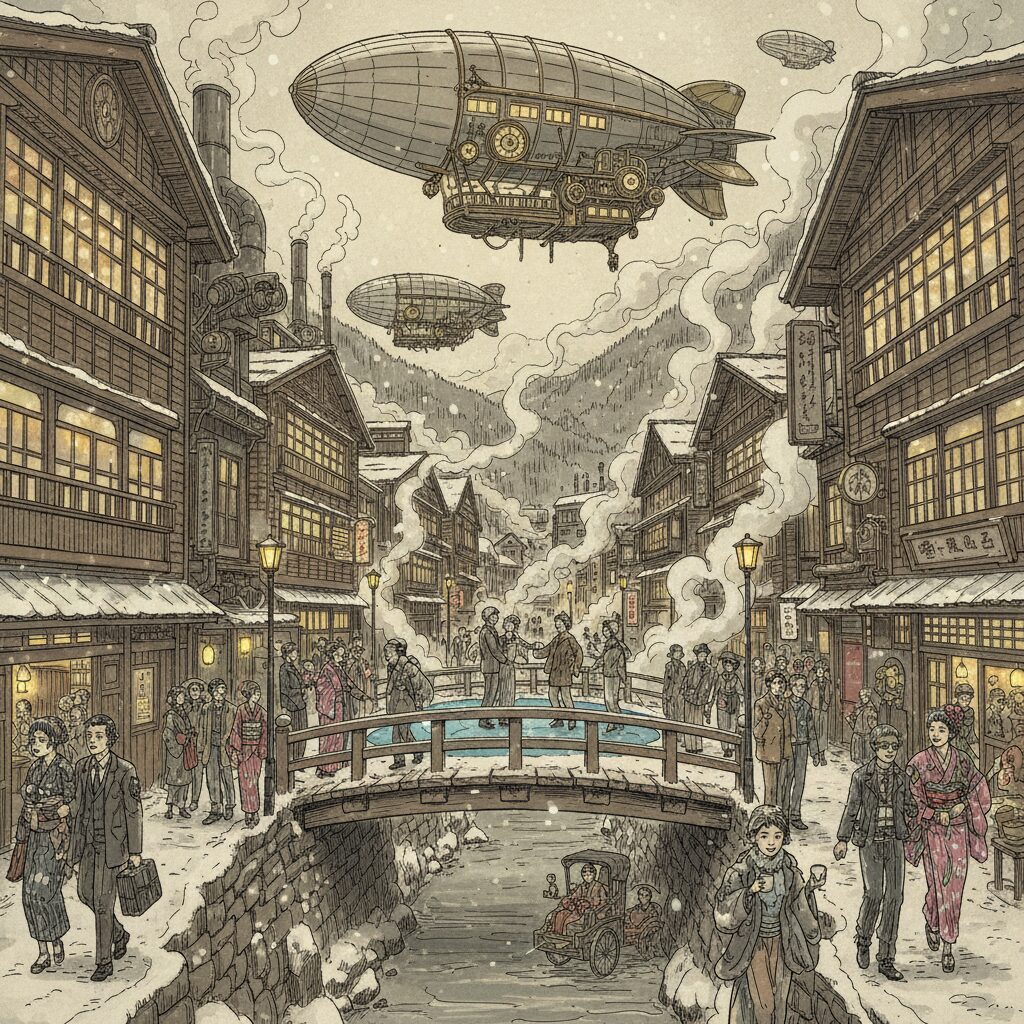
Before you even start packing your bags, you need to grasp the aesthetic we’re dealing with here. When people refer to Ginzan Onsen as embodying “Taisho Roman,” they’re not just using fancy phrases. The Taisho era (1912-1926) was a notably vibrant period in Japanese history. It was a brief, energetic burst nestled between the strict Meiji era and the militaristic early Showa period. Think of it as Japan’s Art Deco phase, a time when Western influences poured in and beautifully blended with traditional Japanese culture. People were wearing kimonos paired with Western-style boots, enjoying jazz in cafes adorned with shoji screens, and embracing a fresh wave of artistic freedom. It was romantic, optimistic, and incredibly stylish.
Ginzan Onsen physically captures this vibe. The town as you see it today was mostly rebuilt during this era after a major flood, which explains its cohesive and breathtaking appearance. The three- and four-story wooden ryokans along the Ginzan River aren’t just old buildings; they are masterpieces of Taisho architecture. You’ll notice stained glass windows, elaborate wooden carvings called kote-e on the walls, and an overall grandeur that feels both exotic and distinctly Japanese. At night, when the gas lamps flicker on, the entire street glows softly. The sound of the river, the clack of wooden geta sandals on the pathway, the steam rising from the hot springs—it all combines to create an atmosphere pure magic. It channels main character energy, like you’ve stepped straight into an epic historical anime. This isn’t a theme park; it’s the genuine, authentic backdrop of a bygone era of elegance.
The Main Event: Checking Into a Legendary Ryokan
Let’s be honest, you don’t just visit Ginzan Onsen—you truly experience it. At the heart of that experience is staying in one of its traditional inns, or ryokans. This isn’t your typical hotel stay; it’s a complete cultural immersion, and it’s absolutely incredible. From the moment you arrive, you’re transported.
Your Arrival: Leaving the Modern World Behind
The journey begins the moment your ryokan’s shuttle bus drops you at the start of the pedestrian-only street. You slide open a heavy wooden door and step into the genkan, the entrance hall. Instantly, a serene atmosphere surrounds you. The scent of aged wood, tatami mats, and a faint hint of onsen steam fills the air. Staff greet you with deep bows and warm smiles, often led by the okami-san, the female proprietor who manages everything with remarkable grace. You exchange your shoes for soft slippers, and just like that, the outside world’s hustle stays behind the door. You’re then guided through quiet corridors lined with polished dark wood to your room, often pausing for a welcome cup of green tea and a small, delicate sweet called okashi. This ritual of hospitality immediately makes you feel cherished.
The Room: Your Personal Zen Zone
Then there’s the room itself. Forget beds and carpets. Your space is a sanctuary with tatami flooring, soft and pleasant underfoot. The room’s design embraces minimalist elegance. Sliding paper screens (shoji) gently diffuse daylight into a calming glow, and a single flawless flower arrangement might adorn the tokonoma, a small decorative alcove. At the center is a low wooden table with legless chairs known as zaisu, where you’ll sip tea and relax in the stillness. There’s no clutter, no noise—only peace. When evening comes, while you dine or soak in the onsen, staff quietly enter to lay out your futon—a plush mattress on the tatami floor. Sleeping on a futon is incredibly comfortable and an essential part of the ryokan experience. This space is crafted for relaxation, quiet reflection, and reconnecting with a simpler way of living.
The Transformation: Yukata Life is the Best Life
One of the highlights of staying in a ryokan is the wardrobe change. In your room, you’ll find a yukata, a lightweight cotton robe. This isn’t just sleepwear; it’s your official Ginzan Onsen uniform. Changing into it is transformative. You instantly feel more relaxed and part of the atmosphere. Everyone—and I mean everyone—wanders around town wearing their ryokan’s yukata and haori (a short outer jacket), paired with traditional geta sandals. The clack of these on the stone pavement forms the town’s signature soundtrack. It’s freeing to shed your street clothes and fully embrace onsen town culture. It breaks down barriers and connects you to the history of the place. Plus, it makes for some seriously stunning photos.
The Onsen: Soaking Your Cares Away
Naturally, the heart of Ginzan Onsen is its onsen—the natural hot springs. The water here is milky, slightly acidic, and famed for its healing properties. Each ryokan has its own baths, which serve as sanctuaries of relaxation. You might find intimate indoor baths made from cypress wood or stone, or if you’re fortunate, a rotenburo—an open-air bath. Soaking in a steaming rotenburo on a snowy winter night is a memory you’ll treasure forever. It’s an otherworldly sensory experience. Remember the etiquette: cleanse yourself thoroughly at the shower stations before entering the communal bath. The water is for soaking only, not washing. Once inside, find a comfortable spot, lean back, and let the mineral-rich water soothe you. It’s pure bliss.
The Feast: A Culinary Masterpiece Known as Kaiseki
Just when you think things can’t get any better, dinner arrives. And it’s not merely a meal—it’s kaiseki, a traditional multi-course Japanese dinner that’s both an art and a culinary masterpiece. Served in your room or a private dining area, this experience is a gastronomic journey that will amaze you. You’re not receiving just one plate; it’s a parade of small, exquisite dishes, each celebrating seasonal, local ingredients. The meal unfolds as a symphony of flavors, textures, and colors. It might begin with a delicate appetizer (sakizuke) and a clear, flavorful soup (suimono), followed by pristine sashimi, a grilled dish (yakimono) like local river fish, and a light steamed dish (mushimono). There’s a simmered dish (nimono) featuring mountain vegetables from Yamagata, and perhaps a small hot pot (nabe) to share. The feast concludes with rice, miso soup, Japanese pickles (tsukemono), and a simple, perfect dessert. Each dish is presented on beautifully chosen ceramics that enhance every bite. Paired with local sake, it’s an unforgettable banquet that nourishes both body and soul. No joke—a kaiseki dinner at a top-level ryokan is a life-changing culinary experience.
Exploring the Fairytale Town: What’s Good in Ginzan?
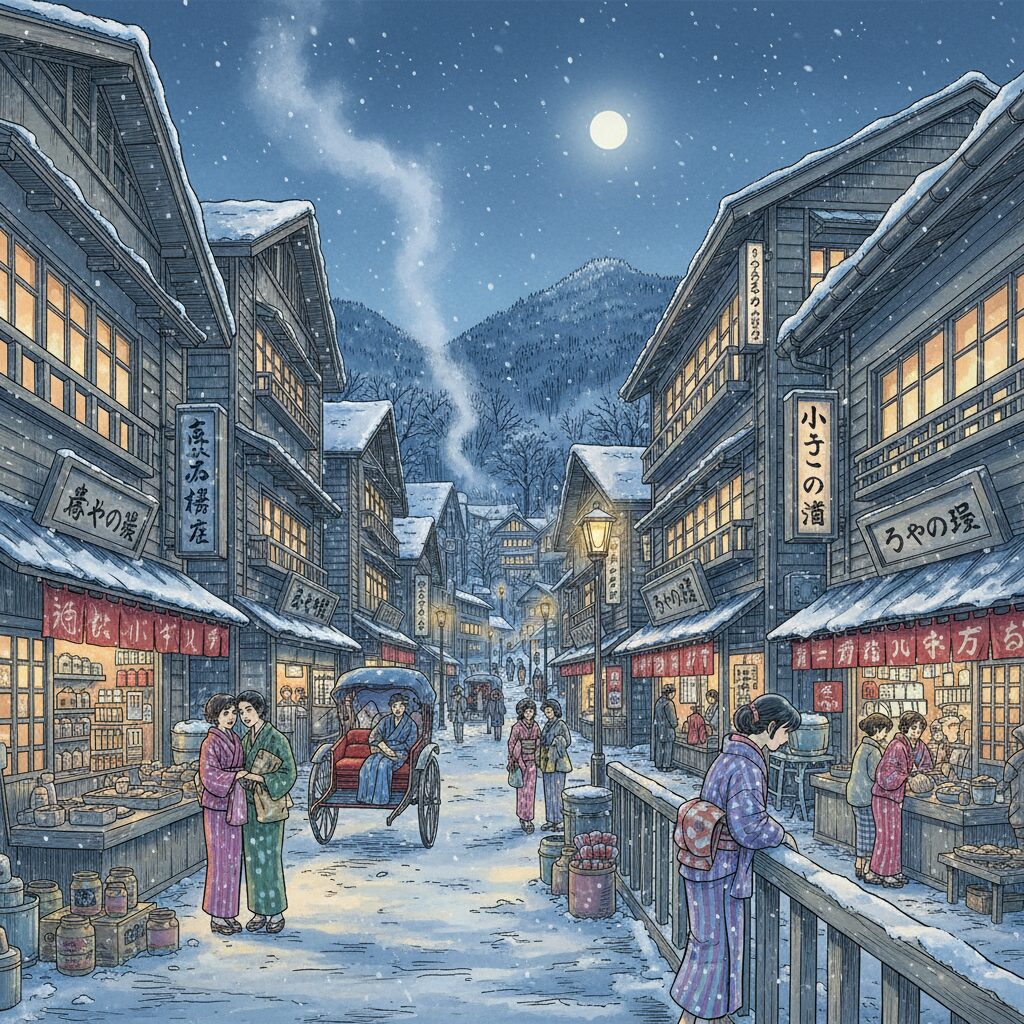
While the ryokan is an attraction in its own right, the town of Ginzan Onsen invites exploration. The main street is compact and easily walkable, with hidden gems around every corner.
The town showcases two distinct personalities. By day, it is charming and picturesque. You can admire the intricate architectural details, browse quaint souvenir shops, and watch steam rise from the river. But as dusk approaches, the true magic unfolds. One by one, gas lamps are lit, bathing the town in a warm, cinematic glow. The light reflects off the dark wooden buildings and, in winter, sparkles on the snow. The contrast between the golden light and the deep blue evening sky is stunning. Your camera will get plenty of use. This is the moment everyone comes for, and it certainly lives up to the hype.
At the far end of town stands the Shirogane no Taki, a 22-meter-high waterfall crashing into the river below. The walk to it is delightful, passing by public baths and cozy cafes. The roaring water provides a powerful natural accompaniment to the town’s quiet elegance. Behind the waterfall, a path leads to the historic Nobezawa Ginzan silver mine, the very reason the town exists. You can even enter a small, illuminated part of an old shaft to experience the area’s history firsthand.
For a quick and easy way to relax, visit the Warashi-yu, a free public footbath (ashiyu) located in the town center. It’s a communal spot where you can sit by the river, soak your feet in the naturally hot onsen water, and simply watch the world go by. It’s the perfect place to warm up on a chilly day and chat with fellow travelers. It’s arguably one of the best places to soak in the town’s incredible atmosphere.
Be sure to sample local snacks. Shops offer everything from onsen manju (steamed buns filled with sweet red bean paste) to a locally renowned fried curry bread (kare-pan) that is crispy, savory, and absolutely delicious. Grabbing a hot snack to enjoy while strolling along the river is a simple yet perfect delight.
Beyond the ‘Gram: The Deeper Story of Ginzan Onsen
It’s easy to be captivated by the romantic charm of Ginzan Onsen, but its history is rooted in something much tougher: silver. The name “Ginzan” literally translates to “Silver Mountain.” For centuries, this area was among Japan’s most prolific silver mines, established in the 1400s and flourishing during the Edo period. Life for the miners was extremely harsh, a stark contrast to the luxury and tranquility the town provides today. The discovery of the hot springs was a welcome relief for them, offering a place to ease their aching bodies after long, grueling shifts underground.
When the silver deposits were exhausted in the late 1600s, the town faced a turning point. It needed to reinvent itself. Gradually, it evolved from a mining town into a toji town—a destination known for long-term hot spring treatments. However, the town’s true transformation occurred during the Taisho era. A severe flood in 1913 destroyed many of the old inns, creating a blank canvas. Rather than rebuilding chaotically, the town’s leaders deliberately chose to reconstruct in the stylish, modern-yet-traditional fashion of the time. They employed top architects and craftsmen, resulting in the stunning, cohesive streetscape that exists today. So, as you admire the beautiful buildings, remember you are witnessing a tale of remarkable resilience—a town that turned disaster into opportunity and shifted from an industrial center to a timeless refuge.
The Practical Sitch: Getting There and When to Go

Alright, let’s get down to business. Ginzan Onsen’s remote setting is part of its allure, but it means you’ll need to carefully plan your trip. Getting there can be a bit of an adventure, but it’s absolutely worth it.
The Journey
Your adventure will most likely begin in Tokyo. From Tokyo Station, you’ll board the Yamagata Shinkansen (the bullet train) and travel north to Oishida Station. The ride itself is a delight as you speed past urban landscapes into the scenic countryside of the Tohoku region. This leg takes around 3 to 3.5 hours. From Oishida Station, you’re almost there. A local bus connects the station to Ginzan Onsen in about 40 minutes. Pro tip: check the bus timetable ahead of time since buses aren’t super frequent. Even better, many ryokans offer free shuttle service for guests from Oishida Station—make sure to arrange this when booking your room to ensure a smooth and stress-free final leg.
The Seasons: When to Visit
There’s no bad time to visit Ginzan Onsen, but each season presents a unique atmosphere.
Winter (December to February) is undoubtedly the best. This is when Ginzan Onsen becomes the magical winter wonderland you’ve seen in photos. The town receives heavy snowfall, and the sight of historic wooden buildings blanketed in snow, lit by warm gas lamps, is unforgettable. However, winter is peak season, with ryokans booking up a year or more in advance. If you want to visit during this time, plan well ahead.
Spring (April to May) offers a different kind of beauty. The snow melts, cherry blossoms bloom, and the mountains burst into vibrant green. It’s a season of renewal, and the town is quieter and more serene.
Summer (June to August) is lush and green. The days are warm, filled with the sound of cicadas. It’s an ideal time to explore hiking trails, including the one through the old silver mine. The town provides a refreshing escape from the heat and humidity of Japan’s major cities.
Autumn (October to November) is truly stunning. The surrounding mountains showcase a fiery display of red, orange, and yellow leaves. The crisp, cool air makes for perfect walks along the river and relaxing outdoor onsen baths. For many, autumn ranks just after winter in terms of beauty.
Tips for the Savvy Traveler
- Book early. Especially for winter visits, rooms are limited and sell out fast.
- Pack light but wisely. With trains and buses involved, a large suitcase is cumbersome. A backpack or small roller bag is best. If visiting in winter, bring warm layers, a waterproof outer shell, and sturdy snow boots with good traction. Streets can be icy.
- Carry cash. While Japan is modernizing, rural areas still favor cash. Credit cards are fine for ryokans, but small shops, cafes, and buses often require cash.
- Stay overnight. A day trip is doable, but you’d miss the best part. The real charm of Ginzan Onsen comes after dark when day-trippers leave. The quiet, lamp-lit streets create an experience you must have. Don’t just visit for the pictures; stay for the ambiance.
A Quick Note on Ryokan Etiquette (No Stress!)
If it’s your first time at a ryokan, it might seem like there are many rules, but it’s really simple and all about respect and relaxation.
- Remove your shoes at the door. This is standard in Japanese homes and ryokans.
- When wearing your yukata, always wrap the left side over the right. The opposite is reserved for dressing the deceased, so it’s an important distinction.
- In the onsen, always shower and wash thoroughly before entering the bath. Never put soap or your towel in the bathwater.
- Don’t worry about the futons. The staff will set them up and put them away—it’s all part of the service.
- Just relax! The staff want to make your stay wonderful. Be polite, respectful, and go with the flow. It’s a fantastic cultural experience, so savor every moment.
Ginzan Onsen is more than just a picturesque spot—it’s an experience. It’s the warmth of the onsen on a cold evening, the taste of a perfectly prepared meal, the sound of wooden sandals on stone paths, and flickering gaslights on fresh snow. It’s a place that slows down time and reconnects you with a gentler rhythm of life. Visiting here is a journey back in time, a chance to escape modern chaos and embrace something timeless and beautiful. It’s a memory in the making, a story you’ll cherish for years. So go ahead, book your ticket, and prepare to step into a dream.