You’ve probably seen the video. A person rolls their bicycle onto a small platform in front of what looks like a futuristic subway entrance for Smurfs. They tap a card, step back, and a mechanical arm grabs the front wheel. The doors slide open, and with a quiet, satisfying whir, the entire bicycle is swallowed by the earth. A few seconds later, the doors close, leaving a perfectly clean, unobstructed sidewalk. The whole vibe is straight-up cyberpunk, a little slice of Blade Runner dropped into a mundane morning commute. The immediate reaction, especially for anyone outside Japan, is usually a mix of awe and confusion. “Why?” It seems like a ridiculously over-engineered solution to a problem that most places solve with a metal rack and a prayer that your bike is still there when you get back. Is this just Japan being extra? Is it a high-tech gimmick for the sake of looking futuristic? The short answer is no. The long answer is way more interesting. These automated, subterranean bicycle parking systems—these steel wombs that birth and consume our bikes daily—are not just a cool piece of tech. They are the climax of a decades-long story about space, order, and the quiet desperation of Japanese urban life. They are a physical manifestation of a uniquely Japanese set of social pressures, historical baggage, and cultural obsessions. To understand why Japan builds these sci-fi bike silos, you have to understand the sidewalk wars that preceded them, the cultural worship of order, and the sheer, brutal reality of what a square meter of land is worth in Tokyo. This isn’t about being futuristic; it’s about solving a very real, very chaotic past.
This focus on creating order in public spaces extends to the workplace, where the decline of traditional nommunication reflects a similar shift in social priorities.
The Mamachari Apocalypse: How Bicycles Took Over the Sidewalks
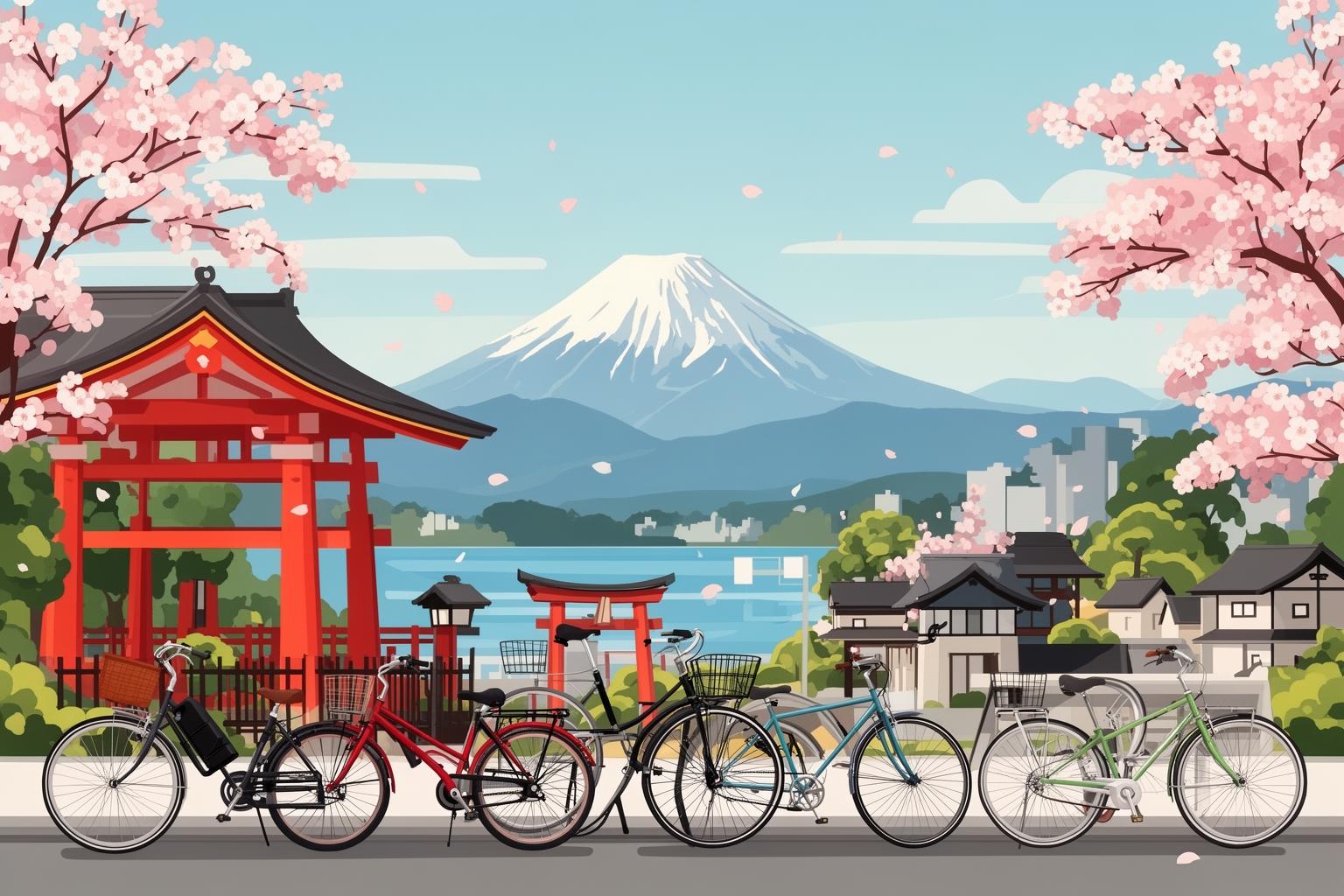
To understand why a multi-million dollar robotic system is necessary to park a bicycle, you first need to erase your mental image of what a “bicycle” normally is. We’re not referring to carbon-fiber racing bikes or trendy fixies. We’re talking about the undisputed king of the Japanese road: the mamachari. The name literally means “mom’s chariot,” and that’s exactly what it is. This is not a vehicle for sport or leisure but a utility powerhouse, the urban equivalent of a family minivan or a pickup truck. It’s the lifeline of suburban life, the primary mode of transport for millions navigating the dense, sprawling residential zones that funnel into major train stations.
Not a Sport, But a Utility Vehicle
The mamachari’s design is a masterclass in functionality. Its low, step-through frame makes mounting and dismounting easy, even while wearing a skirt or carrying bags. Almost every model comes standard with a large front basket, perfect for grocery runs from the local supermarket. The real distinction, however, lies in the modifications. It’s common to see them equipped with one or sometimes two child seats—a sturdy one on the back and a smaller one nestled between the handlebars. Add a built-in kickstand that holds the bike perfectly steady for loading and unloading wriggling toddlers, a chain guard to protect your pants, and built-in dynamo lights that activate automatically, and you have a machine tailor-made for everyday errands. In recent years, electric-assist versions have become standard, giving parents the extra power needed to tackle hills with two kids and a week’s groceries in tow. The mamachari is how you get your child to daycare, visit the post office, see the doctor, and, most critically, travel from your doorstep to the nearest train station. Japan’s world-class public transit system is the envy of the world, but it doesn’t reach every doorstep. The cities function as hubs and spokes, with daily life revolving around the train station. For the millions living in vast residential areas a 10-to-20-minute bike ride from the station, the mamachari isn’t a choice; it’s a necessity. This creates an immense funnel effect. Every morning, a tidal wave of these utility bikes converges on the stations. And every evening, that wave recedes. The problem for decades was managing the sheer volume of metal when the wave was at its peak.
The ‘Bicycle Graveyards’ of the Bubble Era
If you could travel back to a major suburban train station in the 1980s or ’90s, the scene would be pure chaos. The areas around station entrances were completely overrun with bicycles—thousands upon thousands parked, or more accurately, abandoned wherever a small space could be found. They were chained to railings, leaned against walls, and clustered in dense, metallic thickets on the sidewalks. They blocked pedestrian walkways, fire hydrants, and storefronts. Navigating the station plaza was like wading through a river of steel and rubber. This phenomenon was known as 自転車放置 (jitensha houchi), which translates to “abandoned” or “illegally parked bicycles.” These weren’t stolen or forgotten bikes; they belonged to commuters who, faced with a lack of legal parking, simply left them there for the day. The result was both a visual and logistical nightmare. These “bicycle graveyards” symbolized urban dysfunction. They were not just eyesores; they posed genuine hazards. They made it difficult for the elderly and people with disabilities to navigate sidewalks and blocked access for emergency vehicles. For local shop owners, they were a daily frustration, as the wall of bikes often obscured their businesses. Municipal governments fought a constant losing battle. Initial efforts to post warning signs were promptly ignored. City workers then organized massive removals, descending with bolt cutters to tag illegally parked bikes and haul them away by the truckload to impound lots. Owners had to visit the lots, pay fines, and reclaim their bikes. But this was a Sisyphean task; for every hundred bikes removed, a hundred more appeared the next day. Demand for convenient, close-to-the-station parking far exceeded supply. Simple above-ground parking racks were built but were often unsightly, took up valuable surface space, and filled instantly. The problem was clear: Japan’s dependence on the bicycle for the crucial “last mile” commute had created a crisis of space and order at the very transit hubs vital to the cities. The system was buckling under the weight of its own efficiency. This chaos demanded a solution. And it wasn’t just practical—it was an aesthetic and philosophical challenge, striking at the core of Japan’s deep-rooted cultural need for order.
The Obsession with Order: From Tidying Up to Urban Engineering
To truly understand why the solution to the bicycle graveyards took the form of a silent, underground robot, one must grasp a fundamental pillar of the Japanese cultural mindset: a profound, almost religious commitment to order. This goes beyond the Western notion of neatness and tidiness; it is a deeper aesthetic and ethical principle that influences everything from arranging food in a bento box to managing public spaces in a city. The visual disorder of the abandoned bikes was not merely inconvenient—it was a violation of a core cultural value, symbolizing a breakdown in the unspoken social contract that enables a densely populated society to function smoothly.
‘Seiri, Seiton’ on a City Scale
Many know Marie Kondo and her tidying philosophy, but her methods originate from an older Japanese industrial and philosophical approach called the 5S methodology, with two key principles being seiri (整理) and seiton (整頓). Seiri means to sort, distinguishing between what is necessary and what is not, and eliminating the unnecessary. Seiton means to arrange things neatly, placing everything in its proper spot for maximum efficiency and accessibility. These ideas were developed on the factory floors of companies like Toyota to optimize production but also express a worldview that extends far beyond manufacturing. It is a philosophy for life—and by extension, urban planning. The bicycle graveyards were a monumental failure of seiton, physically manifesting disorder. Therefore, the solution had to do more than just add storage; it required restoring order, erasing the problem cleanly and thoroughly. An above-ground parking structure might address storage but remain a visual blight—a monument to the bicycle issue. The underground automated system represents the ultimate form of seiton: it doesn’t only store bikes but removes them entirely from the visual environment. It takes the chaotic presence of thousands of individually owned, cluttered bikes and files them away within a hidden, impeccably organized system. When you summon your bike and it appears seemingly by magic from a small, discreet terminal, the system performs an act of urban seiton, returning one necessary item from its designated place only at the moment it is needed. This longing for visual harmony permeates Japan, apparent in how train passengers form perfect, unspoken lines on platforms, the meticulous sorting of household waste into numerous categories, and the minimalist beauty of traditional architecture and design. The automated bike garage is simply this principle scaled up mechanically and grandly.
The Tyranny of the Unspoken Rule
Another central feature of Japanese society is a preference for indirect communication and avoidance of direct confrontation. Public space is regulated by a dense network of explicit and implicit rules designed to minimize social friction among millions packed into a small area. You don’t talk on your phone while on the train; you don’t eat while walking; you stand on one side of the escalator. These rules are enforced not by police but through collective social pressure to conform. The bicycle problem was a rare and spectacular breakdown of this system. Leaving your bike wherever you wished was an individualistic act that created a collective disorder. Previous measures—warning signs and fines—required direct, unpleasant enforcement. City workers had to confront the issue face-to-face, and citizens were frequently scolded or fined. The automated system is a brilliant piece of social engineering because it delegates rule enforcement to a neutral, non-human third party: the machine. The system makes the “correct” behavior—parking legally—the easiest, quickest, and most convenient choice. Using the automated garage is simple and satisfying: you tap your card, and the machine takes your bike. It’s effortless. Meanwhile, finding an illegal parking spot becomes the harder and more time-consuming option. The machine itself is the enforcer, operating with limited capacity, accepting only subscribers and standard-sized bikes. It cannot be reasoned or argued with; it applies the rules perfectly and impartially every single time. This removes the messy human element of confrontation, replacing it with a straightforward, binary interaction with a machine: you are either inside the system or you are not. By making compliance the path of least resistance, this design gently but effectively nudges the entire population toward orderly behavior. It is a subtle yet powerful form of control—a mechanical solution to a social problem.
‘Waza’ in Concrete and Steel: The Engineering Mindset
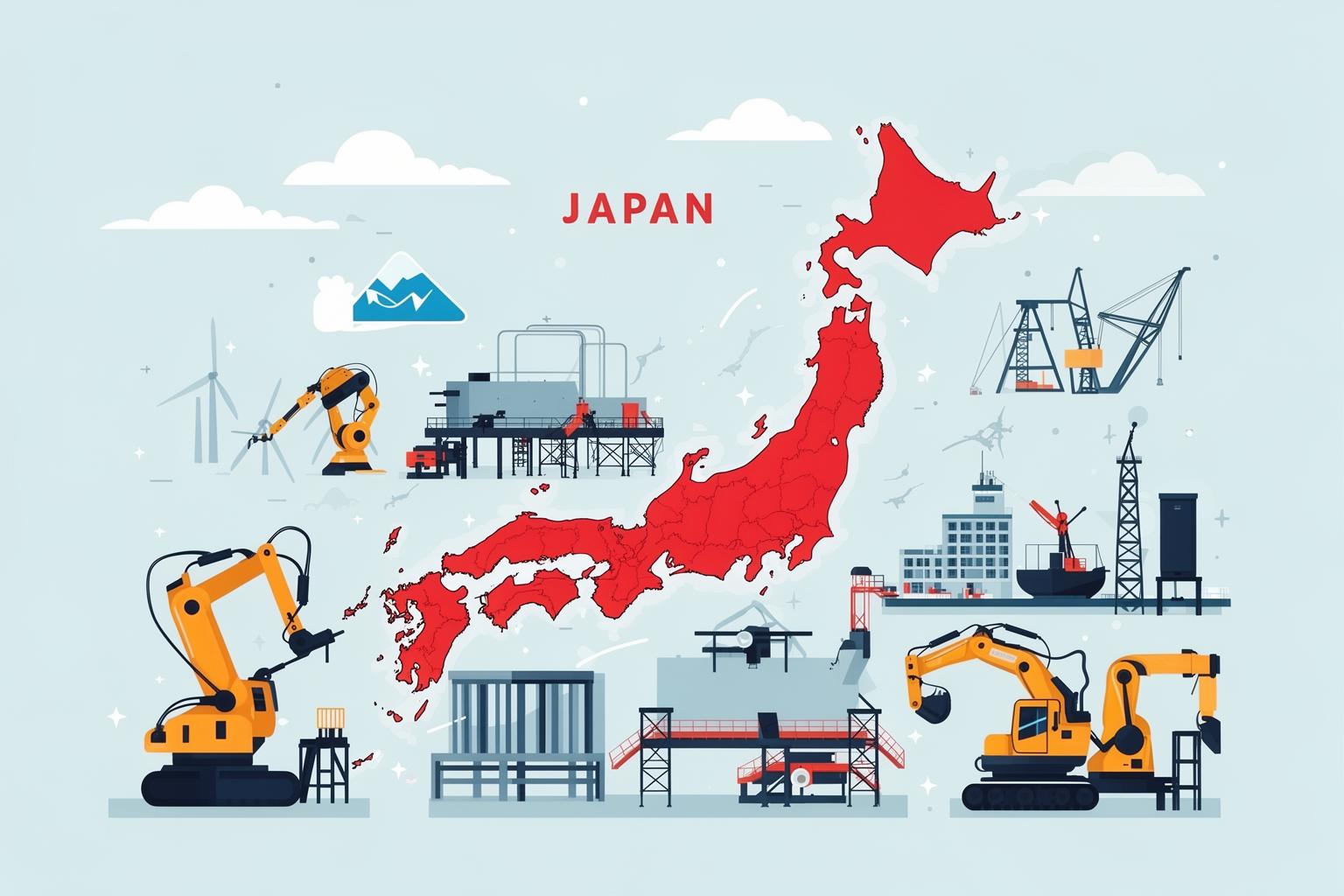
The cultural fixation on order created the demand for a clean, efficient solution. However, it was Japan’s distinctive engineering skill and manufacturing mindset that delivered the supply. The automated bicycle garage is a product of a culture that often treats social problems as engineering challenges to be addressed with technical ingenuity, or gijutsu, and exceptional skill, or waza. It embodies a distinctly Japanese mindset: if a nail is protruding, don’t simply hammer it down; instead, engineer a perfectly calibrated, automated hammer that accomplishes the task with sublime precision.
When a Nail Sticks Up, Engineer a Better Hammer
The common approach was not to launch a public campaign urging people to bike less or walk from further away. Such efforts attempt to change deeply ingrained human behaviors, which are difficult and often ineffective. Rather, the strategy was to accept the behavior—people need to bike to the station—and create a system that could flawlessly accommodate that reality. This focus on solving problems through meticulous, often incremental, technological refinement is a hallmark of modern Japanese industry. It embodies the principle of kaizen, or continuous improvement. It can be seen in the country’s impeccably punctual train systems, where delays are counted in seconds rather than minutes. It is evident in the high-tech toilets that have evolved over decades to include a bewildering variety of features. It’s present in the sophisticated automation found in everything from vending machines to restaurants. The bicycle issue was simply another puzzle awaiting a clever mechanical solution. The company that pioneered and now dominates this market, Giken, did not originally start as a parking company. Their core business was, and remains, press-in piling technology for the construction industry. They excel at building underground structures quietly and with minimal disruption. Seeing the chaos of the bicycle parking lots, they realized they could apply their core expertise—digging holes and constructing strong, cylindrical underground structures—to this entirely different social challenge. They developed the “Eco Cycle” system, a vast underground silo that uses a computer-controlled carrier to file bikes into individual racks. This was a brilliant lateral move, applying heavy industrial technology to a lightweight consumer issue. It’s a classic example of Japanese innovation: not necessarily a disruptive, ground-up invention, but the masterful adaptation and refinement of existing technology to solve a new challenge with elegance and precision.
The Aesthetics of the Mechanism
From my perspective as a curator, what is truly fascinating is that the appeal of these systems extends beyond mere functionality. In Japan, there is a profound cultural appreciation for the beauty of a well-crafted mechanism. It’s a form of performance art. The experience of using the automated garage is deliberately designed to be smooth, quiet, and somewhat magical. The precise movement of the robotic arm, the silent opening of the doors, the gentle whir as your bike is carried into the depths—it creates a moment of quietly satisfying theater in the midst of a mundane daily routine. This fascination with complex and elegant machinery is not new; it has a long history in Japan, tracing back to the intricate karakuri ningyo—mechanized puppets or automatons from the Edo period (1603-1868). These sophisticated devices, powered by springs and clockwork, could perform astonishing feats like serving tea or shooting arrows. They were objects of entertainment and wonder, celebrated for their cleverness and the craftsmanship (waza) of their internal mechanisms. The modern automated bike garage is a spiritual successor to the karakuri. It is a solution to a practical problem, yes, but also a public exhibition of mechanical ingenuity. It completes its task with a grace and precision meant to be admired. It transforms an ordinary chore—parking a bike—into a sleek, futuristic interaction. This aesthetic satisfaction forms part of the product’s appeal. It reassures users that they belong to a smart, orderly, technologically advanced society. The machine’s flawless operation offers a small, daily confirmation that things are functioning as they should, that order has been wrested from chaos.
The Economics of Invisible Real Estate
While the cultural desire for order and the engineering mindset explain the how and why of the automated bike garage, the where—specifically that it’s underground—is dictated purely by cold, hard economics. In Japan’s megacities, land is the most precious commodity available. The choice to excavate a massive underground space for bicycle parking is not whimsical; it is a ruthless calculation of spatial efficiency and financial worth. Every square meter of surface land is fiercely contested, and going underground is often the only way to secure that space.
Digging for Gold: The Value of Surface Land
It’s hard to overstate the scarcity and value of land in a city like Tokyo. The areas immediately surrounding major train stations rank among the most valuable real estate on Earth. This finite land is intensely fought over by retail stores, restaurants, office towers, and residential condos. Using a sizable portion of this prime surface real estate for something as low-revenue as bicycle parking is, from both a planning and economic standpoint, nearly unthinkable. Constructing a traditional multi-level above-ground parking garage would be an enormous waste of space, creating a dead zone in what ought to be a vibrant and commercially active neighborhood. It would be an unsightly concrete block, obstructing views and casting shadows. The economic opportunity cost would be staggering. By relocating the entire parking facility underground, city planners effectively create new usable real estate from nothing. The surface land is freed up and can serve as a pleasant public plaza, a park, outdoor seating for a cafe, or an entrance to a shopping center. The value generated by these public or commercial amenities far surpasses the expense of excavation. This philosophy of maximizing space through subterranean development is a core principle of Japanese urbanism. It explains the expansive underground shopping malls (chikagai) linking major stations, which form whole subterranean cities sheltered from the weather. It also underpins the intricate multi-layered subway networks weaving beneath city streets. The automated bicycle garage represents the latest iteration of this ingrained approach: when building upward or outward is no longer feasible, you build downward. The garage is more than just parking; it’s spatial alchemy, transforming chaotic, low-value land use into an invisible, highly efficient system that frees priceless surface area for active human engagement.
Who Pays for the Robot?
Naturally, these futuristic systems come with a hefty price tag. A single unit, capable of storing around 200 bikes, can cost several million dollars to install. This raises the obvious question: who foots the bill, and is it worth it? The answer lies in a typical Japanese public-private partnership model. Construction is frequently financed by the municipal government as part of civic infrastructure investment aimed at solving the persistent issue of illegal bike parking. Meanwhile, operational management is usually outsourced to a private firm, such as Giken. Crucially, the service is not free for users. To use the system, you typically must register your bike and pay a monthly subscription fee. Costs vary by location but usually range from 1,800 to 3,000 yen per month (approximately $15 to $25 USD). Some visitors might find the idea of paying a monthly fee to park a bicycle absurd. However, this perspective misses the point. You’re not simply paying for a parking spot; you’re subscribing to a premium service. You pay for guaranteed, instant access to a secure space where your bike is protected from rain, wind, and theft. The process is extremely fast and convenient, saving valuable time during your daily commute. Most importantly, by subscribing, you’re contributing to public order, helping maintain a clean, safe, and accessible station area for everyone. When considering potential fines for illegal parking or the cost and distress of a stolen bike, the fee starts to seem quite reasonable. It’s effectively a subscription for peace of mind. From the city’s perspective, the system pays for itself in other ways: lowering labor costs related to impounding illegally parked bikes, boosting public safety, and enhancing the immeasurable value of a more pleasant, commercially thriving station front. Ultimately, it’s a long-term investment in urban livability funded through a mix of public money and user fees.
So, Is It the Future or Just a Really Niche Solution?

After grasping the intricate interplay of factors—the overwhelming mamachari presence, the cultural fixation on order, the engineering-driven mindset, and the harsh realities of land economics—it becomes evident that these automated bike garages are far from mere novelties. They represent an exceptionally tailored and effective response to a distinctly Japanese set of challenges. But does that qualify them as the “future of parking”? And what is it actually like to use one? The truth is that although they seem futuristic, they are a product of a very particular context, and their applicability worldwide is limited.
The Human Element: User Experience and Adoption
The user experience of an automated bike garage can be summed up in one word: seamless. When you first register, you receive a small electronic tag attached to the front of your bike. From then on, the process becomes second nature. You roll your bike into the assigned slot. The machine reads the tag and verifies your subscription. You tap your commuter pass or a dedicated card on a reader, a green light signals approval, and you walk away. The entire drop-off takes about 15 seconds. Retrieval is equally quick. You tap your card at the terminal, the system locates your bike among the 204 slots, and the internal carrier springs to life. Some 20-30 seconds later, the doors open, and your bike is delivered to you, ready to roll. It’s a small daily moment of magic. Naturally, the system isn’t flawless. It has its limits. The slots are standardized, so oversized bikes, those with large front baskets, or certain electric mamacharis with bulky batteries might not fit. And the common question is, what happens during an earthquake or power failure? The systems adhere to strict seismic standards and include backup generators that ensure users can still retrieve their bikes in emergencies. The biggest barrier for users is simply the subscription cost. While thousands use them, many others still choose cheaper, traditional outdoor parking a bit further from the station or risk illegal parking. But for those who prioritize time, security, and convenience, the robotic garage becomes a crucial part of daily life.
Why You Probably Won’t See This in Your City
It’s easy to look at these systems and imagine them everywhere. However, the reality is they emerged from a unique confluence of conditions absent in most other parts of the world. First and foremost, the incredible population density of Japanese cities, where millions live in a way that makes the bike-and-train commute the norm. Second, the distinct cultural role of the bicycle as a practical utility vehicle rather than just for recreation, resulting in huge concentrations at transit hubs. Third, the strong cultural and political commitment to maintaining public order and visual harmony, where the eyesore of a “bicycle graveyard” is deemed a serious civic issue requiring multimillion-dollar solutions. Fourth, the advanced engineering and manufacturing capabilities essential to design, build, and maintain such sophisticated machinery reliably. And lastly, the extreme land values that make an underground solution not only attractive but the only economically sensible choice. Most cities around the world do not share this exact combination of factors. In many European cities like Amsterdam or Copenhagen, cycling is a primary means of transport rather than a feeder to trains, so the parking challenge is more spread out. In North America, car-centric urban design means bike commuting rarely reaches the dense scale found at Japanese train stations. Thus, while the technology can be exported, the problem it addresses is profoundly local. It serves less as a universal future model and more as a highly specific adaptation to Japan’s unique urban ecosystem.
Conclusion: More Than a Parking Lot
The automated underground bicycle garage offers a perfect glimpse into the essence of modern Japan. On the surface, it appears as a sleek, futuristic piece of technology. Yet, when examined more closely, it reveals the underlying logic and cultural framework that govern the country. It stands as an elegant, almost poetic solution to the tension between individual needs and the collective good in one of the world’s most densely populated regions. It physically embodies the struggle between the chaos of millions of individual lives and the relentless pursuit of social and aesthetic order. The system reflects the nation’s problem-solving mentality: acknowledge human behavior as it is, but design an impeccably convenient system that subtly guides that behavior toward a harmonious outcome. The machine’s whirring as it takes a bicycle symbolizes a compromise being reached. The bike, representing individual freedom and mobility, is temporarily entrusted to a collective, unseen system. Stored away in a perfectly organized grid, it contributes to the seamless, clean, and efficient public space above. When the bike is returned, it signals that the system works. In return for a small fee and compliance with the rules, you receive not only your bike but also participation in a society that, against all odds, functions with quiet, mesmerizing, and meticulously engineered grace. It’s more than just a parking lot; it’s the social contract embodied in concrete and steel.