Ever been to Japan and felt like you’ve walked onto a movie set where everyone just gets the script? You order a simple bowl of ramen, and the chef moves with the intensity of a brain surgeon, his brow furrowed in concentration. The bartender you watch later that night carves an ice cube into a perfect sphere with a tiny, terrifyingly sharp knife, a process that takes, like, ten full minutes. The train you ride is so clean you could probably eat off the floor, and it arrives at the platform not just on the minute, but on the second. It’s a lot. You start to wonder, is this for real? Is everyone here just a low-key perfectionist, or is there something deeper going on? It’s a vibe that’s both awe-inspiring and, if we’re being honest, a little intimidating. You’re just trying to enjoy your vacation, and suddenly you feel like you’re in the presence of masters who have dedicated their entire lives to… noodles. Or ice. Or cleaning. What’s the deal? Why is this level of dedication, this almost spiritual pursuit of the perfect product or service, baked into the very fabric of Japanese society? This isn’t just about ‘good customer service.’ This is something else entirely, a cultural operating system running in the background of everything. It’s a concept called shokunin, and to really get it, we need to go back in time and talk about something seriously epic: the samurai sword.
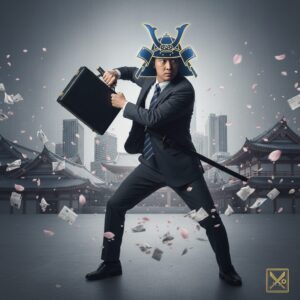
This deep-seated dedication to craft and duty, reminiscent of a warrior’s code, finds its modern parallel in the lives of Japan’s corporate samurai.
The OG Shokunin: Forging a Soul
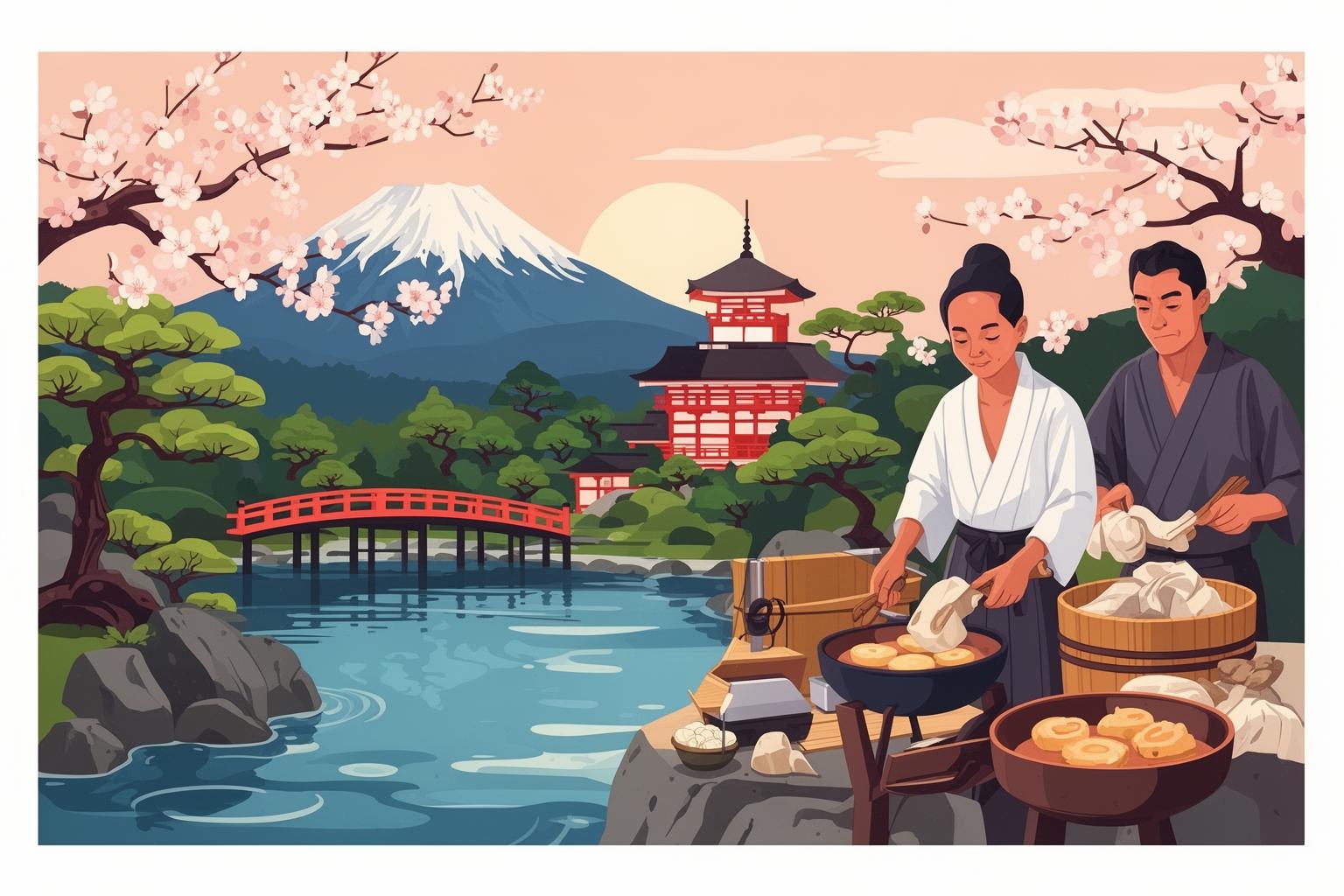
Before we even start to understand why your coffee in a Tokyo kissaten is brewed with such meticulous, single-drop precision, we first need to discuss the katana. Yes, the samurai sword. It’s more than just a weapon; it stands as the ultimate symbol of the shokunin spirit. It’s the blueprint. Calling a swordsmith merely a blacksmith is like referring to a Michelin-starred chef as a short-order cook. It represents an entirely different universe of dedication. The creation of a katana was, and still remains, a profoundly spiritual and ritualistic process. It’s not just metalworking; it’s about infusing a piece of steel with a soul. No exaggeration—that’s exactly how they perceived it.
The Sacred Steel: Tamahagane
Everything begins with the material. They don’t just use ordinary iron. The swordsmith works with a special, legendary steel called tamahagane (玉鋼), or “jewel steel.” This isn’t produced in a massive industrial plant. Instead, it’s made in a traditional clay furnace known as a tatara. The process is grueling, lasting three days and three nights of relentless, sleepless fire-stoking by the master and his apprentices. They use iron sand (satetsu), a dense, black sand found in specific parts of Japan, combined with charcoal. The temperature must be controlled with incredible precision—not too hot, not too cold. The entire operation is steeped in Shinto ritual. The site is surrounded by a shimenawa, a sacred rope, to purify the area and repel evil spirits. The master, or murage, essentially acts as a priest for three days, praying that the kami (gods) will bless the furnace and provide good steel. The outcome of this fiery ordeal isn’t a uniform metal block but a bloom called a kera, a large, rough chunk filled with impurities. Yet within this rough mass lie pockets of tamahagane with varying carbon content, sparkling like jewels. The swordsmith must carefully break the kera apart and select, by sight and touch, the perfect pieces. He seeks a balance between hard, high-carbon steel for the cutting edge and softer, low-carbon steel for the supportive core. From the very start, it is a collaboration with nature and the divine, a quest for perfection within imperfection.
The Dance of Fire and Hammer
Once the steel is chosen, the true work begins. This is the stage you’ve likely seen in films: the hammering, the sparks, the glowing forge. But it’s far more than brute force. The smith takes the chosen pieces of tamahagane, heats them, hammers them into a single block, then starts the iconic folding process. He hammers the block flat, scores it down the center, and folds it back onto itself. He heats, hammers, and folds again—repeating this a dozen to two dozen times. Doing the math, this creates thousands, sometimes tens of thousands, of individual layers within the steel. This isn’t just for aesthetics. The folding serves two key purposes: it eliminates remaining impurities from the tatara stage and forms a uniform yet complex grain structure. It’s like crafting the perfect croissant, but with molten steel. Each fold and hammer strike is a deliberate choice. The smith must sense the steel, grasp its character, and apply the exact force needed. He’s not merely shaping metal; he’s refining its very soul. The rhythmic clang of the hammer is a dialogue between man and material. Through his craft, he meditates, pouring his focus, energy, and entire being into that single piece of metal.
The Clay Jacket and the Baptism of Water
This is where the magic truly unfolds—the step that gives the katana its distinctive curve and legendary cutting edge. Known as tsuchi-oki, or the application of clay, the smith prepares a secret, often family-specific, mixture of clay, charcoal powder, and other ingredients. He coats the forged blade with this wet clay, but not evenly. A thick layer covers the spine and sides, while a thin, precisely shaped layer lines the cutting edge. The pattern painted along the edge will form the hamon, a visible, wavy line that serves as the unique signature of both the blade and the smith. This clay jacket acts as insulation. When the blade, heated to a precise temperature—judged by its color in the dim forge light—is plunged into a trough of water (yaki-ire, or water hardening), the thinly coated edge cools almost instantly, becoming exceptionally hard by forming martensite, a crystalline structure. Meanwhile, the thickly coated spine cools more slowly, remaining softer and more flexible. This differential hardening causes the blade to curve naturally, forming its iconic shape. It’s also the secret behind the blade’s genius design: an edge sharp enough to slice like a razor, supported by a spine that absorbs shock without shattering. This moment is a point of no return. A single misstep in temperature, a steel flaw, or an air bubble in the clay can cause the blade to crack, warp, or shatter entirely. Weeks or months of effort can be lost in a heart-stopping instant. The tension is immense. This is a baptism by fire and water—the true birth of the blade.
The Soul Emerges
Even after hardening, the blade’s journey isn’t done. Its final shape is refined, then passed on to another shokunin: the polisher, or togishi. This is another craft that demands extraordinary dedication. The polisher does far more than sharpen; he reveals the blade’s soul. Using a series of increasingly fine stones over weeks of painstaking labor, he meticulously polishes every surface. This process unveils the hidden beauty of the steel: the subtle wood-grain-like pattern from folding (hada), and the intricate crystalline structure of the hardened edge (hamon). The final polish is achieved with tiny stone slivers controlled by fingertips. It’s an art form in its own right. The polisher makes the smith’s work visible, exposing the character and spirit forged into the steel. When you behold a finished katana, you’re not just seeing a weapon. You’re witnessing countless hours of absolute, unwavering focus. You see the tamahagane from the sacred tatara, the thousands of folds from the smith’s hammer, the ghost of clay in the hamon, and the patiently applied polish. It is a physical expression of the shokunin ideal: to take natural materials and, through human skill, dedication, and spirit, elevate them to a state of perfection. The sword isn’t merely an object; it’s a legacy. That is the soul within the steel.
Unpacking the Shokunin Code: It’s a Whole Vibe
Alright, the swordsmith story is truly epic. But you might be wondering, “Great tale, but how does this relate to my $10 bowl of ramen?” Everything. The spirit of the swordsmith didn’t vanish along with the samurai—it simply changed its form. It evolved into the core philosophy, the cultural DNA that shapes how people in Japan approach their work even today. Shokunin is more than just a job title; it’s a way of life. It’s a social and spiritual duty to perform at your highest level for the benefit of society. Let’s explore the key elements of this mindset, the underlying software running behind the scenes.
Kodawari: The Obsession You Didn’t Realize You Needed
First is kodawari (こだわり). There’s no exact English equivalent. “Fastidiousness” sounds too negative. “Commitment” feels too broad. It’s more like an intense, passionate obsession with the tiniest details. It’s the pursuit of a personal standard of excellence that far exceeds what’s required or what others might notice. The ramen chef’s kodawari isn’t just about making good soup. It’s about the specific breed of pig for the pork bones, the precise mineral content of the water, the humidity in the room where noodles are prepared, the temperature of the bowl when served. It’s an endless quest for refinement. The sushi master’s kodawari lies in the exact pressure applied when shaping the rice, a pressure refined over a decade. The barista’s kodawari is in the 0.1-gram adjustments to coffee beans based on that day’s atmospheric pressure. To outsiders, it may resemble obsessive-compulsive behavior, but within the shokunin mindset, this is the path. This is the work. It’s the belief that the sum of these tiny, seemingly trivial details transforms something from “good” to “sublime.” It’s a profound, personal pride not only in the final product but in the integrity of the entire process.
Kaizen: The Daily Climb Toward a Distant Summit
Next up is kaizen (改善), more familiar in the business world. It means “continuous improvement.” But in the shokunin context, it’s not about quarterly reports or efficiency stats. It’s a deeply personal, daily practice. The shokunin sees perfection as an unreachable ideal, a distant mountain summit you spend your lifetime striving for but never quite reach. Yet that doesn’t stop the climb. The goal is to be better today than yesterday, and better tomorrow than today. Even a master with five decades of experience wakes up asking, “How can I improve my rice just a little? How can I refine my technique a fraction more?” This mindset wards off complacency. You never “arrive.” The craft is alive, and your relationship with it is a lifelong journey of learning and refinement. That’s why you still find seasoned masters working their stations in tiny restaurants, movements economical and perfected over decades, constantly pushing for incremental improvement. It’s a humble, ego-free pursuit. The work is the master, and you remain its eternal student.
Respect for the Tools, Respect for the Materials
Remember the Shinto rituals at the tatara? That reverence extends to everything a shokunin handles. A chef’s knives aren’t mere tools; they’re extensions of his body and spirit. He will clean, sharpen, and store them with extreme care. I once saw a carpenter bow to his plane before beginning work in the morning. This isn’t quirky—it’s a manifestation of the belief that every object, every material, has a spirit. It’s deep respect for the wood from the tree, the fish from the sea, the iron from the earth. The shokunin feels compelled not to waste this gift but to bring out its fullest potential. Doing less would be disrespectful to nature, the craft, and the tools enabling it. That’s why a Japanese chef uses every part of the fish, or why a woodworker meticulously plans cuts to highlight the grain of the wood. It’s a dialogue with the material world—a partnership, not a conquest. This gratitude and respect form a fundamental pillar of the philosophy, keeping the work from becoming a mere mechanical production process.
The Master-Apprentice Legacy: Passing Down Knowledge
The shokunin path isn’t walked solo. It’s traditionally passed from master (shishō) to apprentice (deshi). This isn’t like a modern internship—it’s a deeply hierarchical, long-term commitment often lasting ten years or more. The first few years for an apprentice usually involve menial tasks: cleaning, shopping, and most crucially, observing. An apprentice at a sushi restaurant might spend three years mastering rice before ever touching fish. The master rarely gives direct verbal instructions. Learning happens through watching, imitation, and soaking in the rhythm and feel of the work by total immersion. It’s designed to teach not just technique, but discipline, patience, and respect. A trial by fire that filters out those lacking dedication. Rooted in the guilds of feudal Japan, this system ensures the craft—with all its unspoken nuances and secret methods—is preserved across generations. It’s about safeguarding a legacy, not just transferring a skill.
The Spirit in the Everyday: Modern Shokunin IRL
So, we have the historical blueprint from the swordsmiths and the philosophical code. How does this actually manifest in 21st-century Japan? It’s everywhere, often in places you wouldn’t expect. The shokunin spirit isn’t limited to high art or elite dining. It’s the invisible force behind the incredible precision and care that permeate everyday life in Japan.
The 7-Minute Miracle: Shinkansen Cleaning Crews
Let’s begin with something you’ve likely seen on YouTube: the Shinkansen cleaning crew. When a bullet train arrives at its final stop at Tokyo Station, it must be turned around for its next trip in about 12 minutes. Of that, only 7 minutes are allotted for cleaning. During this time, a team swoops in and, with near-balletic coordination, performs what’s called the “7-minute miracle.” They pick up trash, wipe every tray table, check seat pockets, rotate each seat to face the travel direction, and sweep the entire car. It’s a whirlwind of hyper-efficiency. But it’s not just about speed—it’s about pride. They see themselves as more than just cleaners. They are part of the Shinkansen experience, a symbol of Japanese technological excellence and reliability. They are shokunin of sanitation. Their work enhances passenger comfort and the service’s reputation. They bow to the train both on arrival and departure. They take great pride in restoring the carriage to immaculate condition, ensuring the next passengers enjoy a flawless experience. The job may seem “mundane,” but it’s carried out with the dignity and focus of a high craft.
The Altar of Mixology: The Japanese Bartender
Step into a high-end cocktail bar in Ginza, and you’re not just there for a drink—you’re witnessing a performance. The bartender is the star, and the bar is his stage. Often dressed impeccably in a waistcoat and tie, his movements are precise, deliberate, and devoid of wasted motion. The way he wields his tools—the shaker, jigger, and long-handled spoon—is an art form in itself. The “hard shake,” a distinct Japanese technique, requires years of practice to perfect aeration and temperature. Then there’s the ice—we’ve mentioned the hand-carved ice ball before, but it bears repeating. Why devote such care to it? Because a perfect sphere has the smallest surface area relative to its volume, so it melts slower and chills the drink without diluting it too quickly. It’s kodawari in frozen form. He polishes the glassware until it shines. Every detail is controlled, from the glass temperature to the angle of the pour. Conversation is often kept to a minimum—the emphasis is on the drink, on the craft. It’s a meditative experience for both bartender and customer. You’re not just ordering a cocktail; you’re buying a moment of distilled perfection.
The Gatekeepers of Flow: Station Attendants
Have you ever been in a crowded Tokyo station like Shinjuku during rush hour? It’s like a river of people—chaotic in appearance yet somehow functional. A crucial part of managing this flow is the station attendant. Clad in a sharp uniform and white gloves, their role is far beyond simply blowing a whistle. They point, gesture, and call out warnings and instructions in a melodic, rhythmic chant. Their pointing, known as shisa kanko, is a physical and vocal confirmation system designed to prevent errors. They point at signals saying, “Signal is green, good to go,” or along platform edges with, “Platform clear.” This system maintains focus and safety in a high-pressure environment. They direct crowds, assist passengers, and keep the trains—the city’s lifeblood—running punctually, down to the second. They are the shokunin of public transit, masters of logistics and crowd movement, whose dedication ensures the city’s complex machinery never falters. Their unwavering professionalism transforms what could be a stressful daily commute into a marvel of coordinated motion.
The ‘Why’ Behind the Work: Unpacking the Cultural OS
Alright, it’s evident that the concept of shokunin holds significant importance. But why did it become so deeply ingrained specifically in Japanese culture? Other cultures certainly value craftsmanship, yet this widespread societal dedication is unique. The explanation lies in a blend of history, religion, and social structure.
Zen and the Art of Everything
One major influence is Zen Buddhism. A fundamental idea in Zen is achieving enlightenment through everyday, ordinary activities. Whether sweeping the floor, arranging flowers, or making tea, you can reach a state of mindfulness and presence by fully immersing yourself in the task at hand. The act itself transforms into a form of meditation. Your work isn’t merely a means to an end (such as earning a paycheck); it is the end itself. The goal is to attain mushin, or “no mind,” a state where your body moves instinctively and flawlessly without conscious thought because you have practiced the task so often that it has become part of you. The swordsmith hammering steel or the sushi chef shaping rice—they are engaging in a type of moving meditation. This elevates any kind of labor, no matter how humble, to a potential spiritual path. It endows work with a sense of purpose and dignity that far exceeds its economic role.
The Eight Million Gods of Shinto
Another significant spiritual influence is Shinto, Japan’s native religion. Shintoism is animistic, which means it believes that kami (gods or divine spirits) exist in everything—rocks, trees, rivers, and even man-made objects. This is the idea of yaoyorozu no kami, or the eight million gods. If a divine spirit inhabits your tools and materials, you have a sacred duty to treat them with the utmost respect. This belief nurtures the profound reverence for materials and tools mentioned earlier. Wastefulness or mistreating tools isn’t just inefficient; it’s a spiritual offense. Moreover, creation itself becomes a collaboration with the kami. The shokunin is not a solitary creator imposing their will on lifeless matter; they are a channel, helping to reveal the inherent spirit and beauty that already dwell within the material. This cultivates a humble and respectful relationship with one’s work.
The Feudal Legacy: You Are What You Do
Social structure also had a profound impact. For centuries, feudal Japan was a strictly hierarchical society. If you were born into a family of farmers, you became a farmer; if your father was a carpenter, you became a carpenter. Social mobility was minimal. While this may seem extremely limiting from a modern, Western perspective, it had an unintended effect: since you couldn’t change your social standing, the only way to gain honor and respect was to become the absolute best at your craft. Your work was your identity. Your family’s name and reputation depended directly on the quality of your skills. This created immense social pressure to excel. The pursuit of perfection was not merely a personal choice; it was a social duty. This legacy of linking one’s identity and social status to the excellence of one’s work continues in modern Japan, where your company and role within it remain central to your sense of self.
The Shadow of Perfection: The Downside of the Grind

It’s easy to romanticize all of this. The pursuit of perfection results in remarkable beauty, quality, and reliability. But let’s be honest: this system has a dark side. It can be overwhelming, restrictive, and unhealthy. For every Jiro dreaming of sushi, countless others are burned out by relentless pressure. This cultural operating system can feel like a heavy burden.
Karoshi: Death by Overwork
The most extreme and tragic outcome is karoshi, which literally means “death by overwork.” The intense pressure to demonstrate dedication, work long hours, and prioritize the company or craft over one’s own well-being can cause fatal stress-related strokes, heart attacks, or suicide. The same commitment that creates the perfect bowl of ramen can, when stretched to its limit in corporate settings, foster a toxic culture of unpaid overtime and an inability to say no. Leaving the office before your boss remains a major taboo in many Japanese companies. This is the shokunin spirit twisted into a harmful, unsustainable work ethic.
Resistance to Change and Innovation
While the master-apprentice system effectively preserves tradition, it can also hinder innovation. If the master’s method is regarded as the only correct way, there is little space for experimentation or questioning established processes. The emphasis on perfecting an existing form can come at the cost of creating something entirely new. This is one paradox of modern Japan: a nation of extraordinary technological progress and futuristic cities, yet many internal systems—ranging from business practices to education—feel rigid and resistant to change. The nail that sticks up gets hammered down, and in a culture that prizes perfect execution of tradition, being a disruptive innovator is often a difficult path.
The Pressure to Conform
Finally, this system puts immense pressure on individuals to conform. The expectation of lifelong dedication to a single path is a heavy burden for young people who may want to explore different careers or value work-life balance differently than earlier generations. When universalized, the shokunin ideal can create a society with one “right” way to live and work, where deviating from that path is seen as selfish or lazy. This can generate immense stress, contributing to social anxiety and feelings of isolation that also characterize modern Japanese life.
This isn’t to suggest the shokunin spirit is bad. Far from it. It powers much of what makes Japan fascinating and admirable. But it is a double-edged sword, like the katana that symbolizes it. Its beauty and sharpness come with a heavy weight. Understanding both sides of the blade is essential to truly grasp why Japan is the way it is. It’s not simply a story of a nation of perfectionists. It’s a complex cultural legacy—a source of incredible strength and profound struggle, a soul forged in the fires of history that continues to shape every aspect of life, from the epic to the everyday.