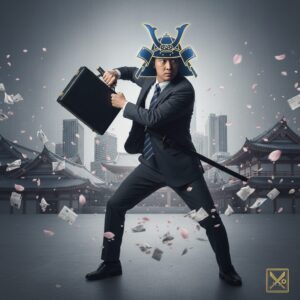
Hey everyone, Sofia here! So, let’s spill the tea on Japan. When you picture Japan, what pops into your head? For a lot of people, it’s this super disciplined, almost futuristic society. You think of Tokyo’s neon-drenched streets, serene temples, and, of course, the iconic ‘salaryman’ – that sea of dedicated professionals in identical dark suits, marching to their corporate offices, ready to pledge their entire lives to a single company. It’s a powerful image, one that’s defined Japan Inc. for decades. It’s the vibe of ultimate dedication, of a society that works in perfect, synchronized harmony. But here’s the plot twist, and it’s a big one. If you hang around hotspots like Shibuya or Shimokitazawa in Tokyo, you’ll see a totally different picture. You’ll see legions of young people who are actively ghosting that entire corporate dream. They’re working in cool cafes, indie bookshops, bustling ramen joints, or picking up shifts at the local conbini. They’re not climbing any corporate ladder; in fact, they’ve kicked it over. These are the ‘Freeters’ (フリーター), and they represent one of the biggest, most misunderstood cultural shifts happening in Japan right now. The name itself is a mashup of the English word ‘free’ and the German word ‘Arbeiter,’ meaning ‘worker.’ It describes someone who intentionally opts out of a full-time, salaried position to make a living through a patchwork of part-time jobs, or ‘arubaito’ (アルバイト). From the outside, it can look totally wild. Why would anyone, in a country obsessed with stability and social harmony, choose a path that seems so unstable? Are they lost? Are they rebels? Or have they figured something out that the rest of the world hasn’t? This isn’t just a trend; it’s a quiet revolution against a century of expectations. It’s about a new generation looking at the ‘good life’ their parents chased and saying, ‘Thanks, but no thanks. We’re doing this our way.’ It’s a massive vibe shift that gets to the very heart of what it means to be young in Japan today. Let’s get into it, because understanding the Freeter is understanding the future of Japan.
This quiet revolution is a stark contrast to the rigid, synchronized world of the traditional salaryman, whose corporate culture was once the undisputed norm.
The Blueprint: Deconstructing the Myth of the Japanese Salaryman
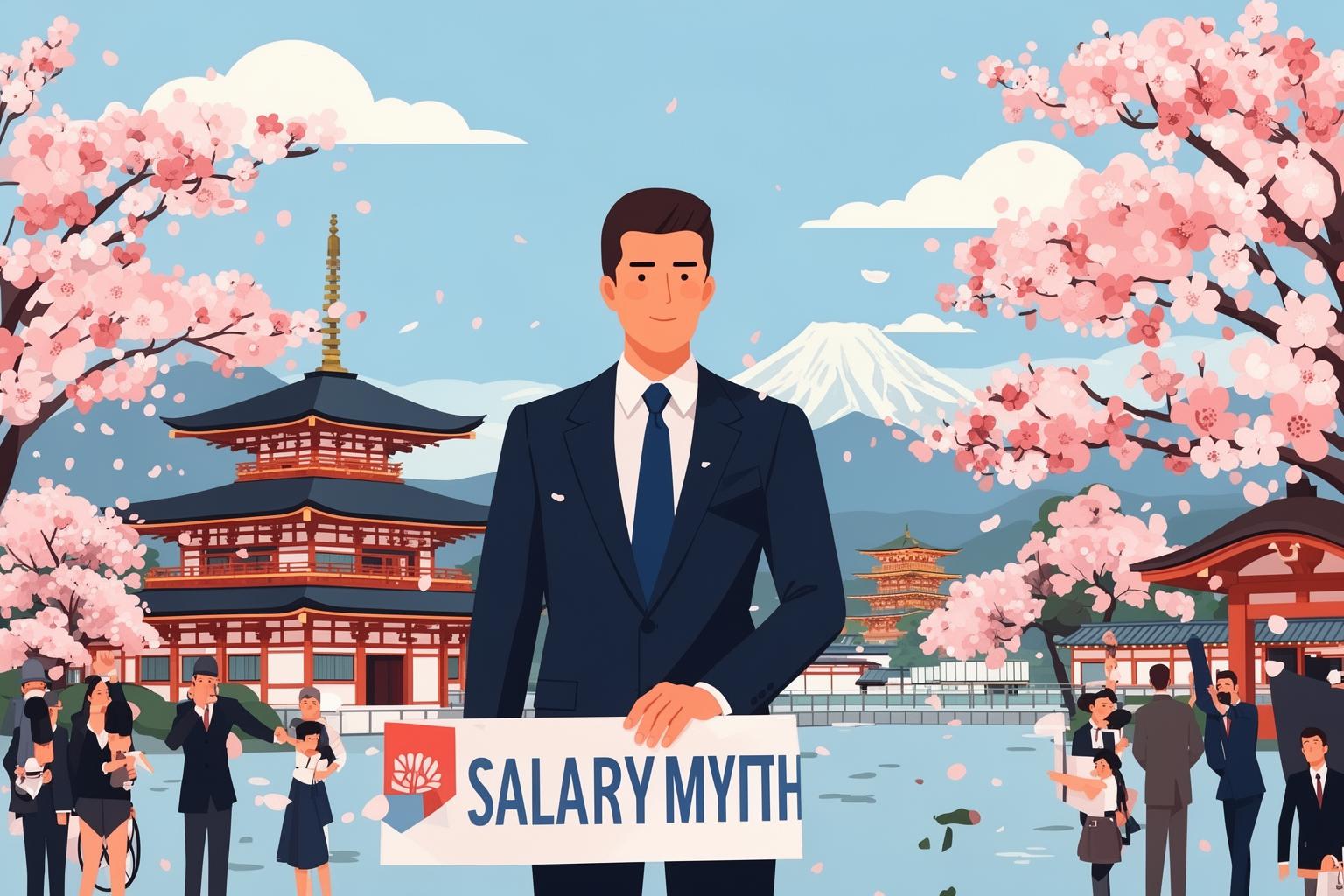
To truly understand why the Freeter lifestyle is such a significant phenomenon, we first need to step back and grasp the system they are rejecting. The salaryman was more than just a job; it was the cornerstone of modern Japanese society—the ultimate benchmark for a successful life. This entire ideal was shaped in the aftermath of World War II. Japan needed to rebuild, requiring a fiercely committed, loyal workforce to drive its economic miracle. And that was precisely what it achieved. The government and major corporations devised an unwritten social contract that became the engine behind the nation’s remarkable recovery. This arrangement was not solely about earning money; it was about constructing a new Japan.
The Post-War Pact: Building a Nation, One Company at a Time
At the heart of this system was a network of interconnected promises that provided something incredibly valuable in a post-war environment: security. The company was not merely a workplace; it was a place that cared for you, from the day you graduated college until retirement. This fostered a level of loyalty almost unimaginable in the West today. Your identity was tied to your company. When introducing yourself, you would not just state your name; you would say, for example, “I’m Tanaka from Mitsubishi.” It was your tribe, your family, your entire world.
The Birth of ‘Shūshin Koyō’: More Than a Job, It’s a Covenant
At the core of this system was ‘Shūshin Koyō’ (終身雇用), meaning ‘lifetime employment.’ This was the ultimate goal. Once hired by a reputable company straight out of university, you were guaranteed employment for life. Barring any catastrophic event, you would never be fired. The company invested in your training, transferred you across departments, and developed you over decades. In return, you pledged unwavering, absolute loyalty. You were expected to prioritize the company’s needs above all else: family, hobbies, and health. This wasn’t seen as exploitation but as a noble sacrifice for the collective good. The company promised stability, and you promised to be a loyal crew member, rowing in harmony until retirement. It was a deeply paternalistic system, providing a strong sense of belonging and predictability in a chaotic world.
The Seniority Ladder (‘Nenkō Joretsu’): A Slow Climb to the Top
Alongside lifetime employment was ‘Nenkō Joretsu’ (年功序列), the seniority-based wage and promotion system. This meant that salary and rank were determined not necessarily by skill or performance but by age and tenure. Everyone started together at the bottom, a group of new graduates, and gradually ascended the ladder as a cohort. It was a steady, predictable progression. This system eliminated internal competition and nurtured group harmony, or ‘wa’ (和), a critically important concept in Japanese culture. There was no point in trying to outshine colleagues; your time would come. This cultivated a strong sense of equality within age groups and reinforced the idea that the group mattered more than the individual. The drawback, of course, was that it could suppress innovation and reward complacency, but for decades, the stability it provided was considered a fair trade.
The Company as Family: From Housing to Holidays
Corporate paternalism extended even further. Large companies often functioned as quasi-welfare states for their workers. They supplied subsidized housing in company dormitories (‘shataku’), which was invaluable in a country with exorbitant real estate prices. They offered family allowances, health check-ups, and company-sponsored vacations to hot spring resorts. There were company sports teams, cultural clubs, and elaborate company events. Your social life was deeply intertwined with your work life. The company was not just a place to earn a living; it was where you found friends, sometimes a spouse, and your entire social identity. Leaving the company was not merely quitting a job; it was akin to being excommunicated from your family and community. The stakes were extraordinarily high.
A Day in the Life: The Unspoken Rules of the Corporate Grind
So what did this system feel like on a daily basis? It was a life of strict discipline, long hours, and unspoken social codes. The pressure to conform was immense, and the boundary between personal and professional life was virtually nonexistent. For generations, this was the price of entry to a stable, middle-class existence. Yet it was a grind, a relentless cycle demanding total submission.
The Morning Commute Crush: A Symphony of Silence
The salaryman’s day often began crammed into a commuter train, a phenomenon called ‘tsūkin rasshu’ (通勤ラッシュ). These trains were famously silent and orderly despite the close quarters. This was a powerful symbol of the Japanese social ethic: endure hardship quietly and without complaint for the group’s sake. You read your newspaper or stared at your phone, avoiding eye contact. This daily ritual was the first act of self-effacement, preparing you for a long day of corporate conformity. The commute itself was a test of endurance, with many salarymen traveling over an hour each way, sacrificing sleep and family time before the workday officially started.
The Art of ‘Nomikai’: The Mandatory After-Work Ritual
Work didn’t end at the clock-out time; far from it. A vital part of corporate life was the ‘nomikai’ (飲み会), or drinking party. These were compulsory social gatherings, an extension of the workday where much of the real business took place. Hierarchies temporarily relaxed, allowing more open dialogue with bosses, a practice known as ‘bureikō’ (無礼講). This was the time for team bonding, smoothing office politics, and demonstrating loyalty. Declining a nomikai invitation was a major social misstep, seen as rejecting the team. So multiple nights a week, you’d be out drinking late, spending more time with your ‘work family’ than your own, often paying part of the bill yourself. It was a powerful tool for maintaining group cohesion but also utterly exhausting, draining personal time and finances.
Overtime is Not a Question: The Culture of ‘Service Zangyo’
Perhaps the most notorious aspect of salaryman culture was the excessively long working hours. The official day might end at 5 or 6 PM, but no one dared leave before their boss. Leaving on time suggested you weren’t busy, dedicated, or a team player. This created a culture of ‘service zangyo’ (サービス残業), or unpaid overtime. Employees stayed late mainly to be seen at their desks, creating an illusion of productivity. This was not simply about finishing work but a performance of loyalty. The hours spent in the office were a badge of honor, proof of your corporate warrior spirit. This culture of overwork became so entrenched that it led to the tragic phenomenon of ‘karōshi’ (過労死), or death from overwork, a social issue that continues to afflict Japan today.
The Great Unraveling: When the Japanese Dream Hit a Brick Wall
For nearly forty years, despite its imperfections, this system actually functioned. It transformed Japan from a war-ravaged country into the world’s second-largest economy. The salaryman dream was attainable: you worked diligently, purchased a home, raised a family, and retired with a comfortable pension. It was a pact fulfilled by success. But then, in the early 1990s, the music stopped. The once seemingly unstoppable economic engine faltered, stalled, and plunged into a steep decline. The dream didn’t just fade away; it shattered into countless fragments, and the social contract that had shaped modern Japan was effectively nullified. This marked the turning point when everything changed.
The Bubble Pops: The ‘Lost Decade’ That Never Ended
The 1980s in Japan were marked by extraordinary economic exuberance, known as the ‘Bubble Economy’ (バブル景気). Stock markets and real estate prices soared to unprecedented levels. Corporate excesses were legendary. Firms purchased iconic New York buildings, and a plot of land in Tokyo’s Ginza district was reputedly valued higher than the entire state of California. It seemed the celebration would last forever. However, it ended abruptly. In 1991, the bubble burst dramatically. The stock market crashed, property values tumbled, and the economy slid into a prolonged stagnation, dubbed the ‘Ushinawareta Jūnen’ (失われた10年), or the ‘Lost Decade.’ Unfortunately, that decade extended into two, then three, resulting in a prolonged economic winter from which Japan has yet to fully recover.
From Economic Miracle to Stagnation: What Went Wrong?
The crash served as a harsh wake-up call. The pillars of the economic miracle—close relationships between banks, government, and corporations—that had once been strengths, now turned into liabilities. Banks found themselves burdened with massive bad debts, and ‘zombie companies’ technically bankrupt were artificially kept afloat, hindering the growth of newer, more dynamic enterprises. The government’s response was sluggish, and consumer confidence vanished. The nation’s mood shifted from boundless optimism to deep-seated anxiety and pessimism. The era of guaranteed growth was over. For young people entering the workforce during this period, the world looked drastically different and far more uncertain than it had for their parents.
The Shattering of Lifetime Employment: Restructuring and Betrayal
The economic downturn forced companies to take unprecedented steps: they began to break the sacred promise of lifetime employment. To survive, corporations engaged in ‘risutora’ (リストラ), a Japanized term for ‘restructuring.’ This involved mass layoffs, hiring freezes, and encouraging older workers into early retirement. Salarymen who had devoted their entire lives to their companies suddenly found themselves out on the street. The psychological blow was severe. It represented a profound betrayal of the social contract. If companies could no longer guarantee lifelong employment, why should employees offer unwavering loyalty? The very foundation of the salaryman system collapsed. The ‘secure’ path was unexpectedly revealed as a high-stakes gamble, and trust between employer and employee was irreparably damaged.
The ‘Employment Ice Age’: A Generation Left Out in the Cold
For the young people coming of age during and after the Lost Decade, conditions were even harsher. They faced an economic reality that was brutally unforgiving. This era became known as the ‘Shūshoku Hyōgaki’ (就職氷河期), or the ‘Employment Ice Age.’ The stable, secure, full-time corporate jobs—once a guaranteed right for their fathers’ generation—simply disappeared. They were a generation adrift, unable to access the upward ladder of success no matter how hard they tried.
‘Shinsotsu Ikkatsu Saiyō’: The Tyranny of the Fresh Graduate System
Japan’s corporate hiring process, called ‘Shinsotsu Ikkatsu Saiyō’ (新卒一括採用), only worsened the problem. This highly synchronized and rigid system hires new university graduates in a single batch each spring. You get only one chance, in the year you graduate, to secure a good corporate job. If you miss this window—due to a lack of positions or failure to secure one—it becomes exceedingly difficult to re-enter the traditional career track. You cease to be considered a ‘fresh’ graduate. This unforgiving, all-or-nothing method meant that an entire generation of talented young people were shut out of the corporate world through no fault of their own, simply because they graduated at the wrong time.
The Rise of the ‘Involuntary’ Freeter: A Role Defined by Circumstance
So what became of these ‘Lost Generation’ graduates? Unable to secure ‘seishain’ (正社員), or full-time permanent employment, their only option was to take on part-time, temporary, or contract work. They became the first wave of Freeters. However, unlike later generations who chose this lifestyle, for them it was a forced reality caused by a failed economy. They were ‘involuntary’ Freeters, still hoping to one day find stable employment but stuck in a cycle of precarious work. They worked hours comparable to full-time employees but without benefits, job security, or raises. This created a new underclass in Japan’s workforce—a two-tiered system of secure insiders and vulnerable outsiders. This generation’s experience of disillusionment and hardship sowed the seeds for the next generation’s radical rethink of work and life.
The New Wave: Redefining Success on Their Own Terms
Fast forward to today—young people becoming Freeters now are a different breed. They grew up witnessing the struggles of the ‘Lost Generation.’ They saw their parents worn down by the corporate machine, only to be let go during restructuring. They watched the promise of stability vanish. As a result, their perspective is fundamentally different. For many, being a Freeter is not a tragic fate; it’s a conscious, deliberate choice. It represents an active rejection of a broken system and a bold effort to build a life based on new values: freedom, flexibility, passion, and mental well-being. They have examined the old definition of success and chosen to rewrite it. It’s an entirely new vibe.
The Passion Economy: Why a 9-to-5 Stifles Creativity
One of the key forces behind the modern Freeter movement is the desire to pursue passions that simply cannot fit within the rigid structure of a traditional Japanese corporate job. The old salaryman model demanded total commitment, leaving no room for anything else. Today’s youth refuse to make that sacrifice. They want to be creators, artists, performers, and entrepreneurs, and the Freeter lifestyle offers them the most valuable resource: time.
The ‘Yume-Oi’ Freeter: Pursuing Dreams from Music to Manga
In Japanese, ‘Yume-oi’ (夢追い), meaning ‘dream chaser,’ perfectly describes a large portion of the Freeter population. These are the aspiring musicians striving to break into Tokyo’s underground music scene, the budding actors attending classes between shifts, the illustrators building portfolios to become ‘mangaka’ (manga artists), or the fashion designers saving to launch brands in Harajuku. For them, a part-time job at a café or convenience store is not a dead end; it’s a strategic choice. It pays the bills, covers rent for their tiny apartments, and—crucially—provides a flexible schedule that allows them to attend auditions, hone their craft, and work on creative projects. A corporate job with its 12-hour days and obligatory nomikais would be a death sentence for their dreams. They’re choosing passion over pension.
Side Hustle Nation: Turning Hobbies into Income in the Gig Economy
The rise of the internet and the global gig economy has significantly enabled this lifestyle. It’s easier than ever to monetize skills and hobbies outside traditional employment. Young Japanese are using platforms like YouTube, Instagram, and freelance marketplaces to build brands and income streams. They may work part-time as baristas for steady income, but their true hustle lies in freelance web design, selling handmade accessories online, or growing a following as gaming streamers. The Freeter model lets them piece together multiple income sources, providing control and autonomy that a single corporate employer could never offer. They are CEOs of their own lives, and their business is their happiness.
The Digital Nomad in a Micro-Apartment: Prioritizing Freedom over Space
This new working style also reflects a preference for a mobile, less materialistic lifestyle. The Freeter approach values freedom and experiences over traditional success markers like a large house or luxury car. Many live in small, minimalist apartments, spending money on travel, concerts, or creative gear. They might work intensively for months, save money, then take a month off to backpack through Southeast Asia. Such flexibility is impossible in a traditional Japanese company, where even a week of consecutive vacation is often frowned upon. The Freeter lifestyle enables them to tailor life to their interests, not vice versa.
Escaping the Matrix: Rejecting Corporate Toxicity
It’s not just about what they’re moving toward; it’s also what they’re fleeing. Thanks to the internet and social media, young Japanese are highly aware of corporate culture’s dark side. They’ve heard horror stories from parents and older siblings and read anonymous accounts of power harassment and soul-crushing overtime. They consciously choose to opt out of a system they see as fundamentally unhealthy and inhumane.
Karōshi: When Work Literally Kills
The concept of ‘Karōshi’ (過労死), or death from overwork, is neither exaggerated nor a myth. It is legally recognized in Japan. Each year, people die from heart attacks, strokes, or suicides caused by extreme stress and excessive hours. High-profile cases make headlines, starkly reminding the public of the ultimate cost of corporate devotion. For a generation prioritizing mental health and work-life balance, sacrificing one’s life for a company isn’t just unappealing; it’s absurd. They view the salaryman path not as stability but as a potential death trap.
Pawa-hara and Seku-hara: The Silent Epidemic of Harassment
Japanese corporate culture is infamously hierarchical, creating fertile ground for harassment. ‘Pawa-hara’ (パワハラ), or power harassment, is widespread, where superiors bully, humiliate, or impose unreasonable demands on subordinates. This can include public reprimands or impossible tasks. Likewise, ‘seku-hara’ (セクハラ), or sexual harassment, remains a serious issue in many male-dominated workplaces. The culture of ‘gaman’ (我慢), or silent endurance, once expected victims to suffer quietly. The younger generation refuses to ‘gaman.’ They demand safe, respectful work environments and, if unavailable in corporate settings, create their own by working independently or in less hierarchical part-time jobs.
The Suffocating Hierarchy: Why Gen Z Feels Stifled
Beyond blatant harassment, the rigid seniority system can be incredibly stifling for ambitious, creative youth. Traditional companies often dismiss young employees’ ideas simply due to their age. They’re expected to observe silently, learn from seniors (‘senpai’), and wait their turn. This clashes with Gen Z’s values of innovation, collaboration, and immediate impact. They don’t want to wait two decades to be heard. The Freeter lifestyle, or work in smaller startups and creative agencies, offers chances to be valued for skills and ideas rather than age. It’s an escape from an outdated, suffocating system.
The ‘Kosupa’ Mindset: Calculating Life’s True Cost
At the core of this shift lies a pragmatic, almost economic, perspective on life, encapsulated by the popular slang ‘kosupa’ (コスパ). Short for ‘cost performance,’ ‘kosupa’ is a concept young Japanese apply to everything from gadgets to life decisions. It means seeking the best return for the lowest cost.
Is the Paycheck Worth the Pain? A New ROI
When applied to careers, the calculation is straightforward. The ‘cost’ of a salaryman job is enormous: time, freedom, mental and physical health, personal relationships. The ‘performance,’ or return, is a high salary and social status. For earlier generations, this was worthwhile. For today’s youth, the equation has changed. They see the cost as too high for the return. They ask: is a bigger paycheck worth sacrificing your entire life? Their answer is a firm no. They believe the ‘kosupa’ of the Freeter lifestyle is better. The ‘cost’ is a lower income and less stability, but the ‘performance’ is huge: freedom, flexibility, low stress, and time to pursue what truly makes them happy. It’s a different kind of life ROI that values well-being over wealth.
Minimalism and ‘Simple Living’: Finding Joy Beyond Consumerism
This ‘kosupa’ mindset aligns with a global trend toward minimalism and simple living. Many young Japanese reject their parents’ generation’s hyper-consumerism. They don’t dream of suburban homes or luxury cars, which are financially out of reach for many and perceived as burdens. Instead, they find joy in smaller, attainable pleasures: a perfect cup of coffee, a vintage record, a weekend trip to the mountains. By consciously wanting less, they require less money to live. This makes the lower income of a Freeter a viable and appealing choice. They’re stepping off the hedonic treadmill, finding a more sustainable happiness.
Experiences over Possessions: The Freeter’s Currency
Ultimately, the currency that matters most to this generation is not yen, but experiences. They value creating memories, learning new skills, and connecting with others. The Freeter lifestyle enables an experience-rich life filled with spontaneity. You can work a ski resort job in winter, a farm job in Hokkaido in summer, or move cities on a whim. This varied, adventurous life is viewed as far more valuable than the monotonous, predictable life of a salaryman. They trade a lifetime of security for a lifetime of stories, and for them, it’s the best deal possible.
The Reality Check: The Unfiltered Truth About the Freeter Lifestyle
Nowadays, it’s easy to romanticize the Freeter lifestyle as a completely awesome existence of freedom and artistic pursuit. For many, it truly is a liberating choice. However, it would be a major disservice not to acknowledge the downside. This path comes with serious challenges and risks. The freedom that makes it so attractive also entails a profound lack of security, as the Japanese social system remains largely designed to support the traditional salaryman rather than the flexible, part-time worker. Choosing the Freeter route means navigating a world without a safety net, which can be extremely difficult.
Financial Fragility: Living on the Edge
The most obvious and urgent challenge for any Freeter is money. While they may manage to cover their everyday expenses, building any form of long-term financial security is immensely difficult. They constantly live on the edge, just one unexpected illness or economic downturn away from a crisis.
The Paycheck-to-Paycheck Reality: No Bonuses, No Safety Net
Full-time employees in Japan enjoy numerous financial benefits that Freeters can only envy. The largest are the biannual bonuses, which can amount to several months’ salary and are a vital part of a household’s yearly income. Freeters receive none of this. Their earnings depend solely on the hours they work. There are no paid sick days, no seniority-based raises, and no severance pay if their job ends. This makes financial planning nearly impossible. Saving for the future becomes a luxury when you’re just trying to pay rent next month. This ongoing financial instability can generate enormous stress and anxiety, undermining the very sense of well-being they sought in the first place.
The Credit Score Conundrum: Locked Out of Major Life Purchases
Japan is a society built on trust and stability, and its financial system reflects this. Getting a loan for a car, a mortgage for a house, or even a credit card requires proving you have a steady income. As a ‘seishain’ (full-time employee) in a reputable company, this is straightforward. As a Freeter with fluctuating, non-guaranteed income from multiple part-time jobs, it is almost impossible. They are effectively barred from major financial milestones that signify adulthood for many. While this might not matter much when you’re 22 and content living in a small apartment, it can become a serious obstacle later if your priorities shift and you want to establish roots.
Pension Panic: What Happens When You’re 65?
This is perhaps the scariest long-term issue. Japan’s public pension system has two tiers. Everyone must pay into the basic national pension, but substantial benefits come from the ‘kōsei nenkin,’ or employees’ pension insurance, which is only available to full-time workers. Employers cover half the contributions for their employees, and the resulting retirement benefits are significantly higher. Freeters are often enrolled only in the basic pension, which barely provides enough to live on. Many even struggle to pay these basic contributions consistently. The outcome is a looming crisis of elderly poverty for a large portion of the population. The freedom they enjoy in their 20s and 30s could come at the price of a destitute old age.
Navigating the Social Maze: Judgment and Acceptance
Beyond financial difficulties, Freeters face social pressures and persistent stigma. While their lifestyle is becoming more common and accepted among peers, older generations and society as a whole can still be deeply critical. Japan values conformity and clear social roles, and the Freeter doesn’t fit neatly into traditional categories.
The ‘Gaman’ Generation vs. the ‘My Pace’ Generation: A Generational Clash
Many older Japanese, who lived through the rebuilding era and sacrificed everything for their companies, simply cannot understand the Freeter attitude. They view it as lazy, irresponsible, and a selfish avoidance of societal duty. This often causes intense family conflicts. Parents who hoped their child would secure a stable job at a major company may feel shame or failure and worry constantly about their child’s future. This conflict is a classic clash between the ‘Gaman’ (endurance) generation, which values quiet sacrifice for the collective good, and the ‘My Pace’ (at my own pace) generation, which prioritizes individual happiness and well-being.
Dating and Marriage: The Freeter’s Dilemma
This social stigma can heavily impact a Freeter’s personal life, especially regarding relationships and marriage. For many Japanese, particularly outside very liberal urban areas, a stable job is a prerequisite for a marriage partner. A man who is a Freeter may be seen as an unsuitable husband, unable to support a family. When meeting a potential partner’s parents, being a Freeter can be an immediate deal-breaker. This pressure forces many to choose between their lifestyle and the possibility of starting a family, adding an emotional layer of complexity to their lives.
Finding Your Tribe: The Rise of Alternative Communities
To cope with this lack of mainstream acceptance, many Freeters create their own close-knit communities. They find solidarity with other creatives, artists, and part-time workers in shared houses, co-working spaces, and online forums. These subcultures, often centered in neighborhoods like Tokyo’s Shimokitazawa or Koenji, provide an essential sense of belonging and validation. Here, their life choices are not only accepted but celebrated. They collaborate on projects, share job information, and offer emotional support. These tribes become their chosen family, a crucial buffer against the pressures of a society that doesn’t always understand them.
The Future is Unwritten: A Quiet Revolution in Progress
So, what does all this signify for Japan? The rise of the Freeter phenomenon is more than just a fleeting trend or a youth subculture. It reflects a much deeper transformation underway within Japanese society. It signals the cracking of old structures under the pressure of new realities. This transition from a collectivist, company-centered model to a more individualistic and flexible lifestyle is sparking a national dialogue about the very nature of work, happiness, and what constitutes a “good life” in the 21st century. This is a quiet revolution, and its outcome remains uncertain.
A System Under Pressure: Japan’s Changing Labor Landscape
The growing number of non-regular workers, including Freeters, has placed significant strain on Japan’s social and economic systems, which were designed for a different era. Both the government and corporations are gradually, and often reluctantly, being compelled to recognize that the old model is no longer viable. The future of Japan’s workforce will inevitably become more diverse and flexible, but the shift is slow and challenging.
The Government’s Reaction: Too Little, Too Late?
The Japanese government acknowledges these issues and has introduced labor reforms aimed at ensuring “equal pay for equal work” to narrow the gap between regular and non-regular employees. Efforts have been made to make it easier for companies to hire mid-career workers and to improve the social safety net for precariously employed individuals. Yet, many critics argue these steps are timid and fail to address the root causes. The deep-rooted cultural attachment to the old system remains strong, and change is unfolding at a glacial pace. There is genuine concern that by the time the system fully adapts, an entire generation will have been left behind.
How Companies are (Gradually) Adjusting
Confronted with a shrinking, aging population and a new generation rejecting traditional norms, some Japanese companies have begun to shift their approach. A few progressive firms are experimenting with more flexible work arrangements, such as four-day workweeks, remote work options, and performance-based pay replacing seniority-based wages. They aim to enhance work-life balance to attract young talent. However, these companies remain the exception rather than the norm. The vast majority of corporate Japan is still deeply conservative and resistant to change. The critical question is whether they can adapt fast enough to regain the loyalty and engagement of the youth they have alienated.
The Key Insight: It’s Not Laziness, It’s a Paradigm Shift
If there is one key takeaway from the Freeter phenomenon, it is this: do not mistake it for laziness or a lack of ambition. Quite the opposite. It represents a highly ambitious effort to redefine life’s most fundamental objectives. It is a brave response to a system that has failed to fulfill its promises and to a world offering new possibilities. This is a generation consciously choosing a different path—one that is more uncertain but, in their view, more authentic and more human.
From Collective Duty to Individual Fulfillment
The rise of the Freeter signals a historic shift in Japanese society’s pendulum. For most of the 20th century, the prevailing ideology was “messhi hōkō” (滅私奉公)—to extinguish the self and serve the public (or the company). The group was paramount; the individual was secondary. The Freeter movement is a powerful assertion of individualism. It proclaims that personal happiness, self-expression, and mental health are not luxuries to be enjoyed only after retirement but essential elements of a life worth living now. This marks a profound change from prioritizing collective good to valuing individual fulfillment.
What the Freeter Phenomenon Indicates About Japan’s Future
The Freeter serves as a mirror reflecting the challenges and contradictions of modern Japan. They embody the tension between tradition and modernity, stability and freedom, and an aging, rigid system versus the dynamic aspirations of a new generation. How Japan responds to this quiet rebellion will shape its future. Will it manage to foster a more flexible, inclusive society that harnesses the creativity and energy of its youth? Or will it cling to the past, creating a permanently divided society of insiders and outsiders? The answer is still unfolding—not in corporate boardrooms, but in the cafes, studios, and shared houses where Freeters are busy forging their own vision of the Japanese dream.