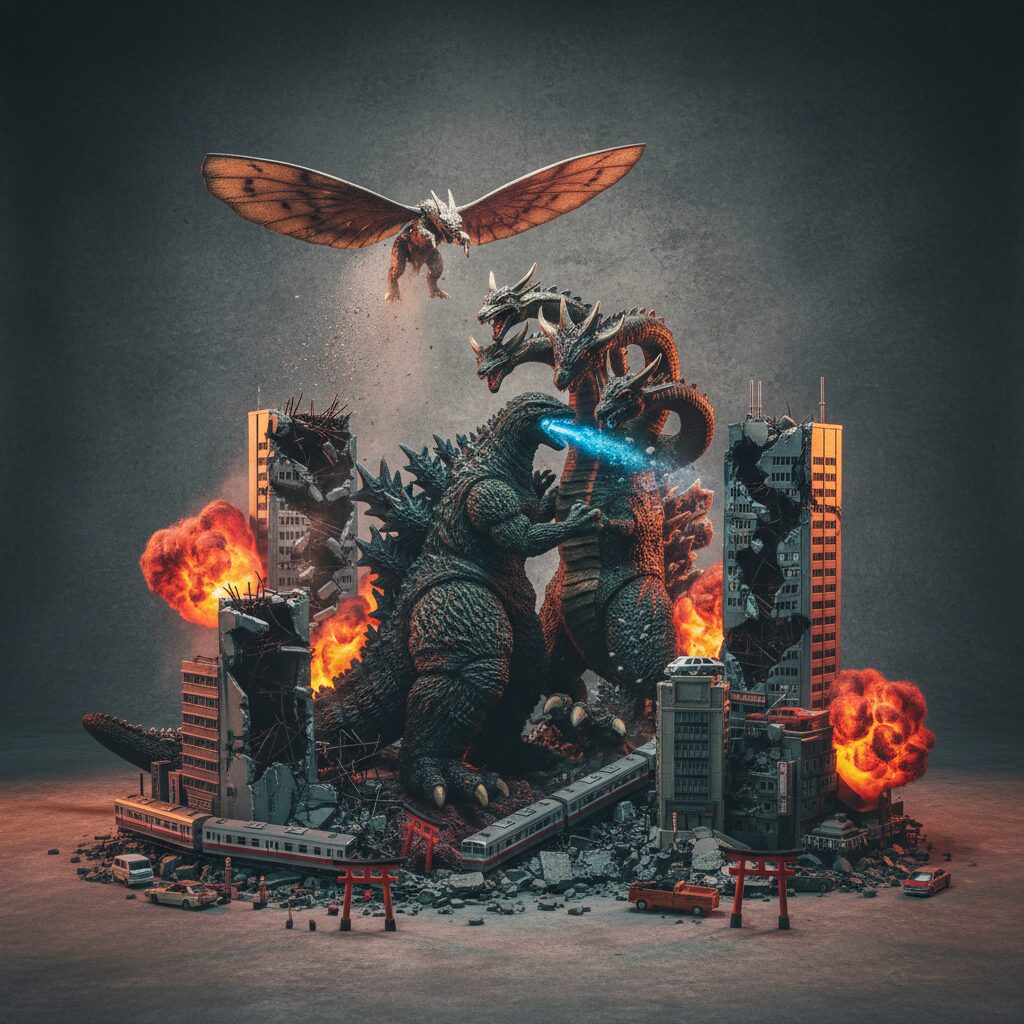
Yo, what’s up. So you’ve scrolled through your feed, seen the clips, right? Gigantic monsters, usually some variation of a super-sized lizard, absolutely wrecking Tokyo. Skyscrapers crumble like sandcastles, tanks melt under atomic breath, and thousands of tiny, screaming people run for their lives. And yet, the vibe is… different. It’s not just a grim disaster flick. It’s a spectacle, almost a party. In the West, a movie about a city getting leveled is usually pure horror, all grit and grief. But in Japan, when Godzilla or his buddies show up to stomp on the capital, there’s this weirdly festive energy mixed in with the terror. It’s loud, it’s chaotic, it’s insanely destructive, but it’s also… kind of a banger? You see the merch, the cute chibi versions of monsters that just vaporized a city block, the excited chatter about the special effects. It makes you wonder, for real: Why does Japan seem to get a kick out of watching its own destruction? It’s a legit question, and the answer is way deeper and more vibey than you’d think. It’s not about a love for violence. It’s a whole cultural mood, a way of processing some seriously heavy history and a unique relationship with disaster itself. We gotta peel back the layers on this one, from the literal atomic elephant in the room to ancient beliefs about gods and the very nature of existence here in this shaky, typhoon-smashed archipelago. This isn’t just about movies; it’s about the Japanese soul, no cap. It’s about finding a beat in the chaos, a reason to rebuild in the rubble, and a way to turn the ultimate nightmare into a legendary story. Before we dive into the beautiful, catastrophic mess of it all, let’s ground ourselves at the epicenter of this creative destruction, the dream factory where these nightmares were born: Toho Studios.
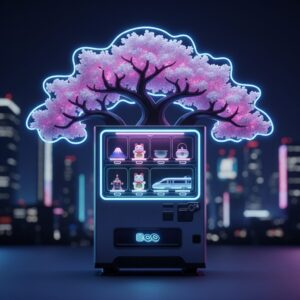
This cultural mood of finding a beat in the chaos is as uniquely Japanese as the country’s otherworldly vending machines.
The Unspoken Shadow: From Atomic Bomb to Atomic Breath
Alright, let’s get real for a moment. You can’t even begin to discuss Godzilla without mentioning the bomb. It’s the origin story—not just for the monster, but for the entire genre and the atmosphere surrounding it. The original 1954 Gojira film wasn’t some cheesy monster-of-the-week movie. It was outright a horror film, a national trauma captured on celluloid. It premiered less than a decade after Hiroshima and Nagasaki were devastated. That memory wasn’t history; it was a fresh, bleeding wound. Audiences who saw the film in theaters had lived through it. They had lost family, witnessed the mushroom clouds, and endured the horrifying aftermath of radiation sickness. Director Ishiro Honda had passed through Hiroshima after the bombing and was profoundly affected by what he encountered. This film was his way of processing that unspeakable horror.
Then, in March 1954, while the movie was still in development, the Lucky Dragon No. 5 incident occurred. A Japanese tuna fishing boat drifted too close to Bikini Atoll, where the U.S. was testing a hydrogen bomb far more powerful than the ones dropped on Japan. The crew was exposed to radioactive fallout, the so-called “death ash.” One crew member died. This event sent a fresh wave of nuclear fear and outrage through Japan. Suddenly, the abstract terror of the bomb became immediate and tangible again. It was no longer a distant wartime memory; it was a clear and present danger. This was the world Godzilla emerged from. He wasn’t merely a monster; he was a walking, roaring, radiation-breathing metaphor for the nuclear bomb. His skin resembled the keloid scars seen on survivors. His atomic breath mirrored the flash of the explosion. The city he destroyed wasn’t just any city—it was a direct representation of the firebombed and atom-bombed cities of the recent past. The scenes in the original film are grim. A geiger counter ticks ominously. Hospitals fill with radiation victims. A mother clings to her children amid the burning city, promising they’ll be reunited with their father soon. This is deeply heavy material. It was Japan confronting its greatest fear head-on.
So, the first act of this destructive spectacle wasn’t a celebration at all. It was a funeral. It was a raw, unfiltered articulation of a nation’s deepest trauma. The destruction wasn’t thrilling or exciting; it was terrifying and tragic. It was a way for a country subjected to the unspeakable to finally express it, even if through the allegory of a giant monster. The monster was the perfect symbol because it was apolitical. It wasn’t an American B-29 bomber; it was a force of nature awakened and mutated by human folly. This allowed the film to explore the consequences of nuclear weapons without getting tangled in the politics of who dropped the bomb on whom. The enemy wasn’t another nation; it was the weapon itself and humanity’s arrogance for creating it. This foundational layer of nuclear trauma is absolutely essential. Even as the series lightened and Godzilla became a hero, that atomic shadow never fully faded. It’s the core of Kaiju DNA. Every shattered building, every fiery explosion, carries an echo of that original, catastrophic atomic flash. Understanding this is the first step to grasping the whole vibe. The party couldn’t begin until after the mourning.
Shikata Ga Nai & The Beauty of Impermanence: Japan’s Disaster Mindset
So if the origin is so dark, how did we shift from a somber trauma metaphor to a popcorn-fueled spectacle? To understand that, you need to zoom out from the 20th century and consider Japan’s deep-rooted relationship with disaster. Geologically speaking, this place is a mess. It sits on the Pacific Ring of Fire. Earthquakes are just a regular part of life. Tsunamis are a historical reality. Volcanoes are literally sleeping giants scattered across the country. Typhoons rage through every year. For centuries, destruction has not been an anomaly; it has been a predictable, cyclical part of existence.
This reality has embedded two key concepts into the cultural psyche: shikata ga nai and mono no aware. Both are crucial for grasping the Kaiju vibe. Shikata ga nai is often translated as “it can’t be helped.” To a Western mindset, this might sound defeatist or passive, but it’s more complex than that. It’s a philosophy of radical acceptance. It acknowledges that some forces are completely beyond control. You can’t stop an earthquake. You can’t reason with a tsunami. You can’t argue with a volcano. Panic or resistance is futile. The practical response is to accept it happened, endure it, and then focus on what comes next: cleaning up, aiding neighbors, and rebuilding. This isn’t surrender; it’s profound resilience. It’s the mindset that allowed Japan to recover repeatedly from countless natural disasters and the man-made devastation of war.
Now, connect this to Kaiju. Godzilla, Mothra, Ghidorah… they aren’t just monsters. They are metaphors for natural disasters. Godzilla embodies the walking earthquake and atomic fallout. Mothra represents the unpredictable, powerful typhoon. They are unstoppable forces of nature. So when they appear and start wreaking havoc, the underlying cultural script isn’t “Oh no, this is the end of the world!” It’s “Ah, here we go again. Shikata ga nai.” The films often focus less on defeating the monster with brute force (which usually fails) and more on enduring the assault, minimizing damage, and surviving to rebuild. The heroes are often scientists, civil servants, or everyday people who find a way to carry on.
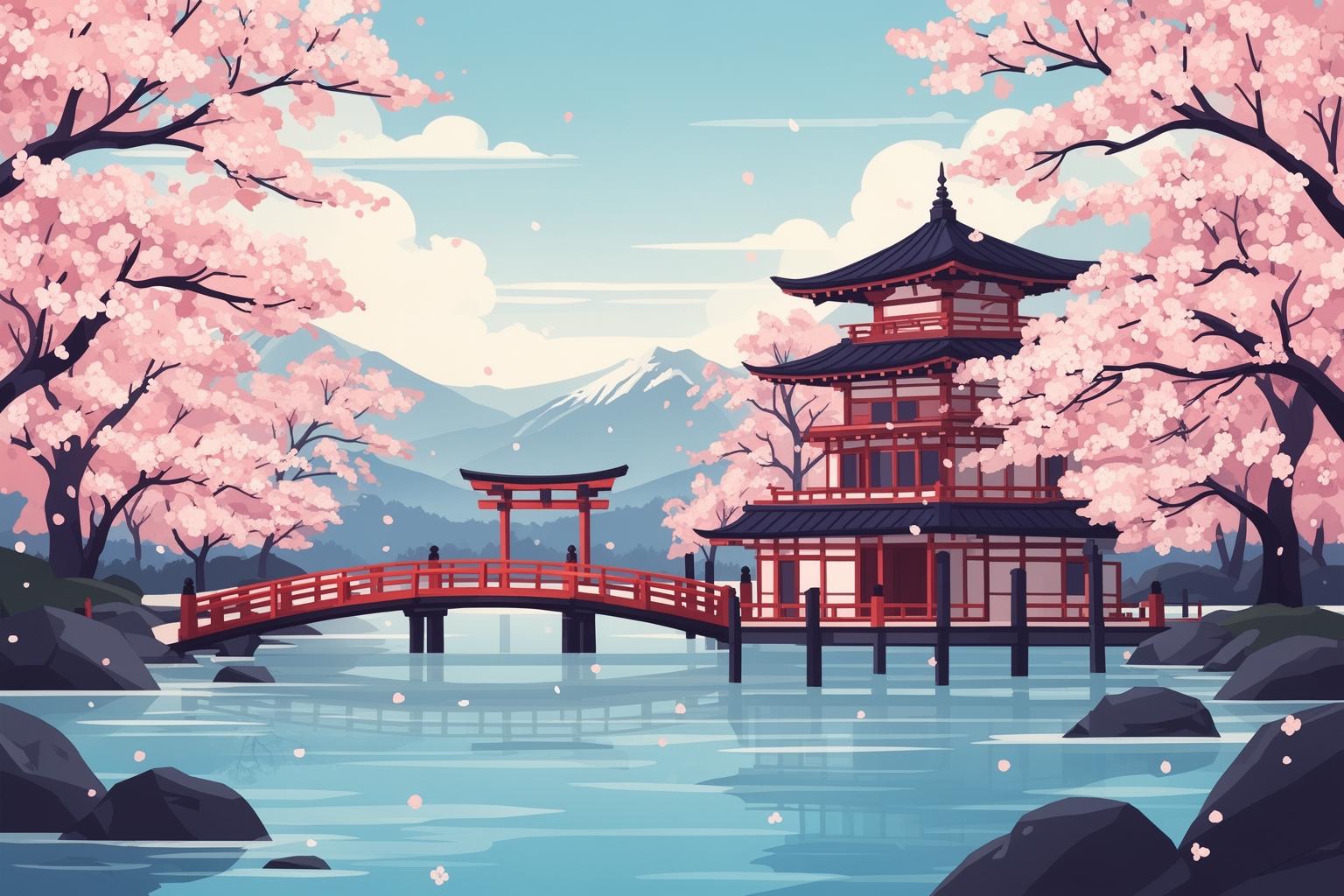
Then there’s mono no aware. This one is more poetic. It roughly translates to “the pathos of things” or an awareness of impermanence. It’s the bittersweet feeling that arises from understanding everything is fleeting, and that this transience is precisely what makes life beautiful. The most famous example is the sakura, the cherry blossoms. Their beauty is so intense because you know they’ll only last a week or two before fading. The whole nation celebrates this brief, beautiful moment. Mono no aware is about finding beauty in the falling petal, not just the blooming flower.
Apply that to a cityscape. In the West, skyscrapers are built to last centuries, symbolizing permanence and power. In Japan, especially in Tokyo—a city repeatedly leveled by earthquakes, fires, and bombs—the idea of permanence is almost a joke. The city is in constant flux, torn down and rebuilt. There’s a certain beauty in this cycle. So when a Kaiju stomps through Shinjuku and topples the Tokyo Metropolitan Government Building, there’s immediate horror, but beneath it, a flicker of mono no aware. It’s the spectacular, dramatic end of something that paves the way for something new. The destruction isn’t just an ending; it’s part of the cycle. Watching that meticulously crafted miniature city get obliterated is, in a strange way, like watching cherry blossoms fall on a massive, explosive scale. It’s a sad, beautiful, and epic acknowledgment that nothing lasts forever—and that’s okay. This blend of pragmatic resilience (shikata ga nai) and aesthetic appreciation of impermanence (mono no aware) transforms disaster into something that can be watched, processed, and even strangely enjoyed as a spectacle.
The Festival of Destruction: From Trauma to Tokusatsu Spectacle
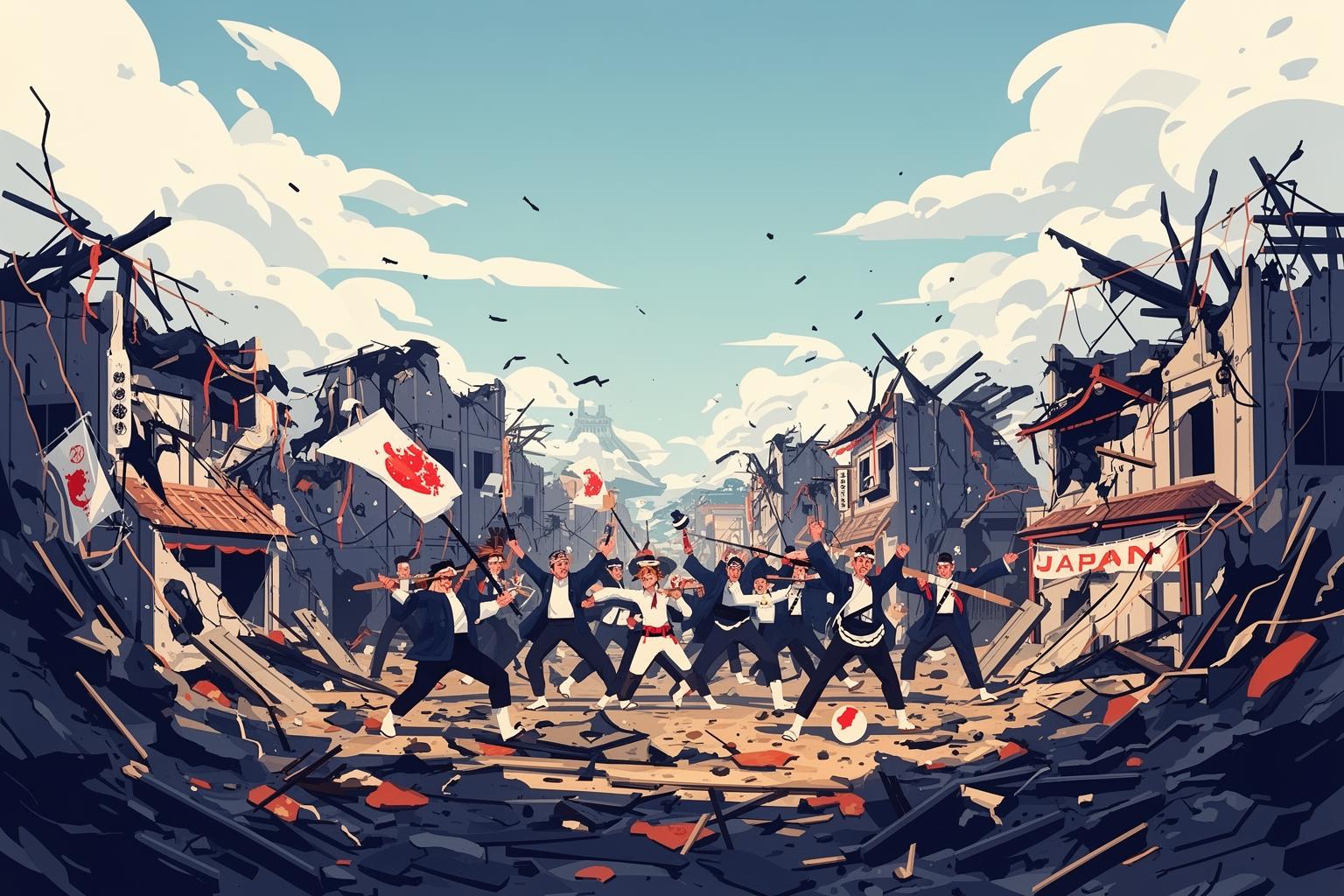
Alright, so we have the historical trauma and cultural mindset for handling disaster. Now comes the fun part: how all this evolves into a festival, a form of entertainment. This is where the magic of tokusatsu—the Japanese style of special effects that defines the Kaiju genre—enters the scene. The shift from the grim, black-and-white horror of the original Gojira to the colorful, chaotic monster battles of the 60s and 70s was intentional. As Japan recovered from the war and experienced rapid economic growth, the national mood shifted. People sought new myths, new stories. The raw wound of the bomb was starting to heal, and Godzilla evolved with it.
The Catharsis of Controlled Chaos
First, let’s explore catharsis. It’s a fundamental psychological need. Living in a place where a catastrophic earthquake could strike at any moment creates a low-level, persistent anxiety. Nuclear fears didn’t disappear after the 50s either; the Cold War kept those worries alive. A Kaiju film acts as a pressure release valve for collective anxiety. It transforms those abstract fears—of natural disaster, nuclear war, and runaway technology—into a tangible form: a giant monster. You see it, hear its roar, and watch it on screen.
Importantly, this chaos is controlled. You watch from a safe theater seat with a bucket of popcorn. You know it’s not real. It’s a simulation. This lets the audience experience the thrill and terror of total destruction in a secure, confined setting. You witness your worst fears unfold, watch society collapse, and then, by the film’s end, the monster is defeated or returns to the sea, the sun rises, and the credits roll. You walk out of the theater back into an intact Tokyo. This process is deeply cathartic. It helps you process anxieties without becoming overwhelmed. It’s like staring into the abyss, then turning on the light. This controlled chaos is central to the “festival” feel. A real festival, like a matsuri, offers sanctioned chaos, a temporary break from everyday order. A Kaiju movie serves a similar purpose; it’s a two-hour matsuri of destruction.
Tokusatsu Aesthetics: The Power of Make-Believe
Here lies the real secret. The reason Kaiju destruction feels festive rather than grim is the tokusatsu aesthetic. Eiji Tsuburaya, the visionary behind the effects for Godzilla and later Ultraman, never aimed for hyper-realism. That was never the point. The goal was to make it awesome. The style is theatrical, not documentary. The key element is “suitmation”—the technique of putting an actor inside an intricately designed, heavy monster suit and having them stomp through miniature cities.
This is crucial. The moment you notice the somewhat awkward, man-in-a-suit movements, your brain recognizes this isn’t real. There’s a charming, handcrafted quality to it. You appreciate the artistry of the suit, the actor’s performance (legends like Haruo Nakajima, the original Godzilla actor, were incredible athletes and artists), and the raw creativity. This intentional lack of realism creates psychological distance. You’re watching a performance, not a real creature. It’s a modern extension of traditional Japanese theater forms like Kabuki or Noh, with stylized masks, elaborate costumes, and non-naturalistic movements to narrate epic stories. Godzilla is essentially a giant, nuclear-powered Kabuki actor. This theatricality lets the audience cheer, gasp, and enjoy the spectacle without the heavy burden of real-world death and tragedy. It frames destruction as art, a dance of devastation.
The Miniatures and the Roar
The other side of this aesthetic is the incredible craftsmanship behind the miniature sets. Tokusatsu artists built extraordinarily detailed, 1/25th-scale replicas of Tokyo, with tiny cars, working lights, and iconic landmarks like Tokyo Tower and the Diet Building. The point of this painstaking work was to have it spectacularly destroyed. This is a critical part of the festival. It celebrates both creation and destruction. The audience marvels at the miniature city’s detail, then revels in the visceral thrill of Godzilla’s tail smashing through it, sending buildings and vehicles flying. It’s like a beautiful sand mandala, lovingly made then ritualistically wiped away.
This embodies an art of impermanence. The joy comes from watching craftsmanship obliterated. It’s not about human suffering; it’s about witnessing a gorgeous model demolished in the coolest way possible. Add to this the sound design. Godzilla’s roar—created by rubbing a resin-coated leather glove along the strings of a double bass—is one of cinema’s most iconic sounds. It’s more than a noise; it’s a statement, the voice of the spectacle. Explosions, crunches, electrical zaps form a symphony of destruction. It’s sensory overload, like a vibrant festival with taiko drums, fireworks, and chanting crowds. The tokusatsu aesthetic is deliberately crafted to turn disaster into exhilarating performance. It isn’t real, nor does it aim to be. It strives to be a myth, a legend, a really loud, unforgettable party.
Godzilla as Kami: The Monster as a Destructive God
To delve even deeper into the Japanese psyche, we must address religion and mythology, particularly Shintoism. Shinto is Japan’s indigenous faith, more a way of life than a rigid doctrine. Central to it is the idea of kami—gods, spirits, or divine essences that inhabit everything: mountains, rivers, trees, rocks, and even powerful natural phenomena. It’s important to understand that kami are not strictly good or evil in the Western sense. They represent forces of nature, embodying both a gentle, benevolent side (nigi-mitama) and a fierce, destructive side (ara-mitama).
A majestic mountain is a kami. The same mountain’s erupting volcano that devastates a village is also the kami. They are two facets of the same entity. Nature gives and nature takes away. It is mighty, awe-inspiring, and utterly indifferent to human concepts of morality. This perspective fundamentally differs from the monotheistic belief in a single, benevolent God. In Shinto, power commands respect, whether creative or destructive. An earthquake is terrifying, yet the immense force it embodies is, in a way, divine—an expression of the earth kami’s ara-mitama.
Now, consider Godzilla through this viewpoint. He is, for all intents and purposes, a modern-day kami. A god of destruction born from the atomic age, he rises from the sea—a traditional source of life and danger in Japan—wields power beyond human understanding, and moves according to his own inscrutable nature. He is the ultimate ara-mitama. When he levels Tokyo, it’s not out of malice but a manifestation of his nature, like a storm hitting land. He serves as divine retribution for humanity’s arrogance in creating the atomic bomb, a physical embodiment of nature’s fury.
This explains why Godzilla’s role varies so much from film to film. In one, he is the ultimate destroyer; in another, he becomes Earth’s protector, battling alien invaders or more malevolent monsters like King Ghidorah. This is not a plot inconsistency or poor writing; it aligns perfectly if you view him as a kami. The destructive force (ara-mitama) can be redirected to defend against a greater threat. The typhoon that floods a village also repels an invading fleet. The volcano god’s destructive power can serve as protection. This is why Japanese audiences can cheer for Godzilla even as he topples their landmarks. They aren’t merely celebrating a monster; they are honoring a powerful god, a force of nature currently on their side. The destruction displays divine power, and in facing such power, human reactions are awe, fear, and respect. It’s a religious experience, a modern mythology unfolding on screen. The Kaiju festival is, in essence, a ceremony to appease and venerate these new gods of the concrete jungle.
The Legacy in Concrete and Pixels: How Kaiju Vibe Shapes Modern Japan
The influence of this cultural narrative—this recurring cycle of spectacular destruction followed by determined rebirth—extends far beyond the movie screen. It spills into the real world, shaping the aesthetics and attitudes of modern Japan in surprising ways. The Kaiju vibe acts like a form of cultural programming, an echo resonating through architecture, urban planning, and, naturally, other pop culture forms such as anime and video games.
Urban Planning and Pop Culture
Consider Tokyo. It’s one of the most dynamic, futuristic cities on Earth, yet it has a relatively short architectural memory. Buildings are frequently torn down and replaced. It’s not unusual for a structure only 30 or 40 years old to be demolished to make way for something new. This architectural turnover happens much faster than in many European or American cities, where preservation tends to be prioritized. This is partly practical—driven by seismic engineering standards, economic pressures, and land value—but there’s also a cultural element, a kind of ingrained acceptance of impermanence linked to the Kaiju cycle. The city is not a static museum; it’s a living, evolving organism. Having witnessed fictional devastation countless times (and real destruction in 1923 from the Great Kanto Earthquake and in 1945 from firebombing), there is perhaps less sentimental attachment to individual buildings and more emphasis on the city’s energy and resilience as a whole. The city’s identity lies in its capacity to regenerate, not in remaining unchanged. The ongoing cycle of construction and demolition is a real-life, slow-motion echo of the Kaiju festival.
This pattern is also mirrored in the pop culture scene. Characters, series, or trends can burst onto the scene with tremendous intensity, only to fade and be replaced by the next big thing. There’s a constant churn, a rapid cycle of creation and destruction of trends paralleling the urban landscape. This is an environment culturally conditioned to embrace the new, fully aware it will soon be supplanted. It’s the spirit of “scrap and build” that rebuilt the nation post-war, now applied to everything from skyscrapers to social media phenomena.
The Echoes in Anime and Games
If Kaiju films are the classic rock of Japanese destructive pop culture, then anime and video games are the punk and electronica that followed. The DNA is unmistakable. Take a masterpiece like Katsuhiro Otomo’s Akira. Its climax features the absolute, psychedelic obliteration of Neo-Tokyo. This stunning, terrifying, and beautifully animated sequence descends directly from Godzilla’s rampage, but updated with cyberpunk, post-bubble-economy anxiety. It’s the same core theme: humanity’s technological hubris culminating in a cataclysmic, awe-inspiring, and horrifying release of power.
Or consider Neon Genesis Evangelion. Its central premise is a recurring cycle of Kaiju-like “Angels” attacking Tokyo-3, the city being systematically destroyed in every episode, and then magically rebuilt in time for the next battle. The destruction becomes so routine it fades into the background, a stage for the characters’ intense psychological drama. The series treats city-scale destruction as a constant, perfectly capturing the shikata ga nai mindset in a futuristic world. The destruction itself isn’t the focus; it’s the human response to it. The festival of destruction serves as a backdrop for exploring the human condition.
This theme appears everywhere. From countless video games where Japanese cityscapes serve as arenas for epic battles, to numerous anime series depicting world-altering cataclysms, the Kaiju legacy runs deep. It has established a visual and thematic language for spectacular destruction that forms a vital part of Japan’s cultural export. It creates a framework where destruction is not merely an end, but a catalyst for change, rebirth, and the next chapter of the story.
So, when you see Tokyo devastated in a movie or anime, you’re not witnessing a random act of violence. You’re watching the latest performance in a long-standing cultural festival. It’s a ritual connecting atomic bomb trauma, ancient earthquakes, Shinto gods, and a profound belief in the beauty of impermanence. It’s not a desire to see the world burn. It’s confidence that, even after the fire, rebuilding is certain. It’s a celebration of resilience, cleverly disguised as a monster mash. It’s the understanding that for cherry blossoms to bloom next spring, they must first fall—and there’s a serious, epic beauty in that.