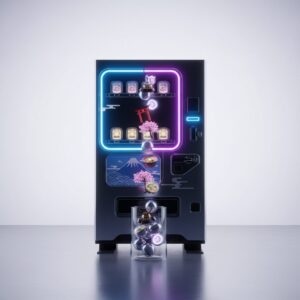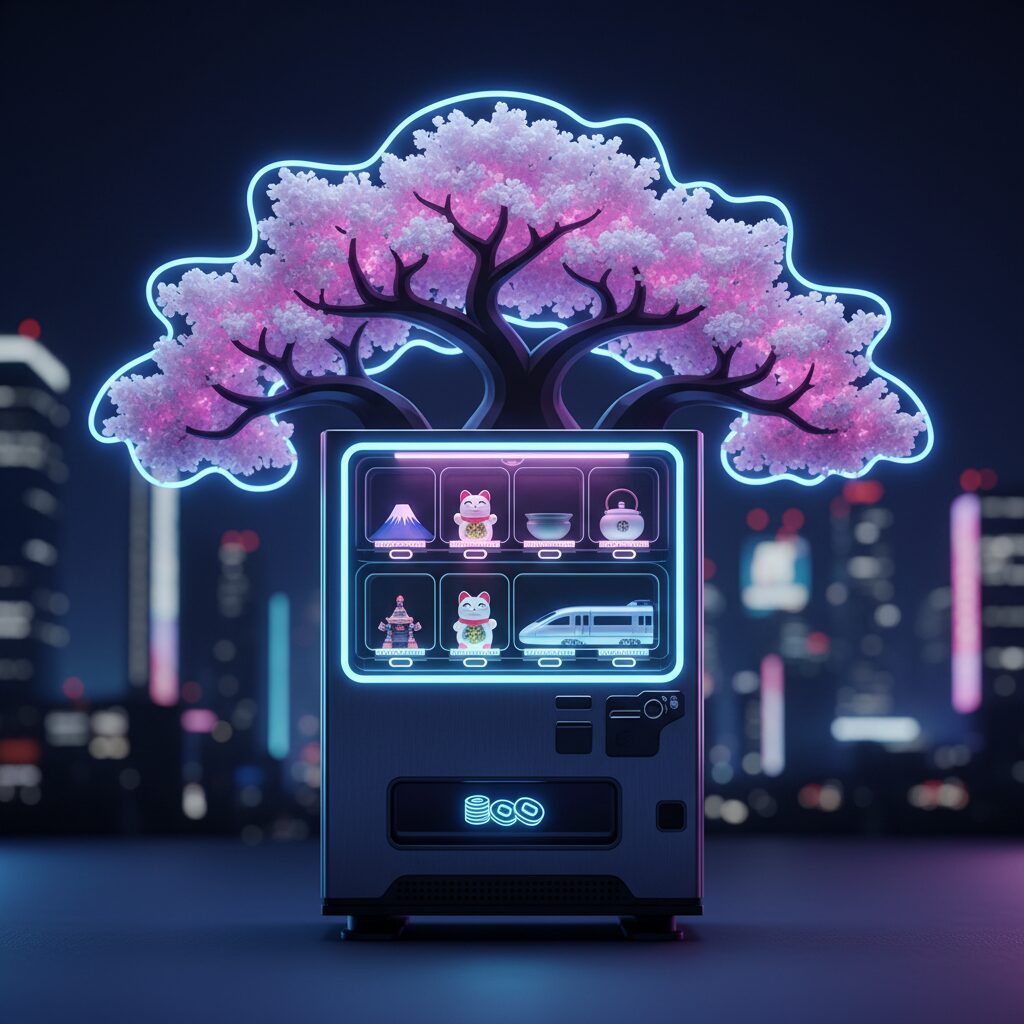
Yo, let’s get real for a sec. If you’ve spent any time doomscrolling through Japan-centric social media, you’ve seen it. The picture that’s pure, uncut aesthetic: a lone vending machine, humming softly, casting a ghostly, electric glow onto an empty street in the dead of night. Maybe it’s nestled between two traditional houses, or standing guard at a deserted rural crossroads, surrounded by rice paddies and the sound of cicadas. It’s a whole mood. It’s giving cyberpunk-meets-cottagecore, and honestly, the internet eats it up. But once the initial vibe check is over, the questions start popping up. Like, for real… why is it there? Who is buying a lukewarm can of corn soup at 3 AM in the middle of nowhere? Isn’t anyone worried it’s going to get smashed and robbed? And then you fall down the rabbit hole and see the other ones. The machines selling hot noodles, little folded paper fortunes, stag beetles, and the one everyone whispers about—used underwear. It’s at this point that fascination tips over into genuine confusion. It’s a classic “Japan, you’re wild” moment. But these glowing sentinels of convenience aren’t just random quirks. They’re not just there for the aesthetic. They are a legit, deeply embedded part of the cultural and economic landscape. They’re a window into the Japanese psyche, a physical manifestation of the country’s unique approach to safety, labor, social interaction, and what it means to be a consumer. So, let’s go beyond the pretty pictures and spill the tea on why Japan’s vending machine game is on a completely different level—a level that can feel both incredibly futuristic and hauntingly lonely at the same time. It’s a story that involves a whole lot more than just a need for a sugary drink.
This unique approach to consumerism and privacy is part of a broader ecosystem of uniquely Japanese services, much like the fascinating world of Japan’s love hotels.
The Holy Trinity: Safety, Cash, and the Aversion to Small Talk
Before we can even explore the more unconventional offerings like hot meals and insects, we first need to grasp the fundamental foundation that makes the entire Japanese vending machine ecosystem possible. It’s not just a single factor; rather, it is a perfect storm of three major cultural and social elements that have created an ideal environment for automated retail to flourish on a scale unmatched anywhere else on Earth. Think of it as the underlying operating system running quietly in the background. Without these core components, the whole network of solitary, glowing machines would collapse. It’s the unspoken social contract that allows a machine stocked with money and merchandise to sit quietly on a street corner without being vandalized or broken into immediately.
The Unspoken Trust: Low Crime as the Operating System
This is the key element, the central protagonist in this story. Japan’s famously low crime rate is not merely a statistic; it is a lived experience that shapes public spaces in ways that can perplex outsiders. In many parts of the world, leaving a fully stocked machine with a cash box on a dimly lit street would be, to say the least, a terrible business decision. It practically invites theft and vandalism. But in Japan, it’s just… routine. The level of societal trust is so high that businesses can install these machines expecting with confidence that they will remain unharmed the following day. This is not because every machine is a high-tech fortress—most are fairly standard. The true security system is society itself.
This phenomenon goes well beyond vending machines. It explains why a salaryman can leave his thousand-dollar laptop unattended at a Starbucks table while he orders. It’s why children take the subway alone from a surprisingly young age. It’s why luxury boutiques in Ginza can display their most expensive handbags right next to an open entrance without worry. There is a profound, ingrained collective respect for both public and private property. Vandalism is seen as a deeply antisocial act, a betrayal of the group harmony that supports much of Japanese culture. So when a beverage company decides to install a machine in a quiet residential neighborhood, they are not just wagering on the machine’s sturdiness; they are placing trust in the character of the community. And this bet almost always proves successful. This foundation of safety allows vending machines to be placed not only in busy, secure locations but literally anywhere there’s an electrical outlet and a sliver of space. It’s this trust that sustains the entire sprawling, decentralized network.
Still a Cash-First Society (Kind Of)
For a nation that pioneered bullet trains and advanced robots, Japan’s relationship with money can feel surprisingly traditional. While Tokyo and other major cities have embraced digital payments, a significant part of daily commerce, especially smaller purchases, still relies heavily on physical cash. Many people, particularly among the older generation, habitually carry a fair amount of yen. Japanese currency is notably coin-heavy. The largest coin, the ¥500 piece, is worth about four or five US dollars. This means that after a few small purchases, your pockets or purse can quickly start to resemble a pirate’s treasure chest, jingling with a substantial load of change.
Vending machines prove the perfect solution. They act as the nation’s coin vacuum cleaners. That handful of ¥100 coins you have left from lunch is exactly the right amount for a bottle of green tea. It’s a smooth, satisfying exchange. This reliance on cash is partly cultural and partly practical. Many small, family-run shops and restaurants have been slow to adopt credit card terminals due to transaction fees. Moreover, for some, handing over cash represents a more tangible and ‘real’ kind of transaction. The vending machine fits seamlessly into this ecosystem: a 24/7 coin-operated servant. While many modern machines now accept IC cards like Suica or Pasmo (rechargeable transit cards), their core identity remains deeply tied to the clink-clank-thud of a coin-and-can exchange. They fulfill an essential function, converting your burdensome loose change into instant refreshments.
The Glorious Escape from Human Interaction
Now we reach the juicy part, the socio-psychological engine behind the demand for automated service. Let’s be honest: sometimes, you just don’t want to engage with anyone. You’ve had a long day, your mind is fried, and the thought of even brief social niceties feels daunting. In Japan, a culture that highly values polite, structured, and often ritualized social interactions, this desire for a frictionless transaction is even stronger. Buying something from a person—even a simple drink—comes with a script: greetings, thank yous, a slight bow. It’s not difficult, but it does require a bit of social energy.
The vending machine provides a beautiful, silent escape from all that. It is the ultimate introvert’s dream. The machine offers no judgment. It doesn’t care if you’re buying a sugary coffee at midnight. It won’t engage in small talk. It doesn’t get your order wrong. You insert your money, press a button, and receive your product. The transaction is perfect, efficient, and blissfully anonymous. This is not to say Japanese people are antisocial—far from it. But in a society with such high population density, the ability to control one’s social exposure is a precious commodity. Vending machines create small, personal bubbles of pure, unfiltered commerce. They are a socially acceptable way to avoid minor human interaction, and in the hustle and bustle of everyday life, that small relief can feel like genuine luxury. It’s a subtle form of self-care, one canned coffee at a time.
From Drinks to Desperation: The Evolution of the Vending Machine Ecosystem
Japan’s vending machine scene is far more diverse and peculiar than anywhere else because it has had significantly more time and pressure to evolve. This phenomenon isn’t new; Japan has been a global pioneer in automated retail for over fifty years. This extensive history, combined with strong demographic and economic factors, has driven vending machines to occupy every imaginable market niche, evolving them from simple beverage dispensers into round-the-clock automated department stores that cater to both everyday and highly specific needs.
The Enduring “Labor Shortage”
To truly understand the vast number of vending machines, one must examine Japan’s demographic trends. The story unfolding over decades is one of a rapidly aging population paired with a persistently low birth rate, causing a chronic labor shortage. This is not a temporary downturn but a profound societal transformation. There are simply not enough young workers to fill available jobs, especially in the service industry. This is where automation becomes crucial—not as a trendy tech buzzword but as a vital economic necessity. Vending machines were Japan’s original workforce robots, functioning perfectly around the clock, every day of the year. They don’t require vacations, sick days, or health benefits, nor do they ever call in hungover. They silently and efficiently perform their tasks.
This economic reality explains why vending machines appear in places where a staffed store would be financially unfeasible. That lonely mountain lookout with a machine? Paying a person to man it all day selling a few drinks would be ruinous; a vending machine only needs electricity and weekly restocking. It’s the ultimate low-cost business model. This rationale has allowed vending machines to pioneer commercial opportunities, filling gaps left by a shrinking workforce. They serve office buildings after hours, residential neighborhoods far from convenience stores, and rural train stations with just a handful of daily passengers. These machines form a quiet army of salespeople, ensuring every commercial opportunity, no matter how small, is seized.
The “Retro” Vending Machines: A Window to the Showa Era
Though modern high-tech vending machines impress, for some explorers, the ultimate treasure lies in the retro vending machine corners. These locations feel frozen in time—dusty arcades of automated delights dispensing hot food from machines that look as if they belong in a 1970s sci-fi film. Renowned spots such as those in Sagamihara or the “Dorei” shop in Gunma are pilgrimage destinations for enthusiasts. These places are more than curiosities; they are living museums of pre-konbini Japan. Before 24/7 convenience stores became ubiquitous, hot food vending machines represented the peak of on-the-go dining. They were lifelines for truckers, night-shift factory workers, and anyone craving a hot meal at unusual hours.
Stepping into one of these corners is a full sensory journey. The air is thick with the aroma of warm broth and toasted bread. The machines hum and clatter with a satisfyingly analog texture. You insert your coins, press a large, often sun-faded plastic button, and wait. A small digital counter, illuminated by glowing Nixie tubes, ticks down the seconds… 25… 24… then, with a final thud, a steaming bowl of udon or a perfectly toasted cheese sandwich is delivered through a metal flap. It feels magical. These corners appear lonely and slightly eerie precisely because they are relics, ghosts of a former economy, reminders of an era when this was cutting-edge convenience. They are lovingly preserved by their owners, often as passion projects, safeguarding a piece of Showa Era (1926–1989) history for new generations to discover.
How a Hot Noodle Machine Works
How does a 40-year-old metal box prepare a satisfying bowl of noodles in less than 30 seconds? It’s actually an ingenious example of simple, durable engineering. There’s no mini robot chef inside. When you place an order, the machine’s internal mechanism activates. A pre-packaged, often frozen, block containing noodles, broth concentrate, and sometimes toppings like fried tofu or tempura, drops from a chute into a plastic bowl. Then, a nozzle shoots boiling water onto it, simultaneously rehydrating the noodles and turning the concentrate into soup. Some machines spin the bowl under the water jet for even cooking. After about 25 to 30 seconds, the meal is ready and delivered piping hot. Toast machines operate similarly, taking pre-made sandwiches wrapped in foil and pressing them between heated plates. It’s not gourmet food, but it’s hot, quick, and deeply comforting—a true win for analog automation.
Let’s Talk About the Weird Stuff: Used Underwear and Other Urban Legends
Alright, you’ve been patient—let’s dive in. You can’t discuss Japanese vending machines without mentioning the infamous one that sells used underwear. For many non-Japanese people, this is the quintessential image of “Weird Japan.” It’s the ultimate clickbait story, often used to showcase how bizarre and deviant Japanese culture can be. But, like most urban legends, the truth is far more complex and honestly far less thrilling than the myth.
The Reality Behind “Burusera” Vending Machines
First, a dose of reality: Yes, vending machines that sold used girls’ school uniforms and underwear—called burusera, a blend of buruma (bloomers) and sērā fuku (sailor uniform)—did exist. They were real. However, their significance in Japanese society has been wildly overstated. This was a niche, fringe phenomenon that peaked in the early 1990s. You wouldn’t find these machines on a typical street corner alongside a Coca-Cola machine. They were strictly confined to the dirtiest back alleys of red-light districts and electronics-and-anime hotspots like Tokyo’s Akihabara. Their clientele was a very specific and controversial fetish market.
More importantly, today they are essentially extinct. The Japanese government cracked down heavily on the burusera industry in the mid-to-late 1990s. A combination of legal reforms and new prefectural regulations, particularly regarding secondhand goods sales and child welfare laws, rendered the business model nearly illegal. The vending machines, as the most brazen and conspicuous aspect of this trade, were the first to vanish. So if you’re visiting Japan now hoping to spot one out of morbid curiosity, save yourself the effort. Finding a burusera vending machine today is about as likely as encountering a samurai strolling down the street. The concept persists far more vividly in the Western imagination of Japan than it does in contemporary Japan itself. It’s an outdated, sensationalized stereotype that no longer reflects reality.
Today’s Strange: Stag Beetles, Dashi, and Creepy Dolls
Just because the most notorious vending machine is a myth doesn’t mean Japan lacks weird and wonderful oddities. Modern peculiarities tend to be less sordid and more… hyper-specific and culturally intriguing.
Consider vending machines selling live stag beetles (kuwagata) and rhinoceros beetles (kabutomushi). To outsiders, this might seem downright crazy. But in Japan, it makes perfect sense. Bug collecting is a hugely popular summer pastime for children, especially boys—much like running a lemonade stand might be in the U.S. These beetles are prized for their impressive pincers and are often kept as pets, even made to fight each other. In the past, kids would catch them in the mountains, but for families living in urban jungles like Tokyo or Osaka, that’s no longer an option. The vending machine fills the gap, offering a convenient way for a dad to pick up a beetle for his son on the way home from work. It’s a cultural product, automated for urban living.
Then there’s the vending machine selling dashi, the essential Japanese soup stock. You might spot rows of tall glass bottles filled with an amber liquid, reminiscent of an old-fashioned apothecary. These machines often appear near train stations and residential neighborhoods, vending high-quality artisanal dashi made from kelp and bonito flakes. Why sell dashi this way? Because making good dashi from scratch takes time, yet it’s used in nearly every Japanese home-cooked meal. This machine offers a perfect shortcut for busy parents wanting to prepare a traditional, flavorful dish without the hassle. It’s a practical solution tailored to a uniquely Japanese culinary need.
And then, of course, there are the mystery machines. These are an offshoot of the gacha capsule toy craze, but instead of dispensing a small plastic toy, these machines deliver a random, odd item inside a box. It might be a strange piece of art, a creepy doll, an exotic canned food from abroad, or simply a humorous note. The point isn’t about usefulness; it’s about the excitement of surprise. It’s commerce turned entertainment—a small gamble that adds a touch of unpredictability to an otherwise ordinary day.
The Vending Machine as a Landscape Feature
After a while, you stop noticing individual vending machines in Japan. They blend into the scenery, becoming as integral to both urban and rural landscapes as traffic lights and mailboxes. Yet, it’s worth pausing to consider their deeper significance. They aren’t merely selling products; they’re shaping the environment and embodying a core aspect of the national identity. They stand as silent witnesses to daily life, offering a service that is both deeply personal and completely anonymous.
Beacons in the Dark
Let’s return to that initial image: the solitary machine glowing in the night. What might first seem eerie or lonely begins to feel different once you understand the context. In a country constantly vigilant against natural disasters like earthquakes and typhoons, that light in the darkness becomes a symbol of stability and safety. Many modern vending machines are even integrated into disaster relief networks. After a major earthquake, these machines can be remotely switched to free-vend mode or unlocked with a special key, providing life-saving hydration to evacuees and first responders. They are built to be resilient infrastructure.
On a more everyday level, their light creates a small oasis of safety on a dark street. Walking home late at night, the familiar glow of a beverage machine can be a comforting sight—a tiny beacon of civilization in a quiet residential area. It silently promises that even at the darkest hour, on the quietest street, order, refreshment, and a brief moment of normalcy are just a button press away. The machine’s loneliness is transformed into a sense of reliable solitude. It is always there for you.
The Silent Companion
Ultimately, the Japanese vending machine is a testament to a society that has perfected the art of automated service. It acts as a silent companion to the nation. It serves the construction worker grabbing a hot coffee before dawn, the high school student celebrating a win with a cold soda, the office worker seeking a caffeine boost for the last train home, and the late-night traveler finding a surprisingly delicious bowl of hot udon at a deserted rest stop. It meets immediate needs without friction or judgment. It embodies the Japanese concept of omotenashi (hospitality), stripped of all human interaction and distilled into its purest, most efficient form: providing exactly what someone needs, at the moment they need it, without them having to ask. The lonely vending machine corner isn’t a sign of a disconnected society. It’s quite the opposite. It’s a symbol of a society so connected and orderly that it can silently, efficiently, and ubiquitously provide for its members—one glowing box at a time.