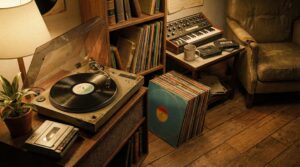
Yo, what’s the move? Ryo Kimura here, tuning in from the heart of Japan’s urban jungle. Let’s talk about something real, something that hits different in a world of endless streams and fleeting digital noise. I’m talking about places where time doesn’t just slow down; it gets meticulously pressed into the grooves of a vinyl record. Welcome to the world of the Japanese jazz kissa—sacred spaces where the music does all the talking, and you, my friend, are there to listen. Seriously listen. These aren’t your typical cafes. They’re not for co-working or catching up on gossip. Nah, these are legit temples of sound, time capsules from the Showa Era, packed with floor-to-ceiling shelves of records, colossal vintage speakers that look like they belong in a concert hall, and an atmosphere so thick with reverence you could cut it with a knife. It’s a vibe that’s low-key intense but mad rewarding. For anyone looking to unplug and connect with music on a spiritual level, exploring Japan’s jazz kissa scene is an absolute must. It’s a journey into the soul of Japan’s post-war cultural landscape, a place where listening isn’t passive—it’s an act of meditation. Bet. Let’s drop the needle on this story.
For a more modern, curated take on this analog listening culture, check out Tokyo’s emerging vinyl omakase scene.
The Unspoken Code: What a Jazz Kissa Is All About
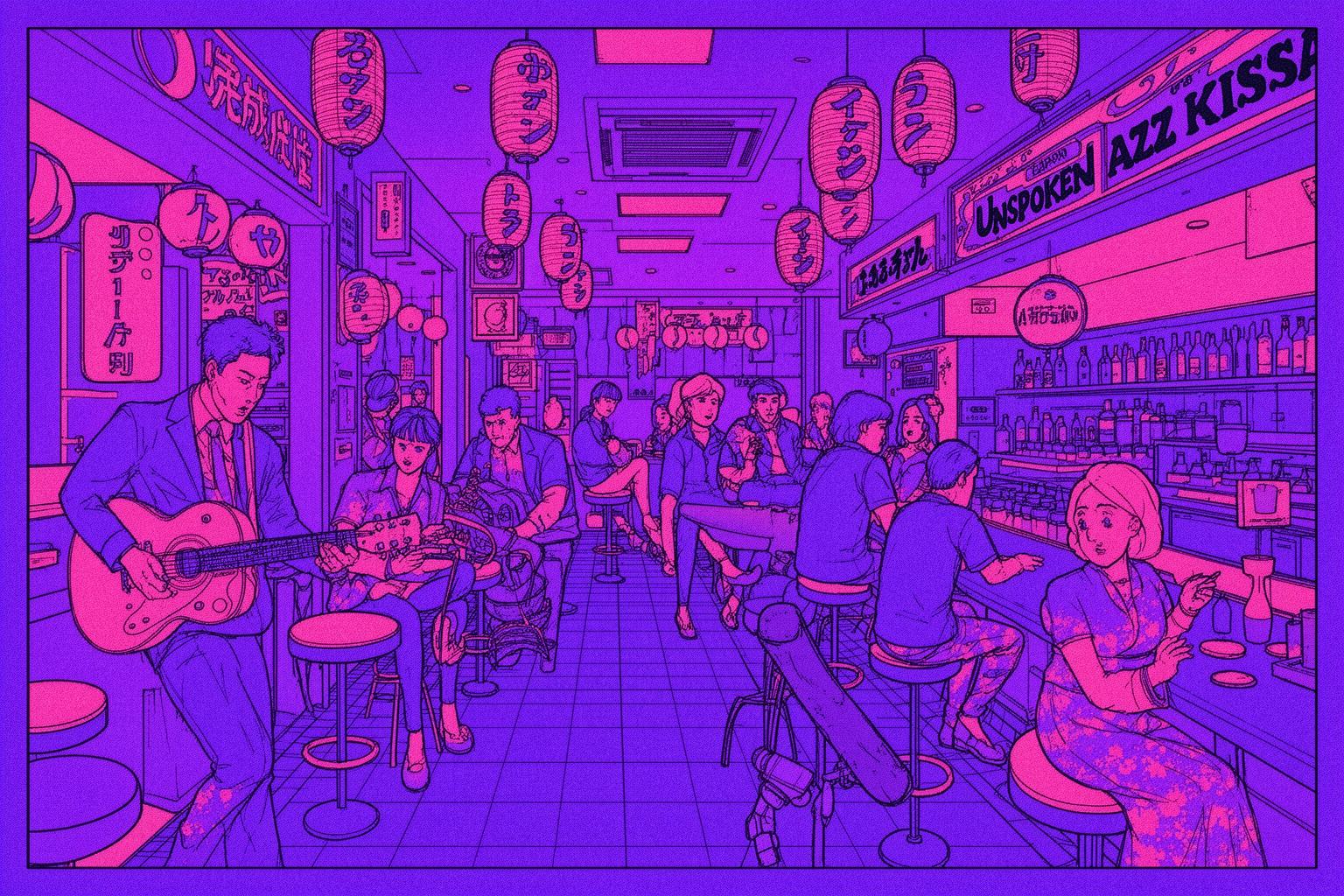
Before you just walk into one of these spots, you need to understand the culture. It’s not about gatekeeping; it’s about honoring the space. The idea of the jazz kissa, or jazz cafe, exploded in Japan after World War II. At that time, vinyl records from the States were incredibly expensive, a real luxury. Most people couldn’t afford to build their own collections. So, these kissas appeared as places where you could pay for a cup of coffee and listen to the latest and greatest jazz LPs on a high-fidelity sound system that would blow your mind. It was a lifeline to another world, a gateway to the sounds of New York, Chicago, and New Orleans right in the heart of Tokyo or Osaka.
These venues became gathering places for students, artists, writers, and rebels—thinkers eager to absorb the improvisational spirit of John Coltrane, the cool melancholy of Miles Davis, or the explosive energy of Art Blakey. The owners, called “Masters,” were more than just shopkeepers; they were curators, audiophiles, and guardians of the atmosphere. They carefully shaped a soundscape, and patrons came to revere it. This history is essential to understanding everything. It clarifies the most important, and often surprising, rule of the jazz kissa: Shigo genkin. No talking. Or at least, keep it to a bare minimum—a soft whisper to the Master when ordering. The focus is entirely on the music. Phones should be silent, headphones tucked away, and conversations reserved for the ghosts of jazz legends streaming from the speakers.
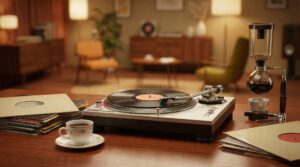
The vibe is a complete mood. You push open a heavy wooden door, often located in a basement or down a narrow alley, and are greeted by the scent of dark-roast coffee, old paper from record sleeves, and perhaps a faint sweet trace of whiskey and tobacco smoke lingering on the velvet seats. The lighting remains low, casting long shadows from towering walls of vinyl. The room’s centerpiece is always the sound system—an altar. We’re talking massive horn speakers from brands like Altec Lansing or JBL, glowing vacuum tube amplifiers, and meticulously maintained turntables. The sound is not just loud; it’s tangible. You feel the bass in your chest, the crispness of the cymbals in your ears. It’s an immersive, full-body experience that a pair of AirPods could never duplicate. This is the heart of the jazz kissa’s appeal: a protest against the shallow, compressed nature of modern music listening. It insists you sit, focus, and let the music take complete control.
Chigusa (Yokohama): The Holy Grail
If you’re planning a pilgrimage to any jazz kissa, you have to begin with the original, the legendary Chigusa in Yokohama. No exaggeration, this place is considered the oldest jazz kissa in Japan, originally opened back in 1933 by a man named Mamoru Yoshida. This spot isn’t just a café; it’s a living museum, a tribute to the enduring influence of jazz in Japan. Stepping into Chigusa feels like entering another world. It’s located in the Noge district, known for its vintage drinking establishments and gritty Showa-era charm, perfectly matching the vibe.
The Resurrection of a Legend
The original Chigusa served as a haven for jazz lovers for over 70 years before sadly closing in 2007 after Yoshida-san passed away. The community was heartbroken. But the story didn’t end there. The locals and devoted regulars refused to let it vanish. They came together, preserved the legendary record collection, the original sign, and even some furniture. After a few years, Chigusa reopened in a new location just a short walk from the original, carefully recreated to maintain its spirit. That’s genuine dedication, showing how much these places mean to people. It’s not merely a business; it’s a cultural institution.
The Vibe Check and the Altec Sound
From the moment you walk in, you’re met with an almost sacred silence, broken only by the warm, rich sound coming from a pair of enormous Altec A5 speakers, famously called “The Voice of the Theatre.” These are more than speakers; they’re legends. Designed for movie theaters in the 1940s, their ability to deliver powerful, realistic, and profoundly resonant sound is well-known. At Chigusa, they take center stage. The Master, stationed behind a counter surrounded by thousands of records, carefully selects an album, cleans it with practiced skill, and gently sets the needle down. The crackle, the pop, and then—boom. The room fills with sound. It’s not about blasting volume; it’s about clarity, depth, and texture. You hear every subtle detail—the saxophonist’s breath, the delicate brush of the snare, the resonant pluck of the double bass. It’s a revelation.
The interior is simple and unassuming. Dark wood, worn chairs, and posters of jazz legends decorate the walls. The main rule is strictly followed: no talking. Patrons sit quietly, eyes closed, completely absorbed in the music. Some read, some sketch, but all share the experience of deep listening. You order a drink—a siphon-brewed coffee is the classic pick—and find a seat. The intense silence might feel a little intimidating at first, but you quickly ease into it. It becomes comforting, meditative. It lets you form a personal connection with the music that’s impossible to find elsewhere. Chigusa is more than a café; it’s a sanctuary where you can truly honor the art form. A visit here is a lesson in mindfulness, taught by the spirits of Bird, Trane, and Miles.
Dug (Shinjuku, Tokyo): The Underground Icon

Now let’s head to the chaotic, neon-soaked core of Tokyo: Shinjuku. Tucked beneath the bustling streets, you’ll discover Dug, another heavyweight in the jazz kissa scene. If Chigusa is a revered temple, Dug resembles a cool, underground bunker for jazz devotees. It carries a slightly different vibe—grittier, and more connected to Tokyo’s avant-garde and literary circles. This is the spot that the world-renowned author Haruki Murakami once frequented, and he even featured it in his novel Norwegian Wood. That literary link has drawn fans from around the world, but don’t be mistaken—Dug is the genuine article, not some tourist gimmick.
The Descent into a Concrete Sanctuary
Finding Dug is part of the adventure. You descend a nondescript staircase off Yasukuni-dori Avenue, and the noise of Shinjuku immediately fades away. The air cools, and you step into a dim, concrete-walled cavern. The atmosphere is instantly intimate and serious. The walls are adorned with iconic black-and-white photos of jazz legends, many shot by the owner, Hozumi Nakadaira, a celebrated jazz photographer. These images aren’t mere decoration; they form a personal history of the music, a gallery of giants caught in moments of raw emotion and creative passion. This lends the space an incredible sense of authenticity.
The Atmosphere and the Shinjuku Pulse
Dug feels more like a bar than a traditional kissa, especially in the evening when patrons are more likely to savor whiskey than coffee. The “no talking” rule is a bit more relaxed here compared to Chigusa, but respect for the music remains paramount. Conversations happen in low, hushed tones, with the focus still firmly on the sound system. The music selection often leans toward cooler, more modern jazz, though the classics are always present. The sound quality is superb, filling the cavern without overpowering. It’s the perfect soundtrack for introspection, losing yourself in a book, or observing the quiet ballet of the bartender crafting a drink.
For first-timers, Dug offers an excellent introduction to the jazz kissa world by blending intense listening with a slightly more social, bar-like ambiance. You can feel the history embedded in the walls—the countless conversations, debates, and creative breakthroughs that must have taken place in those worn leather seats over the decades. It’s a place that has inspired writers, filmmakers, and musicians alike. Sitting there, you sense you’re tapping into that creative energy, part of a long, unbroken lineage of Shinjuku night owls seeking refuge and inspiration in the dark. It’s a genuine cultural landmark, and a visit feels like being let in on one of Tokyo’s best-kept secrets, despite its widespread fame.
Jazz Olympus! (Kanda, Tokyo): The Sonic Boom Experience
Alright, so you’ve already experienced the sacred temple and the cool underground bunker. Now, are you ready for your soul to be vibrated out of your body by the sheer power of sound? If so, you need to head to Jazz Olympus! in the Kanda-Awajicho area of Tokyo. This place is not for the faint-hearted. It’s a jazz kissa that elevates the concept of a high-fidelity sound system to its logical, earth-shaking extreme. The name is no exaggeration; the experience is truly god-tier, a meeting with the thunderous deities of jazz.
The Altar of JBL
Unlike Chigusa’s vintage Altec setup, Jazz Olympus! worships at the altar of JBL. The moment you walk in, your eyes are drawn to the enormous JBL speakers dominating the front of the room. We’re talking professional-grade monitors that look like they belong on a concert stage, not in a small basement cafe. And the Master here is unafraid to unleash them. The volume at Jazz Olympus! is legendary. It’s loud. Truly, incredibly loud. But it’s a clean, powerful, all-encompassing loud. It’s not distorted or painful. It’s a physical force pressing against you, making each note visceral and immediate. You don’t just hear the music; you feel it in your bones, your teeth, your spirit. It’s an intensely purifying experience.
The Ritual of Listening
The ritual here resembles other kissas but on an amplified level. You find a seat, order a drink, and steel yourself. When the needle drops, the world outside disappears. There is only the sound. Conversation is not only forbidden; it’s physically impossible. You couldn’t talk even if you tried. The patrons are serious—true audiophiles and hardcore jazz fans seeking a sonic baptism. You’ll see them seated, heads bowed, eyes closed, some subtly air-drumming or nodding along, completely absorbed in the performance. Tracklists are often posted, and the Master curates sets that take you on a journey, frequently focusing on live recordings that showcase the system’s power and dynamism.
A session at Jazz Olympus! isn’t relaxing in the traditional sense. It’s exhilarating, demanding, and almost overwhelming. It forces you into a state of absolute focus. You can’t scroll through your phone. You can’t daydream about your dinner plans. You’re pinned to your seat by the force of a Coltrane solo or an Elvin Jones drum break. It’s meditation through sonic overload. You leave feeling cleansed and reset, your ears ringing and your perspective on music permanently transformed. It’s a reminder that music can be a powerful, physical, and transformative force. For anyone who truly loves sound, Jazz Olympus! is an essential bucket-list destination. It represents the pinnacle of the jazz kissa as a pure listening environment.
Yamatoya (Kyoto): The Scholarly Retreat

Let’s change both the setting and the city. We’re leaving behind the vibrant chaos of Tokyo and heading to the ancient, graceful capital of Kyoto. Here, amidst temples, gardens, and traditional wooden machiya houses, the jazz kissa experience takes on a more nuanced character. It’s more refined, more introspective, perfectly mirroring its surroundings. The quintessential example of this is Yamatoya, a cherished institution tucked away near Kyoto University.
A Different Atmosphere
In contrast to the intense, bunker-like venues in Tokyo, Yamatoya feels more spacious and scholarly. Its close proximity to the university lends it an intellectual, academic vibe. You’re likely to find students and professors absorbed in thought, flipping through dense books, while the sounds of Bill Evans or Thelonious Monk provide ideal inspiration. The interior resembles a professor’s study, adorned with dark wood and shelves brimming not only with records but also with books on music and art. It feels warm, lived-in, and deeply comforting.
Sound and Serenity in the Historic Capital
The sound system at Yamatoya is, naturally, excellent, but the emphasis isn’t on overwhelming volume as at Olympus!. Instead, the focus is on warmth, clarity, and balance. The music serves as a companion to your thoughts rather than demanding your full attention. It creates an ideal environment for reading, writing, or simply daydreaming. The “no talking” rule remains respected, but the silence feels lighter, more like the gentle hush of a library. It’s a silence that fosters productivity and creativity. The Master is renowned for his profound knowledge and eclectic collection. You might catch a rare European jazz piece or an obscure vocal track you’ve never heard before. Part of Yamatoya’s charm is the thrill of discovery, guided by a true connoisseur.
Visiting Yamatoya provides a striking contrast to the Tokyo scene. It demonstrates how the jazz kissa can adapt to its environment. In Kyoto, a city that treasures tradition, quiet reflection, and craftsmanship, Yamatoya exemplifies those values applied to the appreciation of jazz. It’s an ideal place to unwind after a day of temple visits, allowing the city’s beauty to settle in while you’re embraced by the warm, sophisticated sounds of classic jazz. It reminds us that even in a city famed for its ancient customs, the modern, improvisational spirit of jazz has found a perfect, lasting home.
Your First Time: A Guide to Jazz Kissa Etiquette
So, you’re convinced and ready to step into this unique world. Awesome. But entering a jazz kissa for the first time can be somewhat intimidating. The silence, the serious regulars, the unspoken rules—it can feel like crashing an exclusive party. But don’t worry. It’s actually pretty straightforward. Follow these simple guidelines, and you’ll be feeling like a local in no time.
Rule #1: Embrace the Silence
This is the most important one. The moment you walk in, put your phone on silent mode. Not vibrate. Silent. Stow away your headphones. The main purpose of this space is listening. If you’re with a friend, keep chatting to a minimum. A quick whisper about the music is okay, but a full conversation is a definite no. The silence shows respect—for the music, the Master, and other guests. Think of it like a library or meditation space. Settle in, get comfortable with the quiet, and let your ears take over.
Rule #2: One Drink Minimum
Keep in mind, these are businesses. You’re not paying a cover fee to enjoy a priceless record collection on a top-notch sound system. Your payment is your order. Almost always, there’s a one-drink minimum per person. The typical order is a cup of coffee, often carefully brewed with siphon or pour-over methods. The coffee tends to be strong, dark, and flavorful. Many places also offer tea, juices, and especially in the evening, beer and whiskey. Ordering a drink is the essential transaction that keeps these wonderful spots alive. Don’t just sit down without ordering something.
Rule #3: No Photos (Or Ask First)
Many jazz kissas, especially the older ones, have strict no-photography rules. The flash and shutter noises disrupt the meditative vibe. Some may allow discreet pictures if you avoid flash. The safest bet is to always ask the Master first. A simple, polite gesture like pointing at your camera with a questioning look usually suffices. If they shake their head, respect their decision. These spaces are sanctuaries, not content sources for your Instagram feed. Capture the moment with your mind and ears, not just your camera.
Rule #4: Respect the Master
The person behind the counter is the soul of the kissa. They’re the curator, DJ, host, and guardian of the atmosphere. They’ve dedicated their lives to this craft. Greet them with a polite nod when you arrive and leave. Order clearly and quietly. Avoid making excessive demands. Some kissas allow song requests, but it’s a sensitive matter. Observe first how others handle it. Often, there’s a particular method, like writing your request on paper. As a newcomer, it’s best to trust the Master’s selections. They know their craft. Let them lead the experience.
The Enduring Groove
In an era of instant gratification and disposable culture, the Japanese jazz kissa stands as a quiet, determined act of rebellion. It is a place that requires patience, demands respect, and offers a profound reward: a deep, undiluted connection to music. These are not merely cafes; they are archives of emotion, libraries of soul, and time machines crafted from vinyl, wood, and vacuum tubes. They preserve not only the history of jazz but also a more intentional, mindful way of experiencing art and life.
Whether you’re a dedicated audiophile, an experienced jazz enthusiast, or simply a curious traveler seeking an authentic cultural experience, entering a jazz kissa is a journey well worth taking. It offers a chance to shut out the noise of the modern world and tune into something timeless. So, next time you find yourself in Japan, seek out one of these hidden sanctuaries. Slide open the door, take a seat, order a coffee, and simply listen. Let the legends of jazz share their stories, one revolutionary note at a time. It’s a vibe you’ll never forget. Peace.