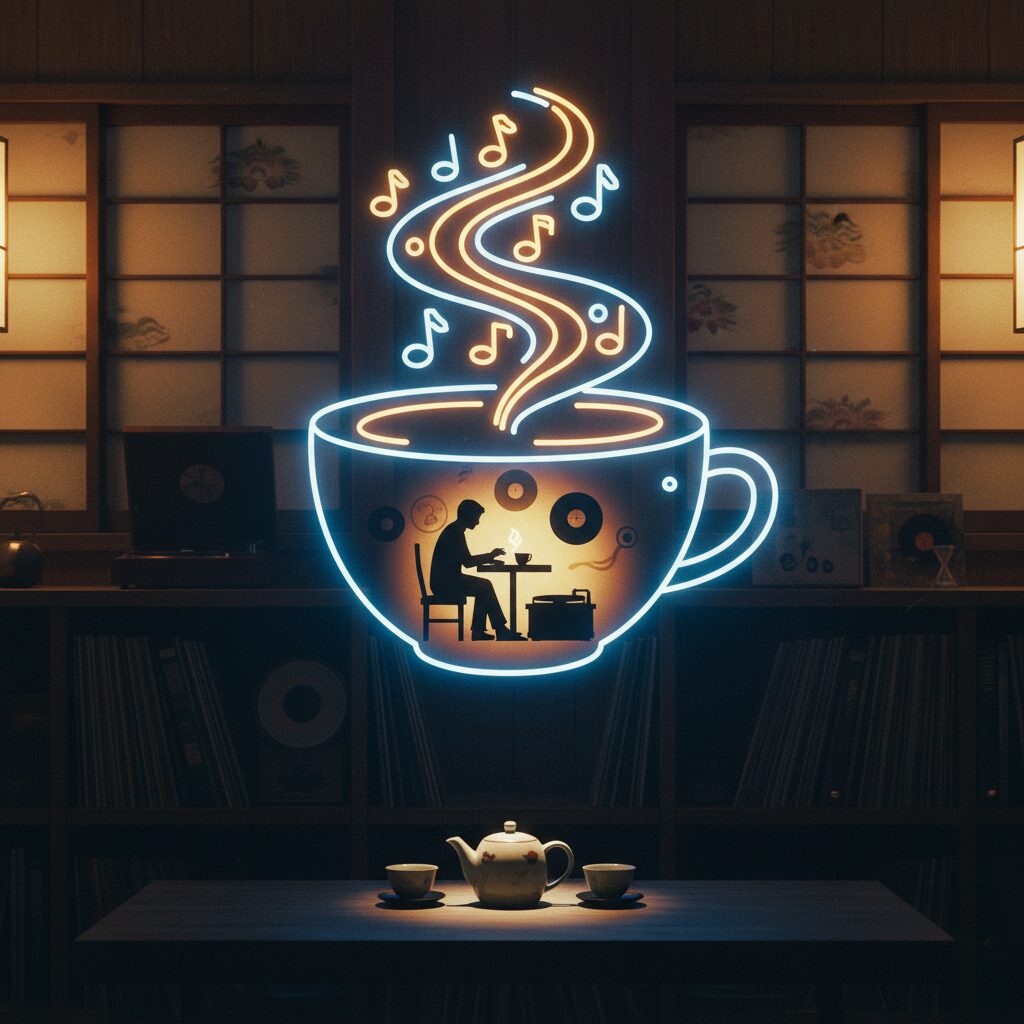
Yo, let’s talk about a real head-scratcher in Japan. You’re wandering through some back alley in Shinjuku or Shimokitazawa, looking for a chill spot to grab a coffee. You see a sign, usually a little worn, maybe with a faded picture of a saxophone. It says “Jazz Kissa” or “ジャズ喫茶”. Sounds cool, right? A little jazzy background music, some caffeine, a solid vibe. So you duck inside, push open a heavy wooden door, and BAM. You’re hit with a wall of… silence. Not just quiet, but a thick, heavy, almost sacred silence. A bunch of people, mostly older dudes, are sitting ramrod straight in their chairs, not talking, not looking at their phones. They’re all facing a pair of speakers the size of refrigerators, just… listening. The air is thick with the smell of dark-roast coffee and decades of old paper vinyl sleeves. You try to whisper your order to the stern-looking guy behind the counter, and he gives you a look that could freeze fire. You suddenly feel like you’ve crashed a funeral. What is going on? Is this a café or some kind of weird, silent cult for audiophiles? The confusion is real, and honestly, that first encounter can be mad intimidating. You think you’re signing up for a casual coffee break, but you’ve walked into a temple of sound. It’s a classic Japan moment: you expect one thing, and the reality is something else entirely—something deeper, weirder, and with a whole lot more unspoken rules. This isn’t just about music; it’s a window into the soul of post-war Japan, a story of how scarcity, obsession, and a need for escape created one of the most unique listening cultures on the planet. So let’s spill the tea on the Jazz Kissa, these hallowed halls of vinyl worship, and figure out why a simple café turned into a silent sanctuary.
This unique listening culture is a profound expression of the Japanese concept of kodawari, an obsessive pursuit of perfection that defines the entire experience.
The Birth of a Vibe: Scars, Poverty, and a Thirst for the Forbidden
To truly understand the Jazz Kissa, you have to turn back the clock—way back. Imagine Japan in the late 1940s and 1950s. The war was over, but the country lay in ruins. Cities were devastated, the economy was broken, and the national identity was shaken by total defeat. It was a time marked by scarcity and survival. Yet amid the devastation, a new sound began to seep in, transmitted via the American Forces Network radio and carried by the occupying GIs. That sound was jazz. It’s important to grasp the context: during the war, jazz was labeled “enemy music.” It was seen as decadent, American, and was officially banned. So when the war ended, listening to jazz wasn’t just about enjoying music; it was a subtle act of rebellion, a taste of forbidden fruit that symbolized freedom, modernity, and a world beyond Japan’s fractured outlook. Jazz stood as the complete opposite of the rigid, militaristic culture that had just collapsed. The swing of Duke Ellington and the bebop frenzy of Charlie Parker heralded a new era, and young Japanese listeners craved this fresh sound.
The Economics of Listening
Here’s the catch: craving jazz and actually being able to hear it were worlds apart. Imported vinyl records were the ultimate luxury in post-war Japan. They were prohibitively expensive, costing a large portion of an average monthly salary—and often were simply unavailable. And suppose, by some miracle, you managed to get a Miles Davis LP. What would you play it on? A quality turntable and amplifier setup was a dream only the super wealthy could afford. For the typical student, artist, or office worker, owning a private music collection was pure fantasy. This economic reality is the foundation of the Jazz Kissa phenomenon. It wasn’t created from a trend or aesthetic desire but out of sheer necessity. It solved a simple problem: how do we listen to this amazing music when we’re all broke? The answer: pool resources. Someone—a passionate, obsessive collector—would gather enough money to buy the equipment and records, open a small shop, and charge a modest fee for a cup of coffee, which granted people hours of listening. The coffee was almost incidental; it was the price of admission. The kissa became a communal sound library, a shared stereo system for a community of music lovers. It was a deeply democratic space. It didn’t matter if you were a university student or a day laborer; for the price of a coffee, you could sit in the same room and experience the same transcendent solos as everyone else. This communal listening model appears in various cultures during times of scarcity, but Japan’s version evolved into something uniquely its own.
A Window to the West
Beyond economics, the Jazz Kissa fulfilled an essential cultural role. In a Japan still largely isolated and searching for its place in the new world order, these cafés acted as gateways. They were smoky, dimly lit embassies of Western cool. Browsing through album covers, with their exotic English text and stylish photos, was a form of escapism. It allowed people to mentally travel to New York, to envision the smoky clubs of 52nd Street. The music itself—complex, improvisational, emotionally raw—stood in sharp contrast to Japan’s more formal and structured social norms. The kissa provided a space to feel differently, to think differently. For many Japanese intellectuals and artists, jazz was more than entertainment; it was an academic subject. They would sit in the kissa with notebooks, analyzing chord progressions, debating saxophonists’ merits, and deconstructing the music’s cultural significance. It was serious business. This intense, scholarly approach to listening laid the foundation for the silent, focused atmosphere that came to define Jazz Kissa. You weren’t there to chat idly; you were there to learn, absorb, and understand. This serious study, born from a hunger for a culture that seemed worlds away, is key to why these places feel more like lecture halls than lounges.
The “Master” and the Temple: Crafting the Sacred Space
As the Jazz Kissa culture took hold, a central figure arose: the “Master” (マスター). This is no ordinary café owner or barista. The Master embodies the heart and soul of the establishment, with a role far more intricate than merely serving drinks. They act as curator, high priest, and gatekeeper of the sonic sanctuary. In most cases, the entire kissa reflects the Master’s personal taste and passion. The thousands of vinyl records lining the walls? They represent a lifetime’s collection, carefully gathered over many years. The massive, vintage speaker system commanding the room? It’s their custom-built altar to sound, meticulously adjusted and cared for with artisan dedication. The Master is a genuine shokunin, a devoted craftsperson—not of pottery or sushi, but of crafting the perfect listening experience.
The Unspoken Rules of Worship
This is the source of the famous Jazz Kissa rules. They aren’t arbitrary; they stem directly from the Master’s philosophy that music takes precedence. The most important rule, which surprises many first-timers, is silence. Why no talking? Because conversation distracts from the music—it’s that straightforward. In the Master’s eyes, visitors are not there to socialize but to engage in focused, deep listening. Any talking, no matter how soft, is a sacrilege, an interruption of the sacred ritual. It’s similar to why you wouldn’t pull out your phone and chat during a philharmonic concert. Here, the music is the performance, not mere background noise; it is the centerpiece. Honoring this is the fundamental agreement you make when entering the door.
Another common, though not universal, guideline is “no requests.” This can feel odd to Western visitors accustomed to jukeboxes or DJs taking requests. Yet, again, consider the Master as a curator or conductor. They have a vision for the listening session, crafting a mood and narrative arc through their selections. One record flows deliberately into the next. Perhaps they’re exploring a certain phase of John Coltrane’s career or contrasting West Coast cool jazz with East Coast hard bop. Any request, no matter the song’s merit, would disrupt that carefully woven progression. It would be like entering a museum and asking the curator to swap a Rembrandt for a Monet simply because you’re in the mood for water lilies. Such a request reveals a fundamental misunderstanding of the Master’s role. You place your trust in their expertise, letting them guide you on a journey. Your role is simply to sit back and listen.
The Altar of Sound
The physical arrangement of a traditional Jazz Kissa reinforces this entire mindset. Notice how the seating almost always faces the speakers—not toward each other for conversation, but directed at the sound source, like pews in a church toward the altar. And what an altar it is. This isn’t some modest Bluetooth speaker; it’s colossal, horn-loaded vintage systems from brands like JBL, Altec Lansing, or Tannoy. These are more than just speakers; they’re revered relics. The Master often employs vintage tube amplifiers—McIntosh units are common—that lend the sound a warmth and richness unattainable from digital gear. The obsession with sound quality is absolute. The aim is to recreate the music with such clarity and power that the musicians feel present in the room with you. The volume is usually loud, not in a rock concert’s headbanging way, but in a fully immersive, enveloping manner. It fills the room and your mind, leaving no space for distracting thoughts or chatter. You don’t merely hear the music; you experience it deeply. This focus on the equipment is a vital part of the experience, signaling that this is a sanctuary for serious audiophiles, a place dedicated to the highest standard of musical reproduction. The price of admission may be just a cup of coffee, but what you’re truly paying for is the privilege of listening through a six-figure sound system curated by an expert.
From Student Hub to Audiophile Heaven: The Evolution of the Kissa
If you could travel back in time to the 1960s and 70s, the golden age of the Jazz Kissa, the atmosphere might catch you off guard. While music was always central, these venues also thrived as vibrant centers of intellectual and counter-cultural activity. They served as unofficial common rooms for university students, aspiring writers, filmmakers, activists, and artists. Imagine the Beat Generation poets in their San Francisco haunts, but with a distinctly Japanese twist. This was a period marked by massive student protests against the government and the US-Japan Security Treaty. The smoky, dimly lit interiors of a Jazz Kissa were ideal for planning revolutions, debating Marxist theory, or simply escaping the pressures of a rapidly transforming society, all fueled by cheap coffee, cigarettes, and the avant-garde cacophony of free jazz.
The Murakami Connection
Any discussion of this era would be incomplete without mentioning Haruki Murakami. Before becoming a world-renowned novelist, he and his wife operated their own Jazz Kissa in Tokyo called Peter Cat. His novels are suffused with the ambiance of these establishments. His characters often appear as solitary, introspective individuals who find comfort and meaning in music, especially jazz and classical. They play a record, pour a drink, and immerse themselves in a world of sound. This directly reflects the culture Murakami himself experienced. The Jazz Kissa was a sanctuary for the alienated, a place where one could be alone with their thoughts yet quietly surrounded by others. It was a space that acknowledged an interior life, a vital theme in much of Japanese art and literature. The intense, often melancholic, and deeply personal bond with music found in his works embodies the emotional heart of the Jazz Kissa experience. It was more than just a hangout; it was a place that shaped the creative and intellectual sensibilities of an entire generation.
The Economic Boom and the Great Culling
Then came the 1980s and Japan’s “Bubble Economy.” Suddenly, the country was awash with money. The economic need that had birthed the Jazz Kissa began to disappear. The average person could now afford high-quality stereo systems for their homes, and imported records were increasingly accessible. The original purpose of the Kissa as a public listening space was becoming obsolete. Why pay for coffee to hear a record when you could buy it and listen at home? At the same time, commercial rents in cities like Tokyo soared. Many of the cherished old Kissa, often run by a single owner operating on razor-thin margins, simply could not stay open. A massive wave of closures ensued. It was a great culling. Those that survived were the ones that doubled down on what made them special. They had to provide something unavailable at home, no matter how much wealth someone had.
The Rise of the Audiophile Temple
This marked the shift from a bohemian student hangout to a revered audiophile sanctuary. The surviving Kissa embraced their greatest strength: an unparalleled sound experience. Masters invested heavily in high-end, rare audio equipment. Their record collections grew even more encyclopedic and unique. Rules of silence and reverence were strictly maintained. They no longer competed with home living rooms; instead, they positioned themselves as world-class listening venues, more akin to concert halls than coffee shops. The clientele changed as well. The student radicals grew up, took on careers, and eventually stopped coming. The new patrons were true aficionados, hardcore audiophiles, collectors, and those for whom sound quality was paramount. The vibe shifted from counter-culture to connoisseurship. This is the Jazz Kissa that has largely persisted into the 21st century: a living museum dedicated to the art of analog sound, run by aging custodians for a devoted congregation. The intimidating, sacred atmosphere is not a flaw; it is precisely what enabled them to survive.
The Modern Jazz Kissa: A Living Museum or a Dying Breed?
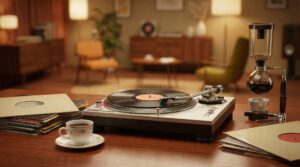
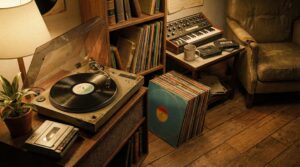
Stepping into a Jazz Kissa today feels like entering a time capsule. The moment you cross the threshold, the hectic energy of modern Tokyo fades away, replaced by a profound, resonant calm. The surroundings consist of dark wood, worn leather chairs, and towering shelves burdened with tens of thousands of vinyl records. The air itself feels heavy, steeped in the history of every note ever played within those walls. You’ll likely spot the Master, often an elderly gentleman, moving with quiet, deliberate grace behind the counter. He might be carefully wiping down a record before placing it on the turntable, his movements practiced and ritualistic. The clientele often embody this history. You’ll see men in their 60s and 70s, patrons who have been visiting this same spot since their university days, sitting in their usual chairs, lost in the music. They are the guardians of this culture, the living embodiment of its legacy.
New Blood in the Old Halls
But look a little closer, and you’ll notice something else as well. You’ll see a young woman with headphones around her neck, sketching in a notebook. You might spot a few foreign tourists, speaking in hushed tones, their eyes wide with a mix of awe and curiosity. A new generation is discovering these spaces, drawn by the global vinyl revival and a desire for authentic, analog experiences in our overwhelmingly digital world. For them, the Jazz Kissa is not merely a nostalgic throwback; it’s a radical alternative. It’s a place that compels you to set your phone aside, to be present, to engage fully in the singular act of listening without distraction. This renewed interest serves as a lifeline for some kissa. While many still face challenges with aging owners and dwindling regulars, others are finding fresh audiences. Some newer venues, often called “record bars,” have taken inspiration from the classic kissa model but with a more relaxed vibe. They might permit quiet conversation or designate specific times for talking and silent listening, attempting to bridge the gap between the strict temple atmosphere and a more conventional social space. This evolution shows that the spirit of the kissa remains alive, adapting to a new era.
Is It For You?
So, let’s be honest. Should you visit one of these places on your trip to Japan? It really depends on what you’re seeking. If your goal is to find a cute café to catch up with friends and snap some pictures for Instagram, then a Jazz Kissa will likely be your worst nightmare. You’ll be miserable, and you’ll disturb everyone else in the room. But if you’re a music lover, if you appreciate high-fidelity sound, if you crave a moment of deep, meditative focus amid a chaotic city, then there is absolutely nothing else like it on Earth. My advice? Go alone. Treat it as a solo cultural excursion. Order a coffee or a whiskey. Keep your phone tucked away. Choose a seat with a good view of the speakers. And simply… listen. Let the sound wash over you. Notice the details in the music you’ve never heard before. Observe the Master as they curate the experience. Let yourself sink into the history and the silence. It may feel uncomfortable at first, but if you surrender to the vibe, it can be a profound, almost spiritual experience. It’s an opportunity to connect with a uniquely Japanese form of cultural expression, one that values patience, focus, and a deep, abiding respect for art. It’s not just about jazz; it’s a workout for your attention span, a masterclass in the art of listening.
Deconstructing the “Vibe”: Why It Feels So… Japanese
Alright, so we’ve explored the history, economics, and development. Yet the central question remains: why does the Jazz Kissa feel so distinctly Japanese? The strict rules, intense focus, and sacred silence didn’t emerge by chance. They are deeply tied to broader Japanese cultural ideas. Grasping these concepts can transform the experience from puzzling to captivating.
Silence as a Mode of Communication
First and foremost is the concept of silence. In many Western cultures, silence in social settings is often perceived as awkward or a sign that something is amiss, prompting a need to fill it with small talk. In Japan, silence, or chinmoku, serves as a powerful form of communication on its own. It can express respect, contemplation, or emotional depth. Within the Jazz Kissa, the shared silence is far from empty; it carries significant meaning. It is a collective commitment to honor the music—a silent declaration that everyone is present for the same reason and respects this shared purpose. By refraining from speech, you show consideration for the Master’s curation and the experience of everyone else in the room. This is a profound group harmony achieved without a single word being exchanged. Though contemplative silence exists in other East Asian traditions, its use in a public, commercial setting like a café is what makes the Japanese kissa so distinctive.
The Significance of Kata (Form)
Next is the concept of kata, roughly translated as “form” or “pattern.” In Japan, many activities—from tea ceremonies to martial arts—follow a prescribed and proper way; there is always a kata. This adherence to form streamlines interactions, fostering order and purpose. The Jazz Kissa follows its own unspoken kata: you enter quietly, take a seat, order a drink (understood as your rent for the space), listen attentively, and leave quietly. By adhering to this kata, you demonstrate your understanding of the space’s purpose and show that you belong. It removes social ambiguity and anxiety about how to behave, allowing everyone to focus on the core goal: the music. While this may feel rigid to outsiders, insiders find it liberating. There’s no need to worry about small talk or complex social navigation—the form takes care of it, freeing your mind to simply listen.
The “Private” Public Space
Lastly, the Jazz Kissa exemplifies a uniquely Japanese phenomenon: the private public space. Japanese cities are extremely crowded, and genuine privacy can be elusive in compact, thin-walled apartments. Consequently, businesses have emerged to create bubbles of solitude within public settings. Examples include solo ramen booths where diners are partitioned from others, or capsule hotels. The Jazz Kissa is the auditory counterpart. It’s a place where you can be alone in public—a setting where one can have a deeply personal, internal, and emotional experience while surrounded by strangers. The silence and rules don’t isolate you negatively; rather, they protect your individual bubble of experience. Everyone inhabits their own world together. This ability to carve out zones of intense interiority amid the urban crush is a crucial coping mechanism in Japanese metropolitan life, and the Jazz Kissa stands as one of its most soulful and enduring expressions. It’s not merely a café with music; it’s a public sanctuary for the private soul.