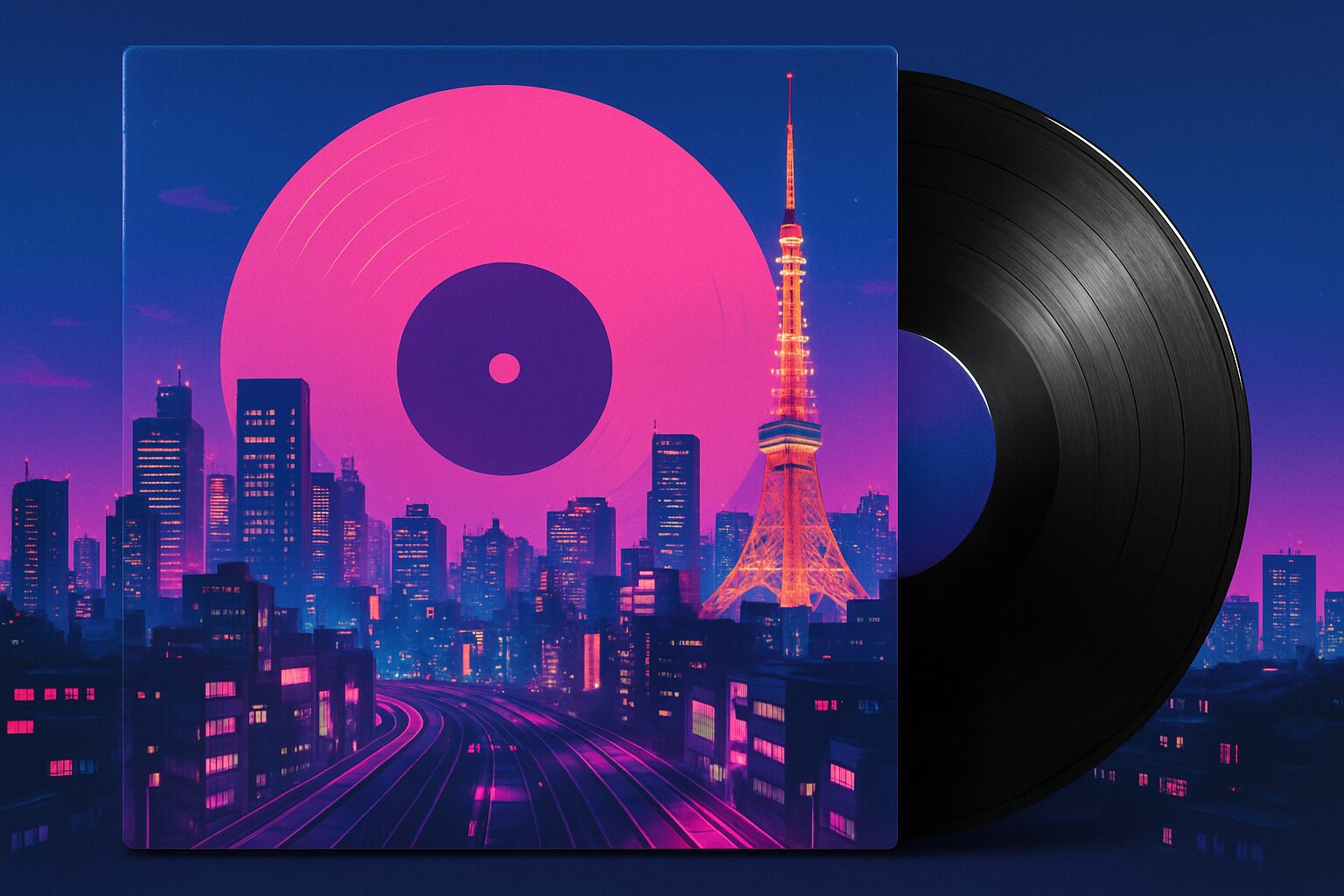
Yo, what’s the move? Let’s talk about a sound. A whole mood. It’s that feeling of cruising down the Shuto Expressway at midnight, the Tokyo Tower glowing like a retro-futuristic dream. It’s the sweet, melancholic vibe of a summer romance fading with the last train. This, my friend, is the sonic world of Japanese City Pop. For real, this genre, born from the wild optimism of Japan’s 80s economic bubble, has been blowing up globally, and it’s no surprise. It’s a perfect storm of smooth AOR, deep-pocket funk, breezy soul, and sophisticated disco, all polished to an insane degree. It’s the soundtrack to a life you wish you lived, full of seaside drives, rooftop cocktails, and bittersweet love stories.
But here’s the thing. Streaming it is cool and all, a decent entry point. But to truly connect with this music, to feel its texture and its history, you gotta go analog. We’re talking vinyl, the OG format. Holding a record from 1982, with its iconic, pastel-drenched cover art and that little paper sash called an OBI strip, is like holding a time capsule. And the best place on Earth to hunt for these gems? It’s gotta be Tokyo. The city itself is a sprawling, neon-lit labyrinth of sound, a paradise for crate diggers. This ain’t just a shopping trip; it’s a full-blown pilgrimage. It’s about the thrill of the hunt, the satisfaction of flipping through endless stacks of records to find that one perfect groove. This guide is your map to that treasure hunt. It’s your all-access pass to navigating the vinyl jungle of Tokyo and building a City Pop collection that’s straight fire. We’re going deep, from the must-know artists to the secret spots and pro-level tips, so you can go from zero to hero in the digging game. So, lace up your kicks, get your tote bag ready, and let’s drop the needle on this adventure. The beat is calling.
To truly immerse yourself in the analog culture that birthed these sounds, consider extending your hunt to include the atmospheric world of Japan’s moody jazz kissaten.
What’s the Deal with City Pop? A Deep Dive into the Groove

Before we delve into the dusty crates, let’s set the stage. To truly appreciate City Pop, you need to understand the world it emerged from. It’s more than just a collection of catchy songs; it’s a cultural snapshot, a sonic reflection of a very specific moment in Japanese history. This genre directly resulted from a nation riding an unprecedented wave of economic prosperity, and that sense of limitless possibility is woven into every track.
The Soundtrack of the Bubble Era
Imagine this: It’s late 1970s and early 1980s Japan. The post-war recovery had transformed into a full-fledged economic miracle. The country was a global powerhouse, exporting technology like the Sony Walkman, which literally changed how people experienced music. There was an air of opulence and boundless optimism. Young people had disposable income like never before, spending it on fashion, cars, and, naturally, music. This was the fertile ground from which City Pop emerged.
The sound itself was a brilliant fusion. Japanese musicians, who had been diligently studying and mastering Western music for decades, blended the smoothest elements of American and European genres and made them uniquely their own. They listened to Steely Dan, Hall & Oates, Earth, Wind & Fire, and Chic. You can hear the DNA of American Adult-Oriented Rock (AOR), the sophisticated chord progressions of jazz fusion, the infectious rhythms of funk and disco, and the laid-back vibes of West Coast and Hawaiian music. But they didn’t merely imitate—it was elevated with a distinct Japanese sensibility for melody and arrangement, combined with a level of studio perfectionism that was truly exceptional. The high quality of these recordings is a major part of their charm. The bass lines are rich and groovy, the drums are crisp, the brass sections tight, and the synthesizers—oh, the synths—are lush and dreamy. This was premium music production, employing top-tier studio technology and the finest session musicians in the country, and the investment is audible in every note. The themes reflected this new urban lifestyle. Lyrics spoke of city life, coastal drives with the top down, summer romances, neon-lit nights, and a sophisticated, often bittersweet longing. It was aspirational music for an aspirational era.
The Aesthetics: More Than Just Music
You can’t discuss City Pop without mentioning its visuals. The album artwork is as iconic as the music itself. It’s a complete aesthetic, a vibe that has been endlessly referenced and mimicked. Artists like Hiroshi Nagai and Eizin Suzuki developed a visual language for the genre that is instantly recognizable. Their work portrays a fantasy version of America through a Japanese perspective: sun-drenched Californian swimming pools, classic cars parked beneath palm trees, sleek modernist architecture, and endless blue skies. It’s clean, optimistic, and exudes a cool, detached luxury. This artwork was more than just packaging; it was an integral part of the experience, selling a lifestyle and a dream along with the music. When you buy a City Pop record, you’re not just acquiring an album; you’re getting a piece of art that perfectly captures the mood of the music inside.
This powerful combination of sound and visuals is a key reason why City Pop experienced a massive global revival in the 2010s. A new generation discovered it online, especially through genres like vaporwave and future funk. These internet microgenres sampled and recontextualized City Pop tracks—chopping them up, slowing them down, and wrapping them in a nostalgic, often ironic, 80s and 90s consumer culture aesthetic. For many listeners outside Japan, this was their first exposure to the genre. A YouTube algorithm suggesting a Mariya Takeuchi song became a gateway, leading millions to uncover this forgotten treasure trove of Japanese music. The aesthetic vaporwave celebrated—the pastel colors, the retro tech, the consumerist dreamscape—was already embedded in City Pop’s original DNA. In a way, the internet didn’t create a new aesthetic; it rediscovered and amplified one that had been there all along, introducing this influential Japanese genre to a brand-new global audience eager for its unique blend of nostalgia and futurism.
The Core Trinity: Artists You Gotta Know
Alright, so you get the gist. You’re ready to embark on your hunt. But where should you even start? The world of City Pop is vast, yet there are three artists who make up the genre’s holy trinity. These are the giants, the legends whose work shaped the sound and whose records are the most coveted by collectors worldwide. Familiarizing yourself with them is your first and most crucial step. No exaggeration—their music is the very foundation of it all.
The King: Tatsuro Yamashita
If City Pop has a king, it’s unquestionably Tatsuro Yamashita. He is a living legend, a musical genius known for his absolute perfectionism. As a singer, songwriter, and producer, he contributed to many iconic records, both his own and those of other artists (including his wife, Mariya Takeuchi). His music serves as the blueprint for top-tier City Pop: lush arrangements, intricate vocal harmonies that he often records entirely himself, and a deep passion for American pop, soul, and doo-wop. He is famously protective of his work, which is why his music is nearly absent from streaming platforms. This makes the search for his vinyl all the more special and necessary. Owning a Tatsuro Yamashita record feels like belonging to an exclusive club.
When digging, the album most referenced is For You (1982). That iconic Eizin Suzuki cover featuring a poolside speaker is essentially the genre’s emblem. From the opening hit “Sparkle” with its legendary guitar riff, the album is a masterclass in upbeat, feel-good pop. It’s pure sonic sunshine. Another coveted gem is Ride on Time (1980), a slightly funkier, more driving album that solidified his superstar status in Japan. And if you want to dig deeper, seek out Spacy (1977), an earlier work with stronger jazz fusion and soul influences showcasing his remarkable musical skill. In any Tokyo record store, you’ll likely find what collectors call the “Tatsu-wall”—a shelf devoted solely to him, often with intimidating prices. But trust me, any album you choose will be a masterclass in production and songwriting.
The Queen: Mariya Takeuchi
You can’t mention Tatsuro Yamashita without mentioning his wife and collaborator, the undisputed queen of City Pop, Mariya Takeuchi. While she began her career as a more conventional pop singer, her work in the early 80s, especially after marrying Yamashita, blossomed into some of the era’s most enduring music. Her songs tend to carry a slightly more melancholic, wistful tone than Yamashita’s, exploring the complexities of love and urban life with a sophisticated, mature outlook.
Her global fame skyrocketed thanks to one track: “Plastic Love.” In the mid-2010s, a YouTube upload of this 8-minute song from her 1984 album Variety mysteriously dominated the platform’s algorithm, introducing millions to her and to City Pop at large. The track perfectly encapsulates the genre’s charm: a funky, infectious bassline, shimmering synths, and a heartbreakingly beautiful vocal about a woman trying to dance away her loneliness. The Variety album, produced entirely by Yamashita, is her crowning achievement and a must-have for any collector. It’s wall-to-wall hits. But don’t stop there—her earlier albums like Love Songs (1980) and Miss M (1980) are also filled with incredible tracks that highlight her exceptional songwriting talent. She crafts melodies that feel instantly timeless, and her voice is pure velvet. Finding a mint copy of Variety with the original OBI strip intact is a rite of passage for any City Pop fan.
The Funk Master: Toshiki Kadomatsu
While Yamashita brought intricate pop craftsmanship and Takeuchi heartfelt songwriting, Toshiki Kadomatsu brought the funk—hard. Kadomatsu stands as the high-energy, dance-floor dynamo of the City Pop scene. His music features blazing horn sections, slap-bass-driven rhythms, and an infectious energy that’s impossible to resist. He was incredibly prolific through the 80s, releasing a string of albums that flawlessly merged pop sensibilities with hardcore funk and fusion. If you want City Pop that moves you, Kadomatsu is your man.
His live performances were legendary, and his albums reflect that vibe. A key record to seek is After 5 Clash (1984), a concept album depicting a Tokyo office worker’s nightlife, with tracks perfect for late-night drives or parties. For a more fusion-oriented, instrumental feel, his album Sea Is A Lady (1987) is a masterpiece—a collection of guitar-driven songs that evoke the feeling of a summer by the sea. Another essential album is Gold Digger: With True Love (1985), which features the undeniable hit “Tokyo Tower.” Kadomatsu’s music is the genre’s adrenaline shot. His records tend to be more affordable than those of Yamashita or Takeuchi but deliver equal quality and an irresistible groove that sparks any party. He embodies the more upbeat, celebratory side of City Pop, and his work is a vital piece of the puzzle.
Beyond the Big Names: Digging Deeper for Gold

Alright, you’ve got the holy trinity on your list, which is a strong starting point. But the true thrill of crate digging lies in uncovering those hidden gems — artists who may not have widespread global recognition but whose music is just as outstanding. This is where you transition from being a casual listener to a dedicated collector. The City Pop scene is vast and rich, with countless musicians who released one or two phenomenal albums just waiting to be found in a forgotten Tokyo record bin. Let me introduce you to some names you absolutely need to seek out to elevate your collection.
The Smooth Operators
This category is for those who appreciate the laid-back, sophisticated side of City Pop. These artists created tracks perfect for a relaxed Sunday afternoon or a scenic sunset drive.
First, there’s Anri. A giant in the genre, she could easily be considered a fourth member of the upper echelon. Her string of albums from the early ’80s is legendary. Timely!! (1983) is an absolute powerhouse, produced by Toshiki Kadomatsu and packed with hits like “Cat’s Eye” and “Kanashimi ga Tomaranai (I Can’t Stop The Loneliness).” It’s a flawless City Pop record from beginning to end. Meanwhile, Heaven Beach (1982) is another timeless classic, perfectly embodying the seaside ambiance the genre is known for.
Next up is Taeko Onuki, one of Japan’s most respected and critically praised singer-songwriters. A founding member of the influential band Sugar Babe alongside Tatsuro Yamashita, her solo work tends to be more introspective, featuring intricate arrangements and a subtle, melancholic charm. Sunshower (1977) is a prized treasure for many collectors, with a warmer, more organic sound than the later synth-heavy City Pop, yet unmistakably influential. Her 1978 album Mignonne is another masterpiece, brimming with lush, string-filled pop songs of breathtaking beauty. Finding her records feels like unearthing an elegant secret.
For a synth-driven, dreamy vibe, you must hunt down Tomoko Aran. Her 1983 album Fuyü-Kükan is a cult classic, especially known for the track “Midnight Pretenders,” which The Weeknd famously sampled in “Out of Time.” The album blends shimmering synthesizers, funky basslines, and her ethereal voice, making it an ideal soundtrack for a solitary night in a futuristic city. It perfectly bridges City Pop and the emerging synth-pop sound of the era.
The Funky Crew
If it’s the slap bass and four-on-the-floor rhythms that get you moving, then exploring the funkier side of City Pop is a must. These artists brought the groove and energy to the genre.
Miki Matsubara’s story perfectly illustrates the internet’s power to revive classics. Her 1979 debut single, “Mayonaka no Door / Stay With Me,” became a viral sensation on TikTok and social media decades after its release. It’s easy to see why, with its iconic intro, compelling saxophone solo, and her incredible vocal delivery making it instantly memorable. Her debut album Pocket Park is a treasure trove of well-crafted pop and soul tracks.
Junko Ohashi is another powerhouse vocalist you should know. With a strong, soulful voice, she handles everything from spirited funk tunes to heartfelt ballads with ease. Her album Magical is a prized find among funk and disco fans, especially for English-language songs like “I Love You So.” Another standout is Point Zero (1983), a slick, polished album brimming with infectious funk from start to finish. When you want City Pop with serious vocal strength, Junko Ohashi is your go-to artist.
For a truly distinctive and intriguing listen, seek out Thanks Giving (1988) by RA MU, a short-lived project led by popular idol Momoko Kikuchi and produced by the experimental electronic group PSY・S. This album is a wild blend of idol pop, City Pop, and avant-garde, sample-heavy electronic music. Although a commercial failure at the time, it has since become a cult favorite for its forward-thinking production and unique style. It perfectly showcases the genre’s eccentric and wonderful potential towards the end of the bubble era.
The Low-Key Legends (For the Real Heads)
This is the realm of deep cuts. Collecting works by these artists will earn you serious respect among seasoned diggers. These are the session musicians, producers, and behind-the-scenes geniuses who also released remarkable solo projects.
Hiroshi Sato, a keyboardist and producer extraordinaire, collaborated widely. His own music is a brilliant fusion of jazz, synth-pop, and soul. His 1982 album Awakening is a masterpiece and one of the first Japanese albums to extensively use the LinnDrum machine, resulting in a futuristic, impeccably clean sound. It’s a smooth, atmospheric, and technically brilliant record that could easily feel contemporary.
Guitarist Makoto Matsushita is another essential figure. Having played on countless City Pop sessions, his distinctive guitar work is key to the genre’s sound. His solo album First Light (1981) is a must-have for fans of instrumental AOR and fusion, showcasing his extraordinary guitar skills with tracks that are both technically impressive and highly melodic. It’s the ultimate driving album.
Finally, add Yurie Kokubu to your deep-cut list. Her 1983 album Relief 72 Hours is pure City Pop bliss — a concept album themed around a 72-hour getaway, perfectly capturing the spirit of escape and adventure. It’s upbeat, funky, impeccably produced, and while it wasn’t a huge commercial success at the time, it’s now revered by collectors as a quintessential example of the genre at its peak.
The Hunter’s Paradise: Navigating Tokyo’s Vinyl Jungle
Tokyo is, without exaggeration, the best city in the world for buying records. The sheer number and quality of vinyl shops here are astounding. The Japanese appreciation for physical media and the careful way people treat their belongings means you can find decades-old records in almost perfect condition. However, the city is vast, and it can be overwhelming. Knowing where to concentrate your efforts is essential. Each neighborhood has its own unique character, and that extends to its record stores. Let’s explore the top spots for crate digging.
Shinjuku: The Crate Digger’s Mecca
If you have only one day to dig, make it Shinjuku. This sprawling, chaotic, and endlessly fascinating area is the undisputed center of Tokyo’s record collecting scene, thanks almost entirely to one legendary institution: Disk Union.
The Disk Union Empire
Disk Union is more than just a store; it’s a way of life for Tokyo’s music fans. They have a huge presence in Shinjuku, with multiple buildings and specialized shops all within a few blocks. The main building near the station is a multi-story vinyl tower. You’ll need a strategy. Head straight to the 4th floor, which is dedicated to Japanese Rock and Pop. This is where you’ll find the City Pop treasure trove. The volume is staggering. Entire sections are devoted to major artists—the well-known “Tatsu-wall” really exists here. The organization is precise, with everything arranged alphabetically and by genre. The staff are experts, and the vibe is one of focused, respectful digging. You’ll be hunting alongside lifelong Japanese collectors and international visitors, all on the same mission. Beyond the main building, don’t overlook the other specialized Disk Union shops. The Soul/Blues store is a must-see, as the lines between soul, AOR, and City Pop can blur, and you can often discover incredible records in the “Japanese Soul” section. This speaks to the depth of their curation.
HMV Record Shop Alta
Located inside the Alta building, HMV offers a different, somewhat more modern experience. While Disk Union feels like a library for serious collectors, HMV is brighter, more open, and resembles a curated boutique. They have an excellent selection of new releases and reissues, perfect if you’re after a fresh pressing of a classic album. Their used City Pop section is also well-curated, often showcasing popular and sought-after titles right at the front. It’s a perfect place to start your day and get a sense of what’s popular before diving into the deep crates at Disk Union.
Shibuya: The Trendy Pulse
Shibuya is famous for its Scramble Crossing, youth fashion, and vibrant energy. That energy carries over to its record shops, some of the best in the city.
Tower Records’ Vinyl Floor (Tower Vinyl Shibuya)
Yes, the massive, iconic Tower Records building still stands strong and thriving. Most floors focus on CDs, but the 6th floor houses Tower Vinyl Shibuya. Shopping vinyl in such a huge, mainstream store is remarkable. They have a vast selection of new releases from around the world, with an excellent Japanese music section. They regularly host in-store artist events and offer exclusive releases and reissues you won’t find elsewhere. It’s a key stop.
Face Records
Just a short walk from Shibuya’s main chaos, Face Records is a legendary boutique. Known for its immaculate curation of high-quality Japanese pressings, it specializes in jazz, soul, funk, and, of course, City Pop. The staff have stellar taste, and anything on their “new arrivals” wall is guaranteed to be exceptional. This is the spot to find something truly special and pristine. Prices can be higher, but you pay for top quality and expert selection.
HMV Record Shop Shibuya
Another excellent HMV, spread over two floors in the heart of Shibuya. It has a vibe similar to the Shinjuku location but features its own unique layout and often different stock. If you have time, visiting both is worthwhile. They are especially strong in 7-inch singles, ideal if you want to collect iconic City Pop A-sides without buying full albums.
Shimokitazawa: The Indie and Vintage Soul
For a different Tokyo experience, visit Shimokitazawa. Known for its bohemian atmosphere, narrow streets packed with vintage clothing shops, small theaters, indie cafes, and fantastic record stores, the pace here is slower, making for a relaxed, exploratory digging experience.
Flash Disc Ranch
An institution and the classic “digger’s spot.” Flash Disc Ranch is famously cluttered, with records piled high on every surface. It feels more like a warehouse or a collector’s packed basement than a typical shop. There’s little meticulous organization—you have to get your hands dirty and literally dig through heaps of vinyl. That’s where the magic happens. The thrill of pulling a rare gem from a random stack defines this place. The owner is a local legend, and prices are often very fair. A must-visit for the experience alone.
JET SET Tokyo
JET SET offers a more modern, curated experience, somewhat like Face Records but with a focus on a different musical slice. They’re strong on new releases, especially in indie, electronic music, and hip-hop. Their reissue section is excellent, always featuring a well-chosen range of City Pop and Japanese funk re-pressings. They also release many exclusives for their store, so it’s always worth seeing what’s new.
The Art of the Dig: Pro Tips for Your Vinyl Quest

Walking into a record store in Tokyo can be overwhelming to the senses. The sheer number of records, the unfamiliar language, and the quiet focus of other shoppers—it can all feel like a lot. However, with some essential knowledge, you can navigate these stores like an expert and increase your chances of finding treasures. This is the art of crate digging.
Decoding the Goods: OBI, Inserts, and Condition
Knowing what to look for is half the challenge. A Japanese record pressing is more than just a vinyl in a sleeve; it’s a complete package.
The OBI Strip (帯) is the paper band wrapped around the spine of the album cover. This unique Japanese feature contains details like price, release date, and marketing slogans. For collectors, the OBI is vital. A record with its original OBI is considered “complete” and is worth significantly more than one without. It shows the previous owner took great care of the album. Always try to find records with the OBI preserved.
Next, look for the Inserts. Most Japanese LPs included inserts such as lyric sheets (often featuring both Japanese and English lyrics), liner notes, and sometimes posters or sticker sheets. Having all original inserts enhances both the value and completeness of the record.
Most importantly, pay attention to the Condition. Japanese sellers are known for their meticulous and conservative grading. Their grading system resembles the international standard (M, NM, EX, VG+, etc.), but a Japanese VG+ often corresponds to an NM grade elsewhere. Check the grade on the price sticker, but always examine the record yourself. Carefully remove it from the sleeve and hold it up to light, tilting it to spot scratches, scuffs, or warping. Most stores offer Listening Stations (shichouki, 試聴機). Don’t hesitate to use them—it’s perfectly acceptable to bring a record you’re seriously considering to the counter and ask to listen. Staff will set it up for you. This is the only way to be completely sure of the record’s playing quality, checking for surface noise, pops, or skips.
Breaking the Language Barrier
Don’t let the language barrier discourage you. Many store signs are in English, and staff in major shops around Shinjuku and Shibuya are accustomed to international customers. Still, knowing a few key things can help. It’s useful to have artists’ names written in Japanese (e.g., 山下 達郎 for Tatsuro Yamashita, 竹内 まりや for Mariya Takeuchi), which you can save on your phone for quick reference. The camera feature in the Google Translate app is invaluable, allowing you to translate album titles, tracklists, and OBI strips in real time. A few basic phrases also go a long way: “Sumimasen” (Excuse me) to get attention, “Shichou dekimasu ka?” (Can I listen to this?), and, of course, “Arigatou gozaimasu” (Thank you very much).
The Rhythm of the Hunt
Timing matters. Many stores release new arrivals and fresh used stock on Fridays and Saturdays, making weekends the best time for selection but also the busiest. If you prefer a quieter experience, go on a weekday. You might miss the newest releases but will enjoy more space and time to browse. Also, be mindful of the digging culture in Japan. It’s generally a quiet, focused activity where people respect the records and each other’s space. Handle the records gently, and always return items to their proper place if you decide not to buy them. Crate digging is a meditative and rewarding process, so take your time, be patient, and savor the thrill of discovery.
Budgeting the Beat: How Much to Shell Out?
So, you’re ready to make a purchase. But how much is this City Pop obsession really going to cost you? Prices for these records can vary from pocket change to a small fortune, making it helpful to have an idea of what to expect. The market is driven by rarity, condition, and, naturally, the huge global demand.
The Heavy Hitters: The High-Priced Grails
Let’s be honest: the most iconic albums by top artists don’t come cheap. A clean, first-press copy of Tatsuro Yamashita’s For You or Mariya Takeuchi’s Variety with the OBI strip will require a significant investment. Prices can range from ¥10,000 to ¥30,000 (around $70 to $200 USD), sometimes even higher for a pristine copy. Other legendary albums like Taeko Onuki’s Sunshower or Hiroshi Sato’s Awakening also fetch very high prices. Why such steep costs? It’s a classic supply-and-demand situation. These culturally important, masterpiece albums are sought after by everyone from dedicated Japanese collectors to new international fans. The original pressings were limited, and finding one in excellent condition four decades later is tough. Owning one of these is a standout addition to your collection.
The Sweet Spot: Mid-Range Gems
This is where most of your spending will occur, and where the real excitement lies. In the ¥2,000 to ¥5,000 range (about $14 to $35 USD), you can put together an outstanding collection. This bracket offers fantastic albums by artists such as Anri, Toshiki Kadomatsu, Junko Ohashi, and Omega Tribe. Many of their essential, classic releases in excellent condition with the OBI can be found at very reasonable prices. Though these records were pressed in larger quantities than the top-tier grails, the music quality is just as compelling. This price range forms the core of a superb City Pop collection—you could leave the store with four or five incredible albums for the cost of a single Yamashita.
The Bargain Bin Miracles
Never underestimate the bargain bins. In Japan, often labeled the “junk” section, this name is misleading. These sections, where records typically cost between ¥300 and ¥1,000 (just a few dollars), are full of treasures. You might find albums missing their OBI strip, with some cover wear, or by less well-known artists. Yet the vinyl itself is often in surprisingly good, playable shape. This is where you can take a chance on unfamiliar artists simply because their cover catches your eye. It’s where hidden gems and B-sides turn into new favorites. Scoring a classic album in the bargain bin just because it lacks that little paper strip is one of the most thrilling moments in crate digging. It’s pure, unfiltered discovery.
The Journey Home: Securing Your Treasure
You’ve spent days searching, your fingers are dusty, and you’ve built an impressive stack of vinyl. Now comes the final challenge: bringing it all home safely. This calls for a bit of planning, but it’s definitely doable.
Packing Like a Pro
Vinyl records are fragile. You can’t just throw them into your suitcase and hope for the best. The most common and damaging issue is bent corners on the sleeves. The best way to avoid this is by using a proper cardboard LP mailer. Most major record stores, especially Disk Union, sell these mailers at the counter. They are designed specifically for shipping vinyl and offer excellent protection. Buy a few of them. You can fit about 5-7 LPs in each mailer. Once packed, place the mailer in the center of your luggage, cushioned on all sides with soft clothing. This will protect it from impacts and keep it secure during your flight. If you’ve purchased a very large number of records, consider dedicating a small carry-on bag just for them—but be sure to check your airline’s baggage policies beforehand.
Tax-Free Shopping & Customs
Here’s a pro tip that can save you quite a bit of money. As a tourist in Japan, you qualify for tax-free shopping on purchases over a certain amount (usually ¥5,000). Most major record stores like Disk Union, HMV, and Tower Records offer this service. You’ll need to show your passport at the time of purchase. The staff will handle the paperwork, and you’ll receive a 10% discount, which is the consumption tax rate. This can really add up, especially when buying pricier records. When returning home, you’ll need to declare your purchases if they exceed your country’s duty-free allowance. Customs regulations vary by country, so it’s wise to check your local rules before you travel. In most cases, a reasonable quantity of records for personal use won’t cause issues, but it’s always best to be informed.
The Vibe Continues: City Pop Experiences Beyond the Record Stores
Your love for City Pop doesn’t have to end when you leave the record store. The genre celebrates a distinctive urban aesthetic, and you can soak in that vibe throughout Tokyo. Immersing yourself in the atmosphere that inspired the music is the perfect way to conclude your vinyl hunting adventure.
City Pop Themed Bars & Cafes
In recent years, Tokyo has seen a surge in “listening bars” or “record bars” (rekōdo bā). These cozy spots, often with just a few seats, are devoted to playing music on high-end, audiophile-grade sound systems. Many specialize in particular genres, and yes, some bars play City Pop all night long. Picture sipping a meticulously crafted Japanese whisky while the warm, analog tones of a Tatsuro Yamashita record fill the space. It’s an incredible experience that lets you appreciate the music in its ideal setting. Venues like City Country City in Shimokitazawa, or various intimate bars tucked away in the backstreets of Shibuya and Shinjuku, offer this kind of curated listening session. It’s a fantastic way to discover new artists and revisit the classics from a fresh perspective.
Chasing the Aesthetic
City Pop is as much about evoking a feeling, a place, a mood as it is about the music itself. You can actually visit the locations behind your favorite songs. Take a train out to the Shonan coast, to spots like Kamakura and Enoshima, which are referenced in numerous tracks about seaside drives and summer romance. The vibe there, especially on a clear, sunny day, feels like stepping right into an Eizin Suzuki album cover. Back in Tokyo, ascend Tokyo Tower or Tokyo Skytree at night. Look out over the sprawling city lights and the streams of headlights on the highways below. This is the view that inspired so many of those wistful, romantic city anthems. A late-night drive across the Rainbow Bridge, with the glittering skyline, is another quintessential City Pop experience. By linking the music to these real-world places, you deepen your appreciation for the art and culture that birthed it.
Your journey into Japanese City Pop on vinyl is far more than just a shopping trip. It’s a deep dive into a magical moment in time. A cultural exploration, a treasure hunt, and a sensory experience all in one. There’s a distinct thrill in finally dropping the needle on a record you hunted down for hours in a basement shop in a foreign city. You hear the faint crackle, then the opening notes of a song that has traveled through time to reach you. In that instant, you’re connected to the artist, the producer, the 1980s Tokyo socialite who first bought the record, and a worldwide community of music lovers who share your passion. The city is a living, breathing archive of this incredible music, and its rhythm waits for you in the grooves of countless records. The hunt is on. Go find your sound. Go find your vibe.