Yo, what’s the vibe? Hiroshi Tanaka here, your local guide to the real deal Japan. So you’ve seen Akihabara online, right? The neon glow, the giant anime billboards, the maids handing out flyers, the endless waves of arcades and figure shops. It’s a full-on sensory assault, a digital dreamscape that feels like the future landed here first. You probably think you’ve got it pegged: Akihabara is the global HQ of otaku culture. Full stop. And yeah, you’re not wrong, but you’re only seeing the top-level boss. What if I told you that underneath all that high-pitched, moe-moe energy, there’s a whole other Akihabara? A deeper, older, and way more analog dimension? A place where grizzled old dudes will argue for hours about the sonic properties of a 1960s vacuum tube, and where you can find vinyl records so rare they’re practically myths. You’re probably thinking, “Hold up. In the most futuristic, digital-crazed neighborhood on the planet, people are obsessed with ancient, analog tech? Make it make sense.” That’s the real question, isn’t it? Why does this intense, almost spiritual dedication to pure sound—to tubes, transistors, and turntables—not only survive but thrive in the shadow of digital pop culture’s command center? To get it, you gotta understand that Akihabara isn’t just a place; it’s a timeline. The layers of anime and gaming are just the most recent, loudest layer of paint. We’re about to peel back the years and get to the core of this electric town’s soul. It’s a journey into Japan’s obsession with craftsmanship, the pursuit of perfection, and why, for some, the purest tech is the tech you can touch, feel, and build with your own two hands. Let’s drop the needle on the real Akiba.
To truly understand this dedication, you need to grasp the Japanese audiophile’s obsessive pursuit of sonic perfection.
The OG Blueprint: Akiba’s Post-War Radio Roots
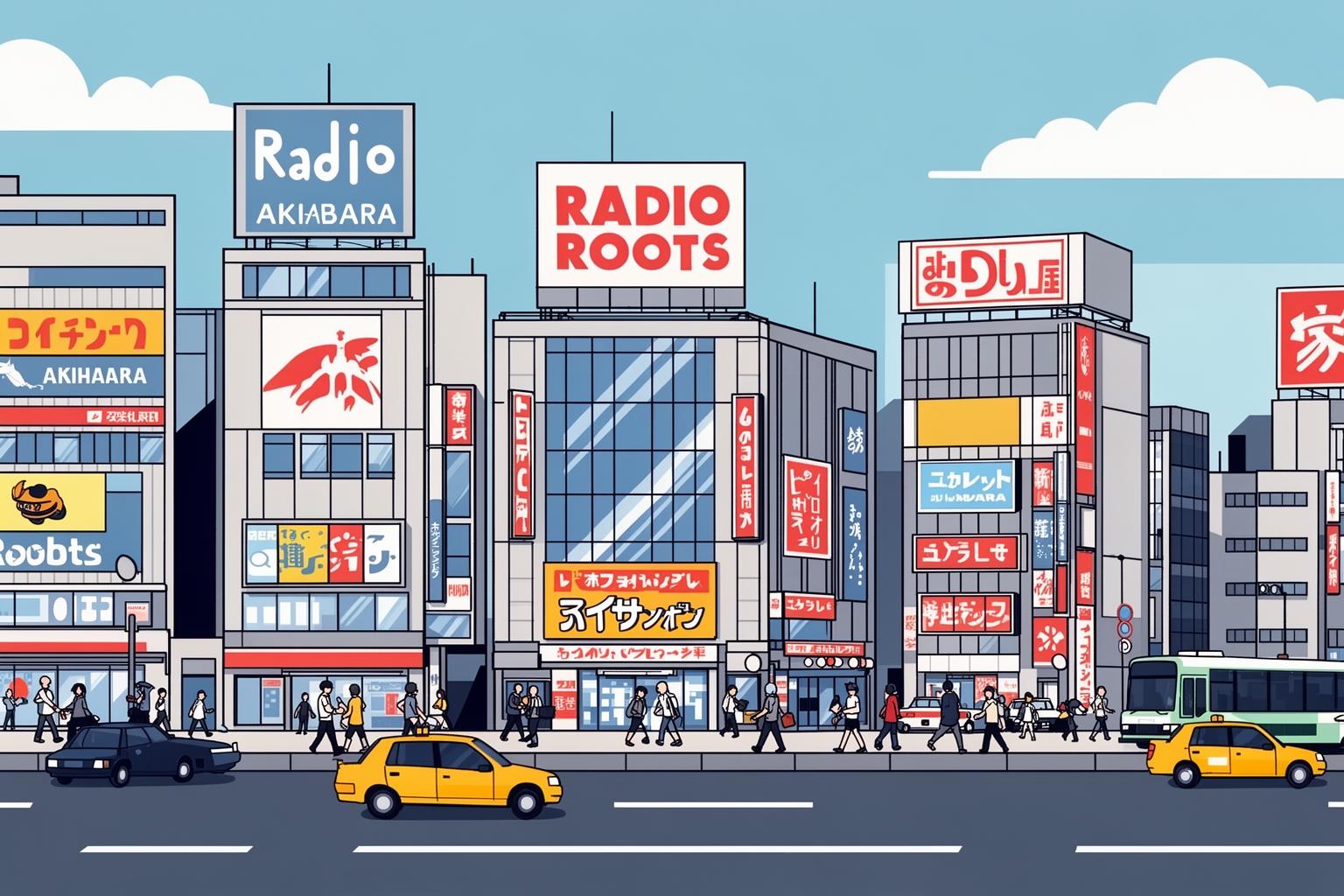
To truly understand the picture, you have to rewind time—way back to just after World War II. Tokyo was in ruins, a landscape of ashes and debris, but people were eager to rebuild and, perhaps even more so, to reconnect. Information was precious. News, music, a voice from the outside world—these were lifelines. And the device that brought it all? The radio. But you couldn’t simply walk into a store and buy one. Resources were limited. This is where Akihabara’s story begins. It started as an open-air black market, a chaotic cluster of stalls near the train station where hustlers and engineers sold scavenged and surplus electronic parts, mostly to build radios. Consider that: Akihabara wasn’t born from entertainment; it was born from a fundamental human need to listen and to know. It was the original peer-to-peer network, made with wires and tubes.
This DIY ethos became Akiba’s core. Building your own radio wasn’t just a pastime; it was an act of empowerment. It meant taking discarded fragments of a broken world and assembling them into something that could capture voices from thin air. This gave rise to a generation who were not merely consumers of technology, but creators. They grasped how things worked from the inside out. This hands-on, deeply technical culture is a pure reflection of monozukuri, the Japanese philosophy of craftsmanship. It’s not just about making things; it’s a profound, almost spiritual dedication to the act of creation, pouring your soul into the object. For these pioneers, a well-soldered joint was as beautiful as a line of poetry. The energy was electric, quite literally. This was not about polished finished products; it was about the raw potential humming inside every capacitor and resistor. As Japan’s economy flourished, Akihabara transformed. The radio parts stalls evolved into shops selling household appliances—TVs, washing machines, refrigerators. It became the “Electric Town,” the destination for your first taste of modern, convenient living. Yet deep in its back alleys, beneath the rumbling train tracks, the original spirit never faded. The component shops, the true heart of Akihabara, simply became more specialized, more niche, serving a new generation of builders and tinkerers.
The DIY Dimension: A Pilgrimage for Component Purists
Fast-forward to the present day. You could pass by these places a hundred times and never even notice them. They’re hidden inside aging buildings like the Akihabara Radio Center, which feels less like a mall and more like a time capsule from the 1970s. The aisles are incredibly narrow, the lighting somewhat dim, and the air thick with a distinctive scent—a blend of old cardboard, dust, and the faint, sharp aroma of solder. This is the promised land for true believers, the audio purists convinced that the soul of a machine lies in its individual components. This isn’t about convenience. This is a quest.
The Altar of the Transistor
Step into one of these legacy shops, and you enter a library of electronic history. Forget sleek, minimalist displays. The walls are covered floor-to-ceiling with grids of tiny wooden or plastic drawers, each bearing a small, often handwritten label with cryptic jargon like “2SC1815,” “µA741,” “100µF 16V.” This is where you come when you need a specific, out-of-production transistor for a vintage amplifier from the 1970s or a particular capacitor famed for its “warm” sound signature. The shopkeepers—often elderly men who’ve stood behind the same counter for five decades—are the high priests of this electronic temple. You don’t just ask them for a part; you present a problem. “The treble on my Sansui AU-717 sounds a bit harsh.” The old master listens, nods slowly, and then, without consulting a computer, his hand moves with a certainty born of decades of experience, pulling open a small drawer to reveal the exact component you need.
To an outsider, this level of obsession may seem baffling. Why go through all that trouble when you can buy a brand-new, perfectly functional amplifier online? Because that misses the point entirely. This embodies a philosophy called kodawari—an uncompromising and relentless pursuit of perfection in every detail. For these audiophiles, the sound isn’t just produced by the amplifier as a whole; it’s the sum of the individual voices of each component. Swapping a single capacitor is like a chef choosing a different kind of salt; it changes the entire flavor profile. They believe vintage components, crafted in a different era with distinct materials and philosophies, possess a unique character—a “soul” that modern, mass-produced parts lack. It’s a contemporary form of animism, attributing spirit to inanimate objects. Searching for that one perfect vintage part is a pilgrimage, and soldering it in place with your own hands is a sacred ritual. The goal isn’t just to hear the music; it’s to build the perfect vessel to channel it.
The Cult of the Perfect Connection
Nowhere is this kodawari mindset more extreme than in the realm of high-end audio cables. Yes, you heard that right—cables. In Akihabara, entire shops are devoted solely to wires. Power cables thicker than an arm, speaker cables woven from exotic materials like single-crystal copper or silver-plated conductors, USB cables with specialized shielding that cost more than the laptop they connect to. For most people, a cable is just a cable. For the Akiba audio aficionado, it’s one of the most critical components in the whole system. They discuss the “soundstage” of a power cord, the “clarity” of an interconnect, the “warmth” of a speaker wire. They spend hours in listening rooms, A/B testing various cables with the intense focus of a wine sommelier.
It may sound like madness, right? The science can be debated, but the cultural logic is crystal clear. It’s the ultimate expression of the belief that everything matters. In Japanese aesthetics, there’s a profound appreciation for the unseen: the true quality of a kimono lies in its stitching on the inside; the foundation of a temple is as important as its ornate roof. For the audiophile, the cable is that invisible foundation. They see the cheap, standard black cable bundled with equipment as an insult to the music—a bottleneck choking the purity of the signal. Investing in a high-end cable is an act of respect. It’s about removing every possible barrier between the original recording and your ears. It’s a quest for absolute purity, a journey toward a platonic ideal of sound. This isn’t just about listening to music; it’s about attaining a state of sonic enlightenment. And in the back alleys of Akihabara, that journey begins with a simple, yet impossibly complex, piece of wire.
The Analog Heartbeat: Vinyl’s Rebellion in Digital Land

So we’ve identified this profound layer of hardware fascination. But it’s not solely about creating things from scratch. Another equally powerful form of analog devotion exists here: the vinyl record. This is likely the biggest surprise for visitors. “Wait, I’m in the city that introduced the world to the Walkman, the CD, and countless video games, and you’re telling me people are queuing to buy massive, fragile plastic discs from the 1980s?” Absolutely. And Akihabara stands as one of the central hubs of this vinyl resurgence.
Japan is famously attached to physical media. Even now, CD sales remain much higher here than in many other countries. Part of this comes from the collector’s mindset, part from the inclusion of bonus items like handshake event tickets for idol groups, but it goes deeper. There’s a tangible satisfaction, a sense of ownership, that streaming just can’t match. Vinyl elevates this further. It’s not simply a physical object; it’s a ritual. And the origins of this ritual trace back to a uniquely Japanese institution: the jazz kissa.
The Legacy of Serious Listening
Beginning in the post-war period, jazz kissa (jazz cafés) and later, classical music cafés, became immensely popular. These were not places for casual chatter over background music. They were sanctuaries of sound. You would go there, order a coffee, and remain silent. The owner—a respected master—would oversee an extraordinary, top-tier sound system: enormous speakers, powerful tube amplifiers, high-end turntables. He would carefully select records and play them for a quiet, attentive audience. This was active, focused, meditative listening. It trained generations of Japanese listeners to value sound quality, to perceive subtle nuances in a recording, and to regard music with reverence. It fostered a nation of audiophiles long before the term became popular.
This culture of serious listening is the direct predecessor of the Akihabara vinyl shop. When you enter one of these stores, often situated on an upper floor of an unassuming building, the atmosphere is calm and library-like. Rows upon rows of carefully organized records extend before you. People don’t speak loudly; they browse with quiet concentration, flipping through crates with practiced, rhythmic motions. This is known as “digging,” and it’s a treasure hunt. You’re not simply seeking a song; you’re searching for a particular pressing, a rare Japanese edition with the prized obi strip, or a forgotten gem the algorithm would never suggest.
The Ceremony of the Groove
Purchasing a record here isn’t mere commerce. It’s an experience. The act of extracting the disc from its sleeve, holding the artwork in your hands, reading the detailed liner notes (often in Japanese, adding to the mystique), the slight static crackle as the needle drops—it’s a multi-sensory ceremony. It compels you to slow down. You can’t just skip to the next track. You’re committing to an entire album, to the artist’s intended journey. It’s the opposite of the fleeting, disposable nature of modern streaming. It’s about engagement, not just consumption. The listening stations, equipped with high-quality headphones and turntables, are intimate sanctuaries where you can immerse yourself in the music before deciding to take it home.
And what are people digging for? Everything. Akiba’s shops are renowned for their extensive collections of Japanese pressings, legendary among collectors worldwide for superior quality and quiet vinyl. But the current hot item is City Pop. This genre of smooth, funky, jazz- and AOR-infused pop from the late ’70s and ’80s has seen a huge global revival thanks to the internet. For international visitors, it serves as the quintessential cool retro soundtrack. For many Japanese, it’s a poignant dose of nostalgia. It’s the sound of the “Bubble Economy,” a period of immense optimism, futuristic cityscapes, and carefree decadence. Owning a City Pop record is more than just music; it’s holding a tangible relic from a lost golden era. It’s connecting to a past that felt like the future, a sentiment that resonates deeply in modern Japan. You’ll also discover remarkable collections of video game soundtracks on vinyl—a perfect Akiba fusion—and rare Japanese jazz, funk, and psychedelic rock that never reached overseas. Each record serves as a portal to another time and place.
The Crossover Episode: When Otaku and Audio Geeks Unite
Within just a few city blocks, two seemingly contrasting worlds coexist: the hyper-digital, character-driven realm of otaku culture and the analog, hardware-focused domain of audiophiles. You might assume they’re completely separate, that the patrons of component shops and the visitors to anime stores come from entirely different spheres. However, the reality is that the boundary between them is quite blurred. In fact, their underlying mindset is nearly the same. What defines an otaku? At its essence, it’s someone with deep, encyclopedic, passionate knowledge of a specific niche—an unwavering attention to detail. An anime otaku who can recognize a show from a single background frame and debate the subtle distinctions between the TV broadcast and Blu-ray version shares the exact same intense focus as the audiophile who identifies the sound of a particular vacuum tube brand and spends a weekend fine-tuning the VTA on their turntable by fractions of a millimeter. It’s the same spirit of kodawari expressed through different passions. The quest for perfection, the love of the esoteric, and the thrill of deep knowledge—that’s the shared foundation.
This crossover is evident everywhere if you know where to look. Visit the high-end headphone shops in Akiba, like E-Earphone. The clientele is a blend of traditional audio enthusiasts and young otaku. Why is that? Because listening to favorite anime soundtracks, game scores, or voice actor albums on multi-hundred-dollar headphones paired with a dedicated amplifier and DAC (Digital-to-Analog Converter) is the ultimate way to appreciate that media. It’s about honoring the content you love by presenting it in the best possible way. It’s the same reasoning behind choosing a 4K OLED screen over a phone to watch your favorite anime. The otaku demand for high-quality audio has fueled a significant market for high-resolution digital audio players and custom-molded in-ear monitors (IEMs). The idol music scene forms another strong connection. Fans are among the last devoted CD buyers, insisting on enjoying those CDs on quality systems. While technology evolves, the fundamental desire for a pure, uncompromised experience persists. The person meticulously painting a Gundam model to perfection and the individual painstakingly soldering new capacitors into their amplifier are united in spirit. Both are engaged in monozukuri—the art of creating something perfect with their own hands and dedication.
The True Sound of Electric Town
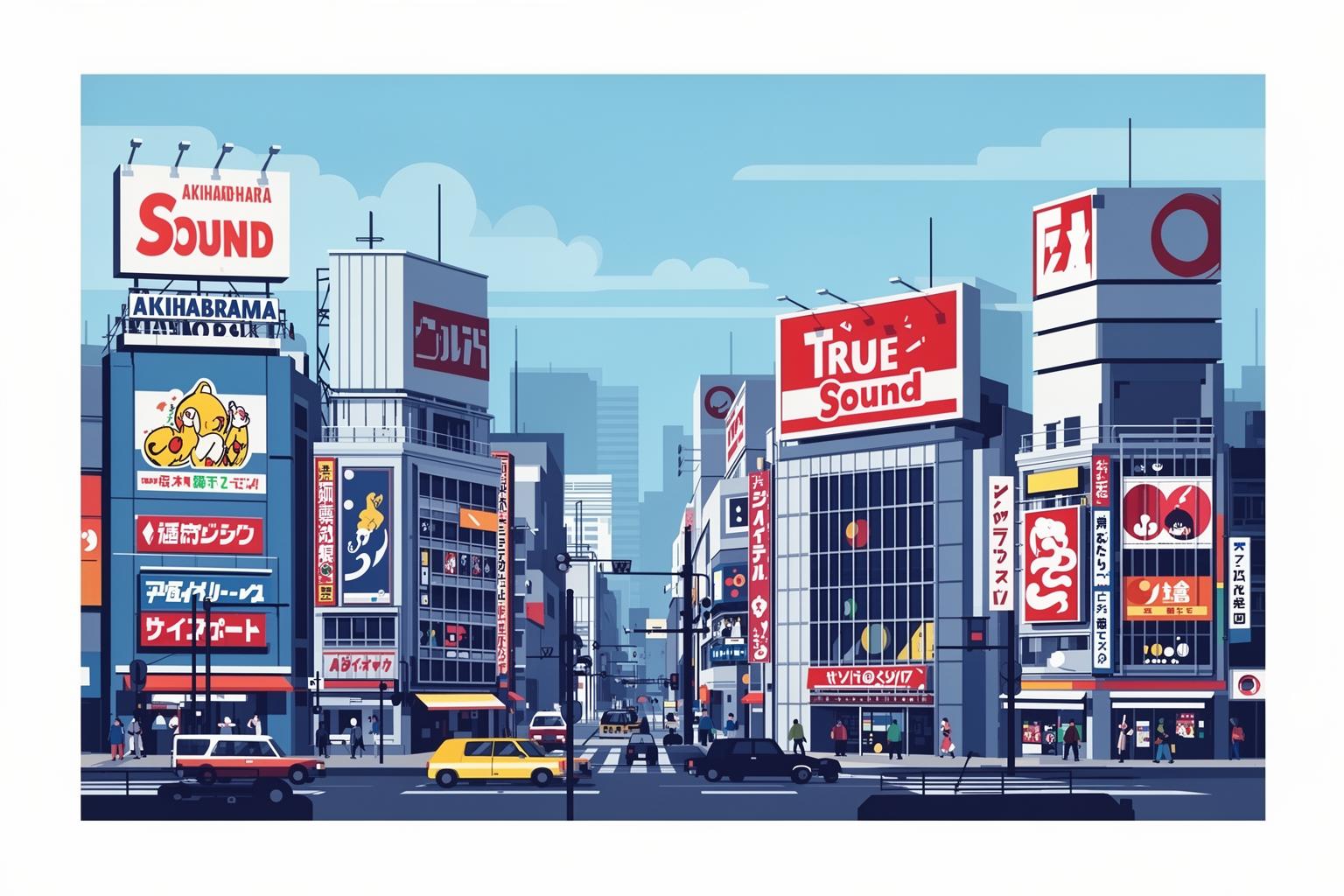
So, let’s wrap it all up. Akihabara is far more intricate than it appears on your Instagram feed. It’s not just a single thing. It’s a dense, living ecosystem where different technological eras and subcultures overlap, constantly influencing one another. The flashing lights and J-pop blasting from the arcades are just the surface—the noisy, dazzling canopy of the jungle. But if you look beyond the leaves, you discover an older, deeper world thriving beneath. The world of audio is Akihabara’s root system. It grounds the neighborhood in a history of hands-on creation, technical mastery, and an almost fanatical commitment to quality. It’s the legacy of the post-war radio builders, alive in the quiet intensity of the component shops and the reverent atmosphere of the vinyl stores.
Grasping this hidden layer is key to understanding why Japan is the way it is. It’s a culture that embraces cutting-edge, futuristic technology while also valuing ancient, analog traditions. It sees no conflict between a virtual idol and a vacuum tube amplifier because both inspire intense passion and dedication. It’s all about the depth of the obsession and the respect for the craft. So next time you’re in Akihabara, by all means, enjoy the sensory overload of the main street. But then, take a turn down a side street. Climb a narrow flight of stairs. Push open a door that seems untouched since 1985. Don’t just look at Akiba—listen to it. Beneath the cacophony of the new, you’ll hear a clearer, warmer sound. A steady, analog hum. A quiet crackle. That’s the true soundtrack of this town. It’s the bassline, the heartbeat that’s been holding the entire chaotic, beautiful rhythm together from the very start. For real.