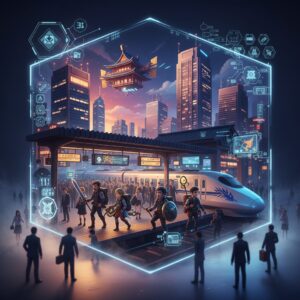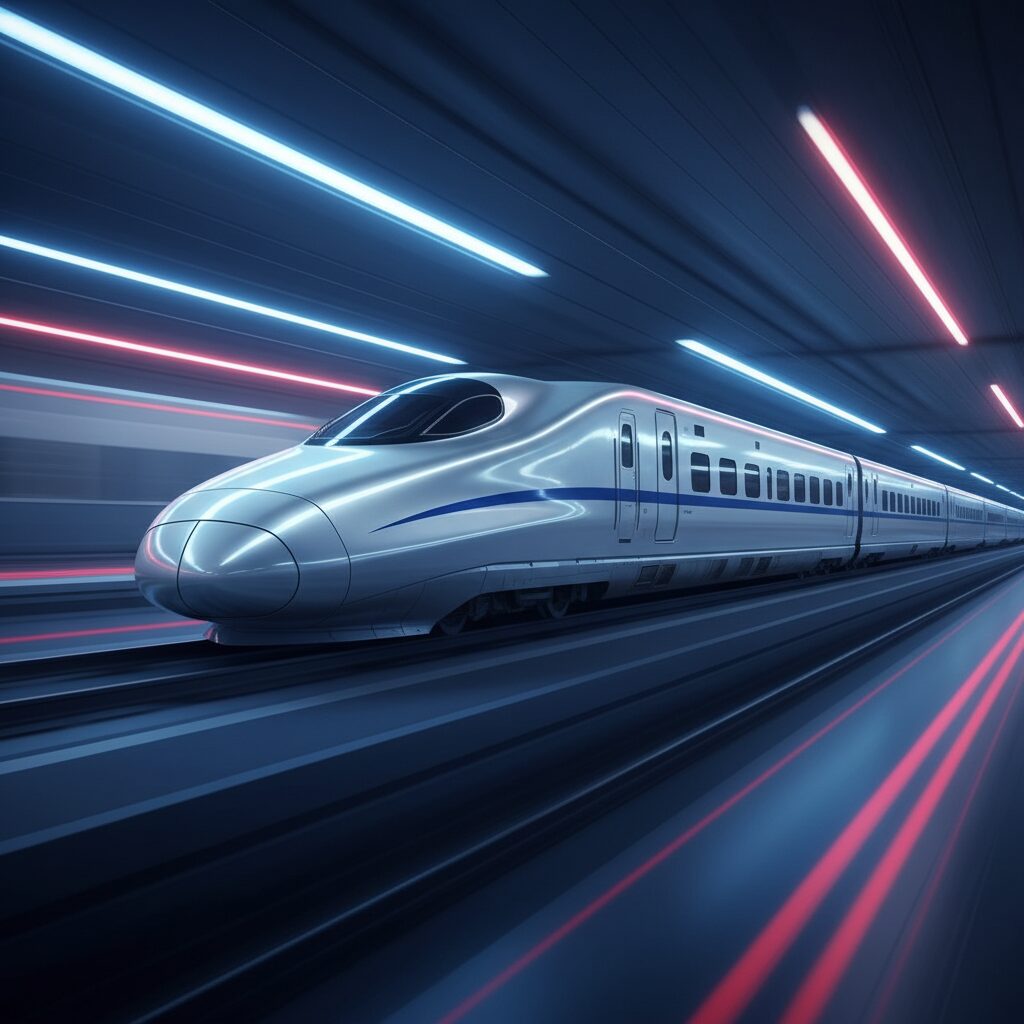
Yo, what’s the deal with Japan? Bet you’ve seen it. That one viral video. A dude in a suit, looking majorly stressed, walks up to a tiny noodle counter tucked into a chaotic train station. He slams some yen into a machine, gets a ticket, and like, 90 seconds later, a steaming bowl of noodles appears. He slurps it down in what looks like three minutes flat, puts the bowl back, and vanishes into the crowd, probably to hop on a Shinkansen—a bullet train that looks like it flew straight out of a sci-fi anime. It’s a whole mood. A blur of hyper-efficiency that’s both mesmerizing and, let’s be real, kinda insane. You see that and you gotta ask: Why? Why the mad rush? Is everyone in Japan just allergic to sitting down for a meal? Is it all about squeezing every last second out of the day? The short answer is kinda, but the real tea is way deeper, more nuanced, and low-key beautiful. It’s not just about saving time. It’s about mastering it. It’s about a crazy-perfect symphony of chaos and calm, a uniquely Japanese rhythm that powers the entire country. As an event planner here in Tokyo, my life is literally scheduling, flow, and logistics. I live and breathe this stuff. And trust me, the combo of stand-up station ramen and the serene glide of a bullet train isn’t just lunch and a ride. It’s a masterclass in the Japanese philosophy of time, space, and getting things done without losing your mind. It’s the ultimate life hack, the cultural cheat code that makes this mega-city tick. So, let’s break it down, for real. Let’s decode the ‘slurp on the go’ vibe and figure out why this high-speed ritual is the most Japanese thing ever. Welcome to the controlled chaos of a Japanese train station, the gateway to understanding it all.
The ‘Tachigui’ Mindset: More Than Just Fast Food
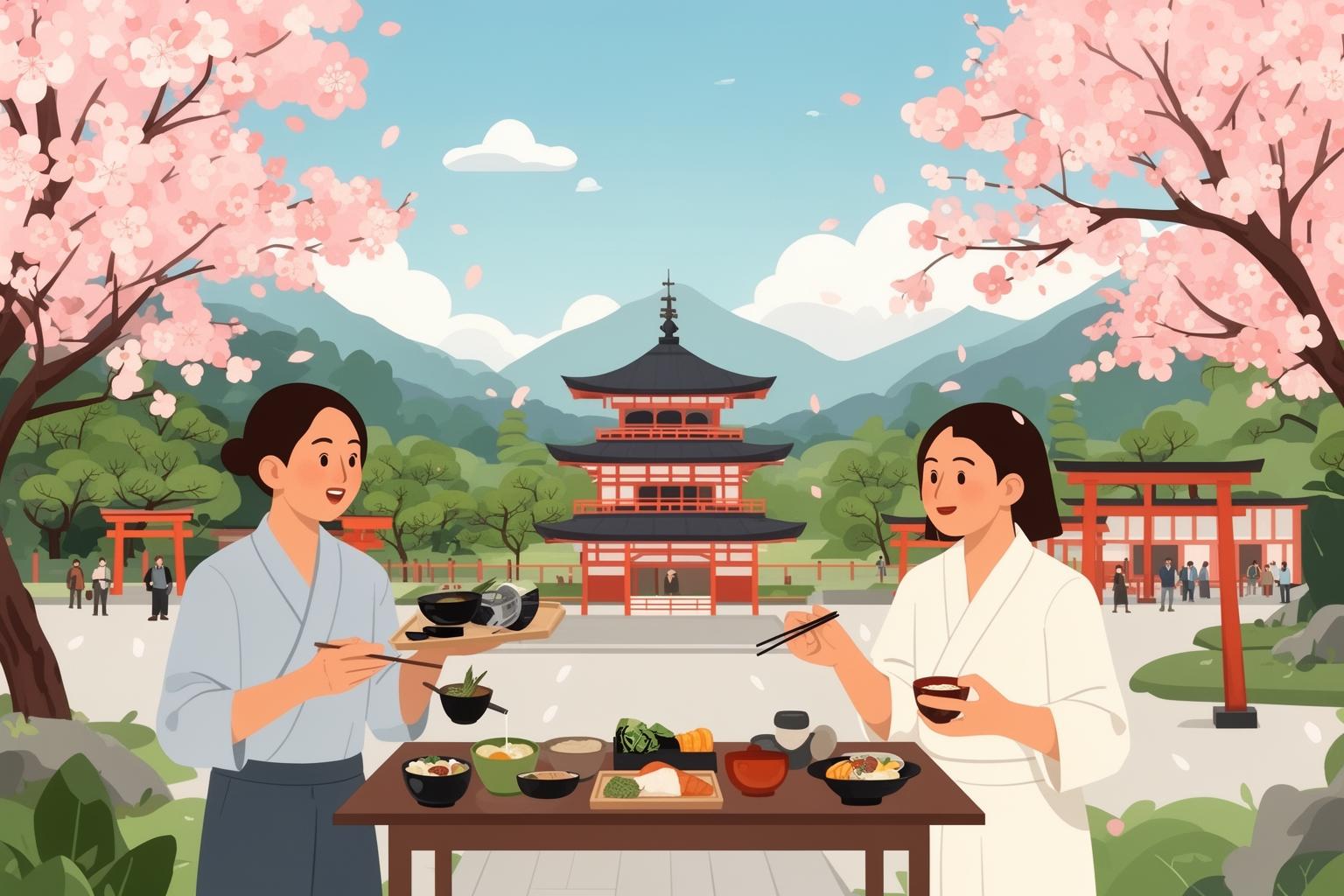
First, let’s clarify the terminology. That stand-and-slurp scene is known as `tachigui` (立ち食い), which literally means ‘stand-eating.’ And it’s not limited to ramen. It encompasses a variety of quick eats: soba, udon, kishimen, and sometimes even curry or sushi. These spots are the unsung heroes of Japan’s urban scene, the quick pit stops that keep the city’s human engine running. To outsiders, they might seem a bit grim—often small, squeezed into awkward corners of train stations, beneath railway arches, or on busy street corners. There are no fancy interiors, no cozy seats, no background music unless you count the rhythmic clatter of trains and the symphony of slurping. The entire experience is designed for one purpose: maximum speed and efficiency. But to dismiss it as merely Japan’s version of fast food misses the point. It’s a cultural institution with unwritten rules, a rich history, and a unique social role. It’s a vibe, and to fully appreciate it, you need to understand the vibe.
Breaking Down the Stand-and-Eat Scene
Step into a typical `tachigui` soba shop. What do you see? A long counter, maybe U-shaped, fitting about ten people standing shoulder-to-shoulder. Behind it, one or two staff move with practiced, almost robotic precision. The air is thick with the savory steam of dashi broth. There’s no host to welcome you, no menu to spend ten minutes deciding from. Usually, right near the entrance, there’s a ticket machine, or `kenbaiki` (券売機). This is peak Japanese efficiency—a vending machine for meals. You scan the plastic food models or pictures with prices, insert your cash, press a button for your choice—perhaps a simple `kake soba` (hot soba in broth) or a fancier `tempura soba`—and out comes a small plastic ticket. You slide the ticket onto the counter, the chef glances at it, and the magic begins. A bundle of pre-cooked noodles is dunked briefly into boiling water to heat up, then strained and dropped into a bowl. A ladle of piping hot broth is poured over. Toppings are added with a flick of the wrist. The entire process, from ticket to bowl, can take less than two minutes. It’s a culinary ballet of pure efficiency. Once you have your bowl, you find a spot at the counter and dig in. This is where the social contract comes in: you are here to eat, period. This isn’t the place for long chats with friends, business calls, or scrolling through Instagram. The unspoken rule is clear: eat quickly, quietly, and then make way for the next person. It may seem cold or antisocial if you’re used to a slower dining culture, but it’s actually a form of deep social respect. In a crowded city like Tokyo, space and time are precious luxuries. By following `tachigui` etiquette, you acknowledge that everyone else is also in a hurry, and their time is just as valuable as yours. It’s a solo mission, certainly, but one carried out in a communal space where everyone implicitly agrees to the same terms. It’s anonymous, yet harmonious. Alone, but together. This efficiency is what makes the business model work, enabling them to serve a high volume of customers with minimal staff and space, which keeps prices incredibly low. We’re talking 300 to 500 yen for a satisfying, hot meal. That’s a game-changer for millions.
The Salaryman’s Pit Stop: Fuel for the Grind
To truly grasp `tachigui`, you have to understand its main clientele: the legendary Japanese `salaryman` (サラリーマン). These office workers, clad in dark suits, form the backbone of the Japanese economy, known for long hours and unwavering dedication. The `tachigui` shop is their sanctuary, their refueling station. Picture this: it’s 7 AM. A salaryman steps off a packed commuter train. He has a meeting across town in 45 minutes. No time for a sit-down breakfast. He slips into a station soba shop, grabs a bowl of `tsukimi soba` (with a raw egg on top), slurps it down in five minutes, and is back on his way. Or it’s 8 PM. After a long day, possibly with overtime, he faces an hour-long train ride home and is starving. The `tachigui` shop offers a quick, affordable, and comforting meal to tide him over before he reaches his family. It’s the perfect buffer. This meal isn’t a luxury; it’s functional fuel—a hot, savory, surprisingly nutritious boost of energy delivered with maximum efficiency. The carbs from the noodles provide instant energy, and the warm dashi broth feels like a hug in a bowl. It’s a moment of pure, focused purpose. No decision fatigue from long menus, no waiting on servers, no awkward small talk. Just a simple transaction that gives exactly what’s needed, when it’s needed. This sharply contrasts with Western ideas of a quick meal. A ‘power lunch’ in the West is about networking, making deals, and being seen. A ‘sad desk lunch’ is often a solitary sandwich eaten while working. `Tachigui` is neither. It’s a deliberate pause—a break from the desk, a moment focused on the simple act of eating without the time commitment of a ‘proper’ meal. It’s a ritual respecting the demands of modern Japanese work life while offering genuine satisfaction. It’s a solution perfectly engineered for a very specific social need. That’s why it’s not just food; it’s a piece of cultural infrastructure.
Enter the Shinkansen: Engineering a Nation’s Flow
Now, let’s shift from the micro-moment of slurping noodles to the macro-wonder that is the Shinkansen. While the `tachigui` shop is about mastering minutes, the Shinkansen is about mastering the entire map of Japan. This isn’t merely a fast train; it’s a cultural icon, embodying post-war Japan’s recovery, innovation, and dedication to precision. It fundamentally transformed the nation’s perception of distance and time. When the first Shinkansen line, the Tōkaidō Shinkansen, debuted in 1964 just in time for the Tokyo Olympics, it changed everything. It cut the travel time between Tokyo and Osaka from nearly seven hours to about four (and now less than two and a half). Suddenly, Japan felt smaller and more connected. It made day trips for business meetings between the country’s two largest economic centers not only possible but routine. It created a mobility never imagined before and became a vital artery for Japan’s economic miracle.
More Than a Train, It’s a Time Machine
Speed is of course the Shinkansen’s main appeal, but its true marvel is reliability. Its punctuality is, no exaggeration, legendary. Average delays are measured in seconds, not minutes. A delay of even a few minutes is so rare it becomes national news. This is no mere boast; it reflects a core Japanese cultural principle: `meiwaku wo kakenai` (迷惑をかけない), meaning the importance of not causing trouble or inconvenience to others. In a collectivist society, this is paramount. A single delayed Shinkansen could disrupt thousands of schedules—business meetings, family gatherings, connections to other trains. This would unleash a massive wave of `meiwaku`, a societal offense of the highest degree. As a result, everyone involved, from drivers and conductors to maintenance crews and central command, is obsessively dedicated to preventing delays. Tracks are meticulously maintained every night. Drivers undergo rigorous simulator training to handle every possible situation. Timetables are planned with nanosecond precision. This system is a promise: if your ticket says the train departs at 14:32, it departs at exactly 14:32. This absolute predictability allows people to organize their lives with extraordinary certainty, providing immense psychological comfort in a fast-paced world. The Shinkansen is a time machine not just because it’s fast, but because it restores control over your time. You can schedule a meeting in Osaka at 3 PM, confident with 99.99% certainty that you’ll arrive at Shin-Osaka station by 2:47 PM, just in time. The system absorbs the chaos and uncertainty of travel to deliver a serene, predictable experience.
The Onboard Experience: A Sanctuary of Order
Stepping from a busy station platform onto a Shinkansen car is like entering a different realm. The station’s chaos fades away. Inside, it’s a sanctuary of calm and order. The first thing you notice is the spotless cleanliness. This is thanks to the famed ‘7-Minute Miracle’ cleaning crews who swarm the train as soon as it reaches its final stop and completely clean and reset it for the next trip in just seven minutes. Then you notice the silence. People speak softly. Phone calls happen only in designated areas between cars. Though it’s a shared public space, the atmosphere is one of mutual respect for everyone’s personal space. The seats are roomy and comfortable, all facing forward. At the terminal station, staff can rotate the seats with a foot pedal so they always face the direction of travel—a small detail that speaks volumes about the emphasis on passenger comfort. The conductor enters, bows to passengers, checks tickets, and bows again on the way out—rituals of respect and professionalism. This experience completely contrasts with the `tachigui` scene. The frantic, purposeful stand-and-slurp at the station is the necessary prelude to the calm, seated, contemplative train ride. You complete the rushed, messy part of your travel before entering this controlled environment. This explains the strict onboard etiquette. Enjoying a fragrant bento box is perfectly acceptable and beloved on the Shinkansen, but eating something with a strong odor, like a greasy burger or sharply scented snacks, is a major faux pas because it would disturb others’ sensory space (`meiwaku` once again). The Shinkansen is more than transport; it’s a carefully curated environment—a moving bubble of Japanese social harmony. You rush to get here, but once aboard, the message is clear: relax. We’ve got this. The system is in control. Your journey will be smooth, quiet, and exactly on time.
The Symbiotic Relationship: Why They Belong Together
So we have these two seemingly opposite experiences: the frantic, five-minute noodle slurp and the serene, two-and-a-half-hour glide. At first glance, they seem worlds apart. Yet in truth, they function as two perfectly interlocking gears in Japan’s intricate time management system. They aren’t opposites; rather, they coexist in a symbiotic relationship, embodying the modern Japanese approach to life. Their bond extends far beyond the mere convenience of a cheap eatery inside a train station—it’s a profound cultural pairing that reflects a shared philosophy of efficiency, quality, and skillful personal time management.
The Perfect Temporal Pairing
The true brilliance of the station ramen-Shinkansen duo lies in how it redefines the experience of waiting. Typically, the time spent at the station before departure is considered ‘dead time’—a tedious pause spent merely passing time before the journey begins. The `tachigui` shop completely reverses this notion. It enables you to reclaim that dead time, transforming it into a productive, satisfying, and even enjoyable occasion. Have 15 minutes before your Nozomi to Hakata leaves? That’s no longer dead time. It’s ‘ramen time.’ It’s a micro-optimization of your own schedule. You’ve turned otherwise wasted minutes into a moment filled with a hot, delicious meal. You reach your platform feeling content and recharged, not restless or bored. This small win sets a positive tone for the entire trip. This micro-level efficiency is perfectly mirrored by the macro-level precision of the Shinkansen system. While you optimized your 15 minutes, Japan Railways (JR) was simultaneously managing hundreds of trains and millions of passengers across the nation. The synergy is striking. The `tachigui` shop addresses the chaotic, unpredictable human elements—hunger and personal timing—with a flexible, on-demand solution. The Shinkansen then takes over, integrating you into its rigid, flawlessly predictable schedule for the journey ahead. It’s a seamless handoff. You control your time until the moment you step onto the platform, then yield to the train’s impeccable logistics. This entire system rests on trust and reliability. You confidently decide to grab noodles just ten minutes before departure because you trust both the shop’s speed and the train’s punctuality. This dynamic between individual initiative and systemic dependability is what makes it all run so smoothly. It’s a dance between the personal and the collective—a masterclass in flow.
‘Kodawari’: The Art of Perfecting the Mundane
To fully understand how both a simple noodle shop and a vast train network can reach such remarkable levels of performance, you must grasp the concept of `kodawari` (こだわり). While there’s no exact English equivalent, it blends obsessive perfectionism, uncompromising attention to detail, and deep pride in one’s craft, no matter how ordinary it may seem. `Kodawari` is the cultural force fueling the excellence of both the ramen and the railways. Consider the `tachigui` shop owner. To outsiders, they’re merely serving noodles. But to themselves, they are artisans. They pursue intense `kodawari` for their dashi broth—perhaps a family recipe featuring a specific kombu from Hokkaido or a secret blend of bonito flakes. They apply `kodawari` to their noodles, ensuring perfect texture and precise cooking time. They exhibit `kodawari` in their workflow, organizing the station layout to assemble a bowl of soba with minimal movements in the shortest possible time. It’s not just a job; it’s the relentless quest for the perfect, rapid bowl of noodles. This isn’t about Western-style ‘artisanal’ slow food; it’s about achieving mastery through efficiency. It’s discovering beauty and pride in flawlessly executing a simple task thousands of times daily. Now apply that mindset to the Shinkansen. The entire system is a cathedral of `kodawari`. Engineers obsess over aerodynamics and energy efficiency. Maintenance crews meticulously inspect every millimeter of track. Cleaning teams leave every seat and tray table spotless within a strict seven-minute window. Drivers stop the train at the exact designated spot on the platform, accurate to mere centimeters, aligning doors perfectly with boarding lines. This shared obsession with perfecting every detail is what creates the Shinkansen’s ‘miracle.’ It’s more than service or professionalism; it’s a deeply embedded cultural commitment to mastering processes and elevating functional tasks to art. The person crafting your 400-yen soba and the engineer overseeing the multi-billion-yen train network are both, in their respective ways, artists fueled by the same spirit of `kodawari`. And this, my friend, is why it all simply works.
Beyond Efficiency: The Emotional Payoff
Alright, so we’ve established that the station slurp and the Shinkansen glide form a tag team of extraordinary efficiency, driven by a cultural obsession with perfection. But if you think that’s the entire story, you’re still missing the most vital piece of the puzzle. The system isn’t just about moving people and satisfying hunger in the shortest time possible. The ultimate aim, the emotional reward for all this relentless optimization, is something far deeper. It’s about creating a feeling—a sense of security, relief, and being taken care of. It’s about crafting peace of mind in one of the busiest, most densely populated countries on the planet.
The ‘Anshin-kan’ Factor: The Comfort of a System That Works
There’s a key Japanese concept called `anshin-kan` (安心感), which roughly means a feeling of safety, security, relief, or peace of mind. In a society often marked by high stress and immense pressure to conform and perform, `anshin-kan` is a highly coveted emotional state. The entire system we’ve been discussing is designed to deliver a significant dose of it. Consider the common anxieties of travel. Will my train be delayed? Will I miss my connection? Will I find something good to eat? Will it be costly? The Shinkansen and `tachigui` ecosystem systematically removes nearly all these worries. You know the train will arrive on time. You know you can get a hot, tasty, and affordable meal in less than ten minutes. You know the station will be clean and signs clear. You know the process will be smooth and predictable. This reliability is more than just practical convenience; it’s a tremendous psychological comfort. The system has your back. While a foreign visitor might see rigid schedules, unspoken rules, and precise choreography as stressful or restrictive, for many residents within the system, it’s the opposite. The structure is freeing. Because the system manages all the logistical challenges, it liberates your mental energy. You don’t have to expend effort worrying about the basics. You can relax, read a book, prepare for your meeting, or simply gaze out at Mount Fuji, confident you’ll arrive exactly where and when you should. The `tachigui` shop offers your first dose of `anshin-kan`. You’re hungry and rushed, a stressful combo. The shop resolves this instantaneously and reliably. Then you board the Shinkansen, the ultimate source of `anshin-kan`, and for the next few hours, you’re enveloped in a bubble of pure, unfiltered predictability. That feeling? That’s the real product on offer here. Not just a meal and a train ticket, but a profound sense of calm.
A Ritual of Transition
Let’s focus once more on that person slurping his noodles. At first glance, his actions may seem purely functional. But there’s a deeper, more ritualistic dimension. Eating the station soba serves as a ritual of transition. It acts as both a mental and physical punctuation mark between two distinct phases of a journey. On one side of the meal lies the chaos of Tokyo Station, a swirling mass of millions of people. You’ve just made your way through that chaos—a stressful feat in itself. On the other side is the peaceful, hermetically sealed world of the Shinkansen and the journey ahead. The meal is the border crossing between these two states. Standing still, focusing on the hot bowl, and slurping the noodles is a grounding moment that forces you to pause, even if only for five minutes. It offers a moment to reset. You’re physically absorbing energy, but you’re also mentally shifting gears. You’re closing the chapter on ‘departure city’ and opening the chapter on ‘the journey.’ In a sense, it’s a modern, high-speed rendition of a tea ceremony. While a traditional tea ceremony revolves around finding stillness and mindful appreciation through a highly stylized ritual, the `tachigui` experience is the salaryman’s tea ceremony. Stripped of all aesthetics except pure function, its essential purpose remains the same: to create a moment of focused calm that punctuates the day. It’s a brief, solitary meditation before being propelled across the country at 300 kilometers per hour. This ritualistic dimension elevates it from simple ‘eating’ to an ‘experience.’ It’s a deeply ingrained habit for millions of travelers in Japan—a small but vital ceremony that marks the real beginning of any long-distance trip. It’s the final, personal act in handing off control from your own chaotic schedule to the perfect order of the railway.
The Slurp and the Glide: A Microcosm of Modern Japan
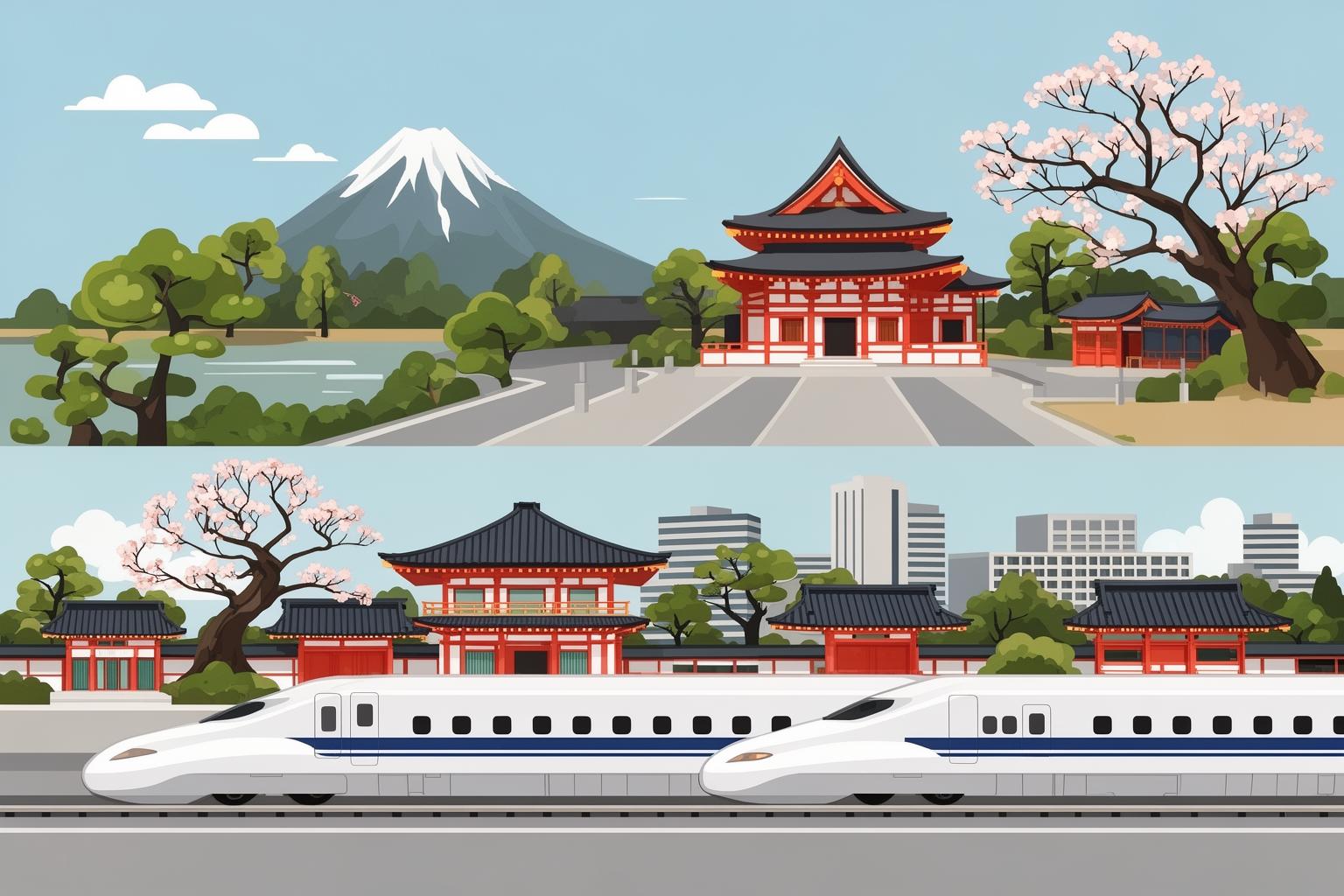
So, returning to the main question: Why is Japan this way? Why the relentless speed, the quiet conformity, the flawless systems? Because it’s a society that has, over decades, made a collective decision. It has chosen to continually refine its public systems to establish a foundation of reliability, which in turn fosters a sense of collective harmony and personal peace of mind. The station ramen shop and the Shinkansen are more than just an intriguing travel combo; they are tangible expressions of this national endeavor. They represent a microcosm of the entire modern Japanese mindset. Within them, you witness all the core cultural values in action. You see precision and punctuality. You see the deeply ingrained wish to avoid causing trouble for others, the spirit of `meiwaku`. You see the craftsman’s dedication to perfecting a craft, the essence of `kodawari`. And you see the ultimate emotional payoff for all this: the profound comfort and security of `anshin-kan`. It’s the great Japanese paradox, unfolding in real time. It’s a culture that embraces moments of intense, high-speed, almost frantic efficiency, not for its own sake, but to safeguard and enable moments of tradition, quiet reflection, and personal calm. The frantic slurp is the price paid for the serene glide. The chaos of the station makes the calm of the train possible. One cannot exist without the other. They are the yin and yang of Japanese travel. So next time you watch a video of someone rapidly finishing a bowl of noodles before boarding a bullet train, don’t just see a person in a rush. See a master of time, a participant in a flawlessly choreographed national dance of speed and stillness. It’s not just a quick meal before a trip. It’s the whole vibe. It’s the Japan cheat code in motion. No cap.