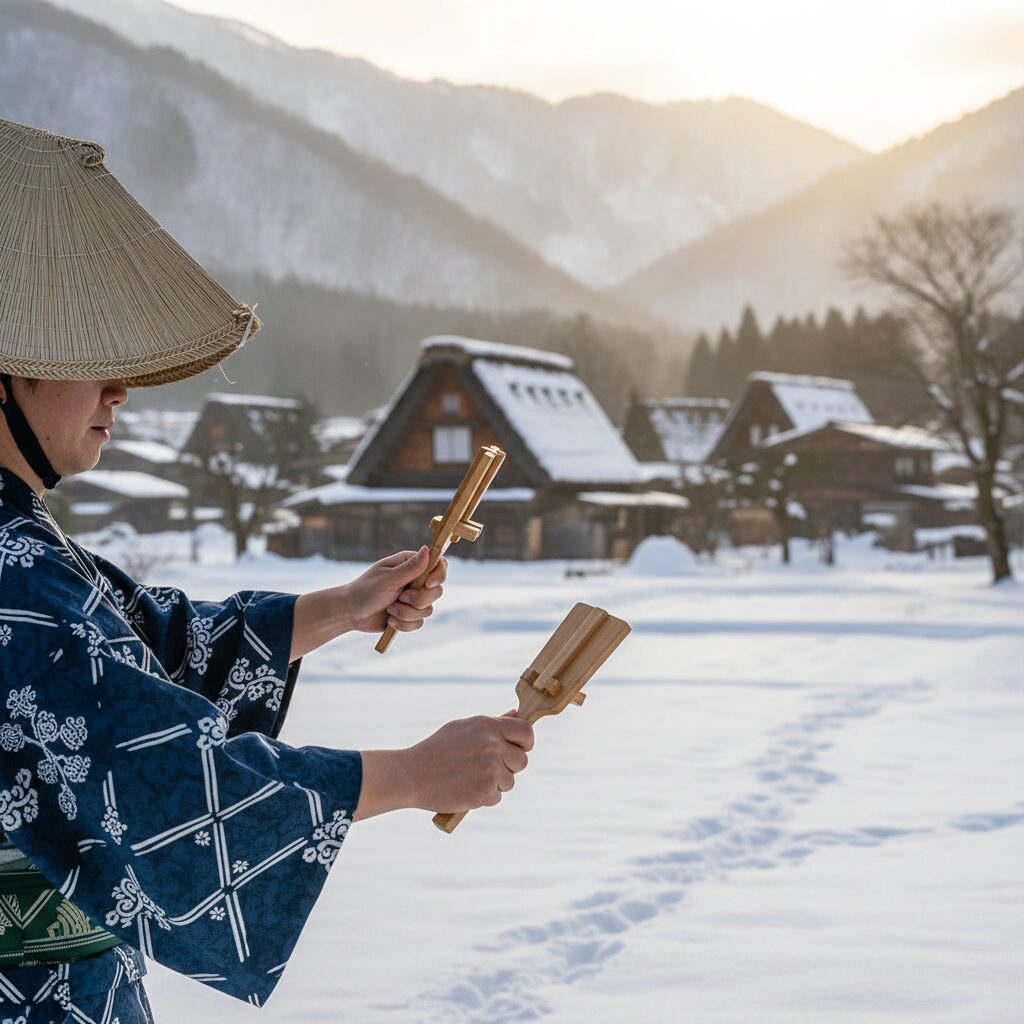
Yo, let’s talk about a sound. Not the kind you stream, but the kind that streams through time itself. Picture this: you’re deep in the mountains of Japan, surrounded by misty peaks that look like they’ve been brushed onto a silk scroll. The air is so clean it basically sparkles. Instead of traffic and sirens, the only sound is the rustle of leaves, a distant stream, and a simple, hypnotic beat. Clack. Clack. Clack. It’s a rhythm that’s been echoing through this valley for over a thousand years. This isn’t some lo-fi playlist; this is the real deal. This is the sound of the Kokiriko Bushi, Japan’s oldest folk song, and you’re hearing it in its birthplace: the jaw-droppingly beautiful, UNESCO-stamped village of Gokayama. Forget everything you think you know about Japan for a second. We’re going off the grid, back in time, to a place where culture isn’t just in a museum—it’s in the air you breathe and the beat that moves your soul. Gokayama is more than a destination; it’s a full-on vibe shift, a place that plugs you directly into the ancient heart of this country. It’s where fairytale houses meet a legendary soundtrack, and trust me, you’re gonna want front-row seats. It’s an experience that’s both epic and incredibly intimate, a story whispered on the mountain wind. Ready to catch the beat? Let’s drop in.
If you’re captivated by the deep cultural heartbeat of the Toyama region, you might also be intrigued by the quiet and mysterious bar scene in nearby Takaoka.
Dropping the Beat: What is Kokiriko Bushi Anyway?
Alright, before we delve further into the magical landscape, let’s spill the tea on the main event: the Kokiriko Bushi. Calling it Japan’s oldest folk song is a bold statement, no cap, but this melody has the history to prove it. We’re talking ancient vibes, a legacy passed down through generations of farmers living in these remote mountain valleys. This isn’t some performance made for tourists; it’s the genuine soundtrack of survival and celebration for the people of Gokayama. At the heart of the song is the kokiriko itself, a simple instrument crafted from two small, decorated bamboo sticks, about 25 centimeters long, tied together with a leather cord. Performers hold them between their fingers and click them together. The sound is sharp, natural, and incredibly rhythmic. It’s raw, earthy percussion that feels primal, connecting you to something deep and elemental. It’s the voice of the forest, the sound of labor, the sound of life.
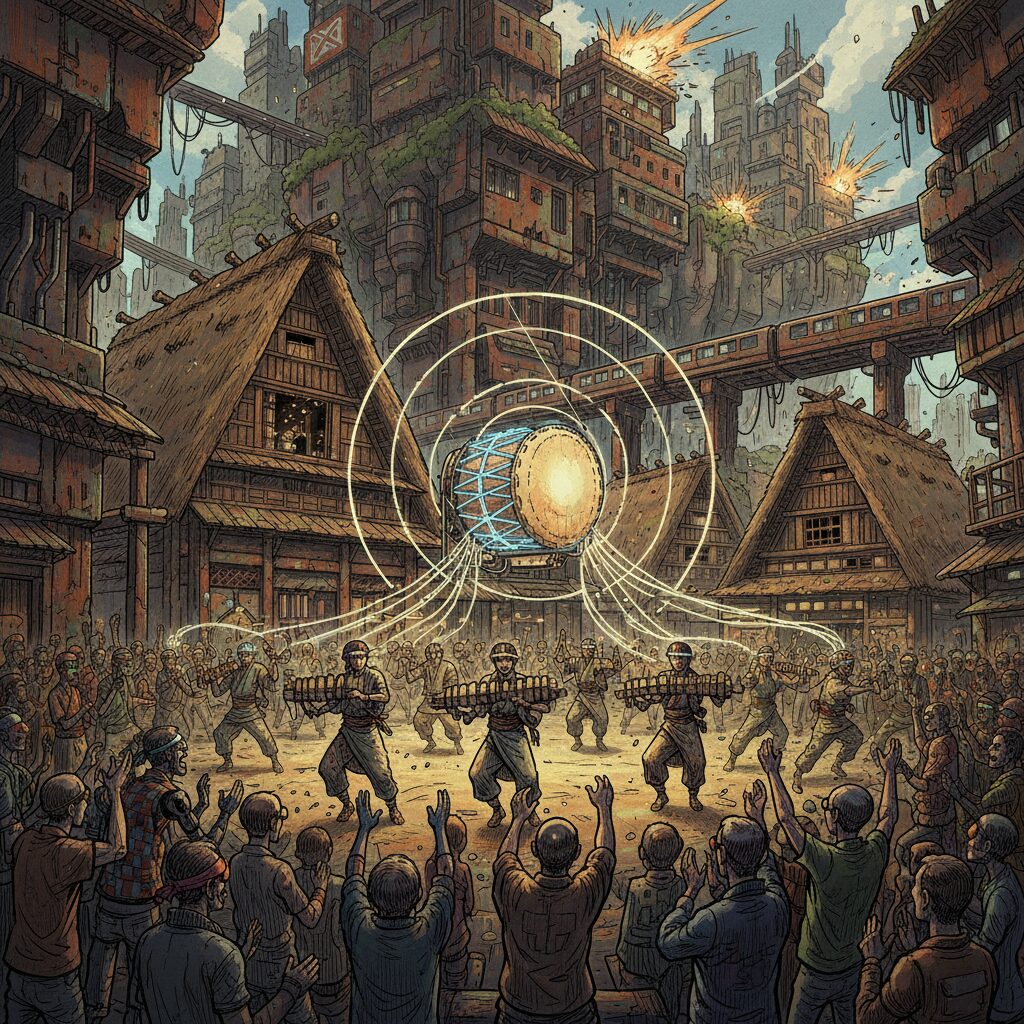
But it’s not just the bamboo clappers. The ensemble expands, creating a surprisingly rich and layered soundscape. You’ll hear the sasara, a striking instrument made of 108 wooden plates strung together. When the performer swings it back and forth, it produces a rustling, cascading sound, like a rushing river or wind through a bamboo grove. It’s pure ASMR for the soul. Then come the drums, flutes, and soulful, chanting vocals. The lyrics are beautifully simple, telling stories of the seasons, the challenges of mountain farming, love, and prayers for a plentiful harvest. They are poems born from the very soil of this region, capturing a life that’s both tough and deeply in tune with nature’s rhythms. Watching the dance is another level of enchantment. The performers, wearing traditional attire—indigo-dyed farming clothes, woven sandals, and the iconic wide-brimmed sugegasa hats that obscure their faces—move with a quiet, ritualistic grace. Their movements are repetitive and hypnotic, mimicking planting rice, bowing in prayer, and celebrating the harvest. The dance is a moving meditation, a story told not with dramatic flair but with the quiet dignity of daily life elevated to art. It’s low-key one of the most powerful and authentic cultural experiences you can have in Japan. You feel history in every note, every step. This is the original traditional beat, and it hits hard.
The Stage is Set: Welcome to Gokayama
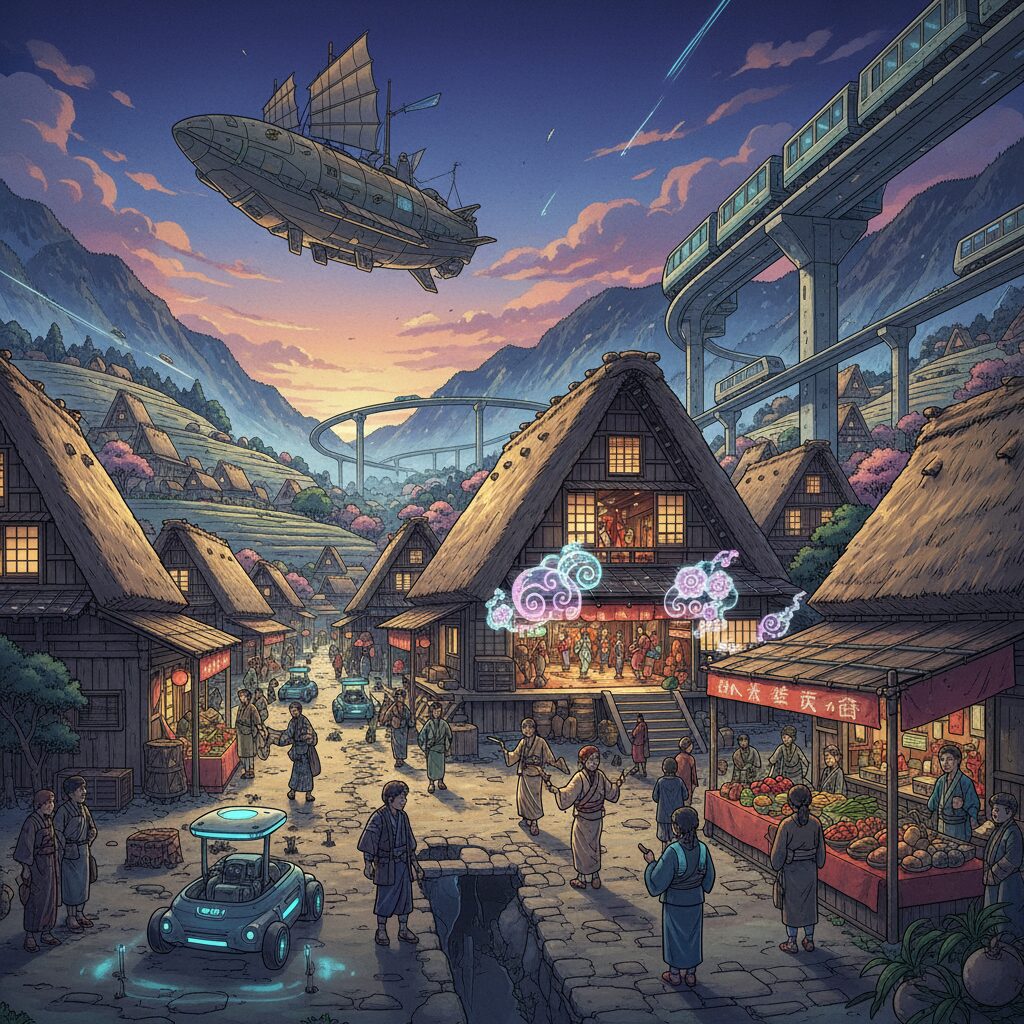
Now, imagine that incredible sound resonating through a village that seems to have been lifted straight from a Studio Ghibli film. That’s Gokayama. Nestled in a remote corner of Toyama Prefecture, it’s not just one village but a collection of small settlements, with Ainokura and Suganuma being the two most renowned and best-preserved. They are the reason for the UNESCO World Heritage designation, shared with the nearby, more famous Shirakawa-go. The defining characteristic, the feature that takes your breath away at first sight, is the Gassho-zukuri farmhouses. The word gassho means “praying hands,” and when you see the impossibly steep, A-frame thatched roofs, the comparison becomes clear. They resemble giant hands pressed together in prayer, a design born from pure necessity. These mountains receive some of the heaviest snowfall on earth, and these roofs are engineered to shed the immense weight of the snow, preventing the houses from collapsing.
Stepping into Ainokura or Suganuma feels like setting a time machine in motion. The modern world simply fades away. There are no power lines cluttering the sky, no concrete eyesores—just dozens of these magnificent farmhouses, some over 300 years old, clustered amid lush green rice paddies and carefully tended vegetable gardens. The air carries the scent of damp earth, woodsmoke from indoor hearths, and the fresh aroma of cedar. You’ll hear the gentle murmur of irrigation channels conveying crystal-clear mountain water past the houses. It’s a sensory immersion in the most peaceful way imaginable. The houses themselves are masterpieces of traditional carpentry, built without a single nail, using intricate joints and ropes to secure the massive wooden beams. The multi-storied attics, dark and fragrant with aged wood and straw, once served for sericulture—raising silkworms—which, along with producing paper and gunpowder ingredients, sustained these villages in their profound isolation. This isolation is crucial. For centuries, Gokayama was cut off from the rest of Japan, especially during harsh winters. This created a unique cultural bubble where traditions like the Kokiriko Bushi could survive, unchanged and pure, for over a millennium. Walking these paths, you’re not just a visitor; you are entering a living, breathing museum where the exhibits are the houses, the landscape, and the enduring spirit of its people.
Catch the Vibe: Experiencing Kokiriko Live
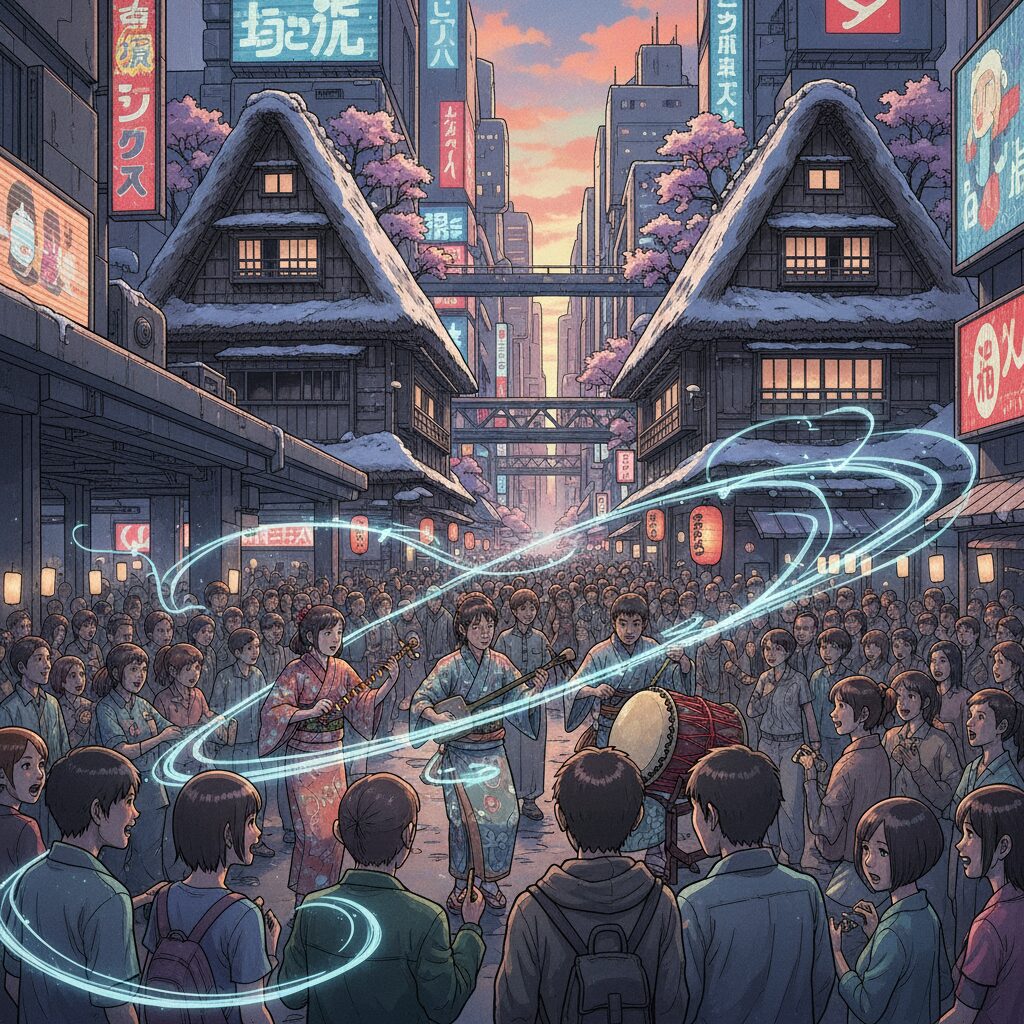
So, you’re captivated by the sound and the scenery—how do you experience the magic of Kokiriko Bushi in person? While you might get lucky catching an impromptu performance or a practice session, the absolute best, no-question, starring-role moment to attend is the Kokiriko Festival. This is the genuine article. Held annually on September 25th and 26th at Hakusan-gu Shrine in Gokayama’s Kaminashi area, it’s not a flashy, large-scale event. Instead, it’s an intensely local, deeply spiritual celebration that feels truly special to witness. As dusk falls over the valley, the shrine grounds, lit by the soft glow of paper lanterns, transform into an otherworldly stage. The entire community gathers—from elderly masters who have danced their whole lives to young children just learning the steps—ensuring this tradition endures. The festival opens with a solemn procession, followed by the first haunting flute notes in the crisp autumn air, then the sharp, rhythmic clack-clack of the kokiriko. The sound reverberates off the surrounding mountains, creating an electric atmosphere. Watching the dancers, faces obscured by sugegasa hats, move in perfect, hypnotic unison is an experience that will give you goosebumps. It feels less like a performance and more like a sacred ritual—a direct connection to the ancestors of this land. The mood is reverent yet joyful, a heartfelt celebration of identity and heritage. You’re not just observing culture; you’re feeling it pulse through the earth beneath you.
If you can’t make the festival, don’t worry—you still have options. Many local minshuku (traditional guesthouses) arrange private performances for guests in the evening. Imagine finishing a delicious home-cooked meal and then enjoying local performers sharing this ancient art beside the warm glow of an irori hearth. It’s an incredibly intimate and unforgettable way to experience it. Additionally, the Gokayama Folk Museum often features video displays and occasional live demonstrations where you can learn about the history of the song and dance. Some places even offer workshops—can you imagine learning the basics of the Kokiriko dance inside a 300-year-old farmhouse? That’s a travel story that always wins. Whatever you do, try to see it live. Recordings can’t capture how the sound fills the space, the performers’ energy, or the profound sense of place that comes from hearing this ancient song in the very valley where it originated. It’s a memory waiting to be made.
Beyond the Dance: Living the Gokayama Life
While the Kokiriko Bushi may serve as the ancient soundtrack, the village life itself takes center stage, and you’re invited to be more than a mere observer. To fully embrace the Gokayama experience, an overnight stay in a Gassho-zukuri minshuku is essential—this is a non-negotiable, bucket-list-worthy adventure. These accommodations aren’t hotels but family homes, often operated by the same lineage for generations, welcoming guests into their lives. You’ll sleep on a comfortable futon spread over tatami mat floors, gently lulled by the chirping of crickets and the soft murmur of the wind outside. The heart of the home is the irori, a large, square, sunken hearth in the center of the main room, where a fire burns steadily day and night. In the evening, you gather around it with the family and fellow guests, sharing stories while fish sizzle on skewers stuck in the ash. The house’s woodwork, blackened and polished by centuries of smoke from this very hearth, glows warmly in the firelight. It’s incredibly cozy and atmospheric. The meals themselves are a highlight—the food represents inaka (countryside) cuisine at its finest. Every ingredient is locally sourced, often foraged from the nearby mountains or grown in the family’s own garden. You’ll savor dishes like sansai (wild mountain vegetables), perfectly grilled river fish, hearty stews, and the renowned Gokayama tofu, which is firm and flavorful, worlds apart from supermarket varieties. Waking up to slide open the paper shoji screen, revealing mist-covered mountains and thatched roofs, is a moment of pure, unfiltered peace—a complete digital detox for the soul.
But the experience doesn’t end indoors. Gokayama offers much more. You can engage with the region’s artisanal heritage by trying your hand at making Gokayama Washi, a traditional Japanese paper. Places like the Gokayama Washi no Sato offer workshops where you learn to transform mulberry pulp into beautifully textured paper. It’s a meditative, hands-on craft that deepens your appreciation for the skills passed down through these remote villages. For outdoor enthusiasts, the hiking is exceptional. Several trails lead to viewpoints that provide postcard-perfect panoramic views of the villages nestled within the valley. The Ainokura observation deck is especially famous, particularly in the early morning when a sea of clouds often blankets the valley below. Each season paints a distinctly beautiful portrait of Gokayama. Spring brings delicate cherry blossoms and vibrant green rice paddies. Summer bursts with lush greenery beneath clear blue skies. Autumn ignites the mountains with fiery reds, oranges, and yellows, arguably the most breathtaking season to visit. Then there’s winter—pure magic. The landscape is cloaked in a thick, silent blanket of pristine white snow, turning the villages into serene, monochrome fairy tales. Snow can pile several meters high, and seeing the gassho houses crowned with massive snow hats is unforgettable. Some evenings, the villages glow warmly, creating a stunning display of golden light against deep blue shadows. Every season carries its own unique character and mood, making Gokayama a place to return to again and again, each visit offering a fresh and memorable experience.
The Nitty-Gritty: Your Gokayama Game Plan
Let’s get practical. Gokayama’s remoteness is a big part of its charm, but it also means you need to plan your trip carefully. It’s not a place you can just drop into on a whim. The most common and convenient way to reach it is by bus. The World Heritage Bus runs between the major transport hub of Kanazawa on one end and the city of Takaoka on the other, stopping at both Suganuma and Ainokura villages along the route. If you’re traveling from Tokyo, you can take the Hokuriku Shinkansen (bullet train) to either Kanazawa or Shin-Takaoka station and catch the bus from there. The bus ride itself is stunning, winding through mountains and along rivers, building anticipation for your arrival. Renting a car is another great option, as it allows you the flexibility to explore the wider area at your own pace, including some of the smaller, less-frequented hamlets. Once you arrive in the villages, your own two feet are the best mode of transport. Both Ainokura and Suganuma are compact and easily walkable, with paths and trails connecting houses and viewpoints.
Timing your visit is crucial. As mentioned, autumn (late September to early November) is peak season, with the Kokiriko Festival and spectacular fall foliage. Winter (December to February) is ideal for dedicated snow lovers and photographers seeking that iconic winter wonderland shot, but be prepared for freezing temperatures and possible travel delays due to heavy snowfall. Spring and summer offer pleasant weather and lush landscapes, making them perfect for hiking and soaking in the peaceful, rural atmosphere. One important tip: book your accommodation well in advance. There are only a handful of minshuku in the villages, and they fill up months, sometimes even a year, ahead—especially during the festival, autumn weekends, or the winter light-up events. This is not a place where you can just show up and find a room. Also, keep in mind this is deep countryside. Bring enough cash. While some larger businesses may accept cards, many smaller shops, eateries, and guesthouses are cash-only. Lastly, and most importantly, be a respectful visitor. These are not merely tourist sites; they are living communities where people have lived for centuries. Stick to public paths, avoid wandering onto private property or peeking into windows, and keep your voice low, especially in the evenings. You are a guest in their home, and a little consideration goes a long way in preserving the serene atmosphere that makes this place so special.
More Than a Melody: The Kokiriko Legacy
So, why does a simple folk song and dance from a distant mountain village hold such significance? Because the Kokiriko Bushi is more than just a performance—it’s a testament to cultural resilience. It tells the story of a community steadfastly preserving its identity despite isolation, harsh winters, and the relentless advance of modernization. In an increasingly homogenized world, places like Gokayama and traditions like the Kokiriko Bushi are invaluable, irreplaceable treasures. Hearing the rhythmic clack of bamboo is like listening to the very heartbeat of the land. It connects you tangibly to generations who have worked the soil, celebrated the harvest, and found joy and meaning in a simple, sustainable way of life. It’s a profound reminder that the most powerful stories are often the quietest.
Having explored many parts of East Asia, I see a beautiful, shared thread here. Across the continent, from the mountain songs of Yunnan province in China to farming rituals in rural Korea, there is a deep, intrinsic link between the land, the people, and their art. Folk traditions like Kokiriko Bushi form the cultural DNA of a place—expressions of a community’s collective soul. They speak a universal language of hope, struggle, and gratitude. Experiencing it in Gokayama feels like more than learning about Japanese culture; it’s tapping into a much larger, ancient human story about our relationship with the earth. It’s a powerful connection that transcends borders and time, reminding us that beneath all our modern complexities, we share these fundamental rhythms of life.
When you leave Gokayama, the visual memories are undoubtedly stunning. The image of gassho houses blanketed in snow or framed by autumn leaves will linger in your mind. But it’s the sound that will truly stay with you. Long after you return to the rush of daily life, that simple, hypnotic rhythm will replay in your thoughts. Clack. Clack. Clack. It’s the sound of resilience. The sound of community. The sound of a tradition that refuses to fade away. Gokayama doesn’t just show you a piece of old Japan; it lets you feel its pulse. So go. Listen to the mountains sing. Walk the ancient paths. Find the beat that has sustained this remarkable place for a thousand years. It’s a vibe that will change you, a rhythm that will become part of your own story.